

Search results
Search for "enantiomer" in Full Text gives 289 result(s) in Beilstein Journal of Organic Chemistry. Showing first 200.
Interactions of cyclodextrins and their derivatives with toxic organophosphorus compounds
Beilstein J. Org. Chem. 2016, 12, 204–228, doi:10.3762/bjoc.12.23
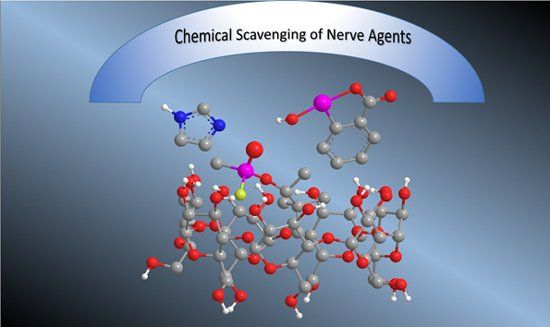
- mainly occurs in the nucleophilic attack rather than in the complex formation. Nevertheless, the optical rotations attributed to each enantiomer of sarin are in contradiction to those described by Benschop and De Jong in 1988 [20]. Indeed, they determined that the (R)-sarin is dextrorotatory whereas the
- )-(−)-enantiomer would be hydrolyzed faster in presence of α-CD. They also studied the alkaline hydrolysis of the two enantiomers of isopropyl para-nitrophenyl methylphosphonate [65] and of isopropyl (S)-2-dimethylaminoethyl methylphosphonothioate [67] in the presence of α-CD at 25 °C. The result indicates that
- to better interactions between the included (−)-enantiomer and the secondary hydroxy groups responsible of the nucleophilic attack. In the 80s, Désiré and Saint-André studied the effect of the three native cyclodextrins on the hydrolysis reaction of tabun, VX, sarin and soman [68][69][70]. It appears





Spiro-fused carbohydrate oxazoline ligands: Synthesis and application as enantio-discrimination agents in asymmetric allylic alkylation
Beilstein J. Org. Chem. 2016, 12, 166–171, doi:10.3762/bjoc.12.18
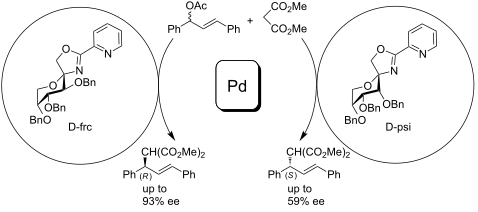
- chiral ligands in palladium-catalyzed allylic alkylation of 1,3-diphenylallyl acetate with dimethyl malonate. The D-fructo-PyOx ligand provided mainly the (R)-enantiomer while the D-psico-configurated ligand gave the (S)-enantiomer with a lower enantiomeric excess. Keywords: asymmetric catalysis
- ]. Thus, a positive optical rotation value refers to the (R)-enantiomer, whereas a negative value belongs to the (S)-enantiomer. In addition, the absolute configuration was independently determined by 1H NMR in the presence of the optically active NMR shift reagent (+)-Eu(hfc)3 [29]. All synthesized
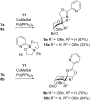
- could be obtained. To our delight, however, ligand 10a was active in 1,2-dichloroethane at 50 °C and gave the opposite enantiomer (S)-14 with an enantiomeric excess of 59% (Table 1, entry 10). Similar to ligand 9b, the β-configurated D-psico-ligand 10b leads to a somewhat lower enantiomeric excess of (S




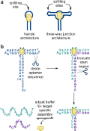
Learning from the unexpected in life and DNA self-assembly
Beilstein J. Org. Chem. 2015, 11, 2713–2720, doi:10.3762/bjoc.11.292
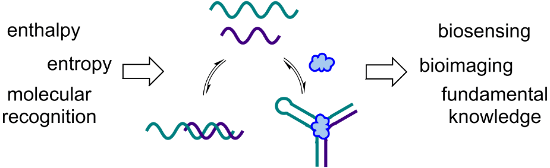
- observed fluorescence output to concentration for each enantiomer. Comparison of our calculated versus actual % L-Tym for these measurements revealed a high level of both accuracy and precision, and we were also able to demonstrate the use of our sensors to accurately monitor yield and enantiopurity in




A novel and practical asymmetric synthesis of dapoxetine hydrochloride
Beilstein J. Org. Chem. 2015, 11, 2641–2645, doi:10.3762/bjoc.11.283
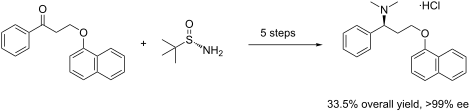
- . The optical rotation value of compound 1 was consistent with that previously reported [15], which confirmed that the S-enantiomer of dapoxetine hydrochloride was synthesized successfully by using this route. Conclusion In summary, a novel and stereoselective synthesis of dapoxetine hydrochloride


Exploring architectures displaying multimeric presentations of a trihydroxypiperidine iminosugar
Beilstein J. Org. Chem. 2015, 11, 2631–2640, doi:10.3762/bjoc.11.282

- strategy for the synthesis of diversely functionalized trihydroxypiperidines through double reductive amination of the D-mannose-derived aldehyde 2 (Scheme 1) [24][25]. Among the 1-azasugars accessed with this methodology, our attention was drawn to the enantiomer of natural 3,4,5-trihydroxypiperidine (1
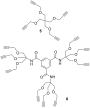
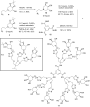
- amination on aldehyde 2 allowed the synthesis of trihydroxypiperidines, among which the enantiomer of natural compound 1 and the N-alkylated piperidine 3. Synthesis of key azide intermediate 4 through the double reductive amination strategy from “masked” dialdehyde intermediate 2. Tetravalent and nonavalent




Bifunctional phase-transfer catalysis in the asymmetric synthesis of biologically active isoindolinones
Beilstein J. Org. Chem. 2015, 11, 2591–2599, doi:10.3762/bjoc.11.279
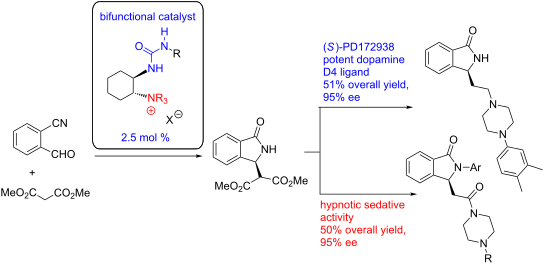
- mmol) and ee 78%. The enantiomers were separated by HPCL using the following conditions: Chiralcel AD-H, n-hexane/iPrOH 70:30, 1.0 mL/min, 10 °C, 12.3 min (minor; R-enantiomer), 25.5 min (major; S-enantiomer). The product was dissolved in a mixture of dichloromethane (6 mL) and heptanes (4 mL) and


Organocatalytic and enantioselective Michael reaction between α-nitroesters and nitroalkenes. Syn/anti-selectivity control using catalysts with the same absolute backbone chirality
Beilstein J. Org. Chem. 2015, 11, 2577–2583, doi:10.3762/bjoc.11.277
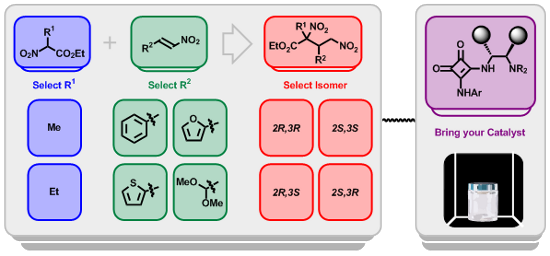
- arises as a key methodology for chemical production of enantiomerically enriched chiral compounds in terms of atom economy and reduced waste generation [2][3][4][5][6]. Nowadays, many very effective methodologies exist that allow the formation of a chiral compound as a single enantiomer. However, and
- achieved by selecting the correct enantiomer of the catalyst, the relative configuration is typically governed by intrinsic factors associated to the mechanistic profile of the reaction and very often the formation of the major diastereoisomer is determined from the very beginning of the reaction and
- syn-3a in excellent yield, an acceptable 88:12 dr and 98% ee. As expected, the use of the pseudoenantiomeric catalyst 5 provided the corresponding enantiomer ent-syn-3a with similar results. Moving to cyclohexanediamine-based catalyst 6 resulted in the same behaviour as observed in our previous report


Synthesis of Xenia diterpenoids and related metabolites isolated from marine organisms
Beilstein J. Org. Chem. 2015, 11, 2521–2539, doi:10.3762/bjoc.11.273
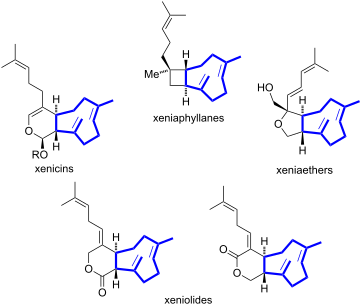
- enantiomerically pure and configurationally stable nine-membered E,Z-dienone 80. The synthesis of the enantiomer of dienone 80, ent-80, was accomplished by a route parallel to that presented in Scheme 8a, starting from ent-77. The highly efficient construction of these versatile intermediates provides a basis to
- synthesize a variety of natural products containing this macrocyclic structural motif. Based on chiral enone 80 and its enantiomer, ent-80, coraxeniolide A (10) and β-caryophyllene (22) were synthesized in five and four further steps, respectively. The synthesis of 10 continued with a trityl perchlorate
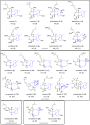
- antheliolide A (18) by Corey. a) Synthesis of enantiomer 80, b) total syntheses of coraxeniolide A (10) and c) β-caryophyllene (22) by Corey. Total synthesis of blumiolide C (11) by Altmann. Synthesis of a xeniolide F precursor by Hiersemann. Synthesis of the xenibellol (15) and the umbellacetal (114) core by







Copper-catalysed asymmetric allylic alkylation of alkylzirconocenes to racemic 3,6-dihydro-2H-pyrans
Beilstein J. Org. Chem. 2015, 11, 2435–2443, doi:10.3762/bjoc.11.264
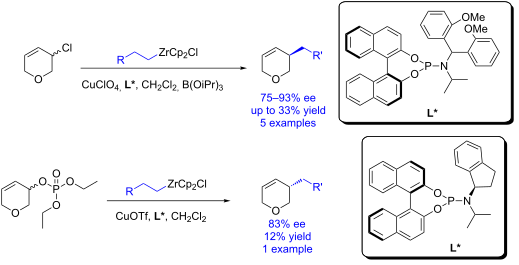
- alkylation (AAA) reactions [5][6][7] can be used in dynamic kinetic asymmetric transformations (DYKAT) [8][9][10][11][12][13][14][15] to provide single enantiomer products from racemic starting materials. Mechanistically some of these have been shown to occur by direct enantio-convergent transformations [16




Copper-catalyzed asymmetric conjugate addition of organometallic reagents to extended Michael acceptors
Beilstein J. Org. Chem. 2015, 11, 2418–2434, doi:10.3762/bjoc.11.263
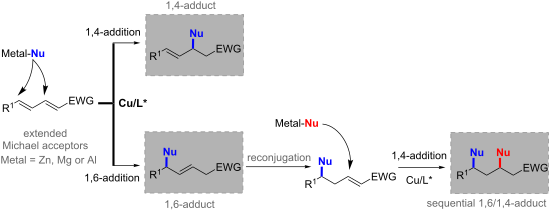
- Josiphos enantiomer used, in both cases with good enantioselectivities (85–92% ee). Subsequent chain elongation followed by a 1,4-ACA reaction was described and enabled the enantioselective insertion of an additional methyl group. With trialkylaluminium reagents Only a few systems are known to perform


Dicarboxylic esters: Useful tools for the biocatalyzed synthesis of hybrid compounds and polymers
Beilstein J. Org. Chem. 2015, 11, 1583–1595, doi:10.3762/bjoc.11.174

- same article the authors showed that only the (L)-enantiomer of dimethyl malate afforded polymers. A racemate of malate esters gave only short polymers; showing nicely that efficient polymerization of diacids can only be achieved with carboxylic groups of similar reactivity. The poly(hexanediol-2


Synthesis of racemic and chiral BEDT-TTF derivatives possessing hydroxy groups and their achiral and chiral charge transfer complexes
Beilstein J. Org. Chem. 2015, 11, 1561–1569, doi:10.3762/bjoc.11.172
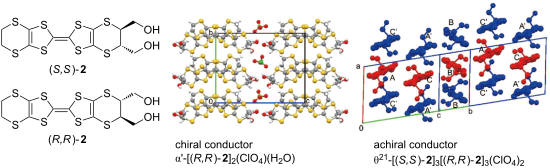
- ,S)-2. The other enantiomer (R,R)-2 was synthesized in the same manner. The cyclic voltammetry measurement on racemic-1 indicated the first and second oxidation potentials (E11/2, E21/2) and their difference ΔE (= E21/2 − E11/2) to be 0.52, 0.83, and 0.31 V by utilizing glassy carbon as working


The enantioselective synthesis of (S)-(+)-mianserin and (S)-(+)-epinastine
Beilstein J. Org. Chem. 2015, 11, 1509–1513, doi:10.3762/bjoc.11.164
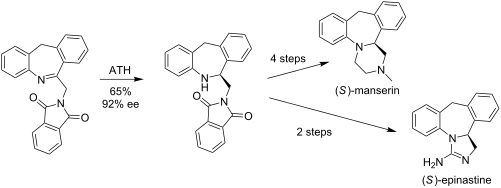
- : chiral diamines; enantioselective reduction; epinastine; mianserin; ruthenium complexes; Introduction Mianserin (1) is a tetracyclic compound widely used as a drug in the treatment of depression. Despite the fact that the (S)-(+)-enantiomer of mianserin is more potent than the (R)-antipode in
- pharmacological tests for antidepresant activity [1][2][3], it is still administered as a racemate probably due to the fact that no serious adverse effects have been recorded for the (R)-enantiomer. Interestingly, no enantioselective synthesis of mianserin has been developed so far. The synthesis of racemic
- another important active substance, epinastine, in enantiomerically pure form (Figure 1). Epinastine (2) is a histamine H1 receptor antagonist and is used as racemic mixture in eye drops to relieve the symptoms of allergic conjunctivitis. Analogously as in the case of mianserin, the (S)-enantiomer is the


Structure and conformational analysis of spiroketals from 6-O-methyl-9(E)-hydroxyiminoerythronolide A
Beilstein J. Org. Chem. 2015, 11, 1447–1457, doi:10.3762/bjoc.11.157
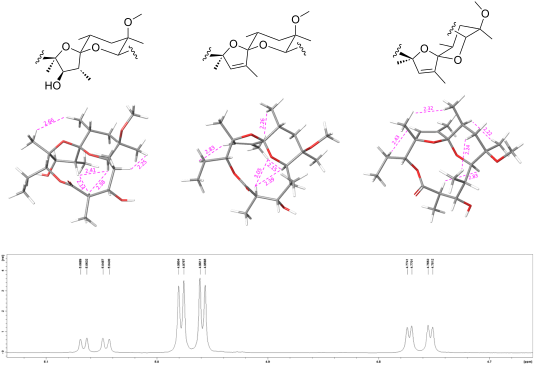
- ]. Only one enantiomer at 8-C was isolated, showing retention of stereochemistry. This would support the hypothesis that the difference in energies of the 6-membered ring anomers relative to a 5-membered ring is sufficient to drive the conversion of 3 to 4. Conclusion In this paper we have presented the




Regioselective synthesis of chiral dimethyl-bis(ethylenedithio)tetrathiafulvalene sulfones
Beilstein J. Org. Chem. 2015, 11, 1105–1111, doi:10.3762/bjoc.11.124

- time in the middle of 80s by Dunitz and Wallis through the synthesis of the (S,S,S,S)-enantiomer of tetramethyl-bis(ethylenedithio)tetrathiafulvalene (TM-BEDT-TTF) (Scheme 1) [1], thus opening opportunities towards the preparation of chiral molecular conductors [2]. Since then a large number of chiral
- for C16H16N2S8: C, 38.99; H, 3.27; N, 5.68; S, 52.05; found: C, 38.65; H, 3.05; N, 5.34; S, 52.43 (%). (R,R)-3: The same synthetic procedure was followed as for the (S,S) enantiomer starting from (R,R)-5. Yield 55%. Anal. calcd for C16H16N2S8: C, 38.99; H, 3.27; N, 5.68; S, 52.05; found: C, 38.71; H
- , 116.56, 112.02, 111.44, 50.10, 44.04, 30.38, 27.39, 21.36 ppm; MALDI–TOF MS (m/z): 444 [M]+ (Mcalcd = 443.86); Anal. calcd for C12H12O2S8: C, 32.41; H, 2.72; O, 7.19; S, 57.68; found: C, 32.72; H, 2.55; O, 6.95; S, 57.93 (%). (R,R)-1: The same synthetic procedure was followed as for the (S,S)-enantiomer


Chiroptical properties of 1,3-diphenylallene-anchored tetrathiafulvalene and its polymer synthesis
Beilstein J. Org. Chem. 2015, 11, 972–979, doi:10.3762/bjoc.11.109
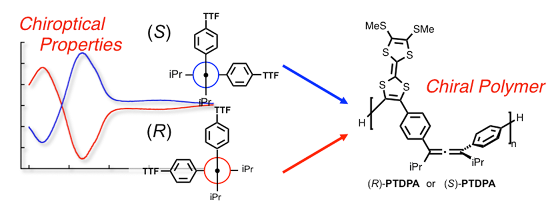
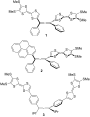
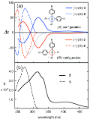
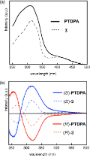
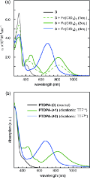
- −341 (c 0.83 in CH2Cl2), respectively. Figure 2 depicted the electronic circular dichroism (ECD) spectra of the enantiomers of (+)/(−)-3 and (+)/(−)-9, and their UV–vis absorption spectra. The ECD spectrum of the (−)-9 enantiomer exhibited a clear bisignate CD curve with a negative peak at 274 nm and a
- 1,3-bis(4-iodophenyl)-1,3-diisopropylallene (9) and organozinc species derived from 4,5-bis(methylthio)TTF. Optical resolution of the enantiomer 3 and its precursor 9 was achieved by a recyclable HPLC on a chiral stationary phase. The ECD spectra were measured, and the obtained spectra allowed for the




Diastereoselective and enantioselective conjugate addition reactions utilizing α,β-unsaturated amides and lactams
Beilstein J. Org. Chem. 2015, 11, 530–562, doi:10.3762/bjoc.11.60
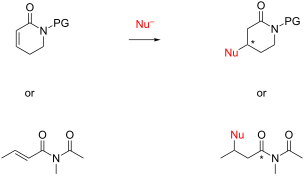
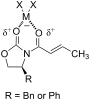
- enantioselectivities when 30 mol % of the catalyst was used. Interestingly, when the Lewis acid is switched to the lanthanide triflate, Yb(OTf)3 or Y(OTf)2, the opposite configuration of the product was obtained (the S enantiomer was obtained vs. the R enantiomer that is obtained when MgBr2 is used). In 2001, the




Chemoselective O-acylation of hydroxyamino acids and amino alcohols under acidic reaction conditions: History, scope and applications
Beilstein J. Org. Chem. 2015, 11, 446–468, doi:10.3762/bjoc.11.51
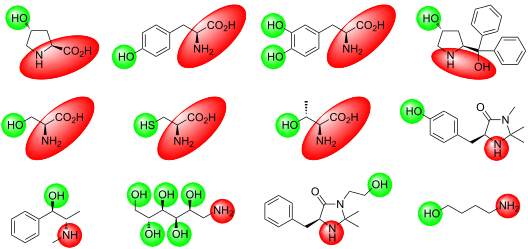
- starting point [47][70]. A potential obstacle to the application of organocatalytic systems based on naturally occurring trans-4-hydroxy-L-proline as the catalytic moiety is how to access both series of enantiomeric products, since the enantiomer of the naturally occurring hydroxyproline is not easily




First chemoenzymatic stereodivergent synthesis of both enantiomers of promethazine and ethopropazine
Beilstein J. Org. Chem. 2014, 10, 3038–3055, doi:10.3762/bjoc.10.322
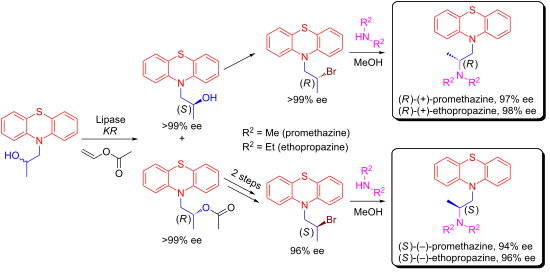
- -6 production [48]. Moreover, Boland and McDonought [49][50] found that preferably the (+)-enantiomer of promethazine is particularly effective in inhibiting the formation of bone resorbing cells (osteoclasts) thus providing a new class of agents useful for preventing or even treating bone loss
- was superior to other enzymes in both the reaction rate and the obtained enantiomeric excess values of the slower reacting enantiomer (S)-(+)-5. In this case, racemic alcohol (±)-3 has been successfully resolved affording the unreacted substrate (S)-(+)-5 in enantiopure form (>99% ee), whereas the
- active ester (R)-(−)-6a of high enantiomeric excess (95% ee) and leaving thereby slower reacting enantiomer (S)-(+)-5 of very high enantiomeric purity (98% ee). On the other hand, from the view point of remaining the enatiopurity of alcohol (S)-(+)-5, ethereal solvents (Et2O and MTBE) which yielded (S




Inherently chiral calix[4]arenes via oxazoline directed ortholithiation: synthesis and probe of chiral space
Beilstein J. Org. Chem. 2014, 10, 2751–2755, doi:10.3762/bjoc.10.291
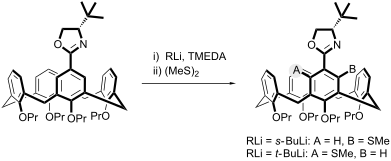
- removal of the oxazoline. This avoids the need to resort to the more expensive oxazoline enantiomer derived from D-tert-leucine. Probing the impact of inherently chiral calix[4]arenes To date we have focused on developing the synthetic methods for meta-functionalised inherently chiral calix[4]arenes, our


Preparation of neuroprotective condensed 1,4-benzoxazepines by regio- and diastereoselective domino Knoevenagel–[1,5]-hydride shift cyclization reaction
Beilstein J. Org. Chem. 2014, 10, 2594–2602, doi:10.3762/bjoc.10.272
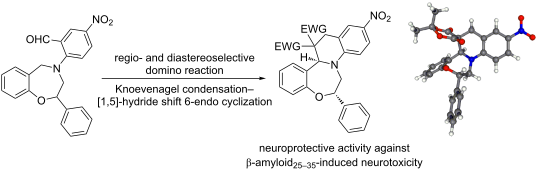
- ,b were separated on a Chiralpak IA column using hexane/dichloromethane as eluent and online HPLC-ECD spectra of the separated enantiomers were recorded. Due to their similar chromophoric system, the HPLC-ECD spectra of 7a and 7b were quite similar. The first-eluting enantiomer of 7a had an intense
- broad positive Cotton effect (CE) at 378 nm, negative ones at 314, 305, 272 nm and positive ones at 284, 279 and 224 nm (Figure 4a). The HPLC-ECD spectrum of the first-eluting enantiomer of 7b showed similar ECD pattern with somewhat different shape and intensities in the 290–240 nm range (Figure 4b
- , 1335, 1488, 2227, 2923 cm−1; HRMS–ESI (m/z): [M+Na]+ calcd for C25H18N4O3Na, 445.1277; found, 445.1271; Anal. calcd for C28H18N4O3 (422.14): C, 71.08; H, 4.29; N, 13.26; found: C, 71.05; H, 4.30; N, 13.25. First eluting enantiomer of 7c: retention time (tR) 21.41 min (Chiralpak IA, hexane


Formal total syntheses of classic natural product target molecules via palladium-catalyzed enantioselective alkylation
Beilstein J. Org. Chem. 2014, 10, 2501–2512, doi:10.3762/bjoc.10.261
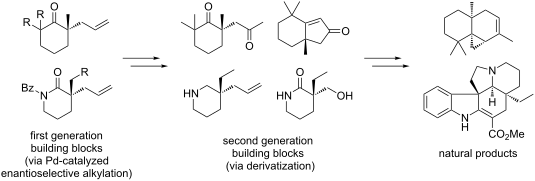
- enantioenriched piperidinone 47, and thus a single enantiomer of rhazinilam may be prepared. The formal synthesis of (+)-rhazinilam commenced with palladium-catalyzed decarboxylative allylic alkylation of known carboxy-lactam 49 to afford benzoyl-protected piperidinone 50 in 97% yield and 99% ee (Scheme 11) [84
- to the compound’s natural antipode. Our lab’s novel approach to (−)-quinic acid (21) allowed access to either enantiomer of this important substance. We have also intercepted a key intermediate in Danishefsky’s synthesis of (±)-dysidiolide (29), rendering the former racemic route enantioselective



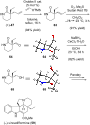

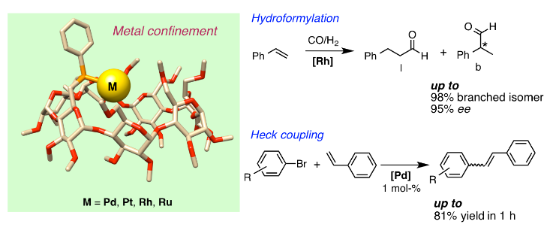
Phosphinocyclodextrins as confining units for catalytic metal centres. Applications to carbon–carbon bond forming reactions
Beilstein J. Org. Chem. 2014, 10, 2388–2405, doi:10.3762/bjoc.10.249
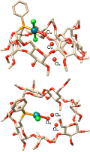
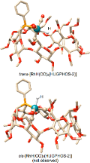
- ) complexes formed (Table 1, entries 4 and 5), although for HUGPHOS ligands bis(phosphine) complexes have never been isolated so far. Raising the temperature to 120 °C caused the catalyst activity to drop significantly and led predominantly to the (S)-enantiomer, suggesting a profound transformation of the






Oligomerization of optically active N-(4-hydroxyphenyl)mandelamide in the presence of β-cyclodextrin and the minor role of chirality
Beilstein J. Org. Chem. 2014, 10, 2361–2366, doi:10.3762/bjoc.10.246
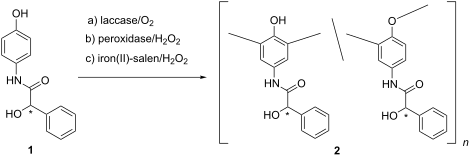
- enzymatic catalyzed asymmetric enantiomer-differentiating oligomerizations was investigated. In addition, the poor influence of cyclodextrin on the enantioselectivity of enzymatic catalyzed asymmetric enantiomer-differentiating oligomerizations was studied. Keywords: cyclodextrin; enantioselectivity
- reaction of chiral phenol derivatives, respectively. Thus, the enantioselectivity of enzymatic asymmetric enantiomer-differentiating oligomerizations of a chiral mandeloamide-phenol derivative as model compound and the influence of cyclodextrin is a main subject of the present study. Results and Discussion
- peroxidase the (S)-enantiomer 1 slightly enriches the reaction solution. Additionally to that, it was of some interest to verify, whether the complexation of the enantiomers with RAMEB-CD affects the conversion of the enantiomers. Therefore, the relatively slow oligomerizations in the presence of laccase


Chiral phosphines in nucleophilic organocatalysis
Beilstein J. Org. Chem. 2014, 10, 2089–2121, doi:10.3762/bjoc.10.218
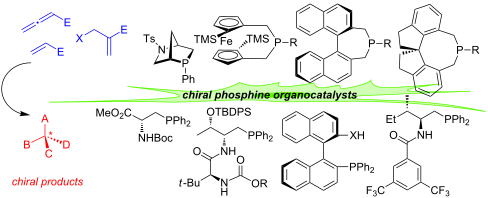
- stereoselectivity; steric hindrance between the tert-butyl group of the allenoate and the 9-phenanthryl group of the alkene suppressed the formation of the γ-isomer, affording α-adducts as the major regioselective products, with steric shielding of the si-face facilitating production of the major enantiomer (Scheme
- proposed that the major enantiomer formed through re-face attack of the ylide onto the Michael acceptor, rather than attack from the sterically hindered si-face. 2.16 Michael additions Asymmetric Michael addition is one of the most studied enantioselective processes in organic synthesis, with many