
Search results
Search for "acid" in Full Text gives 3127 result(s) in Beilstein Journal of Organic Chemistry. Showing first 200.
Rhodopyran, a carboxylated hexahydrocyclopenta[b]pyran from Rhodococcus
Beilstein J. Org. Chem. 2026, 22, 1107–1113, doi:10.3762/bjoc.22.89
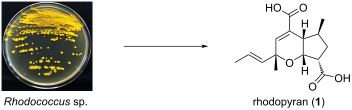
- considered. Rhodococcus is known for broad oxidative and biodegradative capabilities, and endogenous fatty-acid β-oxidation or ω-oxidation intermediates could, in principle, enter a partially dedicated biosynthetic route. Such a scenario is not mutually exclusive with a polyketide- or fatty-acyl-derived
- metabolism, followed by partial reduction, dehydration, intramolecular aldol- or Michael-type C–C cyclization, intramolecular O-cyclization, and tailoring oxidations. Considering the oxidative and catabolic capacity of Rhodococcus, possible entry from endogenous fatty-acid β-/ω-oxidation intermediates cannot


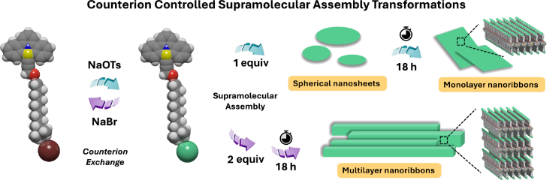
Controlled supramolecular assemblies of luminescent tridentate cyclometalated alkynylgold(III) amphiphiles in aqueous media
Beilstein J. Org. Chem. 2026, 22, 1097–1106, doi:10.3762/bjoc.22.88
- performed with Macherey-Nagel Silica gel 60 UV254 aluminum plates and visualization was accomplished by UV light (254 nm) or staining with phosphomolybdic acid (PMA) followed by heating. Flash column chromatography was performed using Macherey-Nagel Silica gel 60 (230–400 mesh). Deuterated solvents were


Synthesis and acaricidal activity against Varroa destructor of α- and γ-costic acid dimers
Beilstein J. Org. Chem. 2026, 22, 1088–1096, doi:10.3762/bjoc.22.87
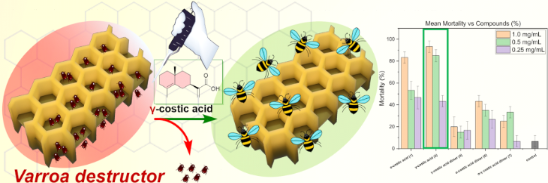
- Council, Institute of Biomolecular Chemistry, Via Campi Flegrei 34, I-80078 Pozzuoli (NA), Italy Department of Agricultural, Environmental and Food Sciences, University of Molise, Via F. De Sanctis snc, I-86100 Campobasso, Italy 10.3762/bjoc.22.87 Abstract α-Costic acid is a natural sesquiterpene
- populations in just a few years, resulting in substantial environmental and economic losses. This study reports the synthesis of α- and γ-costic acid diesters with ethylene glycol and evaluates their acaricidal efficacy against V. destructor in comparison with their parent acids. Although the resulting dimers
- were approximately 50% less active than the parent costic acids, they exhibited higher potency than the previously reported α-costic acid methyl ester. Among all, γ-costic acid, whose acaricidal activity is reported here for the first time, shows the highest activity with mortality higher than 90


Retraction: α,ß-Didehydrosuberoylanilide hydroxamic acid (DDSAHA) as precursor and possible analogue of the anticancer drug SAHA
Beilstein J. Org. Chem. 2026, 22, 1086–1087, doi:10.3762/bjoc.22.86

Amino acid-based surfactants: sustainable synthesis and antimicrobial mechanisms
Beilstein J. Org. Chem. 2026, 22, 1067–1085, doi:10.3762/bjoc.22.85
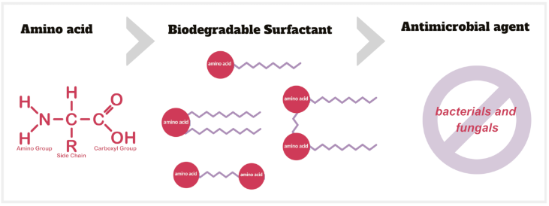
- increasingly ineffective over infections due to the gradual microbial resistance to conventional treatments. This aspect highlights the urgent need for the development of new antimicrobial agents. In this context, the amino acid-derived surfactants have proven to be a promising alternative to eradicate
- effects on the cellular integrity and microbial vital processes. In addition, these surfactants can be easily synthesized using green chemistry principles, are biodegradable and more biocompatible than commercial quaternary ammonium surfactants. This paper aimed to elucidate the relevance of amino acid
- ), exclusively in English, retrieved from the PubMed database. This research employs a qualitative approach, adopting a basic research design with descriptive objectives, using a bibliographic method to explore the topic. The results indicate that the search for new amino acid-derived surfactants with


Synthesis of functionalized, 13-alkyl-substituted coralyne derivatives and investigation of their interactions with duplex and abasic site-containing DNA
Beilstein J. Org. Chem. 2026, 22, 1057–1066, doi:10.3762/bjoc.22.84
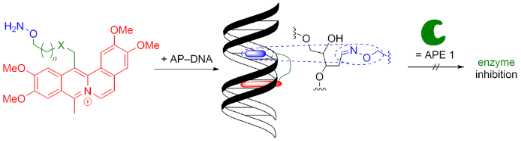
- abasic site-containing DNA (AP-DNA), different synthetic routes towards the functionalization of coralyne were tested. In particular, the alkylation of the benzylic position in papaverine and subsequent cyclization by treatment with acetic anhydride in sulfuric acid led to the synthesis of a coralyne
- ). Subsequent nucleophilic substitution of 3b with KCN furnished the nitrile-functionalized papaverine 3d in 56% yield. However, attempts to hydrolyze the nitrile 3d to the corresponding carboxylic acid failed both under mild and harsh alkaline conditions as well as under acidic conditions, as TLC and 1H NMR
- , and absorption spectroscopy. The papaverine 3c was directly made to react with acetic anhydride and conc. H2SO4 to give the corresponding coralyne 2c as sulfoacetate salt in 37% yield. After ion metathesis by treatment with HBF4 the resulting tetrafluoroborate salt 2c was submitted to acid-catalyzed


One-pot four-component sequential synthesis of S-alkyl dithiocarbamates using lipase as a biocatalyst
Beilstein J. Org. Chem. 2026, 22, 1048–1056, doi:10.3762/bjoc.22.83
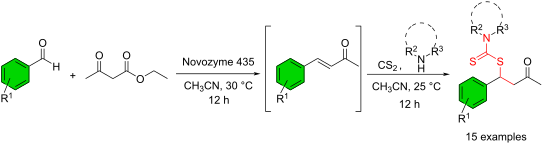
- the aldehyde, resulting in the formation of the intermediate 8a. Next, the ester portion of the ketoester is hydrolyzed through the serine amino acid, leading to the formation of the intermediate 9a. This intermediate then undergoes decarboxylation, which can be assisted by histidine or aniline


Synthesis of novel 1,2,4-oxadiazole-isoxazoline hybrids and their in silico potential with adenosine receptors
Beilstein J. Org. Chem. 2026, 22, 1033–1047, doi:10.3762/bjoc.22.82
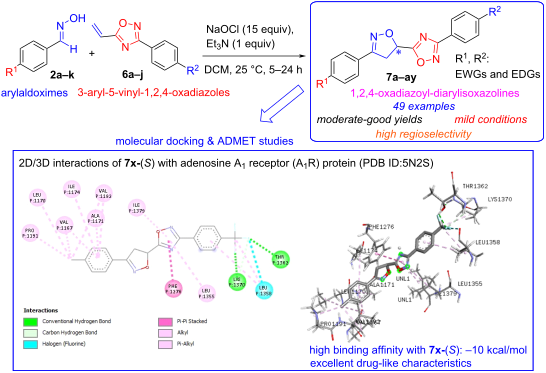
- acid–hypervalent iodine systems, oxone–silica, and chloramine-T – or from chloroaldoximes in the presence of bases including triethylamine, K2CO3, NaHCO3, and pyridine [45][46][47][48][49][50][51][52][53][54]. The combination of Et3N/NaOCl represents a particularly effective system for the in situ
- cycloaddition of indazolyl nitrile oxides with methacrylic acid to afford indazolylisoxazoline esters, followed by cyclization with various aryl benzamidoximes [58]. In a related study, novel 1,2,4-oxadiazole-isoxazole hybrids were synthesized from isoxazoline esters generated through nitrile oxide


Semisynthesis, characterisation, and antibacterial evaluation of a novel lecanoric acid-derived amide library
Beilstein J. Org. Chem. 2026, 22, 1023–1032, doi:10.3762/bjoc.22.81
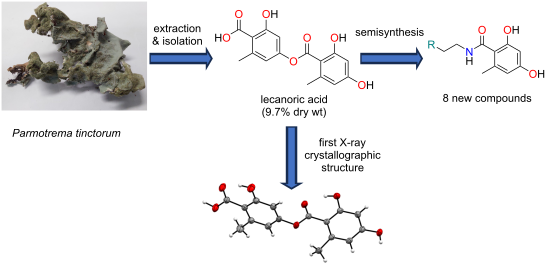
- , The University of Melbourne, Melbourne, VIC 3010, Australia Centre for Cell Factories and Biopolymers, Griffith University, Brisbane, QLD 4111, Australia NatureBank, Griffith University, Brisbane, QLD 4111, Australia 10.3762/bjoc.22.81 Abstract The known lichen depside, lecanoric acid (1), was
- metabolites that included divaricatic acid (2), orcinol (3), orsellinic acid (4), and methyl orsellinate (5). Parallel solution-phase synthesis using amidation chemistry on the abundant scaffold 1 afforded a series of novel amide derivatives 6–13 in high purity (>95%) and low to moderate yields (12–53%). All
- new semisynthetic compounds were fully characterised following 1D/2D NMR, MS and UV data analysis. Crystalline lecanoric acid was obtained during the chemical investigations of the lichen extract, enabling the first X-ray crystallographic analysis to be undertaken on this depside. Compounds 1–13 were


Synthesis and optical resolution of 4,5-diaminohomoadamantane: a promising scaffold for chiral ligands and bioactive compounds
Beilstein J. Org. Chem. 2026, 22, 1013–1022, doi:10.3762/bjoc.22.80
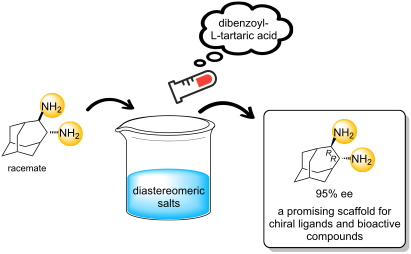
- trans-isomer was selectively obtained via ring-opening of an N-Tf-protected aziridine. The racemic trans-4,5-diaminohomoadamantane was resolved with dibenzoyl-ʟ-tartaric acid. The absolute (4R,5R)-configuration was proposed on the basis of TDDFT calculations of the specific optical rotation using the
- for the synthesis of compound 2 from alcohol 1 using phosphoric acid, affording the target compound in high yield and purity. In the next step, chloronitrosation of alkene 2 led to α-chloroxime 3 in moderate yield. Substitution of chlorine in 3 with azido and benzylamino groups was then carried out to


Z-Selective semihydrogenation of alkynes via Ni/Lewis acid synergistic catalyzed system using DMF as hydrogen source and solvent
Beilstein J. Org. Chem. 2026, 22, 1004–1012, doi:10.3762/bjoc.22.79
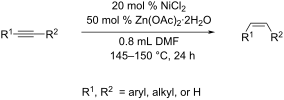
- Lei Kang Haifeng Gao Luo Yang School of Surveying & Testing, Shaanxi Railway Institute, Weinan, 714000, China Key Laboratory for Green Organic Synthesis and Application of Hunan Province, College of Chemistry, Xiangtan University, Hunan, 411105, China 10.3762/bjoc.22.79 Abstract A Ni/Lewis acid
- available catalysts, and demonstrates broad applicability across a wide range of substrates. Keywords: alkynes; DMF; Ni/Lewis acid catalysis; Z-selective semihydrogenation; Introduction Z-Olefins represent important structural units in natural products, pharmaceuticals, and functional materials, making
- promise in addressing some of these issues [11][12][13][14][15][16]. Nickel, in particular, has emerged as an attractive candidate for transfer semihydrogenation [17][18][19][20][21][22]. Common hydrogen donors employed in transfer hydrogenation include isopropanol, formic acid, methanol, and water; these



Rh(III)-catalyzed chelation-assisted C–H activation/annulation of 2-arylimidazolines with cyclic diazo-1,3-dicarbonyl compounds: a novel approach to tetracyclic annulated derivatives of 2,3-dihydroimidazo[2,1-a]isoquinoline
Beilstein J. Org. Chem. 2026, 22, 997–1003, doi:10.3762/bjoc.22.78
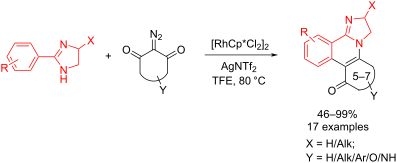
- catalytic system (Table 1, entry 1). A screening of the reaction conditions revealed that the formation of 4a can be promoted by several other additives such as sodium acetate, acetic acid, silver hexafluoroantimonate, or silver triflate, but all of them provided much lower yields (Table 1, entries 2–5


The role of spacer length and flexibility in peptide self-assembly
Beilstein J. Org. Chem. 2026, 22, 986–996, doi:10.3762/bjoc.22.77
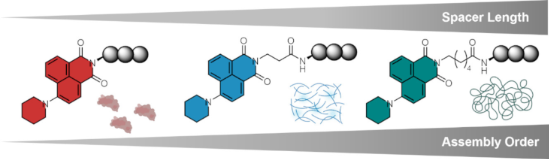
- fluorophore was attached either directly to the peptide N-terminus (C0-spacer), via β-alanine (C3-spacer), or 6-aminohexanoic acid (C6-spacer), yielding a systematic set of peptide–fluorophore conjugates (Scheme 1). This design allows us to dissect the relationship between spacer length and hierarchical self
- synthesize the Cx-spacers, the anhydride was transformed into the imides by refluxing the corresponding amines with the anhydride in the presence of a catalytic amount of 4-(dimethylamino)pyridine (4-DMAP). Through reaction of 2 with 6-aminohexanoic acid, 6-(1,3-dioxo-6-(piperidin-1-yl)-1H-benzo[de
- ]isoquinolin-2(3H)-yl)hexanoic acid (C6-Nap, 3) was obtained. 3-(1,3-Dioxo-6-(piperidin-1-yl)-1H-benzo[de]isoquinolin-2(3H)-yl)propanoic acid (C3-Nap, 4) was synthesized through reaction of 2 with β-alanine and (2S,3S)-2-(1,3-dioxo-6-(piperidin-1-yl)-1H-benzo[de]isoquinolin-2-(3H)-yl)-3-methylpentanoic acid


Novel macrocycles: from synthesis to supramolecular function
Beilstein J. Org. Chem. 2026, 22, 982–985, doi:10.3762/bjoc.22.76
- . Danjou and colleagues [41] explored the use of macrocyclic scaffolds for environmental remediation, particularly in the extraction of radioactive contaminants. The authors synthesized a phenoxycalix[4]pyrrole framework functionalized with multiple hydroxamic acid groups for the selective removal of
Electrochemical reduction of unsaturated carbon–carbon bonds via 3d transition-metal catalysis
Beilstein J. Org. Chem. 2026, 22, 955–981, doi:10.3762/bjoc.22.75
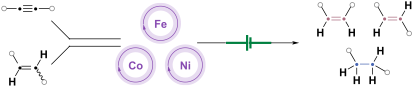
- presence of Cp2Co, indicating that Fe(I) is not merely a transient species but is accumulated under the operating conditions via a mediator-driven uphill electron transfer. Importantly, this Fe(I) species was shown to be catalytically competent, as exposure to tolane and benzoic acid resulted in the
- ) species. In the presence of the in situ generated silane, a Ni–H species is proposed to form, although its involvement remains to be fully established [90]. Substrate scope studies demonstrated that not only terminal alkenes bearing free carboxylic acid or hydroxy groups, but also substrates containing
- under conditions in which both the redox mediator and the cobalt catalyst are simultaneously operative. Kinetic analysis revealed positive dependence on the concentrations of acid, alkyne, mediator, and cobalt catalyst, supporting a mechanistic regime in which substrate and acid binding equilibria








Synthesis of sterically shielded piperidine nitroxides via acid-catalyzed heterocyclization of β-aminoketone derivatives with ketones
Beilstein J. Org. Chem. 2026, 22, 948–954, doi:10.3762/bjoc.22.74
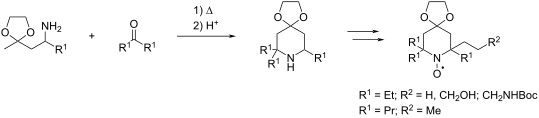
- in materials science and structural biology. The new heterocyclization strategy implies the construction of a 2,2,6-trisubstituted piperidine scaffold from β-aminoketone acetals and dialkyl ketones under acid catalysis. The resulting amines were oxidized to the corresponding ketonitrones and
- of sterically hindered piperidine nitroxyl radicals. Six-membered cyclic nitrones – 2,2,6-trialkyl-substituted 2,3,4,5-tetrahydropyridine-1-oxides were prepared via the acid-catalyzed reaction of 2-(2-aminoalkyl)-2-methyl-1,3-dioxolanes with ketones in analogy to literature procedures [25][26][27][28
- ), the N-adjacent methine (2.71 ppm), and diastereotopic methylene protons (1.39, 1.58 ppm) supported the assigned structure. Compound 4b exhibited spectral data identical to those previously described [31]. The aminodioxolanes 4a,b were subjected to acid-catalyzed heterocyclization with the


Recent advances in copper-catalyzed direct hydroamination of alkenes with (hetero)aromatic amines
Beilstein J. Org. Chem. 2026, 22, 925–947, doi:10.3762/bjoc.22.73
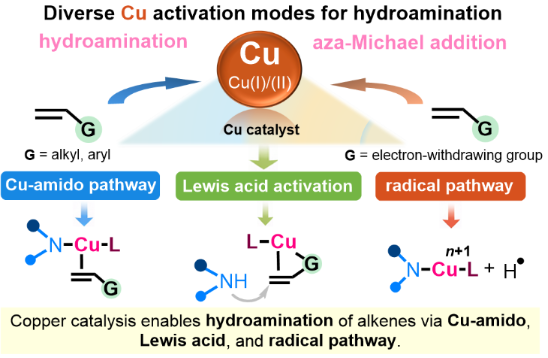
- , including copper–amido-mediated nucleophilic addition or aminocupration, Lewis acid-type alkene activation, and radical-mediated pathways. These complementary mechanisms provide access to diverse alkene classes with control over regioselectivity (Markovnikov vs anti-Markovnikov addition), stereoselectivity
- –amido intermediate or aminocupration-type pathways, enabling efficient C–N bond formation under relatively mild conditions. Copper species may also operate in a Lewis acid-type capacity, where coordination to the alkene or copper-derived Brønsted acidity generated in situ increases alkene
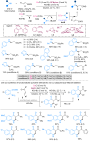
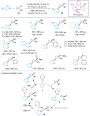
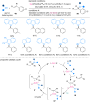
- the direct hydroamination of alkenes using aromatic amines and aza-heterocyclic N–H nucleophiles under copper catalysis. The primary focus is on the mechanistic paradigms, Cu–amido pathways, Lewis acid activation, and carbon-radical manifolds, and on how these distinct activation modes translate into







A practical CO2-mediated synthesis of 5,6-carboxylated silicon-rhodamines for targeted probe development
Beilstein J. Org. Chem. 2026, 22, 915–924, doi:10.3762/bjoc.22.72
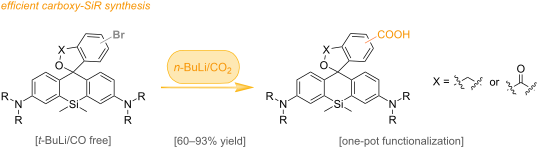
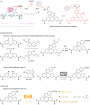
- carboxylation strategy using CO2 as an inexpensive, readily available, and non-toxic C1 source. In principle, CO2 can serve as a carbonyl source through nucleophilic addition followed by protonation to furnish the corresponding carboxylic acid. On the basis of this design (Figure 2a), brominated SiR precursors



Cascade transformation of 2-(diazoacetyl)-2H-azirines to 2-aroyl-3-hydroxy-1H-pyrroles via condensation with aromatic aldehydes
Beilstein J. Org. Chem. 2026, 22, 897–904, doi:10.3762/bjoc.22.70
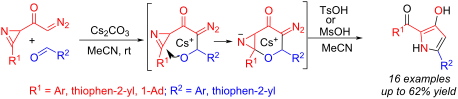
- [4.1.0]heptan-5-one derivative. The acid-catalyzed transformation of which leads to 2-aroyl-3-hydroxy-1H-pyrroles. Keywords: azirines; condensation; cyclization; diazo compounds; pyrroles; Introduction Diazo compounds play a significant role in the synthesis of heterocyclic compounds, which explains
- bicyclic intermediate 4. This acid-catalyzed transformation leads to 3-hydroxy-2-aroyl-1H-pyrroles 5 (Scheme 1). To the best of our knowledge, only few examples of such compounds have been so far reported [23][24]. Results and Discussion A test reaction of 2-(2-diazoacetyl)-3-phenyl-2H-azirine (1a, R = Ph
- mixture containing 4a (after separation of Cs2CO3) with TsOH at 100 °C or MsOH at 25 °C, with the acid clearly acting as a catalyst. Other protic acids, such as aq HCl, aq HI, and TFA, as well as a Lewis acid (FeCl3), also facilitated the conversion of 4a to 5a. Meanwhile, resinification of the reaction


Chiral cyclopropenimine-catalyzed enantioselective Michael reactions of phenol and benzofuran-derived α,β-unsaturated pyrazolamides with benzophenone-imine of glycine esters
Beilstein J. Org. Chem. 2026, 22, 888–896, doi:10.3762/bjoc.22.69
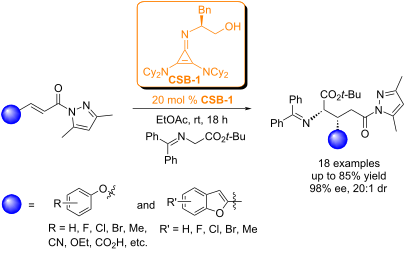
- (Lambert catalyst, CSB-1) as an organocatalyst. In the presence of 20 mol % CSB-1, the Michael adducts were obtained in up to 85% yield and 98% ee under mild conditions. The configurations of these Michael products were deduced by X-ray single crystal diffraction of a pyroglutamic acid ester containing two
- adjacent stereocenters, which was obtained from in-situ acidic hydrolysis and lactamization of the corresponding Michael product. Keywords: α,β-unsaturated pyrazolamide; chiral cyclopropenimine; glutamic acid; lactamization; Michael addition; Introduction Phenols and benzofurans are feedstock chemicals
- , dronedarone, saprisartan and so on [3]. Therefore, the introduction of benzofuran to organic molecules plays an important role in drug research and development. Compounds containing glutamic and pyroglutamic acid frameworks (Figure 1) indicate many pharmacologic properties including influence on protein






Site-specific labelling of native peptides and proteins: chemical and enzymatic strategies
Beilstein J. Org. Chem. 2026, 22, 857–881, doi:10.3762/bjoc.22.67
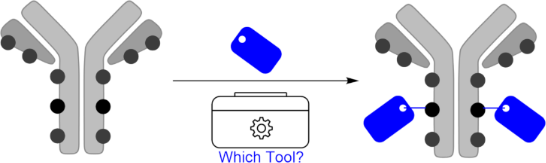
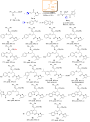
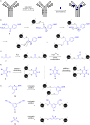
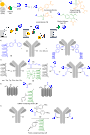
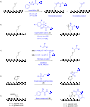
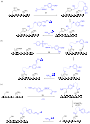
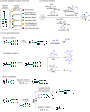
- -like linkages (≈9 M−1 s−1; Scheme 1d) [10], whereas 2-formylphenylboronic acid 3 (FPBA) generates thiazolidino boronate with noticeably improved kinetics (103 M−1 s−1; Scheme 1e) [11][12]. Aldehydes can be introduced at protein N-termini through several strategies: oxidation of serine or threonine with
- biological environment [46]. In a related concept, the Chin group reported the genetic incorporation of the unnatural amino acid 2,3-diaminopropionic acid (DAP, 13), a nucleophilic amine that has a relatively low pKa (6–8) and is structurally analogous to serine or cysteine, enabling identification of native
- ], whereas tosylation is one of the few procedures compatible with red blood cells and animal labelling [51]. Alternatively, benzophenone 18, which can be incorporated in the form of an unnatural amino acid, can form a UV-induced diradical for protein modifications (Scheme 7b) [52][53][54][55]. Proteins








The trans-influence in gold chemistry from a catalytic perspective
Beilstein J. Org. Chem. 2026, 22, 838–856, doi:10.3762/bjoc.22.66
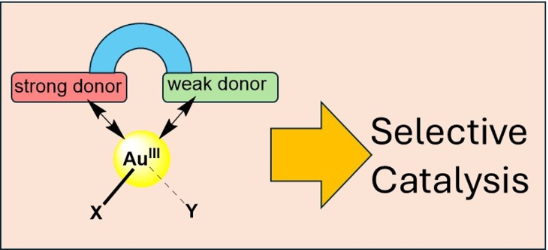
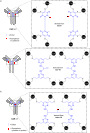
- be underestimated. For example, cleavage of one of the Au–phenyl bonds in A (Scheme 2) with a strong acid provides access to the gold borane and silane σ-complexes [(C^N–CH)Au(C6F5)(H–X)]+, X = B(O2C2Me4) or SiEt3 (Scheme 3) [32]. In the presence of traces of moisture, the Au(III)+ Lewis acidity may
- chemical reactivity. For example, 8a proved stable to air, water and acetic acid, although stronger acids like trifluoroacetic lead to decomposition due to protolytic cleavage of one of the Au–phenyl bonds [31][32]. The stabilising effect of the N-donor in C^N^C ligands is seen quite generally and leads to
- into gold hydrides by stepwise O-transfer reactions to phosphine (Scheme 6) [55]. Quite a different mechanism for the conversion of Au–OH into Au–H was found by Goldberg and co-workers for the hydrogenolysis of [(P^C^P)AuOH]+, which requires an acid catalyst [56]. A mechanistically similar heterolytic


Unsymmetrical sulfoxides with sterically hindered catechol fragment: synthesis, structure, electrochemical properties, and antiradical activity
Beilstein J. Org. Chem. 2026, 22, 828–837, doi:10.3762/bjoc.22.65
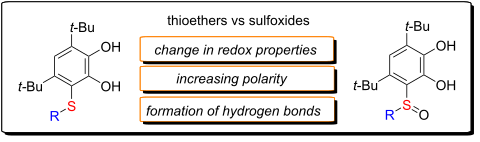
- the reaction with the 2,2′-diphenyl-1-picrylhydrazyl radical (DPPH) and the 2,2′-azinobis(3-ethylbenzothiazoline-6-sulfonic acid) radical cation (ABTS+•). In both assays, the lowest IC50 values among the studied catechol sulfoxides were found for compounds bearing isopropyl and tert-butyl substituents
- , the oxidation of catechols is facilitated under alkaline conditions. Therefore, the oxidation of thioethers 1–7 was carried out in the presence of acetic acid (Scheme 1). This approach proved successful for the selective oxidation of the thioether group, and no products arising from oxidation of the


Total synthesis of the capsular polysaccharide repeating unit towards the development of a glycoconjugate vaccine against Klebsiella pneumoniae ST512
Beilstein J. Org. Chem. 2026, 22, 821–827, doi:10.3762/bjoc.22.64
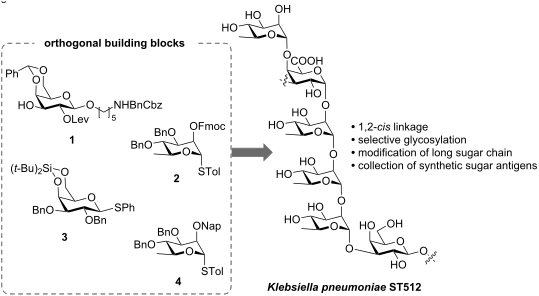
- . Key synthetic challenges including the stereoselective construction of the 1,2-cis glycosidic linkage on the galacturonic acid core and the inherently low reactivity of elongated oligosaccharide intermediates were addressed employing orthogonally protected building blocks. The resulting library of
- repeating unit {3)-[α-ʟ-Rhap-(1→4)]-α-ᴅ-GalpA-(1→2)-α-ʟ-Rhap-(1→2)-α-ʟ-Rhap-(1→2)-α-ʟ-Rhap-(1→3)-β-ᴅ-Galp-(1→}n (Figure 1) [13]. The chemical synthesis of this molecule is challenging due to the stereoselective formation of the 1,2-cis glycosidic linkage on the galacturonic acid core. In addition, the
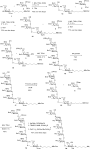
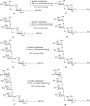
- (NIS) and trifluoromethanesulfonic acid (TfOH) to afford 7 in 86% yield, neighboring participation effect of the levulinoyl (Lev) group at C2 position provided only the β-product. The linker was introduced in anticipation of conjugation to a carrier protein or a glycan microarray surface [31


Knoevenagel condensation of 4,5- and 1,8-diazafluorenes
Beilstein J. Org. Chem. 2026, 22, 803–812, doi:10.3762/bjoc.22.62
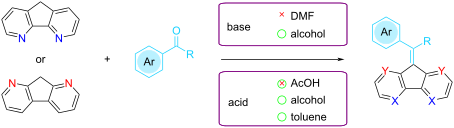
- malononitrile or acetonitrile derivatives [14][19][20]. However, the use of diazafluorenes as the methylene component in condensation reactions remains underexplored. These reactions can be carried out under basic [13][21], acidic [3][5] or Lewis acid catalysis [15][22], but the corresponding literature
- examples are scarce, especially for 1,8-diazafluorene. We have previously reported the condensation of 4,5-diazafluorene (1) with aromatic aldehydes and dialdehydes under ammonium acetate catalysis in acetic acid giving the corresponding products in good yields [5][23]. Remarkably, the only condensation of
- conditions were moderate and the reactivity of aldehydes was insufficient it seemed reasonable to increase their activity by converting them into iminium cations through treatment with ammonium acetate in the presence of acetic acid (Scheme 2). Initially, the Knoevenagel condensation of 1 and 2 was carried