

Search results
Search for "NMR spectra" in Full Text gives 2317 result(s) in Beilstein Journal of Organic Chemistry. Showing first 200.
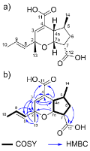
Rhodopyran, a carboxylated hexahydrocyclopenta[b]pyran from Rhodococcus
Beilstein J. Org. Chem. 2026, 22, 1107–1113, doi:10.3762/bjoc.22.89
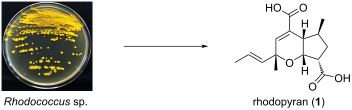
- , Kyoto, Japan). IR spectra were measured by a spectrum 100 spectrometer (PerkinElmer, MA, USA). NMR spectra were obtained on an AVANCE NEO 500 spectrometer (Bruker, MA, USA) in CD3OD and referenced to the residual solvent signals (δH 3.31, δC 49.0). HRESIQTOFMS spectra were recorded on a compact QTOF


Synthesis and acaricidal activity against Varroa destructor of α- and γ-costic acid dimers
Beilstein J. Org. Chem. 2026, 22, 1088–1096, doi:10.3762/bjoc.22.87
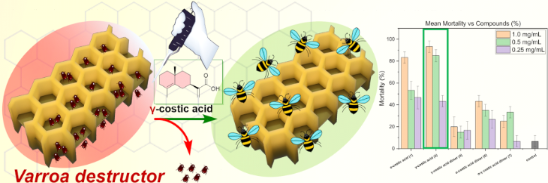
- otherwise stated. Flash chromatography was performed using 60–200 mesh silica gel. 1H NMR and 13C NMR spectra were recorded on Varian (Palo Alto, CA, USA) 400 MHz and 500 MHz and 100 MHz and 125 MHz spectrometers, respectively, at ambient temperature in CDCl3, unless otherwise noted, using the same solvent


Synthesis of functionalized, 13-alkyl-substituted coralyne derivatives and investigation of their interactions with duplex and abasic site-containing DNA
Beilstein J. Org. Chem. 2026, 22, 1057–1066, doi:10.3762/bjoc.22.84
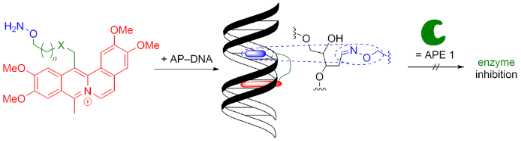
- that ligands with optimized binding properties towards target AP–DNA should be available with this route. Experimental Equipment NMR spectra: Jeol JNM-ECZR (1H: 500 MHz, 13C: 125 MHz, 19F: 470 MHz); Varian VNMR-S 600 (1H: 600 MHz, 13C: 150 MHz); at 25 °C. The chemical shifts (δ) are given in ppm and
- description of synthesis and compound characterization with complete set of NMR spectra (Figures S1–S65). Acknowledgements We thank Jennifer Hermann and Sandra Uebach (University of Siegen) for technical assistance. Funding We thank the University of Siegen for financial support.


One-pot four-component sequential synthesis of S-alkyl dithiocarbamates using lipase as a biocatalyst
Beilstein J. Org. Chem. 2026, 22, 1048–1056, doi:10.3762/bjoc.22.83
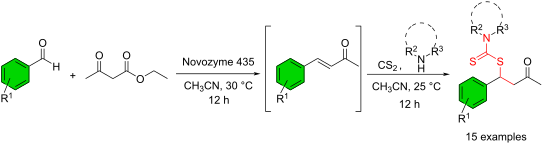
- prepared 20 × 20 cm silica plates) using a mixture of ethyl acetate and n-hexane as a mobile phase. 1H and 13C NMR spectra were recorded at 300 (75) MHz on a Bruker Avance spectrometer using CDCl3 as a solvent. The chemical shifts were referenced to the solvent signals at δH/C 7.26/77 ppm (chloroform-d


Synthesis of novel 1,2,4-oxadiazole-isoxazoline hybrids and their in silico potential with adenosine receptors
Beilstein J. Org. Chem. 2026, 22, 1033–1047, doi:10.3762/bjoc.22.82
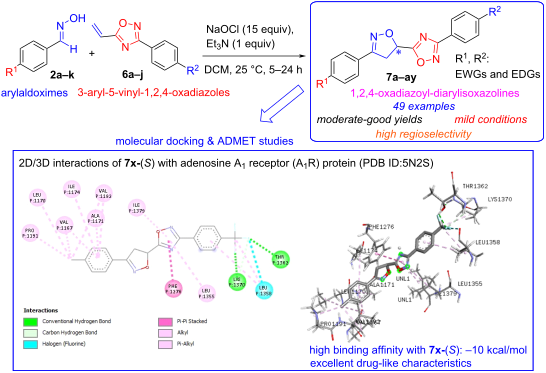
- vinylic proton signals at around 6.5, 5.9, and 6.7 ppm and aromatic proton resonances in the range of 7.0–8.5 ppm in the ¹H NMR spectra, as well as characteristic oxadiazole ring C=N carbon signals at approximately 168 and 175 ppm in the ¹³C NMR spectra. Furthermore, it was found that the obtained
- , corresponding to aromatic C–H, aliphatic C–H, C=N, C–O, and N–O stretching vibrations, respectively. In the 1H NMR spectra, the diastereotopic protons of the isoxazoline ring appeared as doublets of doublets (dd) at around 6.0, 4.0, and 3.9 ppm. The 13C NMR spectra further supported the proposed structures


Semisynthesis, characterisation, and antibacterial evaluation of a novel lecanoric acid-derived amide library
Beilstein J. Org. Chem. 2026, 22, 1023–1032, doi:10.3762/bjoc.22.81
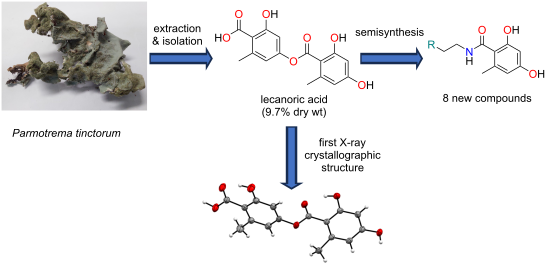
- tinctorum project will be tested for novel bioactivities in the future. Experimental General experimental procedures Melting points were measured using a Cole-Parmer melting point apparatus and are uncorrected. NMR spectra were recorded at 25 °C on a Bruker AVANCE III HD 500 MHz NMR spectrometer equipped
- Arium® Pro VF ultrapure system. All NMR spectra were processed using MestReNova version 14. Chemical structures were drawn using ChemDraw Ultra 12.0.2. All HPLC and UHPLC–MS results were analysed by Thermo Scientific™ Dionex™ Chromeleon™ 7.2. Lichen material Parmotrema tinctorum was collected from a
- File 8: NMR data tables and 1D/2D NMR spectra for natural products 1–5 and semisynthetic amide analogues 6–13, additionally, HRESIMS data for all semisynthetics. Acknowledgements We gratefully acknowledge Patrick McCarthy and Jack Elix for undertaking the taxonomic identification of the lichen used in


Rh(III)-catalyzed chelation-assisted C–H activation/annulation of 2-arylimidazolines with cyclic diazo-1,3-dicarbonyl compounds: a novel approach to tetracyclic annulated derivatives of 2,3-dihydroimidazo[2,1-a]isoquinoline
Beilstein J. Org. Chem. 2026, 22, 997–1003, doi:10.3762/bjoc.22.78
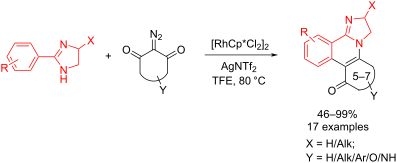
- the preparation of compounds 2–4, analytical data for compounds 4a–q, copies of their NMR spectra, and X-ray crystallography data for compounds 4a and 4f. Acknowledgements We thank LLC Accellenna, Russia for continuous support. We are grateful to the Research Centre for Magnetic Resonance, the Centre


Synthesis of sterically shielded piperidine nitroxides via acid-catalyzed heterocyclization of β-aminoketone derivatives with ketones
Beilstein J. Org. Chem. 2026, 22, 948–954, doi:10.3762/bjoc.22.74
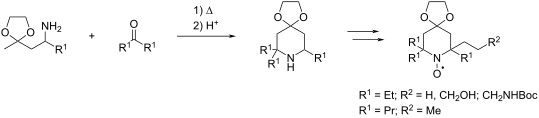
- nitroxides 7a–d in 50–80% overall yield from piperidines 5a,b (Scheme 3). The structures of nitroxides 7a–d were confirmed by 1H NMR spectroscopy of their amine derivatives, obtained via Zn/CF3COOH reduction in CD3OD, following a reported procedure [37]. The full line-shape analysis of the 1H NMR spectra for
- NMR spectra of 8a–d confirms the lack of partially hydrogenated impurities. Elemental analysis and HRMS data were consistent with the proposed molecular formulas. Notably, among the alkynyl derivatives, high hydrogenation yields 70% were observed exclusively for the terminal ethynyl derivative 7a. The
- spectrum of the nitroxide 9a (TEEPONE) was identical to that reported in the literature [21], and the IR spectrum of 9d was similar, with a strong absorption band at 1716 cm−1, characteristic of the carbonyl (C=O) stretching vibrations. The 1H NMR spectra of the reduced derivatives of 9a,d showed no


Palladium-catalyzed benzocyclization reactions of quinoline-2-carboxamides via sequential C–H/N–H functionalization
Beilstein J. Org. Chem. 2026, 22, 905–914, doi:10.3762/bjoc.22.71
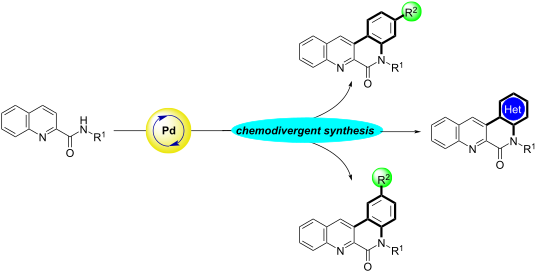
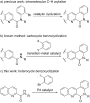
- confirmed by 1H NMR and mass spectra (Scheme 3; see also Supporting Information File 1). This result indicated that the C–C bond was formed first in the reaction. The structures of other products were inferred from their 1H NMR spectra, while the structures of products 3aj and 3ak were also determined by
- for the C–H/N–H functionalization reaction. Supporting Information Supporting Information File 6: Experimental details and copies of 1H and 13C{1H} NMR spectra. Acknowledgements We thank Suzanne Adam, Ph.D, from Edanz (https://jp.edanz.com/ac) for editing a draft of the manuscript. Funding This




Cascade transformation of 2-(diazoacetyl)-2H-azirines to 2-aroyl-3-hydroxy-1H-pyrroles via condensation with aromatic aldehydes
Beilstein J. Org. Chem. 2026, 22, 897–904, doi:10.3762/bjoc.22.70
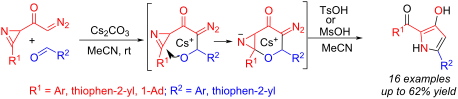
- -methoxyphenyl)-2H-azirine 1b with 4-iodobenzaldehyde (2b) turned out to be well crystallized and precipitated from the reaction medium as a solid (Scheme 2). Although it was also unstable, it was possible to record 1H,1H 2D NOESY and 13C NMR spectra, an IR spectrum in KBr as well as to obtain the accurate mass
- Crystallographic Data Centre. Supporting Information File 3: Full experimental details, characterization data and copies of NMR spectra for all new compounds. Supporting Information File 4: Crystallographic information file for compound 5a. Acknowledgements This research was carried out using resources of the


Unsymmetrical sulfoxides with sterically hindered catechol fragment: synthesis, structure, electrochemical properties, and antiradical activity
Beilstein J. Org. Chem. 2026, 22, 828–837, doi:10.3762/bjoc.22.65
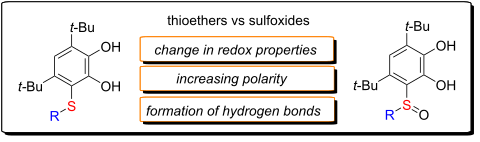
- distance, indicating the formation of π contacts (Cg···Cg 3.676(9)–3.769(9) Å). In the 1H NMR spectra of all synthesized sulfoxides, the signal corresponding to the proton of the hydroxy group at position 1 of the aromatic ring is significantly shifted downfield relative to that in the corresponding
- thioethers (δ 7.11–7.30 ppm) and appears in the range of δ 11.33–11.85 ppm (CDCl₃; see Supporting Information File 1, Section S2). The signal of the second OH proton is also shifted downfield compared to that in the thioethers (δ 5.53–5.58 ppm) and is observed at δ 6.04–6.17 ppm. In the 13C NMR spectra of


Total synthesis of the capsular polysaccharide repeating unit towards the development of a glycoconjugate vaccine against Klebsiella pneumoniae ST512
Beilstein J. Org. Chem. 2026, 22, 821–827, doi:10.3762/bjoc.22.64
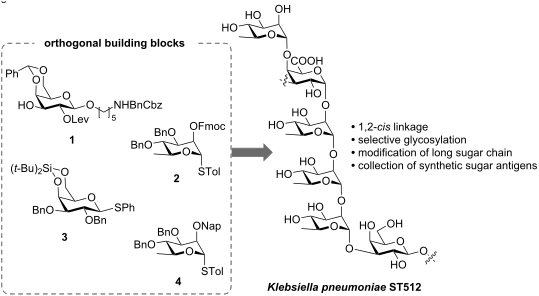
- repeating unit 20. Synthesis of the analogues 21–24. Supporting Information Supporting Information File 34: Experimental procedures and NMR spectra. Funding We gratefully acknowledge the Max-Planck Society for generous financial support. Conflict of Interest The authors declare no conflicts of interest.


Synthesis and structural elucidation of a novel bis-spirooxindole from isatin and ethylenediamine
Beilstein J. Org. Chem. 2026, 22, 813–820, doi:10.3762/bjoc.22.63
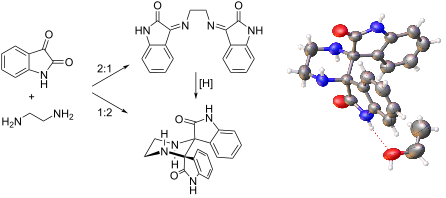
- molecule displays C2 symmetry, consistent with the simplified NMR spectra, and the solid-state metrics support the proposed pentacyclic structure. Compound 25 (C18H17N4O2 u.d. = 13) has one degree less of unsaturation than the diimine 24 (C18H14N4O2 u.d. = 14) suggesting that a reduction is required for
- structurally complex spirocyclic architectures under mild and operationally straightforward conditions, although the substrate scope appears to be limited. Experimental General remarks: NMR spectra were recorded on a Bruker Nanobay Avance III HD 600 MHz spectrometer. Proton-decoupled. When required, COSY, HMQC


Knoevenagel condensation of 4,5- and 1,8-diazafluorenes
Beilstein J. Org. Chem. 2026, 22, 803–812, doi:10.3762/bjoc.22.62
- additional purification. Reaction mixtures were monitored by TLC using Macherey-Nagel pre-coated TLC-sheets Alugram Xtra SIL G/UV254. For column chromatography Macherey-Nagel Kieselgel 60 was used. NMR spectra of products were recorded with Bruker AV 300, Bruker AV 400, and Bruker DRX 500 spectrometers in
- CDCl3 or (CD3)2CO. NMR samples of the solutions of 4,5- and 1,8-diazafluorenes (6 mg/0.5 mL) for the protonation study were prepared by dissolving 1 and 2 in either pure CD3COOD or CD3OD containing 0.005 mL of CD3COOD. Subsequently, 1H NMR spectra were recorded with a Bruker AV 400 immediately after
- for compounds 1,8-DPDAF, 4,5-DPDAF and Zn–4,5-DPDAF. Acknowledgements The authors acknowledge the Multi-Access Chemical Service Center SB RAS for spectral and analytical measurements. We thank Alena V. Lomanovich for recording time-resolved NMR spectra. Dr. Sergey A. Dobrynin is gratefully




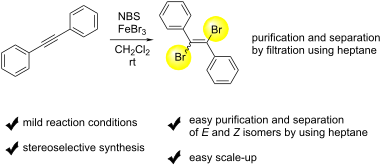
Synthetic study of vic-bromination of diarylacetylenes, easy purification and separation
Beilstein J. Org. Chem. 2026, 22, 795–802, doi:10.3762/bjoc.22.61
- of compounds, and copies of 1H and 13C NMR spectra. Acknowledgements We appreciate Kazuki Miyamoto, Junya Kikuzawa and Ryoichi Tomiyama at Kindai University for useful advice and the cooperation related to this paper. We also thank Akiko Kuwabara and Dr. Masafumi Kobayashi at Kanto Denka Kogyo Co



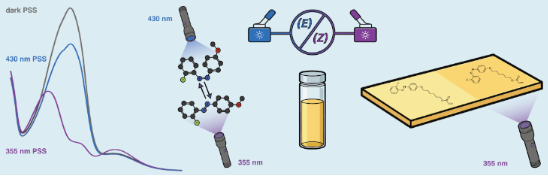
Halogenated azobenzene acrylates: from efficient solution photoswitching to stable solid-state photochromic materials
Beilstein J. Org. Chem. 2026, 22, 782–794, doi:10.3762/bjoc.22.60
- Z → E relaxation at laboratory temperature (20 °C), the and k were measured at 60 °C. The method for its determination is described in our previous article [3]. Figure 7 compares the 1H NMR spectra of the dark-adapted and 355 nm-adapted photostationary states of compound 1e, while Figure 8 show an
- 1d corresponding to the presence of pure Z-isomers. A) HOMO/LUMO localizations in representative E-1a. B) HOMO−1/LUMO localizations in representative Z-1a. 1H NMR spectra (500 MHz, CDCl3, 20 °C) of azobenzene 1e corresponding to the dark-adapted PSS (black) and 355 nm-adapted PSS (violet). A) UV–vis
- electrochemically measured and DFT-calculated data of target azobenzenes 1a–f. Experimentally measured and theoretically calculated optical properties of azobenzenes 1a–f. The E/Z molar ratios, the Z-isomer half-lives and the rate constants of azobenzenes 1a–f determined from the UV–vis and NMR spectra. Supporting


Preparation of 3-(alkylamino)imidazo[1,2-a]pyridine-2-carbaldehydes via Kornblum oxidation and unexpected ring-opening reactions of the corresponding alcohols under oxidative conditions
Beilstein J. Org. Chem. 2026, 22, 763–770, doi:10.3762/bjoc.22.58
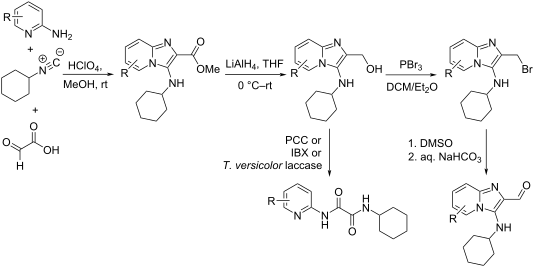
- 8. Yield optimisation using varying amounts of acid catalyst.a Supporting Information Supporting Information File 16: Experimental procedures, copies of NMR spectra and X-ray data of compound 18a. Acknowledgements The authors thank Matthew Bracken for the acquisition of the X-ray data. This work


Synthesis and biological evaluation of new brassinosteroid analogs with C-22 benzoate function
Beilstein J. Org. Chem. 2026, 22, 753–762, doi:10.3762/bjoc.22.57
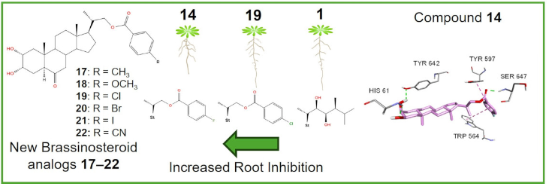
- HSQC NMR and 1H,13C HMBC NMR spectra data, respectively (Figures S35 and S36, Supporting Information File 1). Previous studies have shown that Sharpless dihydroxylation of 2,3-steroidal alkenes with OsO4/DHQD-CLB system, leads to formation of "cis" glycols with C-2(R) and C-3(S) stereochemistry in the
- ). Supporting Information Supporting Information File 13: NMR spectra of compounds, biological bioassays and protein–ligand interactions (molecular docking). Supporting Information File 14: Experimental section. Funding Luis Espinoza-Catalán thanks FONDEQUIP (Fondo de Equipamiento Científico y Tecnológico


Rongalite addition to dienones: diastereoselectivity in cyclic sulfone synthesis; stereochemical rationalization and prospects as a general conjugate nucleophile
Beilstein J. Org. Chem. 2026, 22, 742–752, doi:10.3762/bjoc.22.56

- sulfide oxidation. In that early work, the stereochemical analysis was dependent on conformational analysis and comparison of coupling constants in the 1H NMR spectra. Experiments discussed in our inital report confirmed that the reaction proceeded under kinetic control [21]. Closer examination of the
- . The major product was isolated and assigned as 5 (from axial attack of a small hydride reagent) [24]. From analysis of the NMR spectra of 5, it was clear that the molecule retained symmetry following reduction, reflected in the reduced number of signals in both 1H and 13C spectra compared to alcohol 4
- reaction mixture (≈9:1 ratio by 1H NMR). Evidence for the sterically congested nature of the sulfone 10a was provided by the NMR spectra, which show evidence of restricted rotation (Scheme 3). In the 1H NMR spectrum the signals for the two ortho-methyl groups are inequivalent, and indeed differ in chemical




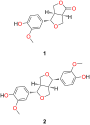
Anti-invasive and cytotoxic evaluation of a (+)-pinoresinol-based semisynthetic library against glioblastoma
Beilstein J. Org. Chem. 2026, 22, 691–704, doi:10.3762/bjoc.22.54
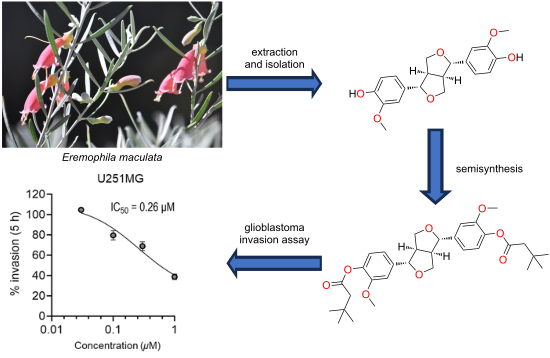
- melting point apparatus and are uncorrected. Specific rotations were determined on a JASCO P-2000 polarimeter. UV–vis spectra were recorded using a CAMSPEC M501 UV–vis spectrophotometer. ECD spectra were obtained on a JASCO J-1500 spectropolarimeter and processed using the software SDAR [31]. NMR spectra



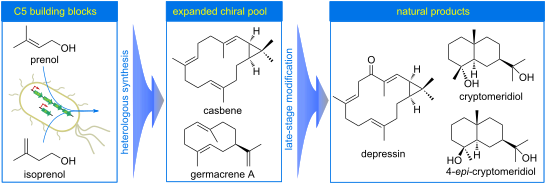
Synthesis of depressin, cryptomeridiol and 4-epi-cryptomeridiol enabled by a terpenoid chiral pool-producing platform
Beilstein J. Org. Chem. 2026, 22, 683–690, doi:10.3762/bjoc.22.53
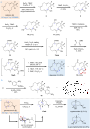
- ). Supporting Information Supporting Information File 5: Materials, synthetic methods and copies of NMR spectra for all compounds. Supporting Information File 6: X-ray crystal structure of 16. Funding We are grateful to the National Natural Science Foundation of China (No. 82574274) for the financial support.


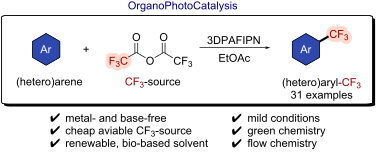
Photoorganocatalytic trifluoromethylation of (het)arenes in green conditions
Beilstein J. Org. Chem. 2026, 22, 662–671, doi:10.3762/bjoc.22.50
- Information Supporting Information File 2: Experimental part, copies of NMR spectra and computational data. Acknowledgements We thank Dr. Y.B. Malysheva for registration of NMR spectra and S.A. Churkin for technical support. Funding The research was carried out in Laboratory “Chemistry of natural products


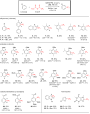


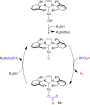
Hydrogen production from formic acid catalyzed by NHC–Cu complexes
Beilstein J. Org. Chem. 2026, 22, 620–627, doi:10.3762/bjoc.22.48
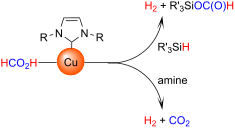
- Information File 16: Detailed description of the procedure for the gas evolution experiments, NMR spectra of isotopic labeling experiments. Acknowledgements The authors gratefully acknowledge Sasol Technology (UK) Ltd. for GC analyses. Funding The authors gratefully acknowledge the UGent BOF, the Royal



Towards the targeted protein degradation of CK2: design and synthesis of CAM4066-based PROTACs
Beilstein J. Org. Chem. 2026, 22, 611–619, doi:10.3762/bjoc.22.47
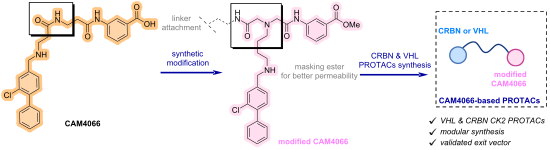
- = dimethylformamide; HATU = O-(7-azabenzotriazol-1-yl)-N,N,N′,N′-tetramethyluronium hexafluorophosphate; THPTA = tris(3-hydroxypropyltriazolylmethyl)amine; TFA = trifluoroacetic acid; VHL = von Hippel–Lindau. Supporting Information Supporting Information File 14: Experimental part and copies of NMR spectra

Regioselective approach to 5-arylsulfonylisoxazoles and their antimicrobial activity
Beilstein J. Org. Chem. 2026, 22, 592–602, doi:10.3762/bjoc.22.45
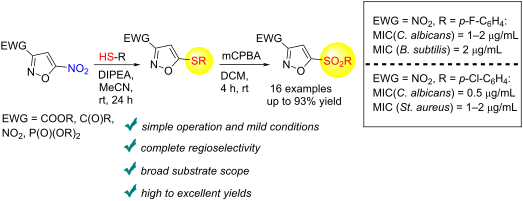
- 4 hours does the C(4)–H signal of compound 4a at δ 7.05 ppm in the 1H NMR spectra finally disappear. With optimized conditions in hand, we turned our attention to examine the substrate scope. As shown in Scheme 3, isoxazole derivatives bearing different electron-withdrawing groups in position 3 such
- conditions. MIC (μg/mL) against bacterial and fungal lines. Supporting Information Supporting Information File 8: General synthetic and biological procedures, characterization data and copies of 1H, 13C{1H}, 19F, 31P, 1H-13C HSQC, 1H-13C HMBC NMR spectra, HRMS spectra and the results of the elemental