
Search results
Search for "tert-butyl" in Full Text gives 711 result(s) in Beilstein Journal of Organic Chemistry. Showing first 200.
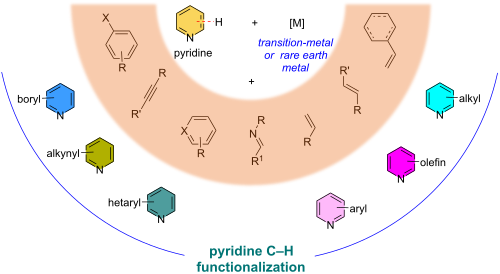
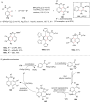
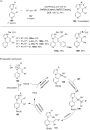
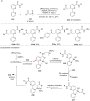
Pyridine C(sp2)–H bond functionalization under transition-metal and rare earth metal catalysis
Beilstein J. Org. Chem. 2023, 19, 820–863, doi:10.3762/bjoc.19.62
















Construction of hexabenzocoronene-based chiral nanographenes
Beilstein J. Org. Chem. 2023, 19, 736–751, doi:10.3762/bjoc.19.54
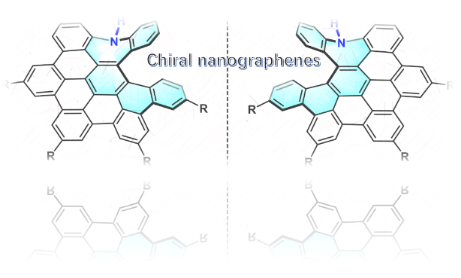
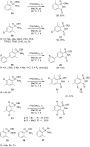
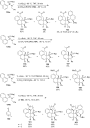
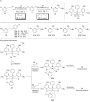
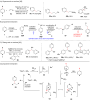
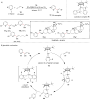
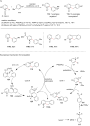
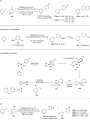
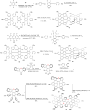
- reaction. To prevent planarization during the final oxidative cyclodehydrogenation reaction step, Jux and co-workers synthesized hexaarylbenzene precursor 3 with sterically demanding tert-butyl groups through a standard [4 + 2] Diels–Alder reaction of tetra-tert-butyltolane 1 and tetracyclone 2 in an 81
- pursuit of HBC-tetramer-based supertwistacene (compound 115 in Scheme 12), Wang and co-workers synthesized a chiral HBC-dimer 46 [46], in which two HBC units structurally shared one benzene ring (Scheme 6). 1,4-Bis((4-(tert-butyl)phenyl)ethynyl)benzene reacted with tetracyclone 2 through a two-fold Diels
- –Alder cycloaddition to afford compound 45 in a 79% yield. Due to the steric hindrance from two bulky tert-butyl groups on the benzene rings in the adjacent hexaphenylbenzene monomers in precursor 45, two [5]helicenes were formed in the oxidative cyclodehydrognation reaction, which gave compound 46 as




Synthesis of imidazo[1,2-a]pyridine-containing peptidomimetics by tandem of Groebke–Blackburn–Bienaymé and Ugi reactions
Beilstein J. Org. Chem. 2023, 19, 727–735, doi:10.3762/bjoc.19.53
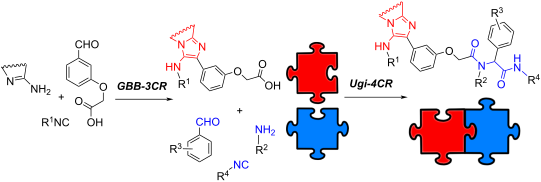
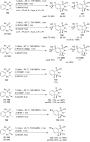
- reaction between 2-amino-5-chloropyridine (1a), 2-(3-formylphenoxy)acetic acid (2) and tert-butyl isocyanide (3a) was chosen for the first step (Scheme 3). In one of the previous works [34], our group has shown that the optimal conditions for this type of reactions are stirring the starting materials for
- heterocyclic acid 8a was obtained by a three-component reaction of 2-amino-5-chloropyridine (1a), 4-formylbenzoic acid (5f), and tert-butyl isocyanide (3a) according to the procedure described above (Scheme 3). In another step, we attempted to introduce the acid 8a into the Ugi four-component reaction with 4
- -chlorobenzaldehyde (5b), 4-methoxyaniline (6a) and tert-butyl isocyanide (3a). It should be especially noted that the solubility of compound 8a is very low (soluble in DMSO and N-methyl-2-pyrrolidone (NMP), slightly soluble in methanol, 1- and 2-propanol, acetone, DMF and insoluble in water, ethanol, acetonitrile


Synthesis of medium and large phostams, phostones, and phostines
Beilstein J. Org. Chem. 2023, 19, 687–699, doi:10.3762/bjoc.19.50
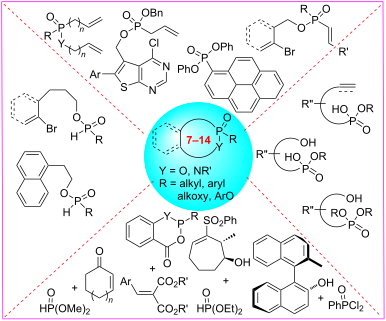
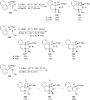
- synthesis of 1,2-oxaphosphaheterocycle 2-oxides. tert-Butyl 2-(bis(allyloxy)phosphoryl)pent-4-enoate (11) generated tert-butyl 2-(allyloxy)-3,4,7-trihydro-1,2-oxaphosphepine-3-carboxylate 2-oxide (12) in excellent 94% yield in the presence of the Grubbs catalyst in DCM. After further allylation with allyl
- bromide, its allylated product 13 further cyclized into bis(1,2-oxaphosphepine 2-oxide) derivative tert-butyl 2,5,5a,6,9-pentahydro-[1,2]oxaphosphepino[2,3-b][1,2]oxaphosphepine-5a-carboxylate 11-oxide (14) in 97% yield under the same conditions (Scheme 2) [27]. The Grubbs 1st generation catalyst-promoted
- from tert-butyl 2-(bis(allyloxy)phosphoryl)pent-4-enoate. Synthesis of 2-ethoxy-5H-benzo[f][1,2]oxaphosphepine 2-oxides from 2-allylphenyl ethyl vinylphosphonates. Synthesis of 2-ethoxy-3,6-dihydrobenzo[g][1,2]oxaphosphocine 2-oxides from 2-allylphenyl ethyl allylphosphonates. Synthesis of




Nucleophile-induced ring contraction in pyrrolo[2,1-c][1,4]benzothiazines: access to pyrrolo[2,1-b][1,3]benzothiazoles
Beilstein J. Org. Chem. 2023, 19, 646–657, doi:10.3762/bjoc.19.46
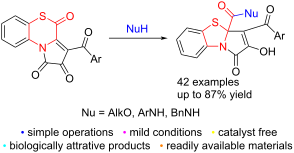
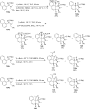
- , benzylamine, and arylamines 11, while alkylamines are unsuitable for it. Notable, the use of bulky nucleophiles (tert-butyl alcohol (16a), benzyl alcohol (16b), benzhydrol (16c), 2-aminobenzothiazole (16d), HCl) makes it possible to obtain pyrrolobenzothiazoles 17 from compounds 1, but their formation




Enolates ambushed – asymmetric tandem conjugate addition and subsequent enolate trapping with conventional and less traditional electrophiles
Beilstein J. Org. Chem. 2023, 19, 593–634, doi:10.3762/bjoc.19.44
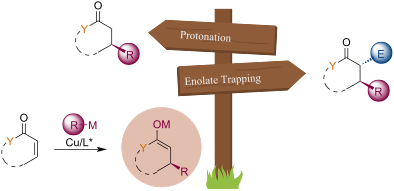
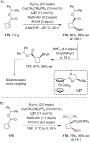
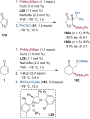
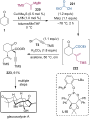
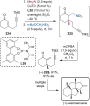
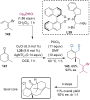
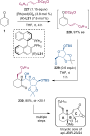
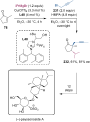
- synthesis of enantiomerically enriched cyclobutanes 77 [52]. Their strategy employed a three-component process in which tert-butyl (E)-2-diazo-5-arylpent-4-enoates 74 were treated with the chiral rhodium catalyst C1 to provide enantiomerically enriched bicyclobutanes 75. These highly strained compounds then









A new oxidatively stable ligand for the chiral functionalization of amino acids in Ni(II)–Schiff base complexes
Beilstein J. Org. Chem. 2023, 19, 566–574, doi:10.3762/bjoc.19.41
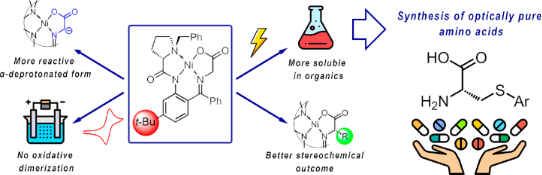
- )-1-benzylpyrrolidine-2-carboxamide) and its Ni(II)–Schiff base complexes formed of glycine, serine, and dehydroalanine are reported. A bulky tert-butyl substituent in the phenylene fragment precludes unwanted oxidative dimerization of the Schiff base complex, making it suitable for targeted
- electrochemically induced oxidative modification of the amino acid side chain. Experimental and DFT studies showed that the additional tert-butyl group increases the dispersion interactions in the Ni coordination environment making the complexes more conformationally rigid and provides a higher level of
- thermodynamically controlled stereoselectivity as compared to the parent Belokon complex. Additionally, functionalization with the tert-butyl group significantly enhances the reactivity of the deprotonated glycine complex towards electrophiles as compared to the anionic species formed from the original Belokon



Access to cyclopropanes with geminal trifluoromethyl and difluoromethylphosphonate groups
Beilstein J. Org. Chem. 2023, 19, 541–549, doi:10.3762/bjoc.19.39
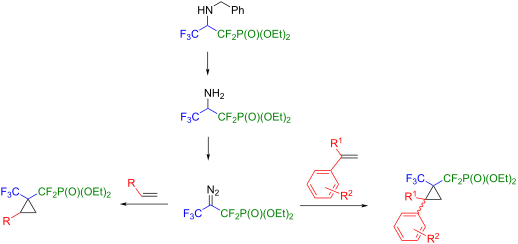
- (5). This compound was synthesized smoothly within three steps in 16.6% overall yield. The synthetic route commenced from the preparation of N-protected amine 3, followed by the deprotection of benzylamine 3 to furnish 4 and ended with the diazotization of 4 using tert-butyl nitrite. As a result, the
- the reaction with tert-butyl-N-allyl carbamate 7g (1:6) while the reaction with allylcyclohexane resulted with the lowest yield (7f, 28%), probably due to the steric hindrance of the reagents. In the case of N-Boc-allylamine, improved diastereoselectivity might result from the coordination of the



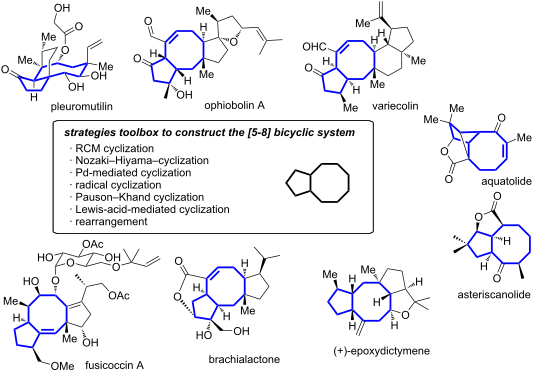
Strategies to access the [5-8] bicyclic core encountered in the sesquiterpene, diterpene and sesterterpene series
Beilstein J. Org. Chem. 2023, 19, 245–281, doi:10.3762/bjoc.19.23


Synthesis and characterisation of new antimalarial fluorinated triazolopyrazine compounds
Beilstein J. Org. Chem. 2023, 19, 107–114, doi:10.3762/bjoc.19.11
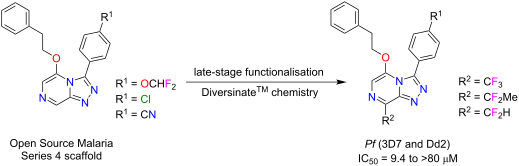
- -difluoroethanesulfinate (DFES) and zinc difluoromethanesulfinate (DFMS). In brief, a mixture of the respective scaffold, Diversinate™ (2 equiv), and TFA (5 equiv) in DMSO/CH2Cl2/H2O (5:5:2) was stirred for 30 min at room temperature and cooled to 4 °C. Then, aqueous tert-butyl hydroperoxide (TBHP, 70%, 3 equiv) was


NaI/PPh3-catalyzed visible-light-mediated decarboxylative radical cascade cyclization of N-arylacrylamides for the efficient synthesis of quaternary oxindoles
Beilstein J. Org. Chem. 2023, 19, 57–65, doi:10.3762/bjoc.19.5
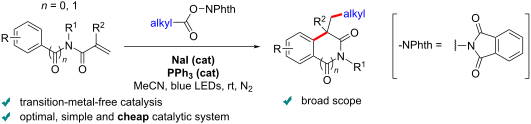
- similar efficiency, affording oxindole 3aj as a 1:1.1 mixture of diastereomers. Interestingly, this method also enabled the synthesis of the highly sterically demanding oxindole 3ak in good yield when using a tert-butyl N-hydroxyphthalimide ester as the tert-butyl radical precursor. Importantly, a redox




A novel spirocyclic scaffold accessed via tandem Claisen rearrangement/intramolecular oxa-Michael addition
Beilstein J. Org. Chem. 2022, 18, 1649–1655, doi:10.3762/bjoc.18.177
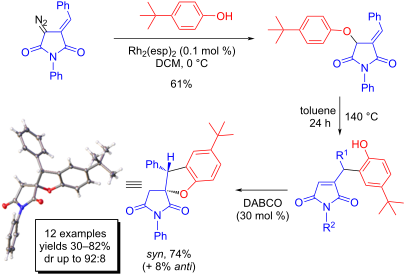
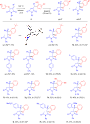
- Discussion The initial attempt to involve DAS 1b in the Rh2(esp)2-catalyzed insertion reaction with 4-(tert-butyl)phenol was successful. The initial adduct 5b was not purified and was heated at 140 °C in toluene to give compound 6b in 47% yield over two steps (Scheme 2). No further optimization of the



Rhodium-catalyzed intramolecular reductive aldol-type cyclization: Application for the synthesis of a chiral necic acid lactone
Beilstein J. Org. Chem. 2022, 18, 1642–1648, doi:10.3762/bjoc.18.176
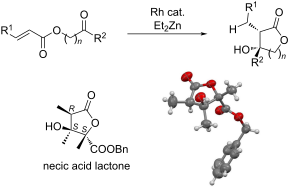
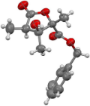
- . Mechanistic investigation of the intramolecular cyclization The reaction mechanism of the intramolecular cyclization can only be speculative at this stage. We have already reported the generation of a rhodium hydride (Rh–H) complex from RhCl(PPh3)3 and Et2Zn, in which the reaction with tert-butyl acrylate


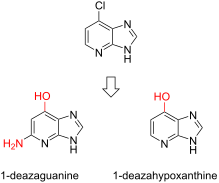
A new route for the synthesis of 1-deazaguanine and 1-deazahypoxanthine
Beilstein J. Org. Chem. 2022, 18, 1617–1624, doi:10.3762/bjoc.18.172
- methanol (20 mL), then 5% hydrochloric acid (5 mL) was added and stirred for 2 hours at 50 °C. After complete deprotection (TLC reaction control!), the solvent and all volatiles were removed under reduced pressure and the crude residue was suspended in dichloromethane (6.5 mL). Afterwards, di-tert-butyl


Solid-phase total synthesis and structural confirmation of antimicrobial longicatenamide A
Beilstein J. Org. Chem. 2022, 18, 1560–1566, doi:10.3762/bjoc.18.166
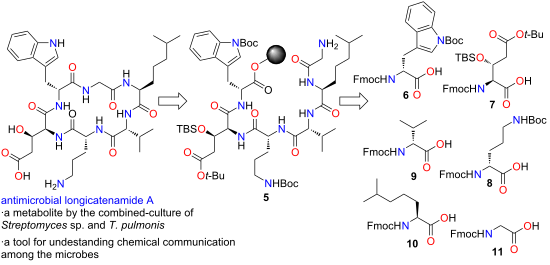
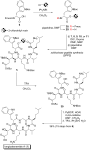
- determined using the modified Mosher’s method [21]. Protection of diol 25 by tert-butyl(dimethyl)silyl (TBS) group followed by selective deprotection of the primary alcohol led to 27. Finally, acid 7 was obtained from alcohol 27 through the same two-step oxidation used to obtain compound 10. Having



1,4,6,10-Tetraazaadamantanes (TAADs) with N-amino groups: synthesis and formation of boron chelates and host–guest complexes
Beilstein J. Org. Chem. 2022, 18, 1424–1434, doi:10.3762/bjoc.18.148
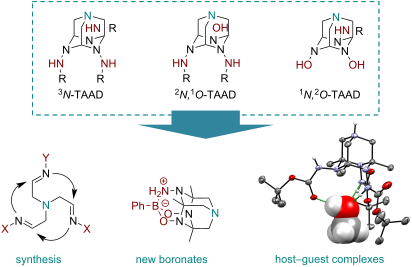
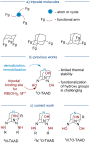
- stabilization of the complex through weak hydrophobic interactions of with tert-butyl groups of Boc. We believe that by adjustment of the substituents on the amide/carbamate groups, receptors for supramolecular sensing of alcohols [44] could be designed based on 3N-TAADs of type 4. Further research in this






Mechanochemical synthesis of unsymmetrical salens for the preparation of Co–salen complexes and their evaluation as catalysts for the synthesis of α-aryloxy alcohols via asymmetric phenolic kinetic resolution of terminal epoxides
Beilstein J. Org. Chem. 2022, 18, 1416–1423, doi:10.3762/bjoc.18.147
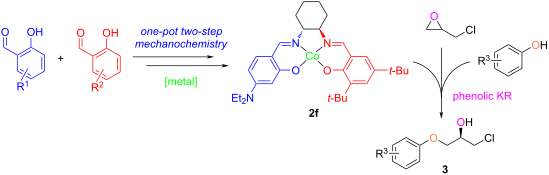
- ethylenediamine monohydrochlorides were grinded with a half equivalent of 4-diethylamino (Et2N‒), 3,5-dichloro (Cl‒), or 3,5-di-tert-butyl (t-Bu‒) salicylaldehydes (blue moieties in Scheme 2) for 10 minutes. The synthesis of diamine monohydrochlorides and characterization data of mono-imine ammonium salts were
- ), half equivalent of 5-bromo (Br‒), 5-methyl, 4-diethylamino (Et2N‒), 3,5-dichloro (Cl‒), or 3,5-di-tert-butyl (t-Bu‒) salicylaldehydes (red moieties in Scheme 2), and trace methanol, followed by grinding for 20 minutes for the second reaction step to complete, monitored by TLC. A trace amount of
- between 1g (81%) and 1h (76%). Yields of 1d (79%), 1e (81%), and 1f (72%) were less than 1a‒c, caused by the steric hindrance of di-tert-butyl groups. In the aspect of characterization of salens, two singlets were shown at around 8 ppm in the 1H NMR spectrum, indicating two unsymmetrical imines. The broad


Preparation of an advanced intermediate for the synthesis of leustroducsins and phoslactomycins by heterocycloaddition
Beilstein J. Org. Chem. 2022, 18, 1385–1395, doi:10.3762/bjoc.18.143
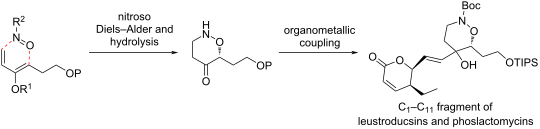
- /z): [M + H]+ calcd 407.2377; found, 407.2359. (6R)-tert-Butyl 5-(diethoxyphosphoryloxy)-6-(2-((triisopropylsilyl)oxy)ethyl)-3,6-dihydro-2H-1,2-oxazine-2-carboxylate (10b): A solution of the enol phosphate 17 (420 mg, 1.03 mmol) in chloroform (1.8 mL) was added to a solution of the Wightman reagent 6
- ppm; HRMS (m/z): [M + Na]+ calcd 560.2779; found, 560.2775; [α]20D : +5.8 (c 1.0, CH2Cl2); ee: 8% (Whelk-O1, 1 mL/min, 95:5 hexane/EtOH, tr (R) = 14.9 min, tr (S) = 16.2 min). (6R)-tert-Butyl 5-oxo-6-(2-((triisopropylsilyl)oxy)ethyl)-1,2-oxazinane-2-carboxylate (11b): A solution of the cycloadduct 10b
- %). tert-Butyl (6R)-5-((E)-2-((2S,3S)-3-ethyl-6-oxo-3,6-dihydro-2H-pyran-2-yl)vinyl)-5-hydroxy-6-(2-((triisopropylsilyl)oxy)ethyl)-1,2-oxazinane-2-carboxylate (25): Data for 25: Rf: 0.10 (30% AcOEt/cyclohexane); 1H NMR (360 MHz, CDCl3) δ 6.97 (dd, J = 9.7, 5.5 Hz, 1H), 6.05 (d, J = 9.7 Hz, 1H), 5.95 (dd, J


A one-pot electrochemical synthesis of 2-aminothiazoles from active methylene ketones and thioureas mediated by NH4I
Beilstein J. Org. Chem. 2022, 18, 1249–1255, doi:10.3762/bjoc.18.130
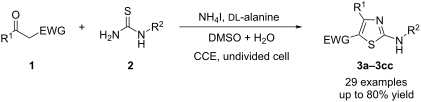
- 1b). Alternatively, the oxidation of α-C–H of active methylene ketones generate α-carbon-centered radicals, thus providing another way to obtain thiazoles. Recently, Sun et al. reported a tert-butyl hydroperoxide/azodiisobutyronitrile-mediated synthesis of 2-aminothiazoles from active methylene
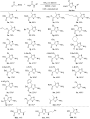
- presence of ᴅʟ-alanine (Table 1, entry 24). Under the optimized reaction conditions (entry 24, Table 1), the scope of the electrochemical reaction was studied using a series of active methylene ketones (Scheme 2). Various linear and branched alkyl acetoacetates including methyl, ethyl, tert-butyl, and amyl
- ethyl, n-propyl, isopropyl, n-butyl, tert-butyl and cyclohexyl moieties were also compatible with the optimized conditions, providing the corresponding 2-aminothiazoles in 24% to 65% yields (3g–l). As shown in Scheme 2, when the R1 group changed from alkyl to aryl, the target products could also be




Vicinal ketoesters – key intermediates in the total synthesis of natural products
Beilstein J. Org. Chem. 2022, 18, 1236–1248, doi:10.3762/bjoc.18.129
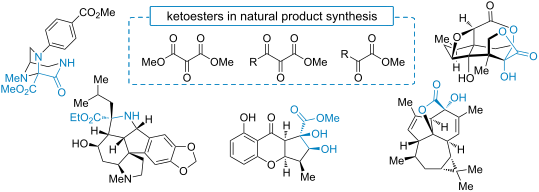
- thermodynamically controlled basic intramolecular aldol addition of compound 108 using the bulky amine base 2,6-di-tert-butyl-4-methylpyridine (DTBMP) led to epimerization of the methyl group and cyclization, giving preussochromone F (109) as single isolable diastereomer probably via transition state XII. The


From amines to (form)amides: a simple and successful mechanochemical approach
Beilstein J. Org. Chem. 2022, 18, 1210–1216, doi:10.3762/bjoc.18.126
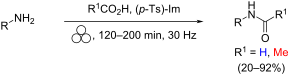
- ). N-(1-Naphthyl)formamide (6) was obtained in satisfying yield, while the methyl and tert-butyl ester moieties affected the reaction outcome (Scheme 1, amides 7 and 8). Secondary amines were also tested under the developed conditions; N-methylaniline provided the desired product 9 in 39% yield, while
Thermally activated delayed fluorescence (TADF) emitters: sensing and boosting spin-flipping by aggregation
Beilstein J. Org. Chem. 2022, 18, 1177–1187, doi:10.3762/bjoc.18.122
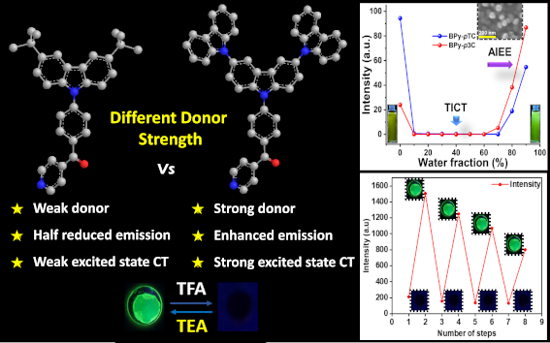
- to the singlet state via RISC [17][27]. Heteroatom lone-pair electrons are sensitive to acid and, once protonated, to base, which would facilitate the tuning of optical properties in such media [21][22]. Herein, (4-(3,6-di-tert-butyl-9H-carbazol-9-yl)phenyl)(pyridin-4-yl)methanone (BPy-pTC) and (4-(9


Electrogenerated base-promoted cyclopropanation using alkyl 2-chloroacetates
Beilstein J. Org. Chem. 2022, 18, 1116–1122, doi:10.3762/bjoc.18.114
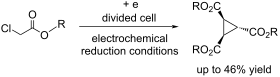
- compound 6 in <24% and <26% yields, respectively (Table 3, entries 3 and 4). n-Propyl 2-chloroacetate (9), with the longer alkyl chain, and tert-butyl 2-chloroacetate (11), with the bulky alkyl group, produced 10 and 12 in <22% and <31% yields, respectively (Table 3, entries 5 and 6). The reaction of 13


Electrochemical formal homocoupling of sec-alcohols
Beilstein J. Org. Chem. 2022, 18, 1062–1069, doi:10.3762/bjoc.18.108
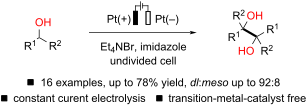
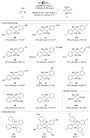
- transformation was investigated as shown in Scheme 2. Various 1-arylethanol derivatives were firstly examined. Substrates bearing p-methyl (1b) or p-tert-butyl (1c) groups afforded the desired products 2b and 2c in moderate yields. Halogen substituents such as fluorine (1d) and chlorine (1e) atoms were tolerated




Synthetic strategies for the preparation of γ-phostams: 1,2-azaphospholidine 2-oxides and 1,2-azaphospholine 2-oxides
Beilstein J. Org. Chem. 2022, 18, 889–915, doi:10.3762/bjoc.18.90
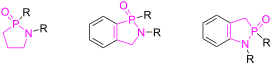
- performed a detailed investigation on the dearomatizing anionic cyclization of diphenyl-N-alkyl-N-benzylphosphinamides 107, 116, and 119 by treatment with sec-butyllithium and protonation with various alcohols (MeOH, iPrOH, t-BuOH), phenols (PhOH, 2-tert-butyl-4-methylphenol, and 2,6-di(tert-butyl)-4
- -dihydrobenzo[c][1,2]azaphosphole 1-oxide (210) was synthesized in low yields of 20–43% with diastereomeric ratios of 10:1 to >20:1 from (R)-1-tert-butyl-1,1-diphenyl-N-(1-phenylethyl)silanamine (204) via the treatment with butyllithium followed by double displacement with four different phosphorus
- )acetates 247 in moderate yields of 53–71% with diastereomeric ratios of 1:1.7 to 1:3. The synthetic strategy is more versatile (Scheme 39) [60]. [3 + 2] Annulation via formations of both C–C and P–N bonds After oxidation with K3Fe(CN)6, diphenyl 3,5-di(tert-butyl)-4-hydroxybenzylphosphonate (248) was