

Search results
Search for "organic" in Full Text gives 3071 result(s) in Beilstein Journal of Organic Chemistry. Showing first 200.
Understanding the origin of stereoselectivity in the photochemical denitrogenation of 2,3-diazabicyclo[2.2.1]heptene and its derivatives with non-adiabatic molecular dynamics
Beilstein J. Org. Chem. 2025, 21, 2007–2020, doi:10.3762/bjoc.21.156
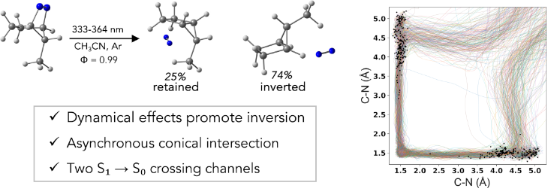
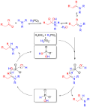
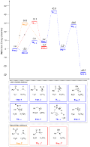
- synthetic organic chemists. We report a computational study on the mechanism of diazabicyclo[2.2.1]heptenes to address long standing mechanistic questions. Indeed, the mechanism of these reactions has been disputed for over six decades. We employed non-adiabatic molecular dynamics (NAMD) simulations
- ; stereoselectivity; Introduction Photochemical reactions utilize light as a sustainable energy source and are considered to be ‘green’ reactions [1][2]. Organic chromophores absorb light, accessing higher-lying excited state(s) that exhibit distinct reactivities, leading to bond breaking and formation, irreversibly
- producing energy-dense compounds [2][3]. One promising strategy to access strained compounds involves gas-evolution (e.g., CO or N2) because of the associated entropic driving force; this approach has had wide utility in photomedicine and organic synthesis. For example, photochemical decarboxylation has


Measuring the stereogenic remoteness in non-central chirality: a stereocontrol connectivity index for asymmetric reactions
Beilstein J. Org. Chem. 2025, 21, 1995–2006, doi:10.3762/bjoc.21.155
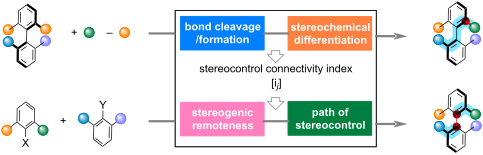
- chiral molecules. Keywords: asymmetric reactions; axial chirality; catalysis; planar chirality; stereocontrol; Introduction Chirality is a ubiquitous and fundamental phenomenon in nature and thus holds an irreplaceable position in organic synthesis. At its most rudimental definition, chirality in a



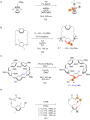
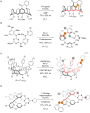
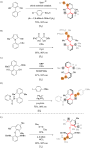

Aryl iodane-induced cascade arylation–1,2-silyl shift–heterocyclization of propargylsilanes under copper catalysis
Beilstein J. Org. Chem. 2025, 21, 1984–1994, doi:10.3762/bjoc.21.154
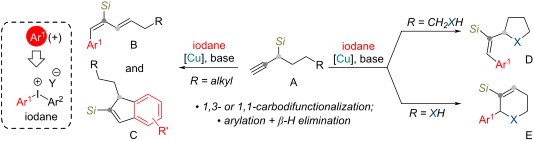
- Rasma Kronkalne Rudolfs Belaunieks Armands Sebris Anatoly Mishnev Maris Turks Institute of Chemistry and Chemical Technology, Faculty of Natural Sciences and Technology, Riga Technical University, P. Valdena str. 3, LV-1048, Riga, Latvia Latvian Institute of Organic Synthesis, Aizkraukles str. 21


Photochemical reduction of acylimidazolium salts
Beilstein J. Org. Chem. 2025, 21, 1973–1983, doi:10.3762/bjoc.21.153
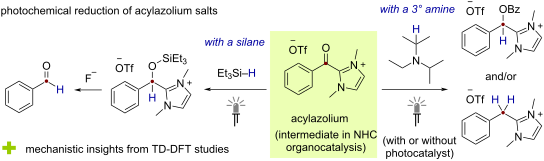
- carboxylic acid derivatives involving hydrogen-atom transfer have not been reported despite the fundamental importance of carbonyl reduction processes in organic synthesis [46]. Here, we report the results of our investigation into such reactions using an acylazolium salt derived from benzoic acid as a model
- the fully reduced species 2 relative to 3 generally decreased (Table 1, entries 6–9). Employing just 1 equivalent of DIPEA nevertheless delivered 30% of 2 alongside 9% of 3. A survey of common organic solvents was then conducted to investigate the influence of the reaction medium. Interestingly
- , resulted in clean formation of the fully reduced product 2 in 48% 1H NMR yield with no intermediate species 3 being detected (Table 1, entry 17). The related iridium complex [Ir(ppy)2(dtbpy)]PF6 (ppy = 2-phenylpyridine) delivered 2 in a similar yield of 46% (Table 1, entry 18) while the organic species


Enantioselective desymmetrization strategy of prochiral 1,3-diols in natural product synthesis
Beilstein J. Org. Chem. 2025, 21, 1932–1963, doi:10.3762/bjoc.21.151
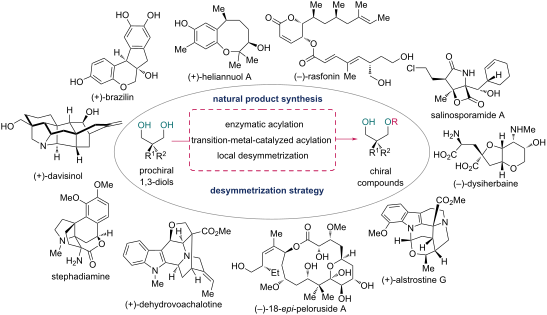
- with organic reactions, this chemo-enzymatic strategy has been successfully utilized in the synthesis of complex molecules [22][23]. Enzymatic reactions feature a convenient operation due to their relative insensitivity to water and oxygen, as well as a specificity to certain substrates, resulting in












Synthesis of N-doped chiral macrocycles by regioselective palladium-catalyzed arylation
Beilstein J. Org. Chem. 2025, 21, 1917–1923, doi:10.3762/bjoc.21.149
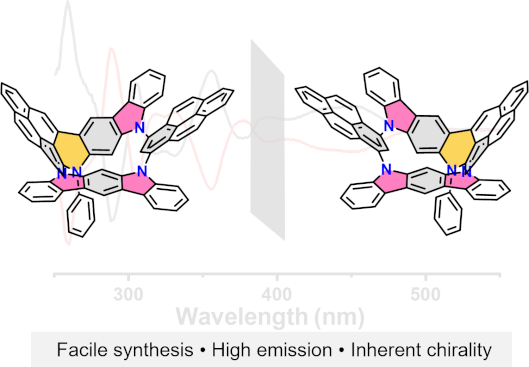
- -bridged structural analogs of [1n]metacyclophanes. In comparison to all-carbon [1n]metacyclophanes, the incorporation of N atoms endows them with unique features, such as enhanced molecular dynamics and tunable redox property, positioning them as key precursors to construct organic high-spin materials [20




Synthesis, biological and electrochemical evaluation of glycidyl esters of phosphorus acids as potential anticancer drugs
Beilstein J. Org. Chem. 2025, 21, 1909–1916, doi:10.3762/bjoc.21.148
- Almaz A. Zagidullin Emil R. Bulatov Mikhail N. Khrizanforov Damir R. Davletshin Elvina M. Gilyazova Ivan A. Strelkov Vasily A. Miluykov Arbuzov Institute of Organic and Physical Chemistry, FRC Kazan Scientific Center of Russian Academy of Sciences, Arbuzov Street 8, Kazan, 420088, Russia Institute
- of Fundamental Medicine and Biology, Kazan Federal University, Kremlyovskaya Street 18, Kazan, 420008, Russia Zelinsky Institute of Organic Chemistry, Russian Academy of Sciences, Leninsky prospekt 47, Moscow, 119991, Russia 10.3762/bjoc.21.148 Abstract Organophosphorus compounds are important in
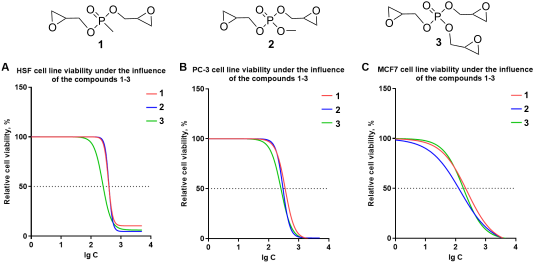
- synthetic organic chemistry and pharmaceutical applications due to their diverse biological activities. In this study, we synthesized three novel glycidyl esters of phosphorus acids 1–3 via the condensation of chlorophosphine oxides or phosphorus oxychloride with glycidol in the presence of a base


Stereoselective electrochemical intramolecular imino-pinacol reaction: a straightforward entry to enantiopure piperazines
Beilstein J. Org. Chem. 2025, 21, 1897–1908, doi:10.3762/bjoc.21.147
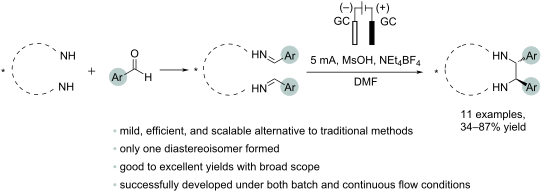
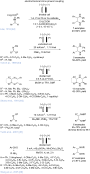
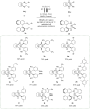
- photochemical and electrochemical methods, have been explored. Over the past two decades a variety of light-promoted imino-pinacol coupling reactions have been developed, involving the use of catalytic transition-metal complexes [35][36], organic dyes [37][38][39], and polyaromatic compounds [40][41] as
- photocatalysts (Scheme 2). The combination of photoredox catalysis with imine activation enabled the reductive coupling of imines under mild reaction conditions, providing direct access to benzyl and aryl vicinal diamines with good to excellent yields. Organic electrochemistry represents an attractive and
- CH2Cl2 (3 × 10 mL). The combined organic layers were dried over Na2SO4, filtered and concentrated under vacuum. The reaction crude was purified by flash column chromatography on silica gel (n-hexane/ethyl acetate 8:2) to give the desired pure product. General procedure for in-flow electrochemical imino





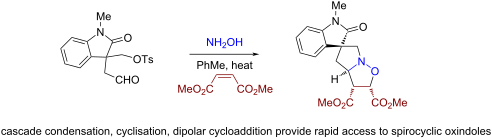
Preparation of spirocyclic oxindoles by cyclisation of an oxime to a nitrone and dipolar cycloaddition
Beilstein J. Org. Chem. 2025, 21, 1890–1896, doi:10.3762/bjoc.21.146
- g, 1.3 mmol) was added to epoxide 1 [28] (2.2 g, 12.7 mmol) and allyltrimethylsilane (6.1 mL, 38 mmol) in dry MeCN (90 mL) at 0 °C. After 1 h, saturated aqueous NaHCO3 (50 mL) was added, and the mixture was extracted with EtOAc (2 × 50 mL). The combined organic layers were washed with brine (20 mL
- , 5.4 mmol) and DMAP (132 mg, 1.1 mmol) in CH2Cl2 (45 mL) at room temperature. After 4 d, saturated aqueous NaHCO3 (45 mL) was added and the layers were separated. The organic layer was dried (MgSO4), filtered and evaporated. The residue was purified by column chromatography on silica gel, eluting with


Systematic pore lipophilization to enhance the efficiency of an amine-based MOF catalyst in the solvent-free Knoevenagel reaction
Beilstein J. Org. Chem. 2025, 21, 1854–1863, doi:10.3762/bjoc.21.144
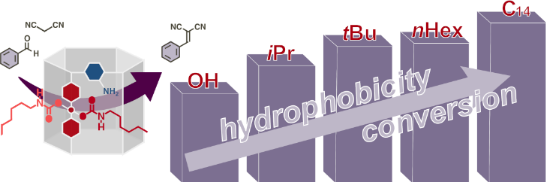
- Pricilla Matseketsa Margret Kumbirayi Ruwimbo Pagare Tendai Gadzikwa Department of Chemistry, Kansas State University, Manhattan, Kansas 66506, United States 10.3762/bjoc.21.144 Abstract We systematically lipophilized an amine-based metal-organic framework (MOF) catalyst and applied the
- efficiency. Keywords: metal-organic frameworks; post-synthesis modification; supramolecular catalysis; Introduction Most enzymatic reactions take place in multifunctional cavities in which multiple amino acid residues work cooperatively to orient and activate reactants [1][2][3]. These residues may also
- ], and metal-organic-frameworks (MOFs), among others [18][19][20]. Within this group of porous materials, MOFs boast the advantages of their crystallinity, the uniformity of their pores that are typically in the microporous range (5–20 Å), and the ability to fine-tune their pore chemical environment [21


Photoswitches beyond azobenzene: a beginner’s guide
Beilstein J. Org. Chem. 2025, 21, 1808–1853, doi:10.3762/bjoc.21.143
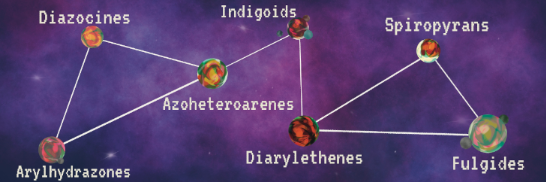
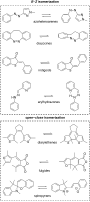
- Michela Marcon Christoph Haag Burkhard Konig Institute of Organic Chemistry, University of Regensburg, Universitätsstr. 31, 93053 Regensburg, Germany 10.3762/bjoc.21.143 Abstract Approaching the vast, colourful world of photoswitches from a different field of study or as an undergraduate student






Fe-catalyzed efficient synthesis of 2,4- and 4-substituted quinolines via C(sp2)–C(sp2) bond scission of styrenes
Beilstein J. Org. Chem. 2025, 21, 1799–1807, doi:10.3762/bjoc.21.142
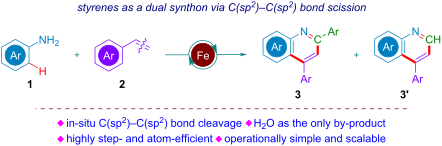
- , antibacterial, and anti-inflammatory activities [10][11][12][13]. In the field of optoelectronics, especially with 2,4-diarylquinoline derivatives, extensive studies have highlighted their applicability in organic light-emitting diode (OLED) systems as functional materials [14][15] and cutting-edge fluorescent
- probes for sensing and bioimaging applications (Figure 1) [16][17]. Quinoline-derived metal complexes have also demonstrated broad utility, functioning as effective catalysts in organic synthesis and finding applications across medicinal chemistry, materials science, photovoltaics, and chemical sensing
- production of approximately 30 million tons annually [40]. Their low cost and widespread availability make them highly valuable as fundamental building blocks in organic synthesis. Over the past few decades, the direct functionalization of styrenes has emerged as a prominent research area due to its




[3 + 2] Cycloaddition of thioformylium methylide with various arylidene-azolones in the synthesis of 7-thia-3-azaspiro[4.4]nonan-4-ones
Beilstein J. Org. Chem. 2025, 21, 1791–1798, doi:10.3762/bjoc.21.141
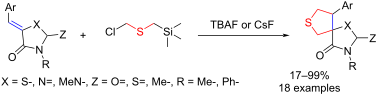
- single either cis or trans stereoisomers, dependent on the heterocycle core used. Keywords: arylidene-azolones; cycloaddition; nitrogen heterocycles; sulfur heterocycles; thioformylium methylide; Introduction Spirocyclic derivatives of heterocycles occupy an important place in modern organic and



Synthesis of chiral cyclohexane-linked bisimidazolines
Beilstein J. Org. Chem. 2025, 21, 1786–1790, doi:10.3762/bjoc.21.140
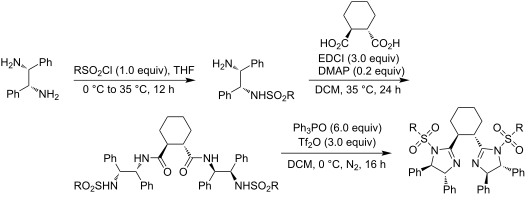
- Changmeng Xi Qingshan Sun Jiaxi Xu State Key Laboratory of Chemical Resource Engineering, Department of Organic Chemistry, College of Chemistry, Beijing University of Chemical Technology, Beijing 100029, People’s Republic of China 10.3762/bjoc.21.140 Abstract Both chiral bisoxazolines and
- bisimidazolines are efficient chiral ligands in metal-catalyzed asymmetric organic transformations. Chiral cyclohexane-linked bisimidazolines were prepared from optically active cyclohexane-1,2-dicarboxylic acid and 1,2-diphenylethane-1,2-diamines via the monosulfonylation of 1,2-diphenylethane-1,2-diamines
- bisoxazolines [1][2][3][4][5][6][7][8][9] and bisimidazolines [10][11][12][13][14][15] are efficient chiral ligands and have been widely applied in various metal-catalyzed asymmetric organic transformations. Various chiral bisoxazoline ligands have been prepared from diacids and enantiopure vicinal amino


Research progress on calixarene/pillararene-based controlled drug release systems
Beilstein J. Org. Chem. 2025, 21, 1757–1785, doi:10.3762/bjoc.21.139
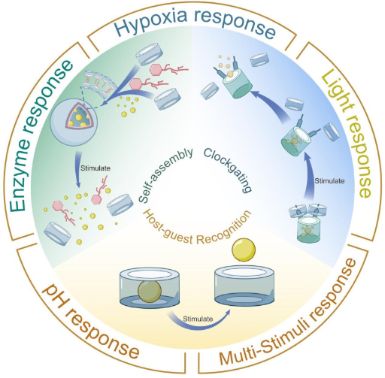
- in organic solvents, [77] which is not feasible for crown ethers, CAs, and resorcinarenes. In addition, PAs can form supramolecular systems in the following ways: (1) the electron-rich cavity interacts electrostatically with cationic guests, such as methyl viologen derivatives, pyridinium salts, and
- hybridized with various inorganic materials, such as metal-organic frameworks (MOFs), mesoporous silica nanoparticles (MSNs), metal nanoparticles, and carbon materials [87]. By designing through electrostatic and non-covalent interactions, PAs can be used as "molecular switches" to construct mechanized MOFs






Unique halogen–π association detected in single crystals of C–N atropisomeric N-(2-halophenyl)quinolin-2-one derivatives and the thione analogue
Beilstein J. Org. Chem. 2025, 21, 1748–1756, doi:10.3762/bjoc.21.138
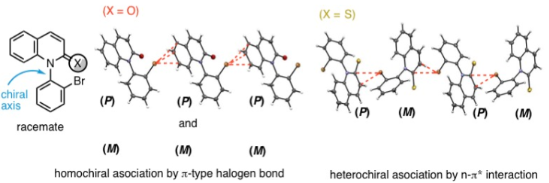
- diverse C–N atropisomeric compounds possessing carboxamide, imide, lactam, sulfonamide, indole, pyrrole, imidazole, carbazole and amine skeletons have been reported by many groups [1][2][3][4][5][6][7][8][9]. C–N atropisomers are attractive compounds from the viewpoint of not only synthetic organic
- interaction as an alternative to hydrogen bonding and has been widely used as an important supramolecular tool in broad fields such as materials science, crystal engineering, liquid crystals, synthetic organic chemistry and medicinal chemistry [22][23][24][25][26]. Typically, halogen bonding has been


Preparation of a furfural-derived enantioenriched vinyloxazoline building block and exploring its reactivity
Beilstein J. Org. Chem. 2025, 21, 1737–1741, doi:10.3762/bjoc.21.136

- Madara Darzina Anna Lielpetere Aigars Jirgensons Latvian Institute of Organic Synthesis Aizkraukles 21, Riga, LV-1006, Latvia Faculty of Natural Sciences and Technology, Riga Technical University, 3 P. Valdena Street, Riga LV-1048, Latvia 10.3762/bjoc.21.136 Abstract N-Alloc-protected furfuryl


Convenient alternative synthesis of the Malassezia-derived virulence factor malassezione and related compounds
Beilstein J. Org. Chem. 2025, 21, 1730–1736, doi:10.3762/bjoc.21.135
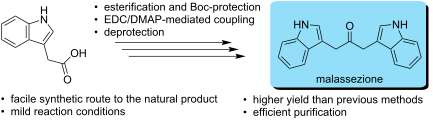
- with EtOAc (3 × 50 mL) and the combined organic layers were washed with water (100 mL) and brine (100 mL), and then dried over anhydrous MgSO4. The solvent was removed under reduced pressure and the residue was purified by flash chromatography on silica gel (EtOAc/hexane gradient 1:10 → 1:1, 1% AcOH
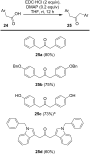
- ), followed by brine (40 mL). The organic layer was dried over anhydrous Na2SO4, and the solvent was evaporated under reduced pressure. The residue was purified by flash chromatography on silica gel using a gradient of EtOAc/hexane (1:10 → 1:1), affording compound 23 as a colorless viscous oil (425 mg, 50
- ), then washed with water (2 × 40 mL) and brine (40 mL). The organic layer was dried over anhydrous Na2SO4, and the solvent was evaporated under reduced pressure. The resulting residue was subsequently purified by flash chromatography on silica gel using a hexane/ethyl acetate mixture as the eluent. 1,3


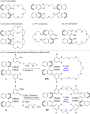
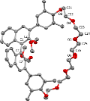
3,3'-Linked BINOL macrocycles: optimized synthesis of crown ethers featuring one or two BINOL units
Beilstein J. Org. Chem. 2025, 21, 1719–1729, doi:10.3762/bjoc.21.134
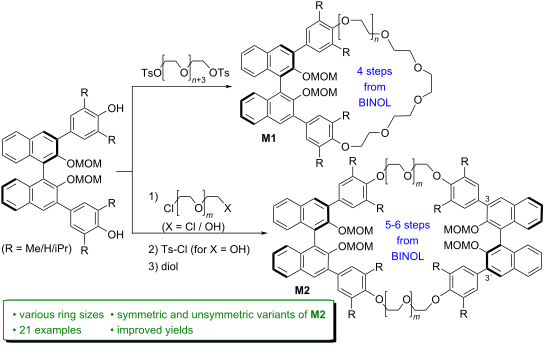
- Somayyeh Kheirjou Jan Riebe Maike Thiele Christoph Wolper Jochen Niemeyer Faculty of Chemistry (Organic Chemistry) and Center for Nanointegration Duisburg-Essen (CENIDE), University of Duisburg-Essen, 45141 Essen, Germany Faculty of Chemistry (Inorganic Chemistry), University of Duisburg-Essen





Approaches to stereoselective 1,1'-glycosylation
Beilstein J. Org. Chem. 2025, 21, 1700–1718, doi:10.3762/bjoc.21.133
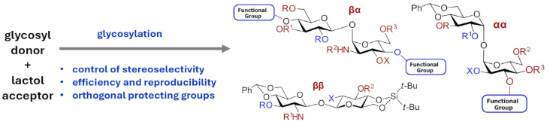
- Daniele Zucchetta Alla Zamyatina Department of Natural Sciences and Sustainable Resources, Institute of Organic Chemistry, BOKU University, 1190 Vienna, Austria 10.3762/bjoc.21.133 Abstract Nonreducing disaccharides are prevalent in non-mammalian glycans and glycolipids, serving as pivotal


Continuous-flow-enabled intensification in nitration processes: a review of technological developments and practical applications over the past decade
Beilstein J. Org. Chem. 2025, 21, 1678–1699, doi:10.3762/bjoc.21.132
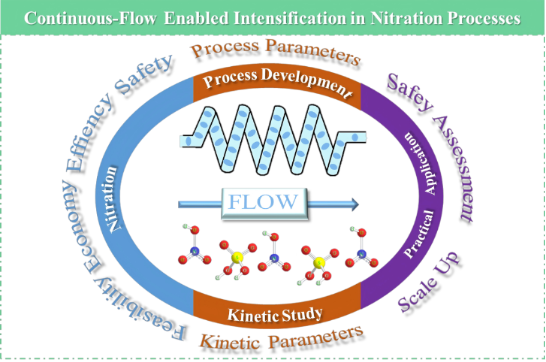
- engaged in the development of continuous-flow nitration systems. Keywords: continuous-flow; kinetics; nitration; optimization; scale up; Introduction Nitro compounds hold an extremely important position in the field of organic chemistry, mainly because they are easily obtainable and can be converted
- compound production, fundamentally involving the interaction between organic substrates and nitrating reagents. The intrinsic kinetics of nitration processes are governed by the synergistic interplay between the substrate’s molecular architecture and nitrating reagent reactivity. Distinct substrate
- , safety, and efficiency concerns, researchers have explored various types of inorganic and organic nitrating reagents to improve reaction performance through innovative chemical approaches. Patra et al. comprehensively reviewed the development and applications of organic nitrating reagents in nitration




Influence of the cation in hypophosphite-mediated catalyst-free reductive amination
Beilstein J. Org. Chem. 2025, 21, 1661–1670, doi:10.3762/bjoc.21.130
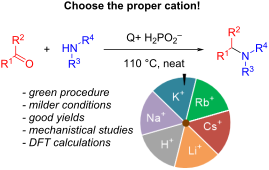
- hypophosphorous acid are commercially available in bulk amounts, however, their usage is understudied in organic processes. While NaH2PO2 has proved to be an efficient four-electron reductant in the catalyst-free reductive amination, the influence of cation in hypophosphite salt has not been studied yet. This
- Scientific) and readily available in bulk quantities compound. In organic synthesis, it is most commonly used in metal-catalyzed reductions where NaH2PO2 serves as a molecular hydrogen donor [6][7][8][9][10][11][12][13][14][15][16]. However, recent studies demonstrated application of hypophosphites as a
- pH 0) [19], and usage of an additional amount of base leads to stronger reductive properties. Moreover, the role of the cation could be critical for the thermal stability against disproportionation or aerobic oxidation of hypophosphite [38]; salts with larger cations are also more soluble in organic


Catalytic asymmetric reactions of isocyanides for constructing non-central chirality
Beilstein J. Org. Chem. 2025, 21, 1648–1660, doi:10.3762/bjoc.21.129
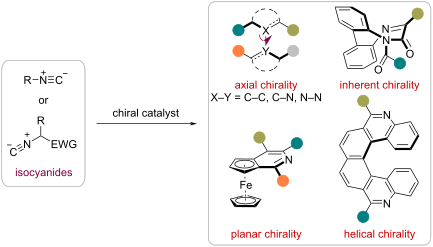
- become a hot topic in synthetic organic chemistry. Isocyanides (also termed isonitriles) are a class of highly versatile building blocks in organic synthesis, participating in a wide range of transformations including multicomponent reactions (e.g., the well-known Passerini and Ugi reactions) [13][14][15
- transformations of isocyanides for generating architectures bearing axial, planar, helical, and inherent chirality. These advances not only offer efficient routes to enantioenriched non-central chiral compounds but also significantly broaden the utility of isocyanides in organic synthesis. Nevertheless, despite





Photocatalysis and photochemistry in organic synthesis
Beilstein J. Org. Chem. 2025, 21, 1645–1647, doi:10.3762/bjoc.21.128
- impact of [Ru(bpy)3]Cl2 on several research areas, including solar energy conversion [5], optosensing [6], photodynamic therapy [7][8] and bioimaging [9]. Scattered examples of [Ru(bpy)3]Cl2 being used as a photocatalyst for visible-light-driven organic synthesis appeared in the scientific literature as
- implement. Two decades later, photocatalysis and photochemistry remain among the most studied topics in modern organic synthesis. Nowadays, chemists can choose from a wide range of organometallic [12][13], organic [14][15], or heterogeneous photocatalysts [16][17] to trigger visible-light photoredox
- catalysis, and this arsenal of catalysts is constantly expanding. In this thematic issue, the Dell’Amico group describes the development of a new class of organic donor–acceptor photocatalysts that show promising activity for several transformations [18]. Additionally, Hoffmann and co-workers contributed a

Transition-state aromaticity and its relationship with reactivity in pericyclic reactions
Beilstein J. Org. Chem. 2025, 21, 1613–1626, doi:10.3762/bjoc.21.125
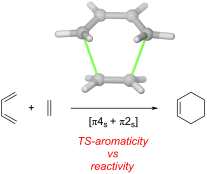
- –ene reaction [58][59] constitutes a fundamental reaction in organic chemistry that has been applied to the synthesis of a number of target molecules owing to its remarkable functional group tolerance [60][61]. Despite that, the main shortcoming of this transformation is its relatively high barrier
- chemistry [91][92][93]. Among the number of dipolarophiles compatible with this [3 + 2]-cycloaddition, phosphaalkynes [94][95][96] and arsaalkynes [97] have been recently used because they allow easy access to novel heterocycles. For instance, when using organic azides as dipoles, the transformation leads
- , very recently it was found that the C≡P moiety, in particular, can be stabilized in the form of a cyaphide ligand bonded to a metal fragment [99][100]. These cyaphide complexes are proven to readily undergo 1,3-dipolar cycloaddition reactions with organic azides [99][100][101], affording novel metal