
Search results
Search for "donor" in Full Text gives 880 result(s) in Beilstein Journal of Organic Chemistry. Showing first 200.
Catalysing (organo-)catalysis: Trends in the application of machine learning to enantioselective organocatalysis
Beilstein J. Org. Chem. 2024, 20, 2280–2304, doi:10.3762/bjoc.20.196
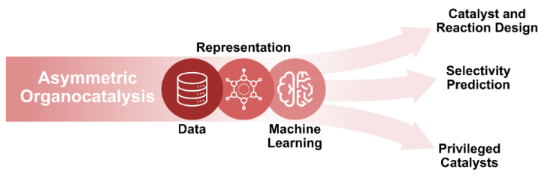
- -type catalysts and more than one million double hydrogen bond donor catalysts. While this repository does not provide any reactivity data, it still comprises a valuable map of organocatalyst chemical space to aid in catalyst design. The creation of these larger datasets, both experimental and in silico




Cell-free protein synthesis with technical additives – expanding the parameter space of in vitro gene expression
Beilstein J. Org. Chem. 2024, 20, 2242–2253, doi:10.3762/bjoc.20.192
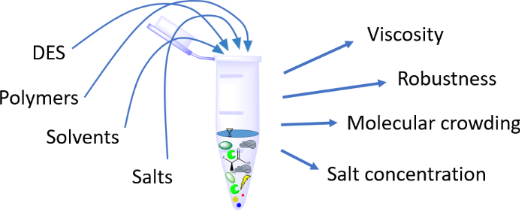
- on the metabolism [6]. Furthermore, protein synthesis takes only a few hours [7], making the process very fast compared to heterologous expression. CFPS relies on the transcription and translation (TX-TL) system of the donor organism [8]. In addition, the reaction solution contains the DNA-template

Novel truxene-based dipyrromethanes (DPMs): synthesis, spectroscopic characterization and photophysical properties
Beilstein J. Org. Chem. 2024, 20, 2163–2170, doi:10.3762/bjoc.20.186
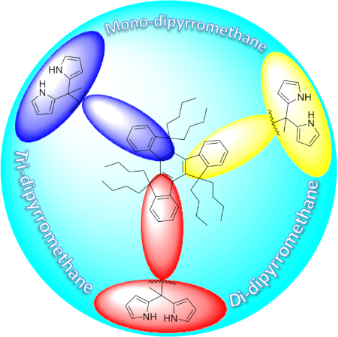
- ), organogels, molecular wires, self-assembly and so forth [14][15][16][17][18][19][20][21][22][23][24][25]. Moreover, nowadays these invaluable compounds have also received great attention of supramolecular chemists, and finds applications in sensing, catalysis, donor–acceptor systems, energy transfer and


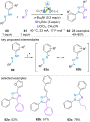
Multicomponent syntheses of pyrazoles via (3 + 2)-cyclocondensation and (3 + 2)-cycloaddition key steps
Beilstein J. Org. Chem. 2024, 20, 2024–2077, doi:10.3762/bjoc.20.178
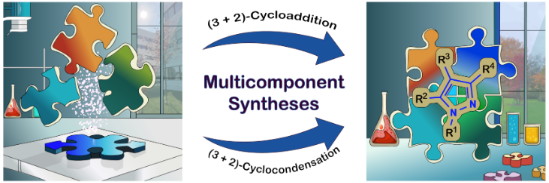
- coordination of the magnesium ions and subsequent hydrazine inactivation. The diversity-oriented nature of this consecutive four-component synthesis was used to synthesize 17 different donor/acceptor-substituted pyrazoles 108 in moderate to good yields (Scheme 39) [136]. The synthesis of bispyrazoles was also




Diastereoselective synthesis of highly substituted cyclohexanones and tetrahydrochromene-4-ones via conjugate addition of curcumins to arylidenemalonates
Beilstein J. Org. Chem. 2024, 20, 2016–2023, doi:10.3762/bjoc.20.177
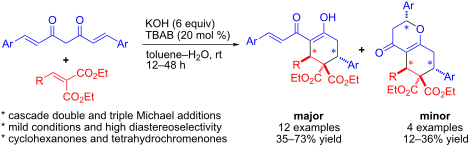
- reactions, especially as a Michael donor at the central methylene carbon, and Michael acceptor at the enone vinyl carbon. Therefore, it would be interesting to develop novel methodologies using curcumin and its non-natural analogs as key starting materials [24]. Because of its multifaceted reactive site
- , curcumin showcases its Michael donor–acceptor ability in different ways, such as simple Michael addition, [4 + 2] annulation, Michael addition followed by cyclization or one-pot multicomponent reactions (MCR), etc. (Scheme 1) [25]. In 2011, our group reported the reactivity of curcumin as a Michael donor
- ]. Other groups have also investigated the Michael donor–acceptor reactivity of curcumins [25]. For instance, a quinine-thiourea catalyzed Michael addition of curcumins to nitroalkenes reported by Ye et al. stopped at the single Michael addition stage [35]. In the subsequent year, Yan et al. demonstrated a


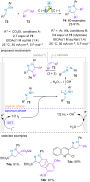
Harnessing the versatility of hydrazones through electrosynthetic oxidative transformations
Beilstein J. Org. Chem. 2024, 20, 1988–2004, doi:10.3762/bjoc.20.175
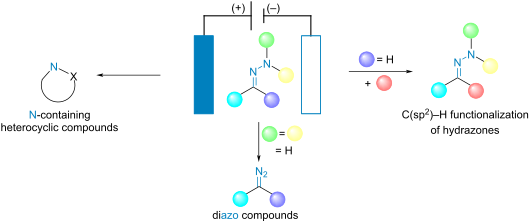
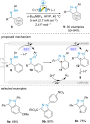
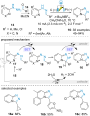
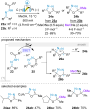
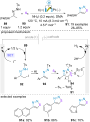
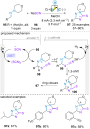
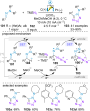
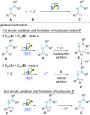
- electron donor to furnish the olefin product 148. In the cathodic chamber, reduction of the acidic proton of TFA counterbalance the overall transformation. A wide range of carbonyl compounds including aromatic and aliphatic aldehydes and ketones as well as various alkene partners were compatible. Of note





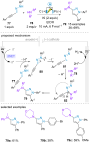


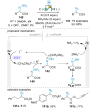
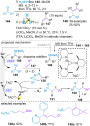

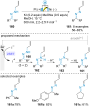
Development of a flow photochemical process for a π-Lewis acidic metal-catalyzed cyclization/radical addition sequence: in situ-generated 2-benzopyrylium as photoredox catalyst and reactive intermediate
Beilstein J. Org. Chem. 2024, 20, 1973–1980, doi:10.3762/bjoc.20.173
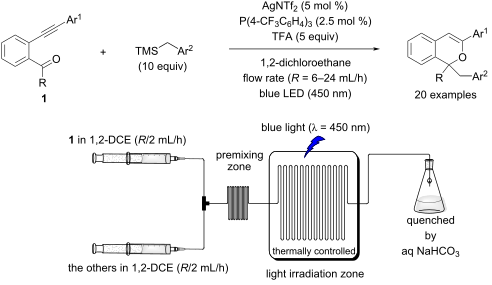
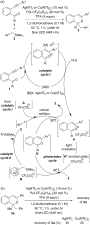
- benzyltrimethylsilane derivatives as the donor molecule in the flow photoreactor to provide 1H-isochromene derivatives in higher yields in most cases than the batch reaction system. Keywords: 2-benzopyrylium; flow chemistry; isocromene; photochemical reaction; π-Lewis acidic metal; Introduction Flow chemistry has
- intramolecular cyclization followed by proto-demetalation with trifluoroacetic acid (TFA). In catalytic cycle II, photoexcitation of the generated 2-benzopyrylium intermediates A under light irradiation facilitates single-electron transfer (SET) from benzyltrimethylsilane derivatives 2 as the donor molecule
- afforded the product 3r in high yield when the temperature of the premixing zone was increased to 50 °C (Table 3, entry 7: 73%). The scope of donor molecules 2b and 2c having an electron-withdrawing trifluoromethyl group and an electron-donating methoxy group [60][61] at the para-position of the


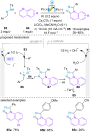
Solvent-dependent chemoselective synthesis of different isoquinolinones mediated by the hypervalent iodine(III) reagent PISA
Beilstein J. Org. Chem. 2024, 20, 1914–1921, doi:10.3762/bjoc.20.167
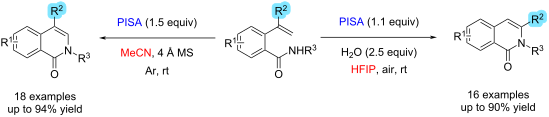
- substrate 1c may act as an electrophilic center, forming a C–O bond with the alkenyl group to give the isochromen-1-one oxime product 2c'. When wet HFIP was used as the solvent, the reaction followed a different pathway. HFIP, a strong hydrogen bonding donor [26][27][28], interacts with the amide moiety of




The Groebke–Blackburn–Bienaymé reaction in its maturity: innovation and improvements since its 21st birthday (2019–2023)
Beilstein J. Org. Chem. 2024, 20, 1839–1879, doi:10.3762/bjoc.20.162
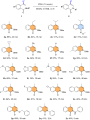
- compounds. Dömling et al. [50] also reported the synthesis of N-edited guanine derivatives. Different drugs display the guanine motif, fundamental for its biological activity is a triad HBA–HBD–HBD (HBA = hydrogen bond acceptor, HBD = hydrogen bond donor) included in its structure. The authors propose a one






Methyltransferases from RiPP pathways: shaping the landscape of natural product chemistry
Beilstein J. Org. Chem. 2024, 20, 1652–1670, doi:10.3762/bjoc.20.147
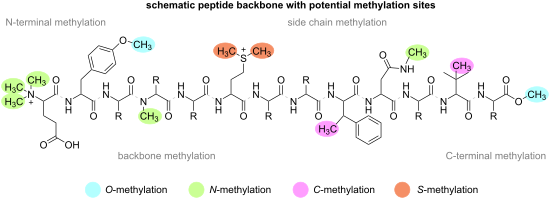
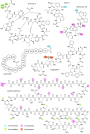
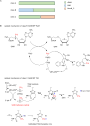
- high substrate flexibility. SAM is the universal methyl donor of biological methylation reactions, and it is the main outcome of the methionine cycle. Following transfer of the methyl group, SAH is formed, which is then hydrolysed to ʟ-homocysteine and adenosine by an SAH hydrolase. ʟ-Homocysteine is
- remethylated to ʟ-methionine by the enzyme methionine synthase, which utilises 5-methyltetrahydrolate (5-MTHF) as a methyl donor. 5-MTHF is a constituent of the folate cycle, which encompasses the intermediates tetrahydrofolate (THF) and 5,10-methylene-THF (5,10-CH2-THF). 5,10-CH2-THF is formed from THF and ʟ
- -serine, which provides the methyl group in this case. Another methyl donor that provides a C1 building block for ʟ-methionine and subsequent SAM synthesis is betaine. Betaine-homocysteine MT remethylates ʟ-homocysteine to ʟ-methionine. Non-SAM-dependent MTs catalyse B12-dependent methylations using the





New triazinephosphonate dopants for Nafion proton exchange membranes (PEM)
Beilstein J. Org. Chem. 2024, 20, 1623–1634, doi:10.3762/bjoc.20.145
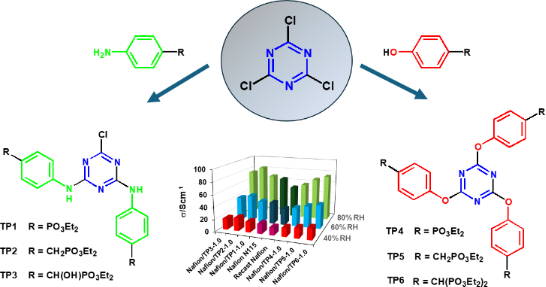
- bisphosphonic acids as dopants in Nafion membranes that led to an increase on the proton conduction of the new membranes, since these compounds are good proton carriers due to their proton donor and acceptor behavior [26][27][28][29]. In addition, the increase in the proton conduction of the doped membranes has




Generation of multimillion chemical space based on the parallel Groebke–Blackburn–Bienaymé reaction
Beilstein J. Org. Chem. 2024, 20, 1604–1613, doi:10.3762/bjoc.20.143

- partition coefficient logarithm (log P), H-bond acceptor/donor count (HAcc/HDon), fraction of sp3-hybrid carbon atoms (F(sp3)), and rotatable bond count (RotB) are shown in Figure 5. It is apparent that the GBB chemical space contains many drug-like (69,043,101 molecules, 25%) and “beyond-Ro5” compounds (75
- performance in the parallel GBB reaction. (Hetero)aromatic aldehydes 2{1–6} illustrating electronic and steric effects on the parallel GBB reaction. Physicochemical properties of the chemical space of 271 Mln. members obtained by virtual GBB reaction (MW – molecular weight; HAcc/HDon – H-bond acceptor/donor


Supramolecular assemblies of amphiphilic donor–acceptor Stenhouse adducts as macroscopic soft scaffolds
Beilstein J. Org. Chem. 2024, 20, 1590–1603, doi:10.3762/bjoc.20.142
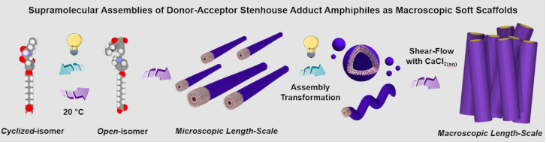
- UV light, we have previously reported a design of amphiphilic donor–acceptor Stenhouse adducts (DASAs) controlled by white light. Herein, we present a series of DASA amphiphiles (DAs) with minor structural modifications on the alkyl linker chain length connecting the DASA motif with the hydrophilic
- fabrication of visible-light-controlled macroscopic scaffolds, offering the next generation of biomedical materials with visible-light-controlled microenvironments and future soft-robotic systems. Keywords: donor–acceptor Stenhouse adduct; photoresponsive molecular amphiphile; supramolecular transformation
- , stiff-stilbene [26], azobenzene [27][28], molecular motors [19][29][30], spiropyran [31][32][33], indigo [34][35], and donor–acceptor Stenhouse adducts (DASAs) [36][37], have been used in supramolecular systems for photoswitchable smart electronic, optoelectronic, and biomedical materials [30][38][39




Bioinformatic prediction of the stereoselectivity of modular polyketide synthase: an update of the sequence motifs in ketoreductase domain
Beilstein J. Org. Chem. 2024, 20, 1476–1485, doi:10.3762/bjoc.20.131
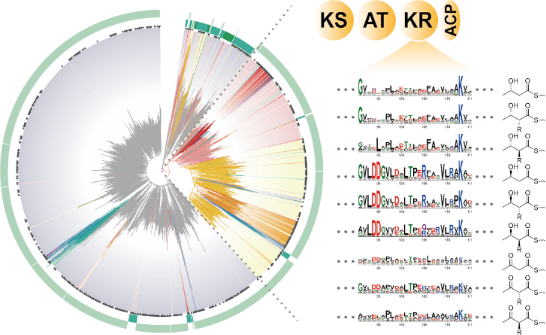
- possessed Q at this residue. This substitution can be reasonable, as it serves as a hydrogen bond donor to activate the β-keto moiety of a substrate [31][32]. Additionally, the presence of K (4), which activates the catalytic tyrosine, was more conserved in C2-type KRs. In general, C2-KRs show similarity to


Synthesis of 2-benzyl N-substituted anilines via imine condensation–isoaromatization of (E)-2-arylidene-3-cyclohexenones and primary amines
Beilstein J. Org. Chem. 2024, 20, 1468–1475, doi:10.3762/bjoc.20.130
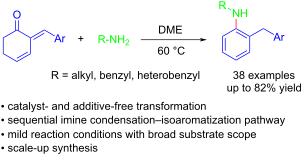
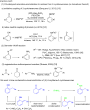
- transformation (Table 1, entries 2–5). Thiourea, which is regarded as a classic H-bond donor in carbonyl activation, also could not boost the yield (Table 1, entry 6). Fortunately, it was found that the yield of 4aa was gradually increased to 64% upon adding 3a from 2.0 to 10.0 equiv (Table 1, entries 7 and 8



A comparison of structure, bonding and non-covalent interactions of aryl halide and diarylhalonium halogen-bond donors
Beilstein J. Org. Chem. 2024, 20, 1428–1435, doi:10.3762/bjoc.20.125
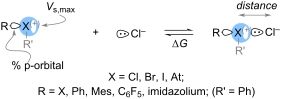
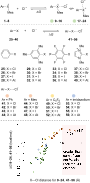
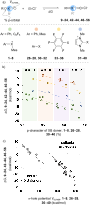
- halogen-bond formation by the linear combination of the % p-orbital character on the halogen and energy of the σ-hole on the halogen-bond donor. Keywords: aryl halide; diarylhalonium; halogen; halogen bond; non-covalent interaction; Introduction Halogen bonding has emerged as an important attractive
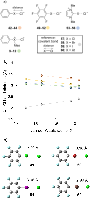
- engage in halogen-bonding interactions [29][30]. In this work, a series of halogen-bond donor molecules and their halogen bond complexes with chloride anion were optimized at the M062x/6-311+G(d) level of theory [31] with def2-tzvpp used for iodine and astatine, and with SMD solvation in tetrahydrofuran
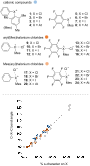
- contacts (Scheme 3). The monovalent halogen-bond donors of phenyl, mesityl, and pentafluorophenyl derivatives 25–35 had endergonic association with chloride (Scheme 3). Pentafluorophenyl astitide (36) was the only neutral monovalent halogen-bond donor with an exergonic association with chloride (ΔG = −5.0




Synthesis of cyclic β-1,6-oligosaccharides from glucosamine monomers by electrochemical polyglycosylation
Beilstein J. Org. Chem. 2024, 20, 1421–1427, doi:10.3762/bjoc.20.124
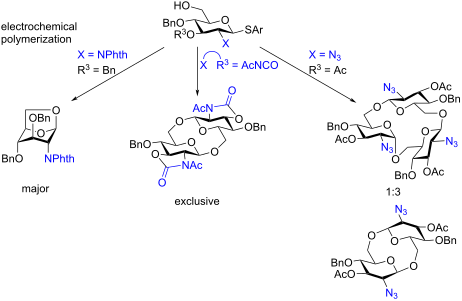
- effect. Although glycosyl donors with an N3 group in position C-2 have been used for α-selective glycosylation [20][21], we have already found that β-selective glycosylation proceeds using a glycosyl donor with an N3 group under electrochemical conditions [22]. The results of the electrochemical


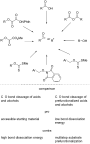
Generation of alkyl and acyl radicals by visible-light photoredox catalysis: direct activation of C–O bonds in organic transformations
Beilstein J. Org. Chem. 2024, 20, 1348–1375, doi:10.3762/bjoc.20.119
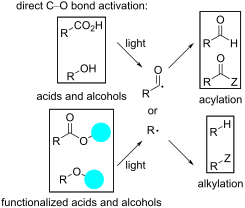
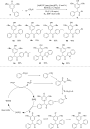
- catalyst is first excited and then transfers one electron to the thiocarbamate moiety to form a thiocarbamate radical anion, with change in oxidation state from III to IV. Next, the sacrificial electron donor Hünig base successfully converts [Ir(IV)] to [Ir(III)], with concurrent formation of an amine
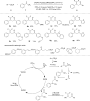
- electron density, which facilitates a π–π interactions with the aryl iodide system and ultimately results in the production of an electron donor–acceptor (EDA) complex 21. Photoexcitation of this EDA complex furnishes an aryl iodide radical anion and a radical cation complex 22. Then, the elimination of






Synthesis of 1,2,3-triazoles containing an allomaltol moiety from substituted pyrano[2,3-d]isoxazolones via base-promoted Boulton–Katritzky rearrangement
Beilstein J. Org. Chem. 2024, 20, 1334–1340, doi:10.3762/bjoc.20.117
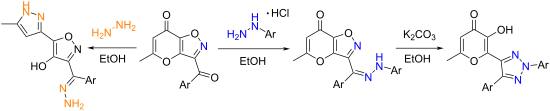
- prepare an array of target 1,2,3-triazoles 4 with allomaltol unit (Scheme 4). It is interesting to note that the recyclization products can be synthesized in good yields employing various starting arylhydrazones 3 both with donor and acceptor substituents at aromatic rings. Besides that, heterocyclic


Transition-metal-catalyst-free electroreductive alkene hydroarylation with aryl halides under visible-light irradiation
Beilstein J. Org. Chem. 2024, 20, 1327–1333, doi:10.3762/bjoc.20.116
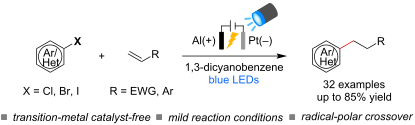
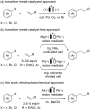
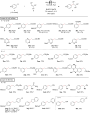
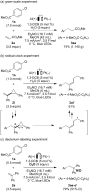
- a hydride donor [5][6][7][8]. On the other hand, aryl radical-involved hydroarylation would be a promising alternative for the synthesis of alkylarenes with high anti-Markovnikov selectivity [9][10]. Aryl halides have received increased attention as ideal radical precursors because of their


Synthesis of indano[60]fullerene thioketone and its application in organic solar cells
Beilstein J. Org. Chem. 2024, 20, 1270–1277, doi:10.3762/bjoc.20.109
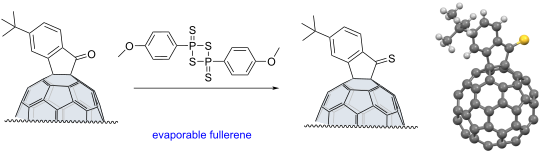
- determined by the difference between the HOMO level of the donor and the LUMO level of the acceptor, t-Bu-FIDS, with a higher LUMO level than C60, was used to fabricate a solution-processed BHJ OPV device with the donor poly(3-hexylthiophene) (P3HT). For comparison, the two known evaporable fullerenes C60
- crystalline polymer donor PNTz4T [32] was used. Compared with t-Bu-FIDS, t-Bu-FIDO achieved 3.71% PCE with larger JSC and higher VOC. With PNTz4T, t-Bu-FIDS exhibited low performance, with JSC of only 4 mA/cm2. This lower VOC may be attributable to a suboptimal BHJ structure between PNTz4T and t-Bu-FIDS


Synthesis and optical properties of bis- and tris-alkynyl-2-trifluoromethylquinolines
Beilstein J. Org. Chem. 2024, 20, 1246–1255, doi:10.3762/bjoc.20.107
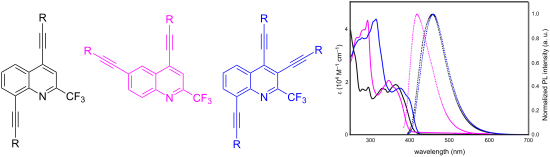
- of 12a and 12c are identical which suggests that the strong acceptor groups of 12c do not have an impact on the emission. On the other hand, the strong donor groups of 12e cause a redshift of 0.20 eV as compared to the simple phenyl-substituted molecule. Electron-acceptor groups usually have a








Competing electrophilic substitution and oxidative polymerization of arylamines with selenium dioxide
Beilstein J. Org. Chem. 2024, 20, 1221–1235, doi:10.3762/bjoc.20.105
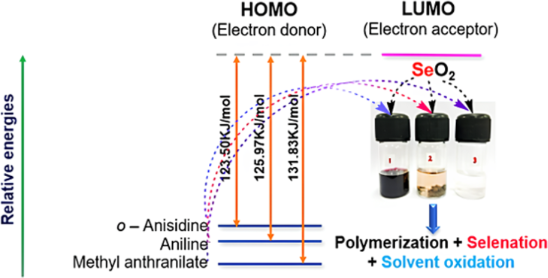
- process, an electron is transferred from the HOMO of an arylamine donor to the LUMO of the SeO2 acceptor. The computed HOMO–LUMO energy difference (∆E) between arylamines and SeO2 decreased in the following order: o-anisidine − SeO2 > aniline − SeO2 > methyl anthranilate − SeO2. It revealed that the HOMO
- of methyl anthranilate was relatively buried, with a large energy gap (mismatch) between the donor and acceptor orbitals, which slowed down the oxidative polymerization process and allowed the alternative reaction pathway, electrophilic substitution of SeO2 on the aryl ring. This result was further
- arylamine reactivity. The NBO analysis was carried out using the same basis set, B3LYP/6-31G(d,p). The natural charge (q) of the nitrogen atom, occupancy of the nitrogen lone pair orbital, second-order perturbation energy (E) for intramolecular donor–acceptor interactions, and the donation of electron


Two-fold addition reaction of silylene to C60: structural and electronic properties of a bis-adduct
Beilstein J. Org. Chem. 2024, 20, 1179–1188, doi:10.3762/bjoc.20.100
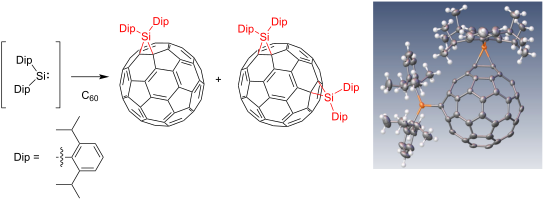
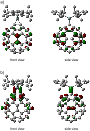
- the transition state was ascribed to the donor–acceptor interactions between the HOMO of the silylene and the LUMO of ethylene, and vice versa [42]. For 2a, the LUMO is largely distributed at the e' bonds, followed by the cis-2 and trans-3 bonds (Figure 8). These results suggest that the formation of


Manganese-catalyzed C–C and C–N bond formation with alcohols via borrowing hydrogen or hydrogen auto-transfer
Beilstein J. Org. Chem. 2024, 20, 1111–1166, doi:10.3762/bjoc.20.98
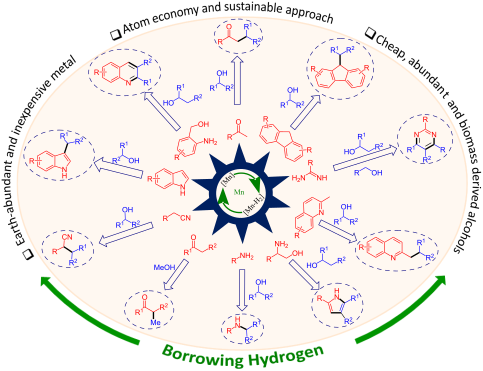
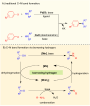
- friendly and atom-economical process for C–C and C–N bond formations utilizing alcohol as an alkylating agent and hydrogen donor, producing water as the only side-product [6][7][8][9]. Notably, alcohols are inexpensive, abundant and can be obtained from biomass, which makes this method even more attractive
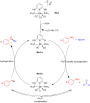
- mol % t-BuOK, t-AmOH, argon atmosphere), various substituted ketones were selectively alkylated with benzyl alcohols as alkyl source and hydrogen donor at 140 °C for 24 h and afforded up to 98% yield of the C-alkylated products (Scheme 26). In addition, numerous substituted benzylic, aliphatic, and
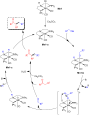
- step, the hydrogenation of the formed intermediate took place via the outer sphere mechanism to deliver the desired alkylated nitrile products (Scheme 54). In 2019, Rueping and El-Seplegy reported the well-defined manganese-PNP complex-catalyzed alkylation of nitriles with alcohols as a hydrogen donor