

Search results
Search for "coupling reaction" in Full Text gives 546 result(s) in Beilstein Journal of Organic Chemistry. Showing first 200.
Construction of hexabenzocoronene-based chiral nanographenes
Beilstein J. Org. Chem. 2023, 19, 736–751, doi:10.3762/bjoc.19.54
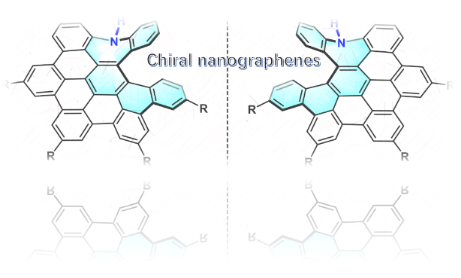
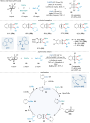
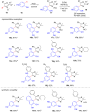
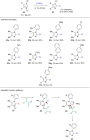
- ]azepine and tetrabromothiophene-S,S-dioxide, followed by oxidative aromatization in the presence DDQ to afford compound 25 in an overall 75% yield. Suzuki−Miyaura cross-coupling reaction of compound 25 with (4-ethylphenyl)boronic acid in the presence of Pd(CH3CN)2Cl2, SPhos, and K3PO4 then furnished the
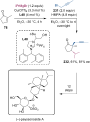
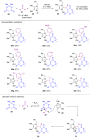
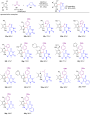
- the prefused building block in a 49% yield. Then naphthalene and phenanthrene residues were introduced into compound 33 through Suzuki coupling reaction, the corresponding precursors 34 and 36 were obtained respectively in high yields. The final cyclodehydrogenation using DDQ and TfOH proceeded
- Sonogashira cross-coupling reaction of phenylacetylene 50 and 1,4-dibromotetrafluorobenzene. The resulting bis[aryl(ethynyl)]tetrafluorobenzene 59 was able to undergo a 2-fold [4 + 2] cycloaddition reaction with cyclopentadienone 2, affording polyaromatic 60 in a 70% yield. The final step was the Scholl




Synthesis of medium and large phostams, phostones, and phostines
Beilstein J. Org. Chem. 2023, 19, 687–699, doi:10.3762/bjoc.19.50
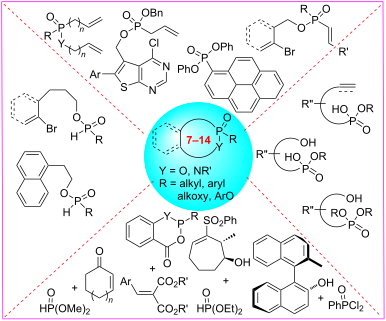
- refluxing toluene under argon atmosphere (Scheme 9) [21]. In addition, the intramolecular coupling reaction of diphenyl pyren-1-ylphosphonate (47) accomplished the synthesis of 3-phenoxybenzo[f]pyreno[1,10-cd][1,2]oxaphosphepine 3-oxide (48) in 35% yield in the presence of largely excessive amounts of AlCl3




Photocatalytic sequential C–H functionalization expediting acetoxymalonylation of imidazo heterocycles
Beilstein J. Org. Chem. 2023, 19, 666–673, doi:10.3762/bjoc.19.48
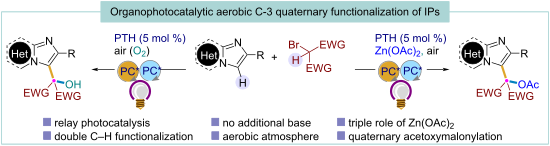
- plays a crucial role in activating IP towards the photoredox coupling reaction. Shifting of protons in the 1H NMR spectrum of 2-phenylimidazo[1,2-a]pyridine (1a) in the presence of Zn(OAc)2 in CDCl3 indicates a weak interaction of Zn(OAc)2 with 1a (see Supporting Information File 1 for details) [20][21




Enolates ambushed – asymmetric tandem conjugate addition and subsequent enolate trapping with conventional and less traditional electrophiles
Beilstein J. Org. Chem. 2023, 19, 593–634, doi:10.3762/bjoc.19.44
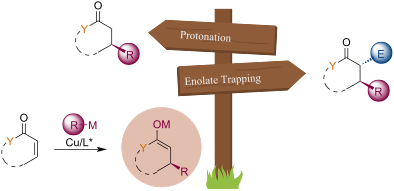
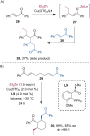
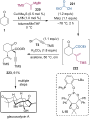
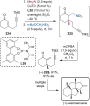
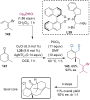
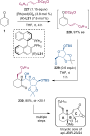
- diastereomers were detected (Scheme 9A). Furthermore, the authors have also demonstrated a four-component coupling reaction: by simply increasing the amount of the organolithium reagent (2.05 equiv) used for the activation of the Zn enolate, β-hydroxyketones 40 were gained via 1,2-addition of the zincate
- derivatization is possible through the oxidation of the silyl motif to alcohol or the dehydration of the aldol adduct. Other tandem conjugate addition/enolate-trapping reactions In 2016, Nishiyama and co-workers have studied a three-component coupling reaction of alkynes, enones, and aldehydes via direct









Phenanthridine–pyrene conjugates as fluorescent probes for DNA/RNA and an inactive mutant of dipeptidyl peptidase enzyme
Beilstein J. Org. Chem. 2023, 19, 550–565, doi:10.3762/bjoc.19.40
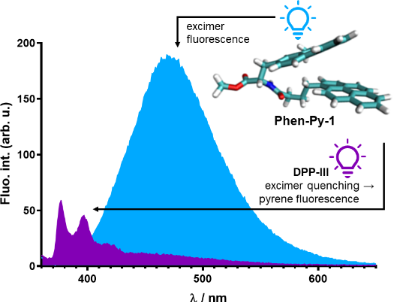
- Synthesis The phenanthridine derivative of the amino acid alanine (Phen-AA) has been prepared according to the procedure described earlier [19]. Phen-AA was deprotected under acidic conditions (TFA–H2O) at room temperature for 20 hours. The amide coupling reaction was performed in anhydrous acetonitrile




Transition-metal-catalyzed domino reactions of strained bicyclic alkenes
Beilstein J. Org. Chem. 2023, 19, 487–540, doi:10.3762/bjoc.19.38
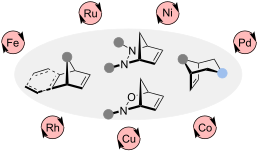
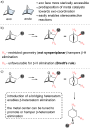
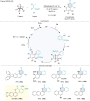
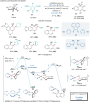
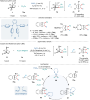
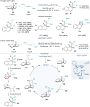
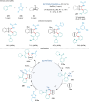
- forms 164. Next, cleavage of the N–O bond followed by an oxidative addition of the Rh(III) to the N–O bond forms intermediate 165 which can finally undergo reductive elimination giving the final product 160a. In 2013, Li reported the domino coupling reaction of 2-phenylpyridines 165 with oxa- and
- and benzamides with azabenzonorbornadienes [78]. Interestingly, the dehydration step occurred smoothly with an aza-leaving group rather than the more common oxa-leaving group discussed above. In 2013, the Radhakrishnan laboratory reported the Rh-catalyzed domino ring-opening coupling reaction of



















Combretastatins D series and analogues: from isolation, synthetic challenges and biological activities
Beilstein J. Org. Chem. 2023, 19, 399–427, doi:10.3762/bjoc.19.31
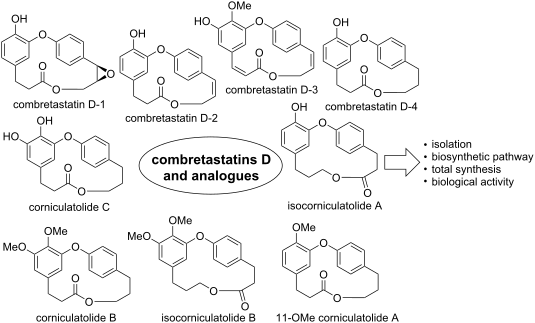
- would give compounds 12 and 13. A coupling reaction would give the corresponding diaryl ether Int-2, in a similar way to that suggested by Pettit, which could be selectively reduced to afford the corresponding seco-acid (intermediates Int-3 and Int-4). Subsequent macrolactonization would give the
- coupling reaction. Thus, the olefination reaction of aldehyde 15 with phosphonate 23, followed by the reduction of the obtained ester 24 using DIBAL led to the alcohol 25. The latter was submitted to the reaction with carboxylic acid 26 under Mitsunobu conditions [30], giving the corresponding ester 27 in
- esterification reactions gave the ester 33 which was submitted to a Sonogashira coupling reaction with propargyl alcohol to give the advanced intermediate 34 [34]. Partial hydrogenation of the triple bond in 34 using Lindlar’s catalyst led to the cis-allylic alcohol 35 and subsequent ester hydrolysis led to the




Strategies to access the [5-8] bicyclic core encountered in the sesquiterpene, diterpene and sesterterpene series
Beilstein J. Org. Chem. 2023, 19, 245–281, doi:10.3762/bjoc.19.23
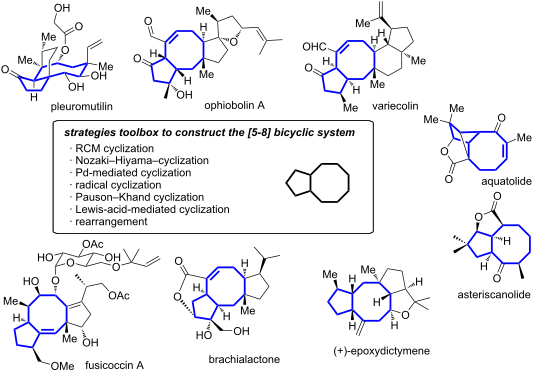
- 31 and oxazolidinone 32 (Scheme 5) [26]. Subsequently, compound 33 was converted in four steps into aldehyde 34 which was engaged in a coupling reaction with bromoketone 35 according to Utimoto conditions to furnish the A-C-D adduct 36 as a single stereoisomer in high yield. Of note, the Utimoto
- possessing a terminal alkene and a vinyl iodide moiety in 9 steps. This compound can be considered as a difunctionalized compound. Indeed, the vinyl iodide function will be engaged first in a coupling reaction with hydrindanone 87 and the terminal alkene will be involved in the key RCM reaction to ensure
- –Hiyama–Kishi (NHK) reaction is an interesting coupling reaction involving the addition of a halogeno derivative (either bromide or iodide) to an aldehyde in the presence of nickel and chromium salts, typically NiCl2/CrCl2, generating an alcohol. In its original version, the stereochemistry of the adduct


Total synthesis of insect sex pheromones: recent improvements based on iron-mediated cross-coupling chemistry
Beilstein J. Org. Chem. 2023, 19, 158–166, doi:10.3762/bjoc.19.15

- carbon–carbon iron-catalyzed cross coupling as a key step were developed, capitalizing on the low toxicity and the cheap cost of this abundant metal [10]. For instance, in 1971, Kochi developed an iron-catalyzed alkyl–alkenyl cross-coupling reaction between aliphatic Grignard reagents and vinyl bromides
- cross coupling reaction developed by Kochi, leading to better yields, with no need to use an excess of one of the coupling partners (Scheme 2b) [12]. The yields obtained using this ligand-free method are comparable to those obtained in recent palladium-mediated alkyl–vinyl cross-couplings using
- ) as a co-solvent. Nevertheless, capitalizing on these results, Cahiez further developed this iron-catalyzed cross coupling reaction with dienol phosphates as electrophiles, which are thermally more stable than dienyl halides [20]. It was found that when dienol phosphates were used as electrophiles


Inline purification in continuous flow synthesis – opportunities and challenges
Beilstein J. Org. Chem. 2022, 18, 1720–1740, doi:10.3762/bjoc.18.182
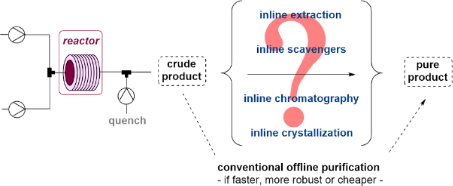
- dipeptide with the aim to overcome issues found in batch in relation to product stability and scale-up concerns. The peptide coupling reaction was performed continuously aided by a MSMPR crystallizer system. This system ultimately shortened the holding time for the quenched solution, leading to a robust




A new route for the synthesis of 1-deazaguanine and 1-deazahypoxanthine
Beilstein J. Org. Chem. 2022, 18, 1617–1624, doi:10.3762/bjoc.18.172
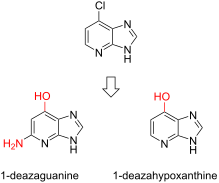
- the cross coupling reaction. We also mention that we did not decide for a direct transformation [27][28] of 6-iodo-1-deazapurine into 6-hydroxy-1-deazapurine for reasons of solubility and desired regioselectivity of the subsequent nitration reaction. 1-Deazahypoxanthine Synthesis of 1


Formal total synthesis of macarpine via a Au(I)-catalyzed 6-endo-dig cycloisomerization strategy
Beilstein J. Org. Chem. 2022, 18, 1589–1595, doi:10.3762/bjoc.18.169
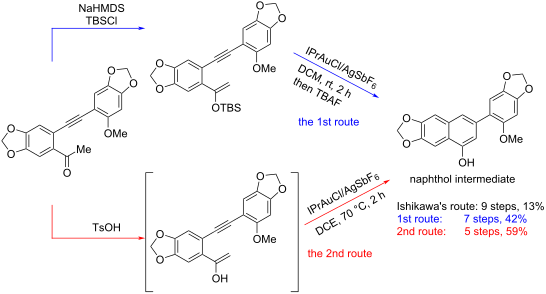
- be synthesized from silyl enol ether compound 10 via the Au(I)-catalyzed cycloisomerization reaction developed by our group [15]. The compound 10 could be constructed by the Sonogashira coupling reaction from readily prepared iodoarene 8 [12][16] and ketone 5, which could be synthesized by using
- building blocks 5 and 8 in hand, ketone 9 was prepared via a palladium-catalyzed Sonogashira coupling reaction in a yield of 95%. The precursor 10 for the gold(I)-catalyzed [19][20][21][22][23][24] cycloisomerization was then synthesized by treating ketone 9 with sodium bis(trimethylsilyl)amide (NaHMDS


Functionalization of imidazole N-oxide: a recent discovery in organic transformations
Beilstein J. Org. Chem. 2022, 18, 1575–1588, doi:10.3762/bjoc.18.168
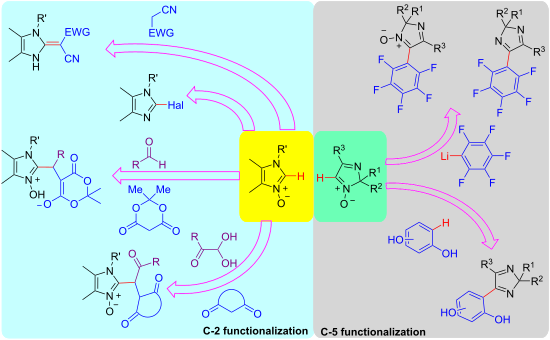
- , like cycloaddition, metal-free coupling reactions, three-component or multicomponent reactions etc., which use N-oxide chemistry. In 2021 Timofey D. Moseev and co-workers unfolded an attractive procedure of the coupling reaction between 2H-imidazole 1-oxides and polyphenols under metal-free conditions
- substitution reactions Metal-free coupling reaction through nucleophilic substitution of H-atom (SNH) In 2020, a C–H/C–Li coupling reaction between 2H-imidazole 1-oxides and pentafluorophenyllithium under transition metal-free conditions was reported by Timofey D. Moseev and co-workers [17]. The reaction
- provide the targeted products 11a–h. In the next year (2021), the same authors suggested another fascinating deoxygenative transition-metal-free SNH coupling reaction procedure of 2H-imidazole 1-oxides with polyphenols [10]. This process is convenient for producing bioactive bifunctional compounds





Simple synthesis of multi-halogenated alkenes from 2-bromo-2-chloro-1,1,1-trifluoroethane (halothane)
Beilstein J. Org. Chem. 2022, 18, 1567–1574, doi:10.3762/bjoc.18.167
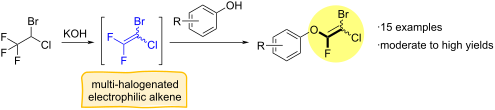
- HF from 1 provides 2 as an E/Z mixuture (E/Z = 1:1). We speculated that the stability of the E isomer was equal to that of the Z isomer under these conditions. To expand the scope of this reaction, we subjected product 2 to a Sonogashira cross-coupling reaction (Scheme 3). This gave a highly
- dichloride (4 mol %), copper iodide (4 mol %) and triethylamine (0.75 mmol) in THF (2.5 mL) was added dropwise trimethylsislylacetylene (1.0 mmol) for 1 min at room temperature. The solution was stirred at rt until the Sonogashira coupling reaction was completed. The reaction mixture was filtered and
- -coupling reaction of 2a with trimethylsilylacetylene. Optimization of reaction conditions for obtaining 2a from 3a and halothane. Scope of reaction with various substituted phenols (3b–p). Supporting Information Supporting Information File 352: Characterization data for 2b–p and copies of 1H, 13C, and 19F


Solid-phase total synthesis and structural confirmation of antimicrobial longicatenamide A
Beilstein J. Org. Chem. 2022, 18, 1560–1566, doi:10.3762/bjoc.18.166
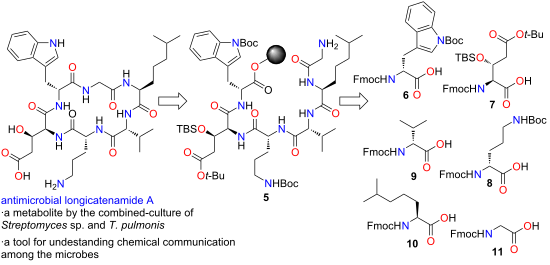
- SnCl2-catalyzed coupling reaction [20] between 21 and 22 afforded β-keto ester 23, which was then reduced to the corresponding β-hydroxy ester 24 by K-Selectride (dr > 20:1), and subsequent acidic removal of the acetonide furnished diol 25. The stereochemistry of the newly generated hydroxy group was



An alternative C–P cross-coupling route for the synthesis of novel V-shaped aryldiphosphonic acids
Beilstein J. Org. Chem. 2022, 18, 1518–1523, doi:10.3762/bjoc.18.160
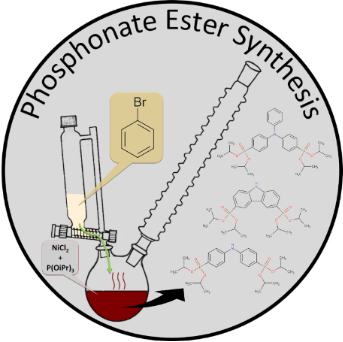
- order of addition of reactants to perform the transition-metal-catalyzed C–P cross-coupling reaction, often referred to as the Tavs reaction, employing NiCl2 as a pre-catalyst in the phosphonylation of aryl bromide substrates using triisopropyl phosphite. This new method was employed in the synthesis of
- three novel aryl diphosphonate esters which were subsequently transformed to phosphonic acids through silylation and hydrolysis. Keywords: arylphosphonic acids; cross-coupling reaction; phosphonate esters; transition-metal catalysis; Introduction Phosphonates and phosphonic acids are a very
- -coupling reaction is carried out by placing the aryl halide and the precatalyst into a round-bottomed flask in the presence of a suitable solvent, such as 1,3-diisopropylbenzene or mesitylene, and setting to reflux. The advantage of using such solvents lies in their high boiling point (203 °C and 164 °C



Cyclometalated iridium complexes-catalyzed acceptorless dehydrogenative coupling reaction: construction of quinoline derivatives and evaluation of their antimicrobial activities
Beilstein J. Org. Chem. 2022, 18, 1507–1517, doi:10.3762/bjoc.18.159
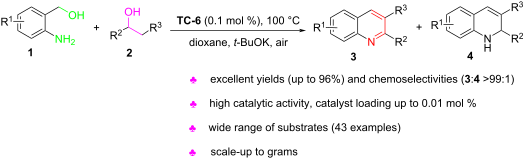
- against Gram-positive bacteria and compound 3ck against C. albicans were better than the reference drug norfloxacin. Keywords: acceptorless dehydrogenative coupling reaction; antibacterial; cyclometalated iridium complexes; quinolines; Introduction As an important class of heterocyclic compounds


Microelectrode arrays, electrosynthesis, and the optimization of signaling on an inert, stable surface
Beilstein J. Org. Chem. 2022, 18, 1488–1498, doi:10.3762/bjoc.18.156
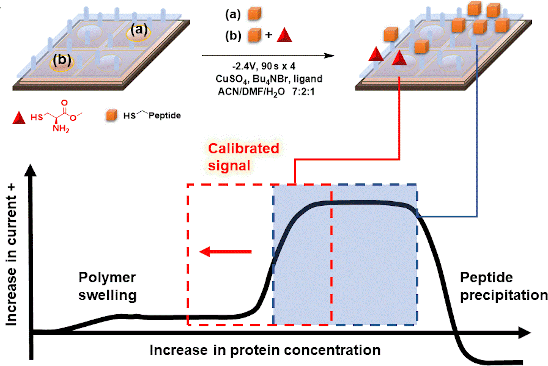
- peptide so that the thiol group in the sidechain could be used to place the molecule the array with the use of an electrochemically initiated Cu(I)-catalyzed cross-coupling reaction (Scheme 1) [9]. To this end, the Cu(I) catalyst needed for the reaction was generated at the electrodes by the reduction of
- for the confinement strategy to keep up. The result is a loss in confinement. It is important to point out that the reaction shown in Scheme 1 is not a typical electrosynthetic reaction. The cross-coupling reaction shown is a Cu(I)-catalyzed transformation that requires no recycling of a reagent
- direct analogy to the RGD-peptide experiment shown above. In this case, a Cu(II)-mediated Chan–Lam coupling reaction was used to place each molecule on a arylborate ester coating the array (Scheme 2) [23]. The Cu(II) needed for the transformation was generated at the selected electrodes by the oxidation


Synthesis of meso-pyrrole-substituted corroles by condensation of 1,9-diformyldipyrromethanes with pyrrole
Beilstein J. Org. Chem. 2022, 18, 1403–1409, doi:10.3762/bjoc.18.145
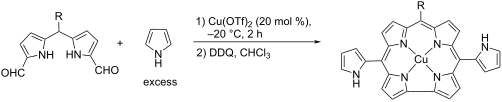
- the silica column to remove Cu(OTf)2. The solvent was removed under reduced pressure and the crude product was purified by flash column chromatography over silica gel with CH2Cl2/hexane (1:1). Synthesis of 3 and 4 by [2 + 2] MacDonald coupling reaction A solution of 5-phenyl-1,9-diformyldipyrromethane


Preparation of an advanced intermediate for the synthesis of leustroducsins and phoslactomycins by heterocycloaddition
Beilstein J. Org. Chem. 2022, 18, 1385–1395, doi:10.3762/bjoc.18.143
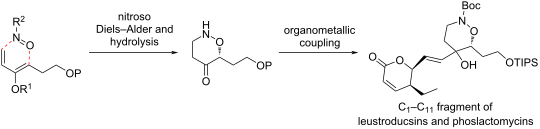
- (Scheme 6); iodination with NIS, as previously described [29], gave lower yields. We first attempted the coupling with the terminal alkyne 19, anticipating the possibility of reducing the triple bond after coupling reaction. In agreement with literature precedents, we chose LiHMDS for deprotonation of 19
- gave a reproducible 46% yield of 23. Optimal conditions were obtained using 1.8 equivalents of vinyl iodide and 1.7 equivalents of BuLi (Table 2, entry 6). It was difficult at this stage to determine the stereoselectivity of the coupling reaction since the starting acetal in 20 was a mixture of
- stereoselectivity of the coupling reaction. This validates the overall strategy for the synthesis of leustroducsins or phoslactomycins by the synthesis of a central cyclic core and its coupling with the other fragments. Conclusion We have synthesized an advanced intermediate for the total synthesis of


Heterogeneous metallaphotoredox catalysis in a continuous-flow packed-bed reactor
Beilstein J. Org. Chem. 2022, 18, 1123–1130, doi:10.3762/bjoc.18.115
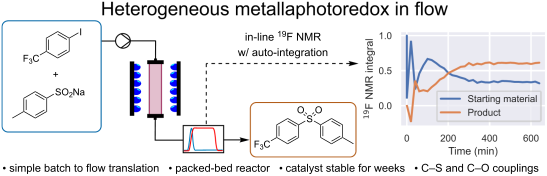
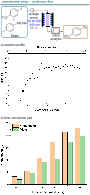
- a narrower residence time distribution and higher yields (see Table 2). C–O coupling reaction Finally, we evaluated the use of the capillary-based reactor for the related C–O coupling of 4-iodobenzotrifluoride and N-(Boc)-proline with N-tert-butylisopropylamine (BIPA) in dimethyl sulfoxide (DMSO





Electrochemical formal homocoupling of sec-alcohols
Beilstein J. Org. Chem. 2022, 18, 1062–1069, doi:10.3762/bjoc.18.108
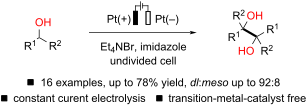
- -coupling reaction of two different benzyl alcohols (Scheme 3). Pleasingly, the reaction using a 1:1 mixture of 1a and 1f under the standard reaction conditions provided the cross-coupling product 2af (dr = 94:6) together with the homocoupling products 2a and 2f. To demonstrate the scalability of the
- /mol, 0 °C, under air. a100 mA cc. b6 F/mol, imidazole (0.075 equiv). c6 F/mol. d8 F/mol, imidazole (0.1 equiv) e8 F/mol, MeCN/MeOH (4:1, 5 mL) without H2O. Investigation of cross-coupling reaction. Large-scale experiment. Control experiments. aDetermined by 1H NMR using 1,3,5-trimethoxybenzene as an




Synthesis of novel alkynyl imidazopyridinyl selenides: copper-catalyzed tandem selenation of selenium with 2-arylimidazo[1,2-a]pyridines and terminal alkynes
Beilstein J. Org. Chem. 2022, 18, 863–871, doi:10.3762/bjoc.18.87
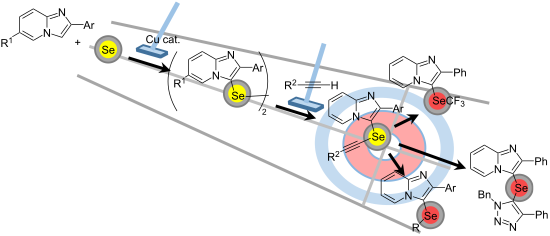
- selenides [25]. In this reaction, unlike the former, bis(imidazo[1,2-a]pyridin-3-yl) diselenides are generated through C–H selenation at the 3-position of 2-arylimidazopyridines with Se powder, followed by the cross-coupling reaction between diselenides and triarylbismuthines. These one-pot reactions are
- imidazopyridinyl selenides A Cu-catalyzed cross-coupling reaction using benzene ring substituted diaryl diselenides with terminal alkynes in the presence of bases is effective for synthesizing aryl alkynyl selenides [27][28][29][30][31]. We previously reported a simple method for the synthesis of bis(2-arylimidazo
- standard conditions did not proceed (Scheme 1, reaction 2). The reaction mechanism for this coupling reaction is presently unclear. We propose that the reaction mechanism may be similar to that of the C(sp)–Se bond formation of terminal alkynes with diaryl diselenides reported by Stieler and Schneider [31



Continuous flow synthesis of azobenzenes via Baeyer–Mills reaction
Beilstein J. Org. Chem. 2022, 18, 781–787, doi:10.3762/bjoc.18.78
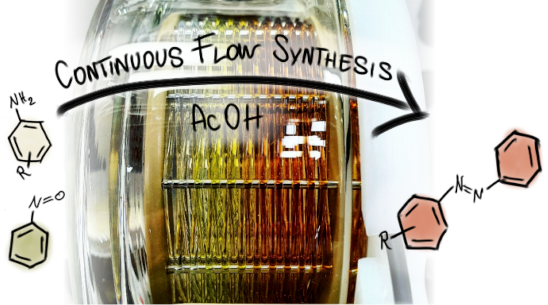
- used Baeyer–Mills coupling reaction was adopted to a continuous flow setup. The versatility was demonstrated with a scope of 20 substances and the scalability of this method exemplified by the synthesis of >70 g of an azobenzene derivative applied in molecular solar thermal storage (MOST) systems


DDQ in mechanochemical C–N coupling reactions
Beilstein J. Org. Chem. 2022, 18, 639–646, doi:10.3762/bjoc.18.64
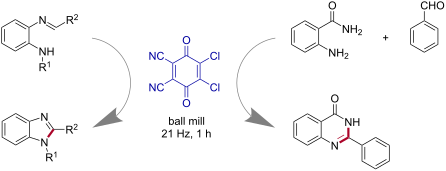
- -Dichloro-5,6-dicyano-1,4-benzoquinone (DDQ) is a commonly known oxidant. Herein, we report that DDQ can be used to synthesize 1,2-disubstituted benzimidazoles and quinazolin-4(3H)-ones via the intra- and intermolecular C–N coupling reaction under solvent-free mechanochemical (ball milling) conditions. In
- , followed by hydride abstraction to generate the desired product 2a. On the other hand, the formation of quinazolin-4(3H)-ones starts with the formation of an imine intermediate and then it will follow the similar mechanistic pathway. To explore the synthetic utility of the oxidative C–N cross-coupling
- reaction, we have performed the large-scale synthesis under the solvent-free (ball milling) conditions as shown in Figure 6. In this context, milling of the substrate (E)-N-(2-((4-bromobenzylidene)amino)phenyl)-4-methylbenzenesulfonamide (1c, 2.795 mmol) in the presence of 1.2 equiv of DDQ delivered 1.098