
Search results
Search for "NMR" in Full Text gives 3262 result(s) in Beilstein Journal of Organic Chemistry. Showing first 200.
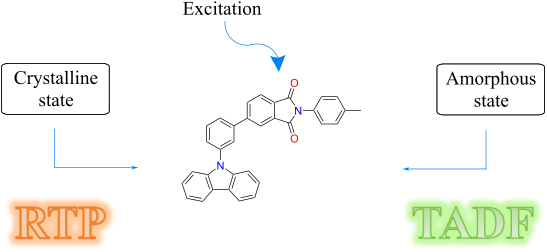
Configuration–packing synergy enabling integrated crystalline-state RTP and amorphous-state TADF
Beilstein J. Org. Chem. 2026, 22, 224–236, doi:10.3762/bjoc.22.16
- without further purification. Instruments and measurements Low-resolution mass spectra were recorded on a DSQ electron-impact (EI) mass spectrometer. High-resolution mass spectra (HRMS) were acquired on a Thermo MAT95XP instrument using fast atom bombardment (FAB) ionization. 1H and 13C NMR spectra were
- recorded on a Bruker Avance III 500HD superconducting NMR spectrometer using DMSO-d6 as the solvent and tetramethylsilane (TMS) as the internal standard. Single crystals suitable for X-ray diffraction analysis were grown from a dichloromethane/n-hexane solvent system; diffraction data were collected on a
- final pure product, 5-(3-(9H-carbazol-9-yl)phenyl)-2-(p-tolyl)isoindoline-1,3-dione (1), was obtained as a solid in a yield of 1.36 g (90%). 1H NMR (500 MHz, DMSO-d6) δ 8.34 (s, 1H), 8.31(d, 1H), 8.27 (d, 2H), 8.13 (s, 1H), 8.07–7.98 (m, 2H), 7.84 (t, 1H), 7.74 (d, 1H), 7.53–7.42 (m, 4H), 7.33 (s, 4H


Synthesis of diaryl phosphates using phytic acid as a phosphorus source
Beilstein J. Org. Chem. 2026, 22, 213–223, doi:10.3762/bjoc.22.15
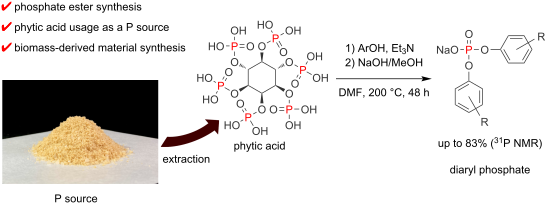
- solution. The isolated diaryl phosphates were brownish, likely due to the presence of trace impurities formed during the reaction; however, the NMR data revealed that few impurity peaks remained. All of these compounds are known, and the NMR spectral data were consistent with previously reported data for
- would be difficult. Furthermore, when 1-naphthol (1k) and 2-naphthol (1l) were used as substrates, the 31P NMR yields of the produced diesters were 45% (2k) and 29% (2l), respectively, and their isolation was difficult because of the presence of large amounts of naphthol-derived by-products. When the
- reactions were performed using alkyl alcohols, their behavior differed significantly from that of aromatic alcohols, and phosphate diesters were not obtained selectively. According to the results of the esterification time-course analysis via 31P NMR presented in Scheme 3 as well as in Figure 4 and Figure




Screwing the helical chirality through terminal peri-functionalization
Beilstein J. Org. Chem. 2026, 22, 205–212, doi:10.3762/bjoc.22.14
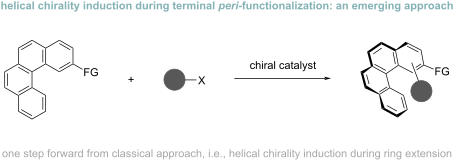
- phosphine oxide and the nitro-functionalized oxa[5]helicene. This ion-pairing interaction was also studied using NMR titration and Job’s plot analysis. The transition state depicted in Figure 3 was found to be most favorable providing the product with M-configuration. Looking ahead, these strategies may


Base-promoted deacylation of 2-acetyl-2,5-dihydrothiophenes and their oxygen-mediated hydroxylation
Beilstein J. Org. Chem. 2026, 22, 192–204, doi:10.3762/bjoc.22.13
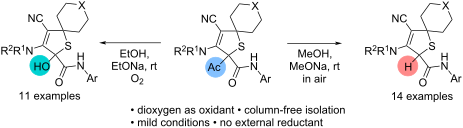
- : Full experimental details and characterization data of all new compounds. Supporting Information File 18: Copies of NMR spectra of all new compounds. Supporting Information File 19: CIF-file for compound 5g. Supporting Information File 20: CheckCIF-file for compound 5g. Funding We gratefully




Streptoquinolines A and B, new antibacterial meroterpenoids produced by Streptomyces sp. TMPU-A0679
Beilstein J. Org. Chem. 2026, 22, 185–191, doi:10.3762/bjoc.22.12
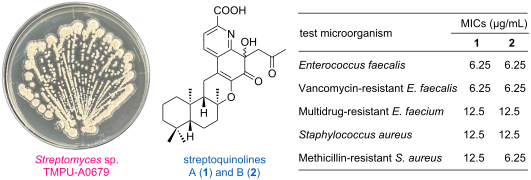
- -resistant enterococci (VRE), two new meroterpenoids, streptoquinolines A (1) and B (2), were isolated from a culture of terrestrial Streptomyces sp. TMPU-A0679. The structures of 1 and 2 were elucidated based on spectroscopic analyses, including NMR and MS, and were found to consist of a drimane-type
- and 1620–1680 cm−1 indicated the presence of hydroxy and carbonyl groups, respectively. Streptoquinoline A (1): The molecular formula of 1 was elucidated as C28H35NO6 based on HRESIMS measurements. The 13C NMR spectrum (in DMSO-d6) showed 28 signals, which were classified into five methyl carbons
- , seven sp3 methylene carbons, two sp3 methine carbons, two sp2 methine carbons, two sp3 quaternary carbons, two oxygenated sp3 quaternary carbons, five sp2 quaternary carbons, and three carbonyl carbons from an analysis of the HMQC spectrum. The 1H NMR spectrum (in DMSO-d6) exhibited signals


Improved synthesis and physicochemical characterization of the selective serotonin 2A receptor agonist 25CN-NBOH
Beilstein J. Org. Chem. 2026, 22, 175–184, doi:10.3762/bjoc.22.11
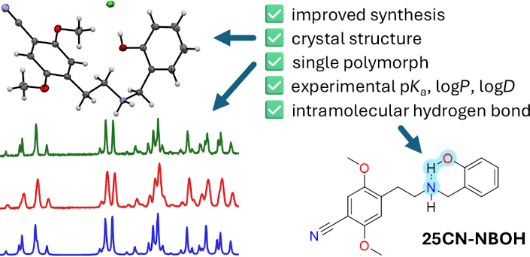
- be partially responsible for its high membrane permeability. To investigate if an IMHB is indeed present in 1, we combined DFT calculations with NMR spectroscopy titrations. For a system containing an IMHB, it would be expected that replacing the proton (O–H) with a deuteron (O–D) would lead to an
- isotope effect observable as changes in the 13C NMR chemical shift [18][19]. DFT calculations were based on a truncated model (Figure 6a) containing the essential elements for intramolecular hydrogen bonding. The structure was considered both in vacuum as well as with DMSO or water as implicit solvents
- bond [21]. When measuring 13C NMR spectra in DMSO-d6 containing different D2O/H2O ratios, isotope effects were clearly observed at several positions (Figure 6c and Figure 6d), with a particularly pronounced upfield shift of the phenol ipso-carbon atom (C14, Δδexp = 0.21 ppm). This two-bond isotope


A new synthesis of Tyrian purple (6,6’-dibromoindigo) and its corresponding sulfonate salts
Beilstein J. Org. Chem. 2026, 22, 167–174, doi:10.3762/bjoc.22.10
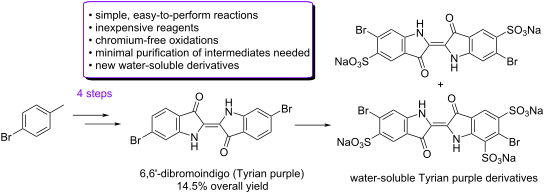
- addition of 1.2 equivalents of triethylamine mediated the formation of 4 in moderate yield, as shown in Scheme 5B (57% isolated, 67% based on NMR). The crude product was sufficiently pure (84 wt % by quantitative NMR) to carry on without purification, but further purification was possible by


Asymmetric Mannich reaction of aromatic imines with malonates in the presence of multifunctional catalysts
Beilstein J. Org. Chem. 2026, 22, 151–157, doi:10.3762/bjoc.22.8
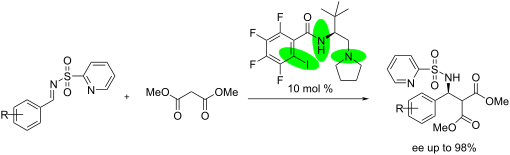
- , entry 17), further highlighting the importance of the pyridine ring containing protecting group. The interaction between catalyst E and the imine was further investigated by 19F NMR studies (see Supporting Information File 1). To further elucidate the role of noncovalent interactions, we conducted
- monitored by 1H NMR analysis. After completion of the reaction, the product was isolated by direct precipitation from the crude reaction mixture by adding a mixture of petroleum ether/Et2O (4:1; 2 mL). The product was collected by filtration and washed with a mixture of petroleum ether/Et2O (4:1; 4 × 2 mL
- 20: Experimental procedures, synthetic details, NMR spectra, chiral HPLC chromatograms. Funding The research was funded by the Estonian Ministry of Education and Research (grant No. PRG1031).


Design and synthesis of an axially chiral platinum(II) complex and its CPL properties in PMMA matrix
Beilstein J. Org. Chem. 2026, 22, 143–150, doi:10.3762/bjoc.22.7
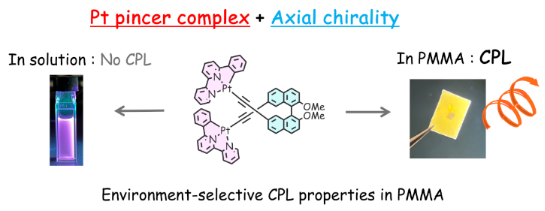
- platinum(II) complexes with pincer ligand moieties [12]. Thus, the reaction of S/R-3 with platinum(II) precursor 4 in the presence of CuI and diisopropylamine afforded the target platinum(II) complex S/R-Pt in moderate yield. The identification of the complex S/R-Pt were carried out with 1H and 13C NMR
- optoelectronic applications. Experimental General information All reagents and solvents were of commercial reagent grade and used without further purification. Dichloromethane for spectroscopy was purchased from FUJIFILM Wako Pure Chemical Corporation. All compounds were identified by 1H , 13C NMR and ESI-MS. 1H
- and 13C NMR spectra were recorded on a Bruker Avance III 400 or JEOL JNM-ECZ600R spectrometer at 25 °C in chloroform-d1 or DMSO-d6. 1H NMR chemical shifts are expressed in parts per million (δ) relative to trimethylsilane (TMS) as a reference. Mass spectra were obtained with a Thermo Scientific


Symmetrical D–π–A–π–D indanone dyes: a new design for nonlinear optics and cyanide detection
Beilstein J. Org. Chem. 2026, 22, 131–142, doi:10.3762/bjoc.22.6
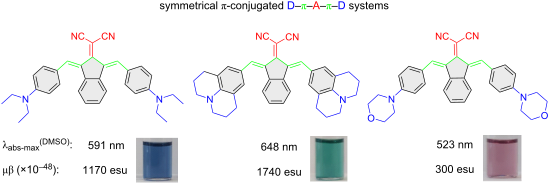
- cyanide and the chemosensor is determined by a 1H NMR study and explained by DFT calculations. Keywords: chemosensor; DFT calculations; donor–π–acceptor–π–donor based organic dyes; indan-2-one; NLO; Introduction Over the past decades, the functional heterocyclic push–pull dyes have attracted significant
- toxic anion and dangerous to human health, by dyes gives advantages such as high sensitivity, fast response, low cost, and ease of operation [26][27][28]. In this study, symmetric novel indan-2-one derivatives with a D–π–A–π–D system were synthesized, and their structures were characterized using 1H NMR
- , 13C NMR, and mass spectrometry methods. Dye structures were designed with alkylaminophenyl groups, known for their various electron-donating properties, as donors, and the dicyanovinyl group, with its strong electron-withdrawing properties, as acceptors, conjugated with an indan-2-one core (Figure 1


Highly electrophilic, gem- and spiro-activated trichloromethylnitrocyclopropanes: synthesis and structure
Beilstein J. Org. Chem. 2026, 22, 123–130, doi:10.3762/bjoc.22.5
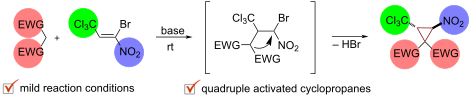
- use of method E in the reaction of 1-bromo-1-nitro-3,3,3-trichloropropene (1) with methyl cyanoacetate, ethyl cyanoacetate or benzoylacetonitrile makes it possible to obtain cyclopropanes 3–5 in the yields up to 72% (Scheme 2). They are formed as single diastereomers (according to the 1H NMR spectra
- and 9b (1.3:1 dr, according to the 1H NMR spectrum) due to the axial chirality of this molecule. The mixture was easily separated by silica gel column chromatography. Each of the isomers is characterized by the trans-configuration of the nitro- and trichloromethyl groups in the cyclopropane ring (3JH
- conditions. The reaction is carried out either in tetrahydrofuran in the presence of triethylamine or in methanol in the presence of fused potassium acetate. The structures of the isolated individual products were characterized by 1H and 13C NMR, IR spectroscopy, mass spectrometry, and confirmed by single


Advances in Zr-mediated radical transformations and applications to total synthesis
Beilstein J. Org. Chem. 2026, 22, 71–87, doi:10.3762/bjoc.22.3
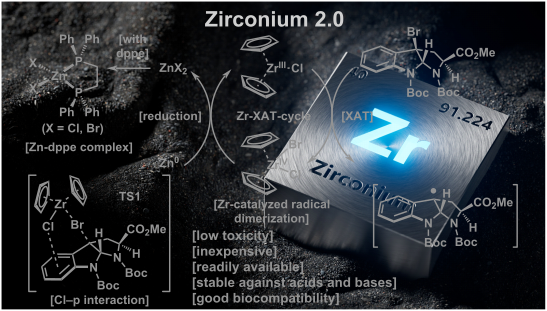
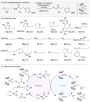
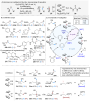
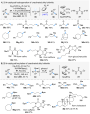
- hydrogen atom from 1,4-cyclohexadiene to furnish the alcohol product. The active species Cp2ZrIII(OTf) is then regenerated via single-electron transfer (SET) from the Ir photocatalyst. Notably, the addition of thiourea 26 significantly improved the regioselectivity in this reaction. According to NMR








Reactivity umpolung of the cycloheptatriene core in hexa(methoxycarbonyl)cycloheptatriene
Beilstein J. Org. Chem. 2026, 22, 64–70, doi:10.3762/bjoc.22.2
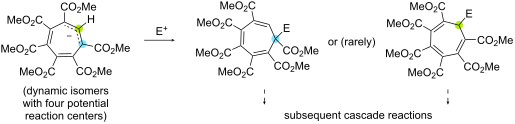
- planarity of the two neighboring ester groups and thereby stabilize the anion. The prevalence of this isomer is also confirmed by the NMR data [21], however, other conformers with different charge distributions are also available in solution. To understand the nucleophilic reactivity of the most stable
- partial positive charge on the i-positioned carbon atom [36], confirmed by an unusually downfield shifted signal of the CH fragment in the 13C NMR spectrum (δ 160.4 ppm in CD3CN) [21]. Moreover, anion 2 underwent a nucleophilic attack onto the i-position by amines to form fluorescent 5
- , quantum chemical calculation details and copies of NMR spectra. Funding This work was financially supported by the Russian Science Foundation (Grant No. 25-23-00616).


Synthesis and applications of alkenyl chlorides (vinyl chlorides): a review
Beilstein J. Org. Chem. 2026, 22, 1–63, doi:10.3762/bjoc.22.1
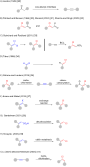
- to the increased steric demand of the TiCl5− counterion, which may impose greater steric interactions during the critical chloride addition step [148]. The high reported yield of product 225 is unexpected. Examination of the corresponding 1H NMR spectrum revealed unusually broad signals, suggesting























One-pot synthesis of ethylmaltol from maltol
Beilstein J. Org. Chem. 2025, 21, 2755–2760, doi:10.3762/bjoc.21.212

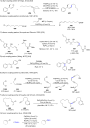
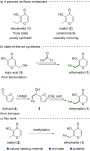
- opted for deprotonation with lithium reagents. Attempted double deprotonation with methyl lithium afforded a complex reaction mixture, from which ethylmaltol (1) was isolated in 11% together with an inseparable impurity tentatively assigned as 6 based on NMR analysis (Table 1, entry 2). Switching to the
- helpful discussions during the preparation of this manuscript. Furthermore, we are thankful to Christoph Kreutz (University of Innsbruck) and Thomas Müller (University of Innsbruck) for support with NMR and HRMS studies. Funding T.M. acknowledges the Austrian Academy of Sciences (OeAW) and the Center for


Sustainable electrochemical synthesis of aliphatic nitro-NNO-azoxy compounds employing ammonium dinitramide and their in vitro evaluation as potential nitric oxide donors and fungicides
Beilstein J. Org. Chem. 2025, 21, 2739–2754, doi:10.3762/bjoc.21.211
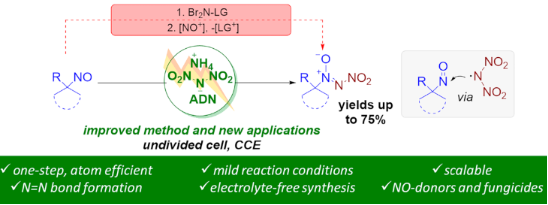
- hygroscopic nature. Any manipulations must be carried out by using appropriate standard safety precautions. 1H, 13C, 14N NMR spectra were recorded with Bruker DRX-500 (500.1, 125.8, 36.1 MHz, respectively) and Bruker AV600 (600.1, 150.9, 43.4 MHz, respectively) spectrometers. Chemical shifts are reported in
- washed with CH2Cl2 (3 × 20 mL). The combined organic phase was washed with H2O (20 mL) and brine (20 mL), dried over Na2SO4, and the solvent was removed in vacuo. The yields of 2a were determined with the use of 1H NMR spectroscopy using 1,1,2,2-tetrachloroethane as an internal standard. NMR and IR
- anodic and cathodic compartments were separately evaporated under water-jet vacuum. The yield of 2a was determined according to 1H NMR spectroscopy using 1,1,2,2-tetrachloroethane as an internal standard. Reaction under constant potential electrolysis (experimental details for Scheme 4, reaction 2): In a





Competitive cyclization of ethyl trifluoroacetoacetate and methyl ketones with 1,3-diamino-2-propanol into hydrogenated oxazolo- and pyrimido-condensed pyridones
Beilstein J. Org. Chem. 2025, 21, 2716–2729, doi:10.3762/bjoc.21.209
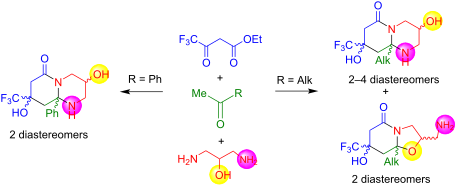
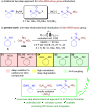
- , causes the formation of two to four diastereomers, the structure of which has been determined with 1H, 19F, 13C, 2D 1H-13C HSQC/HMBC, 1H-1H COSY/NOESY NMR and X-ray diffraction analysis. Keywords: condensed pyridones; 1,3-diamino-2-propanol; ethyl 4,4,4-trifluoroacetoacetate; methyl ketones; three
- three nucleophilic centers in 1,3-diaminopropan-2-ol (3), and because there is a need to increase diastereoselectivity of the cyclization process. Table 1 presents the optimization steps for the reaction conditions at various solvents and temperature. The reaction course was monitored by TLC and 19F NMR
- octahydropyrido[1,2-a]pyrimidinones 4a–d and hexahydrooxazolo[3,2-a]pyridones 5a–c was determined by IR, 1H, 19F, 13C NMR spectroscopy, two-dimensional NMR experiments, and X-ray diffraction analysis (XRD). The IR spectra of octahydropyrido[1,2-a]pyrimidinones 4a–d are characterized by reduced vibrational


Tandem hydrothiocyanation/cyclization of CF3-iminopropargyl alcohols with NaSCN in the presence of AcOH
Beilstein J. Org. Chem. 2025, 21, 2694–2702, doi:10.3762/bjoc.21.207
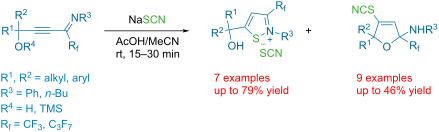
- formation and ratio of the products in contrast to the substituents in the imine fragment. NMR monitoring of reactions (1a/NaSCN/AcOH or 1g/NaSCN/AcOH in MeCN) did not allow to detect any intermediates even when the temperature was lowered to 0 °C. In the 1H and 19F NMR spectra the signals of products 2a
- and 3a appeared immediately upon mixing the starting reagents (Figure 1a and b). This indicated that the cyclization occurred almost immediately. Moreover, in the NMR spectra of the 1g/NaSCN/AcOH reaction mixture in MeCN we detected signals assigned to isothiozolium salt 2g (1H NMR: δ 8.30 s (CH
- ), 5.56 s (CH2) ppm, 19F NMR: δ 60.3 ppm), that disappeared by the end of the reaction (Figure 1c and d). Probably, the salts 2f,g are unstable and decompose under the reaction conditions. The formation of products 2 and 3 can be explained by different directions of cyclization of the primary adduct of



Synthesis of new tetra- and pentacyclic, methylenedioxy- and ethylenedioxy-substituted derivatives of the dibenzo[c,f][1,2]thiazepine ring system
Beilstein J. Org. Chem. 2025, 21, 2645–2656, doi:10.3762/bjoc.21.205
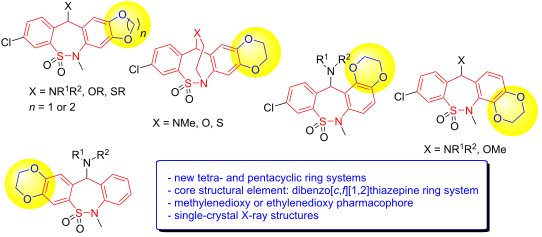
- standard open 40 μL aluminum pan under 50 mL/min nitrogen atmosphere. IR spectra were obtained on a Bruker ALPHA FT-IR spectrometer in KBr pellets or in neat. NMR spectra were recorded at 295 K on a Bruker Avance III HD 600 (600 and 150 MHz for 1H and 13C NMR spectra, respectively) spectrometer equipped
- with a Prodigy cryo-probehead or a Varian Unity Inova 500 (500 and 125 MHz for 1H and 13C NMR spectra, respectively), or a Varian Unity Inova 400 (400 and 100 MHz for 1H and 13C NMR spectra, respectively), or a Varian Gemini 200 (200 and 50 MHz for 1H and 13C NMR spectra, respectively) spectrometer
- was used as the solvent and tetramethylsilane (TMS) as the internal standard. Chemical shifts (δ) and coupling constants (J) are given in ppm and in Hz, respectively. Coupling constants reported in the 1H NMR spectra are H–H couplings unless otherwise stated (J ≡ JH–H). Three-bond H–H couplings (3J


Chemoenzymatic synthesis of the cardenolide rhodexin A and its aglycone sarmentogenin
Beilstein J. Org. Chem. 2025, 21, 2637–2644, doi:10.3762/bjoc.21.204
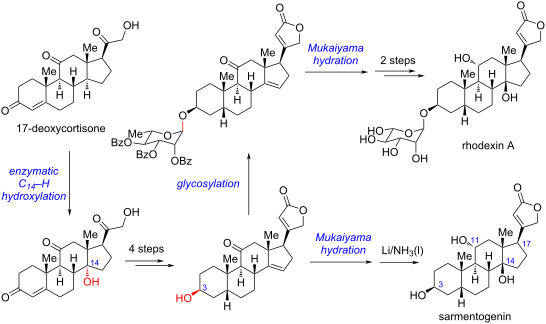
- reduction by Li–NH3(l) was accomplished in just 3 minutes to afford rhodexin A in 60% isolated yield. The synthetic sample exhibited identical NMR spectroscopic data to the literature precedent [20], which confirmed the completion of the chemoenzymatic synthesis of rhodexin A in 9 steps from 17



Thiazolidinones: novel insights from microwave synthesis, computational studies, and potentially bioactive hybrids
Beilstein J. Org. Chem. 2025, 21, 2618–2636, doi:10.3762/bjoc.21.203
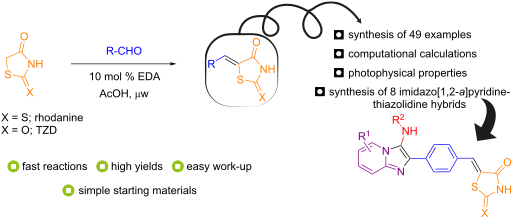
- compounds 3n and 4n was carried out using torsion angle analysis and 13C NMR chemical shift calculations to evaluate the absence of expected signals in the NMR spectra of these compounds. Their photophysical properties were also assessed, confirming a preference for a fluorescence mechanism via an ICT
- efficient synthesis of eight novel imidazo[1,2-a]pyridine–thiazolidinone hybrids in high yields (up to 99%). A spectroscopic analysis of selected compounds was carried out, including torsion angle evaluation and 13C NMR chemical shift calculations, justifying the absence of expected signals in some cases
- and 4n During the characterization of the compounds obtained in our study to determine the reaction scope, an anomaly was observed in the NMR spectra of products 3n and 4n derived from 4-diethylaminobenzaldehyde (see Supporting Information File 1). The spectra were acquired at 600 MHz for 1H NMR (320






Efficient solid-phase synthesis and structural characterization of segetalins A–H, J and K
Beilstein J. Org. Chem. 2025, 21, 2612–2617, doi:10.3762/bjoc.21.202
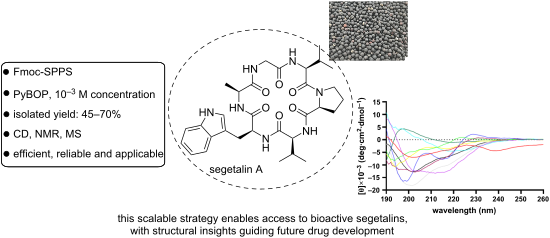
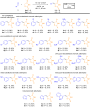
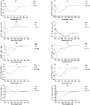
- purification, all cyclopeptides were obtained in 45–70% isolated yields. Structural identities were confirmed by HRESIMS, NMR, and HPLC (>95% purity). Circular dichroism (CD) spectroscopy revealed distinct secondary structures, including β-sheets (1, 2, 3, 4, 7, 8, 10) and α-helical elements (5, 6). This
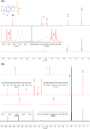
- electrospray ionization mass spectrometry (HRESIMS) data for all compounds matched the calculated exact masses for their respective molecular formulas. NMR spectroscopic analysis in appropriate deuterated solvents (e.g., DMSO-d6, D2O) fully corroborated the amino acid sequence and cyclic connectivity
- reagent for the challenging head-to-tail macrocyclization step under moderate dilution (10−3 M). This protocol afforded the target cyclic peptides in practical isolated yields (45–70%) and high purity. Comprehensive structural characterization by HRESIMS, NMR, and HPLC confirmed the identity and high


Silica gel with covalently attached bambusuril macrocycle for dicyanoaurate sorption from water
Beilstein J. Org. Chem. 2025, 21, 2604–2611, doi:10.3762/bjoc.21.201
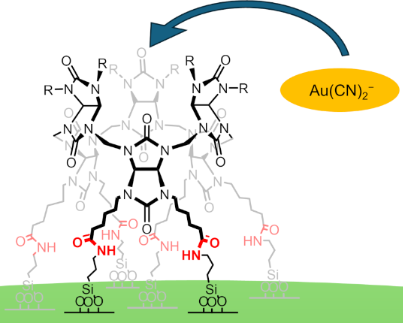
- phosphate buffer (pH 7.1) was chosen to test the materials’ stability in an aqueous environment. 1H NMR measurements showed that neither material released BU into organic solvents in the absence of anions. This was unexpected for SG-BnBU, since BnBU is readily soluble in chloroform and dichloromethane and
- presence of salt showing it is suitable for applications in an aqueous environment. SG-BU1 proved to be stable in chloroform, dichloromethane, and methanol even after addition of TBACl or NaCl, respectively. We did not detect any release of BU1 from SG-BU1 in aqueous phosphate buffer by NMR, but we
- carried out in nitrogen atmosphere. The dicyanoaurate concentration in solution was determined according to UV–vis spectra recorded with a CARY 60 spectrophotometer (Agilent Technologies). NMR spectra were recorded on a Bruker Avance III 300 spectrometer (300.15 Hz, 298.15 K). Preparation of SG-NHCO-BU1


Ni-promoted reductive cyclization cascade enables a total synthesis of (+)-aglacin B
Beilstein J. Org. Chem. 2025, 21, 2548–2552, doi:10.3762/bjoc.21.197
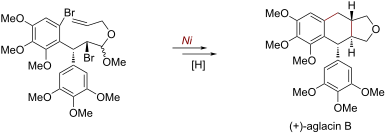
- and Et3SiH as the hydrogen source [22], affording this natural product in 58% isolated yield. NMR data of the synthetic sample were found to be in agreement with those of previous literature (Tables S1 and S2, Supporting Information File 1). Moreover, the newly synthesized (+)-aglacin B (2) formed
- structures of aglacins A, B, C, and E. Retrosynthetic analysis of (+)-aglacin B (2). Synthesis of cyclization precursor 5. Synthesis of (+)-aglacin B (2). Supporting Information Supporting Information File 16: Experimental procedures, characterization data, and copies of 1H/13C NMR spectra
- . Acknowledgements We thank the Analytical and Testing Center of Southwest Jiaotong University for the NMR test. Funding The National Natural Science Foundation of China (Nos. 22071200 and 22471224).


Rapid access to the core of malayamycin A by intramolecular dipolar cycloaddition
Beilstein J. Org. Chem. 2025, 21, 2542–2547, doi:10.3762/bjoc.21.196
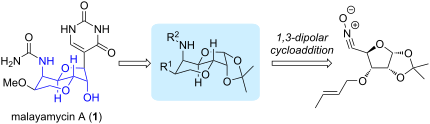
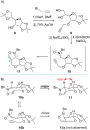
- smoothly to deliver the aldehyde which was immediately subjected to the condensation reaction with benzylhydroxylamine. The corresponding nitrone 10 then underwent an intramolecular cycloaddition. Adduct 11 was isolated as the major product in 42% yield for 2 steps. Comprehensive NMR analysis revealed the
- 19 was moderate because the anomeric carbon at C7 is associated with an acid-sensitive acetonide group. The structural determination of the major product 19a was accomplished by comprehensive NMR spectroscopy and further unambiguously confirmed by X-ray analysis (see Supporting Information File 1 for