

Search results
Search for "enolate" in Full Text gives 277 result(s) in Beilstein Journal of Organic Chemistry. Showing first 200.
Recent advances in transition-metal-free arylation reactions involving hypervalent iodine salts
- Ritu Mamgain,
- Kokila Sakthivel and
- Fateh V. Singh
Beilstein J. Org. Chem. 2024, 20, 2891–2920, doi:10.3762/bjoc.20.243

- upon binding of the enolate molecule to iodine either through a carbon–iodine or an oxygen–iodine bond. Both intermediates, I and II, are in rapid equilibrium with each other and further undergo two different types of reactions: [1,2]-ligand coupling and [2,3]-rearrangement (Scheme 2). Either of these
- base-mediated deprotonation of substrates 86 produces the corresponding ester enolate. This enolate undergoes a retro-Michael reaction, generating sulfenate anion A. The sulfenate anion A then nucleophilically attacks the diaryliodonium salts 16, forming hypervalent iodine intermediates B. Finally

Graphical Abstract

Figure 1: Various structures of iodonium salts.

Scheme 1: Αrylation of α-fluoroacetoacetamides 5 to α-aryl-α-fluoroacetoacetamides 7 and α-fluoroacetamides 8...
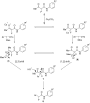
Scheme 2: Proposed mechanism for the arylation of α-fluoroacetoacetamides 5 to α-aryl-α-fluoroacetoacetamides ...

Scheme 3: α-Arylation of α-nitro- and α-cyano derivatives of α-fluoroacetamides 9 employing unsymmetrical DAI...

Scheme 4: Synthesis of α,α-difluoroketones 13 by reacting α,α-difluoro-β-keto acid esters 11 with aryl(TMP)io...

Scheme 5: Coupling reaction of arynes generated by iodonium salts 6 and arynophiles 14 for the synthesis of t...

Scheme 6: Metal-free arylation of quinoxalines 17 and quinoxalinones 19 with DAISs 16.

Scheme 7: Transition-metal-free, C–C cross-coupling of 2-naphthols 21 to 1-arylnapthalen-2-ols 22 employing d...

Scheme 8: Arylation of vinyl pinacol boronates 23 to trans-arylvinylboronates 24 in presence of hypervalent i...

Scheme 9: Light-induced selective arylation at C2 of quinoline N-oxides 25 and pyridine N-oxides 28 in the pr...

Scheme 10: Plaussible mechanism for the light-induced selective arylation of N-heterobiaryls.

Scheme 11: Photoinduced arylation of heterocycles 31 with the help of diaryliodonium salts 16 activated throug...

Scheme 12: Arylation of MBH acetates 33 with DIPEA and DAIRs 16.

Scheme 13: Aryl sulfonylation of MBH acetates 33 with DABSO and diphenyliodonium triflates 16.

Scheme 14: Synthesis of oxindoles 37 from N-arylacrylamides 36 and diaryliodonium salts 26.

Scheme 15: Mechanically induced N-arylation of amines 38 using diaryliodonium salts 16.

Scheme 16: o-Fluorinated diaryliodonium salts 40-mediated diarylation of amines 38.

Scheme 17: Proposed mechanism for the diarylation of amines 38 using o-fluorinated diaryliodonium salts 40.

Scheme 18: Ring-opening difunctionalization of aliphatic cyclic amines 41.

Scheme 19: N-Arylation of amino acid esters 44 using hypervalent iodonium salts 45.

Scheme 20: Regioselective N-arylation of triazole derivatives 47 by hypervalent iodonium salts 48.

Scheme 21: Regioselective N-arylation of tetrazole derivatives 50 by hypervalent iodonium salt 51.

Scheme 22: Selective arylation at nitrogen and oxygen of pyridin-2-ones 53 by iodonium salts 16 depending on t...

Scheme 23: N-Arylation using oxygen-bridged acyclic diaryliodonium salt 56.

Scheme 24: The successive C(sp2)–C(sp2)/O–C(sp2) bond formation of naphthols 58.

Scheme 25: Synthesis of diarylethers 62 via in situ generation of hypervalent iodine salts.

Scheme 26: O-Arylated galactosides 64 by reacting protected galactosides 63 with hypervalent iodine salts 16 i...

Scheme 27: Esterification of naproxen methyl ester 65 via formation and reaction of naproxen-containing diaryl...

Scheme 28: Etherification and esterification products 72 through gemfibrozil methyl ester-derived diaryliodoni...

Scheme 29: Synthesis of iodine containing meta-substituted biaryl ethers 74 by reacting phenols 61 and cyclic ...

Scheme 30: Plausible mechanism for the synthesis of meta-functionalized biaryl ethers 74.

Scheme 31: Intramolecular aryl migration of trifluoromethane sulfonate-substituted diaryliodonium salts 75.

Scheme 32: Synthesis of diaryl ethers 80 via site-selective aryl migration.

Scheme 33: Synthesis of O-arylated N-alkoxybenzamides 83 using aryl(trimethoxyphenyl)iodonium salts 82.

Scheme 34: Synthesis of aryl sulfides 85 from thiols 84 using diaryliodonium salts 16 in basic conditions.

Scheme 35: Base-promoted synthesis of diarylsulfoxides 87 via arylation of general sulfinates 86.

Scheme 36: Plausible mechanism for the arylation of sulfinates 86 via sulfenates A to give diaryl sulfoxides 87...

Scheme 37: S-Arylation reactions of aryl or heterocyclic thiols 88.

Scheme 38: Site-selective S-arylation reactions of cysteine thiol groups in 91 and 94 in the presence of diary...

Scheme 39: The selective S-arylation of sulfenamides 97 using diphenyliodonium salts 98.

Scheme 40: Plausible mechanism for the synthesis of sulfilimines 99.

Scheme 41: Synthesis of S-arylxanthates 102 by reacting DAIS 101 with potassium alkyl xanthates 100.

Figure 2: Structured of the 8-membered and 4-membered heterotetramer I and II.

Scheme 42: S-Arylation by diaryliodonium cations 103 using KSCN (104) as a sulfur source.

Scheme 43: S-Arylation of phosphorothioate diesters 107 through the utilization of diaryliodonium salts 108.

Scheme 44: Transfer of the aryl group from the hypervalent iodonium salt 108 to phosphorothioate diester 107.

Scheme 45: Synthesis of diarylselenides 118 via diarylation of selenocyanate 115.

Scheme 46: Light-promoted arylation of tertiary phosphines 119 to quaternary phosphonium salts 121 using diary...

Scheme 47: Arylation of aminophosphorus substrate 122 to synthesize phosphine oxides 123 using aryl(mesityl)io...

Scheme 48: Reaction of diphenyliodonium triflate (16) with DMSO (124) via thia-Sommelet–Hauser rearrangement.

Scheme 49: Synthesis of biaryl compounds 132 by reacting diaryliodonium salts 131 with arylhydroxylamines 130 ...

Scheme 50: Synthesis of substituted indazoles 134 and 135 from N-hydroxyindazoles 133.
Mechanochemical difluoromethylations of ketones
- Jinbo Ke,
- Pit van Bonn and
- Carsten Bolm
Beilstein J. Org. Chem. 2024, 20, 2799–2805, doi:10.3762/bjoc.20.235
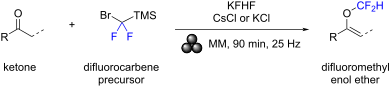
- reactions of difluorocarbene with cyclic and acyclic 1,3-diones (Scheme 1A) [41][42][43][44][45]. Typically, they were conducted with a base to form the corresponding enolate anions which then reacted with difluorocarbene to yield difluoromethyl enol ethers. Those products are of interest because they

Graphical Abstract

Scheme 1: Overview over difluoromethyl enol ether syntheses from acyclic and cyclic 1,3-diones (A), acyclic k...

Scheme 2: Attempted difluoromethylation of 1a in solution. The reactions were performed on a 0.2 mmol scale. ...

Scheme 3: Scope of ketones. The yields were determined by 1H NMR spectroscopy using 1,2-dichloroethane as the...

Scheme 4: Proposed mechanism (A) and mechanistic investigations (B and C). The yields were determined by 1H N...
Copper-catalyzed yne-allylic substitutions: concept and recent developments
- Shuang Yang and
- Xinqiang Fang
Beilstein J. Org. Chem. 2024, 20, 2739–2775, doi:10.3762/bjoc.20.232
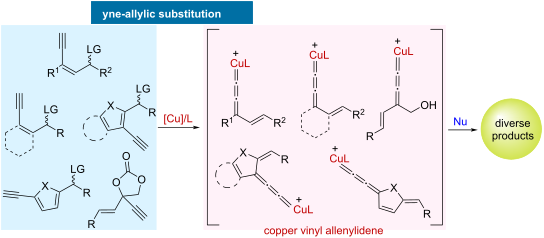
- chelation interaction between the enolate derived from acyclic 1,3-dicarbonyl compounds and copper (Scheme 5, 8a–j). Detailed control experiments indicate that the terminal alkyne moiety is critical and the reaction proceeds through an SN1 mechanism. An outer-sphere nucleophilic attack through copper

Graphical Abstract

Scheme 1: Copper-catalyzed allylic and yne-allylic substitution.

Scheme 2: Challenges in achieving highly selective yne-allylic substitution.

Scheme 3: Yne-allylic substitutions using indoles and pyroles.

Scheme 4: Yne-allylic substitutions using amines.

Scheme 5: Yne-allylic substitution using 1,3-dicarbonyls.

Scheme 6: Postulated mechanism via copper acetylide-bonded allylic cation.

Scheme 7: Amine-participated asymmetric yne-allylic substitution.

Scheme 8: Asymmetric decarboxylative yne-allylic substitution.

Scheme 9: Asymmetric yne-allylic alkoxylation and alkylation.

Scheme 10: Proposed mechanism for Cu(I) system.

Scheme 11: Asymmetric yne-allylic dialkylamination.

Scheme 12: Proposed mechanism of yne-allylic dialkylamination.

Scheme 13: Asymmetric yne-allylic sulfonylation.

Scheme 14: Proposed mechanism of yne-allylic sulfonylation.

Scheme 15: Aymmetric yne-allylic substitutions using indoles and indolizines.

Scheme 16: Double yne-allylic substitutions using pyrrole.

Scheme 17: Proposed mechanism of yne-allylic substitution using electron-rich arenes.

Scheme 18: Aymmetric yne-allylic monofluoroalkylations.

Scheme 19: Proposed mechanism.
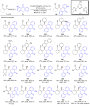
Scheme 20: Aymmetric yne-allylic substitution of yne-allylic esters with anthrones.

Scheme 21: Aymmetric yne-allylic substitution of yne-allylic esters with coumarins.
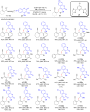
Scheme 22: Aymmetric yne-allylic substitution of with coumarins by Lin.

Scheme 23: Proposed mechanism.

Scheme 24: Amination by alkynylcopper driven dearomatization and rearomatization.

Scheme 25: Arylation by alkynylcopper driven dearomatization and rearomatization.

Scheme 26: Remote substitution/cyclization/1,5-H shift process.

Scheme 27: Proposed mechanism.

Scheme 28: Arylation or amination by alkynylcopper driven dearomatization and rearomatization.

Scheme 29: Remote nucleophilic substitution of 5-ethynylthiophene esters.

Scheme 30: Proposed mechanism.

Scheme 31: [4 + 1] annulation of yne-allylic esters and cyclic 1,3-dicarbonyls.
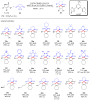
Scheme 32: Asymmetric [4 + 1] annulation of yne-allylic esters.

Scheme 33: Proposed mechanism.

Scheme 34: Asymmetric [3 + 2] annulation of yne-allylic esters.

Scheme 35: Postulated annulation step.

Scheme 36: [4 + 1] Annulations of vinyl ethynylethylene carbonates and 1,3-dicarbonyls.

Scheme 37: Proposed mechanism.

Scheme 38: Formal [4 + 1] annulations with amines.

Scheme 39: Formal [4 + 2] annulations with hydrazines.

Scheme 40: Proposed mechanism.
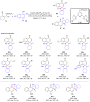
Scheme 41: Dearomative annulation of 1-naphthols and yne-allylic esters.

Scheme 42: Dearomative annulation of phenols or 2-naphthols and yne-allylic esters.

Scheme 43: Postulated annulation mechanism.
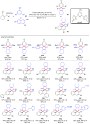
Scheme 44: Dearomative annulation of phenols or 2-naphthols.

Scheme 45: Dearomative annulation of indoles.

Scheme 46: Postulated annulation step.

Scheme 47: Asymmetric [4 + 1] cyclization of yne-allylic esters with pyrazolones.

Scheme 48: Proposed mechanism.

Scheme 49: Construction of C–C axially chiral arylpyrroles.

Scheme 50: Construction of C–N axially chiral arylpyrroles.
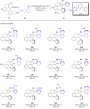
Scheme 51: Construction of chiral arylpyrroles with 1,2-di-axial chirality.

Scheme 52: Proposed mechanism.

Scheme 53: CO2 shuttling in yne-allylic substitution.

Scheme 54: CO2 fixing in yne-allylic substitution.

Scheme 55: Proposed mechanism.
A review of recent advances in electrochemical and photoelectrochemical late-stage functionalization classified by anodic oxidation, cathodic reduction, and paired electrolysis
- Nian Li,
- Ruzal Sitdikov,
- Ajit Prabhakar Kale,
- Joost Steverlynck,
- Bo Li and
- Magnus Rueping
Beilstein J. Org. Chem. 2024, 20, 2500–2566, doi:10.3762/bjoc.20.214
- mechanism starts with the formation of a nickel-chelated enolate intermediate, followed by the anodic oxidation to form the nickel-coordinated carbon-centered radical intermediate. Another mechanism is proposed for alkyl-substituted acylimidazoles. In this case, the additive ferrocene (Cp2Fe) serves as
- mediator between the anode and the nickel-chelated enolate intermediate. Simultaneously, the amine substrate is oxidized at the anode and deprotonated to generate a nitrogen-centered radical. The desired product then is generated by the stereoselective cross-coupling of the carbon-centered radical with the
- orbital during enolate formation, thus providing mild redox conditions. After anodic oxidation, a carbon-centered radical at the α-position is formed, which undergoes stereocontrolled C–C-bond formation with the silyl ether, forming a trimethylsilyl (TMS)-ketyl radical. A second anodic one-electron

Graphical Abstract

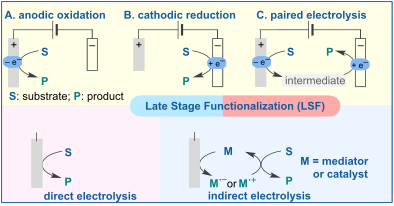
Figure 1: Classification of LSF reactions in this review.

Scheme 1: C(sp2)–H trifluoromethylation of heteroarenes.
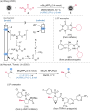
Scheme 2: C(sp2)–H and C(sp3)–H alkylation of complex molecules.

Scheme 3: Electrochemical oxidation-induced intermolecular aromatic C–H sulfonamidation.

Scheme 4: Bioconjugation of tyrosine with (a) phenothiazine and (b) urazole derivatives.

Scheme 5: Electrochemical iodoamination of indoles using unactivated amines.

Scheme 6: Allylic C(sp3)–H aminations with sulfonamides.

Scheme 7: Electrochemical benzylic oxidation of C–H bonds.
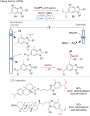
Scheme 8: Site-selective electrooxidation of methylarenes to aromatic acetals.

Scheme 9: Electrochemical activation of C–H by electron-deficient W2C nanocrystals.
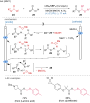
Scheme 10: α-Acyloxy sulfide preparation via C–H/OH cross-dehydrogenative coupling.
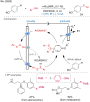
Scheme 11: Aromatic C–H-bond thiolation.

Scheme 12: C(sp2)–H functionalization for the installation of sulfonamide groups.

Scheme 13: Preparation of (hetero)aryl chlorides and vinyl chloride with 1,2-dichloroethane. aCu(OAc)2 (0.05 e...

Scheme 14: Electrochemical dual-oxidation enables access to α-chlorosulfoxides.

Scheme 15: Regio- and chemoselective formyloxylation–bromination/chlorination/trifluoromethylation of alkenes.

Scheme 16: Aziridine formation by coupling amines and alkenes.

Scheme 17: Formation of iminosulfide ethers via difunctionalization of an isocyanide.

Scheme 18: Synthesis of 1,3-difunctionalized molecules via C–C-bond cleavage of arylcyclopropane.

Scheme 19: Electrooxidative amino- and oxyselenation of alkenes. VBImBr = 1-butyl-3-vinylimidazolium bromide.

Scheme 20: Electrooxidative dehydrogenative [4 + 2] annulation of indole derivatives.
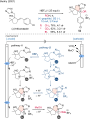
Scheme 21: Electrochemical cyclization combined with alkoxylation of triticonazole.

Scheme 22: Electrochemically tuned oxidative [4 + 2] annulation of olefins with hydroxamic acids.

Scheme 23: Electrosynthesis of indole derivatives via cyclization of 2-ethynylanilines.

Scheme 24: Allylic C–H oxidation of mono-, di-, and sesquiterpenes.

Scheme 25: Oxidation of unactivated C–H bonds.

Scheme 26: Fluorination of C(sp3)–H bonds. rAP = rapid alternating polarity.

Scheme 27: C(sp3)–H α-cyanation of secondary piperidines.
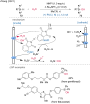
Scheme 28: Selective electrochemical hydrolysis of hydrosilanes to silanols.
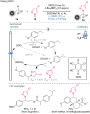
Scheme 29: Organocatalytic electrochemical amination of benzylic C–H bonds.
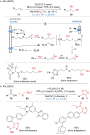
Scheme 30: Iodide ion-initiated anodic oxidation reactions.

Scheme 31: Mn(III/IV) electro-catalyzed C(sp3)–H azidation.
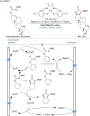
Scheme 32: Tailored cobalt–salen complexes enable electrocatalytic intramolecular allylic C–H functionalizatio...

Scheme 33: Cobalt–salen complexes-induced electrochemical (cyclo)additions.

Scheme 34: Electrochemical 1,2-diarylation of alkenes enabled by direct dual C–H functionalization of electron...

Scheme 35: Cobalt-electrocatalyzed atroposelective C–H annulation.

Scheme 36: Nickel-electrocatalyzed C(sp2)–H alkoxylation with secondary alcohols.

Scheme 37: Nickel-catalyzed electrochemical enantioselective amination.
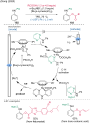
Scheme 38: Ruthenium-electrocatalyzed C(sp2)–H mono- and diacetoxylation.
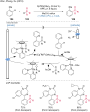
Scheme 39: Rhodium(III)-catalyzed aryl-C–H phosphorylation enabled by anodic oxidation-induced reductive elimi...

Scheme 40: Asymmetric Lewis-acid catalysis for the synthesis of non-racemic 1,4-dicarbonyl compounds.

Scheme 41: Electrochemical enantioselective C(sp3)–H alkenylation.

Scheme 42: Palladium-catalyzed electrochemical dehydrogenative cross-coupling.
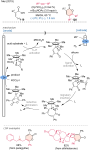
Scheme 43: Ir-electrocatalyzed vinylic C(sp2)–H activation for the annulation between acrylic acids and alkyne...

Scheme 44: Electrochemical gold-catalyzed C(sp3)–C(sp) coupling of alkynes and arylhydrazines.

Scheme 45: Photoelectrochemical alkylation of C–H heteroarenes using organotrifluoroborates.

Scheme 46: Mn-catalyzed photoelectro C(sp3)–H azidation.

Scheme 47: Photoelectrochemical undirected C–H trifluoromethylations of (Het)arenes.

Scheme 48: Photoelectrochemical dehydrogenative cross-coupling of heteroarenes with aliphatic C–H bonds.
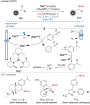
Scheme 49: C–H amination via photoelectrochemical Ritter-type reaction.

Scheme 50: Photoelectrochemical multiple oxygenation of C–H bonds.

Scheme 51: Accelerated C(sp3)–H heteroarylations by the f-EPC system.

Scheme 52: Photoelectrochemical cross-coupling of amines.

Scheme 53: Birch electroreduction of arenes. GSW = galvanized steel wire.

Scheme 54: Electroreductive deuterations.

Scheme 55: Chemoselective electrosynthesis using rapid alternating polarity.

Scheme 56: Electroreductive olefin–ketone coupling.

Scheme 57: Electroreductive approach to radical silylation.

Scheme 58: Electrochemical borylation of alkyl halides. CC = carbon close.

Scheme 59: Radical fluoroalkylation of alkenes.
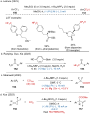
Scheme 60: Electrochemical defluorinative hydrogenation/carboxylation.

Scheme 61: Electrochemical decarboxylative olefination.

Scheme 62: Electrochemical decarboxylative Nozaki–Hiyama–Kishi coupling.
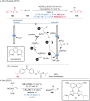
Scheme 63: Nickel-catalyzed electrochemical reductive relay cross-coupling.

Scheme 64: Electrochemical chemo- and regioselective difunctionalization of 1,3-enynes.

Scheme 65: Electrocatalytic doubly decarboxylative crosscoupling.

Scheme 66: Electrocatalytic decarboxylative crosscoupling with aryl halides.

Scheme 67: Nickel-catalyzed electrochemical reductive coupling of halides.

Scheme 68: Nickel-electrocatalyzed enantioselective carboxylation with CO2.

Scheme 69: Reductive electrophotocatalysis for borylation.
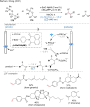
Scheme 70: Electromediated photoredox catalysis for selective C(sp3)–O cleavages of phosphinated alcohols to c...

Scheme 71: Stereoselective electro-2-deoxyglycosylation from glycals. MFE = methyl nonafluorobutyl ether.

Scheme 72: Electrochemical peptide modifications.

Scheme 73: Electrochemical α-deuteration of amides.

Scheme 74: Electrochemical synthesis of gem-diselenides.

Scheme 75: Site-selective electrochemical aromatic C–H amination.

Scheme 76: Electrochemical coupling of heteroarenes with heteroaryl phosphonium salts.
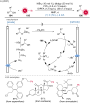
Scheme 77: Redox-neutral strategy for the dehydroxyarylation reaction.
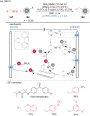
Scheme 78: Nickel-catalyzed electrochemical C(sp3)–C(sp2) cross-coupling of benzyl trifluoroborate and halides....
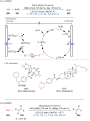
Scheme 79: Paired electrocatalysis for C(sp3)–C(sp2) coupling.

Scheme 80: Redox-neutral strategy for amination of aryl bromides.

Scheme 81: Redox-neutral cross-coupling of aryl halides with weak N-nucleophiles. aProtocol with (+) RVC | RVC...

Scheme 82: Nickel-catalyzed N-arylation of NH-sulfoximines with aryl halides.

Scheme 83: Esterification of carboxylic acids with aryl halides.

Scheme 84: Electrochemically promoted nickel-catalyzed carbon–sulfur-bond formation. GFE = graphite felt elect...

Scheme 85: Electrochemical deoxygenative thiolation by Ni-catalysis. GFE = graphite felt electrode; NFE = nick...
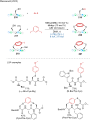
Scheme 86: Electrochemical coupling of peptides with aryl halides.

Scheme 87: Paired electrolysis for the phosphorylation of aryl halides. GFE = graphite felt electrode, FNE = f...

Scheme 88: Redox-neutral alkoxyhalogenation of alkenes.
Natural resorcylic lactones derived from alternariol
- Joachim Podlech
Beilstein J. Org. Chem. 2024, 20, 2171–2207, doi:10.3762/bjoc.20.187
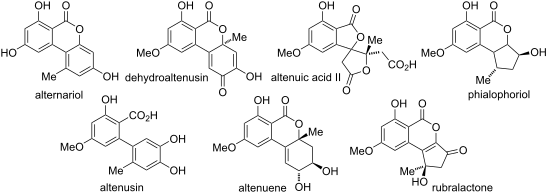

Graphical Abstract
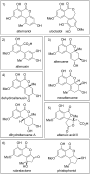
Figure 1: Examples of compounds covered in this review categorized in six sub-classes (see text).
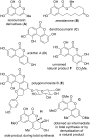
Figure 2: Examples of compounds not covered in this review.

Figure 3: Wrongly assigned and thus obsolete structures (details will be discussed in the respective chapters...

Figure 4: Alternariol with the correct IUPAC numbering and an occasionally used numbering based on the biphen...

Figure 5: Alternariol O-methyl ethers.
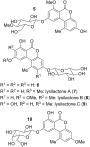
Figure 6: Alternariol O-glycosides.

Figure 7: Alternariol O-acetates and O-sulfates.

Figure 8: 2-Hydroxy- and 4-hydroxy-substituted alternariol and its O-methyl ethers.

Figure 9: Chloro- and amino-substituted alternariol and its O-methyl ethers.
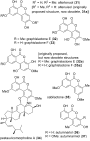
Figure 10: Presumed alternariol derivatives with non-canonical substitution pattern.

Figure 11: Alternariol derivatives with the 1-methyl group hydroxylated.
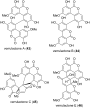
Figure 12: Verrulactones: pseudo-dimeric derivatives of altertenuol and related compounds.

Figure 13: Biaryls formed by reductive lactone opening and/or by decarboxylation.

Figure 14: Altenuene and its diastereomers.

Figure 15: 9-O-Demethylated altenuene diastereomers.

Figure 16: Acetylated and methylated altenuene diastereomers.

Figure 17: Altenuene diastereomers modified with lactic acid, pyruvic acid, or acetone.

Figure 18: Neoaltenuene and related compounds.

Figure 19: Dehydroaltenusin and its derivatives.

Scheme 1: Equilibrium of dehydroaltenusin in polar solvents [278].

Figure 20: Further quinoid derivatives.

Figure 21: Dehydroaltenuenes.

Figure 22: Complex aggregates containing dehydroaltenuene substructures and related compounds.

Figure 23: Dihydroaltenuenes.
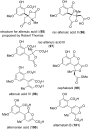
Figure 24: Altenuic acids and related compounds.
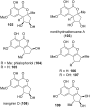
Figure 25: Cyclopentane- and cyclopentene-fused derivatives.
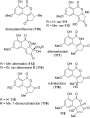
Figure 26: Cyclopentenone-fused derivatives.

Figure 27: Spiro-fused derivatives and a related ring-opened derivative.

Figure 28: Lactones-fused and lactone-substituted derivatives.

Scheme 2: Biosynthesis of alternariol [324].

Scheme 3: Biosynthesis of alternariol and its immediate successors with the genes involved in the respective ...

Scheme 4: Presumed formation of altenuene and its diastereomers and of botrallin.

Scheme 5: Presumed formation of altenuic acids and related compounds.

Scheme 6: A selection of plausible biosynthetic paths to cyclopenta-fused metabolites. (No stereochemistry is...

Scheme 7: Biomimetic synthesis of alternariol (1) by Harris and Hay [66].

Scheme 8: Total synthesis of alternariol (1) by Subba Rao et al. using a Diels–Alder approach [34].

Scheme 9: Total synthesis of alternariol (1) using a Suzuki strategy by Koch and Podlech [62], improved by Kim et...

Scheme 10: Total synthesis of alternariol (1) using an intramolecular biaryl coupling by Abe et al. [63].

Scheme 11: Total synthesis of altenuene (54) and isoaltenuene (55) by Podlech et al. [249].

Scheme 12: Total synthesis of neoaltenuene (69) by Podlech et al. [35].

Scheme 13: Total synthesis of TMC-264 (79) by Tatsuta et al. [185].

Scheme 14: Total synthesis of cephalosol (99) by Koert et al. [304].
Multicomponent syntheses of pyrazoles via (3 + 2)-cyclocondensation and (3 + 2)-cycloaddition key steps
- Ignaz Betcke,
- Alissa C. Götzinger,
- Maryna M. Kornet and
- Thomas J. J. Müller
Beilstein J. Org. Chem. 2024, 20, 2024–2077, doi:10.3762/bjoc.20.178
- oxalate (9) and alkylphenones 10 through a sterically hindered Claisen condensation, producing a six-membered lithium enolate salt. Subsequent cyclocondensation with hydrazines concludes the formation of pyrazoles. However, this process could not be performed as a one-pot synthesis, as the solvent had to

Graphical Abstract

Scheme 1: Consecutive three-component synthesis of pyrazoles 1 via in situ-formed 1,3-diketones 2 [44].

Scheme 2: Consecutive three-component synthesis of 4-ethoxycarbonylpyrazoles 5 via SmCl3-catalyzed acylation ...

Scheme 3: Consecutive four-component synthesis of 1-(thiazol-2-yl)pyrazole-3-carboxylates 8 [51].

Scheme 4: Three-component synthesis of thiazolylpyrazoles 17 via in situ formation of acetoacetylcoumarins 18 ...

Scheme 5: Consecutive pseudo-four-component and four-component synthesis of pyrazoles 21 from sodium acetylac...

Scheme 6: Consecutive three-component synthesis of 1-substituted pyrazoles 24 from boronic acids, di(Boc)diim...

Scheme 7: Consecutive three-component synthesis of N-arylpyrazoles 25 via in situ formation of aryl-di(Boc)hy...

Scheme 8: Consecutive three-component synthesis of 1,3,4-substituted pyrazoles 27 and 28 from methylhydrazine...

Scheme 9: Consecutive three-component synthesis of 4-allylpyrazoles 32 via oxidative allylation of 1,3-dicarb...

Scheme 10: Pseudo-five-component synthesis of tris(pyrazolyl)methanes 35 [61].

Scheme 11: Pseudo-three-component synthesis of 5-(indol-3-yl)pyrazoles 39 from 1,3,5-triketones 38 [64].

Scheme 12: Three-component synthesis of thiazolylpyrazoles 43 [65].

Scheme 13: Three-component synthesis of triazolo[3,4-b]-1,3,4-thiadiazin-3-yl substituted 5-aminopyrazoles 47 [67]....

Scheme 14: Consecutive three-component synthesis of 5-aminopyrazoles 49 via formation of β-oxothioamides 50 [68].
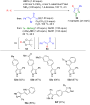
Scheme 15: Synthesis of 3,4-biarylpyrazoles 52 from aryl halides, α-bromocinnamaldehyde, and tosylhydrazine vi...

Scheme 16: Consecutive three-component synthesis of 3,4-substituted pyrazoles 57 from iodochromones 55 by Suzu...

Scheme 17: Pseudo-four-component synthesis of pyrazolyl-2-pyrazolines 59 by ring opening/ring closing cyclocon...

Scheme 18: Consecutive three-component synthesis of pyrazoles 61 [77].

Scheme 19: Three-component synthesis of pyrazoles 62 from malononitrile, aldehydes, and hydrazines [78-90].

Scheme 20: Four-component synthesis of pyrano[2,3-c]pyrazoles 63 [91].

Scheme 21: Three-component synthesis of persubstituted pyrazoles 65 from aldehydes, β-ketoesters, and hydrazin...

Scheme 22: Three-component synthesis of pyrazol-4-carbodithioates 67 [100].

Scheme 23: Regioselective three-component synthesis of persubstituted pyrazoles 68 catalyzed by ionic liquid [...

Scheme 24: Consecutive three-component synthesis of 4-halopyrazoles 69 and anellated pyrazoles 70 [102].

Scheme 25: Three-component synthesis of 2,2,2-trifluoroethyl pyrazole-5-carboxylates 72 [103].

Scheme 26: Synthesis of pyrazoles 75 in a one-pot process via carbonylative Heck coupling and subsequent cycli...

Scheme 27: Copper-catalyzed three-component synthesis of 1,3-substituted pyrazoles 76 [105].

Scheme 28: Pseudo-three-component synthesis of bis(pyrazolyl)methanes 78 by ring opening-ring closing cyclocon...

Scheme 29: Three-component synthesis of 1,4,5-substituted pyrazoles 80 [107].

Scheme 30: Consecutive three-component synthesis of 3,5-bis(fluoroalkyl)pyrazoles 83 [111].

Scheme 31: Consecutive three-component synthesis of difluoromethanesulfonyl-functionalized pyrazole 88 [114].

Scheme 32: Consecutive three-component synthesis of perfluoroalkyl-substituted fluoropyrazoles 91 [115].

Scheme 33: Regioselective consecutive three-component synthesis of 1,3,5-substituted pyrazoles 93 [116].

Scheme 34: Three-component synthesis of pyrazoles 96 mediated by trimethyl phosphite [117].

Scheme 35: One-pot synthesis of pyrazoles 99 via Liebeskind–Srogl cross-coupling/cyclocondensation [118].

Scheme 36: Synthesis of 1,3,5-substituted pyrazoles 101 via domino condensation/Suzuki–Miyaura cross-coupling ...

Scheme 37: Consecutive three-component synthesis of 1,3,5-trisubstituted pyrazoles 102 and 103 by Sonogashira ...

Scheme 38: Polymer analogous consecutive three-component synthesis of pyrazole-based polymers 107 [132].

Scheme 39: Synthesis of 1,3,5-substituted pyrazoles 108 by sequentially Pd-catalyzed Kumada–Sonogashira cycloc...

Scheme 40: Consecutive four-step one-pot synthesis of 1,3,4,5-substituted pyrazoles 110 [137].

Scheme 41: Four-component synthesis of pyrazoles 113, 115, and 117 via Sonogashira coupling and subsequent Suz...

Scheme 42: Consecutive four- or five-component synthesis for the preparation of 4-pyrazoly-1,2,3-triazoles 119...

Scheme 43: Four-component synthesis of pyrazoles 121 via alkynone formation by carbonylative Pd-catalyzed coup...

Scheme 44: Preparation of 3-azulenyl pyrazoles 124 by glyoxylation, decarbonylative Sonogashira coupling, and ...

Scheme 45: Four-component synthesis of a 3-indoloylpyrazole 128 [147].

Scheme 46: Two-step synthesis of 5-acylpyrazoles 132 via glyoxylation-Stephen–Castro sequence and subsequent c...

Scheme 47: Copper on iron mediated consecutive three-component synthesis of 3,5-substituted pyrazoles 136 [150].

Scheme 48: Consecutive three-component synthesis of 3-substituted pyrazoles 141 by Sonogashira coupling and su...

Scheme 49: Consecutive three-component synthesis of pyrazoles 143 initiated by Cu(I)-catalyzed carboxylation o...

Scheme 50: Consecutive three-component synthesis of benzamide-substituted pyrazoles 146 starting from N-phthal...

Scheme 51: Consecutive three-component synthesis of 1,3,5-substituted pyrazoles 148 [156].

Scheme 52: Three-component synthesis of 4-ninhydrin-substituted pyrazoles 151 [158].

Scheme 53: Consecutive four-component synthesis of 4-(oxoindol)-1-phenylpyrazole-3-carboxylates 155 [159].

Scheme 54: Three-component synthesis of pyrazoles 160 [160].

Scheme 55: Consecutive three-component synthesis of pyrazoles 165 [162].

Scheme 56: Consecutive three-component synthesis of 3,5-disubstituted and 3-substituted pyrazoles 168 and 169 ...

Scheme 57: Three-component synthesis of 3,4,5-substituted pyrazoles 171 via 1,3-dipolar cycloaddition of vinyl...

Scheme 58: Three-component synthesis of pyrazoles 173 and 174 from aldehydes, tosylhydrazine, and vinylidene c...

Scheme 59: Three-component synthesis of pyrazoles 175 from glyoxyl hydrates, tosylhydrazine, and electron-defi...

Scheme 60: Pseudo-four-component synthesis of pyrazoles 177 from glyoxyl hydrates, tosylhydrazine, and aldehyd...

Scheme 61: Consecutive three-component synthesis of pyrazoles 179 via Knoevenagel-cycloaddition sequence [179].

Scheme 62: Three-component synthesis of 5-dimethylphosphonate substituted pyrazoles 182 from aldehydes, the Be...

Scheme 63: Consecutive three-component synthesis of 5-(dimethyl phosphonate)-substituted pyrazoles 185 from al...

Scheme 64: Three-component synthesis of 5-(dimethyl phosphonate)-substituted pyrazoles 187 from aldehydes, the...

Scheme 65: Three-component synthesis of 5-diethylphosphonate/5-phenylsulfonyl substituted pyrazoles 189 from a...

Scheme 66: Pseudo-three-component synthesis of 3-(dimethyl phosphonate)-substituted pyrazoles 190 [185].

Scheme 67: Three-component synthesis of 3-trifluoromethylpyrazoles 193 [186].

Scheme 68: Consecutive three-component synthesis of 5-stannyl-substituted 4-fluoropyrazole 197 [191,192].

Scheme 69: Pseudo-three-component synthesis of 3,5-diacyl-4-arylpyrazoles 199 [195].

Scheme 70: Three-component synthesis of pyrazoles 204 via nitrilimines [196].

Scheme 71: Three-component synthesis of 1,3,5-substituted pyrazoles 206 via formation of nitrilimines and sali...

Scheme 72: Pseudo four-component synthesis of pyrazoles 209 from acetylene dicarboxylates 147, hydrazonyl chlo...

Scheme 73: Consecutive three-component synthesis of pyrazoles 213 via syndnones 214 [200].

Scheme 74: Consecutive three-component synthesis of pyrazoles 216 via in situ-formed diazomethinimines 217 [201].

Scheme 75: Consecutive three-component synthesis of 3-methylthiopyrazoles 219 from aldehydes, hydrazine, and 1...

Scheme 76: Three-component synthesis of 1,3,5-substituted pyrazoles 220 from aldehydes, hydrazines, and termin...

Scheme 77: Three-component synthesis of 1,3,4,5-substituted pyrazoles 222 from aldehydes, hydrazines, and DMAD ...

Scheme 78: Pseudo three-component synthesis of pyrazoles 224 from sulfonyl hydrazone and benzyl acrylate under...

Scheme 79: Titanium-catalyzed consecutive four-component synthesis of pyrazoles 225 via enamino imines 226 [211]. a...

Scheme 80: Titanium-catalyzed three-component synthesis of pyrazoles 227 via enhydrazino imine complex interme...

Scheme 81: Pseudo-three-component synthesis of pyrazoles 229 via Glaser coupling of terminal alkynes and photo...

Scheme 82: Copper(II)acetate-mediated three-component synthesis of pyrazoles 232 [216].

Scheme 83: Copper-catalyzed three-component synthesis of 1,3,4-substituted pyrazole 234 from oxime acetates, a...

Scheme 84: Three-component synthesis of 3-trifluoroethylpyrazoles 239 [218].

Scheme 85: Pseudo-three-component synthesis of 1,4-bisulfonyl-substituted pyrazoles 242 [219].

Scheme 86: Three-component synthesis of 4-hydroxypyrazole 246 [221].
Diastereoselective synthesis of highly substituted cyclohexanones and tetrahydrochromene-4-ones via conjugate addition of curcumins to arylidenemalonates
- Deepa Nair,
- Abhishek Tiwari,
- Banamali Laha and
- Irishi N. N. Namboothiri
Beilstein J. Org. Chem. 2024, 20, 2016–2023, doi:10.3762/bjoc.20.177
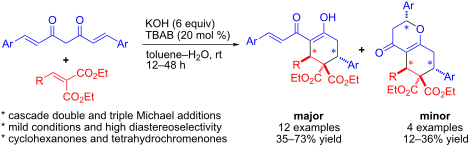
- double Michael adduct 3n in 56% yield (Table 2, entry 14). A plausible mechanism for the cascade double and triple Michael reactions is shown in Scheme 2. At first, the enolate I of curcumin 1 adds to arylidenemalonate 2 in a Michael fashion resulting enolate II. The ester enolate II might remain in
- equilibrium with 1,3-dicarbonyl enolate I, but the former would be trapped via cyclization involving a diastereoselective 6-endo-trig intramolecular Michael addition to the enone moiety leading to highly substituted cyclohexanone 3. The formation of triple Michael adduct 4 can be attributed to the enolate 3
- curcumins 1 with arylidenemalonate 2 can be explained in terms of the relative stereochemistry of the substituents in the enolate arising from the first Michael addition (Figure 3). Comparison of the two possible transition states TSI and TSII for second Michael addition suggests that a severe 1,3-allylic

Graphical Abstract

Figure 1: Biologically active derivatives of cyclohexanones.

Scheme 1: The Michael donor–acceptor reactivity of curcumin: previous vs present work.

Scheme 2: A plausible reaction mechanism.

Figure 2: X-ray structure of 4a (CCDC 2351387).

Figure 3: Origin of stereoselectivity in the double Michael addition.

Scheme 3: Scale-up reaction.
Regioselective alkylation of a versatile indazole: Electrophile scope and mechanistic insights from density functional theory calculations
- Pengcheng Lu,
- Luis Juarez,
- Paul A. Wiget,
- Weihe Zhang,
- Krishnan Raman and
- Pravin L. Kotian
Beilstein J. Org. Chem. 2024, 20, 1940–1954, doi:10.3762/bjoc.20.170
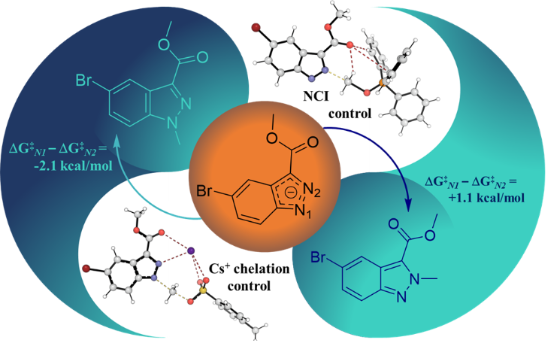
- , presumably due to entropic penalties. Three of four computed resonance forms were all found to be of approximately equal energy. Only the E-enolate form 6 (-N1H-E) was slightly higher in energy by 0.06 kcal/mol likely due to electrostatic destabilization of the oxyanion with N2, however, this difference is
- molecules. Tautomerism of indazole. DFT-calculated deprotonation of 6 with Cs2CO3 in implicit THF with the temperature of the calculation set to 90 °C to simulate the dioxane conditions (top) and energy differences of four enolate resonance structures of 6 calculated as discrete structures. The hybrid is
- identified as 6(N-H) (bottom). DFT-calculated Cs+-coordinated complexes with different enolate forms of 6(N-H) calculated as isolated compounds (top) and calculated intermediates of the reactions of 6(-N1H-Z) and 6(-N1H-E) with Cs+ (bottom). DFT-calculated reaction coordinate diagram for the reaction of 6

Graphical Abstract

Figure 1: Indazole-containing bioactive molecules.

Figure 2: Tautomerism of indazole.

Scheme 1: NMR, NOE, and yield data of compounds 8 and 9.

Scheme 2: Synthesis of compounds P1 and P2.

Figure 3: DFT-calculated deprotonation of 6 with Cs2CO3 in implicit THF with the temperature of the calculati...

Figure 4: DFT-calculated Cs+-coordinated complexes with different enolate forms of 6(N-H) calculated as isola...

Figure 5: DFT-calculated reaction coordinate diagram for the reaction of 6 under conditions A. Concerning con...

Figure 6: DFT-calculated energy for the deprotonation of 6 by the DMAD anion.

Figure 7: DFT-calculations concerning a coordinated Mitsunobu reaction pathway.

Figure 8: Reaction coordinate diagram of 6(N-H) reacting under conditions B. All calculated energies in kcal/...

Figure 9: Reaction of 18 under conditions A and B (top), and proposed chelation/coordination pathways to acco...

Figure 10: DFT-calculated reaction coordinate diagram for the reaction of 18 under conditions A.

Figure 11: DFT-calculated reaction coordinate diagram for the reaction of 18 under conditions B. Ball-and-stic...

Scheme 3: Reaction of 21 under conditions A and B; amultiple purifications; bdetermined by LC–MS.

Figure 12: DFT-calculated transition-state structures and energies of 21 under conditions A (top) and conditio...
Harnessing unprotected deactivated amines and arylglyoxals in the Ugi reaction for the synthesis of fused complex nitrogen heterocycles
- Javier Gómez-Ayuso,
- Pablo Pertejo,
- Tomás Hermosilla,
- Israel Carreira-Barral,
- Roberto Quesada and
- María García-Valverde
Beilstein J. Org. Chem. 2024, 20, 1758–1766, doi:10.3762/bjoc.20.154
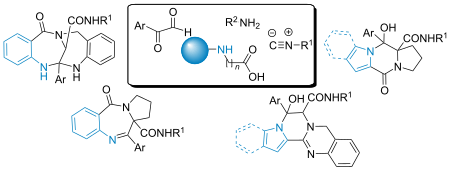
- reactions seem to take place through conjugated additions on the enol tautomer of the Ugi adduct. Indeed, the enolate intermediate would explain the stereochemical results, controlled by the configuration in the hemiaminal intermediate and not by the chiral information on the amine, unlike in the case of

Graphical Abstract

Figure 1: Fused heterocycles containing the piperazine and diazepine core.

Scheme 1: Synthesis of benzodiazepinones 5 from anthranilic acid derivatives.

Scheme 2: Diastereoselective one-pot synthesis of benzodiazepinones 6.

Scheme 3: Synthesis of bis-1,4-benzodiazepines 7.

Scheme 4: Synthesis of benzodiazepinone 5c and pyrrolobenzodiazepinone 8 from anthranilic acid and 3-bromopro...

Scheme 5: Synthesis of pyrrolopiperazinones 9 from pyrrole and indole carboxylic acids.

Scheme 6: Synthesis of pyrrolopiperazinones 10 from N-phenylglicine.

Figure 2: X-ray diffraction structures of pyrrolopiperazinones 9a (left) and 10a (right). The thermal ellipso...

Scheme 7: Synthesis of pyrrolopiperazinone 11 using (S)-α-methylbenzylamine.

Scheme 8: Proposed mechanism in the spontaneous cyclization of Ugi adducts obtained from arylglyoxals and dea...

Scheme 9: Synthesis of pyrrolopiperazinoquinazolines 13.

Scheme 10: Synthesis of piperazinoquinazoline 14.

Scheme 11: Synthesis of dipyrrolopiperazinones 12.

Figure 3: X-ray diffraction structure of dipyrrolopiperazinone 12c. The thermal ellipsoid plot (Olex2) is at ...
Tetrabutylammonium iodide-catalyzed oxidative α-azidation of β-ketocarbonyl compounds using sodium azide
- Christopher Mairhofer,
- David Naderer and
- Mario Waser
Beilstein J. Org. Chem. 2024, 20, 1510–1517, doi:10.3762/bjoc.20.135
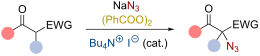
- the starting materials (nucleophilic approach), or rely on more advanced N3-transfer agents (electrophilic approach), over the course of the last years also α-azidations of enolate-type precursors using nucleophilic azide sources under oxidative conditions have been introduced very successfully [24

Graphical Abstract

Scheme 1: General illustration of the oxidative α-azidation of carbonyl derivatives using quaternary ammonium...

Scheme 2: Proposed mechanistic scenario.

Scheme 3: Application scope.

Scheme 4: Proof-of-concept for the analogous oxidative α-nitration.
Towards an asymmetric β-selective addition of azlactones to allenoates
- Behzad Nasiri,
- Ghaffar Pasdar,
- Paul Zebrowski,
- Katharina Röser,
- David Naderer and
- Mario Waser
Beilstein J. Org. Chem. 2024, 20, 1504–1509, doi:10.3762/bjoc.20.134
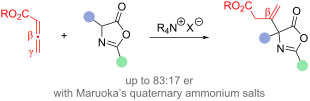
- allenoates 3 delivering highly functionalized α,α-disubstituted α-amino acid derivatives 5 has so far not been systematically addressed (for recent other β-selective additions of enolate precursors to allenoates please see references [31][32][33][34]). Thus, we now became interested in testing this

Graphical Abstract

Scheme 1: General use of azlactones 1 to access more advanced α-AA derivatives (A), our recently reported amm...

Scheme 2: Application scope (conditions as detailed in Table 1, entry 13).

Scheme 3: Azlactone opening reactions.
(Bio)isosteres of ortho- and meta-substituted benzenes
- H. Erik Diepers and
- Johannes C. L. Walker
Beilstein J. Org. Chem. 2024, 20, 859–890, doi:10.3762/bjoc.20.78
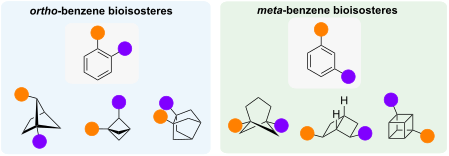
- ]propellane (129). Gassman reported the initial synthesis of [3.1.1]propellane (129) in 1980 [61], and this was recently optimised by Uchiyama (Scheme 13A) [47]. Cyclisation to the bridged structure 126 was achieved by enolate formation and intramolecular nucleophilic substitution of iodide diester 125. A

Graphical Abstract

Figure 1: Scaffolds commonly reported as bioisosteric replacements of para-substituted benzene and examples p...

Figure 2: 1,2-BCPs as isosteres for ortho-and meta-substituted benzenes: comparison of reported exit vector p...
Scheme 1: 1,2-Disubstituted bicyclo[1.1.1]pentanes as isosteres of ortho-substituted benzenes. A: Baran, Coll...

Scheme 2: Synthesis of 1,2-BCPs from BCP 15 by bridge C–H bromination as reported by MacMillan and co-workers ...

Figure 3: Comparative physicochemical data of telmisartan, lomitapide and their BCP isosteres [26,33]. Shake flask d...
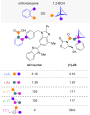
Figure 4: 1,2-Disubstituted bicyclo[2.1.1]hexanes as isosteres of ortho-benzenes: Exit vector parameters of t...
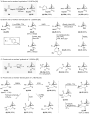
Scheme 3: Synthesis of 1,2-disubstituted bicyclo[2.1.1]hexanes via alkene insertion into bicyclo[1.1.0]butane...

Scheme 4: Synthesis of 1,2-disubstituted bicyclo[2.1.1]hexanes via intramolecular crossed [2 + 2] cycloadditi...

Figure 5: Comparison of physicochemical data of fluxapyroxad and boscalid and their 1,2-BCH bioisosteres [36]. Sh...

Figure 6: Antifungal activity of fluxapyroxad, its 1,5-BCH bioisostere (±)-55, boscalid and its bioisostere 1...
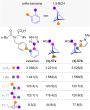
Figure 7: 1,5-Disubstituted bicyclo[2.1.1]hexanes as isosteres of ortho-substituted benzenes. Comparison of e...
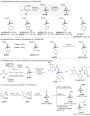
Scheme 5: Synthesis of 1,5-disubstituted bicyclo[2.1.1]hexanes as isosteres of ortho-benzenes via intramolecu...

Figure 8: Comparison of physicochemical data of fluxapyroxad and boscalid and their 1,5-BCH bioisosteres [45]. Sh...

Figure 9: Antifungal activity of fluxapyroxad, its 1,5-BCH bioisostere (±)-64, boscalid and its bioisostere 1...
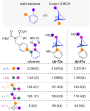
Figure 10: 1,5-Disubstituted 3-oxabicylco[2.1.1]hexanes as isosteres for ortho-benzenes: Comparison of exit ve...

Scheme 6: Synthesis of 1,5-disubstituted 3-oxabicyclo[2.1.1]hexanes as isosteres for ortho-benzenes via intra...

Figure 11: Comparison of physicochemical data of fluxapyroxad and boscalid and their 3-oxa-1,5-BCH bioisostere...

Figure 12: Antifungal activity of fluxapyroxad and boscalid and their 3-oxa-1,5-BCH bioisosteres (±)-75 and (±...

Figure 13: 1,2-Disubstituted bicyclo[3.1.1]heptanes as isosteres of ortho-benzenes. Schematic representation o...

Scheme 7: Synthesis of 1,2-disubstituted bicyclo[3.1.1]heptanes as isosteres for ortho-benzenes via alkene in...

Figure 14: 1,2-Disubstituted stellanes as ortho-benzene isosteres: Comparison of selected exit vector paramete...

Scheme 8: Synthesis of 1,2-disubstituted stellanes as isosteres for ortho-benzenes reported by Ryabukhin, Vol...

Figure 15: 1,2-Disubstituted cubanes as ortho-benzene isosteres: Comparison of substituent distances and angle...

Scheme 9: Synthesis of 1,2-disubsituted cubanes as isosteres for ortho-benzenes. A: Synthesis of 1,2-cubane d...
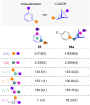
Figure 16: 1,3-Disubstituted bicyclo[2.1.1]hexanes as isosteres of meta-benzenes: comparative exit vector para...

Scheme 10: Synthesis of 1,3-disubstituted bicyclo[2.1.1]hexanes as isosteres for meta-benzenes reported by Wal...
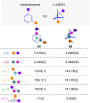
Figure 17: 1,4-Disubstituted bicyclo[2.1.1]hexanes as isosteres of meta-benzenes: comparative exit vector para...

Scheme 11: Synthesis of 1,4-disubstituted bicyclo[2.1.1}hexanes as isosteres for ortho-benzenes via intramolec...

Figure 18: 1,4-Disubstituted-2-oxabicyclo[2.1.1]hexanes as meta-benzene isosteres: comparison of selected exit...

Scheme 12: Synthesis of 1,4-disubstituted 2-oxabicyclo[2.1.1]hexanes as isosteres for meta-benzenes. A: Mykhai...

Figure 19: Comparative physicochemical data for 2- and 3-oxa-1,4-BCHs and para-substituted benzene equivalents...

Figure 20: 1,5-Disubstituted bicyclo[3.1.1]heptanes as isosteres of meta-benzenes: comparison of exit vector p...

Scheme 13: Synthesis of [3.1.1]propellane as a precursor for 1,5-disubsituted bicyclo[3.1.1]heptanes. A: aGass...

Scheme 14: Synthesis of iodine-substituted 1,5-disubstituted bicyclo[3.1.1]heptanes as isosteres for meta-benz...

Scheme 15: Synthesis of nitrogen-, chalcogen- and tin-substituted 1,5-disubstituted bicyclo[3.1.1]heptanes as ...

Figure 21: Comparative physicochemical data of URB597 and 1,5-BCHep isostere 146 [27]. Kinetic aqueous solubility ...
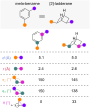
Figure 22: [2]-Ladderanes as isosteres of meta-benzenes: comparison of reported exit vector parameters [63].

Scheme 16: Synthesis of cis-2,6-disubstituted bicyclo[2.2.0]hexanes as isosteres for meta-benzenes. A: Brown a...

Figure 23: Comparative physicochemical data of meta-benzene 158 and [2]-ladderane isostere 159 [63]. Partition coe...

Figure 24: 1,3-Disubstituted cubanes as isosteres of meta-benzenes: comparison of selected exit vector paramet...
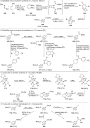
Scheme 17: Synthesis of 1,3-disubsituted cubanes as isosteres for meta-benzenes. A: MacMillan and co-workers’ ...

Figure 25: Comparative physicochemical data of lumacaftor and its 1,3-cubane bioisostere 183 [51]. Distribution co...

Figure 26: 1,3-Disubstituted cuneanes as isosteres of meta-benzenes: comparison of selected exit vector parame...

Scheme 18: Synthesis of 1,3-cuneanes as isosteres of meta-benzene. A: Synthesis of 1,3-cuneanes reported by La...

Figure 27: Comparative physicochemical data of sonidegib and its 1,3-cuneane isostere 190 [71]. aSolubility was to...

Figure 28: Exemplary polysubstituted scaffolds related to disubstituted scaffolds suggested as isosteres of or...
Synthesis of 2,2-difluoro-1,3-diketone and 2,2-difluoro-1,3-ketoester derivatives using fluorine gas
- Alexander S. Hampton,
- David R. W. Hodgson,
- Graham McDougald,
- Linhua Wang and
- Graham Sandford
Beilstein J. Org. Chem. 2024, 20, 460–469, doi:10.3762/bjoc.20.41
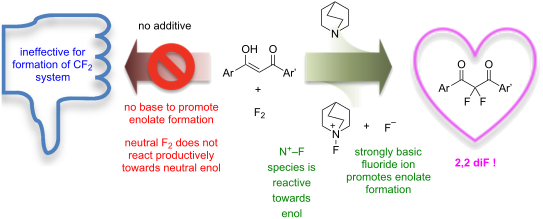
- reactive enolate 1a-enolate. Nitrogen-centered bases react with fluorine gas to form N-fluoroammonium fluorides and fluoride ion [49]. Thus, on addition of tertiary amines, fluorine can react to generate basic fluoride ions and deliver reactive, electrophilic N–F species. Given that Selectfluor is
- anionic 1a–i-enolate species in parallel with N-fluoroammonium ion 6. Fluoride ions formed through the reactions between fluorine and quinuclidine or fluorine and enolate species, may deprotonate 1a–i-enol, to form enolates of 1a–i that are reactive towards both fluorine and N-fluoroammonium ion 6. The
- effective base to facilitate the formation of 1a-enolate from 1a-enol and thus facilitate the initial monofluorination step by either fluorine or N-fluoroammonium ion 6. Carbonate ions are also expected to be highly basic in MeCN, however, their limited solubility is likely to inhibit their ability to act

Graphical Abstract

Scheme 1: Monofluorination of 1,3-diphenylpropane-1,3-dione with Selectfluor.

Scheme 2: Synthesis of 2,2-difluoro-1,3-diphenylpropane-1,3-dione (3a).

Figure 1: Molecular structure of 2,2-difluoro-1,3-diphenylpropane-1,3-dione (3a).

Figure 2: Crystal packing structure of 3f as determined by SXRC.

Figure 3: Molecular structure and crystal packing of 5e as determined by SXRC.

Scheme 3: Proposed mechanism of the quinuclidine-mediated difluorination of 1,3-dicarbonyl substrates.

Scheme 4: Proposed mechanisms of carbonate and chloride ion-mediated difluorination of 1,3-dicarbonyl substra...
Mechanisms for radical reactions initiating from N-hydroxyphthalimide esters
- Carlos R. Azpilcueta-Nicolas and
- Jean-Philip Lumb
Beilstein J. Org. Chem. 2024, 20, 346–378, doi:10.3762/bjoc.20.35
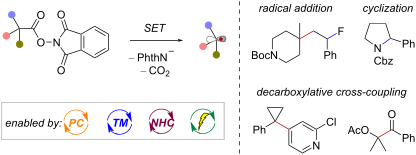
- (Scheme 30B). Then, cesium carbonate deprotonates the enol OH in 145, to provide the enolate form of Breslow’s intermediate 146, which is a suitable reducing agent to trigger the fragmentation of NHPI ester 58 (E°ox = −0.97 V vs SCE in MeCN). Hence, it is proposed that enolate 146 induces the single

Graphical Abstract

Scheme 1: Comparison between Barton and NHPI ester radical precursors.

Scheme 2: Overview of the mechanisms and activation modes involved in radical generation from RAEs.

Scheme 3: Common mechanisms in photocatalysis.

Scheme 4: A) Giese-type radical addition of NHPI esters mediated by a reductive quenching photocatalytic cycl...

Scheme 5: A) Minisci-type radical addition of NHPI esters. B) Reaction mechanism involving an “off-cycle” red...

Scheme 6: Activation of NHPI esters through hydrogen-bonding in an oxidative quenching photocatalytic cycle.

Scheme 7: SET activation of RAE facilitated by a Lewis acid catalyst.

Scheme 8: PCET activation of NHPI esters in the context of a radical-redox annulation.

Scheme 9: Activation enabled by a strong excited-state reductant catalyst and its application in the dearomat...

Scheme 10: Proposed formation of an intramolecular charge-transfer complex in the synthesis of (spiro)anellate...

Scheme 11: Formation of a charge-transfer complex between enamides and NHPI esters enabled by a chiral phospha...

Scheme 12: Activation of NHPI ester through the formation of photoactive EDA-complexes.

Scheme 13: A) EDA complex-mediated radical hydroalkylation reactions of NHPI esters. B) Proposed mechanism for...

Scheme 14: Proposed radical chain mechanism initiated by EDA-complex formation.
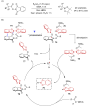
Scheme 15: A) Photoinduced decarboxylative borylation. B) Proposed radical chain mechanism.
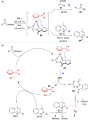
Scheme 16: A) Activation of NHPI esters mediated by PPh3/NaI. B) Proposed catalytic cycle involving EDA-comple...

Scheme 17: A) Radical generation facilitated by EDA complex formation between PTH1 catalyst and NHPI esters. B...

Scheme 18: Proposed catalytic cycle for the difunctionalization of styrenes.

Scheme 19: Formation of a charge-transfer complex between NHPI esters and Cs2CO3 enables decarboxylative amina...

Scheme 20: 3-Acetoxyquinuclidine as catalytic donor in the activation of TCNHPI esters.
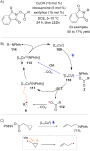
Scheme 21: A) Photoinduced Cu-catalyzed decarboxylative amination. B) Proposed catalytic cycle. C) Radical clo...

Scheme 22: A) Photoinduced Pd-catalyzed aminoalkylation of 1,4-dienes. B) Proposed catalytic cycle.

Scheme 23: A) TM-catalyzed decarboxylative coupling of NHPI esters and organometallic reagents. B) Representat...
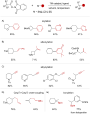
Scheme 24: Synthetic applications of the TM-catalyzed decarboxylative coupling of NHPI esters and organometall...
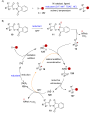
Scheme 25: A) Ni-catalyzed cross-electrophile coupling of NHPI esters. B) Representative catalytic cycle.
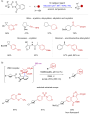
Scheme 26: A) Synthetic applications of decarboxylative cross-electrophile couplings. B) Decarboxylative aryla...

Scheme 27: A) Activation of tetrachlorophthalimide redox-active esters enabled by a low-valency Bi complex. B)...

Scheme 28: Activation of NHPI esters mediated by Zn0 applied in a Z-selective alkenylation reaction.

Scheme 29: A) Activation of NHPI esters enabled by a pyridine-boryl radical species applied to the decarboxyla...

Scheme 30: A) Decarboxylative coupling of RAE and aldehydes enabled by NHC-catalyzed radical relay. B) Propose...

Scheme 31: A) Decarboxylative C(sp3)–heteroatom coupling reaction of NHPI esters under NHC catalysis B) The NH...

Scheme 32: A) Electrochemical Giese-type radical addition of NHPI esters. B) Reaction mechanism.

Scheme 33: Electrochemical Minisci-type radical addition of NHPI-esters.

Scheme 34: Ni-electrocatalytic cross-electrophile coupling of NHPI esters with aryl iodides.

Scheme 35: A) Decarboxylative arylation of NHPI esters under Ag-Ni electrocatalysis B) Formation of AgNP on th...

Scheme 36: Synthetic applications of decarboxylative couplings of NHPI esters under Ni-electrocatalysis.

Scheme 37: Examples of natural product syntheses in which RAEs were used in key C–C bond forming reactions.
Catalytic multi-step domino and one-pot reactions
- Svetlana B. Tsogoeva
Beilstein J. Org. Chem. 2024, 20, 254–256, doi:10.3762/bjoc.20.25
- facile stereoselective tandem reaction based on the asymmetric conjugate addition of dialkylzinc reagents to unsaturated acylimidazoles, followed by trapping of the intermediate zinc enolate with carbocations [12]. A practical one-pot synthesis of fluorescent pyrazolo[3,4-b]pyridin-6-ones by reacting 5

Figure 1: Comparison of a classical “stop-and-go” synthesis with a domino reaction.
Using the phospha-Michael reaction for making phosphonium phenolate zwitterions
- Matthias R. Steiner,
- Max Schmallegger,
- Larissa Donner,
- Johann A. Hlina,
- Christoph Marschner,
- Judith Baumgartner and
- Christian Slugovc
Beilstein J. Org. Chem. 2024, 20, 41–51, doi:10.3762/bjoc.20.6
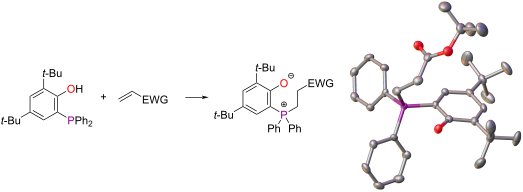
- regarded as stable phosphonium enolate zwitterions. The first zwitterions of this type were published in 1955 [31], but the first crystal structure of a phosphonium enolate zwitterion was reported only in 2007 by Zhu et al., who synthesized the compound via a three-component coupling between an
- between the anionic phenolate and the cationic phosphonium center [32]. Other stable phosphonium enolate or phenolate zwitterions feature P–O distances in the range of 2.60–2.95 Å [28][32]. For comparison, in 1,2-oxaphosphetanes, the covalent bond between P–O is characterized by a distinctly shorter

Graphical Abstract

Scheme 1: Reaction of 1 with various Michael acceptors (EWG = electron-withdrawing group) forming the zwitter...

Figure 1: 1H NMR spectrum of 2a recorded on a 300 MHz spectrometer in CDCl3 at 23 °C; the inset shows a 3D-mo...

Figure 2: a) Molecular structure of 2a, hydrogen atoms omitted for clarity, thermal ellipsoids drawn at 30% p...

Figure 3: Left: UV–vis spectra of 2a, 2b and 2d in chloroform (straight lines) and in methanol (dotted lines)...

Figure 4: Conversion of 1 (initial c = 0.25 mM) toward 2a, 2b, or 2d in the presence of the respective Michae...

Scheme 2: Proposed mechanism for intramolecular proton transfer in zwitterion formation with Michael acceptor...
Anion–π catalysis on carbon allotropes
- M. Ángeles Gutiérrez López,
- Mei-Ling Tan,
- Giacomo Renno,
- Augustina Jozeliūnaitė,
- J. Jonathan Nué-Martinez,
- Javier Lopez-Andarias,
- Naomi Sakai and
- Stefan Matile
Beilstein J. Org. Chem. 2023, 19, 1881–1894, doi:10.3762/bjoc.19.140
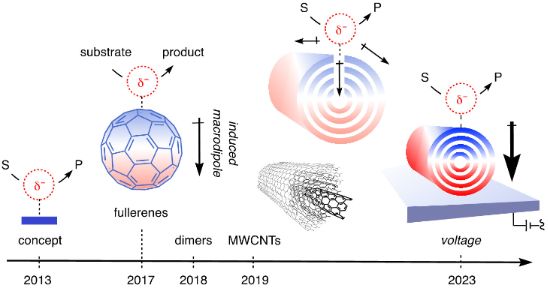
- introduced in 2017, followed by carbon nanotubes in 2019. Consistent with expectations from theory, anion–π catalysis on carbon allotropes generally increases with polarizability. Realized examples reach from enolate addition chemistry to asymmetric Diels–Alder reactions and autocatalytic ether cyclizations
- catalysis; electromicrofluidics; enolate addition; ether cyclizations; fullerenes; Introduction Anion–π catalysis was introduced ten years ago [1]. The idea is to stabilize anionic transition states on electron-deficient, π-acidic aromatic surfaces (Figure 1A). The true beginning is arguably in 2015
- because it took some time to find the benchmark reaction needed to develop the catalysts (Figure 2) [2]. With this operational enolate chemistry in hand, it quickly became clear that increasing π acidity at the same time decreases the stability of the catalyst [3][4][5]. This suggested that induced rather

Graphical Abstract

Figure 1: (A) Anion–π catalysis: Stabilization of anionic transition states from substrate S to product P on ...

Figure 2: Bioinspired enolate addition chemistry to benchmark anion–π catalysts: Stabilization of “enol” inte...

Figure 3: Structure and activity of fullerene-amine dyads to catalyze the intrinsically disfavored but biolog...

Figure 4: Asymmetric anion–π catalysis of intrinsically disfavored exo-selective Diels–Alder reactions on ful...

Figure 5: Asymmetric anion–π catalysis to install remote stereogenic centers on fullerene catalyst 21, with n...
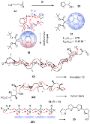
Figure 6: Primary anion–π autocatalysis on monofunctional fullerene 31, with catalytic and autocatalytic rate...

Figure 7: (A) Macrodipoles induced by anionic transition states account for anion–π catalysis on fullerenes. ...

Figure 8: Structure and activity of covalently and non-covalently modified SWCNTs and MWCNTs, with A/D ratios...

Figure 9: (A) Epoxide-opening ether cyclization on pristine carbon nanotubes occurs with (XVI) but not withou...

Figure 10: Electric-field-induced anion–π catalysis on MWCNTs 3 on graphite 76 in electrochemical microfluidic...
Synthesis and biological evaluation of Argemone mexicana-inspired antimicrobials
- Jessica Villegas,
- Bryce C. Ball,
- Katelyn M. Shouse,
- Caleb W. VanArragon,
- Ashley N. Wasserman,
- Hannah E. Bhakta,
- Allen G. Oliver,
- Danielle A. Orozco-Nunnelly and
- Jeffrey M. Pruet
Beilstein J. Org. Chem. 2023, 19, 1511–1524, doi:10.3762/bjoc.19.108
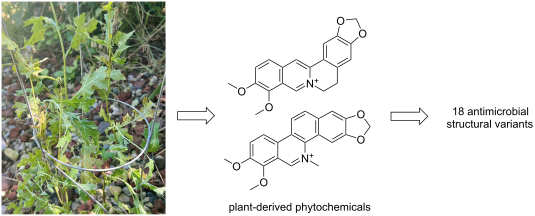
- considered ways to further enhance this activity. We first explored the effects of structural modifications to berberine itself. The cationic iminium within berberine and its derivatives is susceptible to nucleophilic attack [10][14]. Through use of an acetone enolate, as well as partial or full reduction by

Graphical Abstract

Figure 1: Zones of inhibition for 1 mg of evaporated methanolic (MeOH) extracts from various parts of the A. ...

Scheme 1: General route to berberine variants, displaying the numbering system for the berberine ring.

Scheme 2: Synthesis of new berberine variants. Reductive amination to a secondary amine was followed by cycli...

Figure 2: X-ray crystal structures of the oxidation byproducts a) B4 (CCDC 2271457) and b) B6 (CCDC 2271458; ...

Scheme 3: Direct modification of the original berberine structure.

Scheme 4: Preparation of non-cyclic charged variants of B1.

Scheme 5: Partial reduction of compound B1 to B14.

Figure 3: Kirby–Bauer zones of inhibition for all variants B1–B14 compared to original berberine (B). Mean zo...

Scheme 6: Synthesis of the substituted 2-bromoaminonaphthalenes 9 and 10.

Scheme 7: Completion of the synthesis of variants C1–C4.

Figure 4: Kirby–Bauer zones of inhibition for variants C1–C4 compared to original chelerythrine (C). Mean zon...

Figure 5: Effects of original berberine and all variants against T84 human colon cancer cells. Cells were tre...

Figure 6: Effects of original chelerythrine and all variants against T84 human colon cancer. Cells were treat...
α-(Aminomethyl)acrylates as acceptors in radical–polar crossover 1,4-additions of dialkylzincs: insights into enolate formation and trapping
- Angel Palillero-Cisneros,
- Paola G. Gordillo-Guerra,
- Fernando García-Alvarez,
- Olivier Jackowski,
- Franck Ferreira,
- Fabrice Chemla,
- Joel L. Terán and
- Alejandro Perez-Luna
Beilstein J. Org. Chem. 2023, 19, 1443–1451, doi:10.3762/bjoc.19.103
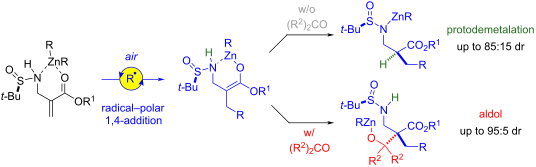
- atom to zinc enables this SH2 process which represents a rare example of alkylzinc-group transfer to a tertiary α-carbonyl radical. The zinc enolate thus formed readily undergoes β-fragmentation unless it is trapped by electrophiles in situ. Enolates of substrates having free N–H bonds undergo
- enolate with electrophiles in protocols wherein all the reactive partners can be introduced from the start, given that dialkylzinc reagents offer a large functional group tolerance; and 3) the radical character of the process allows for the use of alkyl iodides as alkyl source in multicomponent reactions
- enolate and a new R• that propagates the radical chain (Scheme 1). Initiation occurs upon oxidation of the dialkylzinc reagent by oxygen. The feasibility of such 1,4-addition reactions is fully reliant on the ease of the intermediate enoxyl radical to undergo alkylzinc-group transfer. Secondary α-carbonyl

Graphical Abstract

Scheme 1: Air-promoted radical chain reaction of dialkylzinc reagents with α,β-unsaturated carbonyl compounds....
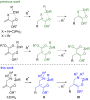
Scheme 2: Enolate formation by zinc radical transfer (SH2 on dialkylzinc reagents).

Scheme 3: Preparation of α-(aminomethyl)acrylate 10.

Scheme 4: Reaction of α-(aminomethyl)acrylate 10 with Et2Zn in the presence of air.

Scheme 5: Chemical correlation to determine the configuration of the major diastereomer of (RS)-14b.
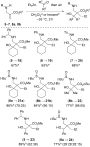
Scheme 6: Air-promoted tandem 1,4-addition–aldol condensation reactions of Et2Zn with α-(aminomethyl)acrylate...
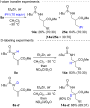
Scheme 7: Diagnostic experiments for a radical mechanism and for enolate formation.

Scheme 8: Diagnostic experiments with N-benzyl enoate 10.

Scheme 9: Reactivity manifolds for the air-promoted tandem 1,4-addition–electrophilic substitution reaction b...
Photoredox catalysis harvesting multiple photon or electrochemical energies
- Mattia Lepori,
- Simon Schmid and
- Joshua P. Barham
Beilstein J. Org. Chem. 2023, 19, 1055–1145, doi:10.3762/bjoc.19.81

Graphical Abstract

Figure 1: Oxidative and reductive activations of organic compounds harvesting photoredox catalysis.

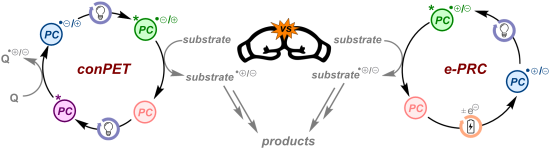
Figure 2: General catalytic cycles of radical ion conPET (left) and radical ion e-PRC (right).
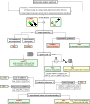
Figure 3: “Beginner’s guide”: comparison between advantages, capacities, and prospectives of conPET and PEC.
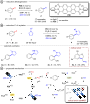
Figure 4: A) conPET reductive dehalogenation of aryl halides with PDI. B) Reductive C–H arylation with pyrrol...
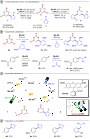
Figure 5: A) Chromoselective mono- and disubstitution or polybrominated pyrimidines with pyrroles. B) Sequent...

Figure 6: A) Synthesis of pyrrolo[1,2-a]quinolines. B) Synthesis of ullazines.

Figure 7: A) Reductive phosphorylation of aryl halides via conPET. B) Selected examples from the substrate sc...
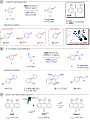
Figure 8: A) Reductive dehalogenation of aryl halides via conPET and selected examples from the substrate sco...
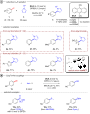
Figure 9: A) Reductive C–H arylation of aryl halides via conPET (top) and selected examples from the substrat...
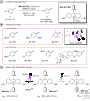
Figure 10: A) Reductive hydrodehalogenation of aryl halides with Mes-Acr-BF4. B) Selected examples from the su...
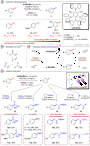
Figure 11: A) Reductive hydrodechlorination of aryl chlorides with 4-DPAIPN. B) Proposed formation of CO2•−. C...
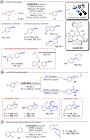
Figure 12: A) Reductive conPET borylation with 3CzEPAIPN (top) and selected examples from the substrate scope ...

Figure 13: Scale-up of conPET phosphorylation with 3CzEPAIPN.
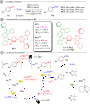
Figure 14: A) Borylation of 1d. B) Characteristics and structure of PC1 with green and red parts showing the l...
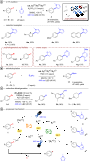
Figure 15: A) Reductive C–H arylation scope with polysulfide conPET (top) and selected examples from the subst...

Figure 16: Scale-up of A) C–H arylation and B) dehaloborylation with polysulfide photocatalysis in continuous-...

Figure 17: A) Formation of [Ir1]0 and [Ir2]0 upon PET between [Ir1]+ and Et3N. B) Mechanism of multi-photon ta...

Figure 18: A) Reductive hydrodehalogenation of aryl halides via multi-photon tandem photocatalysis. B) Selecte...

Figure 19: A) Carbonylative amidation of aryl halides in continuous flow. B) Selected examples from the substr...
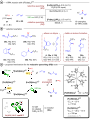
Figure 20: A) General scheme for reductive (RQ) and oxidative quenching (OQ) protocols using [FeIII(btz)3](PF6)...
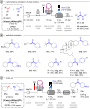
Figure 21: A) Carbonylative amidation of alkyl iodides with [IrIII(ppy)2(dtbbpy)]PF6. B) Selected examples fro...
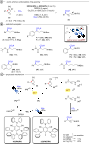
Figure 22: A) Carboxylative C–N bond cleavage in cyclic amines. B) Selected examples from the substrate scope....
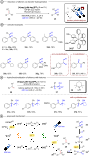
Figure 23: A) Formal reduction of alkenes to alkanes via transfer hydrogenation. B) Selected examples from the...
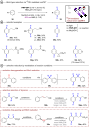
Figure 24: A) Birch-type reduction of benzenes with PMP-BPI. B) Selected examples from the substrate scope (sc...

Figure 25: Proposed mechanism of the OH− mediated conPET Birch-type reduction of benzene via generation of sol...

Figure 26: Reductive detosylation of N-tosylated amides with Mes-Acr-BF4. B) Selected examples from the substr...
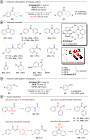
Figure 27: A) Reductive detosylation of N-tosyl amides by dual PRC. B) Selected examples from the substrate sc...

Figure 28: A) Mechanism of the dual PRC based on PET between [Cu(dap)2]+ and DCA. B) Mechanism of the dual PRC...
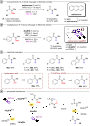
Figure 29: A) N–O bond cleavage in Weinreb amides with anthracene. B) N–O bond cleavage in Weinreb amides rely...
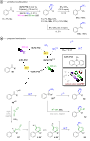
Figure 30: A) Pentafluorosulfanylation and fluoride elimination. B) Mechanism of the pentafluorosulfanylation ...
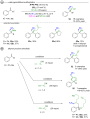
Figure 31: A) α-Alkoxypentafluorosulfanylation (top) and selected examples from the substrate scope (bottom). ...
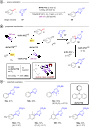
Figure 32: A) Oxidative amination of arenes with azoles catalyzed by N-Ph PTZ. B) Selected examples from the s...

Figure 33: A) C(sp3)–H bond activation by HAT via chloride oxidation by *N-Ph PTZ•+. B) Proposed mechanism for...

Figure 34: A) Recycling e-PRC C–H azolation of electron-rich arenes with pyrazoles using Mes-Acr+ as a photoca...

Figure 35: A) Radical ion e-PRC direct oxidation of unactivated arenes using TAC+ as an electro-activated phot...

Figure 36: A) Radical ion e-PRC direct oxidation of unactivated arenes using TPA as an electro-activated photo...

Figure 37: Proposed mechanism (top) and mode of preassembly (bottom).

Figure 38: A) Possible preassemblies of reactive (left) vs unreactive (right) arenes. B) Calculated spin densi...
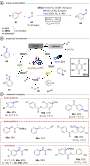
Figure 39: A) Recycling e-PRC C(sp2 )–H acetoxylation of arenes using DDQ as a photocatalyst. B) Proposed cata...

Figure 40: Gram scale hydroxylation of benzene in a recirculated flow setup.
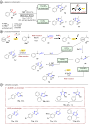
Figure 41: A) Radical ion e-PRC vicinal diamination of alkylarenes using TAC+ as an electro-activated photocat...
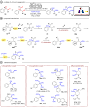
Figure 42: A) Sequential oxygenation of multiple adjacent C–H bonds under radical ion e-PRC using TAC+ as an e...

Figure 43: A) Enantioselective recycling e-PRC cyanation of benzylic C–H bonds using ADQS as photocatalyst. B)...

Figure 44: Proposed tandem mechanism by Xu and co-workers.
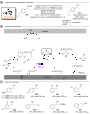
Figure 45: A) Enantioselective recycling e-PRC decarboxylative cyanation using Cu(acac)2, Ce(OTf)3 and a box l...

Figure 46: A) Enantioselective recycling e-PRC benzylic cyanation using Cu(MeCN)4BF4, box ligand and anthraqui...

Figure 47: A) Radical ion e-PRC acetoxyhydroxylation of aryl olefins using TAC+ as an electro-activated photoc...

Figure 48: Selected examples from the substrate scope.

Figure 49: Photoelectrochemical acetoxyhydroxylation in a recirculated flow setup.
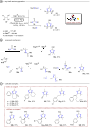
Figure 50: A) Radical ion e-PRC aminooxygenation of aryl olefins using TAC+ as an electro-activated photocatal...
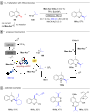
Figure 51: A) Recycling e-PRC C–H alkylation of heteroarenes with organic trifluoroborates using Mes-Acr+ as p...

Figure 52: A) Recycling e-PRC decarboxylative C–H alkylation of heteroarenes using CeCl3·7H2O as catalyst. B) ...

Figure 53: A) Recycling e-PRC decarboxylative C–H alkylation of heteroarenes using Fe(NH4)2(SO4)2·6H2O as cata...
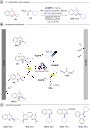
Figure 54: A) Recycling e-PRC C–H alkylation of heteroarenes with alkyl oxalates and 4CzIPN as photocatalyst. ...
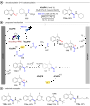
Figure 55: A) Recycling e-PRC decarboxylative C–H carbamoylation of heteroarenes using 4CzIPN as photocatalyst...
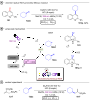
Figure 56: A) Photoelectrochemical HAT-mediated hydrocarbon activation via the chlorine radical. B) Proposed m...

Figure 57: A) Selected examples from the substrate scope. B) Gram and decagram scale semi-continuous flow PEC ...

Figure 58: A) Photoelectrochemical HAT-mediated dehydrogenative coupling of benzothiazoles with aliphatic C–H ...

Figure 59: A) Photoelectrochemical HAT activation of ethers using electro-activated TAC+ as photocatalyst. B) ...

Figure 60: Selected examples from the substrate scope.
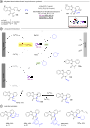
Figure 61: A) Photoelectrochemical HAT-mediated synthesis of alkylated benzimidazo-fused isoquinolinones using...

Figure 62: A) Decoupled photoelectrochemical cerium-catalyzed oxydichlorination of alkynes using CeCl3 as cata...

Figure 63: Proposed decoupled photoelectrochemical mechanism.

Figure 64: A) Decoupled photoelectrochemical ring-opening bromination of tertiary cycloalkanols using MgBr2 as...

Figure 65: A) Recycling e-PRC ring-opening functionalization of cycloalkanols using CeCl3 as catalyst. B) Prop...

Figure 66: Selected examples from the substrate scope of the PEC ring-opening functionalization.
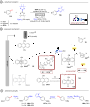
Figure 67: A) Radical ion e-PRC reduction of chloro- and bromoarenes using DCA as catalyst and various accepto...
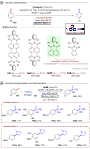
Figure 68: A) Screening of different phthalimide derivatives as catalyst for the e-PRC reduction of aryl halid...

Figure 69: Screening of different organic catalysts for the e-PRC reduction of trialkylanilium salts.

Figure 70: A) e-PRC reduction of phosphonated phenols and anilinium salts. B) Selected examples from the subst...

Figure 71: A) ConPET and e-PRC reduction of 4-bromobenzonitrile using a naphthalene diimide (NDI) precatalyst ...

Figure 72: A) Radical ion e-PRC reduction of phosphinated aliphatic alcohols with n-BuO-NpMI as catalyst. B) C...

Figure 73: Selected examples from the substrate scope.

Figure 74: A) Recycling e-PRC reductive dimerization of benzylic chlorides using a [Cu2] catalyst. B) Proposed...

Figure 75: A) Decoupled photoelectrochemical C–H alkylation of heteroarenes through deamination of Katritzky s...

Figure 76: Proposed mechanism by Chen and co-workers.
First synthesis of acylated nitrocyclopropanes
- Kento Iwai,
- Rikiya Kamidate,
- Khimiya Wada,
- Haruyasu Asahara and
- Nagatoshi Nishiwaki
Beilstein J. Org. Chem. 2023, 19, 892–900, doi:10.3762/bjoc.19.67
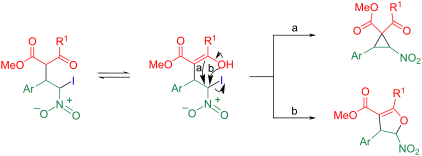
- proceeded, to produce furan 13 with a 46% yield (Scheme 6). The coordination of two carbonyl groups to the tin species facilitated the ring opening of the cyclopropane ring to afford betaine [7], then the oxygen atom of the enolate attacked the benzyl cation to construct a five-membered ring. The subsequent

Graphical Abstract

Scheme 1: Versatile reactivities of cyclopropanes 1a.

Scheme 2: Preparative methods for cyclopropanedicarboxylates 1a.

Scheme 3: Bromination of ethyl acetoacetate (3c) and reaction with nitrostyrene 2a.

Scheme 4: Reaction of 4b with (diacetoxyiodo)benzene (top); structural determination of product 9 (bottom).

Figure 1: Monitoring the cyclization reaction using 4e by 1H NMR.

Scheme 5: A plausible mechanism for formation of cyclopropane 1 and dihydrofuran 8.

Scheme 6: Tin(II)-mediated ring expansion of nitrocyclopropane 1e.
Asymmetric tandem conjugate addition and reaction with carbocations on acylimidazole Michael acceptors
- Brigita Mudráková,
- Renata Marcia de Figueiredo,
- Jean-Marc Campagne and
- Radovan Šebesta
Beilstein J. Org. Chem. 2023, 19, 881–888, doi:10.3762/bjoc.19.65

- 10.3762/bjoc.19.65 Abstract We present here a stereoselective tandem reaction based on the asymmetric conjugate addition of dialkylzinc reagents to unsaturated acylimidazoles followed by trapping of the intermediate zinc enolate with carbocations. The use of a chiral NHC ligand provides chiral zinc
- obtained by other conjugate addition reactions. Keywords: acylimidazole; asymmetric catalysis; carbocation; conjugate addition; enolate; Introduction Asymmetric metal-catalyzed conjugate additions provide access to numerous chiral scaffolds. This type of C–C bond formation efficiently enables the
- excellent in asymmetric conjugate additions of dialkylzincs to acylimidazoles [25]. The initial reaction conditions were inspired by literature precedence on conjugate additions. As the first electrophile for trapping of the chiral enolate, we have used tropylium bistriflimide (Scheme 2). Following our

Graphical Abstract

Scheme 1: Concept of this work.

Scheme 2: Initial experiments for the trapping of the intermediate enolate Enl-1a with tropylium NTf2.
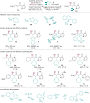
Scheme 3: The reaction scope.

Figure 1: Comparison of DFT-calculated and experimental ECD of (2R,3R)-4 and (2S,3R)-4.

Figure 2: DFT calculated (ωB97X-D4/def2-TZVPPD//PBEh-3c/def2-mSVP) HOMO energies and NBO charges for represen...
Synthesis of medium and large phostams, phostones, and phostines
- Jiaxi Xu
Beilstein J. Org. Chem. 2023, 19, 687–699, doi:10.3762/bjoc.19.50
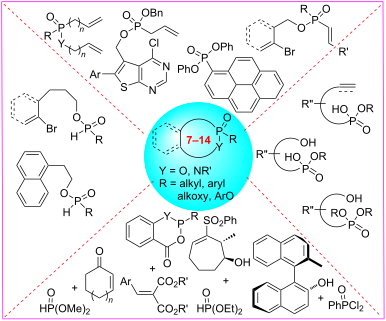
- '-carboxylates 83 in 5–10% yield as byproducts. The major products 84 were generated via Michael addition and the nucleophilic addition–elimination of the carbanion of the generated enolate moiety, while the oxyanion of the enolate moiety attacked the phosphorus to form the byproducts 83 (Scheme 18) [40][41

Graphical Abstract

Figure 1: Biologically active agents and chiral ligands containing medium and large phostams, phostones, and ...

Figure 2: Synthetic strategies for the preparation of medium and large phostams, phostones, and phostines.

Scheme 1: Synthesis of 1,2-azaphosphepine 2-oxide, 1,2-azaphosphocine 2-oxide, 1,2-azaphosphepane 2-oxide, an...

Scheme 2: Synthesis of bis[1,2]oxaphosphepine 2-oxide from tert-butyl 2-(bis(allyloxy)phosphoryl)pent-4-enoat...

Scheme 3: Synthesis of 2-ethoxy-5H-benzo[f][1,2]oxaphosphepine 2-oxides from 2-allylphenyl ethyl vinylphospho...

Scheme 4: Synthesis of 2-ethoxy-3,6-dihydrobenzo[g][1,2]oxaphosphocine 2-oxides from 2-allylphenyl ethyl ally...

Scheme 5: Synthesis of benzothiophene-fused 2-hydroxy-1,2-oxaphosphecane 2-oxide from (4-allyl-2-(4-methylphe...

Scheme 6: Synthesis of benzothiophene-fused 2-hydroxy-1,2-oxaphosphecane 2-oxide from benzyl hydrogen ((4-all...

Scheme 7: Synthesis of benzothiophene-fused 2-hydroxy-1-oxa-2-phosphacycloundecane 2-oxide from benzyl hydrog...

Scheme 8: Synthesis of 5,6,7-trihydro-1,2-oxaphosphepine 2-oxide and its benzo derivatives from 3-bromobut-3-...

Scheme 9: Synthesis of thieno[2,3-d]pyrimidine-fused 2-hydroxy-1,2-oxaphosphonane 2-oxide from benzyl hydroge...

Scheme 10: Synthesis of 3-phenoxybenzo[f]pyreno[1,10-cd][1,2]oxaphosphepine 3-oxide from diphenyl pyren-1-ylph...

Scheme 11: Synthesis of 1,2-oxaphosphepane 2-oxides and 1,2-oxaphosphocane 2-oxide from hydrogen methyl hex-5-...

Scheme 12: Synthesis of 2-methoxy-1,2-oxaphosphinane 2-oxides, 1,2-oxaphosphepine 2-oxides, 1,2-oxaphosphepane...

Scheme 13: Synthesis of 1,2-azaphosphepane 2-oxide and its benzo derivatives from 5-bromohex-5-en-1-yl methylp...

Scheme 14: Synthesis of 4-phenyl-1,2-dihydronaphtho[2,1-c][1,2]oxaphosphinine 4-oxide and 1-phenyl-3,4-dihydro...

Scheme 15: Synthesis of 2-alkoxy-3,5-dimethylene-1,2-oxaphosphepane 2-oxides from dialkyl 2-bromo-1-methylethy...

Scheme 16: Synthesis of 14-methyl-2-phenoxy-1-oxa-2-phosphacyclotetradecane 2-oxide from phenyl hydrogen (12-h...

Scheme 17: Synthesis of 5-oxo-1,3,5-trihydrobenzo[f][1,2]azaphosphepine 2-oxides from 1,2-dihydro-4H-benzo[d][...

Scheme 18: Synthesis of 3-hydrobenzo[f][1,2]oxaphosphepin-5(4H)-one 2-oxides from 2-phenyl/alkoxy-4H-benzo[d][...
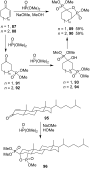
Scheme 19: Synthesis of bicyclic seven- and eight-membered phosphotones from cycloalk-2-enones and dimethyl ph...

Scheme 20: Synthesis of binaphthylene-fused phosphotones from (M)-2'-methyl-[1,1'-binaphthalen]-2-ol and pheny...

Scheme 21: Synthesis of bicyclic phosphotone from (1S,2R)-2-methyl-3-(phenylsulfonyl)cyclohept-3-en-1-ol and d...
Enolates ambushed – asymmetric tandem conjugate addition and subsequent enolate trapping with conventional and less traditional electrophiles
- Péter Kisszékelyi and
- Radovan Šebesta
Beilstein J. Org. Chem. 2023, 19, 593–634, doi:10.3762/bjoc.19.44
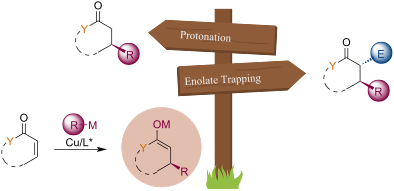
- years of development. The effort of our group to broaden possibilities to engage metal enolates in reactions with new electrophiles is described. The material is divided according to the organometallic reagent employed in the conjugate addition step, and thus to the particular metal enolate formed
- . Short information on applications in total synthesis is also given. Keywords: asymmetric catalysis; conjugate addition; electrophile; enolate; tandem reaction; Introduction The formation of complex chiral molecules is a crucial task of organic synthesis that enables the synthesis of pharmaceuticals
- stereogenic information, thus leading to chiral products. Enolate species are uniquely positioned for reactivity with a broad array of electrophiles and thus allowing quick and efficient construction of highly complex structures from readily available starting materials. Various polar organometallic reagents

Graphical Abstract

Scheme 1: General scheme depicting tandem reactions based on an asymmetric conjugate addition followed by an ...

Scheme 2: Cu-catalyzed tandem conjugate addition of R2Zn/aldol reaction with chiral acetals.

Scheme 3: Cu-catalyzed asymmetric desymmetrization of cyclopentene-1,3-diones using a tandem conjugate additi...

Scheme 4: Stereocontrolled assembly of dialkylzincs, cyclic enones, and sulfinylimines utilizing a Cu-catalyz...

Scheme 5: Cu-catalyzed tandem conjugate addition/Mannich reaction (A). Access to chiral isoindolinones and tr...

Scheme 6: Cu-catalyzed tandem conjugate addition/nitro-Mannich reaction (A) with syn–anti or syn–syn selectiv...

Figure 1: Various chiral ligands utilized for the tandem conjugate addition/Michael reaction sequences.
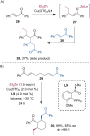
Scheme 7: Cu-catalyzed tandem conjugate addition/Michael reaction: side-product formation with chalcone (A) a...

Scheme 8: Zn enolate trapping using allyl iodides (A), Stork–Jung vinylsilane reagents (B), and allyl bromide...

Scheme 9: Cu-catalyzed tandem conjugate addition/acylation through Li R2Zn enolate (A). A four-component coup...

Scheme 10: Selected examples for the Cu-catalyzed tandem conjugate addition/trifluoromethylthiolation sequence....

Scheme 11: Zn enolates trapped by vinyloxiranes: synthesis of allylic alcohols.

Scheme 12: Stereoselective cyclopropanation of Mg enolates formed by ACA of Grignard reagents to chlorocrotona...

Scheme 13: Domino aldol reactions of Mg enolates formed from coumarin and chromone.

Scheme 14: Oxidative coupling of ACA-produced Mg enolates.

Scheme 15: Tandem ACA of Grignard reagents to enones and Mannich reaction.

Scheme 16: Diastereodivergent Mannich reaction of Mg enolates with differently N-protected imines.

Scheme 17: Tandem Grignard–ACA–Mannich using Taddol-based phosphine-phosphite ligands.

Scheme 18: Tandem reaction of Mg enolates with aminomethylating reagents.

Scheme 19: Tandem reaction composed of Grignard ACA to alkynyl enones.

Scheme 20: Rh/Cu-catalyzed tandem reaction of diazo enoates leading to cyclobutanes.

Scheme 21: Tandem Grignard-ACA of cyclopentenones and alkylation of enolates.

Scheme 22: Tandem ACA of Grignard reagents followed by enolate trapping reaction with onium compounds.

Scheme 23: Mg enolates generated from unsaturated lactones in reaction with activated alkenes.

Scheme 24: Lewis acid mediated ACA to amides and SN2 cyclization of a Br-appended enolate.

Scheme 25: Trapping reactions of aza-enolates with Michael acceptors.

Scheme 26: Si enolates generated by TMSOTf-mediated ACA of Grignard reagents and enolate trapping reaction wit...

Scheme 27: Trapping reactions of enolates generated from alkenyl heterocycles (A) and carboxylic acids (B) wit...

Scheme 28: Reactions of heterocyclic Mg enolates with onium compounds.

Scheme 29: Synthetic transformations of cycloheptatrienyl and benzodithiolyl substituents.

Scheme 30: Aminomethylation of Al enolates generated by ACA of trialkylaluminum reagents.

Scheme 31: Trapping reactions of enolates with activated alkenes.

Scheme 32: Alkynylation of racemic aluminum or magnesium enolates.

Scheme 33: Trapping reactions of Zr enolates generated by Cu-ACA of organozirconium reagents.

Scheme 34: Chloromethylation of Zr enolates using the Vilsmeier–Haack reagent.

Scheme 35: Tandem conjugate borylation with subsequent protonation or enolate trapping by an electrophile.

Scheme 36: Tandem conjugate borylation/aldol reaction of cyclohexenones.

Scheme 37: Selected examples for the tandem asymmetric borylation/intramolecular aldol reaction; synthesis of ...

Scheme 38: Cu-catalyzed tandem methylborylation of α,β-unsaturated phosphine oxide in the presence of (R,Sp)-J...

Scheme 39: Cu-catalyzed tandem transannular conjugated borylation/aldol cyclization of macrocycles containing ...

Scheme 40: Stereoselective tandem conjugate borylation/Mannich cyclization: selected examples (A) and a multi-...

Scheme 41: Some examples of Cu-catalyzed asymmetric tandem borylation/aldol cyclization (A). Application to di...

Scheme 42: Atropisomeric P,N-ligands used in tandem conjugate borylation/aldol cyclization sequence.

Scheme 43: Selected examples for the enantioselective Cu-catalyzed borylation/intramolecular Michael addition ...

Scheme 44: Selected examples for the preparation of enantioenriched spiroindanes using a Cu-catalyzed tandem c...
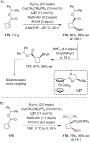
Scheme 45: Enantioselective conjugate borylation of cyclobutene-1-carboxylic acid diphenylmethyl ester 175 wit...
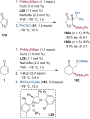
Scheme 46: Cu-catalyzed enantioselective tandem conjugate silylation of α,β-unsaturated ketones with subsequen...

Scheme 47: Cu-catalyzed enantioselective tandem conjugate silylation of α,β-unsaturated ketones with subsequen...
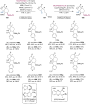
Scheme 48: Cu-catalyzed tandem conjugate silylation/aldol condensation. The diastereoselectivity is controlled...

Scheme 49: Chiral Ru-catalyzed three-component coupling reaction.

Scheme 50: Rh-Phebox complex-catalyzed reductive cyclization and subsequent reaction with Michael acceptors th...
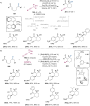
Scheme 51: Rh-catalyzed tandem asymmetric conjugate alkynylation/aldol reaction (A) and subsequent spiro-cycli...

Scheme 52: Rh-bod complex-catalyzed tandem asymmetric conjugate arylation/intramolecular aldol addition (A). S...

Scheme 53: Co-catalyzed C–H-bond activation/asymmetric conjugate addition/aldol reaction.

Scheme 54: (Diisopinocampheyl)borane-promoted 1,4-hydroboration of α,β-unsaturated morpholine carboxamides and...

Figure 2: Some examples of total syntheses that have been recently reviewed.

Scheme 55: Stereoselective synthesis of antimalarial prodrug (+)-artemisinin utilizing a tandem conjugate addi...

Scheme 56: Amphilectane and serrulatane diterpenoids: preparation of chiral starting material via asymmetric t...

Scheme 57: Various asymmetric syntheses of pleuromutilin and related compounds based on a tandem conjugate add...
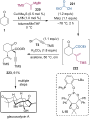
Scheme 58: Total synthesis of glaucocalyxin A utilizing a tandem conjugate addition/acylation reaction sequenc...
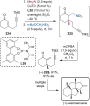
Scheme 59: Installation of the exocyclic double bond using a tandem conjugate addition/aminomethylation sequen...
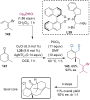
Scheme 60: Synthesis of the taxol core using a tandem conjugate addition/enolate trapping sequence with Vilsme...
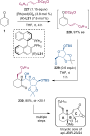
Scheme 61: Synthesis of the tricyclic core of 12-epi-JBIR-23/24 utilizing a Rh-catalyzed asymmetric conjugate ...
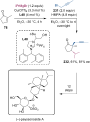
Scheme 62: Total synthesis of (−)-peyssonoside A utilizing a Cu-catalyzed enantioselective tandem conjugate ad...
Asymmetric synthesis of a stereopentade fragment toward latrunculins
- Benjamin Joyeux,
- Antoine Gamet,
- Nicolas Casaretto and
- Bastien Nay
Beilstein J. Org. Chem. 2023, 19, 428–433, doi:10.3762/bjoc.19.32
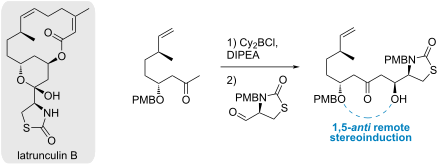
- oxidation in presence of DMP. The assembly of aldehyde 8 and methyl ketone 15 was envisaged through a stereoselective aldol reaction. After unsuccessful attempts of Mukaiyama aldol reactions with silyl enol ethers [28], we found that dicyclohexylboron enolate 20, made in situ from ketone 15 and Cy2BCl in

Graphical Abstract

Figure 1: Structure of latrunculins (the red dots show the natural product stereopentade).

Figure 2: General strategy for latrunculin cycle disconnections (left), previous works towards linear precurs...

Scheme 1: Synthesis of fragment 15 from (+)-β-citronellene (10).
Scheme 2: Synthesis of fragment 8 from ʟ-cysteine ethyl ester hydrochloride (16).

Scheme 3: Synthesis of fragment 21 through a stereoselective aldol reaction.

Scheme 4: 1,3-Anti-diastereoselective reduction of 21 with PNBz transposition, and final determination of the...