
Search results
Search for "in situ" in Full Text gives 1178 result(s) in Beilstein Journal of Organic Chemistry. Showing first 200.
One-pot four-component sequential synthesis of S-alkyl dithiocarbamates using lipase as a biocatalyst
Beilstein J. Org. Chem. 2026, 22, 1048–1056, doi:10.3762/bjoc.22.83
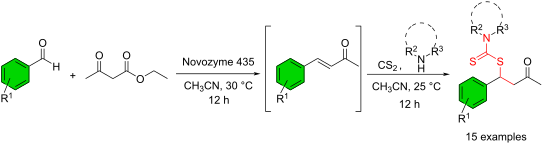
- nucleophilic addition reaction with dithiocarbamate anions, which are generated in situ by reacting CS2 with amines. This sequence successfully yields 15 derivatives of S-alkylated dithiocarbamates with high to excellent yields ranging from 69% to 96%. Keywords: biocatalysis; dithiocarbamate; four-component
- generate the Michael acceptor in situ, which subsequently reacts with a dithiocarbamate nucleophile formed in situ from an amine and carbon disulfide, without isolation of intermediates. This sequential one-pot four-component strategy combines the advantages of biocatalysis, multicomponent synthesis, and
- methodology was developed for the synthesis of S-alkyl dithiocarbamates using Novozym 435 as a biocatalyst. The protocol enables the in situ generation of the Michael acceptor through a lipase-catalyzed Knoevenagel condensation/decarboxylation reaction, followed by addition of a dithiocarbamate nucleophile


Synthesis of novel 1,2,4-oxadiazole-isoxazoline hybrids and their in silico potential with adenosine receptors
Beilstein J. Org. Chem. 2026, 22, 1033–1047, doi:10.3762/bjoc.22.82
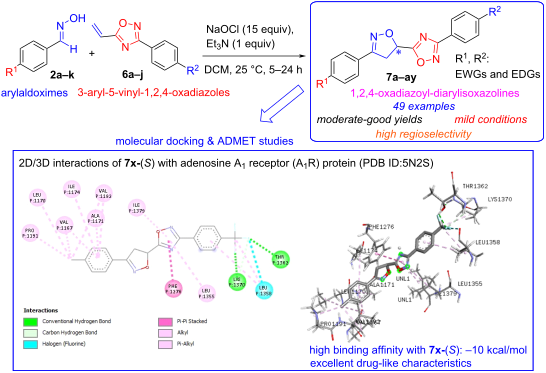
- efficient synthetic route to novel 1,2,4-oxadiazole-isoxazoline hybrids 7 has been developed via regioselective 1,3-dipolar cycloaddition of in situ-generated nitrile oxides with 3-(p-substituted-aryl)-5-vinyl-1,2,4-oxadiazoles 6. The target compounds 7a–ay were obtained in moderate to excellent yields (16
- acid–hypervalent iodine systems, oxone–silica, and chloramine-T – or from chloroaldoximes in the presence of bases including triethylamine, K2CO3, NaHCO3, and pyridine [45][46][47][48][49][50][51][52][53][54]. The combination of Et3N/NaOCl represents a particularly effective system for the in situ
- -isoxazoline hybrids (7) via 1,3-dipolar cycloaddition reactions of nitrile oxides generated in situ. To this end, a model reaction was designed using p-(dimethylamino)benzaldoxime (2e) and 3-(p-iodophenyl)-5-vinyl-1,2,4-oxadiazole (6d) in the presence of sodium hypochlorite and triethylamine to determine the


Z-Selective semihydrogenation of alkynes via Ni/Lewis acid synergistic catalyzed system using DMF as hydrogen source and solvent
Beilstein J. Org. Chem. 2026, 22, 1004–1012, doi:10.3762/bjoc.22.79
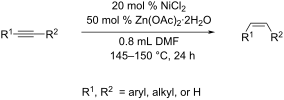
- , as outlined in Scheme 5. The cycle likely begins with the reduction of the Ni(II) precursor to an active Ni(0) species A – a common initiation step in nickel-catalyzed transformations, and the in-situ-generated formic acid functions as the reducing agent for this Ni(II)-to-Ni(0) conversion
- . Simultaneously, the Lewis acid promotes the hydrolysis of DMF with trace water existing in the solvent system to gradually liberate formic acid (HCOOH) and HNMe2. This in situ formation of HCOOH appears critical; analogous systems relying on DMF/water to generate HCOOH for the reduction of metal catalysts have



Electrochemical reduction of unsaturated carbon–carbon bonds via 3d transition-metal catalysis
Beilstein J. Org. Chem. 2026, 22, 955–981, doi:10.3762/bjoc.22.75
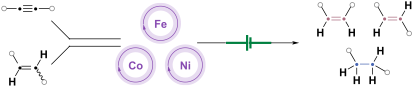
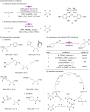
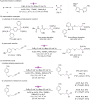
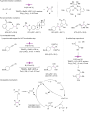
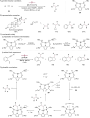
- electrolysis in an undivided cell, in which a catalytically active Fe–H species is generated in situ via a silane intermediate under electroreductive conditions (Scheme 2A) [89]. In this work, the authors highlight a conceptually important strategy that enables the use of H2O as a sustainable hydrogen source
- ) species. In the presence of the in situ generated silane, a Ni–H species is proposed to form, although its involvement remains to be fully established [90]. Substrate scope studies demonstrated that not only terminal alkenes bearing free carboxylic acid or hydroxy groups, but also substrates containing
- substrates were subjected to the electroreductive conditions in the absence of the nickel complex. Under these conditions, both a ring-opening product and a hydrogenation product were detected by NMR spectroscopy. These observations provide compelling experimental evidence that Fe–H species, formed in situ








Recent advances in copper-catalyzed direct hydroamination of alkenes with (hetero)aromatic amines
Beilstein J. Org. Chem. 2026, 22, 925–947, doi:10.3762/bjoc.22.73
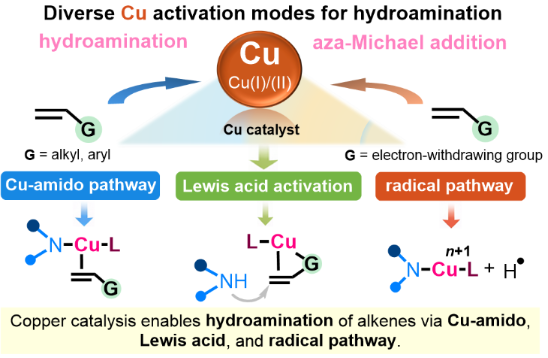
- –amido intermediate or aminocupration-type pathways, enabling efficient C–N bond formation under relatively mild conditions. Copper species may also operate in a Lewis acid-type capacity, where coordination to the alkene or copper-derived Brønsted acidity generated in situ increases alkene
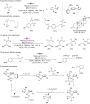
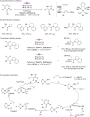
- was generated in situ via the reaction of the ligand-bound Cu–Ot-Bu intermediate Int-I with the amine substrate. In contrast to the NHC–CuNHPh catalyst system reported by the Gunnoe group, which requires the preparation of a preformed NHC–CuNHPh complex, the present protocol generates catalytically
- active copper–amido species directly in situ from CuCl, the ligand, and KOt-Bu. Consequently, the reaction can be performed under simple benchtop conditions without requiring glovebox techniques, providing a more operationally convenient and practical method. Furthermore, the synthetic utility of this







A practical CO2-mediated synthesis of 5,6-carboxylated silicon-rhodamines for targeted probe development
Beilstein J. Org. Chem. 2026, 22, 915–924, doi:10.3762/bjoc.22.72
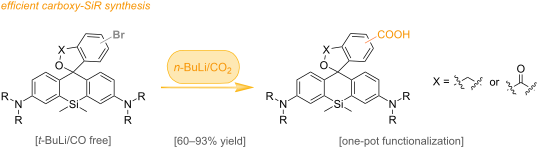
- -catalyzed carbonylation using in situ-generated CO then furnished the corresponding carboxylated SiRs in 50–90% yields. Although this approach significantly improved synthetic efficiency, it still relies on specialized setups for CO generation and expensive palladium catalysts, thereby increasing
- relatively mild conditions. Compared with previous approaches, this strategy avoids the need for specialized apparatus for in situ CO generation as well as expensive palladium catalysts, thereby significantly reducing experimental complexity and synthetic cost. Importantly, the resulting carboxylated SiR



Chiral cyclopropenimine-catalyzed enantioselective Michael reactions of phenol and benzofuran-derived α,β-unsaturated pyrazolamides with benzophenone-imine of glycine esters
Beilstein J. Org. Chem. 2026, 22, 888–896, doi:10.3762/bjoc.22.69
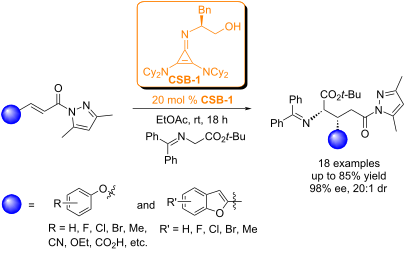
- adjacent stereocenters, which was obtained from in-situ acidic hydrolysis and lactamization of the corresponding Michael product. Keywords: α,β-unsaturated pyrazolamide; chiral cyclopropenimine; glutamic acid; lactamization; Michael addition; Introduction Phenols and benzofurans are feedstock chemicals
- catalyst CSB-1 was released and entered the next catalytic cycle. The pyroglutamic acid esters 7 were obtained through in-situ acidic hydrolysis and lactamization of 6 [14]. Three Michael products 6d, 6d’ and 6h were treated under 4 N HCl in DCM to give 3-substituted pyroglutamic acid esters 7d, 7d’ and 7h
- reaction was completed (detected by TLC), the solvent was removed by a rotary evaporator under reduced pressure. The residue was purified by flash column chromatography (petroether/EtOAc/Et3N 40:1:0.01–20:1:0.01, v/v) to afford pure 6a as a colorless sticky oil. Typical procedure for in situ acidic






Site-specific labelling of native peptides and proteins: chemical and enzymatic strategies
Beilstein J. Org. Chem. 2026, 22, 857–881, doi:10.3762/bjoc.22.67
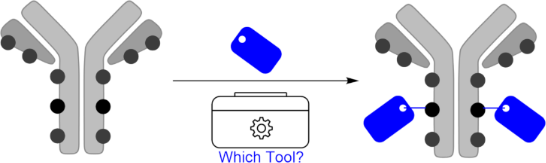
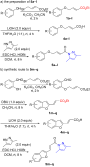
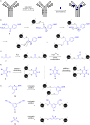
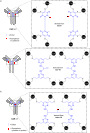
- a chemical label or crosslinking functionality (Scheme 3a). One of the earliest rebridging strategies employed bis-sulfone reagents 6 which, upon in situ activation, generate monosulfone Michael acceptors that selectively react with a reduced cysteine pair (Scheme 3b) [27]. This approach was later
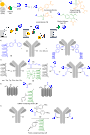
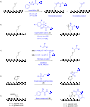
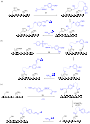
- , including IgG (trastuzumab) [56], EGFR [57], the adenosine A1 receptor [58] and P2X7 [59], have been labelled in vitro and/or in cellular systems. Catalytic approaches generate reactive species in situ, thus enhancing both selectivity and efficiency. A notable example involves rhodium (Rh)-based catalysis








The trans-influence in gold chemistry from a catalytic perspective
Beilstein J. Org. Chem. 2026, 22, 838–856, doi:10.3762/bjoc.22.66
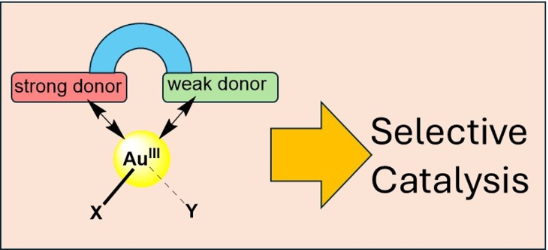
- electron-rich trialkylphosphines, increased the proportion of N-bonded thiocyanate [24]. More recently, Espinet and co-workers used solution microcalorimetry with in-situ generated HI to provide bond dissociation energy scales for the Au–C bonds in R–Au(PPh3) (R = Me, aryl or alkynyl), and further to


Synthetic study of vic-bromination of diarylacetylenes, easy purification and separation
Beilstein J. Org. Chem. 2026, 22, 795–802, doi:10.3762/bjoc.22.61
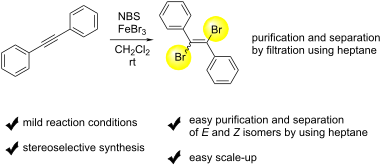
- was reported for the Z isomer (Scheme 1b). As another example in 2008, Adimurthy and co-workers proposed the combination of NaBr-NaBrO3 in AcOH in order to prepare in-situ generated Br2, which was reacted with diphenylacetylene to give no selectivity between E and Z isomers of 1,2-dibromo-1,2
- FeBr3 might be important and in situ Br2 might be generated and formed. FeBr3 might react with Br2 to form [FeBr4]− and "Br+", which can react with 1a. As for the reaction mechanism, the plausible pathway might be the following (Scheme 3). The reaction of NBS and FeBr3 might generate Br2 or "Br+", which



Halogenated azobenzene acrylates: from efficient solution photoswitching to stable solid-state photochromic materials
Beilstein J. Org. Chem. 2026, 22, 782–794, doi:10.3762/bjoc.22.60
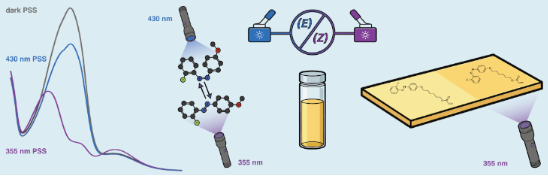
- salts prepared in situ from the commercially available aromatic amines 2a–f [25]. The reaction was buffered by a 10% aq solution of sodium hydroxide and afforded the azobenzenes 3a–f with yields ranging from 41 to 93%. These intermediates were further O-alkylated using 6-chlorohexanol in the presence of


Preparation of 3-(alkylamino)imidazo[1,2-a]pyridine-2-carbaldehydes via Kornblum oxidation and unexpected ring-opening reactions of the corresponding alcohols under oxidative conditions
Beilstein J. Org. Chem. 2026, 22, 763–770, doi:10.3762/bjoc.22.58
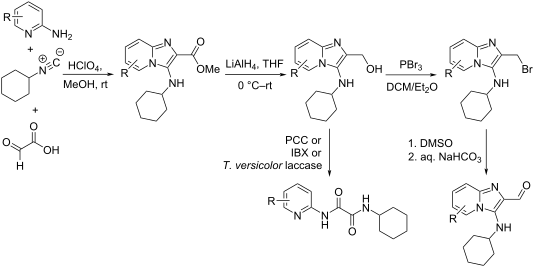
- ), using conditions described by Gladysz et al. [24]. Reaction with glyoxylic acid as the aldehyde component has previously been reported to yield the 2-unsubstituted product as a result of in situ decarboxylation [25]. Unexpectedly, on product isolation we discovered that compounds 13a–d, the methyl
- isocyanide, the glyoxylic acid had undergone in situ esterification in the presence of methanol and the acid catalyst. On scaling the reaction (≈2 g aminopyridine), the originally anticipated unsubstituted products 12a–d were prepared as the sole products in yields ranging from 31% to 57%. Once again, only
- starting material was recovered from reaction of compound 9e. In order to prevent possible mixtures of the two products being formed with slight variation in reaction conditions, the reaction to prepare ester 13 was properly optimised to ensure that full in situ esterification of the glyoxylic acid had


Rongalite addition to dienones: diastereoselectivity in cyclic sulfone synthesis; stereochemical rationalization and prospects as a general conjugate nucleophile
Beilstein J. Org. Chem. 2026, 22, 742–752, doi:10.3762/bjoc.22.56

- sulfones 1a/1b in the same diastereomeric ratio (≈7:1) as observed earlier. This supports the idea that sulfinate addition is reversible. Adducts 1a and 1b most likely form from dibenzalacetone generated in situ. Therefore, prior elimination of p-toluenesulfinate to give dibenzalacetone, followed by


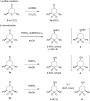


Synthesis of heterocycles based on azomethine ylides from α-amino acids (or amines) and carbonyl compounds
Beilstein J. Org. Chem. 2026, 22, 705–741, doi:10.3762/bjoc.22.55
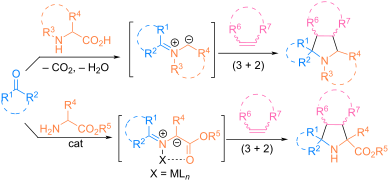
- acid or its ester (Scheme 1). In both cases, condensation of amino acids with carbonyl compounds occurs; however, in the first case, decarboxylation occurs with the in situ formation of azomethine ylides, which subsequently undergo cycloaddition to unsaturated substrates. The advantage of the first
- high yields (77–98%) and good enantioselectivity (67–92% ee). The in situ-generated azomethine ylide is coordinated to the metal center and oriented in transition state A due to the spatial repulsion between the aryl or cyclohexyl group in the ylide and the cyclohexyl fragments of ligand L7, while its
- -butylsulfinylimines 58 and iminoesters 12 using Ag2CO3 as a base (Scheme 27) [66]. Electrophilic dipolarophiles such as sulfinyl imines have been shown to readily undergo (3 + 2) cycloaddition reactions with azomethine ylides generated in situ from the corresponding imino esters, affording pyrrolidines 59 in high


Hydrogen production from formic acid catalyzed by NHC–Cu complexes
Beilstein J. Org. Chem. 2026, 22, 620–627, doi:10.3762/bjoc.22.48
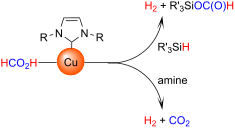
- )] (1a) with formic acid provides the formato species [Cu{OC(O)H}(IPr)] (1b) [52][53]. It was hypothesized that the thermal decarboxylation of 1b would generate in situ a highly reactive hydride species. The reaction of the latter with formic acid would regenerate the formato complex and release H2
- . Interestingly, by adding to the reaction mixture a further equivalent of FA, evolution of gas was observed and H2 was detected by NMR spectroscopy (see Supporting Information File 1, Figure S1). This highlighted the formation in situ of the Cu–H species by decarboxylation of 1b. To quantify the amount of gas



Regioselective approach to 5-arylsulfonylisoxazoles and their antimicrobial activity
Beilstein J. Org. Chem. 2026, 22, 592–602, doi:10.3762/bjoc.22.45
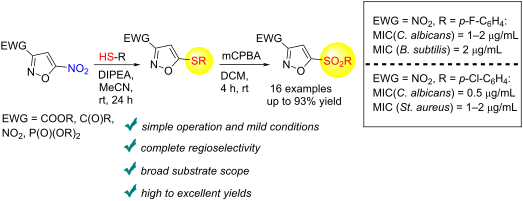
- 5-sulfonylisoxazoles (Scheme 1, approaches A, B, C). As shown in Scheme 1, nitrile oxides are generated in situ by oxidation of aldoximes with chloramine T (approach A) or by dehydrohalogenation of the corresponding oxime halide under basic conditions (approaches B and C). Subsequently, the nitrile


Kinetic resolution of racemic planar-chiral vinylcymantrenes by molybdenum-catalyzed asymmetric metathesis dimerization
Beilstein J. Org. Chem. 2026, 22, 568–574, doi:10.3762/bjoc.22.42
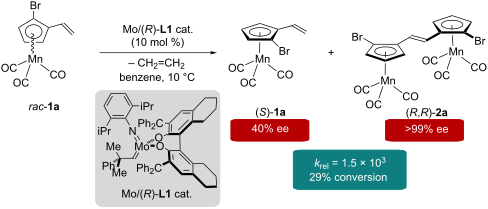
- benzene at the indicated temperature in the presence of an appropriate chiral Mo-precatalyst (10 mol %), which was generated in situ from the Mo-precursor, (pyrrolyl)2Mo(=CHCMe2Ph)(=N-C6H3-2,6-iPr2) [36], and an axially chiral biphenol ligand. The chiral Mo/(R)-L1 precatalyst [21] facilitated the


Get a better glimpse on sequential photoreactions of trisnorbornadienes with 19F NMR spectroscopy
Beilstein J. Org. Chem. 2026, 22, 527–534, doi:10.3762/bjoc.22.38
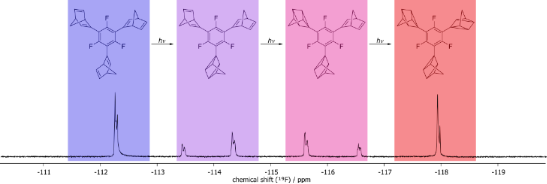
- trisquadricyclane. Even though the reaction can be monitored by photometry or by in situ 1H NMR spectroscopy, unambiguous assignment of the distinct intermediate mono- and bisquadricyclanes was not possible because of signal overlap. In contrast, this shortcoming is circumvented with in situ 19F NMR-spectroscopic
- lines, 1H NMR spectroscopy is a very useful method to follow the photoreaction, ideally upon direct irradiation in the NMR probehead (in situ NMR), because it potentially enables accurate structure elucidation. But even though this method may enable the accurate monitoring of a stepwise photochromic
- reaction of multichromophores in some cases [36][37], significant overlap of NMR signals often interferes with the detailed identification of separate components. Therefore, we proposed that the analysis of the photoreaction of a fluorinated starting material with in situ 19F NMR spectroscopy may add a


Modern synthetic pathways towards eribulin and its subunits
Beilstein J. Org. Chem. 2026, 22, 495–526, doi:10.3762/bjoc.22.37
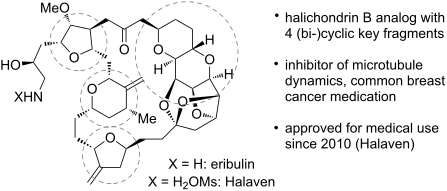
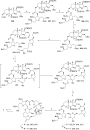
- from Scheme 26 and Scheme 27 were coupled via Corey–Chaykovsky reaction and the so-obtained epoxide was treated with m-CPBA yielding sulfone 251 as the major diastereomer (Scheme 28). Regioselective deprotonation and epoxide opening with in situ-formed Ti(III)-species from Cp2TiCl2 and zinc led to the








Cone p-aminocalix[4]arenes enriched with ‘clickable’ alkyne or azide functionalities
Beilstein J. Org. Chem. 2026, 22, 399–415, doi:10.3762/bjoc.22.28
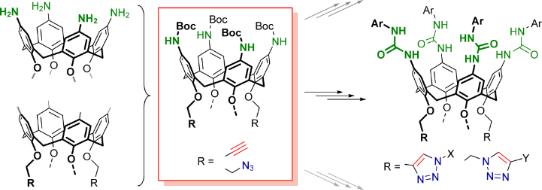
- commercially available lithium bis(trimethylsilyl)amide (LiHMDS), but the latter was found inconvenient for routine syntheses due to high moisture sensitivity which prevented reproducibility of the reaction conditions. To overcome this difficulty, the LiHMDS solution was instead prepared in situ by reacting






Recent advances in the cleavage of non-activated amides
Beilstein J. Org. Chem. 2026, 22, 352–369, doi:10.3762/bjoc.22.23
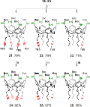
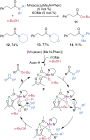
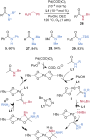
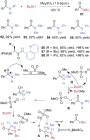
- distinct mechanistic pathways, a simplified version of which is described herein. The active catalytic species, palladium(II) pivalate, is formed in situ from Pd(COD)Cl₂ through ligand exchange with pivalic acid (PivOH). Complexation of this active Pd(II) species with ligand L1 and the amide substrate
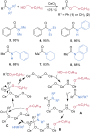
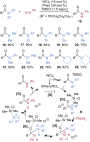
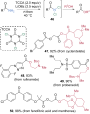
- analogous to that proposed in Scheme 12. Halogenation In 2022, Szostak and Chen developed an elegant and highly chemoselective transamidation of non-activated tertiary amides via in-situ generation of an acyl iodide intermediate 121 (Scheme 19) [67]. In the presence of a catalytic amount of KI and one
- . Bioactive molecule-derived amides with complex structures smoothly underwent acyl iodide generation, thereby furnishing the products 132, 133, and 134 in 85%, 82%, and 88% yield, respectively, via in-situ amidation with aniline. The scope of amine nucleophiles was broad as well. Anilines, primary amines








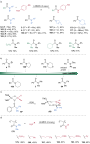


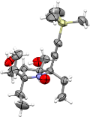
Synthesis of tricyclic fused pyrrolidine nitroxides from 2-alkynylpyrrolidine-1-oxyls
Beilstein J. Org. Chem. 2026, 22, 344–351, doi:10.3762/bjoc.22.22

- corresponding alkynylmagnesium bromides to nitrone 1 [20]. Radicals 2d and 2e were prepared in analogy to the known procedure using trimethylsilylacetylene and benzyl propargyl ether as the terminal alkynes (Scheme 1). Nitrone 1 was treated with a 10-fold excess of alkynylmagnesium bromide prepared in situ via




Spirobarbiturates with a pyrrolizidine moiety: synthesis, structure and biological evaluation
Beilstein J. Org. Chem. 2026, 22, 274–288, doi:10.3762/bjoc.22.20
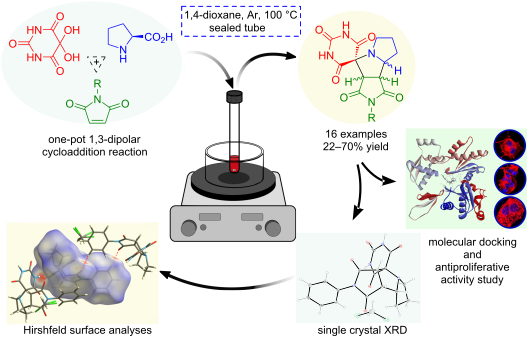
- azabicyclo[3.1.0]hexane and cyclopropa[a]pyrrolizine moieties can be synthesized via 1,3-dipolar cycloaddition between cyclopropene derivatives and azomethine ylides generated in situ from alloxan and α-amino acids [43]. In [43], a mechanism was proposed for the formation of azomethine ylides from alloxan
- [a]pyrolizines as well as spiroazabicyclo[3.1.0]hexanes are readily available from cyclopropenes and azomethine ylides [47][48][49] and some adducts inhibited cancer cell growth in vitro [50][51]. The first reported synthesis of spirobarbiturates employing azomethine ylides (generated in situ from
- ylide, which is generated in situ by condensation of alloxan and ʟ-proline, can react with maleimides to give spirobarbiturate-pyrrolo[3,4-a]pyrrolizidine-1,3-diones in moderate to good yields. We have demonstrated the possibility of using a wide range of N-substituted maleimides as dipolarophiles. All


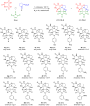


A mild and atom-efficient four-component cascade strategy for the construction of biologically relevant 4-hydroxyquinolin-2(1H)-one derivatives
Beilstein J. Org. Chem. 2026, 22, 244–256, doi:10.3762/bjoc.22.18
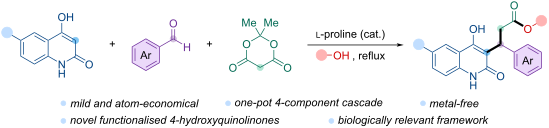
- and selective synthesis of previously inaccessible 4-hydroxyquinolin-2(1H)-one derivatives. Utilizing readily available 6-halo-4-hydroxyquinolinones, aromatic aldehydes, Meldrum’s acid, and alcohols under ʟ-proline catalysis, the reaction proceeds via in situ formation of arylidene-substituted Meldrum
- presumably proceed through in situ formation of the Michael acceptor from the condensation of an aromatic aldehyde with Meldrum’s acid, followed by decarboxylation and lactonization to yield the pyranoquinolinedione products (Scheme 1). We hypothesized that employing an alcohol as solvent could induce
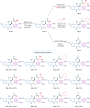
- the desired products. Employing in situ acyl chloride formation from acids 11a–c in the presence of a slight excess of cyclohexanol led to pyranoquinoline 14 formation instead of the open-chain ester. The same cyclic product 14 was obtained via Fischer–Speier esterification with a small excess of


Circumventing Mukaiyama oxidation: selective S–O bond formation via sulfenamide–alcohol coupling
Beilstein J. Org. Chem. 2026, 22, 158–166, doi:10.3762/bjoc.22.9
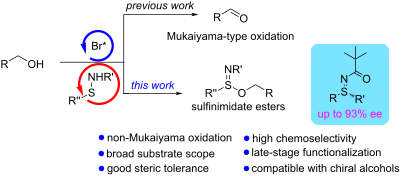
- limitations, we envisioned that highly electrophilic sulfilimidoyl intermediates – generated in situ via N-halosuccinimide-mediated oxidative activation of sulfenamides – could be directly intercepted by alcohols under basic conditions to furnish structurally diverse sulfinimidate esters [32]. In particular