
Search results
Search for "terminal" in Full Text gives 1002 result(s) in Beilstein Journal of Organic Chemistry. Showing first 200.
Controlled supramolecular assemblies of luminescent tridentate cyclometalated alkynylgold(III) amphiphiles in aqueous media
Beilstein J. Org. Chem. 2026, 22, 1097–1106, doi:10.3762/bjoc.22.88
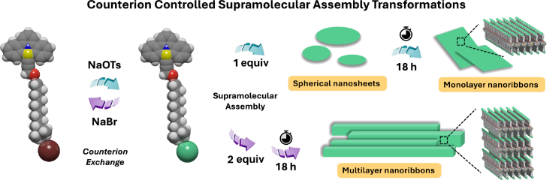
- ligand bearing a propargyl group linked to a terminal quaternary ammonium group through a nonyl linker. Compared with our earlier bidentate designs, this tridentate design provides greater structural rigidity and enhanced luminescence in aqueous media and ambident conditions. Furthermore, the synthetic


Amino acid-based surfactants: sustainable synthesis and antimicrobial mechanisms
Beilstein J. Org. Chem. 2026, 22, 1067–1085, doi:10.3762/bjoc.22.85
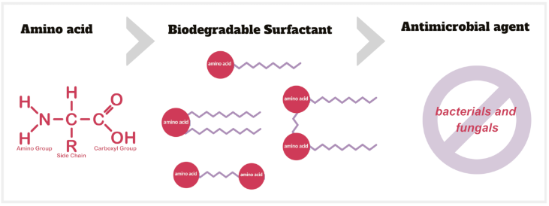
- the critical micellar concentration (CMC, Figure 2) [12][13]. These compounds can be classified according to the charge of the polar terminal groups in: anionic, cationic, nonionic, and zwitterionic [8]. Cationic surfactants are among the most used surfactants, both synthetic and from renewable


Z-Selective semihydrogenation of alkynes via Ni/Lewis acid synergistic catalyzed system using DMF as hydrogen source and solvent
Beilstein J. Org. Chem. 2026, 22, 1004–1012, doi:10.3762/bjoc.22.79
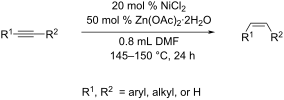
- several limitations – including batch variability, alkene isomerization, and over-reduction to alkanes, which are particularly problematic for terminal and polar substrates [7][8][9][10]. Recent review articles have comprehensively summarized advances in this research field. For instance, Gregori et al
- ratio), operates under mild conditions, and avoids noble metals, toxic reductants, and specialized pressure equipment. The synergy between the Lewis acid and the nickel catalyst, coupled with the dual role of DMF, enables efficient conversion of diverse internal and terminal alkynes to the corresponding
- robust applicability of this catalytic system. Having optimized the conditions for internal alkynes such as diphenylacetylene, we next sought to apply this Ni/Zn dual-catalytic system to the semihydrogenation of terminal alkynes. Using phenylacetylene (3a) as the model substrate, we focused on screening



The role of spacer length and flexibility in peptide self-assembly
Beilstein J. Org. Chem. 2026, 22, 986–996, doi:10.3762/bjoc.22.77
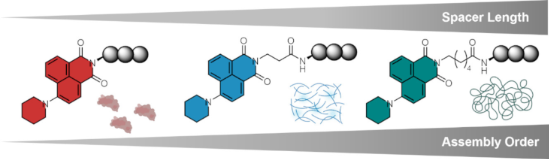
- importance of flexibility within the linker segment for enabling productive intermolecular interactions that promote the formation of ordered self-assembled structures. Conclusion In this work, we investigated how the spacer segment connecting a short self-assembling peptide core to an N-terminal π-block


Electrochemical reduction of unsaturated carbon–carbon bonds via 3d transition-metal catalysis
Beilstein J. Org. Chem. 2026, 22, 955–981, doi:10.3762/bjoc.22.75
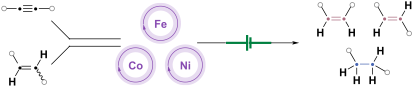
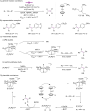
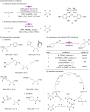
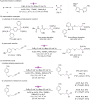
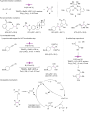
- -based systems [38][39]. In sharp contrast, electroorganic synthesis provides a fundamentally distinct mode of reactivity compared to conventional thermochemical approaches, in which electric current serves as the terminal reductant, thereby enabling unconventional mechanistic pathways for alkyne
- ) species. In the presence of the in situ generated silane, a Ni–H species is proposed to form, although its involvement remains to be fully established [90]. Substrate scope studies demonstrated that not only terminal alkenes bearing free carboxylic acid or hydroxy groups, but also substrates containing
- multiple C=C bonds, undergo highly selective reduction at monosubstituted terminal alkene sites. These results highlight the broad functional-group compatibility and excellent chemoselectivity of the system (Scheme 2B). Moreover, replacement of H2O with D2O enabled efficient electroreductive deuteration








Synthesis of sterically shielded piperidine nitroxides via acid-catalyzed heterocyclization of β-aminoketone derivatives with ketones
Beilstein J. Org. Chem. 2026, 22, 948–954, doi:10.3762/bjoc.22.74
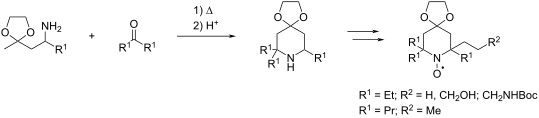
- allyl derivative 7d, extensive signal overlap prevented rigorous simulation, but characteristic terminal vinyl protons at 5.83, 5.28, 5.27 ppm were clearly observed. Elemental analysis and HRMS data were in agreement with the proposed structures. Subsequent hydrogenation of the unsaturated carbon–carbon
- NMR spectra of 8a–d confirms the lack of partially hydrogenated impurities. Elemental analysis and HRMS data were consistent with the proposed molecular formulas. Notably, among the alkynyl derivatives, high hydrogenation yields 70% were observed exclusively for the terminal ethynyl derivative 7a. The


Recent advances in copper-catalyzed direct hydroamination of alkenes with (hetero)aromatic amines
Beilstein J. Org. Chem. 2026, 22, 925–947, doi:10.3762/bjoc.22.73
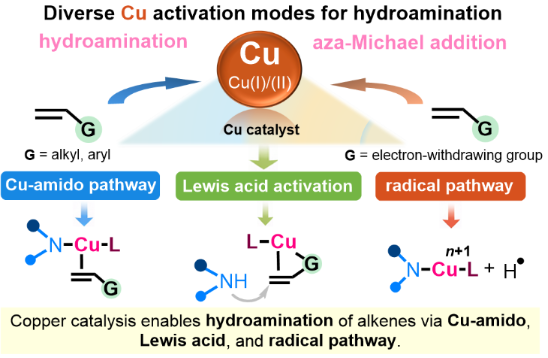
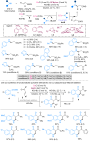
- SIMesCuCl), highly β-regioselective amination reactions of arylamines with terminal and γ-substituted allylic sulfones 10 were achieved, affording diverse β-substituted β-amino sulfones 11 in high yields. The reaction was proposed to proceed via a copper–amido catalytic cycle, analogous to the Gunnoe-type
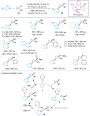
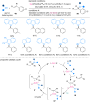
- the regio- and stereoselective synthesis of (E)-allylamines 46 from terminal allenes 45 and aniline derivatives (Scheme 17) [58][59][60]. In the presence of Cu(OTf)2 or Cu(CH3CN)4PF6, various monosubstituted allenes bearing aryl, aminocarboxylate, aminophosphonate, and sulfonamide groups smoothly
- reacted with aniline derivatives or N-methylaniline to afford the corresponding linear (E)-allylamine products 46 with excellent regio- and stereoselectivity. The nucleophilic amine selectively added to the terminal carbon of the allene, providing exclusively the formal anti-Markovnikov hydroamination







Site-specific labelling of native peptides and proteins: chemical and enzymatic strategies
Beilstein J. Org. Chem. 2026, 22, 857–881, doi:10.3762/bjoc.22.67
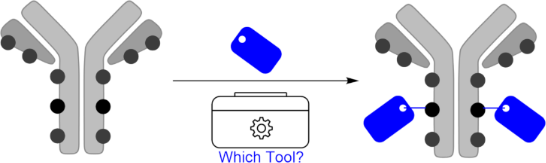
- and usability, ultimately limiting translational potential of a modification tool. This review critically compares current key strategies, including terminal, disulfide-rebridging, small-molecule, glycan and enzyme-based modifications. Finally, we present a decision tree for method selection and
- highlight opportunities for innovation in next-generation native-sequence protein modification technologies. Keywords: affinity-guided chemistry; disulfide-rebridging; enzyme catalysis; glycan modifications; native-sequence; protein labelling; small-molecule modifications; terminal; Introduction Protein
- N-terminal PEGylated granulocyte colony-stimulating factor (G-CSF), is administered to reduce risk of neutropenia in patients receiving chemotherapy. Despite clinical successes, unsolved technical challenges remain. Taking ADC development as an example, a single payload can be insufficient to








The trans-influence in gold chemistry from a catalytic perspective
Beilstein J. Org. Chem. 2026, 22, 838–856, doi:10.3762/bjoc.22.66
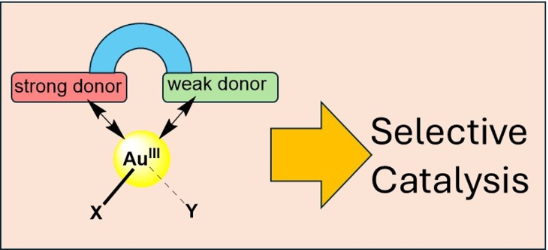
- complexes. Both terminal and internal alkynes could be inserted, with a wide variety of functional groups including alkyl, aryl, OH, COOH, amide and aldehyde substituents, but not DMAD. The excellent stereo- and regiochemical selectivity could be explained by a bimolecular mechanism, as confirmed by DFT
- ]. However, there is apparently yet more versatility in the mechanisms of alkyne hydroauration and may operate for the [(P^N^C)AuH]+ cation 11. Nevado et al. found recently that 11 inserts both DMAD as well as terminal alkynes, to give Au(III) Z-vinyl complexes. Control experiments ruled out the involvement


Design, synthesis, and biological evaluation of FXR/ASK1 dual-target modulators
Beilstein J. Org. Chem. 2026, 22, 771–781, doi:10.3762/bjoc.22.59
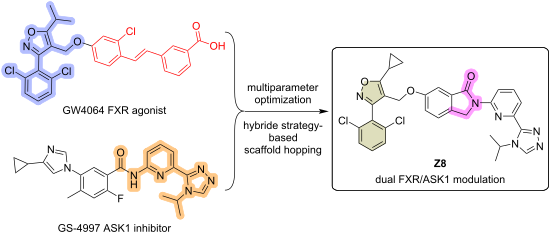
- of the minimal pharmacophores of the selective FXR agonist GW4064 and the selective ASK1 inhibitor selonsertib (GS-4997) [35][36][37]. Published structure–activity relationship (SAR) studies have identified the isoxazole moiety and terminal carboxylic acid of GW4064 [38], along with the 4


Synthesis of heterocycles based on azomethine ylides from α-amino acids (or amines) and carbonyl compounds
Beilstein J. Org. Chem. 2026, 22, 705–741, doi:10.3762/bjoc.22.55
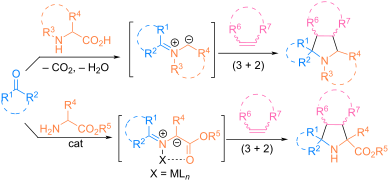
- dipolarophile can lead to a change in the mechanism and to an effective electrophilicity polarization toward the terminal carbon atom. This finding strongly supports the suitability of moderately activated olefins as dipolarophiles for the catalyzed asymmetric cycloaddition reactions involving azomethine ylides
- work by Grigg's group investigated intramolecular cycloaddition at terminal double or triple bonds, leading to the formation of fused ring systems [80][81]. In a later work by Grigg's group [82], the cycloaddition of azomethine ylides obtained from aromatic aldehydes 97 and sarcosine (proline


Towards the targeted protein degradation of CK2: design and synthesis of CAM4066-based PROTACs
Beilstein J. Org. Chem. 2026, 22, 611–619, doi:10.3762/bjoc.22.47
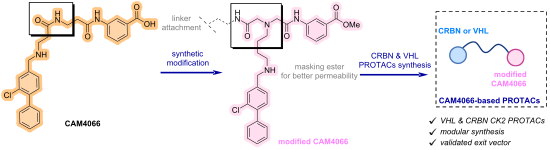
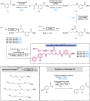
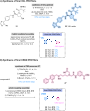
- synthesis see Supporting Information File 1, section 1.3). In parallel, PEG-based linkers bearing terminal alkyne handles were synthesised for modular CuAAC-based PROTAC assembly. The αD binder 16 had been synthesised via a two-step reaction. First, the phenolic group of 15 was converted into the
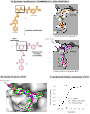
- CK2α further confirmed, that both the ATP-binding and αD-binding motifs retained their expected hydrogen-bonding and hydrophobic interactions, and the linker projected cleanly toward solvent-exposed region (Figure 1). Importantly, the absence of the terminal alkyne substituent in the electron density

Molecular tweezer–peptide conjugates disrupt the protein–protein interaction between survivin and histone H3 essential in mitosis
Beilstein J. Org. Chem. 2026, 22, 557–567, doi:10.3762/bjoc.22.41
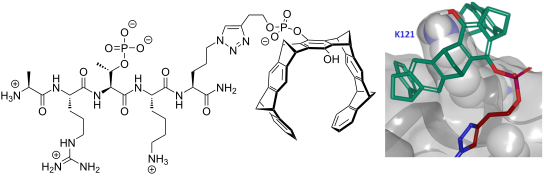
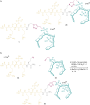
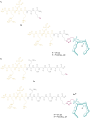
- ), with the phosphorylated histone H3 N-terminal peptide. Fluorescence polarization measurements revealed a nanomolar affinity of the BIR domain for the peptide-tweezer, depending on the presence of lysine residue 121, as proven by the K121A mutant of survivin. Two crystal structures of C-terminally
- histone H3 on the BIR domain of survivin, which leads to attachment of the CPC to the inner centromere [6]. This PPI is facilitated by N-terminal H3 phosphorylation on Thr3, leading to recognition of the phosphorylated N-terminus by survivin and subsequent attachment of the CPC [7]. Jeyaprakash et al
- . Hence, we designed the truncation constructs 1–122, 1–127 and 1–134 that shorten the flexible C-terminal helix of survivin. All new constructs showed a much better expression and crystallization behavior. Fluorescence polarization measurements with the FITC-labeled H3 peptide confirmed that constructs 1




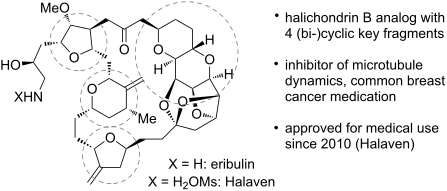
Modern synthetic pathways towards eribulin and its subunits
Beilstein J. Org. Chem. 2026, 22, 495–526, doi:10.3762/bjoc.22.37
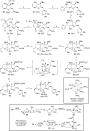
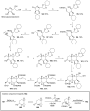
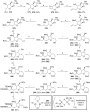
- the secondary alcohol, hydroboration–oxidation of the terminal alkene and treatment with DMP produced aldehyde 261. The second building block (265) was synthesized via stereoselective Noyori reduction of 262 [105], followed by TMS cleavage and Bz-protection of the free alcohol unit (Scheme 30). Both








Synthesis and stereochemical analysis of dynamic planar chiral oxa[7]orthocyclophene
Beilstein J. Org. Chem. 2026, 22, 436–442, doi:10.3762/bjoc.22.30
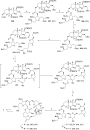
- synthetic route for the C6-iodo-substituted 1ad is shown in Scheme 2. The Heck reaction of O-TIPS-protected 5a with allyl alcohol in the presence of a palladium catalyst provided the aldehyde 4a in 78% yield [9]. The reaction of 4a with CBr4 and PPh3, followed by treatment with n-BuLi, afforded the terminal






Synthesis and anti-cancer activity of naphthalimide–organylselanyl conjugates
Beilstein J. Org. Chem. 2026, 22, 416–435, doi:10.3762/bjoc.22.29
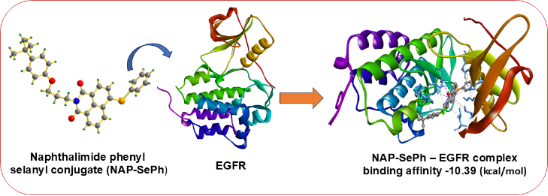
- resonance signals corresponding to the octyl chain attached to the selenium were observed. A triplet at 0.87 ppm was assigned to the terminal methyl (-CH₃) protons, a multiplet peak at 1.27 ppm corresponds to the methylene protons adjacent to the methyl group, and two quintet peaks in the range of 1.47 and




Dialkylaminoalkylation of β-ketosulfones via ring-opening of 3-sulfonylpyrrolidines
Beilstein J. Org. Chem. 2026, 22, 383–389, doi:10.3762/bjoc.22.26
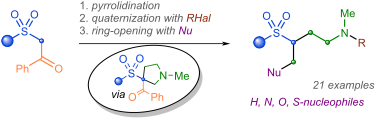
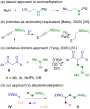
- the fast increase of the molecular complexity, remains significant. Unlike the classical aminoethylation of nucleophilic compounds [28][29], Batey et al. recently developed a two-step approach consisted in addition of terminal ynimides I to various electrophiles with subsequent reduction of the C≡C
- consists in the simultaneous generation of two reactive intermediates: terminal alkene A and N-methylazomethine ylide B, and final [3 + 2] cycloaddition. It was found that the latter approach depends on CH-acidity of the active methylene compounds and performs well with the acidic substrates in the range
- . Second is a step-wise route through retro-Claisen reaction, formation of the carbanion at the α-position to sulfonyl group, and Hofmann elimination of the quaternary nitrogen at the β-position. Both routes lead to the formation of terminal vinyl sulfone C, which reacts with the nucleophile present in the




Electrosynthetic access to unsymmetrical oxaza[8]helicenes with high chiral stability and strong circularly polarized luminescence (CPL)
Beilstein J. Org. Chem. 2026, 22, 372–382, doi:10.3762/bjoc.22.25
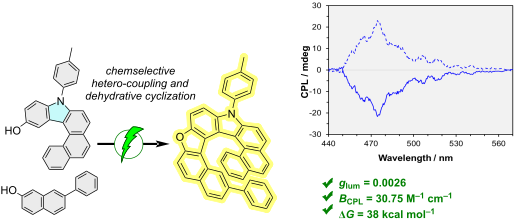
- hydrocarbons (PAHs) built from angularly annulated rings – occupy a distinctive niche because their non-planar, screw-shaped architectures generate inherent, configurational chirality [3][4][5]. This helicity originates from intramolecular steric congestion and stabilizing π–π interactions between terminal
- . Structural properties of oxaza[8]helicenes Aromaticity We evaluated the aromaticity of the oxaza[8]helicenes 5a and 5b using nucleus-independent chemical shifts (NICS), as proposed by Schleyer and co-workers [57][58]. As shown in Figure 2A, the terminal rings exhibit higher aromatic character and a
- attributed to magnetic coupling between the face-to-face terminal rings, in line with the Johnson–Bovey model, given the inter-ring distances of approximately 3.75–3.79 Å [59]. On the other hand, the aromaticity of the pyrrole rings (A and A′) and benzene rings G and G′ in 5a and 5b decreases, which can be




Synthesis of tricyclic fused pyrrolidine nitroxides from 2-alkynylpyrrolidine-1-oxyls
Beilstein J. Org. Chem. 2026, 22, 344–351, doi:10.3762/bjoc.22.22

- corresponding alkynylmagnesium bromides to nitrone 1 [20]. Radicals 2d and 2e were prepared in analogy to the known procedure using trimethylsilylacetylene and benzyl propargyl ether as the terminal alkynes (Scheme 1). Nitrone 1 was treated with a 10-fold excess of alkynylmagnesium bromide prepared in situ via
- metalation of trimethylsilylacetylene or benzyl propargyl ether with ethylmagnesium bromide. After quenching, removal of the MOP protecting group, and oxidation by atmospheric oxygen the nitroxides 2d and 2e were isolated in 64% and 66% yields, respectively. Terminal alkynes can be converted into
- rigid condensed systems can be constructed on the basis of pyrazole ring. The reaction of conjugated alkynones with hydrazine is a common pathway to pyrazoles [29]. Alkynones, in turn, can be prepared by Sonogashira acylation of terminal alkynes [30]. To prevent formation of mixtures due to incomplete




Ring contraction and ring expansion reactions in terpenoid biosynthesis and their application to total synthesis
Beilstein J. Org. Chem. 2026, 22, 289–343, doi:10.3762/bjoc.22.21
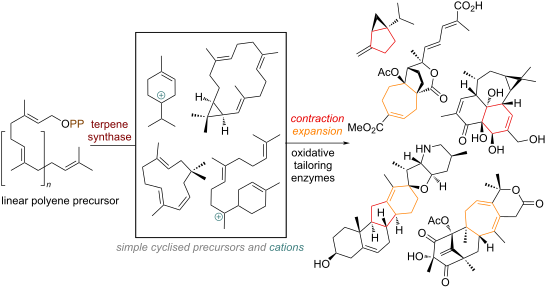
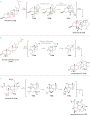
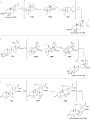
- is initiated via protonation of geranylgeranyl pyrophosphate (GGPP, 12) at the terminal olefin with CpPS (= Clitopilus passeckeranis pleuromutilin synthase), forming the decalin system 12a. A cascade of 1,2-shifts delivers the carbocation 12b which undergoes ring contraction and elimination to give
- -methyltransferase SodC (= pre-sodorifen synthase) which catalyses methyl cation transfer from SAM towards the terminal olefin in 9, a rare event in terpene cyclisation chemistry, resulting in 6,11-ring closure (32a, see Scheme 11). From here, a dyotropic rearrangement can give cation 32c directly, alternatively the






Screwing the helical chirality through terminal peri-functionalization
Beilstein J. Org. Chem. 2026, 22, 205–212, doi:10.3762/bjoc.22.14
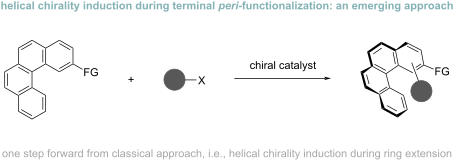
- a functional group installed in the terminal core of helicened with high level of stereocontrol, rather than merely increasing the number of fused rings in a helical system. The direct introduction of suitable functional groups at strategic positions can expand the structure diversity and enhance
- method for the generation of helical chirality primarily involves cycloaddition and central/axial to helical chirality transfer reactions [31] (Figure 1A and B). In addition to this, a parallel strategy also offers a promising approach to achieving configurationally stable helicenes via terminal peri
- each other via hydrogen-bonding interaction, locking the relative orientation of the substrates producing the chiral [4]carbohelicene via peri-terminal functionalization (Figure 2). To examine the utility of the developed protocol, the reaction was scaled up to a 2 mmol scale and the product was


Synthesis and applications of alkenyl chlorides (vinyl chlorides): a review
Beilstein J. Org. Chem. 2026, 22, 1–63, doi:10.3762/bjoc.22.1
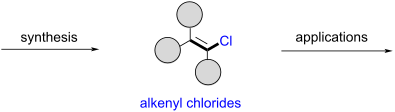
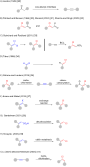
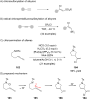
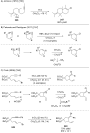
- alkenyl chlorides. The discussion begins with reductive metalation, reactions with organolithium reagents, and eliminations to terminal alkynes – some of which are also exemplified in chapter 1. This is followed by palladium- and nickel-catalyzed cross-coupling reactions. The chapter concludes with a
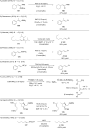
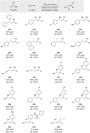
- ) in the presence of ZnCl₂ supported on silica gel converted ketones into the corresponding alkenyl chlorides (Scheme 19) [72]. The scope appears to be limited to aromatic ketones furnishing non-terminal alkenyl chlorides. Su and co-workers reported the synthesis of alkenyl chlorides using a
- of BTC [75][76], represent a notable limitation. The substrate scope parallels that described by Kodomari (Scheme 19), though it includes one example of a terminal alkenyl chloride (compound 9), obtained in modest yield. Several ketone substrates proved unreactive, affording no or only trace amounts























Recent advancements in the synthesis of Veratrum alkaloids
Beilstein J. Org. Chem. 2025, 21, 2657–2693, doi:10.3762/bjoc.21.206
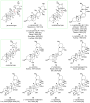
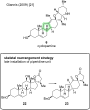
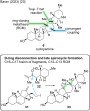
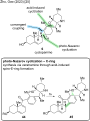
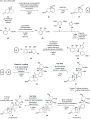
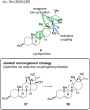
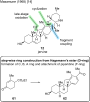
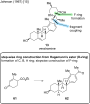
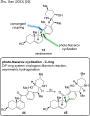
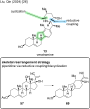
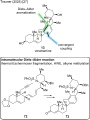
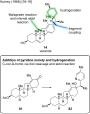
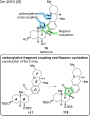
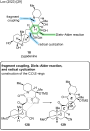
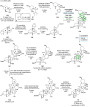
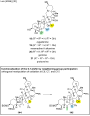
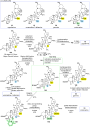
- [53]. This delivered the desired exo-adduct with good ee on a decagram-scale and installed three stereocenters with the correct configuration. The aldehyde moiety was converted to the terminal alkyne 110 via Seyferth–Gilbert homologation using the Ohira–Bestmann reagent. Reduction of the ethyl ester
















Visible-light-driven NHC and organophotoredox dual catalysis for the synthesis of carbonyl compounds
Beilstein J. Org. Chem. 2025, 21, 2584–2603, doi:10.3762/bjoc.21.200
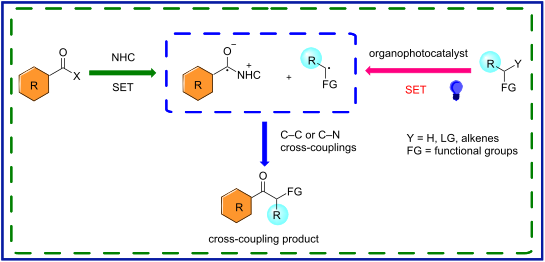
- , and aryloxymethyl potassium trifluoroborate salt 10 under mild conditions. The described catalytic system exhibited broad functional group tolerance and efficiently employed terminal alkenes 11 to generate quaternary centers adjacent to the carbonyl group. The key step in this organocatalytic process
- conditions. This visible-light-mediated dual catalytic method permits the efficient acylsilylation of substituted terminal alkenes 11 via NHC catalysis. Remarkably, this method afforded silyl radicals, which are typically difficult to prepare using conventional HAT-based catalytic methods. This method is
- /organophotocatalyzed oxidative Smiles rearrangement of O-aryl aldehydes 26 has been developed using oxygen as the terminal oxidant under visible-light dual catalysis. This approach afforded highly functionalized 2-hydroxyarylbenzoates 27, tolerating electron-deficient and electron-rich substituents. The C–O bond





Recent advances in total synthesis of illisimonin A
Beilstein J. Org. Chem. 2025, 21, 2571–2583, doi:10.3762/bjoc.21.199
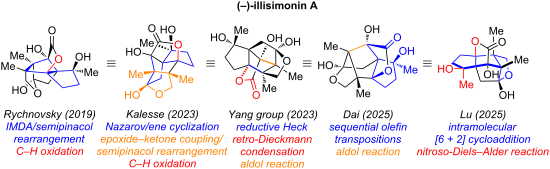
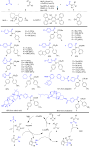
- enantioenriched compound 33, a nickel-catalyzed hydrocyanation of the terminal alkyne was performed. Subsequent protection of the tertiary alcohol with TESOTf and reduction of the resulting cyanide to an aldehyde afforded compound 34 (Scheme 4). Addition of isopropenyllithium to aldehyde 34, followed by TES