

Search results
Search for "strain-promoted azide–alkyne cycloaddition" in Full Text gives 9 result(s) in Beilstein Journal of Organic Chemistry.
Site-specific labelling of native peptides and proteins: chemical and enzymatic strategies
Beilstein J. Org. Chem. 2026, 22, 857–881, doi:10.3762/bjoc.22.67
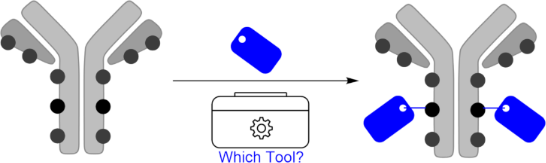
- native glycans for chemical attachment through bioorthogonal chemistry (e.g. strain-promoted azide–alkyne cycloaddition/SPAAC) [114][115][116][117][118][119]. While this strategy enables visualisation and derivatisation of native glycoproteins in their natural environment, metabolic labelling rarely


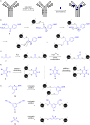
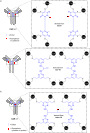


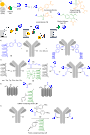




Improved deconvolution of natural products’ protein targets using diagnostic ions from chemical proteomics linkers
Beilstein J. Org. Chem. 2024, 20, 2323–2341, doi:10.3762/bjoc.20.199
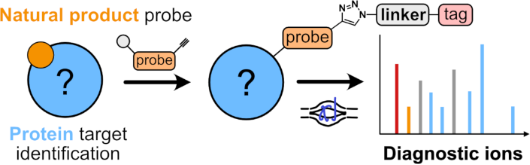
- bearing an affinity or reporter tag. To carry out this bioorthogonal reaction well-known chemistries were developed including traceless Staudinger ligation, Cu-catalyzed azide–alkyne cycloaddition (CuAAC), strain-promoted azide–alkyne cycloaddition (SPAAC), inverse electron-demand Diels–Alder reaction


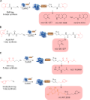
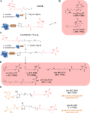


Metal-free double azide addition to strained alkynes of an octadehydrodibenzo[12]annulene derivative with electron-withdrawing substituents
Beilstein J. Org. Chem. 2024, 20, 2234–2241, doi:10.3762/bjoc.20.191
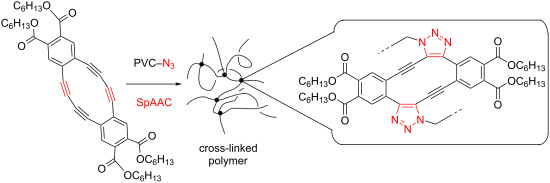
- Naoki Takeda Shuichi Akasaka Susumu Kawauchi Tsuyoshi Michinobu Department of Materials Science and Engineering, Tokyo Institute of Technology, 2-12-1 Ookayama, Meguro-ku, Tokyo 152-8552, Japan 10.3762/bjoc.20.191 Abstract Strain-promoted azide–alkyne cycloaddition (SpAAC) is a powerful tool in
- azide–alkyne cycloaddition; Introduction The strain-promoted azide–alkyne cycloaddition (SpAAC) is one of the most representative metal-free click chemistry reactions [1][2][3][4][5]. SpAAC has been mainly employed in bioconjugation in the fields of chemical biology and medicinal chemistry due to its
- , the double azide addition reaction was applied to polymer crosslinking and the mechanical properties of the self-standing polymer films were compared. Results and Discussion Strain-promoted azide–alkyne cycloaddition Octadehydrodibenzo[12]annulene (DBA) with electron-withdrawing carbonyl substituents




A recent overview on the synthesis of 1,4,5-trisubstituted 1,2,3-triazoles
Beilstein J. Org. Chem. 2021, 17, 1600–1628, doi:10.3762/bjoc.17.114
- decrease in the yield [47]. Some research groups have utilized strain-promoted azide–alkyne cycloaddition reactions (SPAAC) on side chains to afford polymer-based prodrugs. Generally, a range of key strained cyclooctyne derivatives 52 could be reacted with aliphatic azides 51 via this strategy to give















[3 + 2]-Cycloaddition reaction of sydnones with alkynes
Beilstein J. Org. Chem. 2018, 14, 1317–1348, doi:10.3762/bjoc.14.113
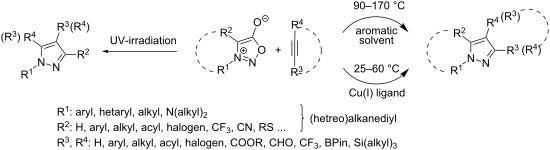
- ; SPSAC) which takes place without any catalyst and at ambient temperature. Such mild reaction conditions, (ultra) fast and unambiguous product formation make SPSAC useful in bio-orthogonal applications and competitive in comparison with analogous strain-promoted azide–alkyne cycloaddition (SPAAC). The


Recent applications of click chemistry for the functionalization of gold nanoparticles and their conversion to glyco-gold nanoparticles
Beilstein J. Org. Chem. 2018, 14, 11–24, doi:10.3762/bjoc.14.2
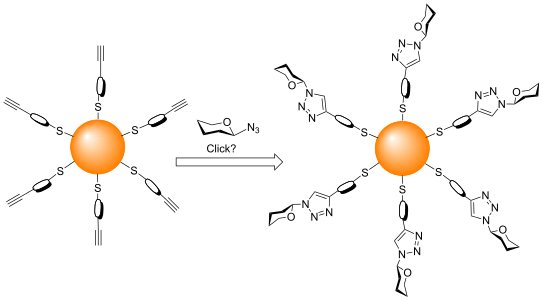
- modification using strain-promoted azide–alkyne cycloaddition In 2014, Workentin and co-workers used the strain promoted azide–alkyne cycloaddition (SPAAC) [53][54][55][56] to modify AuNP surfaces [57]. Firstly 2.8 nm AuNPs functionalized with strained dibenzocyclooctyne derivatives (DBCO-AuNPs) were



Glyco-gold nanoparticles: synthesis and applications
Beilstein J. Org. Chem. 2017, 13, 1008–1021, doi:10.3762/bjoc.13.100
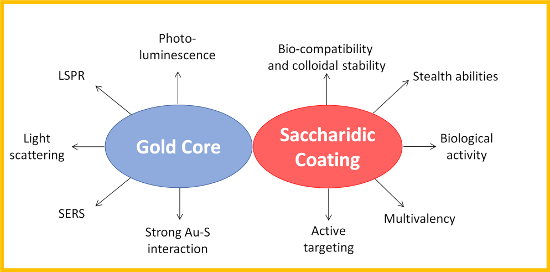
- peanut agglutinin [25]. In this case, the glycosyl residue is not coated on the gold surface by means of a thiol moiety but exploiting the strain-promoted azide–alkyne cycloaddition (SPAAC) to covalently link an azido galactoside on a lipid cyclooctyne. In this manner, the amphiphilic glyco-lipid can be


Synthesis of bi- and bis-1,2,3-triazoles by copper-catalyzed Huisgen cycloaddition: A family of valuable products by click chemistry
Beilstein J. Org. Chem. 2015, 11, 2557–2576, doi:10.3762/bjoc.11.276
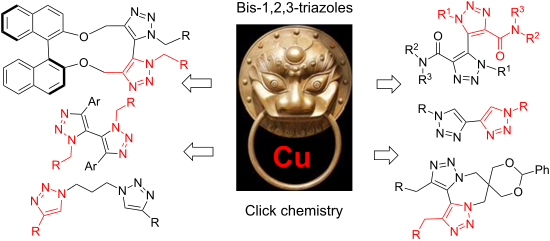
- - and para-ethynylaniline, where both of the substrates worked well and the desired bistriazoles 34 could be obtained by a simple trituration and filtration procedure in good yield. The strain-promoted azide-alkyne cycloaddition (SPAAC) reaction could be well-performed without a Cu(І) catalyst. Such




Expanding the scope of cyclopropene reporters for the detection of metabolically engineered glycoproteins by Diels–Alder reactions
Beilstein J. Org. Chem. 2014, 10, 2235–2242, doi:10.3762/bjoc.10.232
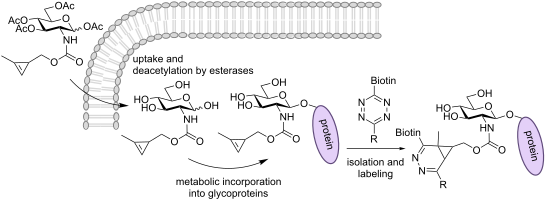
- by simultaneous DAinv reaction and strain-promoted azide–alkyne cycloaddition in a single step [24]. The potential of Ac4ManNCyoc (3) for labeling of sialoglycoconjugates was also recognized by others [30]. Sialic acids are prominently positioned at the outer end of membrane glycoproteins which makes



Other Beilstein-Institut Open Science Activities