

Search results
Search for "protein modifications" in Full Text gives 6 result(s) in Beilstein Journal of Organic Chemistry.
Site-specific labelling of native peptides and proteins: chemical and enzymatic strategies
Beilstein J. Org. Chem. 2026, 22, 857–881, doi:10.3762/bjoc.22.67
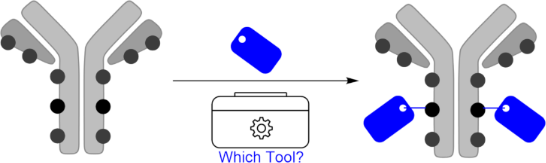
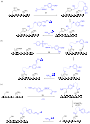
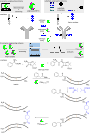
- discussions of rebridging technologies, see references [34][43][44][45]. Affinity-guided protein modifications Affinity-guided protein labelling, also known as affinity-directed conjugation, is a native-sequence modification strategy founded on supramolecular recognition. It employs a bifunctional probe
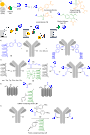
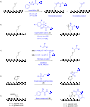
- ], whereas tosylation is one of the few procedures compatible with red blood cells and animal labelling [51]. Alternatively, benzophenone 18, which can be incorporated in the form of an unnatural amino acid, can form a UV-induced diradical for protein modifications (Scheme 7b) [52][53][54][55]. Proteins
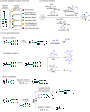
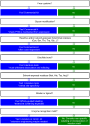
- fulfilling all criteria, and trade-off(s) are inevitable. Hence, we hope this overview will help readers identify opportunities for developing new strategies that address these current limitations. For readers seeking to adapt existing technologies for protein modifications, we present a generic decision








Synthesis, biological and electrochemical evaluation of glycidyl esters of phosphorus acids as potential anticancer drugs
Beilstein J. Org. Chem. 2025, 21, 1909–1916, doi:10.3762/bjoc.21.148
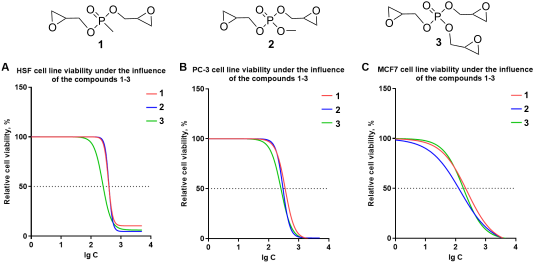
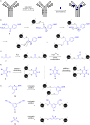
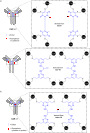
- (LSV) to investigate the alkylating properties of the synthesized compounds. Unlike traditional biochemical assays, this electrochemical approach enabled real-time monitoring of protein modifications. The significant suppression of human serum albumin (HSA) oxidation peaks following exposure to


Olefin metathesis catalysts embedded in β-barrel proteins: creating artificial metalloproteins for olefin metathesis
Beilstein J. Org. Chem. 2018, 14, 2861–2871, doi:10.3762/bjoc.14.265
- post-expressional protein modifications [10][11][12]. For example, a single cysteine mutant of subtilisin from Bacilus lentus (SBL-S156C) was modified via sulfide bond formation with allyl cysteine displaying an allyl function on the protein surface. This allyl group was modified with a GH-type


2-Methyl-2,4-pentanediol (MPD) boosts as detergent-substitute the performance of ß-barrel hybrid catalyst for phenylacetylene polymerization
Beilstein J. Org. Chem. 2017, 13, 1498–1506, doi:10.3762/bjoc.13.148
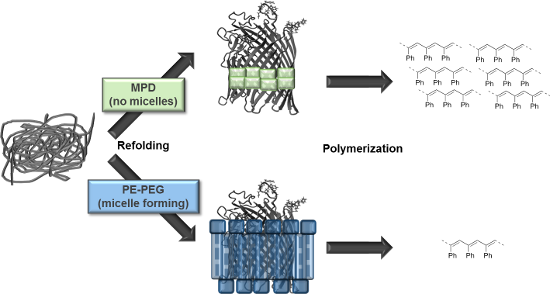
- hydrophobic micelle core. Recently, the small amphiphilic alcohol 2-methyl-2,4-pentanediol (MPD) was shown to successfully stabilize membrane proteins and enable characterization of protein modifications [33][34]. Polymerization of phenylacetylene in the presence of MPD molecules as refolding agent was


Lipids: fatty acids and derivatives, polyketides and isoprenoids
Beilstein J. Org. Chem. 2017, 13, 793–794, doi:10.3762/bjoc.13.78
- , sphingolipids and glycolipids. Lipids also constitute important post-translational protein modifications in lipoproteins. The amphiphilic nature of compounds such as phospholipids with a polar headgroup and a long apolar chain results in the spontaneous formation of lipid bilayers in aqueous environments. This
The allylic chalcogen effect in olefin metathesis
Beilstein J. Org. Chem. 2010, 6, 1219–1228, doi:10.3762/bjoc.6.140
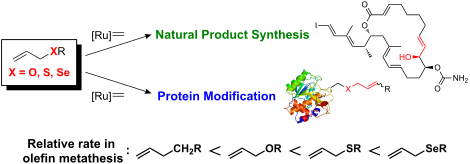
- hydroxy groups, suggests that allyl chalcogens generally play an important role in modulating the rate of olefin metathesis. In this review, we discuss the effect of allylic chalcogens in olefin metathesis and highlight its most recent applications in synthetic chemistry and protein modifications
- . Keywords: allyl substituent effect; allyl sulfides; aqueous chemistry; olefin metathesis; protein modifications; Review Olefin metathesis is one of the most useful chemical transformations for forming carbon–carbon bonds in organic synthesis (Scheme 1) [1][2][3][4]. The broad utility of olefin metathesis
- chalcogen effect in protein modifications via olefin metathesis and the associated principles of cross-metathesis (CM) partner selection for reliable and efficient reaction on proteins are also highlighted. The effect of allylic hydroxy groups in olefin metathesis The activating effect of allylic hydroxy


Other Beilstein-Institut Open Science Activities