

Search results
Search for "protein labelling" in Full Text gives 3 result(s) in Beilstein Journal of Organic Chemistry.
Site-specific labelling of native peptides and proteins: chemical and enzymatic strategies
Beilstein J. Org. Chem. 2026, 22, 857–881, doi:10.3762/bjoc.22.67
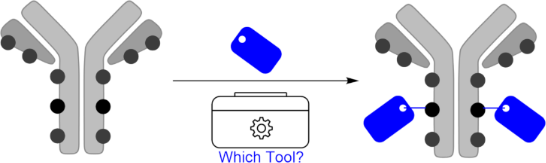
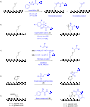
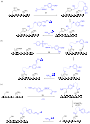
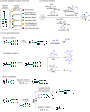
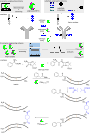
- highlight opportunities for innovation in next-generation native-sequence protein modification technologies. Keywords: affinity-guided chemistry; disulfide-rebridging; enzyme catalysis; glycan modifications; native-sequence; protein labelling; small-molecule modifications; terminal; Introduction Protein
- complementary pairs, such as disulfide bonds (cystine), salt bridges, hydrogen bonds, and cation–π interactions. Among these, disulfide bonds between cysteine residues are the most widely used for native-sequence protein labelling, due to their unique nucleophilicity and low abundance. Therapeutically relevant
- strategy is limited by its reliance on native cystine residues, making it unsuitable for proteins that lack disulfide bonds or that aggregate upon reduction. Its application to endogenous protein labelling is also restricted, as disulfide reduction may destabilise native protein structures, limiting uses








Applications of organocatalysed visible-light photoredox reactions for medicinal chemistry
Beilstein J. Org. Chem. 2018, 14, 2035–2064, doi:10.3762/bjoc.14.179
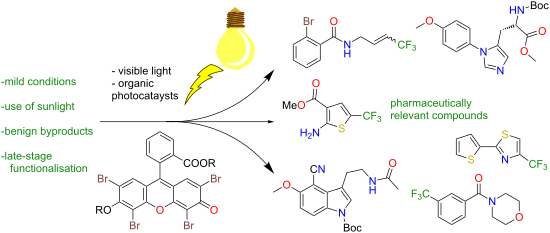
- immediately obvious application of this bioconjugation to biochemistry and molecular biology as a tool for protein labelling, it could also be used as a convenient tool for peptide chemists in medicinal chemistry programs for modification of peptides. 2.2 C(sp2)–C(sp2) bond formation Suzuki–Miyaura and




Chemical probes for competitive profiling of the quorum sensing signal synthase PqsD of Pseudomonas aeruginosa
Beilstein J. Org. Chem. 2016, 12, 2784–2792, doi:10.3762/bjoc.12.277
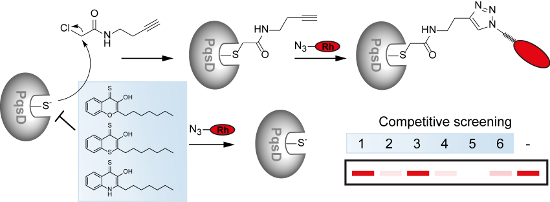
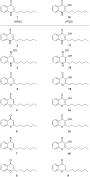
- for the development of customized PqsD inhibitors as well as a chemical toolbox to investigate the activity and active site specificity of the enzyme. Keywords: activity-based probes; PqsD; protein labelling; Pseudomonas aeruginosa; quinolones; Introduction The emergence of multi-drug resistant
- potential inactivation of the probe by the compound scaffold during protein labelling could be ruled out (Supporting Information File 1, Figures S4 and S5). Our 4S-PQS analogues thus represent a promising novel scaffold that inhibits the labelling of PqsD by an active-site-directed probe in the lower



Other Beilstein-Institut Open Science Activities