

Search results
Search for "isozymes" in Full Text gives 7 result(s) in Beilstein Journal of Organic Chemistry.
Structural reassignment of compound 968, an allosteric glutaminase inhibitor
Beilstein J. Org. Chem. 2026, 22, 455–460, doi:10.3762/bjoc.22.33
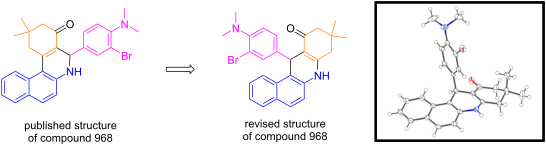
- oxidatively deaminated to the TCA cycle intermediate α-ketoglutarate for energy production and additional biosynthetic pathways. There are two glutaminase isozymes in humans: KGA is encoded by the GLS1 gene and is expressed mainly in the kidney and brain and LGA encoded by the GLS2 gene is expressed mainly in


Synthesis and late stage modifications of Cyl derivatives
Beilstein J. Org. Chem. 2022, 18, 174–181, doi:10.3762/bjoc.18.19
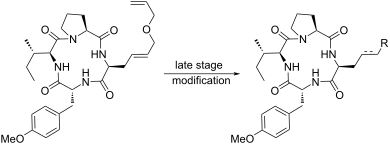
- B (Figure 1) is a cyclic tetrapeptide with a rather unusual epoxyketone side chain and was found to be a strong inhibitor of histone deacetylases (HDACs) [4][5]. HDACs are nuclear isozymes that regulate gene transcription via a dynamic process of acetylation and deacetylation of lysine residues of

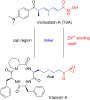
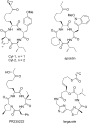


Design and synthesis of diazine-based panobinostat analogues for HDAC8 inhibition
Beilstein J. Org. Chem. 2020, 16, 628–637, doi:10.3762/bjoc.16.59
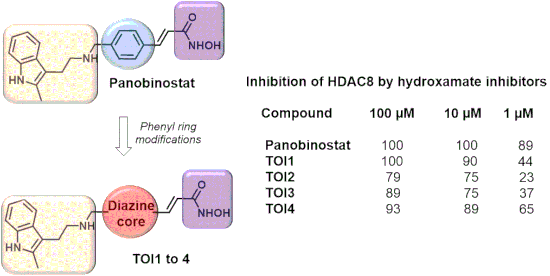
- lay the foundation for future design strategies toward more potent HDACis for HDAC8 isozymes and further therapeutic applications for neuroblastoma. Keywords: diazine; histone deacetylase; inhibitors; isozymes; panobinostat; Introduction One of the most important posttranslational modifications
- involve acetylation/deacetylation of histone proteins by histone deacetylases (HDACs) [1]. HDACs belong to an important family of enzymes consisting of 18 isozymes. They control protein acetylation, which is a change that occurs after translation. In addition, they regulate gene transcription, cell
- interests are Class I HDAC isozymes, HDAC2 and HDAC8, which are important targets in cancer models as both are associated with high risk diseases such as prostate cancer and neuroblastoma [6][7][8]. Compounds such as vorinostat, givinostat and panobinostat have been successfully applied as HDAC inhibitors




Palladium-catalyzed synthesis and nucleotide pyrophosphatase inhibition of benzo[4,5]furo[3,2-b]indoles
Beilstein J. Org. Chem. 2019, 15, 2830–2839, doi:10.3762/bjoc.15.276
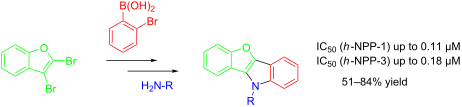
- ]. The isozymes of NPPs are involved in the pathophysiology of different diseases, such as calcification, cancer, and insulin resistance [34][35]. All derivatives of compounds 5 were tested for human recombinant NPPs, i.e., NPP1–3. In addition, we compared the obtained results with those of recently
- changes of the substitution pattern allow for a modification of the selectivity and activity of these compounds to these enzymes. Docking studies of h-ENPP1 inhibitors Molecular docking of the most potent compounds 5c and 6a (for ENPP1) and for 6e (exhibiting dual inhibition for both isozymes) were
- selected inhibitors on isozymes ENPP1 and ENPP3 modelled proteins were in accordance with in vitro experimental studies. Conclusion In conclusion, we have reported a convenient strategy for the preparation of benzo[4,5]furo[3,2-b]indoles based on Suzuki–Miyaura coupling reactions followed by Pd-catalyzed


On the design principles of peptide–drug conjugates for targeted drug delivery to the malignant tumor site
Beilstein J. Org. Chem. 2018, 14, 930–954, doi:10.3762/bjoc.14.80


Synthesis of 3,4-dihydro-1,8-naphthyridin-2(1H)-ones via microwave-activated inverse electron-demand Diels–Alder reactions
Beilstein J. Org. Chem. 2014, 10, 282–286, doi:10.3762/bjoc.10.24
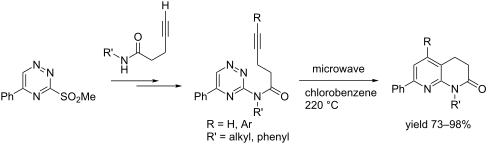
- [8] and gastric antisecretory activities [9]. Many other remarkable applications are reported in the literature [10][11][12][13][14], such as the selective inhibition of p38 mitogen-activated protein kinase [15] and the potent inhibition of protein kinase C isozymes [16]. Much attention has been


A unified approach to the important protein kinase inhibitor balanol and a proposed analogue
Beilstein J. Org. Chem. 2013, 9, 2910–2915, doi:10.3762/bjoc.9.327
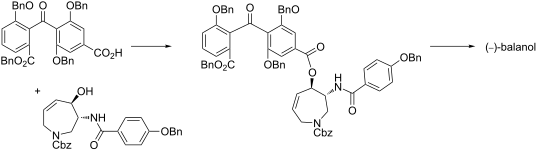
- comprises of a number of isozymes and inappropriate activation of PKC has been linked to a variety of disorders [6][7]. The development of selective PKC inhibitors as novel therapeutics has therefore remained significant [8][9][10][11][12][13][14]. Balanol ((−)-1, Figure 1), a fungal metabolite [15] is
- known to inhibit a number of PKC isozymes at nanomolar concentrations [16], a finding that has motivated research related to the total- [17][18][19][20][21][22][23][24][25][26] or fragment synthesis [27][28][29][30][31][32][33][34][35][36][37][38][39][40][41][42][43][44][45][46][47] of this important


Other Beilstein-Institut Open Science Activities