

Search results
Search for "intermediate" in Full Text gives 2227 result(s) in Beilstein Journal of Organic Chemistry. Showing first 200.
Rhodopyran, a carboxylated hexahydrocyclopenta[b]pyran from Rhodococcus
Beilstein J. Org. Chem. 2026, 22, 1107–1113, doi:10.3762/bjoc.22.89
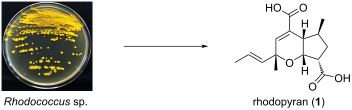
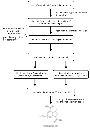
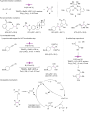
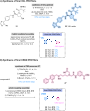
- of underexplored microbial taxa can directly contribute to expanding structural diversity. The biosynthetic origin of rhodopyran (1) remains to be established (Scheme 1). From a structural viewpoint, the carbon framework of 1 could plausibly arise from a linear acyl- or polyketide-like intermediate
- derived from acetyl-CoA/malonyl-CoA-based metabolism. Partial reduction, dehydration, and oxidation of such an intermediate could generate an unsaturated hydroxy- or oxo-acyl precursor suitable for intramolecular ring formation. The cyclopentane ring may be formed through an intramolecular aldol- or
- ). Intermediates are depicted as generic structural classes; regiochemistry, stereochemistry, carbon-by-carbon mapping, and the order of ring closure are not implied. The carbon framework of 1 could plausibly arise from a linear acyl- or polyketide-like intermediate derived from acetyl-CoA/malonyl-CoA-based


One-pot four-component sequential synthesis of S-alkyl dithiocarbamates using lipase as a biocatalyst
Beilstein J. Org. Chem. 2026, 22, 1048–1056, doi:10.3762/bjoc.22.83
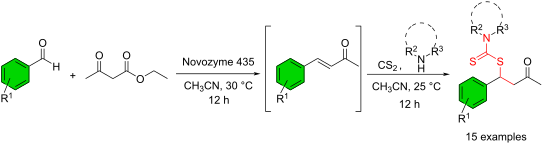
- the aldehyde, resulting in the formation of the intermediate 8a. Next, the ester portion of the ketoester is hydrolyzed through the serine amino acid, leading to the formation of the intermediate 9a. This intermediate then undergoes decarboxylation, which can be assisted by histidine or aniline
- , resulting in the formation of the Michael acceptor 3a. Subsequently, the intermediate 7, formed from the reaction of carbon disulfide 4 and amine 5a, attacks the double bond of 3a, leading to the formation of the product 6a. Conclusion In conclusion, an efficient sequential one-pot four-component


Z-Selective semihydrogenation of alkynes via Ni/Lewis acid synergistic catalyzed system using DMF as hydrogen source and solvent
Beilstein J. Org. Chem. 2026, 22, 1004–1012, doi:10.3762/bjoc.22.79
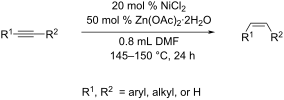
- hydrogenation systems. HCOOH then reacts with the Ni species to form a formate nickel hydride intermediate B (HCOONi(II)H), a key species documented in nickel-catalyzed hydrogen-transfer reactions. Subsequent selective insertion of the internal alkyne into the Ni–H bond of B affords the vinyl-nickel
- intermediate C. Following decarboxylation, the resulting dihydrido vinyl-nickel species D undergoes reductive elimination to release the (Z)-alkene product and regenerates the Ni(0) catalyst A, thereby closing the catalytic cycle. Conclusion In summary, we have developed a highly Z-selective semihydrogenation



Rh(III)-catalyzed chelation-assisted C–H activation/annulation of 2-arylimidazolines with cyclic diazo-1,3-dicarbonyl compounds: a novel approach to tetracyclic annulated derivatives of 2,3-dihydroimidazo[2,1-a]isoquinoline
Beilstein J. Org. Chem. 2026, 22, 997–1003, doi:10.3762/bjoc.22.78
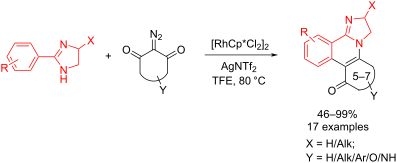
- intermediate B, followed by coordination of diazo compound 3 to give diazonium intermediate C. The latter transforms into a carbene complex D after nitrogen loss. The next intermediate E is a result of migratory insertion of the carbenoid into the C–Rh bond. The last step of the catalytic cycle is
- protodemetallation that delivers CAr-alkylated intermediate F and regenerates the active catalytic species. The target tetraheterocyclic product 4 is formed after intramolecular condensation between the carbonyl group and the imidazoline nitrogen of intermediate F. To support this mechanism experimentally, we have
- performed a reaction of substrate 2a with an equimolar amount of rhodium catalyst, which allowed isolation of compound 5 (intermediate B) in 35% yield (Figure 3b). Conclusion In conclusion, we have successfully extended the strategy of Rh(III)-catalyzed chelation-assisted C–H activation/annulation with


The role of spacer length and flexibility in peptide self-assembly
Beilstein J. Org. Chem. 2026, 22, 986–996, doi:10.3762/bjoc.22.77
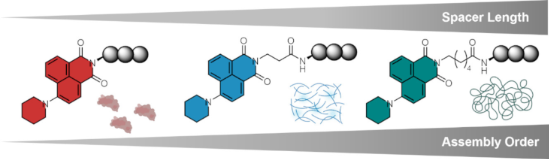
- flexibility and directional non-covalent interactions, thereby dictating assembly pathways and material properties. The results establish a correlation between spacer length and assembly propensity, with the longest spacer (C6) consistently promoting aggregation more effectively than the intermediate analogue


Electrochemical reduction of unsaturated carbon–carbon bonds via 3d transition-metal catalysis
Beilstein J. Org. Chem. 2026, 22, 955–981, doi:10.3762/bjoc.22.75
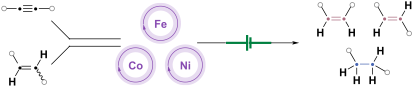
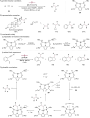
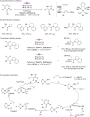
- reduction of unsaturated C–C bonds can be broadly classified according to whether the reaction proceeds through a discrete metal hydride (M–H) intermediate (Figure 2A) [49][50][51][52][53] or through a hydride-free pathway (Figure 2B). In the first category, electrochemical reduction/protonation sequences
- metal–alkenyl intermediate. In some cases, this organometallic species can further undergo chain walking, where iterative β-hydride elimination and reinsertion enable migration of the metal center along the carbon skeleton before product release, thereby allowing remote hydrogenation or positional
- selectivity [54][55][56]. The second mode within M–H chemistry is hydrogen-atom transfer (HAT), namely MHAT [38][57][58][59][60][61][62][63], in which the electrogenerated M–H intermediate behaves not as a classical two-electron hydride donor but as a one-electron H-atom donor. In such cases, reactivity is








Recent advances in copper-catalyzed direct hydroamination of alkenes with (hetero)aromatic amines
Beilstein J. Org. Chem. 2026, 22, 925–947, doi:10.3762/bjoc.22.73
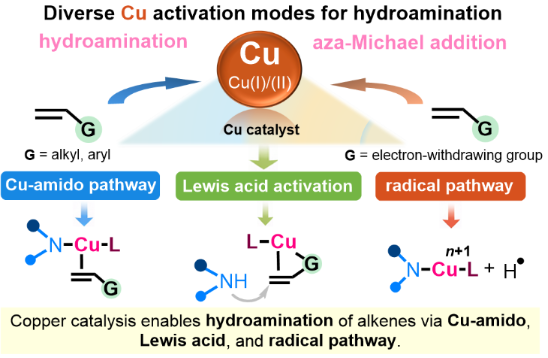
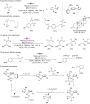
- suitable ligands such as N-heterocyclic carbenes or electron-rich phosphines, the deprotonation of an N–H heteroaromatic can generate a copper–amido intermediate [32][33][34]. These species typically exhibit enhanced nucleophilicity and can engage alkenes via the direct nucleophilic addition of a copper
- –amido intermediate or aminocupration-type pathways, enabling efficient C–N bond formation under relatively mild conditions. Copper species may also operate in a Lewis acid-type capacity, where coordination to the alkene or copper-derived Brønsted acidity generated in situ increases alkene
- been widely explored. Among the various catalytic systems, copper catalysts have attracted particular attention owing to their ability to activate amine components by forming copper–amido species. In this activation mode, deprotonation of the N–H bond generates a Cu–N intermediate with enhanced







A practical CO2-mediated synthesis of 5,6-carboxylated silicon-rhodamines for targeted probe development
Beilstein J. Org. Chem. 2026, 22, 915–924, doi:10.3762/bjoc.22.72
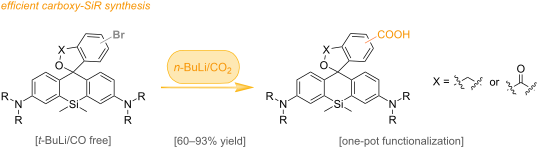
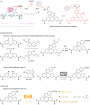
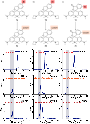
- HRMS (Figure S24) analysis identified this side product as the uncarboxylated rhodamine formed by lithium–halogen exchange followed by protonation. This byproduct likely arises from protonation of the aryllithium intermediate before efficient trapping by CO2, possibly due to trace moisture or other



Palladium-catalyzed benzocyclization reactions of quinoline-2-carboxamides via sequential C–H/N–H functionalization
Beilstein J. Org. Chem. 2026, 22, 905–914, doi:10.3762/bjoc.22.71
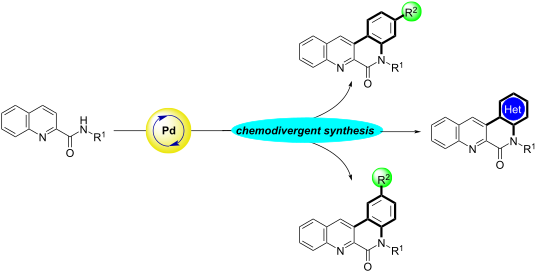
- group in the C5 position, a similar substitution pattern was detected as for compound 3ad derived from 1-bromo-2-iodo-5-methylbenzene (2b). Additionally, during the coupling reaction carried out with 5-tert-butyl-1-bromo-2-iodobenzene, Int-1ad species was detected as a reaction intermediate, as
- . First, the activated palladium(0) catalyst is inserted into the carbon–iodine bond of the 1-bromo-2-iodoarene 2 via oxidative addition. The intermediate Int-2 then undergoes ligand exchange from iodine and phosphine to acetate and quinoline-2-carboxamide to generate intermediate Int-3. Then, through a
- concerted metalation-deprotonation (CMD) process, a carbon–palladium bond is formed to give the palladacycle intermediate Int-4. Next, reductive elimination between the quinoline and arene moieties forms the C–C bond to give intermediate Int-1 and regenerates the palladium(0) catalyst. Another oxidative




Cascade transformation of 2-(diazoacetyl)-2H-azirines to 2-aroyl-3-hydroxy-1H-pyrroles via condensation with aromatic aldehydes
Beilstein J. Org. Chem. 2026, 22, 897–904, doi:10.3762/bjoc.22.70
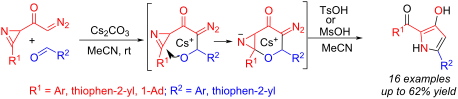
- with aromatic aldehydes does not result in the formation of an azirinyl-substituted β-hydroxy-α-diazocarbonyl compound, but is accompanied by a tandem intramolecular cyclization involving the hydroxy group and the C=N bond of the azirine to form a bicyclic intermediate, a 4-diazo-2-oxa-7-azabicyclo
- bicyclic intermediate 4. This acid-catalyzed transformation leads to 3-hydroxy-2-aroyl-1H-pyrroles 5 (Scheme 1). To the best of our knowledge, only few examples of such compounds have been so far reported [23][24]. Results and Discussion A test reaction of 2-(2-diazoacetyl)-3-phenyl-2H-azirine (1a, R = Ph
- ring. The intermediate (RR,RR)-B immediately yields a more stable conformer with the Ph group from benzaldehyde in the equatorial position (1RR,3RR,6RR)-Phe-C, but the equilibrium as a whole is shifted towards the most stable isomer (1RR,3SR,6RR)-Phe-C isomer. According to the calculation, the


Chiral cyclopropenimine-catalyzed enantioselective Michael reactions of phenol and benzofuran-derived α,β-unsaturated pyrazolamides with benzophenone-imine of glycine esters
Beilstein J. Org. Chem. 2026, 22, 888–896, doi:10.3762/bjoc.22.69
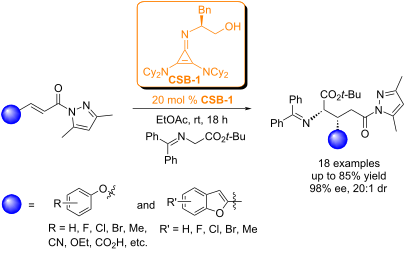
- enhance the formation of transition state B. The highly diastereomic ratio of 6a in syn-form may be generated from transition state B. The formation of intermediate C is the rate-limiting step. When intermediate C is formed, the protonation happened rapidly to afford 6a in high enantioselectivity. The






Diastereodivergent electrophilic trapping of α-boryl lithium derivatives
Beilstein J. Org. Chem. 2026, 22, 882–887, doi:10.3762/bjoc.22.68
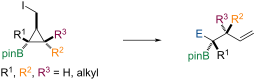
- results suggest that the stereochemical outcome is independent of the initial configuration at C2 and is instead dictated by conformational preferences of the α-boryl lithium intermediate. A simplified steric model is proposed in which lithium coordination induces a pseudo-chelated structure that controls
- cleavage of the C1–C3 bond rather than the C1–C2 bond, provided direct access to α-boryl carbanion intermediate 1. Reaction of 1 with a range of electrophiles furnished tertiary pinacol boranes with a well-defined adjacent stereocenter in excellent diastereoselectivity (Scheme 1). Theoretical studies




Site-specific labelling of native peptides and proteins: chemical and enzymatic strategies
Beilstein J. Org. Chem. 2026, 22, 857–881, doi:10.3762/bjoc.22.67
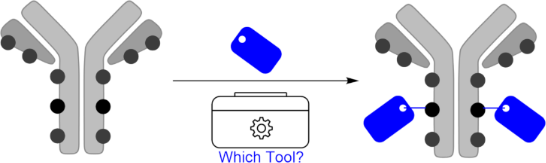
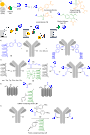
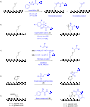
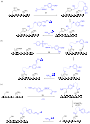
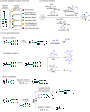
- has enabled pyridinium aldoxime 21 (PyOx) incorporation into protein scaffolds (Scheme 7e) [64]. Acting as a catalytic centre for acyl cation transfer, PyOx reacts with a selected N-acyl-N-alkyl sulfonamide 15’ to generate a reactive ester intermediate. This strategy has successfully modified lysine
- , the enzyme cleaves the Thr–Gly peptide bond to form an acyl intermediate that is ligated to an incoming primary amine nucleophile, such as an N-terminal glycine or lysine ε-amine (Scheme 14a) [143]. Native proteins with an N-terminal glycine and sufficient flexibility can thus be directly modified by
- and glutamine (or other small primary amides) is another frequently used enzyme for bioconjugation. The primary amide in glutamine is converted into an acyl intermediate that is subsequently attacked by amine nucleophiles such as lysine ε-amines and glycine α-amines. Although MTG can modify Gln295 on








The trans-influence in gold chemistry from a catalytic perspective
Beilstein J. Org. Chem. 2026, 22, 838–856, doi:10.3762/bjoc.22.66
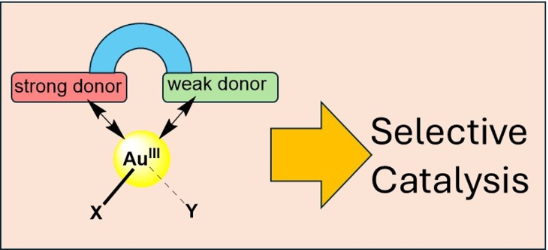
- ^C)AuH2] [50]. Goldberg’s complex 13, on the other hand, which is stabilised by two strongly donating P(t-Bu)2 moieties, is stable at room temperature and could be crystallographically characterised [53]. A gold hydride of type 12 has been postulated as an intermediate in the thermal decomposition of
- (C^C^N)Au–C(R)=C(R)H (Z-configuration), most probably via (C^C^N)AuH as intermediate [54]. Allenes are more reactive, and both (C^N^C)AuH 8a and [(P^N^C)AuH]+ 11 give allene-insertion products, by unspecified mechanisms [31][52]. This picture changed however when it was realised that (C^N^C)AuH
- deprotonation [29] of [(P^N^C)AuH]+ by water, to give a T-shaped Au(I) intermediate, (P^N^C)Au, capable of sequestering the alkyne. This in turn is attacked by another Au(III) hydride to complete the anti-addition process (Scheme 13) [69]. Ligand effects of C^N, C^P and P^N chelates Gold(III) complexes of C^N


Unsymmetrical sulfoxides with sterically hindered catechol fragment: synthesis, structure, electrochemical properties, and antiradical activity
Beilstein J. Org. Chem. 2026, 22, 828–837, doi:10.3762/bjoc.22.65
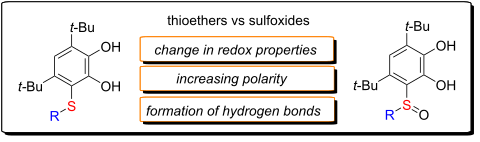
- transformations of the sulfur-centered intermediate can lead to the corresponding sulfone via a disproportionation reaction or in the presence of traces of water [49]. In the case of compounds 2a and 5a, which bear a tertiary hydrocarbon substituent at the sulfinyl group (tert-butyl and adamantyl, respectively


Total synthesis of the capsular polysaccharide repeating unit towards the development of a glycoconjugate vaccine against Klebsiella pneumoniae ST512
Beilstein J. Org. Chem. 2026, 22, 821–827, doi:10.3762/bjoc.22.64
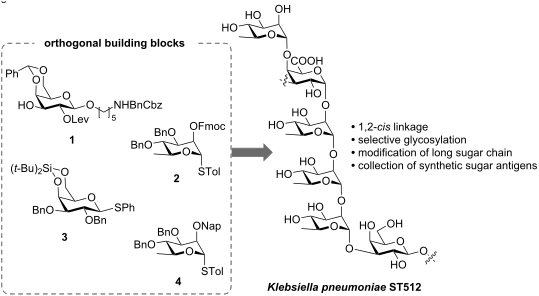
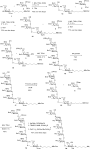
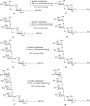
- -throughput screening, a series of analogues including di-, tri-, tetra-, and pentasaccharides were synthesized (Scheme 3). We utilized the intermediate products from the assembly of the hexasaccharide repeating unit 20. The protecting groups of disaccharide 13 were removed by treatment with sodium methoxide


Synthetic study of vic-bromination of diarylacetylenes, easy purification and separation
Beilstein J. Org. Chem. 2026, 22, 795–802, doi:10.3762/bjoc.22.61
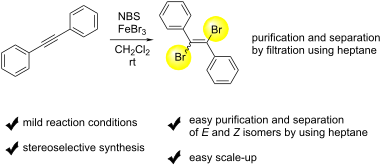
- interested in the selective synthesis of the E isomer of 1,2-dibromo-1,2-diphenylethylene, together with simple purification and separation toward process chemistry, because the compound is an attractive synthetic intermediate for further transformations. During the course of our studies, we have found that
- ). Poor selectivity as shown in entries 1 and 2 might be due to the stability of the intermediate. In the cases of Table 2, entries 3–6 residues such as MeO, F, Br and CN as the substituent at para position of the benzene ring in 1d–g, the selectivity of E and Z and the isolated yield of the E isomer
- can react with 1a to form intermediate A. A reacts with Br− to give E-2a. Another possibility is the reaction of NBS and FeBr3 gives coordinated intermediate B, which can react with 1a to give A, leading to the formation of E-2a [21][22]. Both pathways may be mixed together. One reason why E and Z



Design, synthesis, and biological evaluation of FXR/ASK1 dual-target modulators
Beilstein J. Org. Chem. 2026, 22, 771–781, doi:10.3762/bjoc.22.59
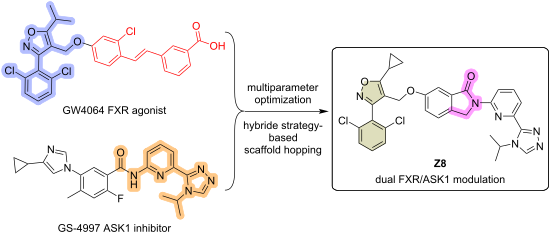
- MASH. Results and Discussion Chemistry The synthetic routes to the target compounds are outlined in Schemes 4–8. The synthesis of isoxazole intermediate 2 commenced with the condensation of commercially available benzaldehyde I with hydroxylamine to afford oxime intermediate II. Subsequent treatment of
- II with NCS, followed by cyclization with methyl 3-cyclopropyl-3-oxopropionate, furnished isoxazole IV. Reduction of IV with lithium aluminum hydride gave alcohol V, which was then brominated with phosphorus tribromide to yield the desired isoxazole intermediate 2 in five steps (Scheme 4) [31]. The
- preparation of triazole intermediates IXa–d is shown in Scheme 5. Firstly, compound VI was reacted with hydrazine hydrate in methanol to obtain hydrazide VII which was mixed with DMF/DMA and heated to provide intermediate VIII. The obtained VIII was not purified and directly reacted with different amines to


Synthesis and biological evaluation of new brassinosteroid analogs with C-22 benzoate function
Beilstein J. Org. Chem. 2026, 22, 753–762, doi:10.3762/bjoc.22.57
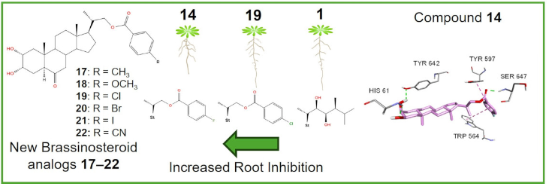
- binding energies obtained from a docking study. In this way, it is intended to assess the effect of chemical structure on the initial and one intermediate step, and on the final plant response. Our results show that the binding of BR analogs to the active site, which initiate the signaling process, and
- . thaliana seedlings [28][29]. The obtained results indicate that compounds 10 and 11 are the most active of teasterone analogs [28], whereas fluorinated castasterone analogs 13 and 14 with a fluoro substituent in the ortho- and para-positions, show interesting activities at intermediate concentrations [29
- data suggest that the initial step of the signaling process and the subsequent dephosphorylation of BES1 depend on the structure of BRs analogs in the same way. In other words, the interaction between BRs analogs and the binding site determines the response of the plant and one intermediate step


Rongalite addition to dienones: diastereoselectivity in cyclic sulfone synthesis; stereochemical rationalization and prospects as a general conjugate nucleophile
Beilstein J. Org. Chem. 2026, 22, 742–752, doi:10.3762/bjoc.22.56

- system 18. However, we did not obtain any of the desired product, with low conversion and a mixture of products, none of which were sulfone 18. The absence of cyclized product is likely due to the necessity of forming a bridgehead enol intermediate which violates Bredt’s rule [42]. A larger ring
- does not conclusively indicate beyond all doubt the lower nucleophilicity of Rongalite – it is still possible that loss of formaldehyde from an intermediate such as 28 (inset in scheme to Table 1) is rate-determining. We can, however, conclude that conjugate addition of p-toluenesulfinate is




Synthesis of heterocycles based on azomethine ylides from α-amino acids (or amines) and carbonyl compounds
Beilstein J. Org. Chem. 2026, 22, 705–741, doi:10.3762/bjoc.22.55
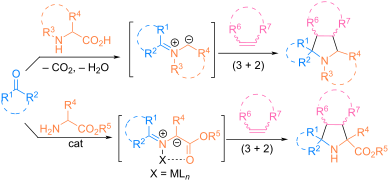
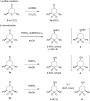
- authors proposed a model for the intermediate complex in 1,3-dipolar cycloaddition reactions. This intermediate consists of an azomethine ylide coordinated to a Zn(II)-t-Bu-BOX catalyst and is an 18-electron complex with a tetrahedral arrangement of ligands around the zinc center. Excellent results for
- shielding of the Si-side of the chiral iminium intermediate by bulky aryl groups leads to a stereoselective endo approach of the 1,3-dipole to the sterically less hindered Re-side of the intermediate iminium cation (Scheme 26). In this context, it is worth noting a work published in 2011, in which the
- -alkylmaleimides 63, with the formation of cycloadducts 68. Next, without isolating the intermediate product 68, the resulting reaction mixture was used for the intramolecular (3 + 2) cycloaddition step with alkynes 69 and alkenes 70, which led to the formation of cycloadducts 71 and 72 with high


Anti-invasive and cytotoxic evaluation of a (+)-pinoresinol-based semisynthetic library against glioblastoma
Beilstein J. Org. Chem. 2026, 22, 691–704, doi:10.3762/bjoc.22.54
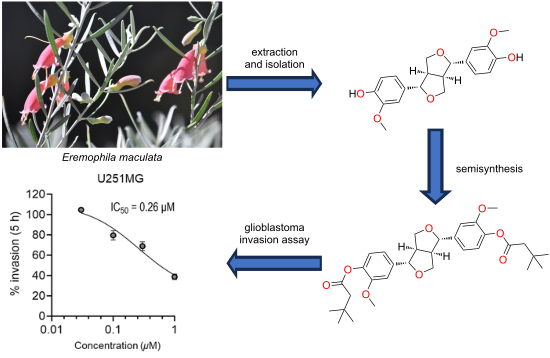
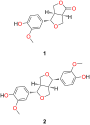
- purity (>95%). Semisynthetic analogues 3−5 are known compounds [25][26]. However, some of these compounds have not been fully characterized. Regarding compound 5, this molecule had previously been reported as an intermediate in the total synthesis of racemic pinoresinol [25]. Through a bromination



Synthesis of depressin, cryptomeridiol and 4-epi-cryptomeridiol enabled by a terpenoid chiral pool-producing platform
Beilstein J. Org. Chem. 2026, 22, 683–690, doi:10.3762/bjoc.22.53
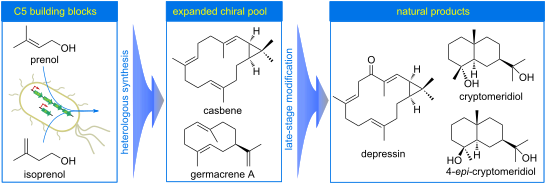
- Cichorium intybus, while multiple products were produced when the same compound was treated with acid or Hg(OAc)2, indicating (+)-hedycaryol might serve as the biosynthetic intermediate of compound 2 [37]. Terpene cyclase TwCS from Tripterygium wilfordii responsible for the biosynthesis of 2 was discovered


Towards the targeted protein degradation of CK2: design and synthesis of CAM4066-based PROTACs
Beilstein J. Org. Chem. 2026, 22, 611–619, doi:10.3762/bjoc.22.47
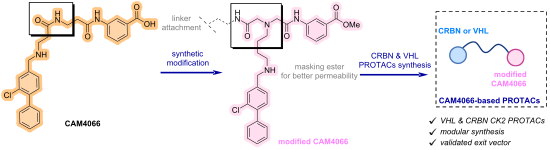
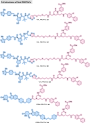
- construction. The synthesis of the ATP-site binder began with the alkylation of commercially available methyl 3-aminobenzoate (3) using bromoacetyl bromide. Although initial purification via silica gel chromatography led to substantial product loss, isolation by simple aqueous workup afforded the intermediate
- 4 cleanly and in quantitative yield. This intermediate enabled straightforward elaboration of the ATP-binding fragment, as N-Boc-1,4-diaminobutane was subsequently alkylated with intermediate 4 to generate the chain-extended linker precursor 5. The use of DIPEA instead of triethylamine suppressed
- undesired alkylation of the base and significantly improved the isolated yield up to 84%. Introduction of an acetic acid handle was then achieved via alkylation with bromoacetic acid under DIPEA mediation, giving intermediate 6, which served as the common attachment point for linkers 7–10 (for full

Computational prediction of C–H hydricities and their use in predicting the regioselectivity of electron-rich C–H functionalisation reactions
Beilstein J. Org. Chem. 2026, 22, 603–610, doi:10.3762/bjoc.22.46
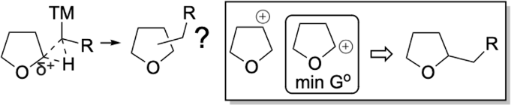
- is less sterically hindered (%Vbur = 62.3%). For comparison, the site with the lowest BDE has an intermediate value for %Vbur of 65.4%. Compounds 5 and 6 Allen and Lambert [42] reported the tropylium ion-mediated α-cyanation of amines, including compounds 5 and 6. In the case of compound 5, the


![[Graphic 6]](/bjoc/content/inline/1860-5397-22-46-i8.svg?max-width=637&scale=1.18182)