

Search results
Search for "disulfide-rebridging" in Full Text gives 2 result(s) in Beilstein Journal of Organic Chemistry.
Site-specific labelling of native peptides and proteins: chemical and enzymatic strategies
Beilstein J. Org. Chem. 2026, 22, 857–881, doi:10.3762/bjoc.22.67
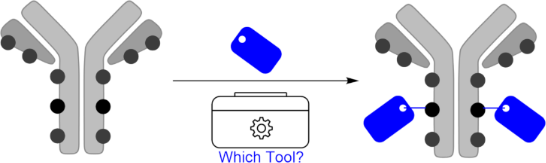
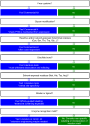
- and usability, ultimately limiting translational potential of a modification tool. This review critically compares current key strategies, including terminal, disulfide-rebridging, small-molecule, glycan and enzyme-based modifications. Finally, we present a decision tree for method selection and
- highlight opportunities for innovation in next-generation native-sequence protein modification technologies. Keywords: affinity-guided chemistry; disulfide-rebridging; enzyme catalysis; glycan modifications; native-sequence; protein labelling; small-molecule modifications; terminal; Introduction Protein
- including reaction kinetics, minimisation of reaction steps, conjugate stability and solubility. Furthermore, disulfide rebridging carries an inherent risk of scrambling, compromising homogeneity. In the case of DAR 4 ADCs, this approach enables conjugation with fairly homogeneous loading, yet heterogeneity





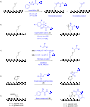

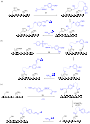
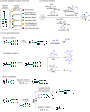


Photocatalyzed elaboration of antibody-based bioconjugates
Beilstein J. Org. Chem. 2025, 21, 616–629, doi:10.3762/bjoc.21.49
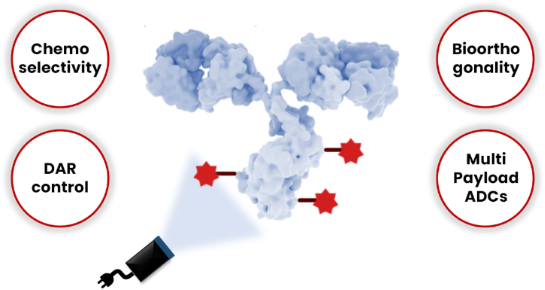
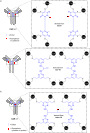
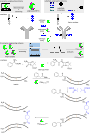
- method allows the same photocatalyst and electrophile to be involved in two different but selective bioconjugations of mAbs. It remains limited to reactions involving oxidative mechanistic pathways with 1O2. Cys In 2016, Bräse et al. developed a photomediated disulfide rebridging method, exploiting the
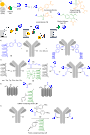
- procedure developed by Bräse et al. on photoinduced disulfide rebridging method. Schematic procedure developed by Lang et al. on a photoinduced dual nickel photoredox-catalyzed approach. The antibody shown in this figure is from https://www.gettyimages.de/detail/illustration/monoclonal-antibody-igg2a


Other Beilstein-Institut Open Science Activities