
Search results
Search for "coupling reaction" in Full Text gives 546 result(s) in Beilstein Journal of Organic Chemistry. Showing first 200.
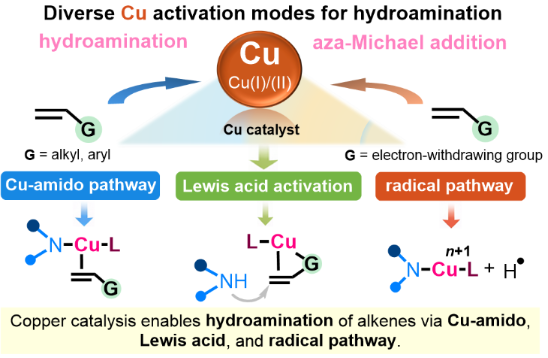
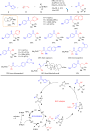
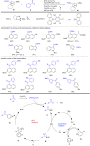
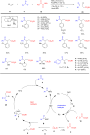
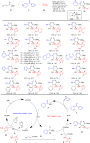
Recent advances in copper-catalyzed direct hydroamination of alkenes with (hetero)aromatic amines
Beilstein J. Org. Chem. 2026, 22, 925–947, doi:10.3762/bjoc.22.73
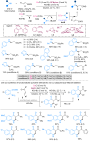
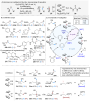
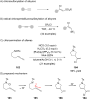
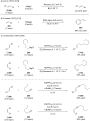
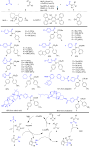
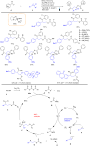
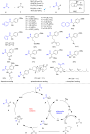
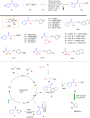
- imination-alkynylation-aza-Michael cascade for the enantio- and diastereoselective synthesis of 1,3-disubstituted isoindolines and tetrahydroisoquinolines 24 via a three-component coupling reaction involving 2-formylphenyl acrylates or 2-formylphenylcrotonates 21, arylalkynes 22, and anilines [46]. In this







Palladium-catalyzed benzocyclization reactions of quinoline-2-carboxamides via sequential C–H/N–H functionalization
Beilstein J. Org. Chem. 2026, 22, 905–914, doi:10.3762/bjoc.22.71
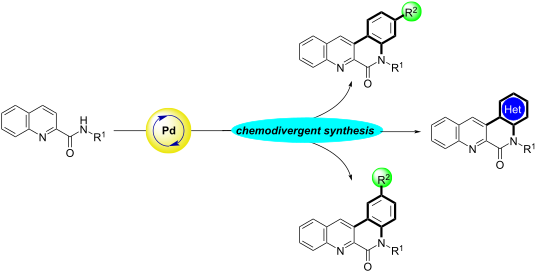
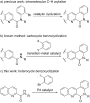
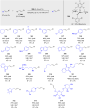
- ). Notably, the reaction using o-xylene as the solvent supported a good mass balance of 1a and 3aa. Therefore, the coupling reaction conditions were further optimized using o-xylene as the solvent. The ligand effect was examined, and the results indicated that electron-donating ligands were more efficient
- group in the C5 position, a similar substitution pattern was detected as for compound 3ad derived from 1-bromo-2-iodo-5-methylbenzene (2b). Additionally, during the coupling reaction carried out with 5-tert-butyl-1-bromo-2-iodobenzene, Int-1ad species was detected as a reaction intermediate, as




Halogenated azobenzene acrylates: from efficient solution photoswitching to stable solid-state photochromic materials
Beilstein J. Org. Chem. 2026, 22, 782–794, doi:10.3762/bjoc.22.60
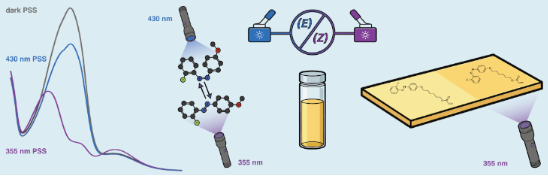
- polyacrylate or polystyrene materials. Results and Discussion Synthesis of azobenzene monomers The target azobenzene monomers 1a–f were obtained using a facile three-step synthetic route as shown in Scheme 1. The first step represents an azo-coupling reaction between phenol and the corresponding diazonium


Design, synthesis, and biological evaluation of FXR/ASK1 dual-target modulators
Beilstein J. Org. Chem. 2026, 22, 771–781, doi:10.3762/bjoc.22.59
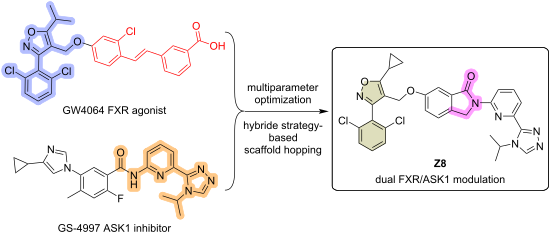
- LiOH or lithium aluminum hydride to obtain compounds Z4–7. The synthesis of compounds Z8–15 followed a similar preparation procedure as for Z1–7. The synthesis of target compounds Z16–29 is illustrated in Scheme 7. Intermediates 8 and 10 were synthesized by the Suzuki cross-coupling reaction using


Preparation of 3-(alkylamino)imidazo[1,2-a]pyridine-2-carbaldehydes via Kornblum oxidation and unexpected ring-opening reactions of the corresponding alcohols under oxidative conditions
Beilstein J. Org. Chem. 2026, 22, 763–770, doi:10.3762/bjoc.22.58
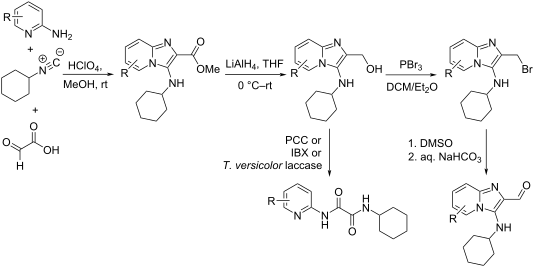
- ester. In this paper, we describe the synthesis of a library of derivatives of 8, whose imidazo[1,2-a]pyridine core could be accessed via the Groebke–Blackburn–Bienayme (GBB) multicomponent coupling reaction [20][21][22][23]. Results and Discussion In order to access our initial target compounds 7, the


Get a better glimpse on sequential photoreactions of trisnorbornadienes with 19F NMR spectroscopy
Beilstein J. Org. Chem. 2026, 22, 527–534, doi:10.3762/bjoc.22.38
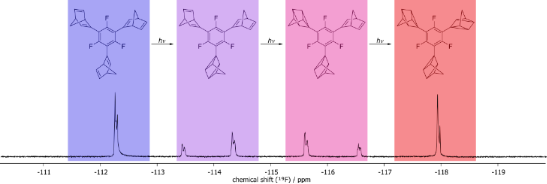
- storage. The target compound was readily synthesized by a Suzuki–Miyaura coupling reaction and examined with respect to the key properties for MOST applications. Upon direct or photosensitized irradiation, the trisnorbornadiene was transformed stepwise and almost quantitatively into the corresponding
- trisnorbornadiene 1f was synthesized in 36% yield through a Suzuki–Miyaura coupling reaction of tribromotrifluorobenzene 3 with the 2-borononorbornadiene 1e (Scheme 2) [43]. The product 1f was identified and fully characterized by NMR spectroscopy (1H, 13C, 19F, COSY, HSQC, HMBC), mass spectrometry, melting point
- comparison of the synthesis and photophysical properties of the fluoro-substituted norbornadiene 1f with the ones of the parent compound 1b revealed that the yield of the Suzuki–Miyaura coupling reaction is significantly lower for the former [22], presumably because of the steric hindrance induced by the


Modern synthetic pathways towards eribulin and its subunits
Beilstein J. Org. Chem. 2026, 22, 495–526, doi:10.3762/bjoc.22.37
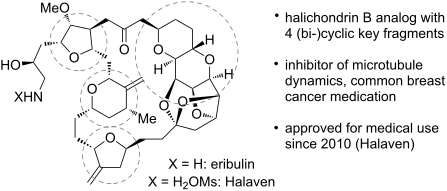
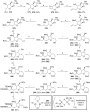
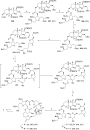
- cyclization proved to be suitable, but only moderately yielding, procedures. Further, this pathway, with the exception of the coupling reaction between 167 and 171, involves only simple and mild transformations using standard reagents. As mentioned above, 186 served as an intermediate for the total synthesis








Recent advances in the stereoselective synthesis of distal biaxially chiral molecules
Beilstein J. Org. Chem. 2026, 22, 461–479, doi:10.3762/bjoc.22.34
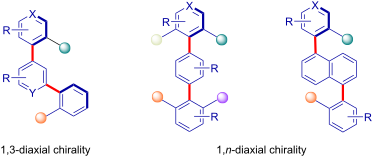
- , Hayashizaki, and Ito reported a highly stereoselective asymmetric cross-coupling reaction of 2-methylnaphthylmagnesium bromide with bromonaphthalene, catalyzed by a nickel complex with ferrocenylphosphine as the ligand, successfully synthesizing biaxially chiral molecules, namely 1,1':5',1"- and 1,1':4',1
- catalyst control, ultimately forming a helix and another stereogenic axis. In 2019, Shi and co-workers developed a Suzuki–Miyaura cross-coupling reaction catalyzed by a chiral NHC–Pd complex proceeding with high enantioselectivity (Scheme 16) [55]. This reaction can be used to synthesize different kinds of
- atropisomeric biaryls and heterobiaryls and is also applicable to the construction of tetra-ortho-substituted biaryls. This represents the first example of a C(sp2)–C(sp2) cross-coupling reaction catalyzed by a chiral NHC–metal complex. In 2020, Baudoin and co-workers reported an approach to synthesize


Synthesis of tricyclic fused pyrrolidine nitroxides from 2-alkynylpyrrolidine-1-oxyls
Beilstein J. Org. Chem. 2026, 22, 344–351, doi:10.3762/bjoc.22.22

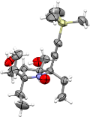
- propargylamines via A3-coupling reaction [21]. In analogy to a literature procedure [22], heating of radical 2a in a mixture of dimethylamine, formalin, and tetrahydrofuran in the presence of copper(II) acetate afforded the corresponding dimethylamino derivative 2f. To confirm the structure of the novel




Configuration–packing synergy enabling integrated crystalline-state RTP and amorphous-state TADF
Beilstein J. Org. Chem. 2026, 22, 224–236, doi:10.3762/bjoc.22.16
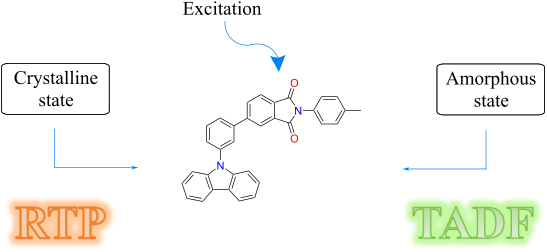
- no moisture or oxygen interfered with the reaction. Following this, 3-(9H-carbazol-9-yl)phenylboronic acid (5, 1.09 g, 3.80 mmol) was added to the flask. The mixture was stirred for 5 minutes to allow proper mixing. To facilitate the Suzuki coupling reaction, an aqueous solution of potassium
- carbonate (K2CO3) with a concentration of 1 g/mL (3 mL) was added. Subsequently, tetrakis(triphenylphosphine)palladium(0) (0.07 g, 0.06 mmol) was introduced to the reaction mixture to promote the coupling reaction. The mixture was then heated to reflux and maintained at this temperature for an overnight


Design and synthesis of an axially chiral platinum(II) complex and its CPL properties in PMMA matrix
Beilstein J. Org. Chem. 2026, 22, 143–150, doi:10.3762/bjoc.22.7
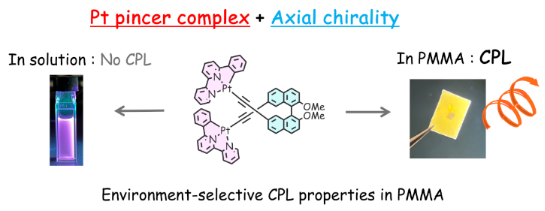
- environment. Results and Discussion Synthesis Each enantiomer of the target platinum(II) complex was synthesized separately. The synthesis of the chiral backbone S/R-3 was prepared in two steps starting from a chiral binaphthyl derivative [23]. Compound S/R-2 was obtained by using a Sonogashira coupling
- reaction of S/R-1 with trimethtylsilylacetylene in toluene (Scheme 1). Subsequent deprotection of the trimethylsilyl (TMS) groups with tetrabutylammonium fluoride (TBAF) afforded the desired ligand S/R-3. The preparation of the target platinum(II) complex was performed by using a similar procedure of other


Symmetrical D–π–A–π–D indanone dyes: a new design for nonlinear optics and cyanide detection
Beilstein J. Org. Chem. 2026, 22, 131–142, doi:10.3762/bjoc.22.6
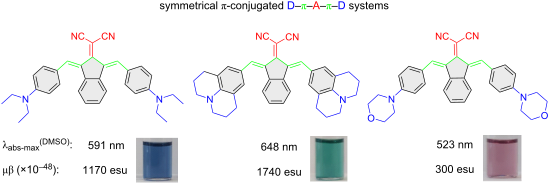
- /acetic acid buffers with a good yield (84%). Target compounds were synthesized by a coupling reaction between 2-(1,3-dihydro-2H-inden-2-ylidene)malononitrile (1) and appropriate alkylaminobenzaldehyde derivatives in acetic anhydride. Compounds were obtained with low to good yields (25–75%, conventional


Total synthesis of natural products based on hydrogenation of aromatic rings
Beilstein J. Org. Chem. 2026, 22, 88–122, doi:10.3762/bjoc.22.4
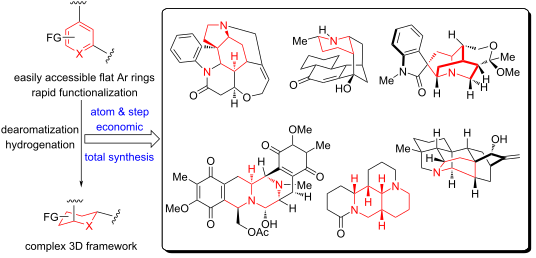
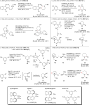
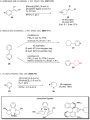
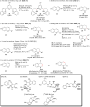
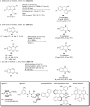
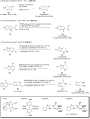
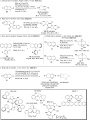
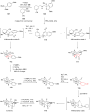
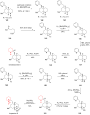
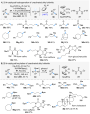
- ]. Starting from pyridine derivatives 129, they obtained the key intermediate 131 via a Simmon–Smith reaction and a bimetallic-mediated photocatalytic radical coupling reaction. Intermediate 132 was then constructed by Friedel–Crafts alkylation using diethylaluminum chloride as a Lewis acid. The pyridine ring








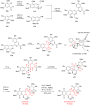


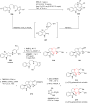

Advances in Zr-mediated radical transformations and applications to total synthesis
Beilstein J. Org. Chem. 2026, 22, 71–87, doi:10.3762/bjoc.22.3
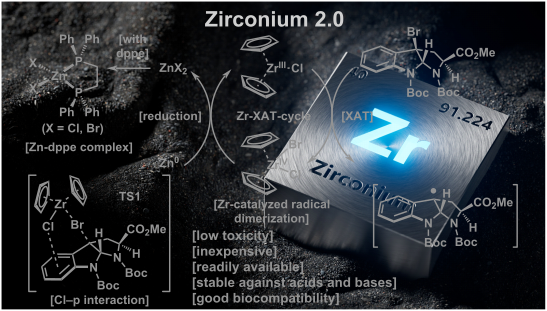
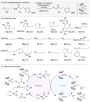
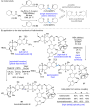
- suggested that the developed reaction would be applicable to halichondrin synthesis. The Zr/Ni-mediated ketone synthesis was then applied to the total synthesis of homohalichondrin B (58, Scheme 11B). Using a fragment corresponding to homohalichondrin B, the coupling reaction furnished ketone 57 in 82








Synthesis and applications of alkenyl chlorides (vinyl chlorides): a review
Beilstein J. Org. Chem. 2026, 22, 1–63, doi:10.3762/bjoc.22.1
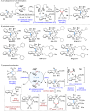
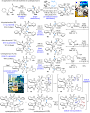
- construction of structurally complex motifs in a concise number of steps. A recent account by Frontier and Hernandez provides a comprehensive and mechanistically summary of halo-Nazarov electrocyclizations [173]. 1.7 Coupling reactions As already mentioned in the introduction, the coupling reaction of 1,1
- and Negishi demonstrated that the use of one equivalent of (E)-1-iodo-2-chloroethylene enables selective Sonogashira reactions, yielding alkenyl chlorides in high yields (not shown) [178][179][180]. Matsuda and co-workers reported a rhodium-catalyzed coupling reaction of 1,2-trans-dichloroethene with























Total synthesis of asperdinones B, C, D, E and terezine D
Beilstein J. Org. Chem. 2025, 21, 2730–2738, doi:10.3762/bjoc.21.210
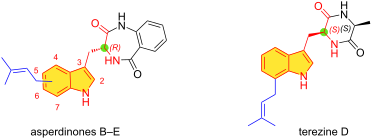
- transferase AnaPT. A second, less evident approach, starts with a prenylindole, followed by introducing an (R)- or (S)-2-aminopropionate (alanine) unit at C-3 by a Negishi cross-coupling reaction (Figure 2, approach B, D–F). Although each approach has precedents in different contexts, achieving regioselective
- prenylindoles (Figure 1, approach B) which would rely on a Negishi cross-coupling reaction [37][38] using Jackson’s iodozinc N-Boc-ʟ-serine methyl ester [39] and 3-iodoallyl- or 3-iodoprenylindoles (Figure 3). Related Negishi cross-coupling reactions have been reported for bromoindoles [40] and 3-iodo-N-Boc-7
- -methylindole [41] in excellent yields. The Negishi cross-coupling reaction with the organozinc reagent prepared from iodoalanine derivative (vide infra) has been used to prepare various aryl-substituted tryptophans in 76–96% yields [42]. In principle, this protocol should be applicable to all the C4–C7


Visible-light-driven NHC and organophotoredox dual catalysis for the synthesis of carbonyl compounds
Beilstein J. Org. Chem. 2025, 21, 2584–2603, doi:10.3762/bjoc.21.200
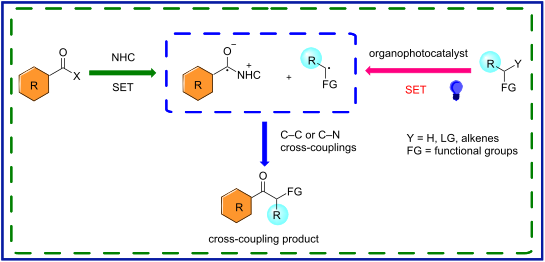
- existing metal-catalyzed C–H bond functionalization methods (Scheme 3) [53]. Recently, Scheidt et al. discovered an NHC/organic photoredox-catalyzed three-component coupling reaction for the efficient and novel preparation of γ-aryloxy ketone scaffolds 12. This transformation builds on the emerging field
- is the reduction of acylazolium C to generate a stable benzylic radical D is formed, and this extends the lifetime of the radical, allowing for radical–radical coupling reaction to afford the desired γ-aryloxy ketones 12 in good yields. The utility of this sustainable method was further demonstrated
- amide via dual catalysis. Visible-light promoted cooperative NHC/photoredox catalyzed ring-opening of aryl cyclopropanes. NHC-catalyzed benzylic C–H acylation by dual catalysis. NHC/photoredox-catalyzed three-component coupling reaction for the preparation of γ-aryloxy ketones. NHC-catalyzed silyl





Recent advances in total synthesis of illisimonin A
Beilstein J. Org. Chem. 2025, 21, 2571–2583, doi:10.3762/bjoc.21.199
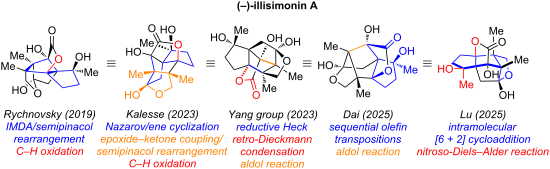
- substructure hidden inside the natural product’s cage-like ring system, Kalesse’s group chose to construct this architecture first using a tandem Nazarov/ene cyclization [36]. The cis-pentalene was subsequently assembled via a Ti(III)-mediated epoxide–ketone coupling reaction. Starting from the known
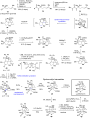
- triflate formation followed by a palladium-catalyzed coupling reaction with AlMe3. The carbonyl group at C8, required for the subsequent aldol reaction, was introduced by enolate oxidation followed by Jones oxidation. Hydrolysis of the ketal at C11 afforded ketoester 64. A TBD (1,5,7-triazabicyclo[4.4.0






Isoorotamide-based peptide nucleic acid nucleobases with extended linkers aimed at distal base recognition of adenosine in double helical RNA
Beilstein J. Org. Chem. 2025, 21, 2513–2523, doi:10.3762/bjoc.21.193
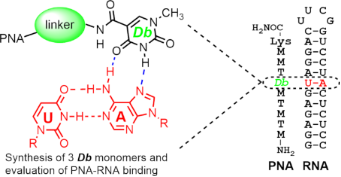
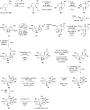
- incomplete conversion resulted in Boc protected beta-alanine that was challenging to separate from the desired product (3). Carboxylic acid 3 then underwent a peptide coupling reaction with allyl-protected PNA backbone 4 to afford nitrobenzene 5 in 69% yield. Nitrobenzene 5 was then reduced to the


Insoluble methylene-bridged glycoluril dimers as sequestrants for dyes
Beilstein J. Org. Chem. 2025, 21, 2302–2314, doi:10.3762/bjoc.21.176
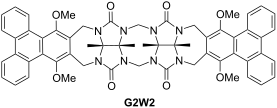
- ]. Next, we performed the oxidative coupling reaction of 1 and W4 in CH2Cl2 catalyzed by anhydrous FeCl3 to give W1 in 35% yield [45]. For the synthesis of W2, we first oxidized triphenylene with CrO3 and 18-crown-6 to give triphenylene-1,4-dione (2) according to Echavarren’s protocol [46]. Triphenylene



Enantioselective radical chemistry: a bright future ahead
Beilstein J. Org. Chem. 2025, 21, 2283–2296, doi:10.3762/bjoc.21.174
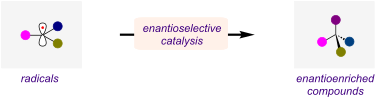
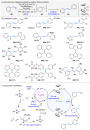
- and NiCl2·diglyme, was used as the catalyst to obtain the coupling products 20 in good yield and high enantioselectivity. The first nickel-catalyzed asymmetric reductive cross-coupling reaction between acid chlorides 21 and secondary benzylic chlorides 22 was reported by Reisman and co-workers (Scheme


Pd-catalyzed dehydrogenative arylation of arylhydrazines to access non-symmetric azobenzenes, including tetra-ortho derivatives
Beilstein J. Org. Chem. 2025, 21, 2234–2242, doi:10.3762/bjoc.21.170
- and co-workers developed a Chan–Evans–Lam-type oxidative cross-coupling reaction between N-arylphthalic hydrazides and arylboronic acids using copper catalysis [41]. Similarly, in 2003, Lee and co-workers introduced a desymmetrization approach employing simpler N=N precursors, specifically N-protected
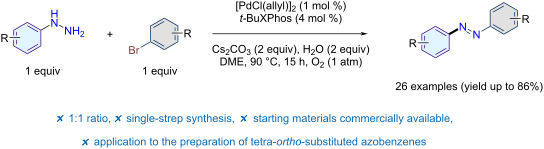
- proposed. In the first step a C–N-coupling reaction with phenylhydrazine occurs [57]. The catalytic cycle starts by the formation of Pd(0) in situ through reduction facilitated by phosphine and water [58]. This is followed by the oxidative addition of aryl bromides, leading to the formation of the Pd(II


A m-quaterphenyl probe for absolute configurational assignments of primary and secondary amines
Beilstein J. Org. Chem. 2025, 21, 2211–2219, doi:10.3762/bjoc.21.168
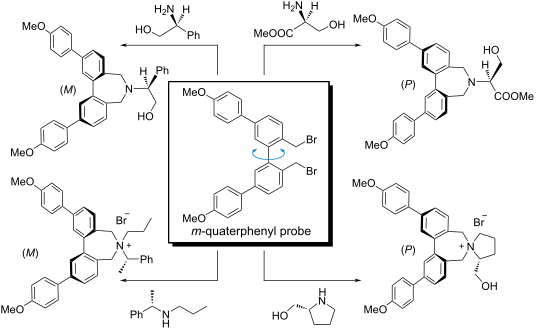
- clarity. The relationship between the ACD values and excess of P conformer. Excess of P conformer (%) = ([P] − [M])/([P] + [M]) × 100, where [P] and [M] are the amounts of P and M conformers calculated by B3LYP/6-31G*, respectively. Coupling reaction of 1 and chiral primary and secondary amines. The


C2 to C6 biobased carbonyl platforms for fine chemistry
Beilstein J. Org. Chem. 2025, 21, 2103–2172, doi:10.3762/bjoc.21.165
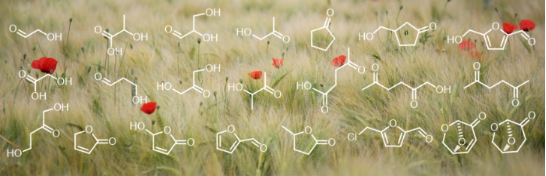
- production of jet fuel precursors through the electrocatalytic highly selective coupling reaction of furfural and levulinic acid. The Ni2+ species serves as the active site for the coupling process (Scheme 53) [181]. A similar strategy involving phenolic compounds and furfural allowed the production of


The application of desymmetric enantioselective reduction of cyclic 1,3-dicarbonyl compounds in the total synthesis of terpenoid and alkaloid natural products
Beilstein J. Org. Chem. 2025, 21, 2085–2102, doi:10.3762/bjoc.21.164
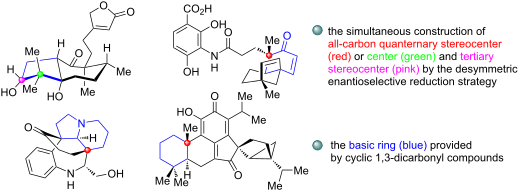
- and transformations of 43 produced hydroxyketone 44. Due to the steric hindrance of this substrate, the subsequent Suzuki cross coupling reaction with 3-boronophenol proceeded in low yield. To address this issue, Han′s group employed a novel palladacycle catalyst 45, previously developed by their
- -catalyzed Suzuki cross-coupling reaction of sterically hindered substrates developed by Han [35][36][37], the coupled product 57 was obtained in a satisfactory yield (72%) from 55 and pinacol boronate 56, along with trace amounts of the double bond migrated side product 58 (57:58 = ca. 15:1). Demethylation