
Search results
Search for "cis" in Full Text gives 745 result(s) in Beilstein Journal of Organic Chemistry. Showing first 200.
Synthesis and optical resolution of 4,5-diaminohomoadamantane: a promising scaffold for chiral ligands and bioactive compounds
Beilstein J. Org. Chem. 2026, 22, 1013–1022, doi:10.3762/bjoc.22.80
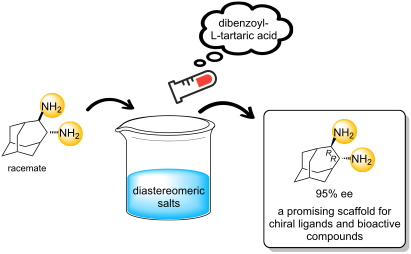
- may serve as a novel scaffold for bioactive compounds. Herein, we report a synthetic approach to this previously inaccessible chiral scaffold. 4,5-Diaminohomoadamantane was prepared as a mixture of cis- and trans-isomers by reduction of the corresponding vicinal azidoxime with LiAlH4. In contrast, the
- -diaminohomoadamantane was isolated as a mixture of trans- and cis-isomers 8a,b, we decided to synthesize trans-4,5-diaminohomoadamantane through ring opening of aziridine 9. This compound was obtained from homoadamantanone oxime by reduction with LiAlH4 [41]. Since the aziridine ring-opening reaction usually proceeds
- -substituted aziridines easily give the corresponding ring-opened products [77][88][89], however in our case only the starting compound 10 was isolated. In the reaction of tosylated compound 11 with sodium azide in the presence of ammonium chloride, trans- and cis-diastereomers of 13a,b were obtained (Scheme 4


Z-Selective semihydrogenation of alkynes via Ni/Lewis acid synergistic catalyzed system using DMF as hydrogen source and solvent
Beilstein J. Org. Chem. 2026, 22, 1004–1012, doi:10.3762/bjoc.22.79
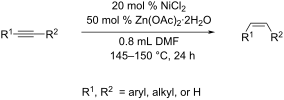
- application in reduction chemistry [45][46]. In this work, we describe a new synergistic catalytic system for the cis-selective semihydrogenation of alkynes, utilizing a Lewis acid together with a nickel catalyst and DMF as the hydrogen source. This method achieves excellent Z-selectivity (up to 98:2 Z/E
- evaluated the influence of the nickel precursor. As summarized in Table 1, the reaction of 1a was performed in DMF (0.8 mL) at 150 °C for 24 h, using various Ni sources (20 mol %) and Co(OAc)2·4H2O (50 mol %). When NiCl₂ was used, 2a (cis-stilbene) was obtained in 68% GC yield (Table 1, entry 1). In



Electrochemical reduction of unsaturated carbon–carbon bonds via 3d transition-metal catalysis
Beilstein J. Org. Chem. 2026, 22, 955–981, doi:10.3762/bjoc.22.75
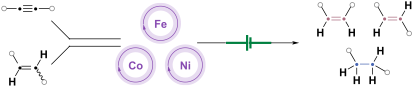
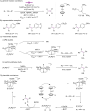
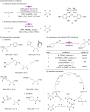
- group reported a voltage-controlled tandem electrocatalytic Z-selective semihydrogenation, in which cobaltocene operates as a cobalt redox mediator 3 in concert with a cobalt catalyst 9 (Scheme 4A) [97]. This strategy enables the selective hydrogenation of activated alkynes to cis-alkenes while








Recent advances in copper-catalyzed direct hydroamination of alkenes with (hetero)aromatic amines
Beilstein J. Org. Chem. 2026, 22, 925–947, doi:10.3762/bjoc.22.73
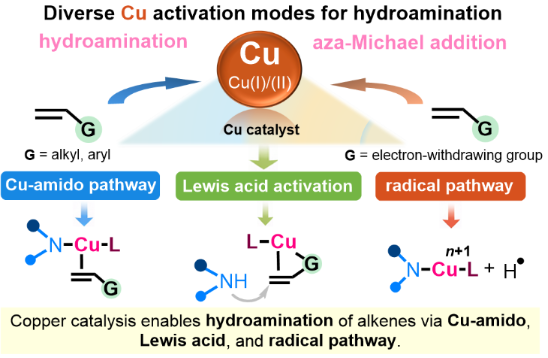
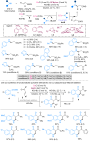
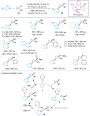
- that the reaction proceeded via a copper–pyrazolate (copper–amido) catalytic cycle [56]. The active copper–amido species I initially coordinated to the cyclopropene to form a π-complex II, followed by cis-aminocupration across the strained alkene, generating a cyclopropylcopper intermediate III
- hydroamination to furnish the enantioenriched indoline products 48 in moderate-to-good yields, with up to 89% ee. Mechanistic studies have suggested that the reaction proceeds via the cis-aminocupration pathway, in which a nitrogen nucleophile and copper(II) are added across the alkene to form the organocopper






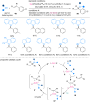

Cascade transformation of 2-(diazoacetyl)-2H-azirines to 2-aroyl-3-hydroxy-1H-pyrroles via condensation with aromatic aldehydes
Beilstein J. Org. Chem. 2026, 22, 897–904, doi:10.3762/bjoc.22.70
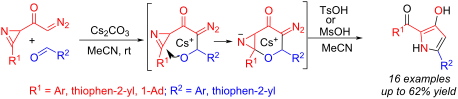
- , to our knowledge, no derivative of trans-2-oxa-7-azabicyclo[4.1.0]heptane has been prepared [25][26]. According to our DFT calculations, trans-2-oxa-7-azabicyclo[4.1.0]heptane has a 42.6 kcal/mol higher Gibbs energy than the cis isomer, and the introduction of two sp2-hybridized carbons, as in


The trans-influence in gold chemistry from a catalytic perspective
Beilstein J. Org. Chem. 2026, 22, 838–856, doi:10.3762/bjoc.22.66
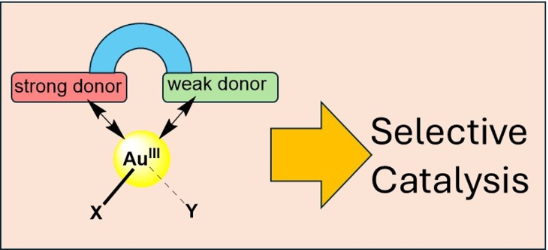
- -planar geometries there is always also the influence of two cis-ligands. Melpolder and Burmeister used solution infrared spectroscopy to determine the ratio of N-bonded and S-bonded thiocyanate ligands in LAuSCN/NCS as a function of L. As expected, ligands L with a strong trans-influence, such as
- σ-MOs is reduced by SO mixing with the Au(dπ)-based MOs. Further computational exploration of the trans-influence of various ligands L was conducted on three series of model complexes: trans-[HAu(C6H5)2L]q, cis-[HAu(C^C)L], and [HAu(C^N)L]q+1. Ligands L in trans position have by far the largest
- < C6F5− ≈ PH3 < C6H5− < CH3− < H− < SiH3−. Ligands in cis position exert a weaker influence, spanning about 6 ppm but with a trend in the opposite direction, with the weakest σ-donors, as well as the strongest π-acceptors, exhibiting the highest deshielding, resulting in the most positive 1H hydride


Total synthesis of the capsular polysaccharide repeating unit towards the development of a glycoconjugate vaccine against Klebsiella pneumoniae ST512
Beilstein J. Org. Chem. 2026, 22, 821–827, doi:10.3762/bjoc.22.64
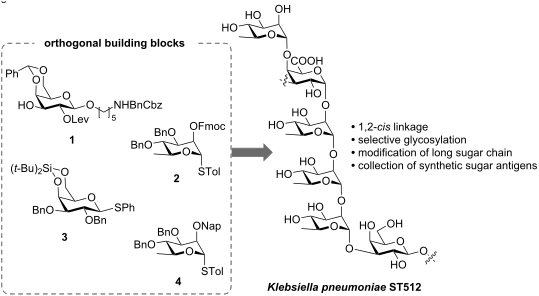
- . Key synthetic challenges including the stereoselective construction of the 1,2-cis glycosidic linkage on the galacturonic acid core and the inherently low reactivity of elongated oligosaccharide intermediates were addressed employing orthogonally protected building blocks. The resulting library of
- repeating unit {3)-[α-ʟ-Rhap-(1→4)]-α-ᴅ-GalpA-(1→2)-α-ʟ-Rhap-(1→2)-α-ʟ-Rhap-(1→2)-α-ʟ-Rhap-(1→3)-β-ᴅ-Galp-(1→}n (Figure 1) [13]. The chemical synthesis of this molecule is challenging due to the stereoselective formation of the 1,2-cis glycosidic linkage on the galacturonic acid core. In addition, the
- furnished tetrasaccharide 15. Subsequently, donor 3 was coupled with compound 15 under NIS/TfOH promotion to yield pentasaccharide 16 in 89% yield. The stereoselective construction of the 1,2-cis linkage was directed by the bulky 4,6-O-silylidene protecting group of 3. Treatment with HF·pyridine


Synthesis and biological evaluation of new brassinosteroid analogs with C-22 benzoate function
Beilstein J. Org. Chem. 2026, 22, 753–762, doi:10.3762/bjoc.22.57
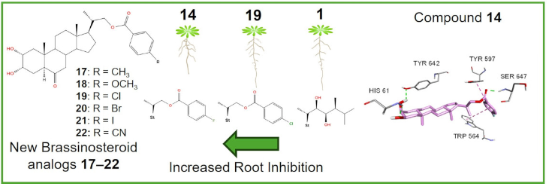
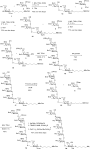
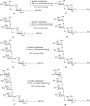
- HSQC NMR and 1H,13C HMBC NMR spectra data, respectively (Figures S35 and S36, Supporting Information File 1). Previous studies have shown that Sharpless dihydroxylation of 2,3-steroidal alkenes with OsO4/DHQD-CLB system, leads to formation of "cis" glycols with C-2(R) and C-3(S) stereochemistry in the


Rongalite addition to dienones: diastereoselectivity in cyclic sulfone synthesis; stereochemical rationalization and prospects as a general conjugate nucleophile
Beilstein J. Org. Chem. 2026, 22, 742–752, doi:10.3762/bjoc.22.56

- crude 1H NMR spectrum (Supporting Information File 1). We thus used computation to model the cyclization to give products trans-12a and cis-12b, as this substrate appeared to represent a limiting case for both reaction diastereoselectivity and steric tolerance. Given that the reaction takes place in a
- work, by which we were able to locate transition states for reactions to give trans-12a and the unobserved cis-12b (Figure 4). The activation energy difference to reach TS-12a, leading to 12a and TS-12b, leading to 12b was found to be a significant 4.7 kcal/mol in favor of TS-12a (see Supporting
- reaction of this type. What follows is an examination of the transition state structures leading to the trans and cis-isomers 12a and 12b; although the transition states leading to 1a and 1b may differ slightly in energy, they are very similar in appearance to those for 12a and 12b. Examination of the




Synthesis of heterocycles based on azomethine ylides from α-amino acids (or amines) and carbonyl compounds
Beilstein J. Org. Chem. 2026, 22, 705–741, doi:10.3762/bjoc.22.55
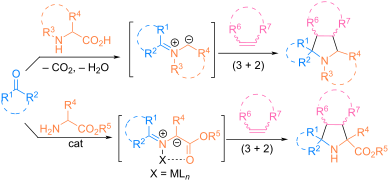
- activated alkenes was proposed. The authors demonstrated the potential for cycloaddition of silylimines containing a pyridine substituent with various dipolarophiles (Scheme 33). In all cases, the cycloaddition reactions proceeded with very high diastereoselectivity (trans/cis >95:<5), providing the trans


Synthesis of depressin, cryptomeridiol and 4-epi-cryptomeridiol enabled by a terpenoid chiral pool-producing platform
Beilstein J. Org. Chem. 2026, 22, 683–690, doi:10.3762/bjoc.22.53
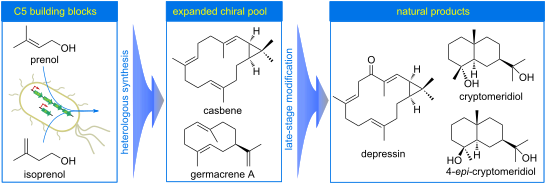
- ). Depressin (1) was isolated from the soft coral Simularia depressa collected from Hainan Province of China [13]. Its structure contains the typical bicyclo[12.1.0]pentadecane casbane diterpenoid skeleton with a cis-disubstituted cyclopropane unit, and a keto group at C5, which is the most frequently oxidized


Harnessing light energy with molecules
Beilstein J. Org. Chem. 2026, 22, 680–682, doi:10.3762/bjoc.22.52
- and can be potentially used at a later stage. A strong emphasis is on molecular photoswitches (photochromic molecules) that upon irradiation undergo cis/trans isomerization, intramolecular photocycloaddition, or an electrocyclic reaction. In addition, several articles describe absorption tuning by
- between trans and cis isomers, represent another class of photoswitches, which were reviewed as mostophores in a Perspective by Wang, Wu, and co-workers [8]. Besides MOST systems, molecular photoswitches are interesting for a variety of potential applications when incorporated as photoresponsive units in
Computational prediction of C–H hydricities and their use in predicting the regioselectivity of electron-rich C–H functionalisation reactions
Beilstein J. Org. Chem. 2026, 22, 603–610, doi:10.3762/bjoc.22.46
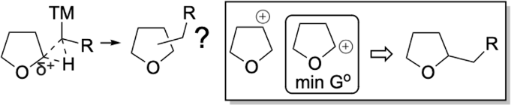
- -catalysed C–H carbamoylation of the cis-fused azabicyclo[4.3.0]nonane derivative 9, and Overman and Tomasi [46] reported the Cu(II) salt-catalysed addition of a N-tosyl group to the C–C double bond in compound 10 in conjunction with an H-abstraction, to form a new C–C double bond. In all three cases, the


![[Graphic 6]](/bjoc/content/inline/1860-5397-22-46-i8.svg?max-width=637&scale=1.18182)


Experimental and DFT studies on the regioselective methanolysis of 5-azido-9-oxabicyclo[6.1.0]nonan-4-yl 4-nitrobenzoate isomers
Beilstein J. Org. Chem. 2026, 22, 547–556, doi:10.3762/bjoc.22.40
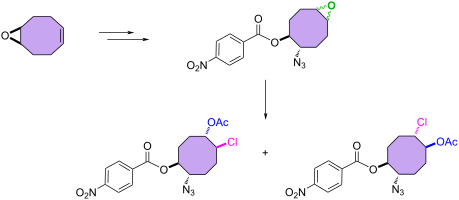
- -oxabicyclo[6.1.0]nonan-4-yl 4-nitrobenzoate isomers starting from cis,cis-1,5-cyclooctadiene. Results and Discussion For the synthesis of the hitherto unknown key compound 8-azidocyclooct-4-en-1-yl 4-nitrobenzoate (8), we commenced by obtaining the known 5,6-epoxycyclooctene (6), which was prepared by
- epoxidation of cis,cis-1,5-cyclooctadiene (5) with m-CPBA [21][22]. Subsequently, the 5,6-epoxycyclooctene (6) was reacted with NaN3 and NH4Cl in EtOH/H2O to give azidol 7 in 92% yield [23] (Scheme 1). Azidol 7 was then converted into the corresponding azido nitrobenzoate 8 with p-nitrobenzoyl chloride (p-NBC
- -ray analysis (Figure 2) [25]. X-ray analysis of azido compound 10 confirmed the trans configuration of the azide group with chloride and the cis configuration with the acetate. Our suggested mechanism for the ring-opening of the epoxides 9 with HCl(g) in MeOH proceeded as described in Scheme 3. As


Melifoliox B, a novel phloroglucin derivative isolated from Melicope barbigera (Rutaceae) and synthesis of new oxidation products from melifoliones A and B
Beilstein J. Org. Chem. 2026, 22, 535–546, doi:10.3762/bjoc.22.39
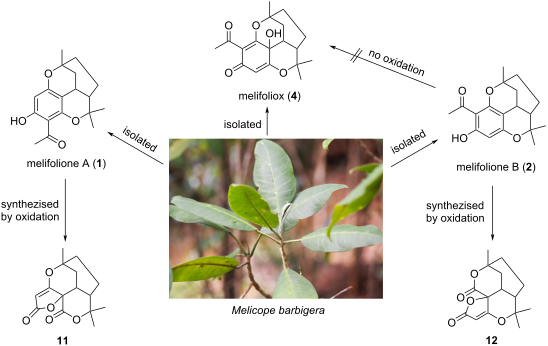
- hydrogenated pyran rings of 4 can only be linked cis, the two possible enantiomers of 4 have the following configuration: (6aR,9S,10aS,10bR) or (6aS,9R,10aR,10bS). Due to the finding, that the isolated compound showed no optical rotation, it exists as a racemate. A stereo model of 4 provided important



A facile and practical method for the synthesis of trans-(±)-taxifolin and its derivatives via Darzens reaction
Beilstein J. Org. Chem. 2026, 22, 443–450, doi:10.3762/bjoc.22.31
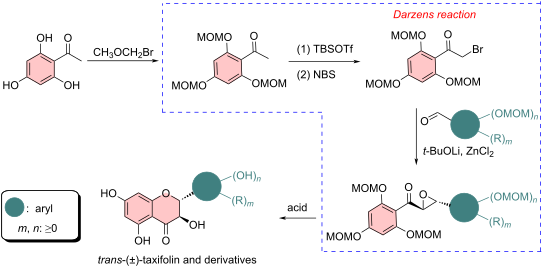
- transformation from dietary food to multifunctional medications in the near future. Taxifolin is a chiral compound with two stereocenters and exists as trans or cis isomers. It is commonly referred to as the trans dextral form (trans-(+)-taxifolin), which has higher bioactivity than its levorotatory enantiomer
- . The stereochemical outcome of the Darzens reaction may produce the α,β-epoxycarbonyl products with either the substituents on the same side or opposite side of the epoxy functionality, i.e., as cis/trans isomers. In this work, the α,β-epoxycarbonyl product contains bulky multiple-substituted benzene


Total synthesis of natural products based on hydrogenation of aromatic rings
Beilstein J. Org. Chem. 2026, 22, 88–122, doi:10.3762/bjoc.22.4
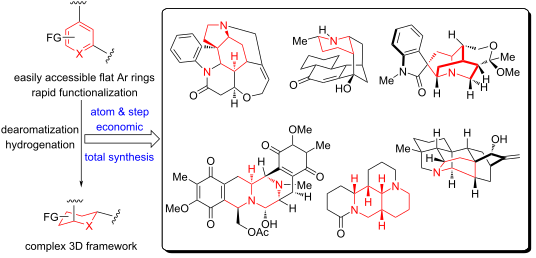
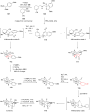
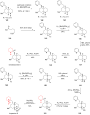
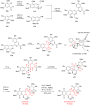
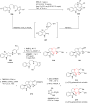
- diastereoselective hydrogenation of symmetrical 2,5-DKP (2,5-dipiperazinone) 67 using a rhodium complex (Scheme 8) [63]. The saturated pentacyclic compound 68 was obtained in high yield and excellent diastereoselectivity. The hydrogen atoms in the final product were all arranged in cis configuration. Key features of
- catalyst in the presence of perchloric acid to obtain (−)-decahydrotabersonine, a product with a completely reduced aromatic ring (Scheme 13) [79]. Through the structural characterization of the product, the authors found that the hydrogenation was highly stereoselective, yielding only cis-hydrogenated


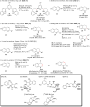
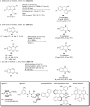
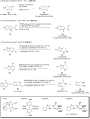
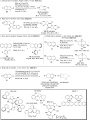









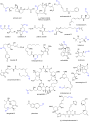
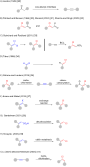
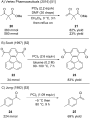
Synthesis and applications of alkenyl chlorides (vinyl chlorides): a review
Beilstein J. Org. Chem. 2026, 22, 1–63, doi:10.3762/bjoc.22.1
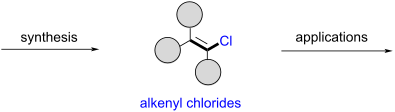
- reported the synthesis of conjugated alkenyl chloride 183 by chlorination of cis-diol 181 and subsequent elimination of product 182 with KOH (Scheme 31) [130]. Schlosser reported that treatment of 1,2-dichloroalkanes with sodium or potassium hydroxide in dimethoxyethane effected selective elimination
- phosphonium salt 342 is commercially available (CAS: 5293-84-5) and is frequently employed for the formation of alkenyl chlorides (e.g., Scheme 60C) [196]. It is noteworthy that a highly cis-selective variant, necessitating a sophisticated phosphonium salt, was reported by Schlosser in 1993 [197]. In 2006























Competitive cyclization of ethyl trifluoroacetoacetate and methyl ketones with 1,3-diamino-2-propanol into hydrogenated oxazolo- and pyrimido-condensed pyridones
Beilstein J. Org. Chem. 2025, 21, 2716–2729, doi:10.3762/bjoc.21.209
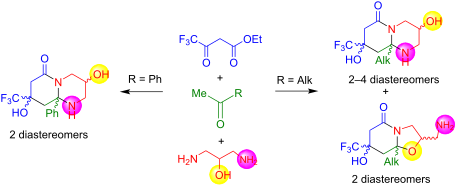
- composition of the products, increasing the content of the trans,cis-form 4atc to 20%. The use of 1,4-dioxane with acetic acid catalysis at different molar ratios (Table 1, entries 7, 8) led to the formation of a large fraction of unidentified by-products (42–61%), whereas the base catalysis with
- %) (Table 1, entry 10), with the formation of the cis,cis-bicycle 4acc as the predominant product (28%), while the proportion of hexahydrooxazolopyridones 5 was minimal (10%) compared to all other conditions. The highest content of hexahydrooxazolo[3,2-a]pyridin-5-one 5a was observed at room temperature in
- octahydrocyclopenta[b]oxazolo[3,2-a]pyridin-5-ones in the reactions of 3-oxo ester 1 and cycloketones with amino alcohols [26]. However, these attempts turned out to be unsuccessful because of the increased occurrence of side processes (56%); however, an increase in the proportion of the cis,trans


Recent advancements in the synthesis of Veratrum alkaloids
Beilstein J. Org. Chem. 2025, 21, 2657–2693, doi:10.3762/bjoc.21.206
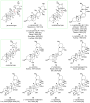
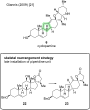
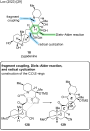
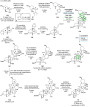
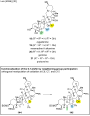
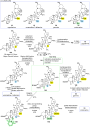
- cevanine-type alkaloids has been reported [13][38][39][40][41][42]. The common hexacyclic framework is often highly oxidized and the hydroxy groups are further functionalized as esters of various carboxylic acids. Apart from the hydroxylation pattern, structural diversity is also imparted through a cis- or
- in refluxing toluene, giving 99 in 88% yield as a single diastereomer. Due to steric hindrance, dienophile 98 would approach the more accessible face of diene 97, i.e., cis to C8–H. Furthermore, exclusive endo-addition was observed because exo-addition would lead to severe interference between the
- TBSO-substituent on the dienophile and the diene. As a result of such endo-addition, the benzyloxy group in the diene and the acylpyridine of the dienophile are oriented cis to each other in adduct 99. Next up was the formation of the C20–OH by addition of MeMgBr to the ketone 99, which initially gave



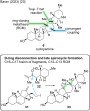

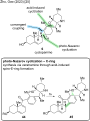
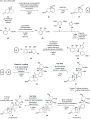
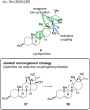

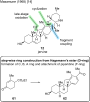


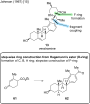

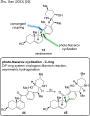

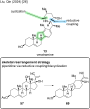

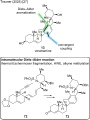

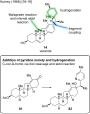


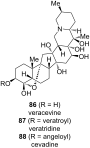


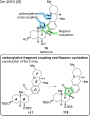

Chemoenzymatic synthesis of the cardenolide rhodexin A and its aglycone sarmentogenin
Beilstein J. Org. Chem. 2025, 21, 2637–2644, doi:10.3762/bjoc.21.204
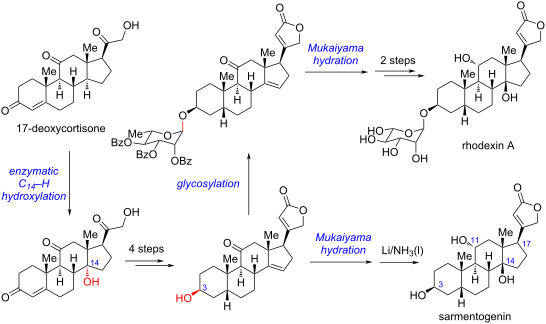
- – sarmentogenin and ʟ-rhamnose connected by the C3–O bond. In the steroidal skeleton, both the A/B and C/D rings are cis fused, which is different from common steroids. Besides, the steroidal skeleton is moderately oxidized at the C3, C11, and C14 positions. The introduction of the hydroxy groups and the
- C14 β-OH group. The revised synthetic route is described in Scheme 2. At first, 4 was subjected to a Pd/C-catalyzed hydrogenation to afford the desired A/B-cis fused intermediate 7 along with its C5 epimer as a 2:1 separable mixture in a quantitative yield. By treating 7 with the Bestmann ylide



Efficient solid-phase synthesis and structural characterization of segetalins A–H, J and K
Beilstein J. Org. Chem. 2025, 21, 2612–2617, doi:10.3762/bjoc.21.202
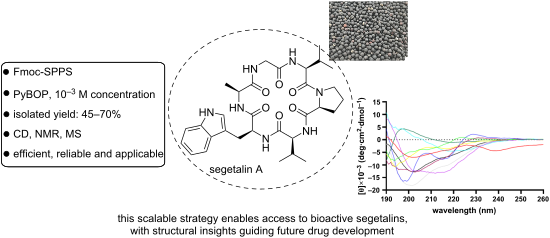
- ) and G (7) using a pseudoprolinic acid strategy to induce cis-amide bond formation, followed by desulfurization [19]. Despite achieving cyclization, this route involves intricate procedures, expensive starting materials, and has limited applicability to other segetalins. Given the limitations of


Recent advances in total synthesis of illisimonin A
Beilstein J. Org. Chem. 2025, 21, 2571–2583, doi:10.3762/bjoc.21.199
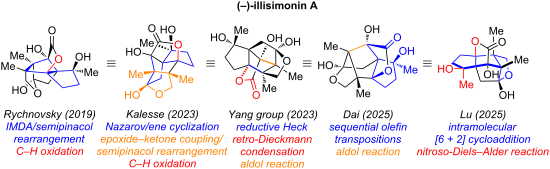
- directly, the team adopted a strategy involving rearrangement from the more accessible cis-pentalene isomer. They first assembled the cis-pentalene core through an elegant intramolecular Diels–Alder (IMDA) reaction. Subsequently, the conversion from cis to trans-pentalene was achieved via a semipinacol
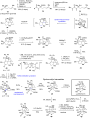
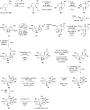
- , obtained as a 1.7:1 mixture of diastereomers after protection of one of the carbonyl groups in 19 as enol ether with BOMCl. A silyl-tethered intramolecular Diels–Alder reaction of the in situ generated 22 constructed the tricyclo[5.2.1.01,5]decane core bearing a cis-pentalene unit, yielding compound 23
- rearrangement of 28 enabled the rearrangement of cis-pentalene to trans-pentalene, delivering intermediate 29, which possesses the same carbon skeleton as the natural product. Further oxidation of the primary alcohol to a carboxylic acid, accompanied by TBS deprotection, afforded hemiketal 30. Finally, a White






Rapid access to the core of malayamycin A by intramolecular dipolar cycloaddition
Beilstein J. Org. Chem. 2025, 21, 2542–2547, doi:10.3762/bjoc.21.196
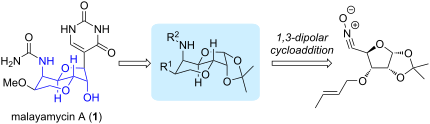
- three contiguous stereogenic centers (Scheme 1A). The pyran ring was constructed by a RCM reaction [16]. Subsequent functionalization of the alkene to install the 1,2-cis-hydroxy amine required 6 steps from the sterically more demanding side. In continuing our recent interest in accessing unusual
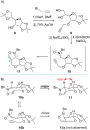
- intermediate 5 will be converted into the final target after installation of the urea and uracil motifs. Accordingly, a nitrone-based latent functionality approach [28] would be tunable from fully substituted tetrahydrofuran-derived nitrone 7. The cis-1,2-hydroxy amine could be derived from oxazoline 6 through
- malayamycin A and other related uracil nucleosides via a dipolar cycloaddition. The latent functionality strategy employing oxazoline to reveal the cis-1,2-hydroxyamine moiety proves to be feasible, circumventing the lengthy route for alkene functionalization required in previous syntheses. Although the




Synthesis of the tetracyclic skeleton of Aspidosperma alkaloids via PET-initiated cationic radical-derived interrupted [2 + 2]/retro-Mannich reaction
Beilstein J. Org. Chem. 2025, 21, 2470–2478, doi:10.3762/bjoc.21.189
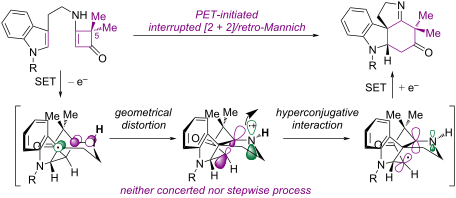
- construction of the tetracyclic core of Aspidosperma alkaloids. Our method involves an Ir-catalyzed PET reaction of K for the stereoselective formation of the cis-configured BC bicyclic core with an all-carbon quaternary center [25][26]. Computational studies suggest that the observed tandem PET reaction of K