

Search results
Search for "cation" in Full Text gives 768 result(s) in Beilstein Journal of Organic Chemistry. Showing first 200.
Controlled supramolecular assemblies of luminescent tridentate cyclometalated alkynylgold(III) amphiphiles in aqueous media
Beilstein J. Org. Chem. 2026, 22, 1097–1106, doi:10.3762/bjoc.22.88
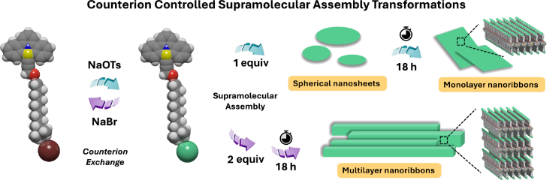
- stronger intermolecular interactions between the GA cation end group and the tosylate anion than with the bromide anion [51][63]. Increasing the concentration of sodium tosylate from 1.0 to 4.0 equiv progressively reduces the lag time and accelerates the assembly process (Figure 3b). Notably, the final


Novel macrocycles: from synthesis to supramolecular function
Beilstein J. Org. Chem. 2026, 22, 982–985, doi:10.3762/bjoc.22.76
- decreases overall water solubility, it significantly enhances binding toward quaternary ammonium guests relative to primary ammonium ions. Detailed calorimetric and crystallographic data confirm that modifying the outer ionic environment is an effective tool to balance cation–dipole interactions against
Cascade transformation of 2-(diazoacetyl)-2H-azirines to 2-aroyl-3-hydroxy-1H-pyrroles via condensation with aromatic aldehydes
Beilstein J. Org. Chem. 2026, 22, 897–904, doi:10.3762/bjoc.22.70
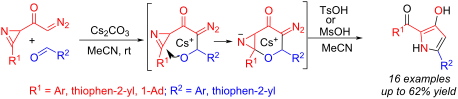
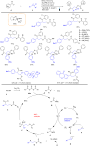
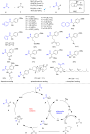
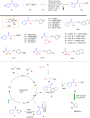
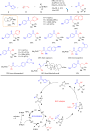
- , which was confirmed by DFT calculations at the B3LYP-D3/6-311+G(d,p) level of theory with a SMD solvent model for MeCN. According to the calculations, the aziridine ring of protonated intermediate D readily opens to form the more stable cation E. The intramolecular H-shift leading to the ammonium cation


Diastereodivergent electrophilic trapping of α-boryl lithium derivatives
Beilstein J. Org. Chem. 2026, 22, 882–887, doi:10.3762/bjoc.22.68
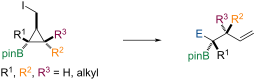
- revealed that the electrophile preferentially approaches from the face opposite the coordinating lithium cation, with the lowest-energy transition state stabilized by a lithium cation–vinyl interaction (see A in Scheme 1) [34]. Results and Discussion The intricate interplay of the coordination and steric


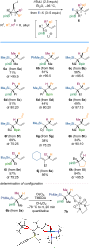


Site-specific labelling of native peptides and proteins: chemical and enzymatic strategies
Beilstein J. Org. Chem. 2026, 22, 857–881, doi:10.3762/bjoc.22.67
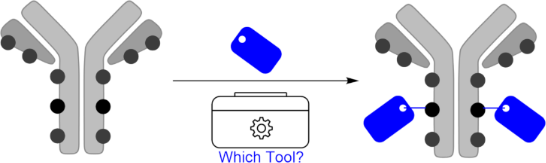
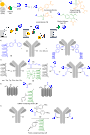
- complementary pairs, such as disulfide bonds (cystine), salt bridges, hydrogen bonds, and cation–π interactions. Among these, disulfide bonds between cysteine residues are the most widely used for native-sequence protein labelling, due to their unique nucleophilicity and low abundance. Therapeutically relevant
- 4-dimethylaminopyridine-containing binder 20, in which dimethylaminopyridine (DMAP) acts as nucleophilic base catalyst mediating acyl cation transfer, that was successfully applied to label lectins and cell-surface receptors (HER2 and EGFR; Scheme 7d) [62][63]. More recently, genetic code expansion
- has enabled pyridinium aldoxime 21 (PyOx) incorporation into protein scaffolds (Scheme 7e) [64]. Acting as a catalytic centre for acyl cation transfer, PyOx reacts with a selected N-acyl-N-alkyl sulfonamide 15’ to generate a reactive ester intermediate. This strategy has successfully modified lysine


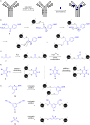
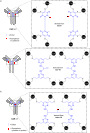






The trans-influence in gold chemistry from a catalytic perspective
Beilstein J. Org. Chem. 2026, 22, 838–856, doi:10.3762/bjoc.22.66
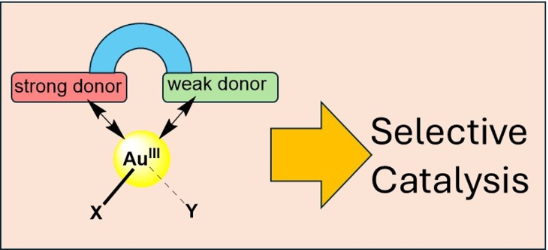
- ]. However, there is apparently yet more versatility in the mechanisms of alkyne hydroauration and may operate for the [(P^N^C)AuH]+ cation 11. Nevado et al. found recently that 11 inserts both DMAD as well as terminal alkynes, to give Au(III) Z-vinyl complexes. Control experiments ruled out the involvement
- alcohols as nucleophiles to give vinyl ethers [78]. Given that alkynes coordinated to cationic Au(III) centres display strong vinyl cation character [28], it is perhaps not unexpected that even weak donors like the triflate anion undergo nucleophilic attack, as recently demonstrated by Rocchigiani et al


Unsymmetrical sulfoxides with sterically hindered catechol fragment: synthesis, structure, electrochemical properties, and antiradical activity
Beilstein J. Org. Chem. 2026, 22, 828–837, doi:10.3762/bjoc.22.65
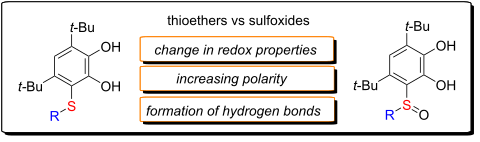
- the reaction with the 2,2′-diphenyl-1-picrylhydrazyl radical (DPPH) and the 2,2′-azinobis(3-ethylbenzothiazoline-6-sulfonic acid) radical cation (ABTS+•). In both assays, the lowest IC50 values among the studied catechol sulfoxides were found for compounds bearing isopropyl and tert-butyl substituents
- ), the second redox stage splits into two steps. The first yields a relatively stable cation radical (Ic/Ia = 0.45–0.50) (Scheme 2, path b), while the subsequent redox transition occurs at higher potentials (2.03–2.06 V) (Figure 3). In the case of catechols 7 and 7a, the second oxidation peak appears in
- sulfoxides 1a–7a were investigated in comparison with thioethers 1–7, 3,5-DTBC and standard antioxidant Trolox using the 2,2′-diphenyl-1-picrylhydrazyl (DPPH) radical and the ABTS·+ radical cation. The presence of a catechol fragment acting as a primary antioxidant and thioether or sulfoxide groups serving


Knoevenagel condensation of 4,5- and 1,8-diazafluorenes
Beilstein J. Org. Chem. 2026, 22, 803–812, doi:10.3762/bjoc.22.62
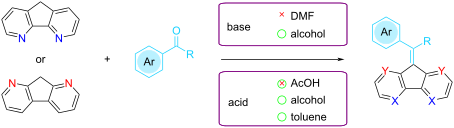
- iminium cation. Additionally, we performed the condensation of diazafluorenes with ketones yielding unique di(pyridin-2-yl)methylene)-9H-diazafluorenes. Results and Discussion Basic conditions Following the typical protocol of the Knoevenagel condensation, the reactions of 4,5- and 1,8-diazafluorenes with
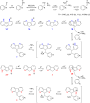
- react at all – only starting compounds were quantitatively evaluated from all reactions (Scheme 2, Table 1). To rationalize this observation, we hypothesized that the protonation of nitrogens leads to electrostatic repulsion between the protonated diazafluorene and the iminium cation (vide infra
- to the iminium cation occurs via the methylene carbon of the corresponding enamine tautomeric form 1B or 2B. Thus, this process is limited by the concentration of this form which is expected to be higher for 1,8-diazafluorene (2) due to the activation by the neighboring nitrogen atoms via the




Design, synthesis, and biological evaluation of FXR/ASK1 dual-target modulators
Beilstein J. Org. Chem. 2026, 22, 771–781, doi:10.3762/bjoc.22.59
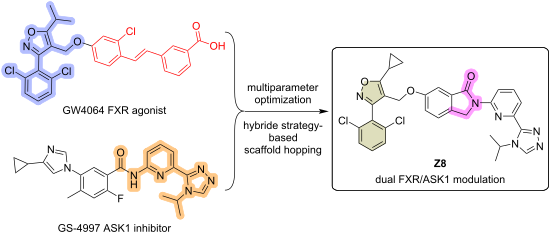
- -aliphatically substituted 4H-1,2,4-triazolopyridine biaryl scaffold of selonsertib [31][39][40], as key pharmacophores. In the co-crystal structure of hFXR-LBD with GW4064 [41], the isoxazole core coordinates the π-cation interaction between His 447 and Trp 469; the 5-isopropyl group is embedded into a


Synthesis of heterocycles based on azomethine ylides from α-amino acids (or amines) and carbonyl compounds
Beilstein J. Org. Chem. 2026, 22, 705–741, doi:10.3762/bjoc.22.55
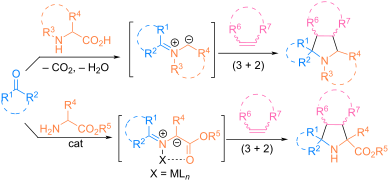
- shielding of the Si-side of the chiral iminium intermediate by bulky aryl groups leads to a stereoselective endo approach of the 1,3-dipole to the sterically less hindered Re-side of the intermediate iminium cation (Scheme 26). In this context, it is worth noting a work published in 2011, in which the
- -nitro-1,2-diphenylcyclopropene 127 in primary, secondary, and tertiary alcohols, as well as using certain thiols. The authors suggest that the reactions proceed via a stage of heterolytic cleavage of the C–N bond of the starting 3-nitro-1,2-diphenylcyclopropene to form a cyclopropenyl cation, which then
- 144 were obtained in high yields (up to 95%) and excellent stereoselectivity (up to 99% ee). The used catalyst L22 can effectively activate cyclohexenone through the formation of an iminium cation and promote the formation of hydrogen bonds between the catalyst and the dipole [96]. The Shi group has


Computational prediction of C–H hydricities and their use in predicting the regioselectivity of electron-rich C–H functionalisation reactions
Beilstein J. Org. Chem. 2026, 22, 603–610, doi:10.3762/bjoc.22.46
- primarily anthracene derivatives and benzyl C–H bonds, suggesting potential systematic errors in QM computations or experimental measurements. Radical and cation stabilities generally follow the trend: tertiary > secondary > primary methyl carbon stability. Our study also explores the correlation between


![[Graphic 6]](/bjoc/content/inline/1860-5397-22-46-i8.svg?max-width=637&scale=1.18182)


Molecular tweezer–peptide conjugates disrupt the protein–protein interaction between survivin and histone H3 essential in mitosis
Beilstein J. Org. Chem. 2026, 22, 557–567, doi:10.3762/bjoc.22.41
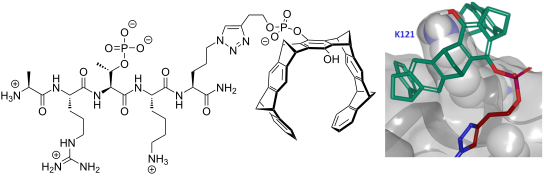
- Ca2+ cation from the crystallization buffer, is visible next to the cavity (Figure S12 in Supporting Information File 1). From recent complexation experiments with lipids, it is known that even uncharged alkyl groups may occupy the tweezer cavity and gain binding energy through dispersive interactions
- and the hydrophobic effect [16]. Ca2+ may also interact with the high π-electron density inside the cavity, although in direct titrations, only small affinities in the millimolar range have been determined for this cation [17]. This observation not only indicates a competition of the (putative
- conjugates for well-accessible lysines in the CPC. For efficient docking of a tweezer molecule onto a lysine residue on the protein surface, only one phosphate moiety is sufficient, which locks the included lysine cation into an ion pair [20]. In MD simulations between survivin and the truncated version of




Synthesis and uranyl(VI) extraction performance of a calix[4]pyrrole–tetrahydroxamic acid receptor
Beilstein J. Org. Chem. 2026, 22, 486–494, doi:10.3762/bjoc.22.36
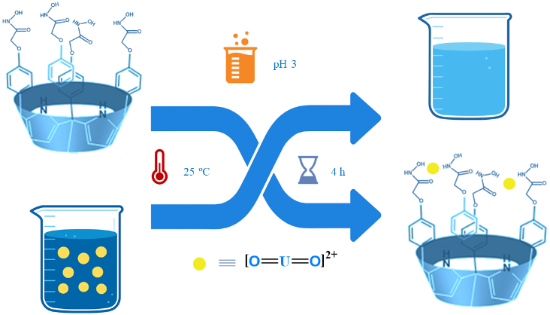
- receptors bearing both anion- and cation-binding sites, as well as systems capable of promoting ion-pair formation [23][24]. As effective chelating agents for a broad range of transition metals, hydroxamic acids constitute an important class of organic compounds that have attracted considerable attention
- deprotonation. The coordination of the hydroxamic acid groups to the uranyl cation stabilizes the deprotonated hydroxamate form, effectively lowering the apparent pKa and enabling strong binding even at low pH [33]. It is important to mention that the formation of the stable 5-membered chelate between the


Synthesis and anti-cancer activity of naphthalimide–organylselanyl conjugates
Beilstein J. Org. Chem. 2026, 22, 416–435, doi:10.3762/bjoc.22.29
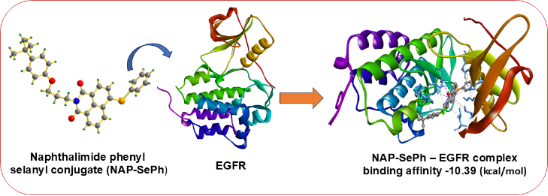
- . However, as shown in Supporting Information File 1, Figure S19, a representative fragment ion with a m/z value of 318.0028 could be matched with naphthalimide selenenium cation, having a calculated m/z value of 318.0028. Single-crystal X-ray diffraction analysis of compound 7 A single crystal of compound




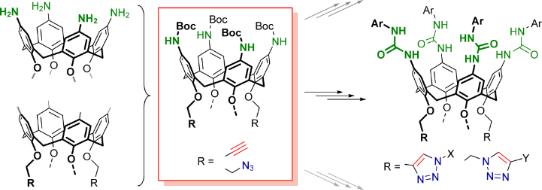
Cone p-aminocalix[4]arenes enriched with ‘clickable’ alkyne or azide functionalities
Beilstein J. Org. Chem. 2026, 22, 399–415, doi:10.3762/bjoc.22.28
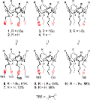
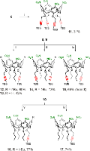
- or a trialkylammonium cation inside the joint cavity formed by two cone calix[4]arene macrocycles [46][47][48][49][50][51][52][53][54]. This phenomenon has been thoroughly investigated, including the effects from substituents in the urea groups and/or at the calixarene narrow rim upon the






Electrosynthetic access to unsymmetrical oxaza[8]helicenes with high chiral stability and strong circularly polarized luminescence (CPL)
Beilstein J. Org. Chem. 2026, 22, 372–382, doi:10.3762/bjoc.22.25
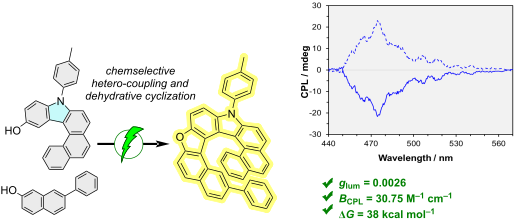
- products were detected under the optimized conditions (Scheme 2). Based on our previous reports [48][56], DFT calculations, and cyclic voltammetry (CV) analyses (Figure 1), anodic single-electron transfer (SET) is expected to occur first from 3, generating the electrophilic radical cation [3]·+ as 3 (Eox
- = 0.735 V vs Fc/Fc+ in CH2Cl2) is oxidized more readily than the 2-naphthol partners (Eox of 4a = 1.081 V and Eox of 4b = 1.286 V vs Fc/Fc+ in CH2Cl2). The radical cation [3]·+ then undergoes rapid deprotonation to form a neutral radical intermediate (Int-I) with high spin density at the reactive site
- the pKa of [3]·+ radical cation and spin density of neutral radical intermediate Int-I (optimized at the UB3LYP/6-31G+(d,p) level of theory with IEPCM model as solvation of DCM. Grimme’s dispersion with the original D3 damping function was applied as empirical dispersion correction to the optimized




Recent advances in the cleavage of non-activated amides
Beilstein J. Org. Chem. 2026, 22, 352–369, doi:10.3762/bjoc.22.23
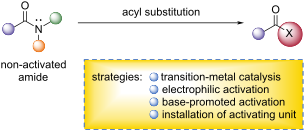
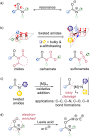
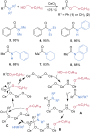
- catalysis, electrophilic activation, strong base-counter-cation systems, and N-based activating groups that enable chemoselective bond cleavage. Together, these developments provide powerful tools for amide functionalization and offer new opportunities for efficient, practical, and selective syntheses
- -promoted transformations enhanced by alkali-metal counter-cation effects, and (iii) installation of activating groups on the nitrogen to enable chemoselective cleavage under tailored conditions. These approaches collectively offer promising avenues for the efficient transformation of non-activated amides
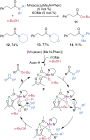
- electrophilic benzylating reagent (Scheme 7) [55]. DPT-BM functions as an O-benzylating reagent that generates benzyl cation equivalents upon dissolution in the solvent under non-acidic conditions. Thus, the reaction of an amide with DPT-BM is proposed to form a benzyl imidate salt J, which subsequently










Ring contraction and ring expansion reactions in terpenoid biosynthesis and their application to total synthesis
Beilstein J. Org. Chem. 2026, 22, 289–343, doi:10.3762/bjoc.22.21
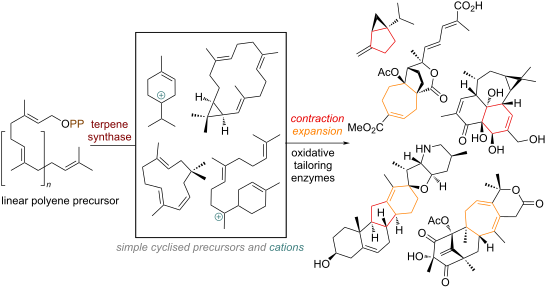
- synthesis, are gathered. Our definition includes both radical and polar ring-size altering reactions, transannular cyclisations of macrocycles and cation-mediated rearrangements where fitting. Goal of this review is to gather and compare mechanistic proposals for the biogenesis of ring-size-altered
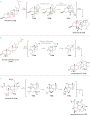
- of the bicyclo[3.1.0]hexane system present in thujane monoterpenes [56] (see Scheme 2A). Starting from geranyl pyrophosphate (6), monoterpene cyclases first build up a 6-membered ring with an exocyclic carbocation, commonly referred to as α-terpinyl cation 6a. From there, a 1,2-hydride shift gives
- rise to the isomeric terpin-4-yl cation 6b. By way of cyclopropane formation, a different, so called, thujyl cation 6c is conceivable. Elimination then furnishes the ring-contracted 5/3-ring systems from the original cyclohexyl intermediate to give sabinene (7) and α-thujene (8). Another example of a 6






Synthesis of diaryl phosphates using phytic acid as a phosphorus source
Beilstein J. Org. Chem. 2026, 22, 213–223, doi:10.3762/bjoc.22.15
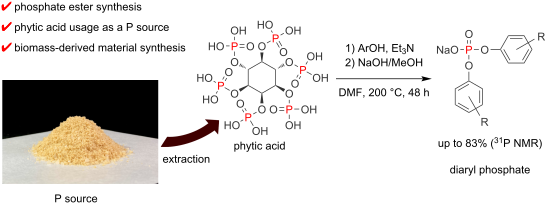
- recovery of 4.2% based on the total P analysis data. Considering the losses that occurred during the purification steps, these results were consistent with the fact that 100 g of rice bran contained approximately 6 g of phytic acid [1][2][3]. Subsequently, the isolated phytate was desalted using a cation
- -exchange resin to obtain phytic acid. Cation exchange was performed via a shaking method rather than a column method owing to the low solubility of phytate in water. The 31P NMR spectrum of the obtained phytic acid clearly shows four peaks corresponding to the non-equivalent phosphorus atoms in the phytic
- ). The residue was washed with methanol and dried under vacuum overnight. Finally, 2.52 g of the crude sodium phytate was obtained as a white solid. Purification of extracted phytic acid Well-conditioned DOWEX 50W × 2 100–200 mesh (H) cation exchange resin (Dow Chemical Co., Midland, MI, USA) (60 mL) was




Synthesis and applications of alkenyl chlorides (vinyl chlorides): a review
Beilstein J. Org. Chem. 2026, 22, 1–63, doi:10.3762/bjoc.22.1
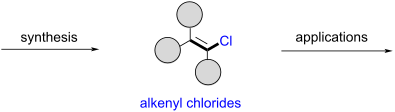
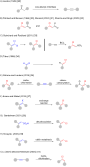
- , Scheme 24) towards further protonation – often proceeding via more stabilized tertiary carbocation intermediates (for example: 153 is more stable compared to initially formed alkenyl cation 152, Scheme 24) [91]. This protonation pathway commonly leads to the formation of gem-dichloride species 151, which
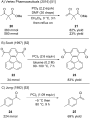
- ). Importantly, a lower alkyne-to-chloride ratio resulted in diminished yields of 155. The authors proposed that the key intermediate is a linear vinyl cation with a planar geometry (217, Scheme 40B), wherein the empty p-orbital lies in the molecular plane. As such, nucleophilic attack occurs within this plane
- acidity [145]. This transformation remained unexplored for nearly a decade until Kabalka demonstrated that the benzylic cation could be accessed directly from the corresponding alcohol via its conversion to the benzyloxyboron dichloride (Scheme 42) [146]. Subsequently, Kabalka reported an improved variant















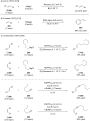


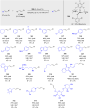
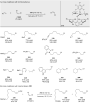
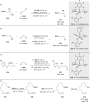






Visible-light-driven NHC and organophotoredox dual catalysis for the synthesis of carbonyl compounds
Beilstein J. Org. Chem. 2025, 21, 2584–2603, doi:10.3762/bjoc.21.200
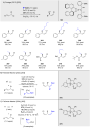
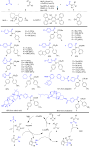
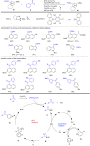
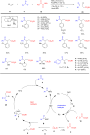
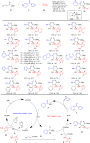
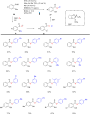
- -rich and electron-poor substituents. This reaction was carried out between arylcyclopropanes 5 and acyl fluoride 4 in the presence of NHC (10 mol %) and 4CzIPN (5 mol %). Mechanistic studies showed that the cascade proceeds via nucleophilic ring-opening of a cyclopropyl radical cation D with subsequent
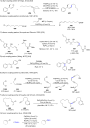
- substrate 7, generating the aryl radical cation C along with the formation of corresponding radical anion of the photocatalyst (PC•–). The reduction potentials are (E1/2(P/P•–) = –1.37V vs SCE for [Ir(dF(CF₃)ppy)₂(dtbbpy)]PF₆ and –1.21V vs SCE for 4CzIPN as an organophotocatalyst. This method permits the C
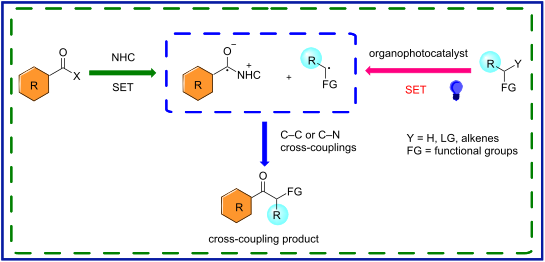
- was described. Aromatic C(sp2)–H bond acylation was achieved by dual catalysis through cooperative NHC and organophotoredox-catalyzed C–C cross-coupling of a benzo-fused aryl radical cation C with stable ketyl radical B as the key step. LED irradiation of photocatalyst leads to photoexcited PC*, which





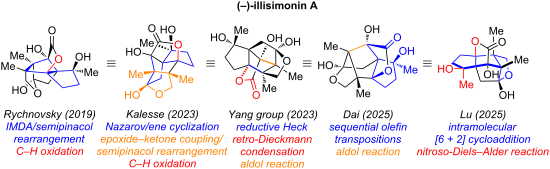
Recent advances in total synthesis of illisimonin A
Beilstein J. Org. Chem. 2025, 21, 2571–2583, doi:10.3762/bjoc.21.199
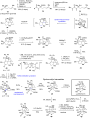
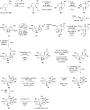
- cation were consistent with earlier reports [2][26], though the configurations of the intermediates were clearly delineated. The authors proposed that dicarbonyl compound 50 serves as the key intermediate diverging to all Illicium sesquiterpenes, with a retro-Dieckmann condensation and aldol reaction






Ni-promoted reductive cyclization cascade enables a total synthesis of (+)-aglacin B
Beilstein J. Org. Chem. 2025, 21, 2548–2552, doi:10.3762/bjoc.21.197
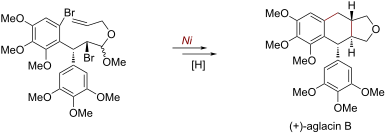
- (2) and C (3), featuring a visible light-catalyzed radical cation cascade for the formation of the C8–C8′ and C2–C7′ bonds [6]. Subsequently, they improved the reaction conditions to achieve the racemic synthesis of aglacins A (1) and E (4) as well [7]. In 2021, the Gao group described the total


Synthesis of the tetracyclic skeleton of Aspidosperma alkaloids via PET-initiated cationic radical-derived interrupted [2 + 2]/retro-Mannich reaction
Beilstein J. Org. Chem. 2025, 21, 2470–2478, doi:10.3762/bjoc.21.189
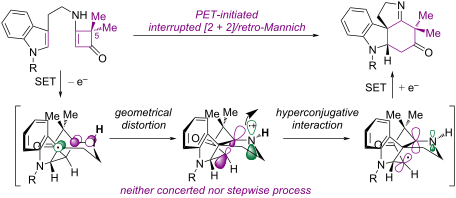
- current interest in the synthesis of complex natural products via photochemical reactions, we decided to achieve such an unusual bond cleavage (Figure 1a, path A) of cyclobutenone by generating a radical cation species via a PET reaction. The synthetic plan is shown in Figure 1c and includes a PET
- -initiated [2 + 2] cyclization of the tryptamine-substituted cyclobutenone K to form the radical cation L, which has a highly functionalized and rigid bicyclo[2.2.0]hexane core. Fragmentation of the C3–C19 bond would afford a redox-active intermediate which upon further reductive quenching would lead to the
- formation of IN1. The radical cation IN1 served as the reference point for DFT investigations. As illustrated in Figure 2a, facilitated by a favorable radical cation–π interaction [31], IN1 proceeds to the first radical addition transition state (TS1), with an energy barrier of 8.3 kcal/mol. This leads to


Pathway economy in cyclization of 1,n-enynes
Beilstein J. Org. Chem. 2025, 21, 2260–2282, doi:10.3762/bjoc.21.173
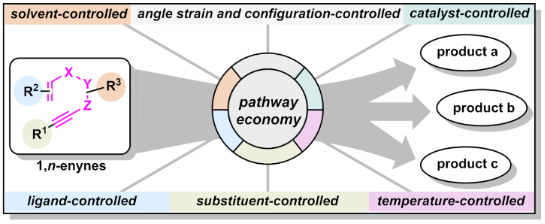
- acted as nucleophile, the stable imine–gold–aryl cation–π–π interaction precluded rearrangement and promoted the capture of imine to form spiro[indoline-3,3'-pyridine] derivatives 67. The Ph3PAuCl/AgNTf2-catalyzed cyclization of N-propargyl-tethered amide enynes efficiently afforded four distinct