
Search results
Search for "carbon" in Full Text gives 2161 result(s) in Beilstein Journal of Organic Chemistry. Showing first 200.
Rhodopyran, a carboxylated hexahydrocyclopenta[b]pyran from Rhodococcus
Beilstein J. Org. Chem. 2026, 22, 1107–1113, doi:10.3762/bjoc.22.89
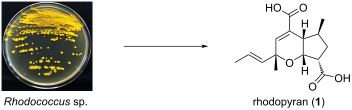
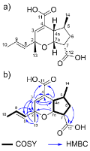
- . The 13C NMR spectrum exhibited 14 signals, including two carbonyl carbons (δC 176.1, 170.6), four olefinic carbons (δC 142.9, 135.5, 130.2, 125.0), an oxygenated quaternary carbon (δC 75.6), an oxygenated methine (δC 77.2), and three methyl carbons (δC 24.3, 21.1, 17.9) (Table 1). The remaining carbon
- carboxyl group at C-4 was assigned by correlations from H-3 and H-4a to the carbonyl carbon C-11, and by correlations from H-3 and H-4a to C-4. Likewise, correlations from H-6α/H-6β and H-7 to C-12 positioned another carboxyl group at C-7. The linkage from C-5 to C-6 and the placement of Me-14 at C-5 were
- -cyclopenta[b]pyran-6-one core bearing a hydroxy group and an allyl side chain [19]. In contrast, rhodopyran (1) is a carboxylated hexahydrocyclopenta[b]pyran bearing two carboxyl groups and a 1-propenyl substituent, and therefore differs markedly from the diospentenols in carbon number, oxidation state, and


Controlled supramolecular assemblies of luminescent tridentate cyclometalated alkynylgold(III) amphiphiles in aqueous media
Beilstein J. Org. Chem. 2026, 22, 1097–1106, doi:10.3762/bjoc.22.88
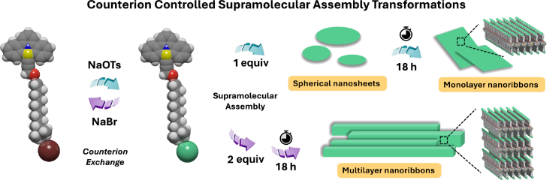
- 20.0 °C at a rate of 1.0 °C/min. Transmission electron microscopy (TEM): TEM samples were prepared by depositing sample solutions (0.2 wt %, 10.0 μL) onto a carbon grid (Micro to Nano, EMR Carbon support film on copper, 400 square mesh) for 30 s. The sample solution was removed by blotting and


One-pot four-component sequential synthesis of S-alkyl dithiocarbamates using lipase as a biocatalyst
Beilstein J. Org. Chem. 2026, 22, 1048–1056, doi:10.3762/bjoc.22.83
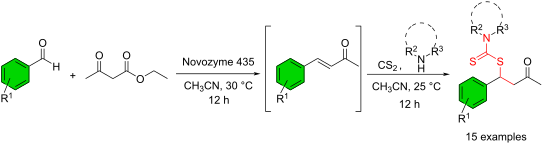
- , where they serve as antifungal and anticancer agents. As a result, their synthesis has garnered significant attention in recent years. In this study, we present an efficient one-pot four-component approach for the synthesis of these scaffolds, utilizing aldehydes, ethyl acetoacetate, carbon disulfide
- the development of efficient and diverse synthetic methodologies for S-alkyl dithiocarbamates remains crucial. The synthesis of S-alkyl dithiocarbamates is primarily achieved through multicomponent reactions [17][18] that involve primary or secondary amines, carbon disulfide (CS2), and electrophilic
- remains limited. Notable advances in this area include a 2020 study by Halimehjani et al. who employed a four-component strategy involving β-naphthol, formaldehyde, amines, and carbon disulfide in water as the solvent to synthesize these compounds (Scheme 1a) [25]. Also, in 2013, Azizi et al. demonstrated


Synthesis of novel 1,2,4-oxadiazole-isoxazoline hybrids and their in silico potential with adenosine receptors
Beilstein J. Org. Chem. 2026, 22, 1033–1047, doi:10.3762/bjoc.22.82
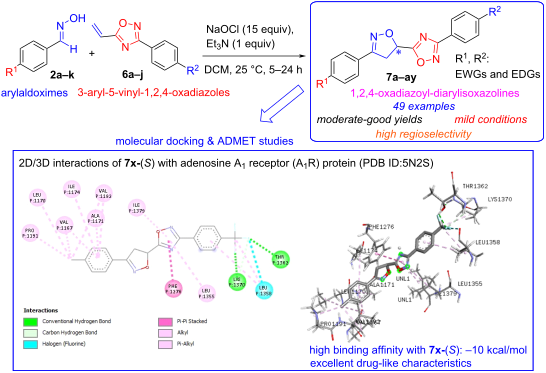
- vinylic proton signals at around 6.5, 5.9, and 6.7 ppm and aromatic proton resonances in the range of 7.0–8.5 ppm in the ¹H NMR spectra, as well as characteristic oxadiazole ring C=N carbon signals at approximately 168 and 175 ppm in the ¹³C NMR spectra. Furthermore, it was found that the obtained
- compounds (7x-(S), 7x-(R), 7j-(S), 7aw-(S), 7aw-(R), 7ah-(S)) and reference (co-crystallized) ligand with A1 adenosine receptor. Green arrows: conventional hydrogen bonds; pink region: alkyl connections; light pink region: pi-alkyl connections; blue region: halogen interactions; light green region: carbon


Semisynthesis, characterisation, and antibacterial evaluation of a novel lecanoric acid-derived amide library
Beilstein J. Org. Chem. 2026, 22, 1023–1032, doi:10.3762/bjoc.22.81
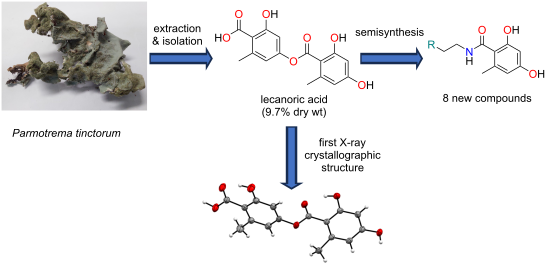
- methylene groups (δC 38.1, 37.1), one aliphatic methine carbon (δC 25.2), and one carbonyl carbon (δC 167.7). The presence of phenols in 6 was supported by a bathochromic shift of the UV spectrum upon addition of base (NaOH) [25][26]. One spin system was identified from the COSY spectrum, which was the
- diffractometer using Cu Kα radiation at 200.0(1) K using an Oxford Cryostream cooling device. The structures were solved by direct methods and difference Fourier synthesis [35]. Hydrogen atoms bound to the carbon atom were placed at their idealized positions and included in subsequent refinement cycles. The


Synthesis and optical resolution of 4,5-diaminohomoadamantane: a promising scaffold for chiral ligands and bioactive compounds
Beilstein J. Org. Chem. 2026, 22, 1013–1022, doi:10.3762/bjoc.22.80
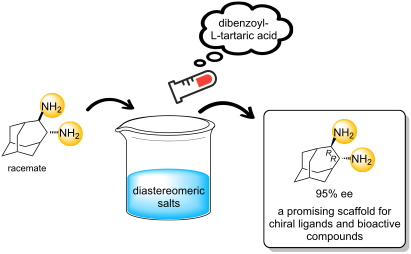
- analysis conditions could be identified. Therefore, a preliminary derivatization of diamine 8a′ was required, which was carried out by reactions with carbon disulfide [75] or benzil [77]. However, HPLC analysis was only successful for racemic 2,3-dihydropyrazine 17 (Scheme 6). For (4R,5R)-2,3


The role of spacer length and flexibility in peptide self-assembly
Beilstein J. Org. Chem. 2026, 22, 986–996, doi:10.3762/bjoc.22.77
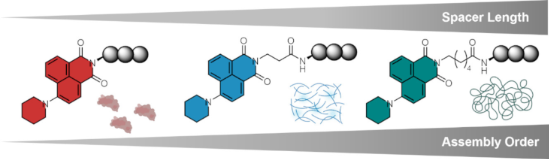
- -cysteine-alanine (ICA) tripeptides containing carbon spacers of 6, 3, or 0 methylene units linking the peptide backbone to a hydrophobic naphthalene (Nap) π-block. Using complementary spectroscopic and microscopic techniques, we show that spacer length controls the balance between conformational


Novel macrocycles: from synthesis to supramolecular function
Beilstein J. Org. Chem. 2026, 22, 982–985, doi:10.3762/bjoc.22.76
- desymmetrized building blocks avoid the dense packing commonly observed in rigid planar systems. As a proof of concept, these precursors were converted into methylene-alternating copolymers that exhibit high solubility and measurable carbon dioxide adsorption, highlighting their potential for the development of
- versatile tools for the selective modulation of biologically relevant protein–protein interactions. The contributions collected in this thematic issue highlight the breadth and continued evolution of contemporary macrocyclic chemistry. From new ultracycle receptors to functional materials for carbon dioxide
Electrochemical reduction of unsaturated carbon–carbon bonds via 3d transition-metal catalysis
Beilstein J. Org. Chem. 2026, 22, 955–981, doi:10.3762/bjoc.22.75
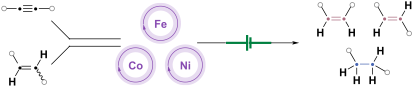
- metal–alkenyl intermediate. In some cases, this organometallic species can further undergo chain walking, where iterative β-hydride elimination and reinsertion enable migration of the metal center along the carbon skeleton before product release, thereby allowing remote hydrogenation or positional
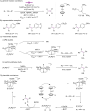
- through the combination of anodic iron salts and electrochemically generated silyl hydrides, actively participate in the reaction pathway (Scheme 2C) [91]. The authors proposed that the ring-opening product arises from β-carbon elimination of an intermediate generated via migratory insertion, followed by
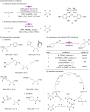
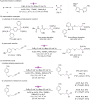
- chemoselectivity that are difficult to achieve under classical HAT conditions. Substrates featuring a quaternary carbon adjacent to the alkyne exhibited diminished E/Z selectivity, which was tentatively attributed to increased steric hindrance surrounding the putative cobalt–alkene intermediate. Interestingly








Synthesis of sterically shielded piperidine nitroxides via acid-catalyzed heterocyclization of β-aminoketone derivatives with ketones
Beilstein J. Org. Chem. 2026, 22, 948–954, doi:10.3762/bjoc.22.74
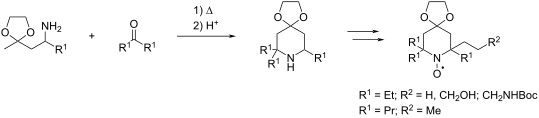
- subsequent reaction with moderately basic organometallic reagents, such as 2-alkynyl- and 2-allylmagnesium halides, enables the facile introduction of diverse substituents, including those with functional groups. If necessary, the multiple carbon–carbon bonds in the side chain can be subjected to
- alkynyl- or allylmagnesium halides gave 2-alkynyl or 2-allyl-substituted nitroxides. Finally, carbon–carbon multiple bonds were removed via Pd-catalyzed hydrogenation and the nitroxide group was recovered by mild oxidation. This approach was used to prepare both symmetric 2,2,6,6-tetraethyl- and 2,2,6,6
- allyl derivative 7d, extensive signal overlap prevented rigorous simulation, but characteristic terminal vinyl protons at 5.83, 5.28, 5.27 ppm were clearly observed. Elemental analysis and HRMS data were in agreement with the proposed structures. Subsequent hydrogenation of the unsaturated carbon–carbon


Recent advances in copper-catalyzed direct hydroamination of alkenes with (hetero)aromatic amines
Beilstein J. Org. Chem. 2026, 22, 925–947, doi:10.3762/bjoc.22.73
- , tunable basicity, and directional hydrogen-bonding capabilities enable precise modulation of molecular recognition, biological activity, and physicochemical properties. Consequently, the efficient and selective construction of carbon–nitrogen (C–N) bonds embedded within aromatic nitrogen frameworks
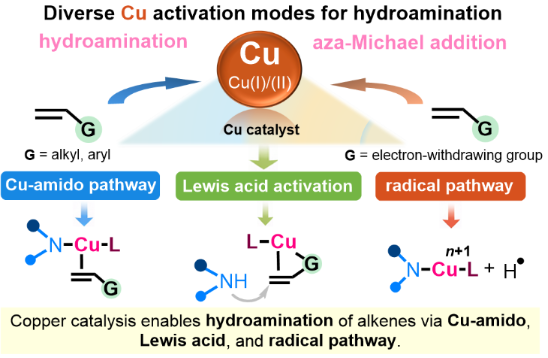
- the direct hydroamination of alkenes using aromatic amines and aza-heterocyclic N–H nucleophiles under copper catalysis. The primary focus is on the mechanistic paradigms, Cu–amido pathways, Lewis acid activation, and carbon-radical manifolds, and on how these distinct activation modes translate into
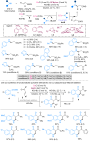
- Michael acceptor. This coordination increased the electrophilicity of the β-carbon, facilitating nucleophilic attack. The reaction proceeded efficiently with various activated olefins 14, affording N-substituted products 15 in high yields with good regioselectivities. Notably, the catalytic role of copper






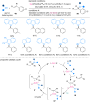

Palladium-catalyzed benzocyclization reactions of quinoline-2-carboxamides via sequential C–H/N–H functionalization
Beilstein J. Org. Chem. 2026, 22, 905–914, doi:10.3762/bjoc.22.71
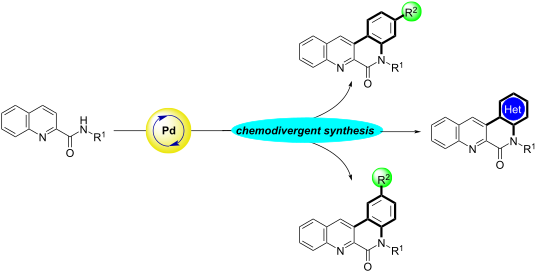
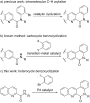
- metal affinity [9][10]. It is therefore expected that annulation of the amide moiety in quinoline-2-carboxamides would extend their functionality as biologically active structures, ligands, and extractants. Transition-metal-catalyzed coupling reactions are crucial for constructing carbon–carbon and
- carbon–heteroatom bonds. The classical coupling reactions, such as Kumada–Tamao–Corriu coupling [11][12][13], Sonogashira coupling [14][15], Negishi coupling [16][17], Migita–Kosugi–Stille coupling [18][19][20], Suzuki–Miyaura coupling [21][22], and Hiyama coupling [23][24] involve carbon–halogen and
- carbon–metal species (Scheme 1a). Fagnou and co-workers reported direct arylation reactions with palladium(II) acetate to synthesize biaryl compounds via concerted metalation–deprotonation (CMD; Scheme 1b) [25][26][27]. Buchwald, Hartwig, and co-workers explored carbon–nitrogen coupling reactions that




Chiral cyclopropenimine-catalyzed enantioselective Michael reactions of phenol and benzofuran-derived α,β-unsaturated pyrazolamides with benzophenone-imine of glycine esters
Beilstein J. Org. Chem. 2026, 22, 888–896, doi:10.3762/bjoc.22.69
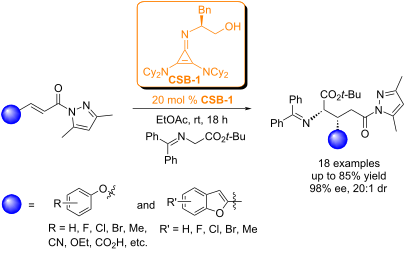
- -conformation and the absolute configurations of 7d’ was unambiguously assigned as 2S and 3S, this means that the benzophenone-imine group and bromophenoxymethyl group should be arranged on the same side of the longest carbon chain to be syn before lactamization, therefore, the absolute configuration of 6d’ was






Diastereodivergent electrophilic trapping of α-boryl lithium derivatives
Beilstein J. Org. Chem. 2026, 22, 882–887, doi:10.3762/bjoc.22.68
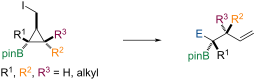
- ; Introduction α-Boryl carbanions 1 (Scheme 1), also referred to as boron alkylidenes or borata alkenes, represent a fascinating class of organoboron intermediates characterized by the delocalization of electron density from the negatively charged carbon center toward the electron-deficient boron atom. This




The trans-influence in gold chemistry from a catalytic perspective
Beilstein J. Org. Chem. 2026, 22, 838–856, doi:10.3762/bjoc.22.66
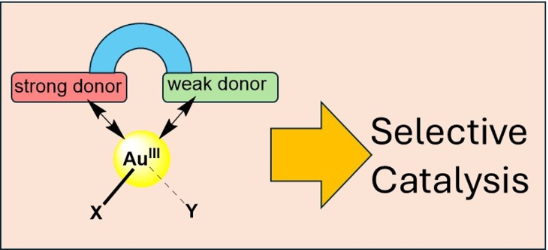
- trialkylphosphines, anionic carbon and hydride ligands. N- and O-lone pair donors (pyridine, water) are weak ligands. The following indicative series is typical for Pt(II), although there may be slight variations in the specific ordering depending on the complex type under investigation: CO, CN−, C2H4 > P(alkyl)3
- , while C^N^C and C^C^N ligand frameworks look like simple structural isomers, their reactivity and analysis of their bonding has shown that replacing the weak N(pyridine) donor by strongly donating anionic carbon leads to profound changes in gold orbital ordering, often with drastic consequences for
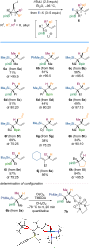
- chemical shifts [32][49][50][51][52]. Both neutral and cationic gold(III) hydride pincer complexes could be prepared. They fall into two categories: those of types 8–11 where the hydride ligand is trans to an N donor (shielding, negative δ shifts), and those where the hydride is trans to an anionic carbon


Unsymmetrical sulfoxides with sterically hindered catechol fragment: synthesis, structure, electrochemical properties, and antiradical activity
Beilstein J. Org. Chem. 2026, 22, 828–837, doi:10.3762/bjoc.22.65
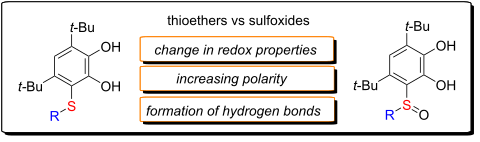
- the sulfoxides, the signals of the carbon atoms bearing the OH groups are shifted downfield and appear at δ 148.4–150.0 ppm. The sulfinyl group also influences the signals of aliphatic carbon atoms. For example, in sulfoxide 1a, the signal of the secondary carbon in the isopropyl substituent is
- shifted downfield (δ 54.4 ppm) compared to the analogous carbon atom in thioether 1 (δ 41.9 ppm). These results indicate a pronounced electron-withdrawing effect of the sulfinyl group, as well as the presence of strong intra- and intermolecular O–H···O=S bonds, which is consistent with the IR
- supported by the oxidation potential data. As the number of carbon atoms in the aliphatic hydrocarbon substituents of sulfoxides increases, their activity in the DPPH test diminishes. Compounds 7 and 7a, which contain a naphthyl substituent, exhibit the highest IC50 values among the studied catechols


Total synthesis of the capsular polysaccharide repeating unit towards the development of a glycoconjugate vaccine against Klebsiella pneumoniae ST512
Beilstein J. Org. Chem. 2026, 22, 821–827, doi:10.3762/bjoc.22.64
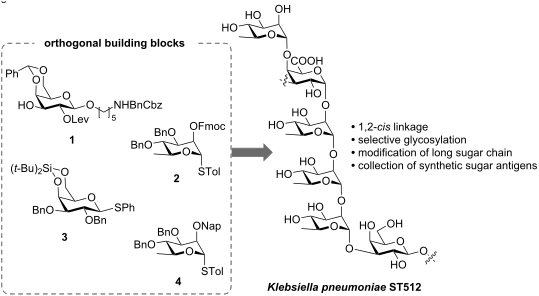
- followed by catalytic hydrogenation over palladium on carbon, affording disaccharide 21 in 47% yield over two steps. Similarly, trisaccharide 22, tetrasaccharide 23, and pentasaccharide 24 were prepared from intermediates 14, 15, and 17, respectively. The analogues 21–24, together with the repeating unit


Synthesis and structural elucidation of a novel bis-spirooxindole from isatin and ethylenediamine
Beilstein J. Org. Chem. 2026, 22, 813–820, doi:10.3762/bjoc.22.63
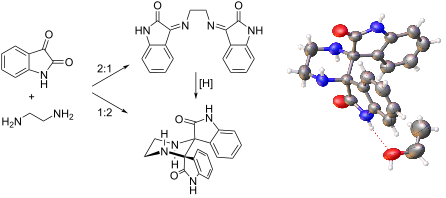
- retained the four-signal pattern of isatin (H4', H5', H6', H7'), slightly shifted by the new structural environment. In the 13C NMR spectrum, the amide carbonyl appeared at δ 176.5 ppm, while a key quaternary carbon at δ 61.0 ppm (C3‘) – formerly the C-3 isatin carbonyl carbon – confirmed the formation of


Knoevenagel condensation of 4,5- and 1,8-diazafluorenes
Beilstein J. Org. Chem. 2026, 22, 803–812, doi:10.3762/bjoc.22.62
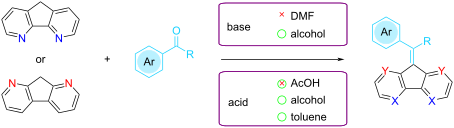
- to the iminium cation occurs via the methylene carbon of the corresponding enamine tautomeric form 1B or 2B. Thus, this process is limited by the concentration of this form which is expected to be higher for 1,8-diazafluorene (2) due to the activation by the neighboring nitrogen atoms via the




Preparation of 3-(alkylamino)imidazo[1,2-a]pyridine-2-carbaldehydes via Kornblum oxidation and unexpected ring-opening reactions of the corresponding alcohols under oxidative conditions
Beilstein J. Org. Chem. 2026, 22, 763–770, doi:10.3762/bjoc.22.58
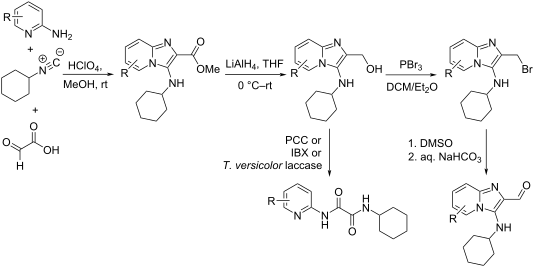
- similar reactions on alcohols 17b–d led to the corresponding ring-opened products 18b–d (Scheme 4). The ring-opened products were isolated in yields of 26–36%, with loss of one carbon atom occurring (-CH2OH). To test whether C-2 decarboxylation could have immediately preceded ring-opening, decarboxylated
- mechanism. Oxidative ring-opening of imidazo[1,2-a]pyridines has been reported previously, but in these cases different ring-opened products were identified. These previous results are compared to our present report in Figure 5. Wang and co-workers [30] reported ring-opening accompanied by loss of a carbon
- , rt, 20–24 h. Ester hydrolysis and in situ decarboxylation. Ester reduction to the corresponding alcohols. Reaction yields are provided in parentheses. Oxidative ring-opening with loss of one carbon atom. Yields are provided in parentheses. Oxidative conditions applied to decarboxylated compound 12b


Synthesis and biological evaluation of new brassinosteroid analogs with C-22 benzoate function
Beilstein J. Org. Chem. 2026, 22, 753–762, doi:10.3762/bjoc.22.57
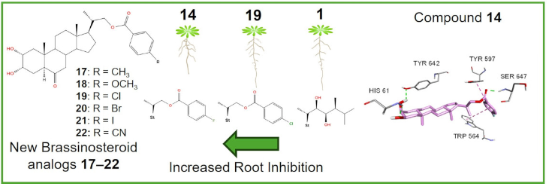
- 7.2 Hz, H-22b), are assigned to carbinolic hydrogens H-22a and H-22b, respectively. In the 13C NMR spectrum, the signals observed at δ = 166.57, 143.31, 129.40, 128.93, 127.65, and 21.52 ppm, are assigned to carbon ArCOO, C-4’, C-2’, C-3’, C-1’, and CH3-Ar of the benzoate group, respectively. All


Synthesis of heterocycles based on azomethine ylides from α-amino acids (or amines) and carbonyl compounds
Beilstein J. Org. Chem. 2026, 22, 705–741, doi:10.3762/bjoc.22.55
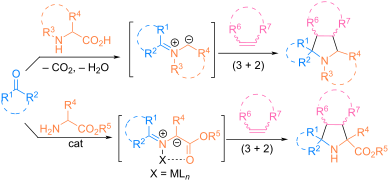
- dipolarophile can lead to a change in the mechanism and to an effective electrophilicity polarization toward the terminal carbon atom. This finding strongly supports the suitability of moderately activated olefins as dipolarophiles for the catalyzed asymmetric cycloaddition reactions involving azomethine ylides
- reactions proceed with high stereoselectivity, providing products with eleven chiral carbon atoms in three steps. In 2018, Zhang and co-workers presented a sequential process based on a combination of inter- and intramolecular (3 + 2) cycloaddition reactions to prepare highly fused heterocyclic systems
- due to the possibility of cycloaddition at the carbon–oxygen double bond (C=O) of the aldehyde, which acts as an alternative to the carbon–carbon double bond (C=C) [83]. In 2016, Sridharan reported a one-pot iridium-catalyzed three-component dehydrogenation/1,3-dipolar cycloaddition cascade reaction


Anti-invasive and cytotoxic evaluation of a (+)-pinoresinol-based semisynthetic library against glioblastoma
Beilstein J. Org. Chem. 2026, 22, 691–704, doi:10.3762/bjoc.22.54
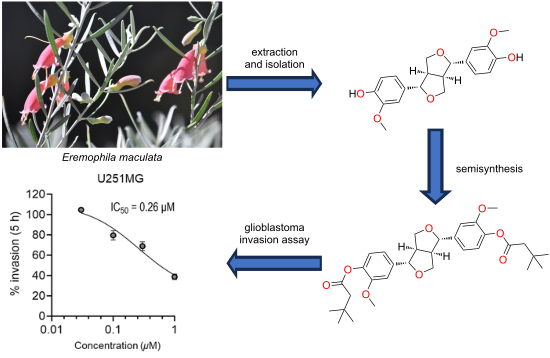
- 7.06 (2H), 6.83 (2H)), as well as two methine (δH 4.75 (2H), 3.11 (2H)), one methylene (δH 4.27/3.90, 4H), and one methoxy signal (δH 3.92, 6H)). The 13C NMR and HSQC spectra of 5 indicated a total of 10 unique carbon signals, including one methoxy (δC 56.6, 2C), two methine (δC 85.4, 53.9, 4C), one
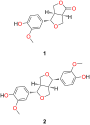
- methylene (δC 71.8, 2C), and six aromatic carbon signals (δC 147.6, 142.9, 133.3, 122.3, 108.4, 108.0, 12C). Comparison of the 1H and 13C NMR data of 5 and (+)-pinoresinol (2) showed a high degree of homology, with the major differences in NMR data associated with a chemical shift of the aryl resonances
- collected on a Rigaku XtaLAB synergy diffractometer using Cu Kα radiation at 100.0(1) K using an Oxford Cryostream cooling device. The structure was solved by direct methods and difference Fourier synthesis [36]. Hydrogen atoms bound to the carbon atom were placed at their idealized positions and included



Synthesis of depressin, cryptomeridiol and 4-epi-cryptomeridiol enabled by a terpenoid chiral pool-producing platform
Beilstein J. Org. Chem. 2026, 22, 683–690, doi:10.3762/bjoc.22.53
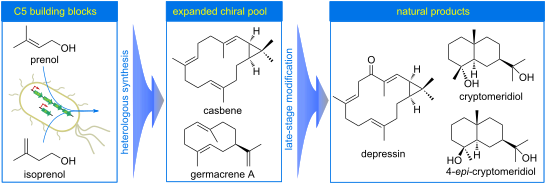
- cyclases; Introduction Terpenoids are one of the most important family of natural products that have been found to be produced in all domains of life. Although containing only carbon, hydrogen and oxygen atoms in most cases, over 100,000 terpenoid structures containing diverse skeletons and rich oxidative
- pathway, have been adopted to provide the two key five-carbon building blocks DMAPP and IPP. With the recent advancement in the field of synthetic biology, more chiral terpenes (e.g., guaia-6,10(14)-diene [7][8], drimenol [9][10], and ent-atiserenoic acid [11] as shown in Figure 1b) became easily
- -carbon alcohols prenol and isoprenol. Late-stage redox modification of the casbene skeleton allowed us to synthesize depressin in nine steps, while transannular cyclization of the germacrene A skeleton followed by hydration has made cryptomeridiol and 4-epi-cryptomeridiol easily accessible in two steps


Advantages of PROTACs in achieving selective degradation of homologous protein families
Beilstein J. Org. Chem. 2026, 22, 628–661, doi:10.3762/bjoc.22.49
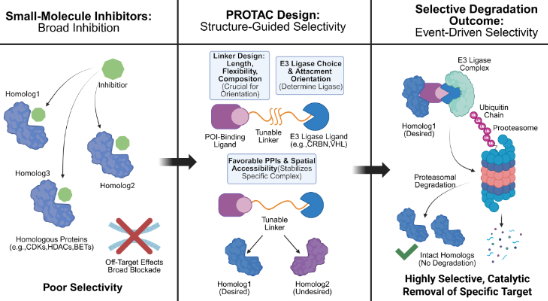
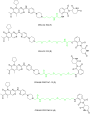
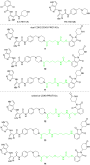
- pharmaceutical chemists. In 2019, Gray, Zhang and co-workers designed a PROTAC-1 (1) to degrade CDK4/6 [21]. To construct compound 1 they used the CDK4/6 inhibitor palbociclib as the POI ligand, pomalidomide, which combines with CRBN as the E3 ligand and a 4-carbon alkyl linker to connect them. The compound can
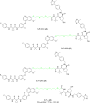
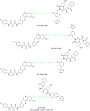
- C5-linker series (Figure 7). As for these compounds, the difference is the number of carbon atoms (n) between nexturastat A and the triazole fragment or the number of carbon atoms (m) between pomalidomide and the triazole fragment. It was found that compound 20d (DC50 = 1.64 ± 0.24 nM) with a medium
- , the resulting PROTAC showed a robust selective degradation of p38δ. Compound 33 degraded p38δ with a DC50 of 46.17 ± 9.85 nM and Dmax of 99.41 ± 3.31% but did not degrade α, β, or γ at all. In some cases, even changing single carbon atoms of the linker segment may cause a surprising change in the