

Search results
Search for "carbocation chemistry" in Full Text gives 12 result(s) in Beilstein Journal of Organic Chemistry.
Ring contraction and ring expansion reactions in terpenoid biosynthesis and their application to total synthesis
- Nicolas Kratena,
- Nicolas Heinzig and
- Peter Gärtner
Beilstein J. Org. Chem. 2026, 22, 289–343, doi:10.3762/bjoc.22.21
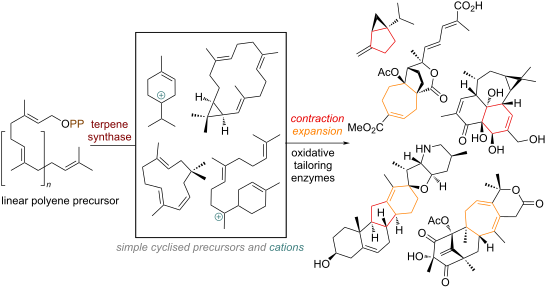
- with oxygen via 2 the ketal structure 3 can decarboxylate [50], generating another high-energy ferryl-oxo species 4 (bound with succinate) which can lead to hydroxylation or carbocation chemistry [51]. Finally, other classes of tailoring enzymes can also act as electrophiles and lead to ring-size

Graphical Abstract

Scheme 1: Mechanistic overview of enzymes involved in ring-size-altering reactions: A: Difference in ionisati...

Scheme 2: A: Ring contraction through involvement of carbocationic intermediates in thujane monoterpene biosy...

Scheme 3: Examples of concerted ring expansions of carbocation intermediates in PxaTPS8-catalysed cyclisation...

Scheme 4: Sequential ring expansions during astellifadiene (17) synthesis reported by Abe and co-workers.

Scheme 5: Cyclobutane ring expansion and sequential ring contractions catalysed by the synthase AITS in the b...

Scheme 6: Ring expansion and transannular ring contraction of a cyclopentane to cyclobutane in the biosynthes...

Scheme 7: Computationally elucidated concerted cyclisations/alkyl/hydride shifts during the biosynthesis of t...

Scheme 8: Cyclisation events and 6→5-ring contraction during the construction of epi-isozizaene (26) catalyse...

Scheme 9: Transannular cyclisations and 4→5-membered ring expansion through dyotropic 1,2-rearrangement of al...

Scheme 10: Ring expansion in presilphiperfolan-8b-ol (31) biosynthesis and ring contraction of the presilphipe...

Scheme 11: Ring contraction via transannular cyclopropanation and opening of cyclopropane in the biosynthesis ...

Scheme 12: The crucial CYP450-catalysed oxidative rearrangement defining the skeleton in gibberellin biosynthe...

Scheme 13: CYP450-mediated oxidation of cyclopentane methylene expanding the 8-membered ring in the biosynthes...

Scheme 14: CYP450-mediated oxidation of an exocyclic methyl group to effect transannular cyclisation across th...

Scheme 15: Non-enzymatic transannular aldol reaction enables the formation of the 5/13/3-tricyclic ring system...

Scheme 16: A: Oxidative ring expansion of a cyclopentane by incorporation of a methyl group in the biosynthesi...

Scheme 17: Rearrangement and ring expansion in the construction of the complex bridged carbon framework of and...

Scheme 18: Ketoglutarate-mediated oxidations of preaustinoid A1 (53) en route to complex meroterpenoids, B-rin...

Scheme 19: Proposed putative biosynthetic formation of the tigliane skeleton from an E,E,Z-triene.

Scheme 20: Photocatalytic tandem ring expansion/contraction of santonin to give photosantonin products and gua...

Scheme 21: A: Proposed biosynthesis of stelleroid B (66) from stelleranoid I (65) by ketol rearrangement; B: o...

Scheme 22: Singular examples of A,B-ring contractions and expansions in the biosynthesis of sesquiterpenoids e...

Scheme 23: A: plausible proposed biosynthetic pathway for the tigliane/ingenane skeletal rearrangement and 1,2...

Scheme 24: A: Multiple ring-size alterations during xenovulene A (90) biosynthesis; B: Ring contraction and re...

Scheme 25: Proposed biosyntheses of the complex, polycyclic terpenoid illisimonin A (97) and the bridged antro...

Scheme 26: Proposed biogenetic origin for the meroterpenoid liphagal (104) via epoxide-mediated ring expansion....

Scheme 27: Proposed biogenetic origin for the ring-contracted members of the taiwaniaquinol family.
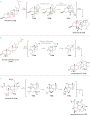
Scheme 28: A: Schenck ene/Hock/Aldol cascade effecting B-ring contraction in atheronal B (113); B: Selective C...
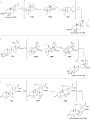
Scheme 29: A: D-ring expansion of buxenone (118) via cyclopropanation towards buxaustroine A (119); B: Propose...

Scheme 30: Biosynthetic origin of alstoscholarinoids A (124) and B (125) via cascade oxidative rearrangement c...

Scheme 31: Biogenetic origin of the hedgehog signalling inhibitor cyclopamine (129) by tandem ring contraction...

Scheme 32: Proposed biogenetic origin of the B-ring contracted spirocyclic triterpenoid spirochensilide A (131...

Scheme 33: A: Proposed B-ring contraction during the biosynthesis of holophyllane A (133); B: B-ring contracti...

Scheme 34: Radical and ionic/polar mechanisms for the C-ring-contracted triterpenoids phomopsterone B (139) an...

Scheme 35: A: Plausible mechanism for the formation of schiglautone A (144) from anwuweizic acid (145); B: Pro...

Scheme 36: Reported biosynthetic proposal for the formation of B-ring expanded triterpenoids rhodoterpenoids A...

Scheme 37: A: Final reaction step in the synthesis of euphorikanin A (154), benzilic acid-type ring contractio...

Scheme 38: Tricyclic ring expansion in the Gui synthesis of gibbosterol A (158) and sarocladione (160) via Ru-...

Scheme 39: A: A-ring expansion during the Gui synthesis of rubriflordilactone B (161); B: Mechanism for the bi...

Scheme 40: Photosantonin rearrangement effects A/B ring contraction/expansion in Li’s synthesis of the complex...

Scheme 41: Tandem A/B ring expansion/contraction of an ergosterol derivative via pinacol rearrangement in the ...

Scheme 42: Synthetic studies towards cyclocitrinol (179) by A) the semisynthetic approach by Gui et al. using ...

Scheme 43: A: Bioinspired synthesis of spirochensilide A (131) by the Heretsch group via selective 8,9-epoxida...
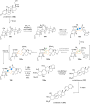
Scheme 44: Baran’s synthesis of cortistatin A (191), expanding the B-ring through a cyclopropane fragmentation....

Scheme 45: Ding’s total synthesis of retigeranic acid (198) showcasing sequential 6→5 ring contractions.

Scheme 46: A: Oxa-di-π-methane (ODPM) rearrangement of a bicyclic ketone en route to silphiperfolenone (203); ...

Scheme 47: Biomimetic synthesis of liphagal (104) from sclareolide (221) by George and co-workers.

Scheme 48: Wu’s bioinspired synthesis of cucurbalsaminones B (224) and C (225) by photocatalytic oxa-di-π-meth...

Scheme 49: Baran’s total synthesis of maoecrystal V (230) featuring a pinacol rearrangement for ring expansion...

Scheme 50: A: Ketol rearrangement leading to ring contraction in the total synthesis of preaustinoid B; B: Ben...

Scheme 51: A: Scheidt’s synthesis of isovelleral (251) by pinacol rearrangement triggered by Mitsunobu conditi...

Scheme 52: Biomimetic transformations of simplified test substrates related to Euphorbia diterpenoids.

Scheme 53: A: First generation synthesis of taiwaniaquinones by benzilic acid-type rearrangement of the B-ring...

Scheme 54: A: Norrish type 1 radical recombination leading to ring contraction en route to cuparenone (272): 1...

Scheme 55: Ring contraction of a bridged D-ring system in the total synthesis of andrastatin D (280), terrenoi...

Scheme 56: Biomimetic synthesis of hyperjapone A (284) and hyperjaponol C (285) by George et al.

Scheme 57: Heretsch’ synthesis of dankastarones A (288) and B (289), swinhoeisterol A (290), and periconiaston...

Scheme 58: A: Zhang’s ring contraction during the synthesis of stemar-13-ene (295) by pinacol rearrangement; B...

Scheme 59: Trauner’s biomimetic synthesis of preuisolactone A (307) featuring a ring contraction via benzilic ...

Scheme 60: Bioinspired approaches for ring contraction/expansion reactions in the synthesis of alstoscholarino...

Scheme 61: A: Sarpong and Li, Wang and co-workers’ ring expansion of cephanolide A (313) to reach harringtonol...
Unraveling the role of prenyl side-chain interactions in stabilizing the secondary carbocation in the biosynthesis of variexenol B
- Moe Nakano,
- Rintaro Gemma and
- Hajime Sato
Beilstein J. Org. Chem. 2023, 19, 1503–1510, doi:10.3762/bjoc.19.107
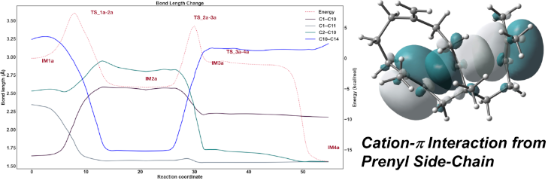
- hyperconjugative interactions, through-space interactions, and C–H–π interactions, have been intensively investigated by Tantillo and co-workers, who have contributed greatly to revealing the intriguing nature of carbocations [7][19][20]. We have also elucidated various new insights of carbocation chemistry, such

Graphical Abstract

Scheme 1: Proposed biosynthetic pathway for variexenol B.
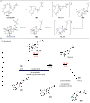
Figure 1: (A) Results of DFT evaluation of the whole pathway of variexenol B without cation–π interaction. (B...
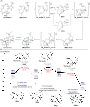
Figure 2: (A) Results of the DFT evaluation of the whole pathway of variexenol B including cation–π interacti...

Figure 3: (A) A representative example of the evolution of key bond lengths in the conversion of path a. (B) ...
Understanding the competing pathways leading to hydropyrene and isoelisabethatriene
- Shani Zev,
- Marion Ringel,
- Ronja Driller,
- Bernhard Loll,
- Thomas Brück and
- Dan T. Major
Beilstein J. Org. Chem. 2022, 18, 972–978, doi:10.3762/bjoc.18.97
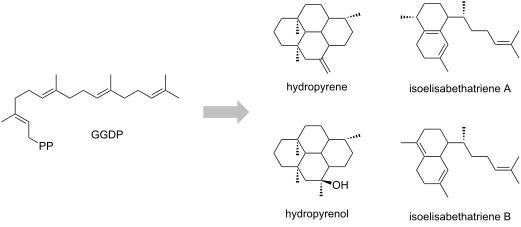
- kinetic control; Introduction Terpenes constitute a ubiquitous class of natural molecules that are synthesized by terpene synthases (TPS). TPS generate a plethora of terpenes employing rich carbocation chemistry from a very limited number of substrates, known as geranyl pyrophosphate (GPP), farnesyl

Graphical Abstract

Figure 1: Summary of yields of HP and IE products in hydropyrene synthase.
Scheme 1: Proposed mechanism for HP and IE routes.
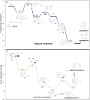
Figure 2: Free energy profile of hydropyrene cation (a), and IE cation (b) formation in the gas phase. The fr...

Figure 3: Structures of intermediates C‘ and C. The distance between the double bond and the cation in interm...
Efficient production of clerodane and ent-kaurane diterpenes through truncated artificial pathways in Escherichia coli
- Fang-Ru Li,
- Xiaoxu Lin,
- Qian Yang,
- Ning-Hua Tan and
- Liao-Bin Dong
Beilstein J. Org. Chem. 2022, 18, 881–888, doi:10.3762/bjoc.18.89
- cyclase) act on geranylgeranyl diphosphate (GGDP) to perform regio- and stereoselective cyclizations or skeleton rearrangement reactions via carbocation chemistry to form diverse and versatile carbon skeletons; and ii) multiple post-modification enzymes, most often cytochrome P450s, decorate the carbon

Graphical Abstract

Figure 1: (a) The natural pathways (MVA: blue, MEP: green) for producing IPP and DMAPP; (b) the carbon skelet...

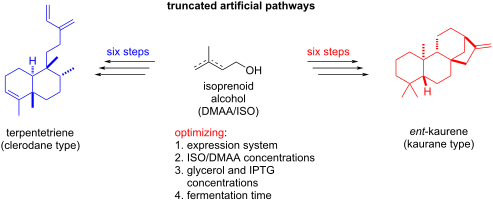
Figure 2: Truncated artificial pathways (six steps) to produce terpentetriene and ent-kaurene.

Figure 3: Construction maps of single plasmid expression system and two-plasmid expression system for overpro...

Figure 4: Optimizing the ratios of ISO/DMAA for overproducing terpentetriene (a) and ent-kaurene (b). Red: IS...

Figure 5: (a) Terpentetriene (red) and ent-kaurene (blue) yields supplied with various concentrations of glyc...
Targeting active site residues and structural anchoring positions in terpene synthases
- Anwei Hou and
- Jeroen S. Dickschat
Beilstein J. Org. Chem. 2021, 17, 2441–2449, doi:10.3762/bjoc.17.161
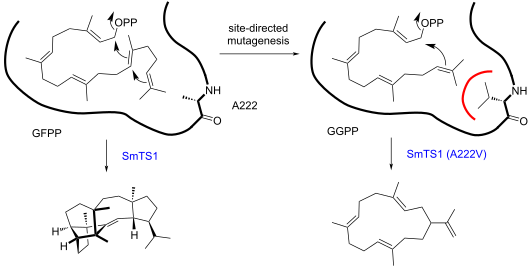
- (GFPP, C25) for sesterterpene biosynthesis. Type I terpene synthases (TPSs) activate these acyclic molecules by the abstraction of diphosphate to produce a reactive allyl cation that can initiate a cascade reaction through typical carbocation chemistry, including cyclisation reactions by intramolecular

Graphical Abstract

Figure 1: Highly conserved residues in the active site of SdS for Mg2+ complexation, substrate recognition an...

Figure 2: The products of SmTS1. A) Structures of sestermobaraenes A–F (1–6) and sestermobaraol (7). B) The t...

Figure 3: Swiss homology modelling of SmTS1. A) Superimposition of the SdS crystal structure (green) with the...

Figure 4: Products and relative activities of SmTS1 and its variants. Bars left of the dashed line show relat...

Figure 5: Total ion chromatogram of an extract from an incubation of GGPP with the SmTS1 A222V variant.

Figure 6: Relative activities of SmTS1 and its variants towards GFPP (blue bars) and GGPP (yellow bars), and ...

Scheme 1: Determination of the enantiomeric composition of 8 and 9 obtained from GGPP with SmTS1 enzyme varia...

Figure 7: Determination of the absolute configuration of compounds 8 and 9. Partial HSQC spectra of A) unlabe...
CF3-substituted carbocations: underexploited intermediates with great potential in modern synthetic chemistry
- Anthony J. Fernandes,
- Armen Panossian,
- Bastien Michelet,
- Agnès Martin-Mingot,
- Frédéric R. Leroux and
- Sébastien Thibaudeau
Beilstein J. Org. Chem. 2021, 17, 343–378, doi:10.3762/bjoc.17.32
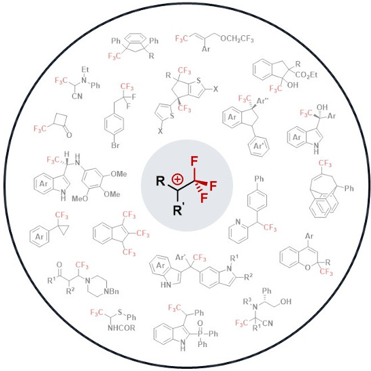
- substrates will not be addressed in this review [30][31][32][33]. Aryl-substituted trifluoromethylated carbenium ions α-(Trifluoromethyl)-substituted carbenium ions: At the dawn of their outstanding studies on carbocation chemistry, Olah et al. empirically demonstrated that despite exhibiting the highest

Graphical Abstract

Figure 1: Stabilizing interaction in the CF3CH2+ carbenium ion (top) and structure of the first observable fl...

Scheme 1: Isodesmic equations accounting for the destabilizing effect of the CF3 group. ΔE in kcal⋅mol−1, cal...

Scheme 2: Stabilizing effect of fluorine atoms by resonance electron donation in carbenium ions (δ in ppm).
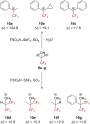
Scheme 3: Direct in situ NMR observation of α-(trifluoromethyl)carbenium ion or protonated alcohols. Δδ = δ19...

Scheme 4: Reported 13C NMR chemical shifts for the α-(trifluoromethyl)carbenium ion 10c (δ in ppm).
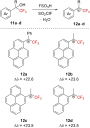
Scheme 5: Direct NMR observation of α-(trifluoromethyl)carbenium ions in situ (δ in ppm).

Scheme 6: Illustration of the ion pair solvolysis mechanism for sulfonate 13f. YOH = solvent.
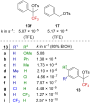
Figure 2: Solvolysis rate for 13a–i and 17.

Figure 3: Structures of allyl triflates 18 and 19 and allyl brosylate 20. Bs = p-BrC6H4SO2.

Figure 4: Structure of tosylate derivatives 21.
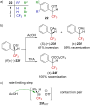
Figure 5: a) Structure of triflate derivatives 22. b) Stereochemistry outcomes of the reaction starting from (...

Scheme 7: Solvolysis reaction of naphthalene and anthracenyl derivatives 26 and 29.

Figure 6: Structure of bisarylated derivatives 34.

Figure 7: Structure of bisarylated derivatives 36.

Scheme 8: Reactivity of 9c in the presence of a Brønsted acid.
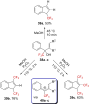
Scheme 9: Cationic electrocyclization of 38a–c under strongly acidic conditions.

Scheme 10: Brønsted acid-catalyzed synthesis of indenes 42 and indanes 43.

Scheme 11: Reactivity of sulfurane 44 in triflic acid.

Scheme 12: Solvolysis of triflate 45f in alcoholic solvents.

Scheme 13: Synthesis of labeled 18O-52.

Scheme 14: Reactivity of sulfurane 53 in triflic acid.

Figure 8: Structure of tosylates 56 and 21f.

Scheme 15: Resonance forms in benzylic carbenium ions.

Figure 9: Structure of pyrrole derivatives 58 and 59.

Scheme 16: Resonance structure 60↔60’.
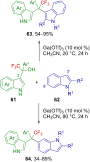
Scheme 17: Ga(OTf)3-catalyzed synthesis of 3,3’- and 3,6’-bis(indolyl)methane from trifluoromethylated 3-indol...

Scheme 18: Proposed reaction mechanism.

Scheme 19: Metal-free 1,2-phosphorylation of 3-indolylmethanols.
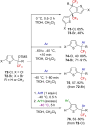
Scheme 20: Superacid-mediated arylation of thiophene derivatives.

Scheme 21: In situ mechanistic NMR investigations.
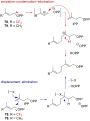
Scheme 22: Proposed mechanisms for the prenyltransferase-catalyzed condensation.

Scheme 23: Influence of a CF3 group on the allylic SN1- and SN2-mechanism-based reactions.

Scheme 24: Influence of the CF3 group on the condensation reaction.

Scheme 25: Solvolysis of 90 in TFE.

Scheme 26: Solvolysis of allyl triflates 94 and 97 and isomerization attempt of 96.

Scheme 27: Proposed mechanism for the formation of 95.

Scheme 28: Formation of α-(trifluoromethyl)allylcarbenium ion 100 in a superacid.
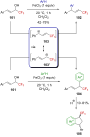
Scheme 29: Lewis acid activation of CF3-substituted allylic alcohols.
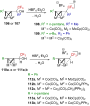
Scheme 30: Bimetallic-cluster-stabilized α-(trifluoromethyl)carbenium ions.
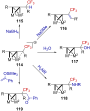
Scheme 31: Reactivity of cluster-stabilized α-(trifluoromethyl)carbenium ions.
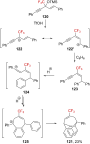
Scheme 32: α-(Trifluoromethyl)propargylium ion 122↔122’ generated from silyl ether 120 in a superacid.
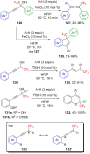
Scheme 33: Formation of α-(trifluoromethyl)propargylium ions from CF3-substituted propargyl alcohols.
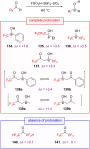
Scheme 34: Direct NMR observation of the protonation of some trifluoromethyl ketones in situ and the correspon...

Scheme 35: Selected resonance forms in protonated fluoroketone derivatives.

Scheme 36: Acid-catalyzed Friedel–Crafts reactions of trifluoromethyl ketones 143a,b and 147a–c.

Scheme 37: Enantioselective hydroarylation of CF3-substituted ketones.
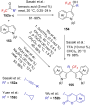
Scheme 38: Acid-catalyzed arylation of ketones 152a–c.

Scheme 39: Reactivity of 156 in a superacid.
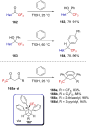
Scheme 40: Reactivity of α-CF3-substituted heteroaromatic ketones and alcohols as well as 1,3-diketones.

Scheme 41: Reactivity of 168 with benzene in the presence of a Lewis or Brønsted acid.

Scheme 42: Acid-catalyzed three-component asymmetric reaction.

Scheme 43: Anodic oxidation of amines 178a–c and proposed mechanism.
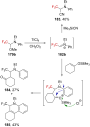
Scheme 44: Reactivity of 179b in the presence of a strong Lewis acid.

Scheme 45: Trifluoromethylated derivatives as precursors of trifluoromethylated iminium ions.

Scheme 46: Mannich reaction with trifluoromethylated hemiaminal 189.

Scheme 47: Suitable nucleophiles reacting with 192 after Lewis acid activation.
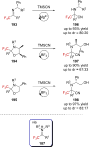
Scheme 48: Strecker reaction involving the trifluoromethylated iminium ion 187.
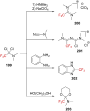
Scheme 49: Reactivity of 199 toward nucleophiles.

Scheme 50: Reactivity of 204a with benzene in the presence of a Lewis acid.

Scheme 51: Reactivity of α-(trifluoromethyl)-α-chloro sulfides in the presence of strong Lewis acids.

Scheme 52: Anodic oxidation of sulfides 213a–h and Pummerer rearrangement.

Scheme 53: Mechanism for the electrochemical oxidation of the sulfide 213a.

Scheme 54: Reactivity of (trifluoromethyl)diazomethane (217a) in HSO3F.

Figure 10: a) Structure of diazoalkanes 217a–c and b) rate-limiting steps of their decomposition.

Scheme 55: Deamination reaction of racemic 221 and enantioenriched (S)-221.

Scheme 56: Deamination reaction of labeled 221-d2. Elimination products were formed in this reaction, the yiel...
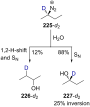
Scheme 57: Deamination reaction of 225-d2. Elimination products were also formed in this reaction in undetermi...

Scheme 58: Formation of 229 from 228 via 1,2-H-shift.

Scheme 59: Deamination reaction of 230. Elimination products were formed in this reaction, the yield of which ...

Scheme 60: Deamination of several diazonium ions. Elimination products were formed in these reactions, the yie...

Scheme 61: Solvolysis reaction mechanism of alkyl tosylates.

Scheme 62: Solvolysis outcome for the tosylates 248 and 249 in HSO3FSbF5.

Figure 11: Solvolysis rate of 248, 249, 252, and 253 in 91% H2SO4.

Scheme 63: Illustration of the reaction pathways. TsCl, pyridine, −5 °C (A); 98% H2SO4, 30 °C (B); 98% H2SO4, ...

Scheme 64: Proposed solvolysis mechanism for the aliphatic tosylate 248.

Scheme 65: Solvolysis of the derivatives 259 and 260.

Scheme 66: Solvolysis of triflate 261. SOH = solvent.

Scheme 67: Intramolecular Friedel–Crafts alkylations upon the solvolysis of triflates 264 and 267.

Scheme 68: α-CF3-enhanced γ-silyl elimination of cyclobutyltosylates 270a,b.
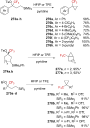
Scheme 69: γ-Silyl elimination in the synthesis of a large variety of CF3-substituted cyclopropanes. Pf = pent...

Scheme 70: Synthetic pathways to 281. aNMR yields.

Scheme 71: The cyclopropyl-substituted homoallylcyclobutylcarbenium ion manifold.
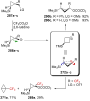
Scheme 72: Reactivity of CF3-substituted cyclopropylcarbinyl derivatives 287a–c. LG = leaving group.

Scheme 73: Reactivity of CF3-substituted cyclopropylcarbinyl derivatives 291a–c.

Scheme 74: Superacid-promoted dimerization or TFP.

Scheme 75: Reactivity of TFP in a superacid.
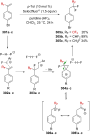
Scheme 76: gem-Difluorination of α-fluoroalkyl styrenes via the formation of a “hidden” α-RF-substituted carbe...

Scheme 77: Solvolysis of CF3-substituted pentyne 307.

Scheme 78: Photochemical rearrangement of 313.

Figure 12: Structure of 2-norbornylcarbenium ion 318 and argued model for the stabilization of this cation.

Figure 13: Structures and solvolysis rate (TFE, 25 °C) of the sulfonates 319–321. Mos = p-MeOC6H4SO2.

Scheme 79: Mechanism for the solvolysis of 323. SOH = solvent.

Scheme 80: Products formed by the hydrolysis of 328.

Scheme 81: Proposed carbenium ion intermediates in an equilibrium during the solvolysis of tosylates 328, 333,...
- generate a highly reactive cationic intermediate that can be subject to a cascade reaction through typical carbocation chemistry, including cyclisation reactions, hydride migrations and Wagner–Meerwein rearrangements [1][2]. The cascade is usually terminated by deprotonation or attack of water. The
Acid-catalyzed rearrangements in arenes: interconversions in the quaterphenyl series
- Sarah L. Skraba-Joiner,
- Carter J. Holt and
- Richard P. Johnson
Beilstein J. Org. Chem. 2019, 15, 2655–2663, doi:10.3762/bjoc.15.258
- polarizable continuum model (PCM). As in our earlier research, we employed B3LYP/6-31+G(d,p) theory with PCM solvation in dichloroethane [25][26][28]. As noted earlier by Tantillo, the B3LYP functional provides a very good description of carbocation chemistry [3]. Figure 1 shows the lowest energy pathways for

Graphical Abstract
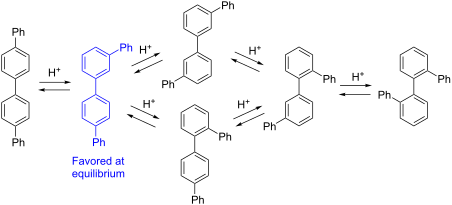
Scheme 1: Acid-catalyzed rearrangements of arenes.

Scheme 2: Rearrangement of quaterphenyl isomers by phenyl shifts.

Scheme 3: Synthesis of quaterphenyl isomers.

Scheme 4: Rearrangement of quaterphenyl isomers via (a) 1,2-phenyl shift and (b) 1,2-biphenyl shift.

Figure 1: Pathways for terminal 1,2-phenyl shifts in quaterphenyl isomers calculated with IEFPCM(DCE)/B3LYP/6...

Figure 2: Pathways for 1,2-biphenyl shifts in quaterphenyl isomers calculated with IEFPCM(DCE)/B3LYP/6-31+G(d...
The cyclopropylcarbinyl route to γ-silyl carbocations
- Xavier Creary
Beilstein J. Org. Chem. 2019, 15, 1769–1780, doi:10.3762/bjoc.15.170
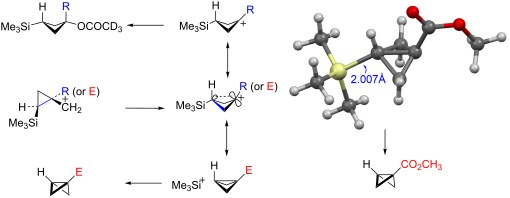
- contributed heavily to the development of carbocation chemistry. This article will deal with three types of carbocations that have been of intense and fundamental interest over the years, i.e., cyclopropylcarbinyl cations, electron-deficient cations, and silyl substituted carbocations. A brief overview of

Graphical Abstract

Scheme 1: Solvolyses of cyclopropylcarbinyl and cyclobutyl substrates.

Scheme 2: The cyclopropylcarbinyl–cyclobutyl–homoallyl cation manifold.

Figure 1: Electron-deficient carbocations.

Scheme 3: Solvolyses of γ-trimethylsilylcyclobutyl substrates.

Figure 2: Substrates of interest.

Scheme 4: Synthesis of mesylates 19 and 20.

Scheme 5: Reaction of mesylate 19 in CD3CO2D.

Scheme 6: Reaction of mesylate 20 in CD3CO2D.

Figure 3: M062X/6-311+G** calculated structures and relative energies of cations 24, 27, and transition state ...

Scheme 7: Synthesis of mesylates 31 and 32.

Scheme 8: Reaction of mesylate 31 in CD3CO2D.

Scheme 9: Reaction of mesylate 32 in CD3CO2D.

Scheme 10: Reaction of trifluoroacetate 48 in CD3CO2D.

Scheme 11: Bicyclobutane formation from a γ-trimethylsilyl cation.

Scheme 12: Formation of triflates 60 and 61.

Scheme 13: Formation of triflates 67, 68, and 69.

Scheme 14: Reactions of substrates with electron-withdrawing groups in CD3CO2D.

Figure 4: γ-Trimethylsilyl cations.

Scheme 15: Bicyclobutane formation from mesylate 76 in CH3CO2H.

Scheme 16: Reactions of triflates 60 and 67 in CD3CO2D.
Stereochemical investigations on the biosynthesis of achiral (Z)-γ-bisabolene in Cryptosporangium arvum
- Jan Rinkel and
- Jeroen S. Dickschat
Beilstein J. Org. Chem. 2019, 15, 789–794, doi:10.3762/bjoc.15.75
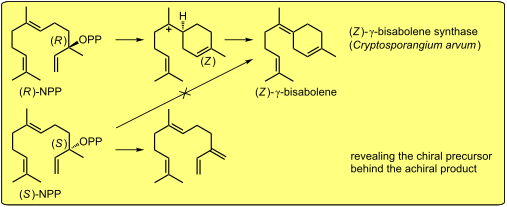
- ; carbocation chemistry; enzyme mechanisms; nerolidyl diphosphate; terpenes; Introduction Given the enormous impact of chirality within biomolecules for all forms of life, it is fascinating to see how nature is able to maintain and reproduce stereochemical information. This concept largely involves the

Graphical Abstract

Figure 1: Structures of achiral terpenes: (E)-β-farnesene (1), α-humulene (2), 1,8-cineol (3) and sodorifen (4...
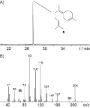
Figure 2: A) Total ion chromatogram of a hexane extract from the incubation of FPP with BbS and B) EI mass sp...

Scheme 1: Cyclisation mechanism to 5 involving either the intermediates (R)-NPP and (S)-A (path A) or (S)-NPP...
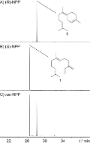
Figure 3: Total ion chromatograms of hexane extracts from incubation experiments with BbS and A) (R)-NPP, B) (...
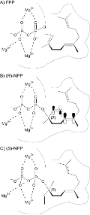
Figure 4: Hypothetical BbS active site comparable conformational folds of A) FPP, B) (R)- and C) (S)-NPP expl...
A detailed view on 1,8-cineol biosynthesis by Streptomyces clavuligerus
- Jan Rinkel,
- Patrick Rabe,
- Laura zur Horst and
- Jeroen S. Dickschat
Beilstein J. Org. Chem. 2016, 12, 2317–2324, doi:10.3762/bjoc.12.225
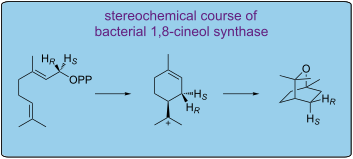
- hydrophobic cavity from which water is excluded to enable carbocation chemistry in an aqueous environment. Furthermore, the hydrophobic cavity provides a template that arranges the substrate in a certain conformation to determine the formation of a specific product. Single residues such as phenylalanines are

Graphical Abstract

Figure 1: Selection of achiral terpenes.

Scheme 1: Cyclisation of GPP to 1 via the (R)-terpinyl cation ((R)-6, left) or the (S)-terpinyl cation ((S)-6...

Figure 2: Partial HSQC spectra showing the region of crosspeaks for HA and HB connected to C-3 and C-5 of A) ...

Figure 3: A) Partial HSQC spectrum showing the region of crosspeaks of C-2 with its directly connected hydrog...

Scheme 2: Mechanism for the cyclisation of FPP to corvol ethers A (19) and B (18). WMR: Wagner-Meerwein rearr...
Molecular rearrangements of superelectrophiles
- Douglas A. Klumpp
Beilstein J. Org. Chem. 2011, 7, 346–363, doi:10.3762/bjoc.7.45
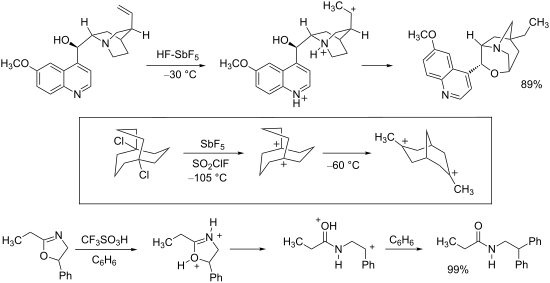
- number of rearrangements that involved both the migration of carbon-centered groups and hydride shifts. The migration of hydride is a common reaction step in carbocation chemistry. Not surprisingly, it also appears to be involved in the chemistry of superelectrophilic systems. There are two means by

Graphical Abstract

Scheme 1: Superelectrophilic activation of the acetyl cation.

Scheme 2: Ring opening of diprotonated 2-oxazolines.

Scheme 3: AlCl3-promoted ring opening of isoxaolidine 16.

Scheme 4: Ring-opening reactions of cyclopropyl derivatives.

Scheme 5: Condensations of ninhydrin (28) with benzene.

Scheme 6: Rearrangement of 29 to 30.

Scheme 7: Superacid promoted ring opening of succinic anhydride (33).

Scheme 8: Reaction of phthalic acid (36) in FSO3H-SbF5.

Scheme 9: Ring expansion of superelectrophile 42.

Scheme 10: Reaction of camphor (44) in superacid.

Scheme 11: Isomerization of 2-cyclohexen-1-one (48).

Scheme 12: Isomerization of 2-decalone (51).

Scheme 13: Rearrangement of the acyl-dication 58.

Scheme 14: Reaction of dialkylketone 64.

Scheme 15: Ozonolysis in superacid.

Scheme 16: Rearrangement of 1-hydroxy-2-methylcyclohexane carboxylic acid (79) in superacid.

Scheme 17: Isomerization of the 1,5-manxyl dication 87.

Scheme 18: Energetics of isomerization.

Scheme 19: Rearrangement of dication 90.

Scheme 20: Superacid promoted rearrangement of pivaldehyde (92).

Scheme 21: Rearrangement of a superelectrophilic carboxonium ion 100.

Scheme 22: Proposed mechanism for the Wallach rearrangement.

Scheme 23: Wallach rearrangement of azoxypyridines 108 and 109.

Scheme 24: Proposed mechanism of the benzidine rearrangement.

Scheme 25: Superacid-promoted reaction of quinine (122).

Scheme 26: Superacid-promoted reaction of vindoline derivative 130.

Scheme 27: Charge migration by hydride shift and acid–base chemistry.

Scheme 28: Reactions of 1-hydroxycyclohexanecarboxylic acid (137).

Scheme 29: Reaction of alcohol 143 with benzene in superacid.

Scheme 30: Reaction of alcohol 148 in superacid with benzene.

Scheme 31: Mechanism of aza-polycyclic aromatic compound formation.

Scheme 32: Superacid-promoted reaction of ethylene glycol (159).

Scheme 33: Reactions of 1,3-propanediol (165) and 2-methoxyethanol (169).

Scheme 34: Rearrangement of superelelctrophilic acyl dication 173.