
Search results
Search for "LED" in Full Text gives 2073 result(s) in Beilstein Journal of Organic Chemistry. Showing first 200.
Synthesis and acaricidal activity against Varroa destructor of α- and γ-costic acid dimers
Beilstein J. Org. Chem. 2026, 22, 1088–1096, doi:10.3762/bjoc.22.87
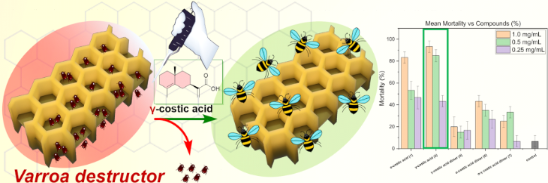
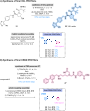
- homo- and heterodimers 4, 6, and 7 (Scheme 1). Accordingly, the formation of dimer of 6 with ethylene glycol was first attempted under classical acid-catalyzed Fischer esterification conditions, in the presence of p-toluenesulfonic acid (pTsOH) (Scheme 1). However, these conditions led to isomerization
- carboxylic acid group and of an α,β-unsaturated carboxyl moiety. In fact, moving from α-costic acid (1) to its methyl ester 10 [14] a marked decrease in activity from 83% to 10% is observed and, as reported above, the transformation of costic acids 1 and 3 to diesters 4, 6, 7 led to a decrease in acaricidal


Synthesis of functionalized, 13-alkyl-substituted coralyne derivatives and investigation of their interactions with duplex and abasic site-containing DNA
Beilstein J. Org. Chem. 2026, 22, 1057–1066, doi:10.3762/bjoc.22.84
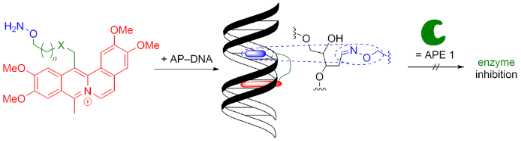
- abasic site-containing DNA (AP-DNA), different synthetic routes towards the functionalization of coralyne were tested. In particular, the alkylation of the benzylic position in papaverine and subsequent cyclization by treatment with acetic anhydride in sulfuric acid led to the synthesis of a coralyne
- and a fluorescence quantum yield of Φfl = 0.40. The titration of 2e with ct DNA led to strong quenching of the fluorescence by up to 82% at saturation (Figure 2B). CD-spectroscopic analysis of the ligand–DNA complexes revealed slight pertubation of the characteristic band of the DNA at 285 nm. At the


One-pot four-component sequential synthesis of S-alkyl dithiocarbamates using lipase as a biocatalyst
Beilstein J. Org. Chem. 2026, 22, 1048–1056, doi:10.3762/bjoc.22.83
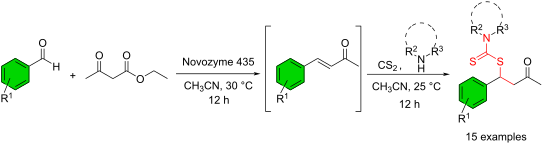
- yields, indicating that the reaction tolerates moderate steric effects. It is also noteworthy that aldehydes bearing electron-withdrawing substituents, such as 4-Cl (6c, 72%), 3-NO2 (6h, 69%), and 3-Cl (6i, 81%) led to decreased yields. Additionally, acyclic amines such as dimethylamine and diethylamine


Synthesis and optical resolution of 4,5-diaminohomoadamantane: a promising scaffold for chiral ligands and bioactive compounds
Beilstein J. Org. Chem. 2026, 22, 1013–1022, doi:10.3762/bjoc.22.80
- cell damage [57], and activity against Staphylococcus aureus was noted for peroxysampsone A С [58]. Basarić and co-workers showed that the replacement of 2-substituted adamantane by a homoadamantane skeleton led to enhanced antiproliferative activity (compound D) [59]. Compound E showed efficacy
- for the synthesis of compound 2 from alcohol 1 using phosphoric acid, affording the target compound in high yield and purity. In the next step, chloronitrosation of alkene 2 led to α-chloroxime 3 in moderate yield. Substitution of chlorine in 3 with azido and benzylamino groups was then carried out to
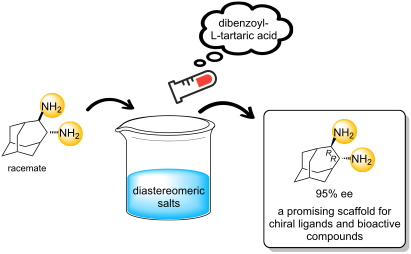
- ). The NaBH4/MoO3 system [81] led to the selective reduction of only the hydroxyimino group, affording azidoamine 7. The reduction of azidoxime 4 using LiAlH4 [75][87] allowed total reduction of both the oxyimino and azido groups, resulting in the formation of isomeric diamines 8a,b (Scheme 2). Since 4,5


Z-Selective semihydrogenation of alkynes via Ni/Lewis acid synergistic catalyzed system using DMF as hydrogen source and solvent
Beilstein J. Org. Chem. 2026, 22, 1004–1012, doi:10.3762/bjoc.22.79
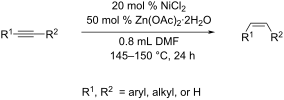
- optimal. Reducing either the nickel loading (Table 3, entry 13) or the Lewis acid amount (Table 3, entries 14–15) led to a clear decrease in yield. While increasing both loadings slightly improved the yield (Table 3, entries 16–17), the marginal gain did not justify the higher catalyst use. The reaction
- observed at 140 °C, providing 4a in 70% GC yield (64% isolated yield, entry 3). Further increases to 145 °C or 150 °C led to diminished yields of 67% and 51%, respectively (Table 4, entries 4–5). These results suggest that the reduction of terminal alkynes is more temperature-sensitive than that of



Synthesis of sterically shielded piperidine nitroxides via acid-catalyzed heterocyclization of β-aminoketone derivatives with ketones
Beilstein J. Org. Chem. 2026, 22, 948–954, doi:10.3762/bjoc.22.74
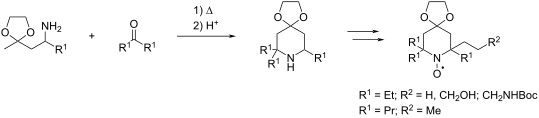
- using a sodium tungstate/hydrogen peroxide system. Attempted purification led to decomposition; therefore, crude 6a and 6b were used directly in the next step. It is known that the reaction of sterically hindered nitrones may lead to metalation or deoxygenation of the alkylnitrone group instead of


Recent advances in copper-catalyzed direct hydroamination of alkenes with (hetero)aromatic amines
Beilstein J. Org. Chem. 2026, 22, 925–947, doi:10.3762/bjoc.22.73
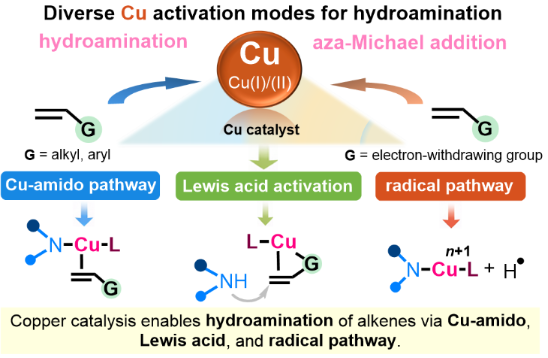
- generated an amide species that coordinated to the copper center to form the catalytically active copper–amido intermediate II. Subsequent metal-assisted activation of the olefin led to the formation of C–N bond through aminocupration, generating organocopper intermediate IV. Computational studies indicated
- functionality generated a hemiaminal intermediate, which underwent Cu(I)-assisted air oxidation to produce the corresponding amide intermediate 27. Subsequent intramolecular aza-Michael addition of the pyridinyl nitrogen to the activated α,β-unsaturated ester led to cyclization, ultimately furnishing the
- reaction proceeded through a pathway distinct from the classical metal–amido mediated hydroamination. The combination of copper halide and silver salt generated a cationic copper complex I, which, upon coordination of the amine substrate, led to proton release and formation of a Brønsted acid species in







Palladium-catalyzed benzocyclization reactions of quinoline-2-carboxamides via sequential C–H/N–H functionalization
Beilstein J. Org. Chem. 2026, 22, 905–914, doi:10.3762/bjoc.22.71
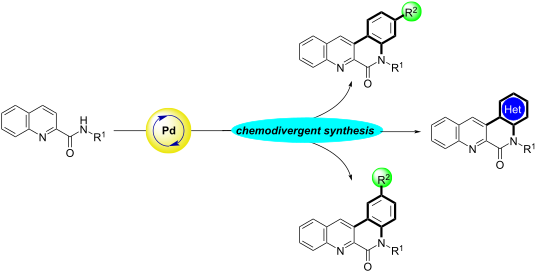
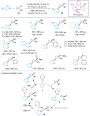
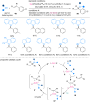
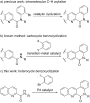
- obtained in 39% yield (Table 1, entry 3). Using any base other than Cs2CO3 resulted in lower yields, thus confirming that Cs2CO3 was the optimal base for this reaction (Table 1, entries 4–6). Increasing the concentration of 1a from 0.1 to 1.0 M led to an increased yield, even if Pd(OAc)2 was used as the




Cascade transformation of 2-(diazoacetyl)-2H-azirines to 2-aroyl-3-hydroxy-1H-pyrroles via condensation with aromatic aldehydes
Beilstein J. Org. Chem. 2026, 22, 897–904, doi:10.3762/bjoc.22.70
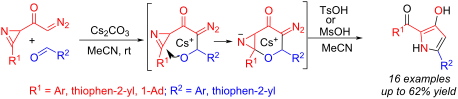
- (probably 4a; Scheme 1, R = Ph, Ar = 4-FC6H4) turned out to be extremely unstable and could not be isolated either by crystallization or by chromatography on silica gel or alumina, which led to its complete decomposition. Fortunately, the corresponding product of the reaction of 2-(2-diazoacetyl)-3-(3


Chiral cyclopropenimine-catalyzed enantioselective Michael reactions of phenol and benzofuran-derived α,β-unsaturated pyrazolamides with benzophenone-imine of glycine esters
Beilstein J. Org. Chem. 2026, 22, 888–896, doi:10.3762/bjoc.22.69
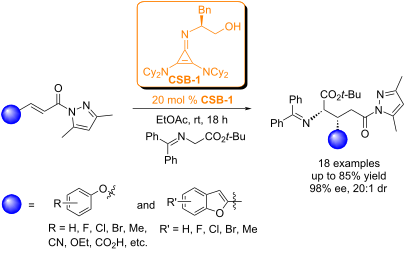
- acetate (EA) as a solvent (Table 1, entry 14 vs entry 1). The reaction carried out in acetonitrile provided racemic 6a (Table 1, entry 15). When MeOH was used as a solvent, it led to no reaction (Table 1, entry 16), this may due to the large amount of hydrogen-bonding interactions in MeOH to inactivate






Diastereodivergent electrophilic trapping of α-boryl lithium derivatives
Beilstein J. Org. Chem. 2026, 22, 882–887, doi:10.3762/bjoc.22.68
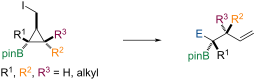
- moderate yields with good diastereoselectivity. Reaction with cyclohexanone led to partial elimination, which proceeded to completion upon warming the reaction mixture to room temperature, affording the bora-Wittig product 6j in moderate yield [39]. Furthermore, an intramolecular reaction was investigated




Site-specific labelling of native peptides and proteins: chemical and enzymatic strategies
Beilstein J. Org. Chem. 2026, 22, 857–881, doi:10.3762/bjoc.22.67
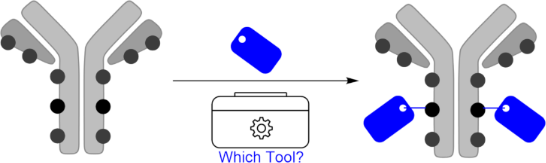
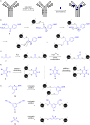
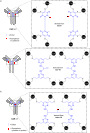
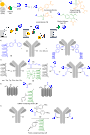
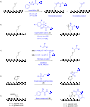
- has led to the development of labelling techniques, wherein the C-terminal carboxylate can be functionalized via visible-light photoredox decarboxylative catalysis (Scheme 2d) [23]. Similarly, decarboxylative alkylation has been applied to complex proteomes to enable proteome-wide C-terminal profiling
- substitution → hydrolysis; Scheme 8) [79], laying the groundwork for ligase development [80][81]. Lysine residues are abundant and typically solvent-exposed [82], hyper-reactive variants have been reported, and have led to the development of tools such as “K-lock” [83][84][85]. Unfortunately, the reactivity








The trans-influence in gold chemistry from a catalytic perspective
Beilstein J. Org. Chem. 2026, 22, 838–856, doi:10.3762/bjoc.22.66
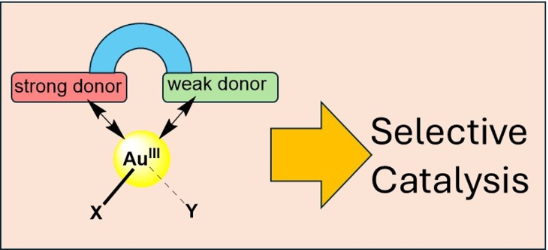
- ]. The same principles apply to other alkenes and nucleophiles (alcohols, water) [85]. Using acetylene instead of ethylene gives first the analogous mono-insertion product, with the vinyl ligand trans to N. The mono-vinyl complex (C trans to N) could be isolated. Adding excess acetylene led to the


Synthesis and structural elucidation of a novel bis-spirooxindole from isatin and ethylenediamine
Beilstein J. Org. Chem. 2026, 22, 813–820, doi:10.3762/bjoc.22.63
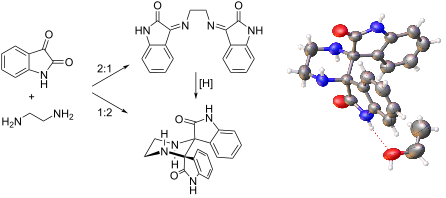
- observed relative stereochemistry in 25. However, alternative pathways, cannot be excluded. To address the generality of this transformation, a small set of substituted isatins was examined under the conditions used for the formation of 25. Reactions with 5-bromoisatin and 5-nitroisatin led to complex


Halogenated azobenzene acrylates: from efficient solution photoswitching to stable solid-state photochromic materials
Beilstein J. Org. Chem. 2026, 22, 782–794, doi:10.3762/bjoc.22.60
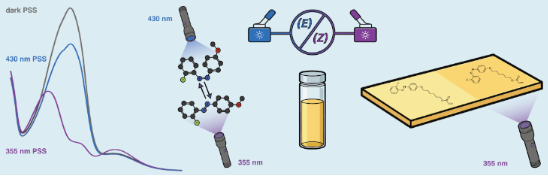
- efficient photoswitches. In general, all monohalogenated switches reached higher photoconversion by ≈20% as compared to dihalogen-substituted ones. However, it should be noted that the absorption maxima of dihalogenated switches are blue-shifted and, provided a short-wavelength LED will be used, the
- yellow upon irradiation with 355 nm LED (Figure 10A) reflecting the E → Z switch. The irradiated sample was kept in the dark at 22 °C and the magnitude of color change was visually verified after 20, 40, and 90 days as shown in Figure 10B–D. Even after 90 days in the dark, high color saturation was still


Design, synthesis, and biological evaluation of FXR/ASK1 dual-target modulators
Beilstein J. Org. Chem. 2026, 22, 771–781, doi:10.3762/bjoc.22.59
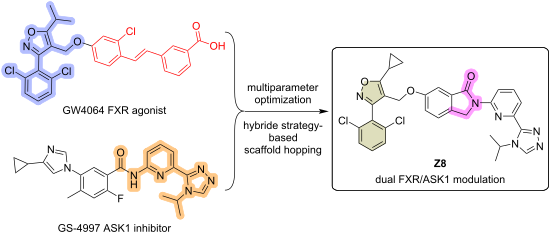
- previous study demonstrated that in a liver fibrosis model and a chronic fast food diet (FFD)-induced MASH mouse mode [26][27], the combination of an ASK1 inhibitor and an FXR agonist led to a more pronounced reduction in hepatic fibrosis than either monotherapy [28]. Recently, several publications


Preparation of 3-(alkylamino)imidazo[1,2-a]pyridine-2-carbaldehydes via Kornblum oxidation and unexpected ring-opening reactions of the corresponding alcohols under oxidative conditions
Beilstein J. Org. Chem. 2026, 22, 763–770, doi:10.3762/bjoc.22.58
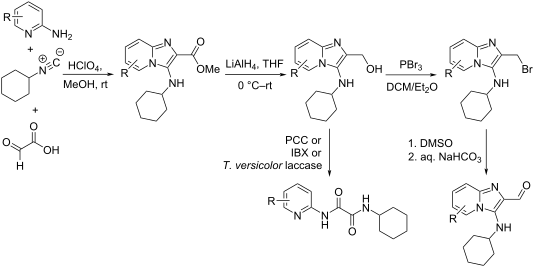
- -chloroaniline. Alternative oxidation conditions such as PCC, IBX or T. versicolor laccase applied to the alcohols led only to oxidative ring-opening to give oxalamide derivatives, with no aldehyde being isolated. Keywords: 3-aminoimidazo[1,2-a]pyridine-2-carbaldehydes; Groebke–Blackburn–Bienaymé reaction
- –99% using LiAlH4 reduction (Scheme 3). Unexpectedly, reduction of 13d and 13f led to the same compound, the dehalogenated derivative 17d in 96% and 51% yield, respectively, presumably through nucleophilic aromatic substitution [29]. Oxidation of alcohols 17a–d using pyridinium chlorochromate (PCC
- similar reactions on alcohols 17b–d led to the corresponding ring-opened products 18b–d (Scheme 4). The ring-opened products were isolated in yields of 26–36%, with loss of one carbon atom occurring (-CH2OH). To test whether C-2 decarboxylation could have immediately preceded ring-opening, decarboxylated


Rongalite addition to dienones: diastereoselectivity in cyclic sulfone synthesis; stereochemical rationalization and prospects as a general conjugate nucleophile
Beilstein J. Org. Chem. 2026, 22, 742–752, doi:10.3762/bjoc.22.56

- 1b was provided by derivatization of both molecules in ways that confirmed their relative stereochemistry by taking advantage of the different symmetry elements present in each case. Thus, both reductive amination and hydride reduction of C2-symmetric 1a led to the isolation of the only possible
- methanesulfinate or p-toluenesulfinate and 1 equivalent of Rongalite (50 °C, AcOH/H2O, o/n) led to a mixture of products. These results are tabulated in Table 1. Mixtures of cyclic and acyclic products were obtained in both cases. Our initial interpretation was that the ratios reflected the relative rates of




Synthesis of heterocycles based on azomethine ylides from α-amino acids (or amines) and carbonyl compounds
Beilstein J. Org. Chem. 2026, 22, 705–741, doi:10.3762/bjoc.22.55
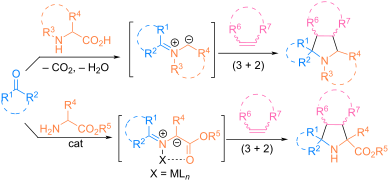
- various aromatic and aliphatic substituents; vinylaryl carbinols with electron-withdrawing and electron-donating substituents in the phenyl ring have successfully proven themselves as dipolarophiles; replacement of the aryl substituent with heteroaromatic or aliphatic ones also led to acceptable results
- -alkylmaleimides 63, with the formation of cycloadducts 68. Next, without isolating the intermediate product 68, the resulting reaction mixture was used for the intramolecular (3 + 2) cycloaddition step with alkynes 69 and alkenes 70, which led to the formation of cycloadducts 71 and 72 with high


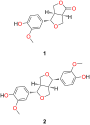
Anti-invasive and cytotoxic evaluation of a (+)-pinoresinol-based semisynthetic library against glioblastoma
Beilstein J. Org. Chem. 2026, 22, 691–704, doi:10.3762/bjoc.22.54
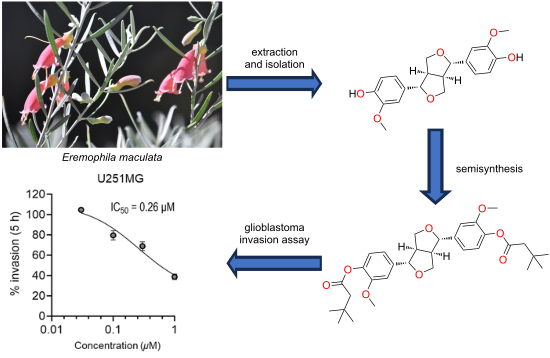
- reported. In this study, we chemically investigated the seeds of Eremophila maculata for the first time, which led to the isolation and characterization of two known plant metabolites, (+)-salicifoliol and (+)-pinoresinol. Due to the reported biological properties of the lignan natural product



Photoorganocatalytic trifluoromethylation of (het)arenes in green conditions
Beilstein J. Org. Chem. 2026, 22, 662–671, doi:10.3762/bjoc.22.50
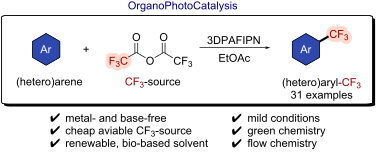
- , entries 4 and 5). The influence of catalyst loading was then examined. Raising the photocatalyst concentration to 2 mol % led to yields of 64%, 64%, and 78% under white, violet, and blue light, respectively (Table 1, entries 3–5). A further increase to 5 mol % (Table 1, entry 5) afforded 87% yield
- TMB (Table 3, entry 2), which led to an even lower yield of 51% (isolated yield was 39% for entry 2). Further scale-up to a 1 g level, carried out in a Schlenk flask with a 38 mm inner diameter, afforded a comparable yield. In contrast, implementation of a continuous-flow setup provided a higher yield




Hydrogen production from formic acid catalyzed by NHC–Cu complexes
Beilstein J. Org. Chem. 2026, 22, 620–627, doi:10.3762/bjoc.22.48
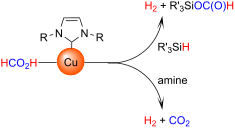
- steric reasons rather than electronics. In fact, the reaction of trifluoroacetic acid led to the same outcome as acetic acid (Scheme 4, see Supporting Information File 1, section 8). Theoretical as well as experimental investigations to assess the mechanism of this transformation are still ongoing. The
- intensively investigated [44][61]. Thus, the decomposition of a 1:1 HCO2H/NEt3 mixture in the presence of different NHC–Cu complexes was explored (Table 1). No conversion was achieved with [Cu(OH)(IPr)] (1a). To our delight, the reaction in the presence of its chloride analogue 1d led to 24% conversion after
- generating an inactive species [44]. Electronic effects were next investigated. Electron-rich anilines like p-toluidine or p-anisidine led to lower conversions than p-chloroaniline (Table 2, entries 5, 8, and 10). As highlighted in Table 2, no correlation between the basicity of the amines and the


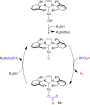

Towards the targeted protein degradation of CK2: design and synthesis of CAM4066-based PROTACs
Beilstein J. Org. Chem. 2026, 22, 611–619, doi:10.3762/bjoc.22.47
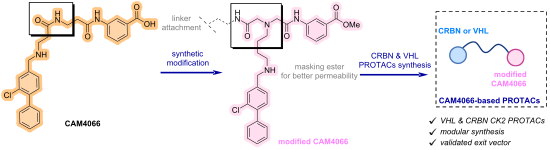
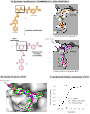
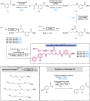
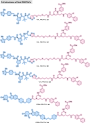
- construction. The synthesis of the ATP-site binder began with the alkylation of commercially available methyl 3-aminobenzoate (3) using bromoacetyl bromide. Although initial purification via silica gel chromatography led to substantial product loss, isolation by simple aqueous workup afforded the intermediate

Regioselective approach to 5-arylsulfonylisoxazoles and their antimicrobial activity
Beilstein J. Org. Chem. 2026, 22, 592–602, doi:10.3762/bjoc.22.45
- ]. Briefly, these reporter strains express different fluorescent proteins depending on the mechanism of action of the antibiotic. In case of activation of the antibiotic-induced SOS-response, the rfp gene was expressed in the cell of the reporter strains, and disruption of the translation mechanism led to


Design and synthesis of an erdafitinib-based selective FGFR2 degrader
Beilstein J. Org. Chem. 2026, 22, 583–591, doi:10.3762/bjoc.22.44
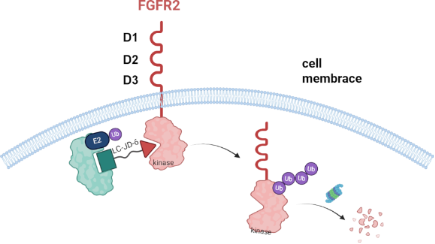
- -JD-6 could directly degrade FGFR2 from the plasma membrane. KATO III gastric cancer cells were incubated with 500 nM LC-JD-6 for 12 hours, followed by flow cytometric quantification of cell surface FGFR2 expression. As shown in Figure 4b and Figure 4c, LC-JD-6 treatment led to a marked decrease in