

Search results
Search for "C–H pKa values" in Full Text gives 2 result(s) in Beilstein Journal of Organic Chemistry.
Computational prediction of C–H hydricities and their use in predicting the regioselectivity of electron-rich C–H functionalisation reactions
Beilstein J. Org. Chem. 2026, 22, 603–610, doi:10.3762/bjoc.22.46
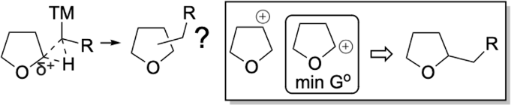
- calculations. Refer to section 1 in Supporting Information File 1 for more details. Hereafter, we check the geometries for imaginary frequencies and use the total thermal energy at 298.15 K. Following a similar approach from our previous paper for C–H pKa values [3], we compute the hydricity through the direct
- . These properties encompass the site of metabolism [25][27], the strengths of hydrogen bond donors and acceptors [28][29][30], the regioselectivity of electrophilic aromatic substitution reactions [10], C–H pKa values [3], and electro- and nucleophilicity [31]. Building on the methodology from Finkelmann


![[Graphic 6]](/bjoc/content/inline/1860-5397-22-46-i8.svg?max-width=637&scale=1.18182)


pKalculator: A pKa predictor for C–H bonds
Beilstein J. Org. Chem. 2024, 20, 1614–1622, doi:10.3762/bjoc.20.144
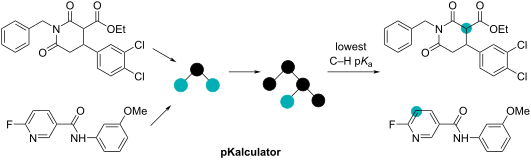
- . As molecular complexity increases, this task becomes more challenging. This paper introduces pKalculator, a quantum chemistry (QM)-based workflow for automatic computations of C–H pKa values, which is used to generate a training dataset for a machine learning (ML) model. The QM workflow is
- benchmarked against 695 experimentally determined C–H pKa values in DMSO. The ML model is trained on a diverse dataset of 775 molecules with 3910 C–H sites. Our ML model predicts C–H pKa values with a mean absolute error (MAE) and a root mean squared error (RMSE) of 1.24 and 2.15 pKa units, respectively
- . Furthermore, we employ our model on 1043 pKa-dependent reactions (aldol, Claisen, and Michael) and successfully indicate the reaction sites with a Matthew’s correlation coefficient (MCC) of 0.82. Keywords: C–H pKa values; pKa predictor; Introduction Over the years, the ability to selectively break a C–H


![[Graphic 9]](/bjoc/content/inline/1860-5397-20-144-i12.svg?max-width=637&scale=1.3000021)


Other Beilstein-Institut Open Science Activities