

Search results
Search for "visible" in Full Text gives 661 result(s) in Beilstein Journal of Organic Chemistry. Showing first 200.
Continuous flow synthesis of azobenzenes via Baeyer–Mills reaction
Beilstein J. Org. Chem. 2022, 18, 781–787, doi:10.3762/bjoc.18.78
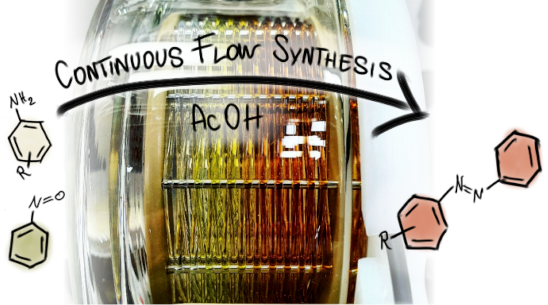
- only the geometry is altered from the planar (E)-AB to its twisted (Z)-AB form, but also its properties change (e.g., dipole moment and polarity) [13][14]. Furthermore, the (Z)-AB can be reversibly switched back by visible light or thermally [15]. To synthesize ABs a variety of reactions can be chosen


Structural basis for endoperoxide-forming oxygenases
Beilstein J. Org. Chem. 2022, 18, 707–721, doi:10.3762/bjoc.18.71
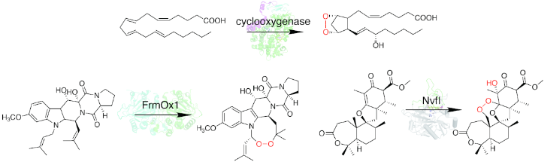
- photosensitizers or visible light, non-enzymatically reacts with the biosynthetic intermediates to produce endoperoxide structures [16][22][23]. However, over the past three decades, only a few endoperoxide-forming enzymes have been identified, including the cyclooxygenases in the biosynthesis of prostaglandins
- substituted with Ala or Phe generates an N-1 dealkylated product, which is non-enzymatically created from C21 hydroxylated products, as a major product. Based on these structural analyses, as well as an EPR analysis of the enzyme reaction of FtmOx1 and a transient ultraviolet–visible (UV–vis) absorption


Heteroleptic metallosupramolecular aggregates/complexation for supramolecular catalysis
Beilstein J. Org. Chem. 2022, 18, 597–630, doi:10.3762/bjoc.18.62
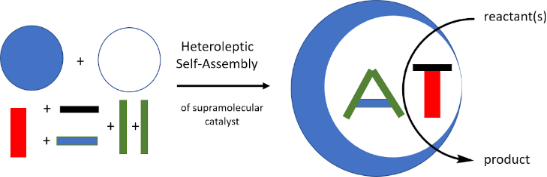
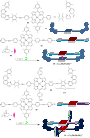
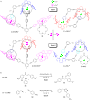
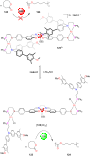
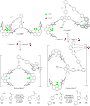
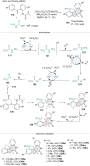
- + 26), respectively, were successfully employed as visible-light photocatalysts for a cross-coupling cyclization of N,N-dimethylaniline (27) and N-alkyl/aryl maleimides 28 (Figure 6). Notably, the systems showed much higher catalytic activity compared to similar reactions with the dye or cages alone











Tetraphenylethylene-embedded pillar[5]arene-based orthogonal self-assembly for efficient photocatalysis in water
Beilstein J. Org. Chem. 2022, 18, 429–437, doi:10.3762/bjoc.18.45
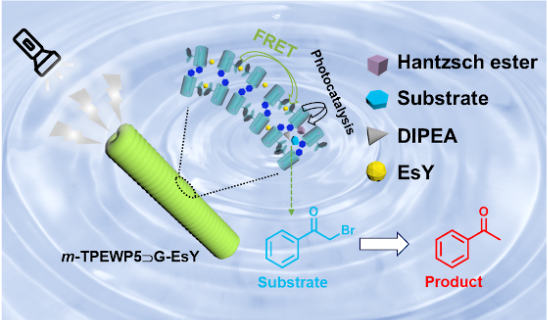
- chromophoric dye molecules can be utilized in photoredox reactions under the irradiation of light with suitable wavelength [6]. However, in the case of the m-TPEWP5G-EsY nanosystem, which contains conjugated molecules and displays harvesting antenna effects from ultraviolet to visible light wavelengths, solar
- FRET process, whilst the m-TPEWP5G-EsY nanorod assembly could act as a nanoreactor providing a suitable environment for the photochemical catalytic reaction in aqueous solution under visible light irradiation. In the presence of 0.5 mol % m-TPEWP5G-EY in aqueous solution, 2-bromo-1-phenylethanone (1a


![[Graphic 5]](/bjoc/content/inline/1860-5397-18-45-i7.svg?max-width=637&scale=1.18182) G-EsY self-assembled photocat...
G-EsY self-assembled photocat...


![[Graphic 15]](/bjoc/content/inline/1860-5397-18-45-i17.svg?max-width=637&scale=1.18182) G; (b) m-TPEWP5
G; (b) m-TPEWP5![[Graphic 16]](/bjoc/content/inline/1860-5397-18-45-i18.svg?max-width=637&scale=1.18182) G-EsY. [m-TPEWP5] = 1 × 10⁻⁴ M, [G] = 1 × 10⁻⁴ M, [EsY] = ...
G-EsY. [m-TPEWP5] = 1 × 10⁻⁴ M, [G] = 1 × 10⁻⁴ M, [EsY] = ...

![[Graphic 25]](/bjoc/content/inline/1860-5397-18-45-i27.svg?max-width=637&scale=1.18182) G donor assembly...
G donor assembly...

![[Graphic 43]](/bjoc/content/inline/1860-5397-18-45-i45.svg?max-width=637&scale=1.18182) G-EsY na...
G-EsY na...

![[Graphic 48]](/bjoc/content/inline/1860-5397-18-45-i50.svg?max-width=637&scale=1.18182) G-E...
G-E...
Recent developments and trends in the iron- and cobalt-catalyzed Sonogashira reactions
Beilstein J. Org. Chem. 2022, 18, 262–285, doi:10.3762/bjoc.18.31
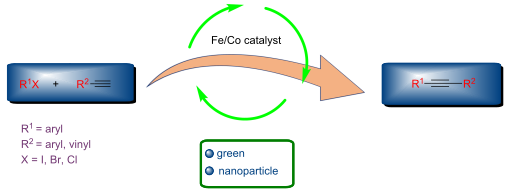
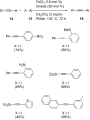
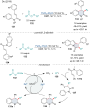
- bonds. This protocol involves the visible light-assisted Sonogashira coupling of aryl bromides and terminal alkynes in the presence of the Co(C9H9NO2)3 complex as the catalyst (Scheme 34) [45]. This novel catalytic system provided 23 alkyne products in a substrate scope study using ethylene glycol as
- additive and K2CO3 as base in DMF under visible light irradiation. The reaction of Co(OAc)2·4H2O with 2-(hydroxyimino)-1-phenylpropan-1-one in EtOH resulted in the formation of the Co catalyst. The coupling strategy exhibited only poor activity by the use of pure Co salts and the reaction was promoted by
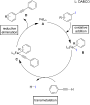
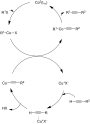
- -substituted bromobenzenes with phenylacetylene in the presence of Co(C9H9NO2)3. Possible mechanism for the visible light-assisted cobalt complex-catalyzed Sonogashira coupling. (Reproduced with permission from ChemCatChem. 2018, 10, 758–762.) Sonogashira cross-coupling of aryl halides and phenylacetylene







Green synthesis of C5–C6-unsubstituted 1,4-DHP scaffolds using an efficient Ni–chitosan nanocatalyst under ultrasonic conditions
Beilstein J. Org. Chem. 2022, 18, 133–142, doi:10.3762/bjoc.18.14
- of the material (Figure 3a and Figure 3b). The TEM images showed agglomeration of spherical NPs, leading to the formation of multiple scaffolds. In the SEM images, the presence of spheres of 40–60 nm was clearly visible (Figure 3c and Figure 3d). Often, these small NPs were agglomerated to form




Recent advances and perspectives in ruthenium-catalyzed cyanation reactions
Beilstein J. Org. Chem. 2022, 18, 37–52, doi:10.3762/bjoc.18.4
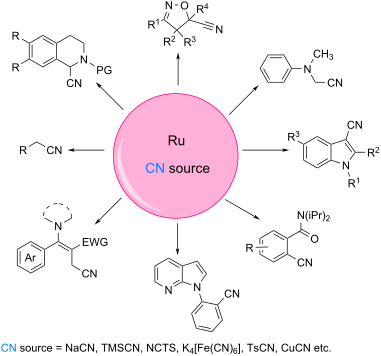
- product (Table 1, entry 5). However, tertiary amines with a benzyl group reacted very slowly and afforded the expected product in moderate yield (Table 1, entry 6). The reason for the incompatibility of tributylamine towards this method has yet to be explored. A synthesis of allylic cyanides via visible
- conditions, readily available reagents, lower catalyst loading, and the use of cost effective atmospheric oxygen and visible light are the most attractive characteristics of this reaction. Xu et al. in 2016 discussed the deboronative cyanation of alkyltrifluoroborates using [Ru(bpy)3](PF6)2 as the photoredox
- catalyst [41]. This method provides an efficient pathway to 1°, 2°, and 3° alkyl nitriles using p‐toluenesulfonyl cyanide (TsCN) in CH2Cl2/H2O under visible-light irradiation (Scheme 17). 1‐Acetoxy‐1,2‐benziodoxol‐3‐(1H)‐one (BI‐OAc) was chosen as the oxidant and TFA as the additive in this method. A lower


Iron-catalyzed domino coupling reactions of π-systems
Beilstein J. Org. Chem. 2021, 17, 2848–2893, doi:10.3762/bjoc.17.196













Host–guest interaction and properties of cucurbit[8]uril with chloramphenicol
Beilstein J. Org. Chem. 2021, 17, 2832–2839, doi:10.3762/bjoc.17.194
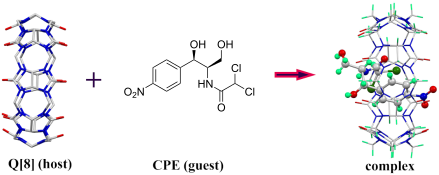
- structure stacking diagram of the CPE@Q[8] host–guest complex along the c-axis. It can be clearly seen that small hexagonal holes are formed between the complexes, which are expected to have potential applications in molecular adsorption and drug delivery. UV–visible spectroscopy The interaction between Q[8


Photophysical, photostability, and ROS generation properties of new trifluoromethylated quinoline-phenol Schiff bases
Beilstein J. Org. Chem. 2021, 17, 2799–2811, doi:10.3762/bjoc.17.191
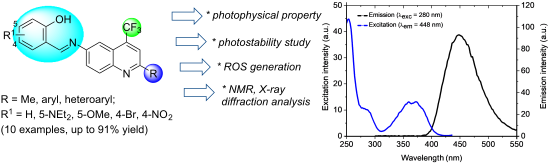
- chloroform solutions were measured with a Cary50 Eclipse Fluorescence Spectrophotometer (excitation/emission; slit 2.5 mm). All spectra can be found in Supporting Information File 1 (Figures S2–S7). Photostability assays were performed using white-light LED array system irradiation (visible range) at 25 mW




A tribute to Carsten Schmuck
Beilstein J. Org. Chem. 2021, 17, 2795–2798, doi:10.3762/bjoc.17.190

- had very intensive international collaborations with many group leaders all over the world, easily visible from scientific publications and from a recent review article [1]. Moreover, Carsten also took a prominent part in several formal EU collaboration schemes, giving a notable contribution to the

Visible-light-mediated copper photocatalysis for organic syntheses
Beilstein J. Org. Chem. 2021, 17, 2520–2542, doi:10.3762/bjoc.17.169
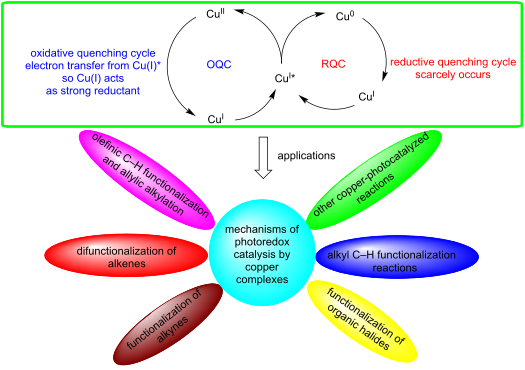
- -planar geometry, thereby resulting in a shorter excited state lifetime compared with ruthenium and iridium-based photocatalysts and thus limiting the application of CuI complexes to visible-light-mediated organic syntheses [22][31]. Homoleptic CuI bisphenanthroline complexes were designed with
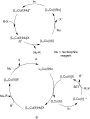
- homolysis to produce CuI species and radical intermediates. These intermediates can initiate productive organic transformations [39]. 2.1 Visible-light-mediated Cu(I) catalytic cycle Upon the absorption of a photon (Scheme 4), CuILn forms a singlet MLCT state, which subsequently yields the excited triplet
- , in path b (a rebound cycle), CuI* is trapped after a SET by the radical intermediate to generate a CuIII species, which undergoes ligand exchange with the nucleophile and reductive elimination to produce the target product and the regenerated CuI catalyst [37][38][40]. 2.2 Visible-light-mediated Cu(I






Synthesis of phenanthridines via a novel photochemically-mediated cyclization and application to the synthesis of triphaeridine
Beilstein J. Org. Chem. 2021, 17, 2340–2347, doi:10.3762/bjoc.17.152
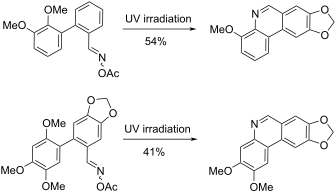
- visible light photoredox-catalyzed cyclizations also afforded phenanthridines (Figure 2, reaction 3) [11]. Inspired by the Rodrıguez and Walton approach, we sought to synthesize the nitrogen analogue of an angucycline known as phenanthroviridone 6, [12] from oxime 7 (Scheme 1). Based on the results




Phenolic constituents from twigs of Aleurites fordii and their biological activities
Beilstein J. Org. Chem. 2021, 17, 2329–2339, doi:10.3762/bjoc.17.151
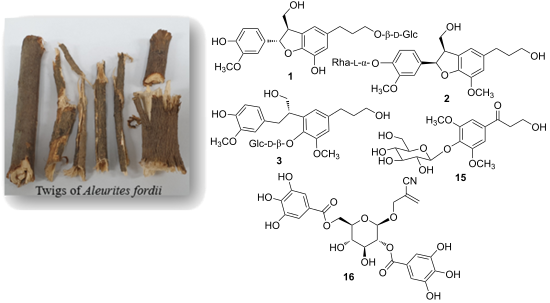
- associated with antineurodegenerative diseases. Experimental General experimental procedures. Optical rotations were measured on a JASCO P-2000 polarimeter. IR spectra were acquired with a JASCO FT/IR-4600 spectrometer. UV spectra were obtained on a Shimadzu UV-1601 UV–visible spectrophotometer. NMR spectra


A visible-light-induced, metal-free bis-arylation of 2,5-dichlorobenzoquinone
Beilstein J. Org. Chem. 2021, 17, 2315–2320, doi:10.3762/bjoc.17.149
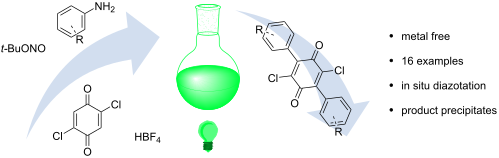
- salts are generated in situ and converted to radicals through irradiation with visible light. Reaction products precipitate from the solvent, eliminating the need for purification and thus providing a novel green method for the synthesis of versatile bis-electrophiles. Keywords: benzoquinone; diazonium


Post-functionalization of drug-loaded nanoparticles prepared by polymerization-induced self-assembly (PISA) with mitochondria targeting ligands
Beilstein J. Org. Chem. 2021, 17, 2302–2314, doi:10.3762/bjoc.17.148
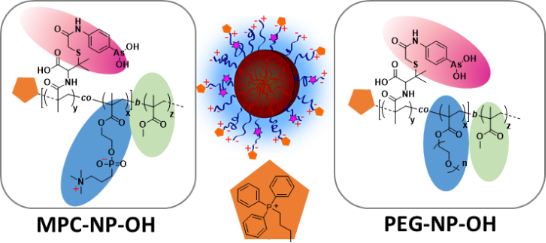
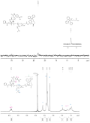
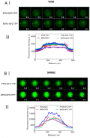
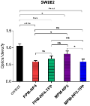
- binding of biorecognition molecules on a PEG nanoparticle to its target only works when the PEG chain length is less than the polymer chain to which the ligand is attached. Otherwise, the long PEG chain will intercept ligand binding [50]. It is also reasonable to think that TPP is barely visible on the






Photoredox catalysis in nickel-catalyzed C–H functionalization
Beilstein J. Org. Chem. 2021, 17, 2209–2259, doi:10.3762/bjoc.17.143
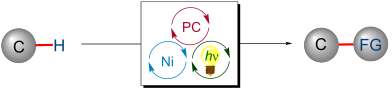
- developments in the field of photoredox nickel-catalyzed C‒H functionalization reactions with a range of applications until summer 2021. Keywords: C–H activation; functionalization; nickel; photocatalysts; photoredox; visible light; Introduction During the last decades, transition-metal-catalyzed
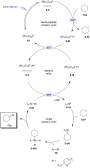
- developments, which enables a diverse range of previously inaccessible organic transformations in milder reaction conditions [31][32][33][34][35][36][37][38][39][40]. Here, by absorbing visible light, a photocatalyst can function as a single-electron redox mediator through an oxidative or reductive quenching
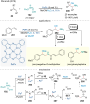
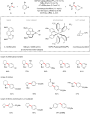
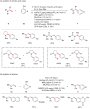
- were found to be suitable to achieve the transformation in satisfactory yields under visible light irradiation (Scheme 2). The authors hypothesized that the key α-nitrogen carbon-centered radical 5 could be generated via a photoredox-driven N-phenyl oxidation and α-C–H deprotonation sequence from














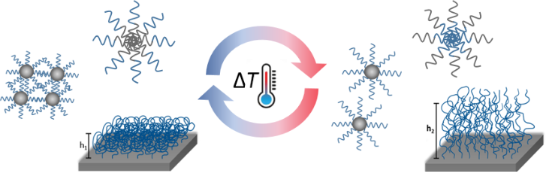
Constrained thermoresponsive polymers – new insights into fundamentals and applications
Beilstein J. Org. Chem. 2021, 17, 2123–2163, doi:10.3762/bjoc.17.138


Towards new NIR dyes for free radical photopolymerization processes
Beilstein J. Org. Chem. 2021, 17, 2067–2076, doi:10.3762/bjoc.17.133
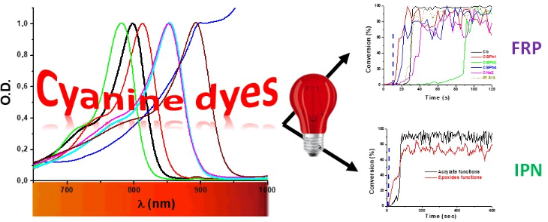
- conversions. To prevent the use of harmful UV light, different longer-wavelength photoinitiating systems (PISs) were proposed, e.g., blue light in dental materials [1][2]. Many PISs were developed for visible light, but much less studies are focused on the polymerization using near-Infrared (NIR) sources [3
- obtained with low energy and a moderate device cost contrary to thermal solutions; ii) mild irradiation conditions: safer and cheaper systems; and iii) the curing of thick and/or filled systems that cannot be addressed with UV or even visible-light-sensitive systems. Thus, the NIR curing of thick and
- (wavelength of the irradiation used). The visible–NIR spectra of IR 813 (Scheme 2) considered as a reference is given in Figure S1 in Supporting Information File 1. NIR polymerization initiating ability Due to the good NIR absorption properties, the proposed dyes have been tested as photoinitiators in


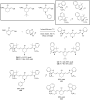


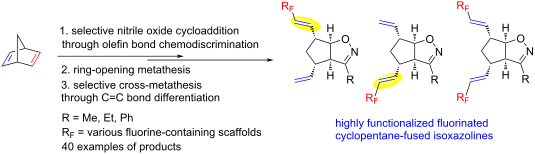
A study on selective transformation of norbornadiene into fluorinated cyclopentane-fused isoxazolines
Beilstein J. Org. Chem. 2021, 17, 2051–2066, doi:10.3762/bjoc.17.132
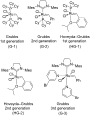
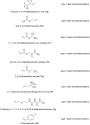
- more effective in the CM transformations. Note, that first-generation catalyst HG-1 did not afford cross-metathesized products. Our data allows to summarize some clearly visible general trends. First of all, most CM reactions of compounds (±)-4 and (±)-5 were only slightly regioselective




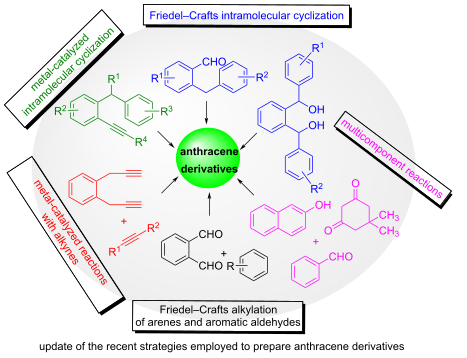
Recent advances in the syntheses of anthracene derivatives
Beilstein J. Org. Chem. 2021, 17, 2028–2050, doi:10.3762/bjoc.17.131
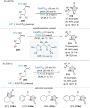
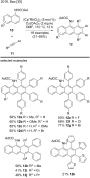
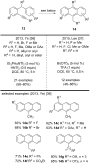
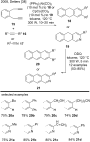
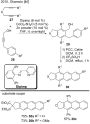
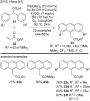
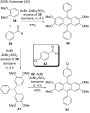
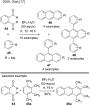
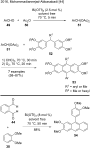
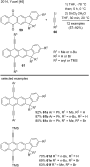
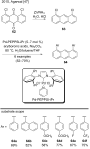
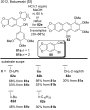
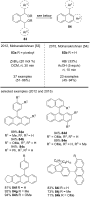
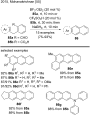
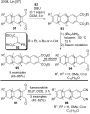
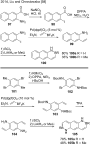
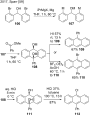
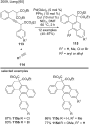
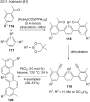
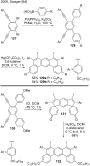
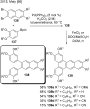
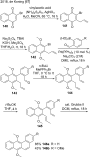
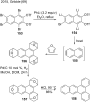
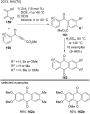
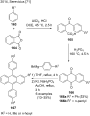
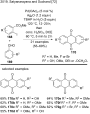
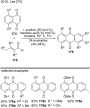
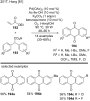
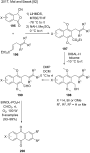
- employed palladium(II) acetate and visible light under O2 in the reactions between ethyl acrylate (192) and substituted diaryl carboxylic acids 193, to produce anthraquinones 194 in low to moderate yields (30–68%). In a direct comparison with the methodology proposed by Hong for the synthesis of
- anthracenes, previously shown in Scheme 7 [41], the key to obtaining anthraquinones was the photooxidation induced by visible light, which afforded the substituted anthraquinones 194. In this case, the effect of the aromatic ring substituents also affected the yield of the anthraquinones, as can be seen from
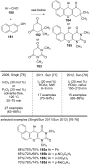
- multicomponent reactions employing 2-hydroxy-1,4-naphthoquinone (186), β-naphthol (181), and aromatic aldehydes. Synthesis of substituted anthraquinones catalyzed by an AlCl3/MeSO3H system. Palladium(II)-catalyzed/visible light-mediated synthesis of anthraquinones. [4 + 2] Anionic annulation reaction for the
















On the application of 3d metals for C–H activation toward bioactive compounds: The key step for the synthesis of silver bullets
Beilstein J. Org. Chem. 2021, 17, 1849–1938, doi:10.3762/bjoc.17.126
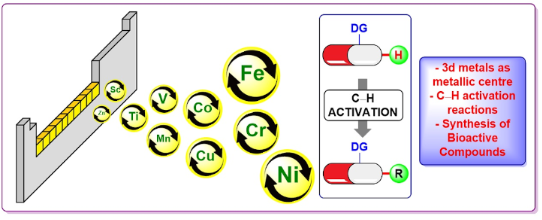
- has been selectively feasible without activating a C(sp2)–H bond in the arene moiety. Verma and co-workers [91] have reported the use of VO(acac)2 immobilized over graphitic carbon nitride (VO@gC3N4) under visible light irradiation to perform a photocatalytic C–H activation of arene methides and
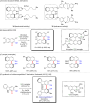
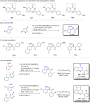
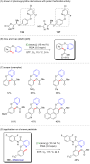
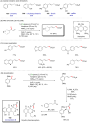
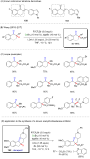
- are crucial. In 2018, Ackermann and co-workers described a novel room temperature C–H arylation by using a continuous visible light photo-flow technique, allied with a manganese photocatalyst CpMn(CO)3 [142]. The new flow protocol enabled the synthesis of several arene- and heterocyclic-based




























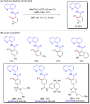
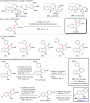
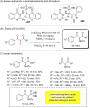
Sustainable manganese catalysis for late-stage C–H functionalization of bioactive structural motifs
Beilstein J. Org. Chem. 2021, 17, 1733–1751, doi:10.3762/bjoc.17.122

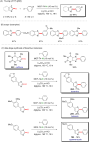
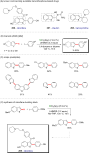
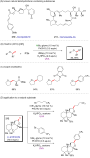
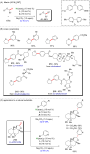
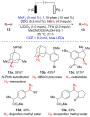
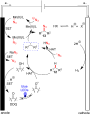
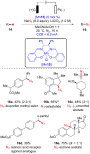
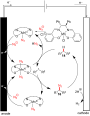
- , azidated N-protected memantine 13a was successfully generated by employing electricity and visible-light irradiation in the presence of a Mn catalyst. High regioselectivity was observed at tertiary or benzylic positions (see 13a–c). For commercially available drug derivatives, methyl esters of ibuprofen
- excluded. This late-stage process by Mn catalysis, electrochemistry, and visible-light catalysis exhibits high value as a sustainable tool to investigate problematic synthetic transformations. Recently, the Ackermann group disclosed a convenient manganese-catalyzed late-stage C–H azidation of bioactive


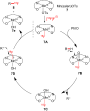







Cerium-photocatalyzed aerobic oxidation of benzylic alcohols to aldehydes and ketones
Beilstein J. Org. Chem. 2021, 17, 1727–1732, doi:10.3762/bjoc.17.121

- ; aldehydes; cerium; oxidation; ketones; visible light; Introduction The selective oxidation of alcohols to carbonyl compounds [1][2] is an important process for producing a wide range of value-added fine chemicals [3][4][5][6]. In the traditional oxidation process stoichiometric amounts of oxidants such as
- acting as the terminal oxidant [13][14][15][16][17][18][19][20][21][22][23][24][25][26][27][28][29][30][31][32][33]. Most aerobic oxidation reactions utilize either metal complexes and nanoparticles or persistent radical reagents as catalysts [21]. In the past ten years, visible light-induced
- generating oxygen-centered radicals, that lead to carbon-centered radicals through intra/intermolecular hydrogen atom transfer (HAT) processes, radical decarboxylative or radical deformylation [57][58][59]. In continuation of our research interest on visible-light-driven cerium photocatalysis [59][65], we


2,4-Bis(arylethynyl)-9-chloro-5,6,7,8-tetrahydroacridines: synthesis and photophysical properties
Beilstein J. Org. Chem. 2021, 17, 1629–1640, doi:10.3762/bjoc.17.115
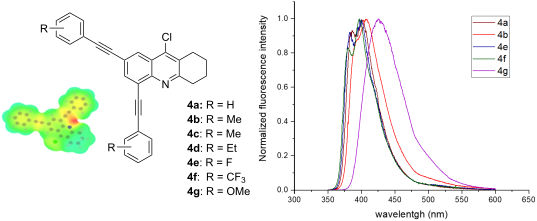
- properties. Herein, starting from readily available anthranilic acid, an efficient synthesis of 2,4-bis(arylethynyl)-9-chloro-5,6,7,8-tetrahydroacridine derivatives was accomplished via a one-pot double Sonogashira cross-coupling method. The UV-visible absorption and emission properties of the synthesized