

Search results
Search for "transformations" in Full Text gives 1191 result(s) in Beilstein Journal of Organic Chemistry. Showing first 200.
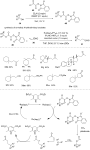
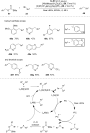
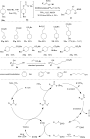
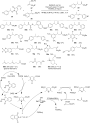
Synthetic applications of the Cannizzaro reaction
Beilstein J. Org. Chem. 2024, 20, 1376–1395, doi:10.3762/bjoc.20.120
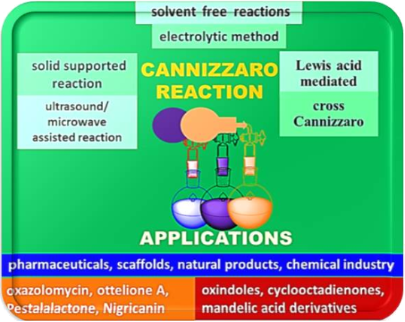
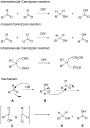
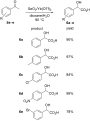
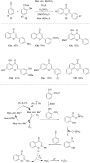
- ytterbium triflate, ZrO2, Cu(OT)2, MgBr2, LiBr, AlCl3, Fe and Ru catalysts have gained attention [40][41][42][43]. The Cannizzaro reaction has also found extensive use in the synthesis of bioactive and drug molecules [44][45][46]. Moreover, enzymatic transformations have been also observed for the synthesis
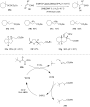
- flavoring agents, it plays a vital role for the development of unique sensory compounds [56][57]. The Cannizzaro disproportionation has also been observed in several electrochemical transformations [58] and during the electrocatalytic reduction of carbon dioxide [59]. A recent study by Liu et al. witnessed
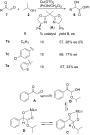
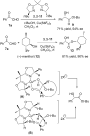
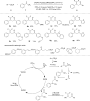
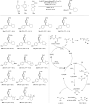
- [87]. The sequence of transformations commencing from the aldehyde 64 afforded the desymmetrized biaryl derivative 66 and proceeded towards the final natural product 67 (Scheme 20). Applying crossed-Cannizzaro reaction: Mondal and coauthors demonstrated an efficient application of the aldol/crossed







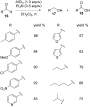


Generation of alkyl and acyl radicals by visible-light photoredox catalysis: direct activation of C–O bonds in organic transformations
Beilstein J. Org. Chem. 2024, 20, 1348–1375, doi:10.3762/bjoc.20.119
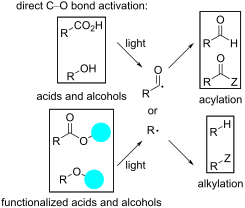
- radicals by activation of C–O bonds using visible-light photoredox catalysis offers a mild and environmentally benign approach to useful chemical transformations. Alcohols, carboxylic acids, anhydrides, xanthates, oxalates, N-phthalimides, and thiocarbonates are some examples of alkyl and acyl precursors
- that can produce reactive radicals by homolysis of the C–O bond. These radicals can then go through a variety of transformations that are beneficial for the construction of synthetic materials that are otherwise difficult to access. This study summarizes current developments in the use of organic
- synthesis [4][5][6][7][8][9]. In the context of sustainable catalysis, visible-light-mediated chemistry is becoming a prominent viable option for radical transformations in the synthesis of biologically useful compounds due to the energy efficiency and environmental friendliness [10][11]. Recently, the

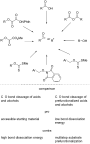


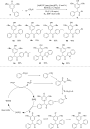



Transition-metal-catalyst-free electroreductive alkene hydroarylation with aryl halides under visible-light irradiation
Beilstein J. Org. Chem. 2024, 20, 1327–1333, doi:10.3762/bjoc.20.116
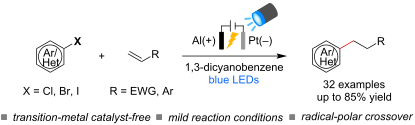
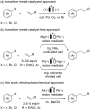
- intermediates through a single-electron transfer process [26][27][28][29][30][31]. In particular, electroreductive transformations have recently received renewed attention from modern synthetic chemists as a safer protocol than conventional methods using chemical reductants such as metal hydride species [32][33
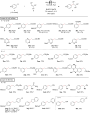
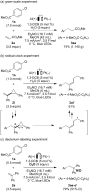
- 3pa and 3qa, respectively. In addition to the successful transformations of heteroaryl iodides with indole or pyridine cores (3ra, 3sa), the electroreductive synthesis of methaqualone derivatives was also achieved (3ta). Pleasingly, a series of electron-deficient alkene and styrene derivatives were


Computation-guided scaffold exploration of 2E,6E-1,10-trans/cis-eunicellanes
Beilstein J. Org. Chem. 2024, 20, 1320–1326, doi:10.3762/bjoc.20.115

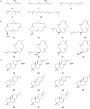
- -eunicellane skeletons, respectively. Although the structures of these diterpenes only differed in their configuration at a single position, C1, they displayed distinct chemical and thermal reactivities. Here, we used a combination of quantum chemical calculations and chemical transformations to probe their
- when the C6–C7 alkene of 2 was oxidized by mCPBA oxidation, resulting in formation of the gersemianol derivative 8 [7]. Inspired by the reactivity of the trans-eunicellane skeleton, we conducted a series of chemical transformations to convert 2 into trans/trans-6/6/6 bicyclic skeletons with various
- appears to be the dominant form in nature (≈98%). Perhaps the inherent reactivity seen for 2E-trans-eunicellanes contributes to their presumed rarity in nature, as certain conditions or transformations, either enzymatic or spontaneous, may alter the hydrocarbon skeleton. This idea is supported by the


Sustainable tandem acylation/Diels–Alder reaction toward versatile tricyclic epoxyisoindole-7-carboxylic acids in renewable green solvents
Beilstein J. Org. Chem. 2024, 20, 1308–1319, doi:10.3762/bjoc.20.114
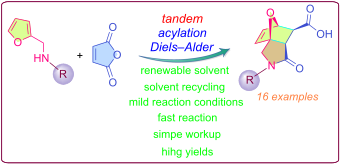
- second step of this reaction, regio- and stereochemically controlled intramolecular cyclization leads to the formation of versatile nitrogen-containing tricyclic systems. However, these useful organic transformations are usually carried out in highly toxic organic solvents such as benzene, toluene
- prediction that their resources will run out in the near future has led 'green chemists' to explore solvents that can be derived from renewable resources and used effectively in various organic transformations. In this context, we have shown for the first time that the 100% atom-economical tandem Diels–Alder
- applications [15][16]. These oils are of increasing interest for the production of a wide range of polymeric materials [17][18][19][20][21][22][23], drug delivery systems [24][25][26][27][28][29], less toxic anticancer drugs [30][31][32][33] and intermediates suitable for various organic transformations [14


Oxidative hydrolysis of aliphatic bromoalkenes: scope study and reactivity insights
Beilstein J. Org. Chem. 2024, 20, 1286–1291, doi:10.3762/bjoc.20.111
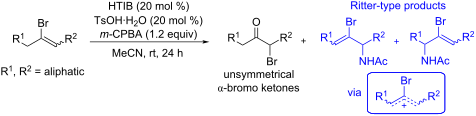
- alternative reaction pathway. Keywords: bromoalkenes; bromoketones; hypervalent iodine; oxidative hydrolysis; Ritter-type; Introduction Organic synthesis heavily relies on oxidative transformations to facilitate chemical reactions. One popular method for achieving these transformations is using redox-active
- transformations, cementing their position as a go-to option for organic chemists. Based on our continued interest in iodine(III)-mediated chemistry, we have explored numerous strategies in oxidative transformations such as direct α-tosyloxylation of ketones [12][13][14], and the oxidation of enol esters [15][16



The Ugi4CR as effective tool to access promising anticancer isatin-based α-acetamide carboxamide oxindole hybrids
Beilstein J. Org. Chem. 2024, 20, 1213–1220, doi:10.3762/bjoc.20.104
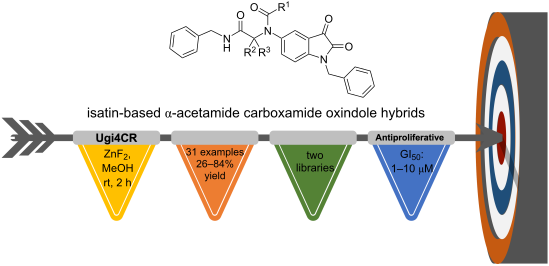
- aspects. Multicomponent reactions (MCRs) are remarkable tools which demonstrated great potential for more sustainable production of active pharmaceutical ingredients (API’s). These flexible and versatile one-pot transformations in which three or more reagents are combined to access a new complex scaffold


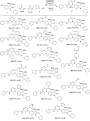


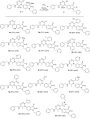

Bismuth(III) triflate: an economical and environmentally friendly catalyst for the Nazarov reaction
Beilstein J. Org. Chem. 2024, 20, 1167–1178, doi:10.3762/bjoc.20.99
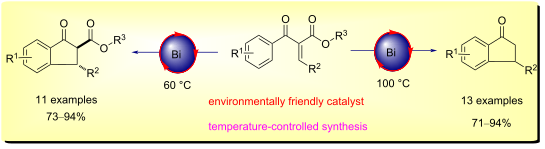
- synthesis has been reported for several transformations, such as epoxide opening [56], ketal formation and deprotection [57][58], Mannich reaction [59], intramolecular Sakurai cyclization [60], alcohol oxidation [61], aromatic hydrocarbon nitration [62], imine allylation [63], Knoevenagel condensation [64


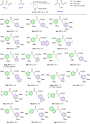
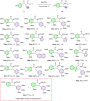
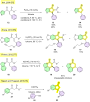


Manganese-catalyzed C–C and C–N bond formation with alcohols via borrowing hydrogen or hydrogen auto-transfer
Beilstein J. Org. Chem. 2024, 20, 1111–1166, doi:10.3762/bjoc.20.98
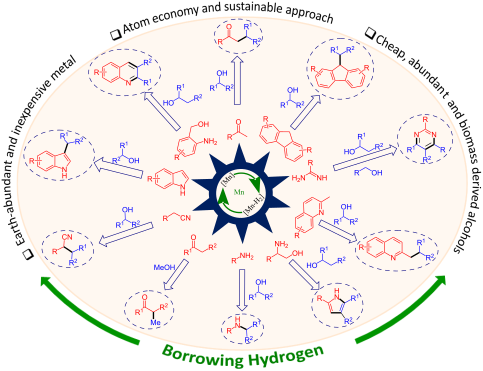
- Milstein [17] in hydrogenation and dehydrogenation reactions with pincer-decorated manganese complexes, significant progress has been made in manganese catalysis [18][19][20]. Notably, well-defined low-valent diamagnetic manganese(I) complexes have been studied in many catalytic transformations, and




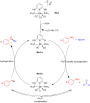


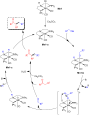

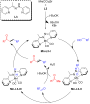


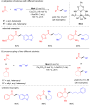















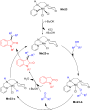


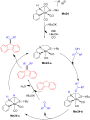

Synthesis of 1,4-azaphosphinine nucleosides and evaluation as inhibitors of human cytidine deaminase and APOBEC3A
Beilstein J. Org. Chem. 2024, 20, 1088–1098, doi:10.3762/bjoc.20.96
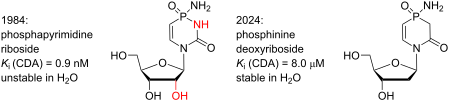
- kinetic data using Lambert’s W function [71]. This method provides better estimates for the Michaelis–Menten constant (KM) and maximum velocity (Vmax) than nonlinear regression analysis of the initial rate (V0). It is also superior to any of the known linearised transformations of the Michaelis–Menten
- equation, such as Lineweaver–Burk, Hanes–Woolf and Eadie–Hofstee transformations [71]. Then, KM for the substrate and Ki for each inhibitor were calculated, assuming competitive nature of the inhibitors (Table 1). Initially, we performed this assay in 50 mM sodium phosphate buffer at pH 7.4 (25 °C) and


Mild and efficient synthesis and base-promoted rearrangement of novel isoxazolo[4,5-b]pyridines
Beilstein J. Org. Chem. 2024, 20, 1069–1075, doi:10.3762/bjoc.20.94
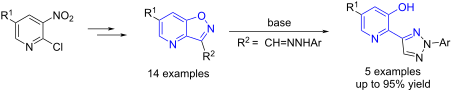
- -b]pyridine took place, followed by a base-promoted decarbonylation/isoxazole ring opening. Such transformations have been previously reported for benzo[d]isoxazoles with a carbonyl or carboxyl group in position 3 or 3-unsubstituted benzo[d]isoxazoles [25][26][27][28][29]. This means that the formyl


Carbonylative synthesis and functionalization of indoles
Beilstein J. Org. Chem. 2024, 20, 973–1000, doi:10.3762/bjoc.20.87
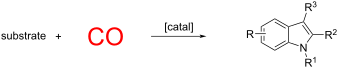
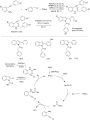
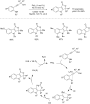
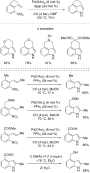
- synthesis of a set of 12 desired products. These included an ethyl ester and a carboxylic acid, and were all obtained in good yields of up to 99% (Scheme 45). Conclusion We have summarized the importance of carbon monoxide as C1 building block to promote different kinds of transformations to synthesize and












Enhancing structural diversity of terpenoids by multisubstrate terpene synthases
Beilstein J. Org. Chem. 2024, 20, 959–972, doi:10.3762/bjoc.20.86
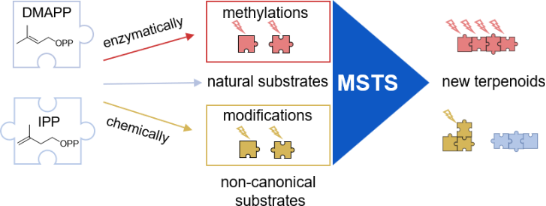
- combinatorial biosynthesis. An important review published previously comprehensively addressed the transformation of synthetic prenyl-substrate analogs by TSs as well as TS-mimicking chemical transformations [13]. In this review, we discuss representative MSTSs originating from different species that use
- analogs have been synthesized to act as actual substrates of TSs to generate novel terpene skeletons, introduce reaction handles, and produce value-added compounds. A previous review has covered the advances of TS-catalyzed transformations of synthetic substrate analogs up to 2019 [13][42]. Here, we







Enantioselective synthesis of β-aryl-γ-lactam derivatives via Heck–Matsuda desymmetrization of N-protected 2,5-dihydro-1H-pyrroles
Beilstein J. Org. Chem. 2024, 20, 940–949, doi:10.3762/bjoc.20.84
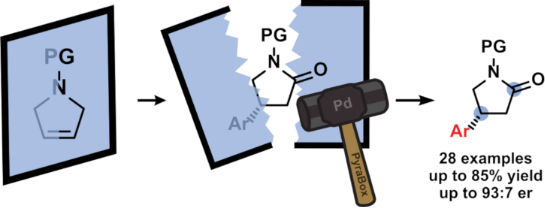
- preclude chirality as in the transformation of a prochiral molecular entity into a chiral one [1]. It is a powerful and elegant strategy in asymmetric synthesis [2], which combined with the use of chiral ligands and transition-metal catalysts enabled many valuable transformations to increase molecular




Three-component N-alkenylation of azoles with alkynes and iodine(III) electrophile: synthesis of multisubstituted N-vinylazoles
Beilstein J. Org. Chem. 2024, 20, 891–897, doi:10.3762/bjoc.20.79
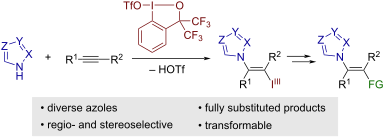
- performed in 68% and 74% yields, respectively (Scheme 4a). Furthermore, the iodanyl group on these products serves as a versatile handle for downstream transformations, thus allowing for the stereoselective preparation of various trisubstituted N-vinylazoles (Scheme 4b). Pd-catalyzed C–C couplings such as
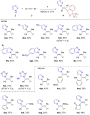
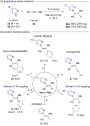
- other heteroatom nucleophiles is currently underway. Synthesis of N-vinylazoles. Scope of three-component N-alkenylation of azoles. Competition experiments and plausible reaction pathway. Preparative-scale reaction and product transformations. Reaction conditions: (a) Pd(PPh3)4, 4-MeOC6H4B(OH)2, Cs2CO3



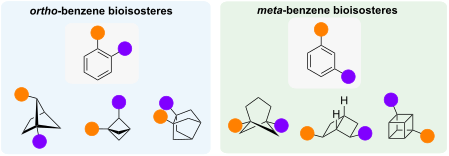
(Bio)isosteres of ortho- and meta-substituted benzenes
Beilstein J. Org. Chem. 2024, 20, 859–890, doi:10.3762/bjoc.20.78
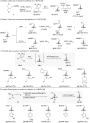
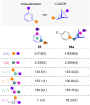
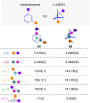
- , deiodination at the bridgehead position, and nucleophilic substitution at the alkyl chloride. From 1,2-BCP (±)-4, a variety of 1,2-BCPs were prepared through basic chemical transformations (Scheme 1B) [26]. Selective deprotection gave access to free alcohol-containing 1,2-BCPs (±)-5 and (±)-8. Oxidation and
- alkenes including acrylates, vinyl sulfones, and acrylamides could all be incorporated and the number of accessible bifunctional 1,2-BCHs was increased further by chemical transformation (Scheme 3D) [35]. Among the reported transformations were reduction of the ketone (to (±)-34), hydrolysis of the
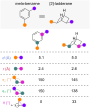
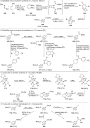
- transformations. Additional bifunctional [2]-ladderanes were accessible by further synthetic manipulations (Scheme 16C) [63]. Acid 152 could be transformed into protected amine 153 by Curtius rearrangement and alcohol 155 through reduction. The [2]-ladderane scaffold was also shown to be tolerant of oxidising

















Skeletal rearrangement of 6,8-dioxabicyclo[3.2.1]octan-4-ols promoted by thionyl chloride or Appel conditions
Beilstein J. Org. Chem. 2024, 20, 823–829, doi:10.3762/bjoc.20.74
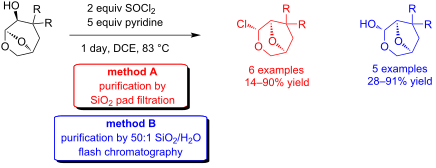
- described for the first time. The work builds upon the findings of the groups of Karban and Banwell, who described this type of ring transformation using DAST, with two new reagents for promoting the rearrangement reaction. This work adds to the growing set of transformations that are known for
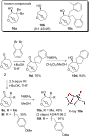
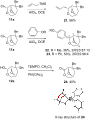
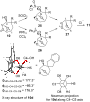
- 10a–c, preparation of 10d–f, and X-ray structure of 10e. Rearrangement reactions for 10a–f promoted by SOCl2. Reactions of allylic alcohols 15 and 18 with SOCl2. Appel reactions of dioxabicyclo[3.2.1]octan-4-ols 10a,e,f and 15. Some transformations for the skeletal rearrangement products 11a and 12a




Synthesis of new representatives of A3B-type carboranylporphyrins based on meso-tetra(pentafluorophenyl)porphyrin transformations
Beilstein J. Org. Chem. 2024, 20, 767–776, doi:10.3762/bjoc.20.70
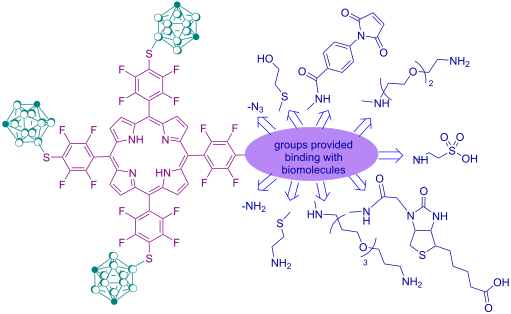
- synthesis and characterization of tris(carboranyl)porphyrins of A3B-type (where “B” corresponds to the substituent responsible for bioconjugate coupling) based on the transformations of 5,10,15,20-tetrakis(pentafluorophenyl)porphyrin which was used as a basic compound for the synthesis of new boronated



Chemoenzymatic synthesis of macrocyclic peptides and polyketides via thioesterase-catalyzed macrocyclization
Beilstein J. Org. Chem. 2024, 20, 721–733, doi:10.3762/bjoc.20.66
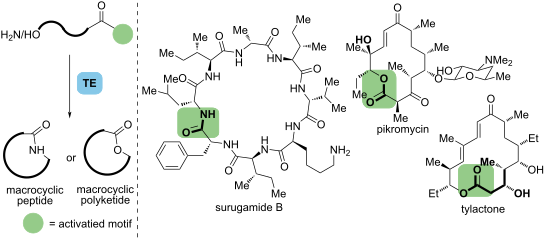
- .20.66 Abstract Chemoenzymatic strategies that combine synthetic and enzymatic transformations offer efficient approaches to yield target molecules, which have been increasingly employed in the synthesis of bioactive natural products. In the biosynthesis of macrocyclic nonribosomal peptides, polyketides
- increase the ratio of intramolecular nucleophilic attack, resulting in macrocyclic products via preorganization of substrate and enzyme in an active conformation [17][18]. Chemoenzymatic strategies, which merge practical enzymatic transformations with modern organic synthetic methods to increase the
- epoxidation with enzymatic macrocyclization in 2020 as shown in Scheme 8 [85]. According to their previous report [86], the production of fragments 61 was initiated by Evans’ asymmetric aldol and alcohol protection to generate 57. Six-step route transformations, including cross metathesis, afforded aldehyde


SOMOphilic alkyne vs radical-polar crossover approaches: The full story of the azido-alkynylation of alkenes
Beilstein J. Org. Chem. 2024, 20, 701–713, doi:10.3762/bjoc.20.64
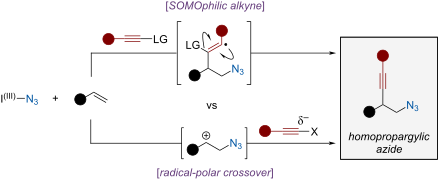
- can be found in bioactive molecules and have been tested in structure–activity relationship studies (Scheme 1A) [8][9][10]. Moreover, transformations have been developed to exploit the two functional groups simultaneously, for example through their intramolecular cyclization to form pyrroles in the
- increase the yield of different transformations. Using fluoride scavenger such as TMSCl, TFAA or TMS2(O) led to similar or lower yields (Table 7, entries 3–5). We were pleased to see that in the presence of BF3·Et2O, 4a was obtained in 75% yield (Table 7, entry 6). Addition of a less acidic boron Lewis


Regioselective quinazoline C2 modifications through the azide–tetrazole tautomeric equilibrium
Beilstein J. Org. Chem. 2024, 20, 675–683, doi:10.3762/bjoc.20.61
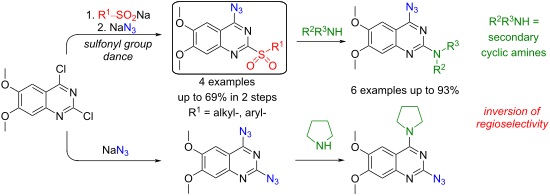
- –tetrazole tautomeric equilibrium directs the nucleofugal sulfinate from the first step to replace chloride at the C2 position. This transformation is effective with quinazolines bearing electron-rich substituents. Therefore, the title transformations are demonstrated on the 6,7-dimethoxyquinazoline core


Palladium-catalyzed three-component radical-polar crossover carboamination of 1,3-dienes or allenes with diazo esters and amines
Beilstein J. Org. Chem. 2024, 20, 661–671, doi:10.3762/bjoc.20.59
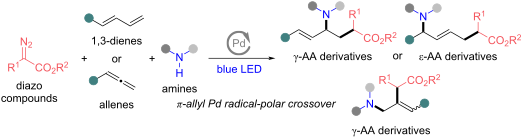
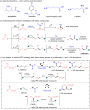
- amines. Scale-up reactions and synthetic transformations. Reaction conditions: a) LiAlH4, THF, 0 °C; b) MeMgBr, THF, rt to reflux; c) NaOH, MeOH, 60 °C, d) EDCI, DMAP, BnNH2, DCM, rt; e) EDCI, DMAP, Et3N, HN(OMe)(Me)·HCl, DCM, rt; f) MeMgBr, THF, 0 °C to rt; g) Pd/C, HCO2NH4, 65 °C. For more details, see



A laterally-fused N-heterocyclic carbene framework from polysubstituted aminoimidazo[5,1-b]oxazol-6-ium salts
Beilstein J. Org. Chem. 2024, 20, 621–627, doi:10.3762/bjoc.20.54
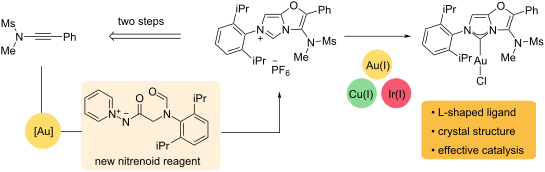
- seen with imidazolidines (cf. for IPr TEP[Ir] = 2050.2 cm−1) [34]. A benchmarking exercise was then performed looking at the reactivity of 13 compared against reaction of symmetrical IPrAuCl across a range of known gold-mediated transformations of alkynes featuring intermolecular attack [35
- ) complex is catalytically competent across several transformations with excellent conversions at 1 mol % loading and with broadly comparable reactivity to IPrAuCl. Having validated the AImOx motif as a viable ligand platform for development, further elaboration and applications will be reported in due


Entry to new spiroheterocycles via tandem Rh(II)-catalyzed O–H insertion/base-promoted cyclization involving diazoarylidene succinimides
Beilstein J. Org. Chem. 2024, 20, 561–569, doi:10.3762/bjoc.20.48
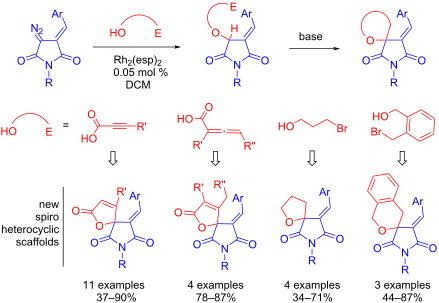
- ) or a bromine atom. These transformations yield spiro-annulated O-heterocycles with succinimide ring, namely spiro-Δα,β-butenolides 2 and 3, tetrahydrofurans 4 and benzopyrans 5 (Scheme 1). Fragments of these oxygen-containing spiro-conjugated heterocycles are part of many important drugs and natural
- -(bromomethyl)benzyl alcohol. Examples where a target spirocyclic product was not observed. Plausible mechanism of the transformations studied. Supporting Information Deposition numbers CCDC 2295111 (for 2a), 2308315 (for 3b), and 2305370 (for 4b) contain the supplementary crystallographic data for this paper


Synthesis of photo- and ionochromic N-acylated 2-(aminomethylene)benzo[b]thiophene-3(2Н)-ones with a terminal phenanthroline group
Beilstein J. Org. Chem. 2024, 20, 552–560, doi:10.3762/bjoc.20.47
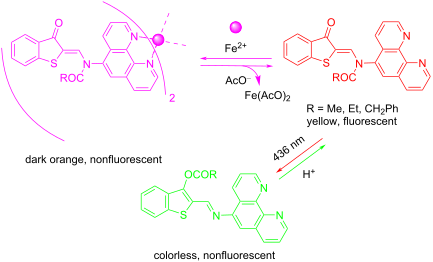
- the phenanthroline unit was also involved in a π–π-stacking interaction (blue plane–green plane in Figure 4), with the plane centroid–plane centroid distance being 3.6998(8) Å (plane shift 1.4919(17) Å, twist and fold angles 1.54° and 1.92°, respectively). Cation-induced transformations of the