

Search results
Search for "quantum yields" in Full Text gives 178 result(s) in Beilstein Journal of Organic Chemistry.
Functional properties of metallomesogens modulated by molecular and supramolecular exotic arrangements
Beilstein J. Org. Chem. 2009, 5, No. 54, doi:10.3762/bjoc.5.54
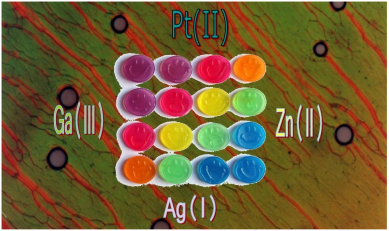
- in solution), in the red region of the Vis spectrum (λ = 610 nm), with emission quantum yields in the range of 6–23%, depending on the solvent. However, the 3,4,5-trialkoxy-substituted benzoato fragment of the curcumin ligand imposes an overall hemi-disc structure to the resulting palladium


Reversible intramolecular photocycloaddition of a bis(9-anthrylbutadienyl)paracyclophane – an inverse photochromic system. (Photoactive cyclophanes 5)
Beilstein J. Org. Chem. 2009, 5, No. 20, doi:10.3762/bjoc.5.20
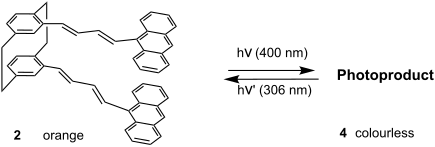
- concentration, no intermolecular reaction could compete with an intramolecular process [12]. Disappearance quantum yields at 394 nm were found to be low in methylcyclohexane (1.5 × 10⁻⁴) and in acetonitrile (4.2 × 10⁻²). The weakness of the cyclophotoaddition probably reflects a preference for internal
- balance (sensitivity 10−7 g). Quantum yields Reaction quantum yields were determined as described elsewhere [29], using the Parker iron trioxalate actinometer. The monochromatic beams were obtained from a cooled 1000 W Xenon lamp, using a Bausch and Lomb monochromator. The samples were previously purged


Synthesis of coumarin or ferrocene labeled nucleosides via Staudinger ligation
Beilstein J. Org. Chem. 2006, 2, No. 23, doi:10.1186/1860-5397-2-23
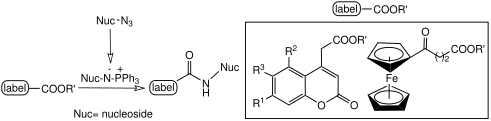
- ), which were synthesised in our department as part of studies into new ligands. Coumarins as fluorescent probes or labels [28][29][30] have extensive and diverse applications, they exhibit extended spectral range, are photostable and have high emission quantum yields. Ferrocene derivatives are often used


Other Beilstein-Institut Open Science Activities