
Search results
Search for "organic" in Full Text gives 3071 result(s) in Beilstein Journal of Organic Chemistry. Showing first 200.
Orthogonal photoswitching of heterobivalent azobenzene glycoclusters: the effect of glycoligand orientation in bacterial adhesion
Beilstein J. Org. Chem. 2025, 21, 736–748, doi:10.3762/bjoc.21.57
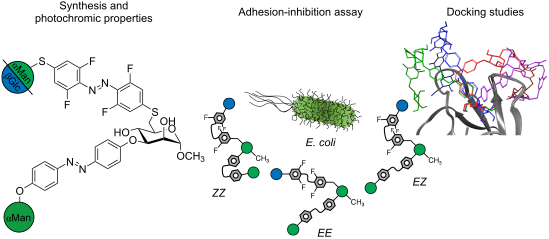
- Leon M. Friedrich Thisbe K. Lindhorst Otto Diels Institute of Organic Chemistry, Christiana Albertina University of Kiel, Otto-Hahn-Platz 3–4, 24118 Kiel, Germany 10.3762/bjoc.21.57 Abstract Carbohydrate recognition is fundamental to a plethora of cellular processes and hence the elucidation of
- . Supporting Information File 1, Figures S13–S16). DMSO is known for its bactericidal effect and still, the use of this organic solvent in bioassays is common [42]. In general, a DMSO concentration of less than 10% (v/v) is accepted as nontoxic [43]. In any case, the effect of DMSO in the assays was carefully


Synthesis of HBC fluorophores with an electrophilic handle for covalent attachment to Pepper RNA
Beilstein J. Org. Chem. 2025, 21, 727–735, doi:10.3762/bjoc.21.56
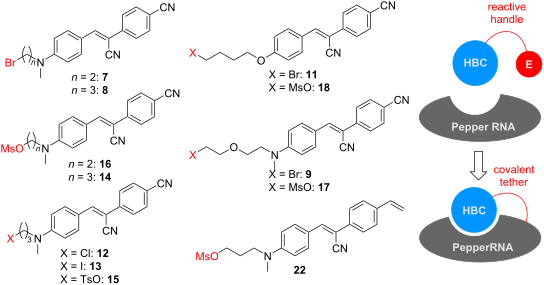
- Raphael Bereiter Ronald Micura Institute of Organic Chemistry, Center for Molecular Biosciences, Innsbruck (CMBI), University of Innsbruck, Innrain 80-82, 6020 Innsbruck, Austria 10.3762/bjoc.21.56 Abstract The fluorescent light-up aptamer (FLAP) Pepper can utilize fluorophores that are equipped



Acyclic cucurbit[n]uril bearing alkyl sulfate ionic groups
Beilstein J. Org. Chem. 2025, 21, 717–726, doi:10.3762/bjoc.21.55
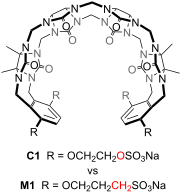
- elements of life processes including self- versus non-self-recognition, biosynthesis, molecular and ion transport, and replication. Beginning with the pioneering works of Pedersen, Lehn, and Cram, supramolecular chemists have studied the fundamental aspects of non-covalent interactions in organic solvents




Origami with small molecules: exploiting the C–F bond as a conformational tool
Beilstein J. Org. Chem. 2025, 21, 680–716, doi:10.3762/bjoc.21.54
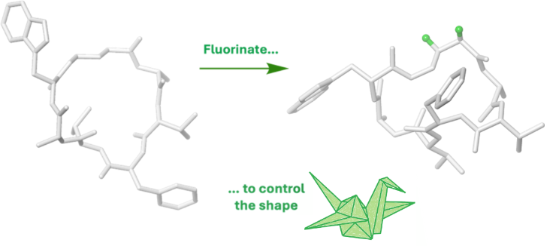
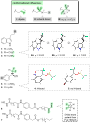
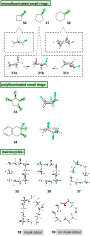
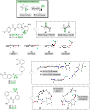
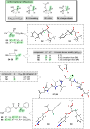
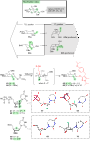
- Patrick Ryan Ramsha Iftikhar Luke Hunter School of Chemistry, The University of New South Wales (UNSW), Sydney 2052, Australia 10.3762/bjoc.21.54 Abstract When present within an organic molecule, the C–F bond tends to align in predictable ways with neighbouring functional groups, due to
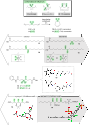
- compact size of the fluorine atom itself, means that fluorine can be incorporated into an organic molecule as a replacement for hydrogen without drastically altering the molecular volume. Second, the C–F bond is highly polarised. This means that any molecular conformation in which the C–F dipole is
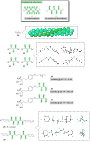
- concepts to their own scaffolds of interest. Review 1 Alkanes The simplest organic scaffolds are the alkanes. In such molecules, C–C bond rotations often have low energy barriers, and they often deliver conformers that are similar in energy, and this means that many alkanes have considerable conformational



Photochemically assisted synthesis of phenacenes fluorinated at the terminal benzene rings and their electronic spectra
Beilstein J. Org. Chem. 2025, 21, 670–679, doi:10.3762/bjoc.21.53
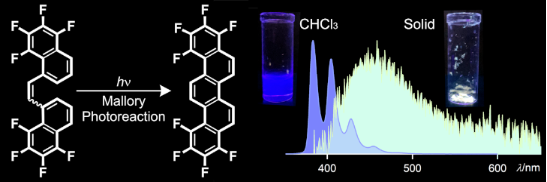
- chemistry, but also for their application in materials science, in particular, in organic electronics [1][2][3][4]. Among the structural classifications of PAHs, the representatives are acenes and phenacenes; the former consisting of linearly fused benzene-ring arrays while the latter exhibit zigzag ones
- due to the angular annelation. These series are known as one-dimensional graphene ribbons. As has been commonly recognized, acene molecules have been intensively and extensively studied in the organic functional materials field [5][6][7]. By contrast, phenacenes had been hardly applied as functional
- molecules in spite of their long history; phenacenes were recognized as contents in petroleum-industry residues as early as in the 19th century [8][9]. In the last decade, phenacenes were demonstrated to serve as platform materials namely in organic electronics, such as chromophores for photovoltaics [10




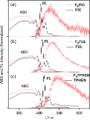

Asymmetric synthesis of fluorinated derivatives of aromatic and γ-branched amino acids via a chiral Ni(II) complex
Beilstein J. Org. Chem. 2025, 21, 659–669, doi:10.3762/bjoc.21.52
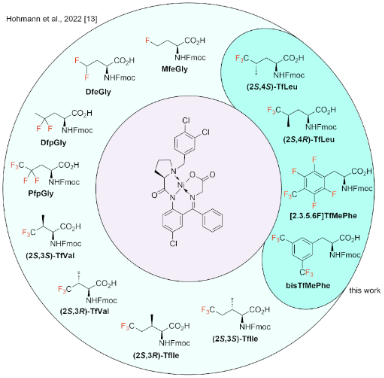
- , base, solvent, and reagent equivalents to optimize the alkylation reaction for both bromides 4 and 5 (Table 1 and Table 2). For Ni(II) complex of [2.3.5.6F]TfMePhe (6), firstly we screened different inorganic and organic bases (Table 1, entries 1–3) and 1,8-diazabicyclo[5.4.0]undec-7-ene (DBU) was
- with DCM (2 × 40 mL). The combined organic phases were then washed with aq HCl (2 M, 12 mL), saturated aqueous NaHCO3 solution (12 mL), and brine (12 mL). Afterward, the combined organic phases were dried over Na2SO4, filtered, and dried in vacuo for 16 h. The crude product was purified via flash


Recent advances in allylation of chiral secondary alkylcopper species
Beilstein J. Org. Chem. 2025, 21, 639–658, doi:10.3762/bjoc.21.51
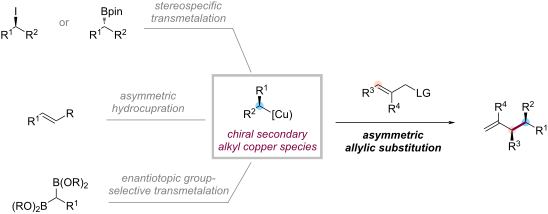
- Abstract The transition-metal-catalyzed asymmetric allylic substitution represents a pivotal methodology in organic synthesis, providing remarkable versatility for complex molecule construction. Particularly, the generation and utilization of chiral secondary alkylcopper species have received considerable
- secondary organocopper; copper-mediated reaction; stereoselectivity; Introduction The transition-metal-catalyzed regio- and enantioselective allylic substitution represents a pivotal methodology in organic synthesis, providing remarkable versatility for complex molecule construction [1][2][3][4]. The
- AAA methodologies. Review Copper-catalyzed stereospecific coupling of chiral organometallic species with allylic electrophiles The asymmetric construction of carbon–carbon bonds through copper-catalyzed AAA has emerged as a powerful synthetic tool in organic chemistry [41][42][43][44][45]. The




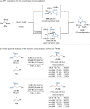
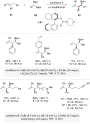

Entry to 2-aminoprolines via electrochemical decarboxylative amidation of N‑acetylamino malonic acid monoesters
Beilstein J. Org. Chem. 2025, 21, 630–638, doi:10.3762/bjoc.21.50
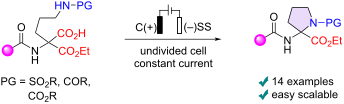
- Olesja Koleda Janis Sadauskis Darja Antonenko Edvards Janis Treijs Raivis Davis Steberis Edgars Suna Latvian Institute of Organic Synthesis, Aizkraukles 21, Riga LV-1006, Latvia Faculty of Medicine and Life Sciences, Department of Chemistry, University of Latvia, Jelgavas 1, Riga LV-1004, Latvia

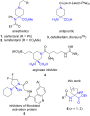


Photocatalyzed elaboration of antibody-based bioconjugates
Beilstein J. Org. Chem. 2025, 21, 616–629, doi:10.3762/bjoc.21.49
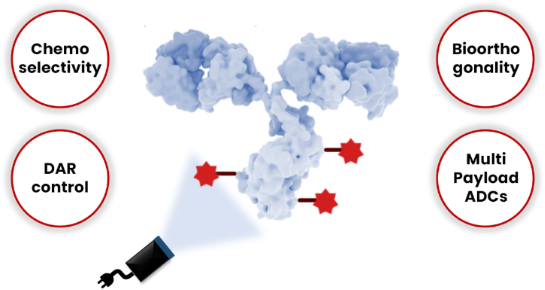
- aqueous media is essential for the modification of antibodies, as these biomolecules are typically dissolved in water or aqueous buffers to maintain their stability and activity. Antibodies are sensitive to their environment, and using a non-negligible amount of organic solvents or harsh chemical


Semisynthetic derivatives of massarilactone D with cytotoxic and nematicidal activities
Beilstein J. Org. Chem. 2025, 21, 607–615, doi:10.3762/bjoc.21.48
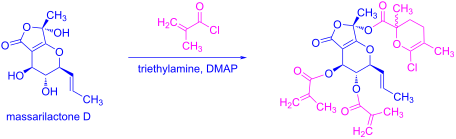
- mixture was stirred at room temperature overnight. The reaction mixture was suspended in water (25 mL) and extracted with CH2Cl2 (2 × 25 mL). The combined organic layer was evaporated to dryness to give a residue, which was dissolved in methanol (300 μL) and purified by preparative HPLC [ChemStation
- (25 mL) and extracted with CH2Cl2 (2 × 25 mL). The combined organic layer was evaporated to dryness to give a residue, which was dissolved in methanol (300 μL) and purified by preparative HPLC (gradient from 60 to 85% solvent B in 50 min) to yield compounds 3 in 6% yield (1.72 mg, tR = 25.24 min) and
- with CH2Cl2 (2 × 25 mL). The combined organic layer was evaporated to dryness to give a residue, which was dissolved in methanol (300 μL) and purified by preparative HPLC (gradient from 60 to 100% solvent B in 50 min) to yield compound 5 in 82% yield (39.79 mg, tR = 22.50 min). White powder; [α]D25


Sequential two-step, one-pot microwave-assisted Urech synthesis of 5-monosubstituted hydantoins from L-amino acids in water
Beilstein J. Org. Chem. 2025, 21, 596–600, doi:10.3762/bjoc.21.46
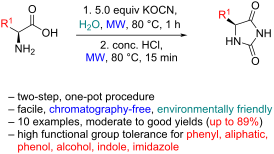
- mixture was neutralized to pH 7 using saturated sodium bicarbonate solution and extracted with ethyl acetate multiple times. The organic extracts were combined, dried with anhydrous sodium sulfate, and concentrated under reduced pressure to afford H2d as a white solid. Yield 70%. 1H NMR (400 MHz, DMSO-d6


Formaldehyde surrogates in multicomponent reactions
Beilstein J. Org. Chem. 2025, 21, 564–595, doi:10.3762/bjoc.21.45
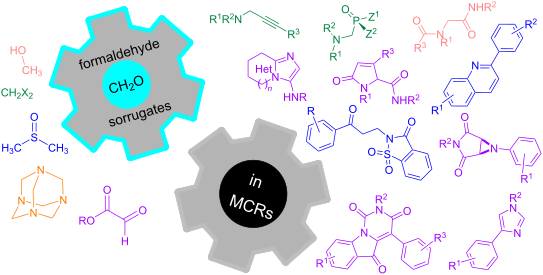
- concerns and improved reaction control can be addressed, paving the way for more efficient and sustainable synthetic methodologies. Keywords: cascade reactions; formaldehyde surrogates; green chemistry; heterocycles; multicomponent reactions; Introduction Organic chemistry is a mature discipline that has
- undergone significant changes since the term was first coined. Since its inception, organic chemistry has straddled the boundaries between art, creativity, and industrial applications. It is a science that is needed to solve complex retrosynthetic problems and develop molecules in gram to kilogram scales
- surrogate and source of formaldehyde Dimethyl sulfoxide is a well-known polar-aprotic solvent with high boiling point that is used in several organic synthetic reactions because of affordable cost and relatively low toxicity. There are numerous examples that show the use of DMSO as a C1 or C2 building block


Study of the interaction of 2H-furo[3,2-b]pyran-2-ones with nitrogen-containing nucleophiles
Beilstein J. Org. Chem. 2025, 21, 556–563, doi:10.3762/bjoc.21.44
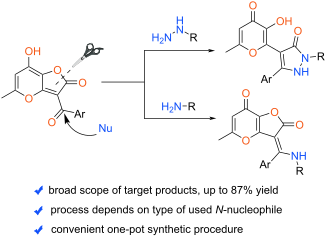
- Constantine V. Milyutin Andrey N. Komogortsev Boris V. Lichitsky N.D. Zelinsky Institute of Organic Chemistry, Russian Academy of Sciences, Leninsky Pr., 47, Moscow, 119991, Russian Federation 10.3762/bjoc.21.44 Abstract For the first time, the reaction of substituted 2H-furo[3,2-b]pyran-2-ones
- Supporting Information File 2: General information, characterization data, NMR spectra and crystallographic data of synthesized compounds. Acknowledgements Crystal structure determination was performed in the Department of Structural Studies of Zelinsky Institute of Organic Chemistry, Moscow.


Asymmetric synthesis of β-amino cyanoesters with contiguous tetrasubstituted carbon centers by halogen-bonding catalysis with chiral halonium salt
Beilstein J. Org. Chem. 2025, 21, 547–555, doi:10.3762/bjoc.21.43
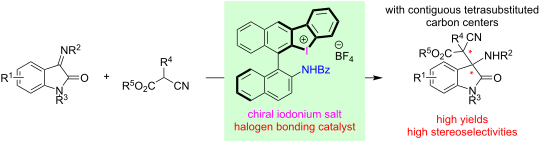
- of its unique interaction in organic synthesis. Chiral halonium salts have been found to have strong halogen-bonding-donor abilities and work as powerful asymmetric catalysts. Recently, we have developed binaphthyl-based chiral halonium salts and applied them in several enantioselective reactions
- organic chemistry [2][3][4][5], organocatalysis [6][7], metal catalysis [8][9], biochemistry [10][11], materials science [12][13], and supramolecular chemistry [14][15], although its successful application to asymmetric catalysis has been limited (Figure 1) [16][17][18][19][20]. In 2018, Arai and co


Binding of tryptophan and tryptophan-containing peptides in water by a glucose naphtho crown ether
Beilstein J. Org. Chem. 2025, 21, 541–546, doi:10.3762/bjoc.21.42
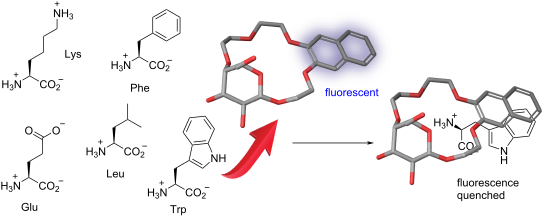
- Gianpaolo Gallo Bartosz Lewandowski Laboratory of Organic Chemistry, ETH Zürich, Vladimir-Prelog-Weg 3, 8093 Zürich, Switzerland 10.3762/bjoc.21.42 Abstract Tryptophan fulfills a plethora of important functions in nature both in its free form and as a component of peptides and proteins. Selective


Cryptophycin unit B analogues
Beilstein J. Org. Chem. 2025, 21, 526–532, doi:10.3762/bjoc.21.40
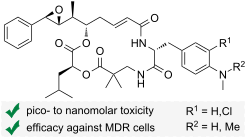
- Thomas Schachtsiek Jona Voss Maren Hamsen Beate Neumann Hans-Georg Stammler Norbert Sewald Department of Chemistry, Organic and Bioorganic Chemistry, Bielefeld University, Universitätsstraße 25, 33615 Bielefeld, Germany Department of Chemistry, Inorganic and Structural Chemistry, Bielefeld



Deep-blue emitting 9,10-bis(perfluorobenzyl)anthracene
Beilstein J. Org. Chem. 2025, 21, 515–525, doi:10.3762/bjoc.21.39
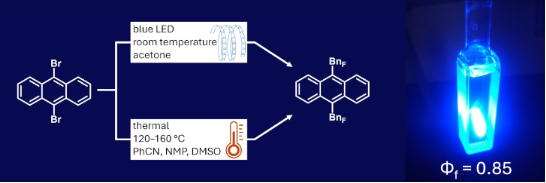
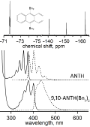
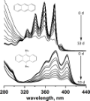
- ; perfluorobenzylation; photochemistry; Introduction The revolution of small organic molecules in the semiconductor industry continues to progress, replacing some silicon and metal-based electronic components. Acenes, such as anthracene (ANTH) and its higher homologues, represent some of the most studied materials that
- have promising applications in optoelectronics. For example, investigation of the photophysical and electronic properties of ANTH began in the 1960s [1][2][3], and since then many new ANTH derivatives have been synthesized and explored for their use as fluorescent probes, organic semiconductors, and
- emitters for organic light emitting diodes (OLEDs) [4][5][6][7][8]. More recently, an increased interest in the studies of triplet–triplet annihilation mechanisms in anthracene emitter materials [9] and the design of efficient OLED emitters based on hyperfluorescence [10][11], which could exhibit high





Unprecedented visible light-initiated topochemical [2 + 2] cycloaddition in a functionalized bimane dye
Beilstein J. Org. Chem. 2025, 21, 500–509, doi:10.3762/bjoc.21.37
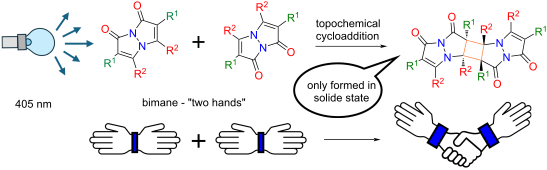
- topochemical reactions. Currently, topochemically active monomers are limited to large, planar aromatic molecules, aryl-substituted olefins, and polyenes, often complexed with metals. These compounds are frequently employed in the construction of metal-organic frameworks [13][14][15]. The limited range of


Synthesis of N-acetyl diazocine derivatives via cross-coupling reaction
Beilstein J. Org. Chem. 2025, 21, 490–499, doi:10.3762/bjoc.21.36
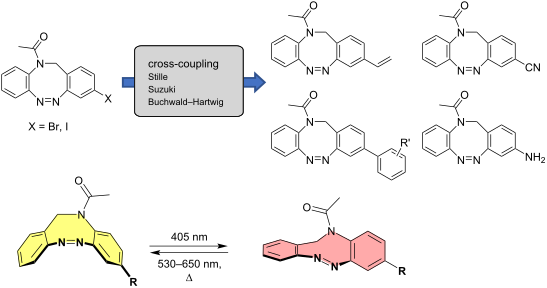
- Thomas Brandt Pascal Lentes Jeremy Rudtke Michael Hosgen Christian Nather Rainer Herges Otto Diels Institute for Organic Chemistry, Kiel University, Otto-Hahn-Platz 4, 24118 Kiel, Germany Institute for Inorganic Chemistry, Kiel University, Max-Eyth-Straße 2, 24118 Kiel, Germany 10.3762/bjoc.21.36
- ]. Moreover, the parent diazocine is insoluble in water (precipitation in water/DMSO > 9:1). Substitution with polar substituents such as CH2NH2 provides water solubility, however, it does not restore the high Z → E conversion rates of the parent system in organic solvents, which is a disadvantage, since
- azobenzenes, spiropyranes and diarylethenes in organic solvents [3][13][15]. There are two strategies of applying diazocines in photopharmacology. The first one exploits the structural similarity of the tricyclic diazocine framework to the tricyclic structure of, e.g., tetrahydrodibenzazocines [16][17] and


Synthesis of electrophile-tethered preQ1 analogs for covalent attachment to preQ1 RNA
Beilstein J. Org. Chem. 2025, 21, 483–489, doi:10.3762/bjoc.21.35
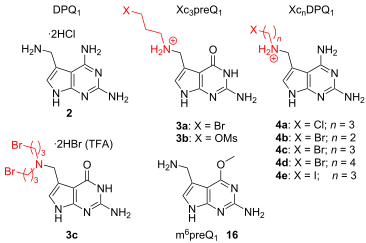
- Laurin Flemmich Ronald Micura Institute of Organic Chemistry, Center for Molecular Biosciences Innsbruck (CMBI), Innrain 80-82, 6020 Innsbruck, Austria 10.3762/bjoc.21.35 Abstract The preQ1 cIass-I riboswitch aptamer can utilize 7-aminomethyl-7-deazaguanine (preQ1) ligands that are equipped with
- derivatives have been reported [22][23][24][25][26]. Among these reports, various silylation and protection strategies have been employed to address the poor solubility of preQ1 (and analogs) in organic solvents [9][22][23][25][26][27][28][29]. Herein, we report an optimized three-step protocol, free of


Organocatalytic kinetic resolution of 1,5-dicarbonyl compounds through a retro-Michael reaction
Beilstein J. Org. Chem. 2025, 21, 473–482, doi:10.3762/bjoc.21.34
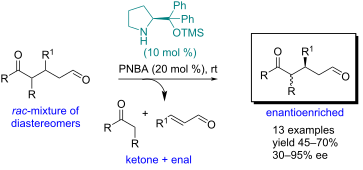
- entry 2 versus entry 6 in Table 2). Furthermore, we studied the effect of using an organic acid as the co-catalyst for forming the enamine intermediate from 1 and for the retro-Michael reaction. We observed that benzoic acid (BA) as a co-catalyst provides a lower er than that achieved with PNBA as a co


Photomechanochemistry: harnessing mechanical forces to enhance photochemical reactions
Beilstein J. Org. Chem. 2025, 21, 458–472, doi:10.3762/bjoc.21.33
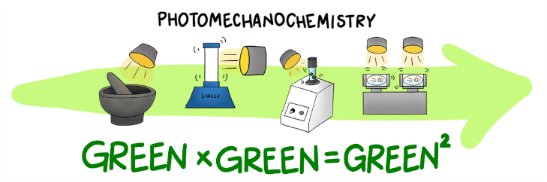
- Sustainability, University of Parma, Parco Area delle Scienze 17/A, 43124 Parma, Italy 10.3762/bjoc.21.33 Abstract Photomechanochemistry, i.e., the merger of light energy and mechanical forces, is emerging as a new trend in organic synthesis, enabling unique reactivities of fleeting excited states under solvent
- research. Keywords: light-mediated synthesis; mechanochemistry; photomechanochemistry; Introduction Light-mediated synthetic methodologies have significantly transformed contemporary organic chemistry by enabling a broad array of previously unattainable transformations [1]. In fact, the absorption of a
- rearrangements. Most organic molecules are colorless and, in fact, do not absorb visible light: highly energetic UV irradiation is typically needed. A milder approach is offered by photocatalytic approaches. Here, a photocatalyst is added to the reaction mixture to convert light energy into chemical potential to




Electrochemical synthesis of cyclic biaryl λ3-bromanes from 2,2’-dibromobiphenyls
Beilstein J. Org. Chem. 2025, 21, 451–457, doi:10.3762/bjoc.21.32
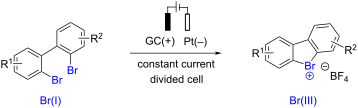
- Andrejs Savkins Igors Sokolovs Latvian Institute of Organic Synthesis, Aizkraukles 21, 1006 Riga, Latvia Faculty of Medicine and Life Sciences, University of Latvia, Jelgavas 1, 1004 Riga, Latvia 10.3762/bjoc.21.32 Abstract The remarkable nucleofugality of bromoarenes in diarylbromonium species
- Belyakov from the Latvian Institute of Organic Synthesis (LIOS) for X-ray crystallographic analysis. We also thank Prof. Edgars Suna (LIOS) for helpful discussions and assistance in preparing the manuscript. Funding This work was financially supported by Latvian Science Council grant LZP-2021/1-0595.


New tandem Ugi/intramolecular Diels–Alder reaction based on vinylfuran and 1,3-butadienylfuran derivatives
Beilstein J. Org. Chem. 2025, 21, 444–450, doi:10.3762/bjoc.21.31
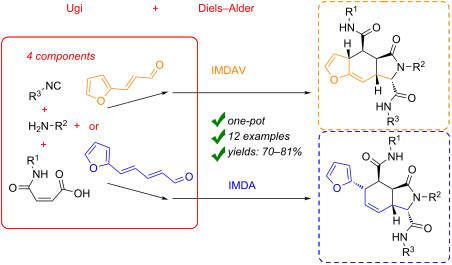
- Yuriy I. Horak Roman Z. Lytvyn Andrii R. Vakhula Yuriy V. Homza Nazariy T. Pokhodylo Mykola D. Obushak Department of Organic Chemistry, Ivan Franko National University of Lviv, 6 Kyryla i Mefodiya St., Lviv 79005, Ukraine 10.3762/bjoc.21.31 Abstract A new tandem sequence involving the Ugi
- environmentally friendly synthetic strategies, especially one-pot multicomponent and tandem reactions, are key to modern organic and medicinal chemistry [1][2][3][4][5][6][7] and have proven to be successful in generating diverse heterocyclic scaffolds, as highlighted in a recent book [8]. Multicomponent




Beyond symmetric self-assembly and effective molarity: unlocking functional enzyme mimics with robust organic cages
Beilstein J. Org. Chem. 2025, 21, 421–443, doi:10.3762/bjoc.21.30
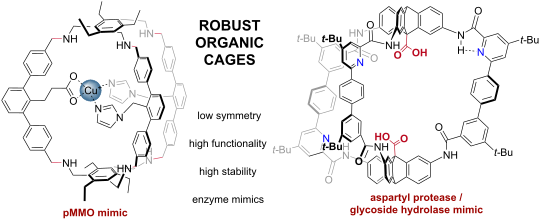
- demonstrating enzyme-like rate accelerations remain rare. This perspective will briefly highlight some of the key advances in traditional cavity catalysis, by cavity type, in order to contextualize the recent development of robust organic cage catalysts, which can exploit stability, functionality, and reduced
- symmetry to enable promising catalytic modes. Keywords: cavity confinement catalysis; enzyme mimicry; robust organic cages; self-assembly; supramolecular catalysis; Introduction I frequently introduce my research on organic cage enzyme mimics with the following observation. For hundreds of years
- that an underexplored cavity type, robust organic cages [38][39][40][41][42][43][44][45][46][47], are uniquely positioned to facilitate these advances. Outline and Overview The aim of this perspective is twofold: (1) to briefly review the state of the art of cavity catalysis, highlighting the catalytic