
Search results
Search for "monomer" in Full Text gives 364 result(s) in Beilstein Journal of Organic Chemistry. Showing first 200.
Interactions between shape-persistent macromolecules as probed by AFM
Beilstein J. Org. Chem. 2017, 13, 938–951, doi:10.3762/bjoc.13.95
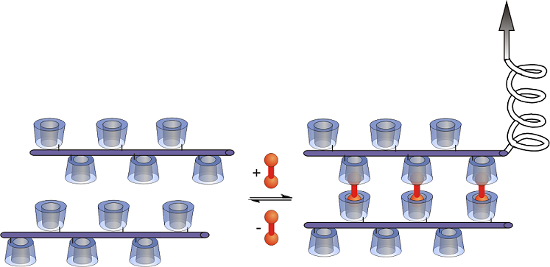
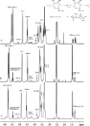
- -monoamino-6-deoxy-β-CD [52] using N,N’-dicyclohexyl-carbodiimide (DCC) and 1-hydroxybenzotriazole (HOBt) applying a procedure known for terephthalic acid [53]. The resulting product, monomer 7, was easily isolated due to its low solubility in water which was attributed to self-inclusion between hydrophobic
- backbone. Compared to monomer 7, peak broadening and the disappearance of the 1H NMR signals of the acetylene protons at 4.54 and 4.36 ppm indicate the formation of polymer 8. The presence of the conjugated backbone was confirmed by UV–vis and fluorescence measurements in water. Compared to 7, a
- of gyration Rg,app, and radius of gyration of a cylindrical cross-section Rg,CS are presented in Table 1. The ratio between I(0) and ICS(0) provides the apparent contour length of the polymer chain. SAXS and SANS indicate a contour length of 130–160 Å, i.e., 15 monomer units with the length of one






Expression, purification and structural analysis of functional GABA transporter 1 using the baculovirus expression system
Beilstein J. Org. Chem. 2017, 13, 874–882, doi:10.3762/bjoc.13.88
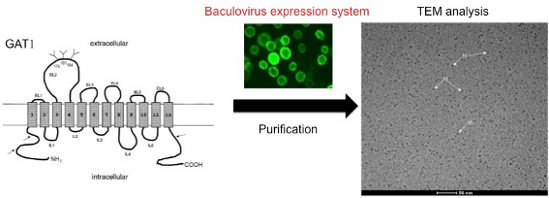
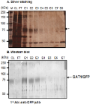
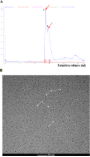
- membrane. GAT1 dimers were expressed and examined as a distinct population of 9 nm freeze-fracture particles in the plasma membrane of Xenopuslaevis oocytes by freeze-fracture and electron microscopy [33]. The GAT1 protein monomer was determined to be the functional unit since each monomer functions
- independently [33][34]. A similar example is the bacteria homologue LeuT, which was also crystallized as a dimer [13], however, each monomer has its own binding pocket, indicating that the monomers are the functional units. Therefore, a GAT1/GFP fusion protein monomer could be suitable for further structural



Molecular-level architectural design using benzothiadiazole-based polymers for photovoltaic applications
Beilstein J. Org. Chem. 2017, 13, 863–873, doi:10.3762/bjoc.13.87
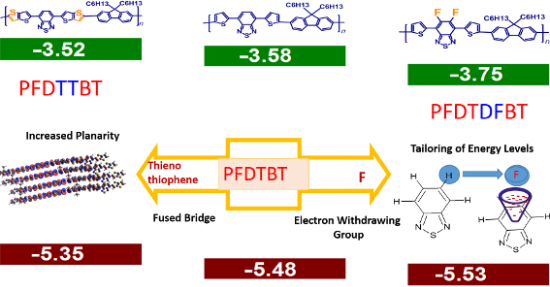
- synthesis of monomer M1 started with the cyclization of o-phenylenediamine with thionyl chloride in the presence of triethylamine, a strong base and dichloromethane as the solvent at 0 °C. Compound 1 was then treated with bromine and HBr to obtain 4,7-dibromobenzo[c][1,2,5]thiadiazole (2). The latter
- impurities and subsequently brominated using N-bromosuccinimide to produce the desired monomer M1. The synthesis of fluorinated monomer M2 started from 1,2-difluorobenzene. However, the direct bromination of this compound in the 1,4-position is hindered due to the electronegative fluorine substituents. Hence
- nitric acid and acetic acid gave dinitro compound 6. The nitro groups in 6 were then reduced by treatment with iron powder and acetic acid. The cyclization of the diamino compound 7 (as described for compound 1) afforded the difluorinated benzothiadiazole 8. The monomer M2 was obtained by coupling 8 with



Cyclodextrins tethered with oligolactides – green synthesis and structural assessment
Beilstein J. Org. Chem. 2017, 13, 779–792, doi:10.3762/bjoc.13.77
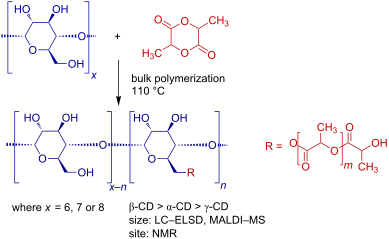
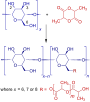
- polymers with different core and similar number of arms. The modification of CDs with a reduced amount of monomer units results in CD-oligomer materials which still keep an important property of the starting CDs, like their inclusion ability [16]. The CD-oligoester conjugate, compounds with a relatively
- molar ratio between L-LA and OH groups of CDs was kept to a value of 5 for all types of CDs (Table 1) and the reaction was stopped after 72 hours. Although the cyclodextrins were only dispersed in the molten monomer the magnetic stirring insured a good dispersion of the reactants. In previous studies
- [19], the molar ratio between CD and the total monomer amounts introduced in the reaction was about 1/5 which even, in conditions of melted monomer, would not ensure a good mixture of reactants and therefore the reaction would be considered as a heterogeneous system with all disadvantages resulting




Fluorescent carbon dots from mono- and polysaccharides: synthesis, properties and applications
Beilstein J. Org. Chem. 2017, 13, 675–693, doi:10.3762/bjoc.13.67
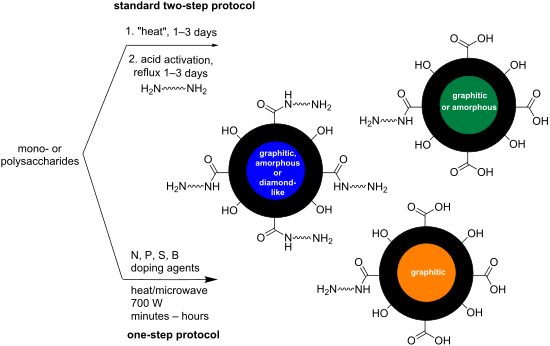
- , alginic acid has one carboxylic acid group per monomer unit, whereas chitosan is an amine-containing polysaccharide; analysis of the different CDs showed higher intensities for peaks attributed to carboxylic acid C=O bonds in both Alg-CDs and Chi-CDs. Similarly Chi-CDs showed an abundance of amine


Highly reactive, liquid diacrylamides via synergistic combination of spatially arranged curing moieties
Beilstein J. Org. Chem. 2017, 13, 372–383, doi:10.3762/bjoc.13.40
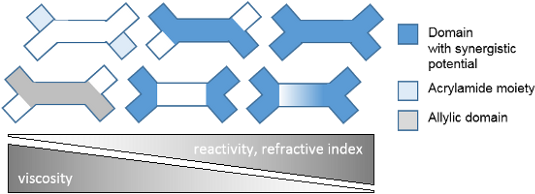
- reactivity – the proper design of these features ensures continuous light transmittance, adequate propagation rates and, ultimately, thorough polymerization [1][2]. The number of applications for UV–vis curable monomer systems has greatly increased over the last decades [3]. At the same time, the selection
- monomer structures [22]. In this sense, Bowman et al. demonstrated increased photo-polymerization rates for monoacrylates equipped with secondary functionalities, yet limiting discussion to oxygen-based (meth)acrylate derivatives [23]. In this study, we present the synthesis and characterization of tailor
- maximum rates of polymerization, Rp,max, were calculated according to Equation 1. With Q/s being the heat flow per second at the global minimum of the first deviation of the respective measurement (maximum Q/s), M the molar mass of the monomer, n the number of double bonds per monomer molecule, ∆Hp the








Dynamics and interactions of ibuprofen in cyclodextrin nanosponges by solid-state NMR spectroscopy
Beilstein J. Org. Chem. 2017, 13, 182–194, doi:10.3762/bjoc.13.21
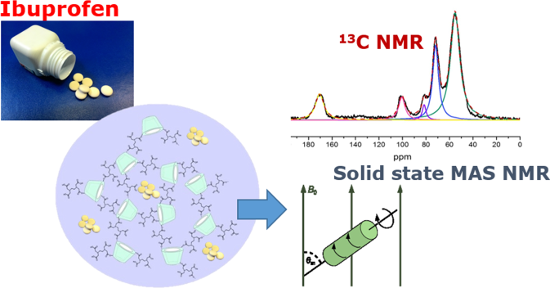
- formation as the main mechanism of absorption [33]. We may conclude that the type of monomer and the cross-linker agent both play a key role in driving the absorption towards inclusion complexes or segregation in the polymer pores, although a sufficient number of data is still missing to formulate a general


Extrusion – back to the future: Using an established technique to reform automated chemical synthesis
Beilstein J. Org. Chem. 2017, 13, 65–75, doi:10.3762/bjoc.13.9
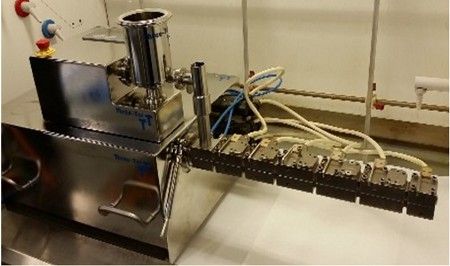
- worthwhile noting the other various reaction types explored by extrusion: Grafting reactions – a grafted polymer is synthesised from the reaction of a polymer and a functionalised monomer [12]. Functionalisation – this takes place on already prepared polymers, when the polymer is either functionalised by the
- (Scheme 1). The s-BuLi reacts with the double bond of styrene, initiating a homopolymerisation process. Once all the monomer is consumed, the polymer has a stable anionic polymer chain, which allows for further functionalisation by reaction with electrophilic functional groups. The solution-based living


Stabilization of nanosized titanium dioxide by cyclodextrin polymers and its photocatalytic effect on the degradation of wastewater pollutants
Beilstein J. Org. Chem. 2016, 12, 2873–2882, doi:10.3762/bjoc.12.286
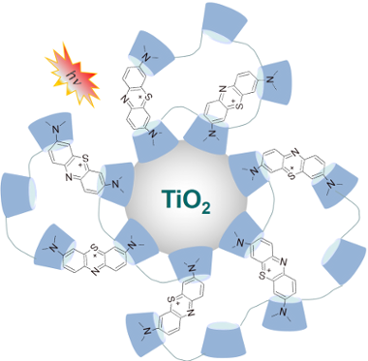
- behavior and stability of nanoTiO2 in cyclodextrin solutions. On the other hand, we used various monomer and polymer cyclodextrin derivatives, and assessed the options for nanoTiO2 stabilization in the presence of various salts and tap water on the basis of turbidity tests. The physical stability of
- start to aggregate and form larger particles enhancing the turbidity of dispersion. The turbidity (the haziness of the dispersion caused by particles invisible for the naked eye) was measured to monitor the aggregation of the particles of nanoTiO2. Various monomer and polymer CD derivatives were studied
- how they influence the stability of nanoTiO2 in the presence of NaCl (0.1%) by recording the turbidity. We used neutral and charged CD derivatives, such as non-ionic 2-hydroxypropyl-β-cyclodextrin monomer (M) and polymer (P) (HPBCD-M/P), anionic carboxymethyl-β-cyclodextrin monomer and polymer (CMBCD



A versatile route to polythiophenes with functional pendant groups using alkyne chemistry
Beilstein J. Org. Chem. 2016, 12, 2682–2688, doi:10.3762/bjoc.12.265
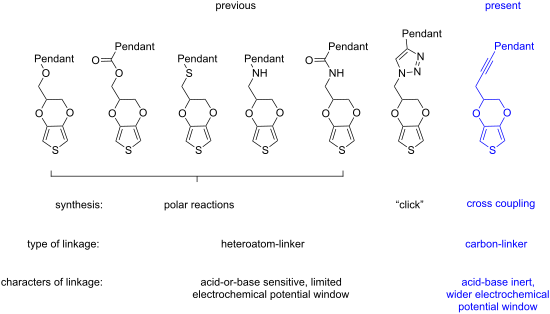
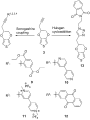
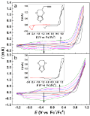
- application of a C–C bond forming synthesis for the PEDOT functionalization by a Sonogashira coupling yielding the first terephthalate functionalized EDOT monomer as well as a viologen unit with symmetrical N-substitution attached to an EDOT core. These new monomers have been successfully electropolymerized


Formose reaction controlled by boronic acid compounds
Beilstein J. Org. Chem. 2016, 12, 2668–2672, doi:10.3762/bjoc.12.263
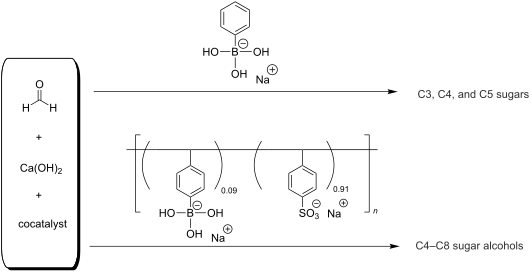
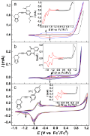
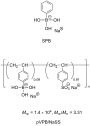
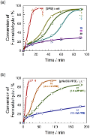
- polymer, respectively (Scheme 1). The copolymer was prepared by radical copolymerization at a molar ratio of 1:10 in monomer feed. The formose reaction was carried out using a solution containing 200 mM formaldehyde and 20 mM calcium hydroxide at 60 °C. Fructose or glyceraldehyde was employed as a



Interactions between cyclodextrins and cellular components: Towards greener medical applications?
Beilstein J. Org. Chem. 2016, 12, 2644–2662, doi:10.3762/bjoc.12.261
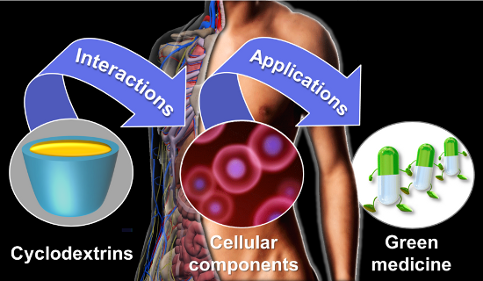
- neglected. Similar conclusions were made by Paal and Szeijtli [103]. iv) Complexation of nucleic acids Nucleic acids are macromolecules, where the monomer is the nucleotide. Each nucleotide has three components: a 5-carbon sugar, a phosphate group, and a nitrogenous base. These nucleotides are joined by


Radical polymerization by a supramolecular catalyst: cyclodextrin with a RAFT reagent
Beilstein J. Org. Chem. 2016, 12, 2495–2502, doi:10.3762/bjoc.12.244
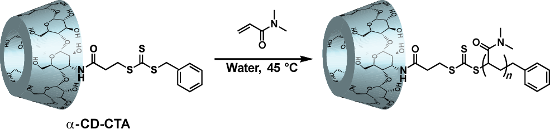
- functions of supramolecular catalysts. CD derivatives are widely used in radical polymerization to dissolve hydrophobic monomers in aqueous solutions [48][49][50][51][52][53][54] and to control the aggregation of polymers [55][56][57][58]. Although supramolecular catalysts with CDs as monomer recognition
- sites and catalytic active sites have been designed for polymerization reactions, relatively few reports have described a catalytic design in which the catalytic active site does not leave the CD monomer recognition site during the growing step. In a previous design of radical initiators with CDs, the
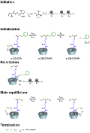
- radical-initiating end group leaves the CD monomer recognition site [59][60]. With this molecular design, an included monomer is distant from the radical species and cannot be involved in the direct polymerization. Here, we will observe the effect of monomer recognition of CD on polymerization if a


Methylenelactide: vinyl polymerization and spatial reactivity effects
Beilstein J. Org. Chem. 2016, 12, 2378–2389, doi:10.3762/bjoc.12.232
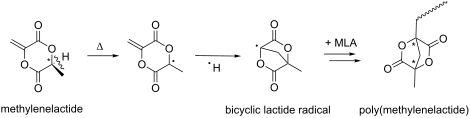
- polymerization of the cyclic push–pull-type monomer methylenelactide in comparison to the non-cyclic monomer α-acetoxyacrylate is described. The experimental results revealed that methylenelactide undergoes a self-initiated polymerization. The copolymerization parameters of methylenelactide and styrene as well
- -dimethylacrylamide was performed at 70 °C in 1,4-dioxane using AIBN as initiator and 2-(((ethylthio)carbonothioyl)thio)-2-methylpropanoic acid as a transfer agent. Keywords: copolymerization; kinetic study of the radical homopolymerization; push–pull monomer; reversible addition fragmentation chain transfer (RAFT
- copolymerization of MLA with styrene and methyl methacrylate, respectively. The results were compared to the well-known push–pull type monomer α-acetoxyacrylate. Results and Discussion Free-radical polymerization of methylenelactide MLA The push–pull type monomer MLA contains an electron-deficient vinyl group


Isosorbide and dimethyl carbonate: a green match
Beilstein J. Org. Chem. 2016, 12, 2256–2266, doi:10.3762/bjoc.12.218
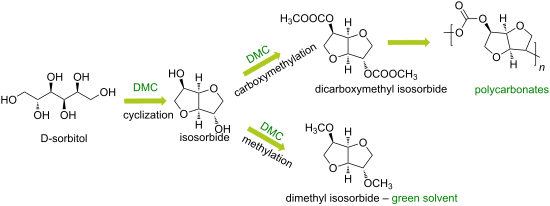
- -pot, environmental friendly and high yielding. The reactivity of isosorbide with DMC is equally interesting as it can lead to the formation of dicarboxymethyl isosorbide, a potential monomer for isosorbide-based polycarbonate, and dimethyl isosorbide, a high boiling green solvent. The peculiar
- in the highest isolated yield. Dicarboxymethyl isosorbide is also an intermediate of great interest in view of its application as monomer for homo- and co-polycarbonates incorporating the isosorbide subunit. In this prospect, carboxymethylation of isosorbide can be efficiently carried out via DMC


Comparing blends and blocks: Synthesis of partially fluorinated diblock polythiophene copolymers to investigate the thermal stability of optical and morphological properties
Beilstein J. Org. Chem. 2016, 12, 2150–2163, doi:10.3762/bjoc.12.205
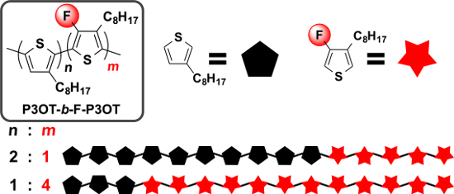
- blends. Here we explore the impact of backbone fluorination in block copolymers of poly(3-octyl-4-fluorothiophene)s and poly(3-octylthiophene) (F-P3OT-b-P3OT). Two block co-polymers with varying block lengths were prepared via sequential monomer addition under Kumada catalyst transfer polymerisation
- behavior avoids any issues of triblock copolymers, and also provides good control over the molecular weight and relative block lengths [24][25][26][27][28][29][30][31]. In addition to enabling the formation of a diblock copolymer via sequential monomer addition, the KCTP can lead to controlled end
- KCTP using a method analogous to that used for thiophene-selenophene block copolymers [26]. Due to the much lower solubility of F-P3OT compared to P3OT, the more soluble P3OT block was grown first from the activated monomer 2, followed by the addition of 4 to the P3OT macroinitiator. Relative block




DNA functionalization by dynamic chemistry
Beilstein J. Org. Chem. 2016, 12, 2136–2144, doi:10.3762/bjoc.12.203
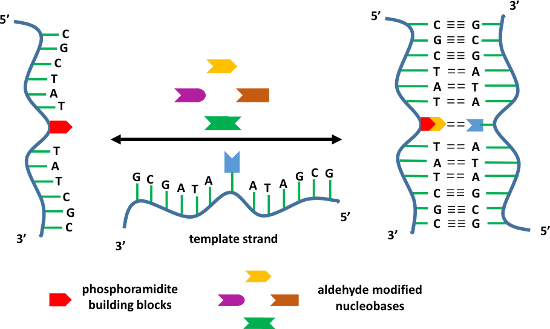
- , we generated the libraries of reversibly interconverting building blocks – dynamic combinatorial libraries (DCL) (Figure 1). The abasic strand and its complementary template strand are spontaneously assembled into a double helix through Watson–Crick base-pairing and the incoming nucleobase monomer


Ionic liquids as transesterification catalysts: applications for the synthesis of linear and cyclic organic carbonates
Beilstein J. Org. Chem. 2016, 12, 1911–1924, doi:10.3762/bjoc.12.181
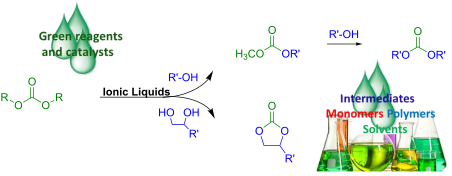
- to facilitate work-up, recycling, and purification of products, especially for large-scale preparations. These heterogeneous systems include supported metal oxides and binary oxide mixtures. For example, MoO3/SiO2 and sol–gel MoO3/TiO2 is used for the preparation of diphenyl oxalate monomer (DPO
- intermediate towards the diphenyl carbonate monomer. The first step is the insertion of CO2 into ethylene oxide to give ethylene carbonate, which is catalyzed by onium salts. The second step involves the transesterification of ethylene carbonate with methanol. The reaction is carried out in a continuous


From supramolecular chemistry to the nucleosome: studies in biomolecular recognition
Beilstein J. Org. Chem. 2016, 12, 1863–1869, doi:10.3762/bjoc.12.175
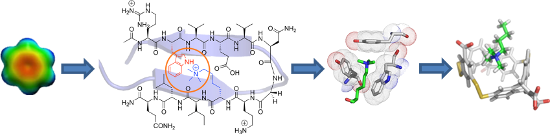
- highly amenable to structure–function studies, since only a new monomer must be synthesized, rather than an entirely new receptor. With my interest in trimethyllysine provided a significant problem in which DCC seemed to be a promising solution. It turns out that the main tool for sensing protein post


Synthesis and characterization of benzodithiophene and benzotriazole-based polymers for photovoltaic applications
Beilstein J. Org. Chem. 2016, 12, 1629–1637, doi:10.3762/bjoc.12.160
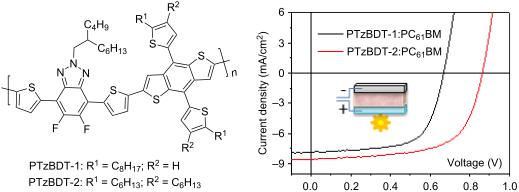
- interchain π–π stacking, BDT is a widely used electron-rich monomer. Moreover, alkyl or aryl groups can easily be introduced to BDT basic units as side groups to finely tune the properties of the resulting polymers, not only in terms of solubility but also contributing, for example, to extend the π
- PTzBDT-2 (Scheme 1), based on Tz and BDT moieties. The Tz ring was substituted with an asymmetrically branched alkyl side chain and sandwiched between two thiophene rings. The chemical structure of the Tz based monomer was made to be the same in both polymers for the comparative study. On the other hand


Automated glycan assembly of a S. pneumoniae serotype 3 CPS antigen
Beilstein J. Org. Chem. 2016, 12, 1440–1446, doi:10.3762/bjoc.12.139
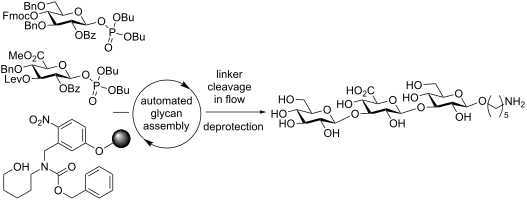
- glucose building block. This monomer did not suffer from a loss of stereocontrol as was observed in the case of the similarly protected GlcA building block. The desired trisaccharide 5 was observed as the main product from the automated synthesis by HPLC analysis (Figure 5). The Lev protecting group had


From N-vinylpyrrolidone anions to modified paraffin-like oligomers via double alkylation with 1,8-dibromooctane: access to covalent networks and oligomeric amines for dye attachment
Beilstein J. Org. Chem. 2016, 12, 1395–1400, doi:10.3762/bjoc.12.133
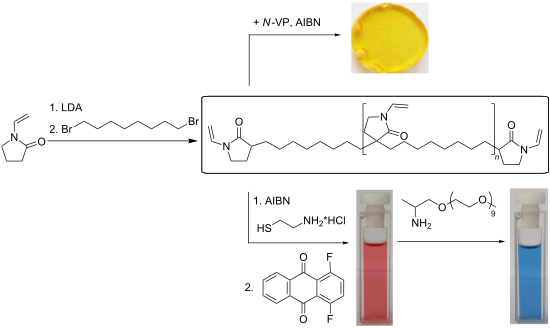
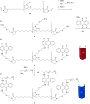
- paraffin-like oligomeric chains bearing polymerizable vinyl moieties. These oligomers were radically crosslinked in bulk with N-VP as co-monomer yielding swellable polymer disks. The vinylic side groups of the N-VP oligomers allow thiol–ene click reactions with 2-aminoethanethiol hydrochloride to obtain
- . However, in contrast to the restricted monoalkylation of N-vinylcaprolactam [24], the five-membered ring of N-VP can be double alkylated in α-position. In this connection, 1-bromo-2-(2-bromoethoxy)ethane was used as alkylation reagent to allow the preparation of a spiro-type monomer [25] due to



Conjugate addition–enantioselective protonation reactions
Beilstein J. Org. Chem. 2016, 12, 1203–1228, doi:10.3762/bjoc.12.116
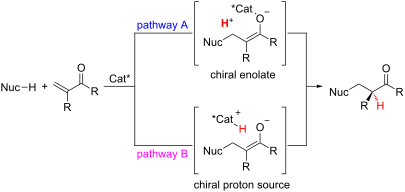
- interplay between ligand exchange and the ammonium salt (Scheme 19) [40]. Based on their findings they proposed a catalytic cycle in which the Brønsted basic dimeric palladium-μ-hydroxo complex 79 is broken up by the amine salt 74, liberating Lewis acidic palladium monomer 80 and free amine. Binding of the




Stimuli-responsive HBPS-g-PDMAEMA and its application as nanocarrier in loading hydrophobic molecules
Beilstein J. Org. Chem. 2016, 12, 939–949, doi:10.3762/bjoc.12.92
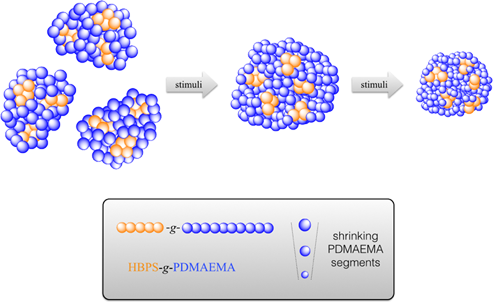
- ) prepared through atom transfer radical self-condensing vinyl polymerization (AT-SCVP) was firstly reported in 1996 [26]. It used vinylbenzyl chloride (VBC), which is an important commercially available monomer and its industrial synthesis was started from 1957, as monomer with a self-initiation site [27
- (VBC), a commercially available monomer, as monomer and self-initiator. The feeding ratio of VBC/CuCl/2,2-bipyrene (bpy) was 10:1:2. The 1H NMR spectrum of HBPS showed peaks around 5.7 and 5.2 ppm attributed to double bonds [26][27] as shown in Figure 1B. For AT-SCVP, the polymerization was initiated
- by benzyl chloride of VBC. It was found that each polymer chain was tethered with a double bond and chloride groups. Each monomer inserted into the polymer chain has one initiate site to start propagation of the side chains, which leads to the formation of hyperbranched topology. The broad peak from




Amino-functionalized (meth)acryl polymers by use of a solvent-polarity sensitive protecting group (Br-t-BOC)
Beilstein J. Org. Chem. 2016, 12, 245–252, doi:10.3762/bjoc.12.26
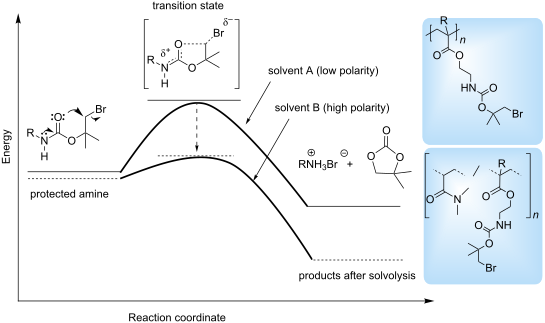
- product. This means that the amino-protecting group is extremely sensitive to decomposition. A third type of monomer was synthesized by reaction of 1a with 1-bromo-2-methylbut-3-en-2-ol (2c) yielding 2-((1-bromo-2-methylbut-3-en-2-yl)oxycarbonylamino)ethyl acrylate (3d, Scheme 3). Although monomer 3d is
- deprotection for 3a,b, 6a,b and 7a,b are summarized in Table 1. As assumed above the molecular dispersed monomer shows the highest reactivity followed by the copolymer. The solvolysis of the protecting group in the homopolymer is relatively slow because of neighboring group formed retarding hydrogen bonds