
Search results
Search for "equilibrium" in Full Text gives 679 result(s) in Beilstein Journal of Organic Chemistry. Showing first 200.
Metal-free glycosylation with glycosyl fluorides in liquid SO2
Beilstein J. Org. Chem. 2021, 17, 964–976, doi:10.3762/bjoc.17.78
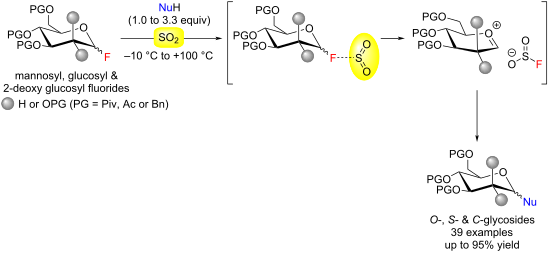
- equilibrium. Keywords: fluorosulfite; glycosyl fluoride; Lewis acid; liquid sulfur dioxide; metal-free glycosylation; Introduction The glycosylation reaction is still one of the most important and basic synthetic strategies in carbohydrate chemistry that provides access to the various types of
- the stereoselectivity of the glycosylation in liquid SO2 is substrate-controlled and approaches a thermodynamic equilibrium determined by the anomeric effect or interference of both the anomeric effect and the assistance of the neighboring ester-type protecting group. Next, we have also observed that
- the anomerization of the glycosylated products towards their thermodynamic equilibrium is promoted by the species formed during the glycosylation reaction [76]. Thus, when anomerically pure thiomannoside β-3c was subjected to the glycosylation conditions (100 °C, 16 h) in liquid SO2 without any



Kinetics of enzyme-catalysed desymmetrisation of prochiral substrates: product enantiomeric excess is not always constant
Beilstein J. Org. Chem. 2021, 17, 873–884, doi:10.3762/bjoc.17.73
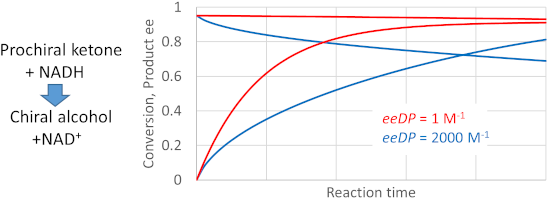
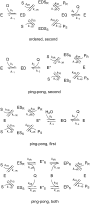
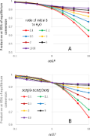
- reaction proceeds to high conversion. For example, an ee of 0.95 at the start of the reaction can decline to less than 0.5 at 95% of equilibrium conversion, but for different enzyme properties it will remain almost unchanged. For most mechanisms a single function of multiple enzyme rate constants (which
- the equilibrium constant where the enzymatic reaction was not completely irreversible [2]. A limitation of the enzymatic resolution is that the maximum yield of the desired enantiomer is the 50% contained in the starting racemate. This is one reason for the current greater interest in enzymatic
- favoured product are completely absent. In most of the applications the overall reaction is significantly reversible, with an equilibrium constant that is not enormously larger than 1. And in many cases there is a noticeable formation of the less favoured enantiomer, with product ee values of 0.98 or less



Microwave-assisted multicomponent reactions in heterocyclic chemistry and mechanistic aspects
Beilstein J. Org. Chem. 2021, 17, 819–865, doi:10.3762/bjoc.17.71
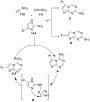
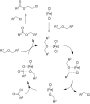
- electrostatic interaction between carboxylate and iminium moieties undergoes a nucleophilic attack by isocyanide to generate nitrilium ion B. The intramolecular acylation of B forms C followed by Mumm rearrangement results in the formation of the desired products 22. The intermediate D may exist in equilibrium
- as depicted in Scheme 56 wherein cycloketone 141 in presence of AcOH exists in equilibrium with enol form B. The imine intermediate A (condensation of aldehyde and pyrazolylamine) surrenders to a [4 + 2] cycloaddition with the enol form B and result in cycloaddition adduct C. A further dehydration






Synthesis of β-triazolylenones via metal-free desulfonylative alkylation of N-tosyl-1,2,3-triazoles
Beilstein J. Org. Chem. 2021, 17, 762–770, doi:10.3762/bjoc.17.66
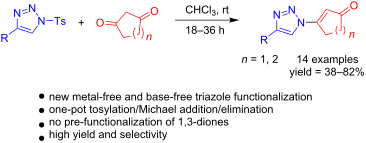
- of dimedone (2d). Unlike cyclic 1,3-dicarbonyls, the acyclic 1,3-dicarbonyls possess intramolecular hydrogen bonding and are in rapid equilibrium with their keto-form. In polar solvents, the stability of the enol form is further decreased and, therefore, the keto-enol equilibrium lies more towards


α,γ-Dioxygenated amides via tandem Brook rearrangement/radical oxygenation reactions and their application to syntheses of γ-lactams
Beilstein J. Org. Chem. 2021, 17, 688–704, doi:10.3762/bjoc.17.58
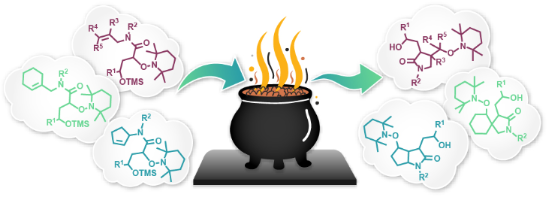
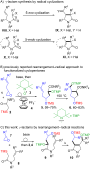
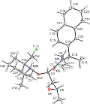
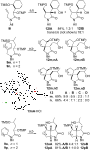
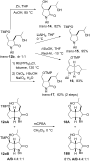
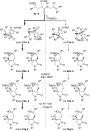
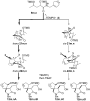
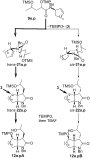
- did not improve the results, indicating that the reactions are at thermodynamic equilibrium after 24 h. Surprisingly, for N-methyl-substituted lactam 12e the diastereomeric enrichment remained rather moderate despite variations of temperature and time (Table 4, entry 5), whereas the diastereomeric
- (Table 4, entries 9–11). Thus, the nitrogen substituent exerted a significant influence on the facility and position of the trans/cis equilibrium of the lactams 12. The influence of an isopropenyl or tetramethylpiperidinyloxymethyl group at C4 has in contrast only little influence on the thermodynamic
- equilibrium (Table 4, entries 7 and 11 vs entries 1 and 9). Attempts to influence the diastereomeric ratio of the cyclization products by irreversible stoichiometric deprotonation of the lactams 12d,f,i by LDA at −78 °C and subsequent protonation by methanol did not lead to substantial changes of the initial







Valorisation of plastic waste via metal-catalysed depolymerisation
Beilstein J. Org. Chem. 2021, 17, 589–621, doi:10.3762/bjoc.17.53
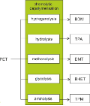
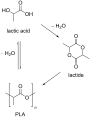
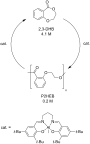
- conditions, showing the best combination to be 196 °C, an EG/PET ratio of 2.45:1 (w/w) and a catalyst loading of 0.3 wt % (Table 2, entry 2) [129]. Under these conditions, an equilibrium yield of BHET around 65% was achieved within short reaction times (1 h), much faster than in the absence of catalysts or










Synthesis of (Z)-3-[amino(phenyl)methylidene]-1,3-dihydro-2H-indol-2-ones using an Eschenmoser coupling reaction
Beilstein J. Org. Chem. 2021, 17, 527–539, doi:10.3762/bjoc.17.47
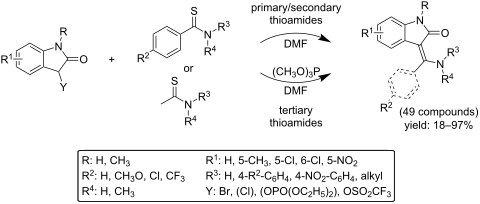
- derivatives 9a–e. The substituent R4 strongly influences both the equilibrium between >C=N+HR4 and >C=NR4 as well as the nucleophilic attack of the internal C3 carbanion to give the thiirane intermediate in Scheme 2. While the EWG groups decrease the concentration of the α-thioiminium salt (that is much more
- the equilibrium concentration) of the intermediary α-thioiminium salt which is much more reactive towards an internal nucleophilic attack than the free thioimidate group. Although an electron-withdrawing substituent R4 also enhances the internal nucleophilic attack to both α-thioiminium and imine


Synthesis and physicochemical evaluation of fluorinated lipopeptide precursors of ligands for microbubble targeting
Beilstein J. Org. Chem. 2021, 17, 511–518, doi:10.3762/bjoc.17.45
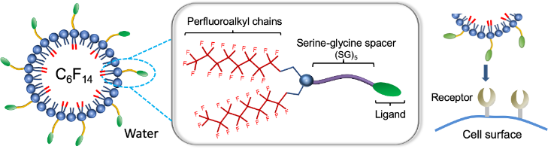
- interface, with equilibrium surface pressures reaching ≈7–10 mN m−1 versus less than 1 mN m−1 only for their hydrocarbon analog 4. The F-lipopeptides penetrate in the DPPC monolayers in both liquid expanded (LE) and liquid condensed (LC) phases without interfacial film destabilization. By contrast, 4
- , reflecting a progressive adsorption at the interface, then reached a plateau, and stabilized at the equilibrium surface pressure (πeq). The adsorption kinetics demonstrate that the F-lipopeptides formed stable monolayers at the interface. The πeq values increased with the degree of fluorination of the F


Biochemistry of fluoroprolines: the prospect of making fluorine a bioelement
Beilstein J. Org. Chem. 2021, 17, 439–460, doi:10.3762/bjoc.17.40
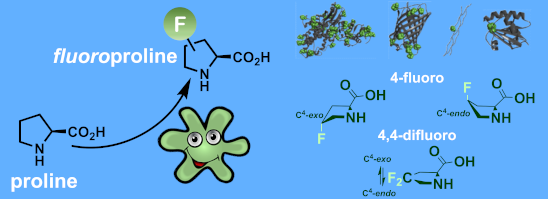
- ] and ribonuclease A [140] (Table 3). These results have been explained by considering the conformational bias of the residues (pucker, trans/cis equilibrium), an altered hydrophobicity and polarity and the local environment at the substitution sites. An elevated folding velocity, presumable due to


Identification of volatiles from six marine Celeribacter strains
Beilstein J. Org. Chem. 2021, 17, 420–430, doi:10.3762/bjoc.17.38
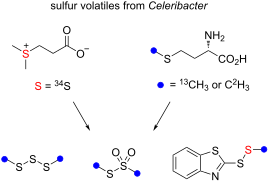
- from the roseobacter group is the production of the sulfur-containing antibiotic tropodithietic acid (TDA) in Phaeobacter piscinae DSM 103509T [28], a compound that is in equilibrium with its tautomer thiotropocin [29] that was first described from Pseudomonas sp. CB-104 [30]. Its biosynthesis depends




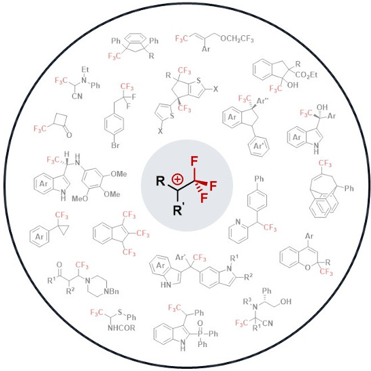
CF3-substituted carbocations: underexploited intermediates with great potential in modern synthetic chemistry
Beilstein J. Org. Chem. 2021, 17, 343–378, doi:10.3762/bjoc.17.32



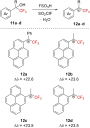

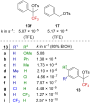


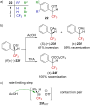


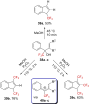


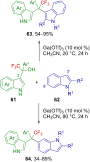


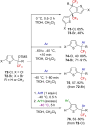

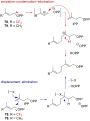


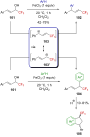
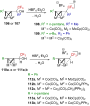
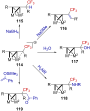
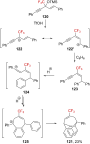
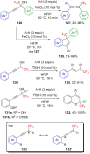
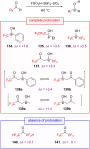


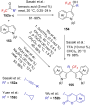

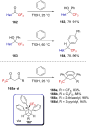


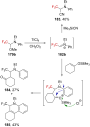


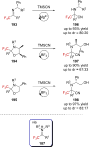
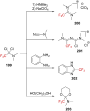


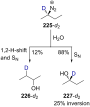


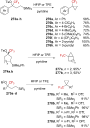


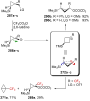


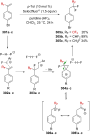


Synthesis of legonmycins A and B, C(7a)-hydroxylated bacterial pyrrolizidines
Beilstein J. Org. Chem. 2021, 17, 334–342, doi:10.3762/bjoc.17.31

- and B, are related as 7a-epimers that interconvert in aqueous solution to form a pH-dependent equilibrium ratio of the two [9]; they are weakly antibacterial and were shown to prolong “the survival period of mice inoculated with leukaemia L-120 cells” [7][8]. Although the clazamycins are not


19F NMR as a tool in chemical biology
Beilstein J. Org. Chem. 2021, 17, 293–318, doi:10.3762/bjoc.17.28
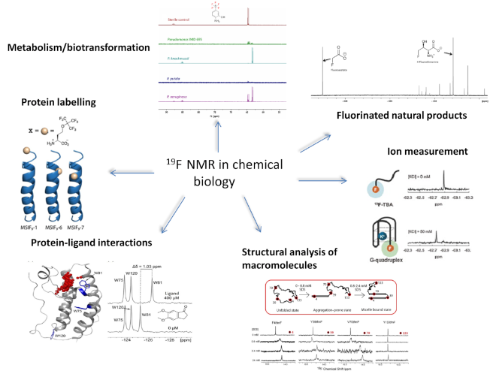
- -β2AR, changes in the NMR signals monitored within different helices of the protein revealed that agonist binding primarily shifted the equilibrium towards the G protein-specific active state of helix VI. In contrast, β-arrestin-biased ligands predominantly affected the conformation of specifically
- thermodynamic equilibrium binding constants (K) and kinetic rates of association (kon) and dissociation (koff) in protein–ligand binding events [37]. In order to achieve this, they analysed the binding of four different proline-rich peptides to a 5-FTrp-labelled Src homology 3 (SH3) recognition protein domain
- characterize and quantify the relative populations of monomeric, octameric, and higher oligomer species that populate the pathway from the native PrP state to fibril formation. The equilibrium constants between states were also analysed as a function of both temperature and pressure, allowing to determine the


The preparation and properties of 1,1-difluorocyclopropane derivatives
Beilstein J. Org. Chem. 2021, 17, 245–272, doi:10.3762/bjoc.17.25
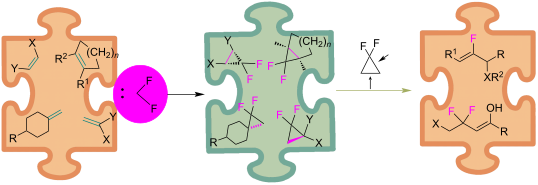
- rearrangement of 1,1-difluoro-2-methylenecyclopropane (96) (Scheme 45) [92]. At 210 °C the rate of cleavage of the proximal bond was only 3.8 times faster than for the analogous hydrocarbon. It was also observed that the equilibrium lay significantly in favor of the rearranged product 97, which was by 1.9 kcal




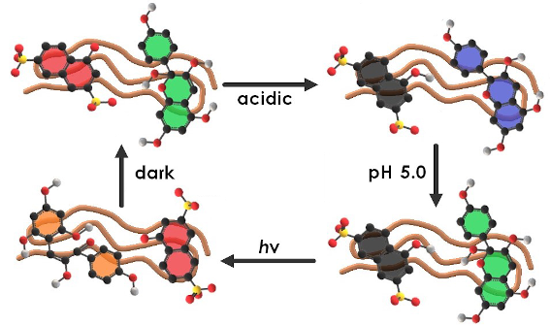
Multiswitchable photoacid–hydroxyflavylium–polyelectrolyte nano-assemblies
Beilstein J. Org. Chem. 2021, 17, 166–185, doi:10.3762/bjoc.17.17
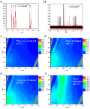
- considers the interaction at multiple binding sites, which might be identical or non-identical. Thus, the model is generally applicable for any possible scenario with more than one ligand. In addition to the enthalpy, the titration curve contains direct information of the stoichiometries and equilibrium




Insight into functionalized-macrocycles-guided supramolecular photocatalysis
Beilstein J. Org. Chem. 2021, 17, 139–155, doi:10.3762/bjoc.17.15
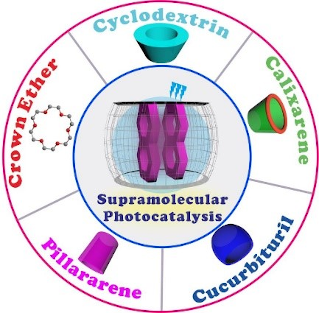
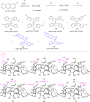
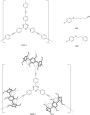
- various photocatalytic reactions, there are still several issues to be addressed: 1) To develop supramolecular photocatalytic systems, it is critical to have a thorough understanding of the photochemical and photophysical aspects of the reactions, such as the kinetic equilibrium constants, the reaction






Supramolecular polymerization of sulfated dendritic peptide amphiphiles into multivalent L-selectin binders
Beilstein J. Org. Chem. 2021, 17, 97–104, doi:10.3762/bjoc.17.10
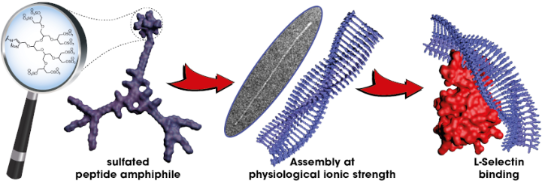
- interactions [17][18]. By a careful design of the corresponding building blocks, extensive multilateral hydrogen bonds between the amino acid sequences of the oligopeptide backbone lead to secondary structures that direct the equilibrium to polymeric nano-scaled assemblies. A well-studied receptor making use



Molecular basis for protein–protein interactions
Beilstein J. Org. Chem. 2021, 17, 1–10, doi:10.3762/bjoc.17.1
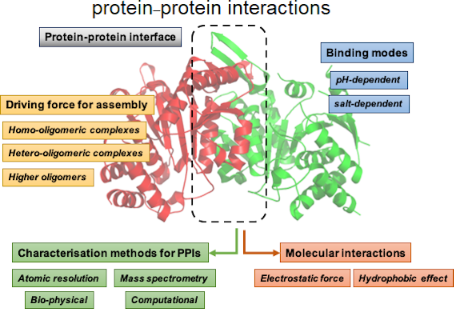
- tryptophan, the equilibrium between the monomer and the oligomer formation is shifted towards the latter [75][76]. Examples of PPIs within higher-order protein complexes PPIs are responsible for the assembly of large protein complexes, such as capsid proteins in viruses and protein containers. This section


All-carbon [3 + 2] cycloaddition in natural product synthesis
Beilstein J. Org. Chem. 2020, 16, 3015–3031, doi:10.3762/bjoc.16.251
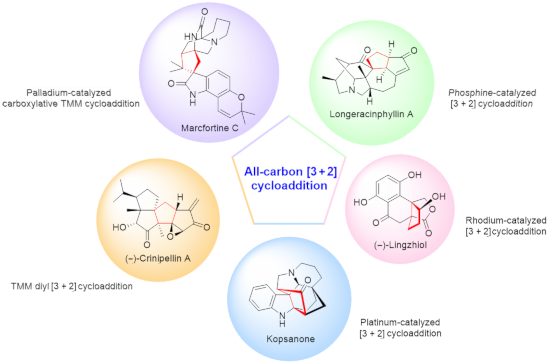
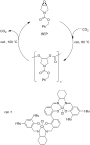
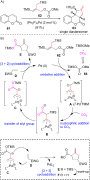
- 3A). Trost and co-workers proposed that the catalytic mechanism involves an oxidative addition of palladium(0) into 62 affording the η3-Pd TMM complex A [37] (Scheme 3B). Methyl trimethylsilyl carbonate (64) is formed as side product, which is in equilibrium with carbon dioxide and methyl
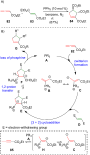
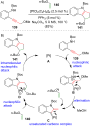
- -workers proposed that the catalytic mechanism involves a reaction between phosphine catalyst A and allene 82 to give B and/or C (Scheme 5B). Catalytic [3 + 2] cycloaddition of B and/or C and alkene D gives the cyclic intermediates E and F in an equilibrium state through a 1,2-proton transfer. The loss of







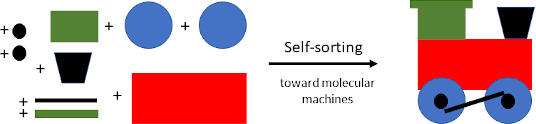
Using multiple self-sorting for switching functions in discrete multicomponent systems
Beilstein J. Org. Chem. 2020, 16, 2831–2853, doi:10.3762/bjoc.16.233
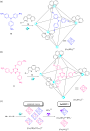
- reversed back to the initial state (Figure 15b). Here, all translocations happen in an off-equilibrium system. Since the kinetic evolution of the lithium pulses was followed by color and luminescence changes of the lithium-sensitive probe 36, the system is suited for a multitude of new applications
- translocation, monitored by distinct emission colors. b) Working principle of the chemical fuel 50. Off-equilibrium lithium pulses generate c) SOS morse signals, and d) sawtooth signals. Adapted with permission from (Ghosh, A.; Paul, I.; Schmittel, M. J. Am. Chem. Soc. 2019, 141, 18954–18957 [61]). Copyright









Dirhamnolipid ester – formation of reverse wormlike micelles in a binary (primerless) system
Beilstein J. Org. Chem. 2020, 16, 2820–2830, doi:10.3762/bjoc.16.232
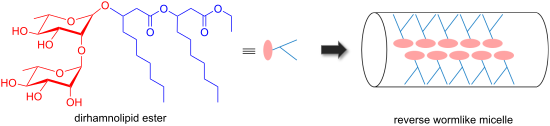
- G''min. The reciprocal of the frequency where G'' has a minimum approximately corresponds to the breaking/recombination time τb of the reverse micelles, which are self-organized systems that undergo constant scission and recombination processes in a dynamic equilibrium [36]. Therefore, τb is the
- increase in the number of micelles can be explained by the breakup of big branched micelles into plenty of small ones. At elevated temperatures, the micelles can dissolve into surfactant monomers (dynamic equilibrium), which then leads to a decrease in the number of micelles. The relaxation time (τR


Synthesis and investigation of quadruplex-DNA-binding, 9-O-substituted berberine derivatives
Beilstein J. Org. Chem. 2020, 16, 2795–2806, doi:10.3762/bjoc.16.230
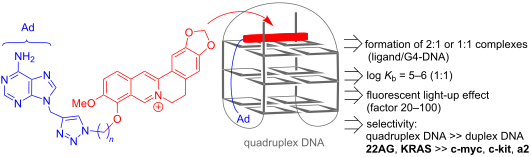
- enthalpy of the ligand binding (ΔHb) is hardly accessible. Hence, we explain the very low ΔTm values for G4-DNA a2 in the presence of the ligands 4a–e with a very low affinity of these ligands at the melting temperature, which may be caused by the delicate, temperature-dependent equilibrium of the
- . Additional information about the complex formation between the ligands and the quadruplex DNA forms 22AG and a2 was provided by CD spectroscopy. The changes of the CD spectrum of 22AG upon the addition of derivatives 4a–e clearly indicate a shift of the equilibrium between the different quadruplex forms of
- the characteristic CD pattern with a strong positive band at 295 nm and a weak negative one at 260 nm [60]. These observations show that all ligands stabilize preferentially the basket-type quadruplex structure of 22AG. In the case of the G4-DNA a2 the addition of the ligands shifts the equilibrium


Activation of pentafluoropropane isomers at a nanoscopic aluminum chlorofluoride: hydrodefluorination versus dehydrofluorination
Beilstein J. Org. Chem. 2020, 16, 2623–2635, doi:10.3762/bjoc.16.213
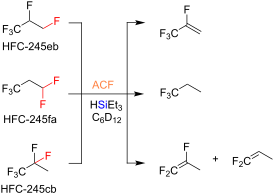
- dehydrofluorination product 2,3,3,3-tetrafluoropropene (HFO-1234yf, 1) and the isomerization product 1,1,1,2,2-pentafluoropropane (HFC-245cb, 10b) in a 1:2 ratio (Scheme 2, top) with almost full conversion. The group of Kemnitz previously showed that 1 and 10b can be in an equilibrium when HF is present in the
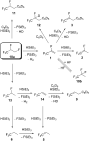
- equilibrium between 5 and 6, that depends on the amount of HF or HSiEt3 present in the reaction mixture. Additionally, it is conceivable that 14 can further react to form 5 via allylic hydrodefluorination [16]. Therefore, the reactivity of 14 was tested in the presence of ACF and silane in C6D12 or C6D6




Anion exchange resins in phosphate form as versatile carriers for the reactions catalyzed by nucleoside phosphorylases
Beilstein J. Org. Chem. 2020, 16, 2607–2622, doi:10.3762/bjoc.16.212
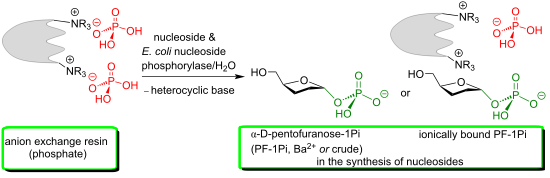
- letter to the editor Kalckar reported for the first time that specific inosine nucleosidase from rat liver catalyzes the reversible reaction “inosine + phosphate ⇌ hypoxanthine + ribose-1-phosphate”: the equilibrium of this reaction in water at pH 6.5 is displaced to the nucleoside synthesis. Moreover
- , he made the very interesting observation that the reaction of hypoxanthine and ribose-1-phosphate reached equilibrium after 20 min at a 70% concentration of inosine and “The synthesis of inosine would probably proceed further if all traces of inorganic phosphate were removed, since with equimolar
- -phosphate buffer, pH 7.4; 45 °C) [41]. It was shown that the N7-isomer formed predominantly at the beginning of the reaction and the ratio of N7- and N9-isomers displaced gradually to the latter getting equilibrium at ca. 1:4.8 ratio after 24 h. Results and Discussion The analysis of the experimental works


Particle size effect in the mechanically assisted synthesis of β-cyclodextrin mesitylene sulfonate
Beilstein J. Org. Chem. 2020, 16, 2598–2606, doi:10.3762/bjoc.16.211
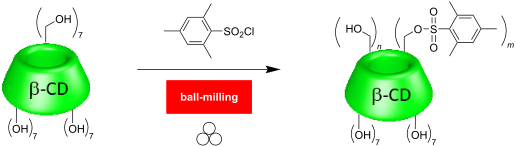
- occur over longer times, suggesting that shear, friction, and collision effects did not anymore affect the β-CD particle size and morphology over time. In fact, crystal breaking reduced the particle size up to some critical threshold, as a result of the equilibrium between comminution and aggregation
- . While the deprotonation/protonation equilibrium preferentially takes place at the 2- and 6-positions of the β-CD [29], the alkoxide located on the primary face at the 6-position is more inclined to react with the bulky mesitylenesulfonate group than the alkoxide on the secondary face at the 2-position