

Search results
Search for "electrophiles" in Full Text gives 318 result(s) in Beilstein Journal of Organic Chemistry. Showing first 200.
Derivatives of the triaminoguanidinium ion, 5. Acylation of triaminoguanidines leading to symmetrical tris(acylamino)guanidines and mesoionic 1,2,4-triazolium-3-aminides
Beilstein J. Org. Chem. 2017, 13, 579–588, doi:10.3762/bjoc.13.57
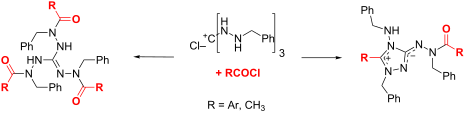
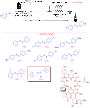
- ) is generally considered as being typical for these and related mesoionic compounds (see the next chapter). It was therefore expected that betaines 7 would be attacked by electrophiles at the exocyclic nitrogen atom bearing excess π-electron density. In fact the protonation of 7b,c with hydrochloric




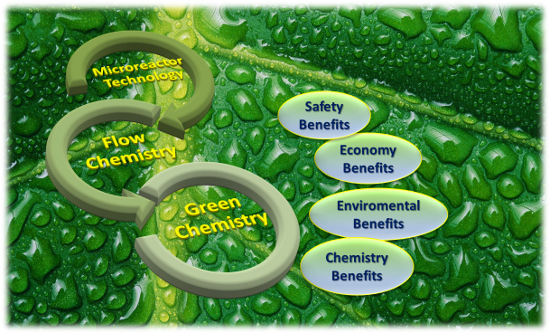
Contribution of microreactor technology and flow chemistry to the development of green and sustainable synthesis
Beilstein J. Org. Chem. 2017, 13, 520–542, doi:10.3762/bjoc.13.51
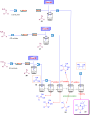
- microreactor system [19]. In particular, they reported that starting from different substituted carbamoyl chloride 1 and lithium naphthalenide (LiNp) it was possible to generate the corresponding carbamoyllithium 2, that upon trapping with different electrophiles provided several amides and ketoamide 3 (Scheme
- conventional batch protocol. In addition, THF could be used in place of mixed solvents (Et2O/THF/light petroleum). Under the optimized conditions, the reactions of benzyllithiums with different electrophiles, gave adduct products in good yields (Scheme 4). Another useful aspect of the flash chemistry relies on
- versatility of this approach, Ley and co-workers reported the allylations of carbonyl electrophiles such as aldehydes using the above reported strategy for the generation of allylboronic acids. The flow protocol considers the reaction of diazo compounds 25 (generated in flow) with boronic acid 26 and aldehyde








Decarboxylative and dehydrative coupling of dienoic acids and pentadienyl alcohols to form 1,3,6,8-tetraenes
Beilstein J. Org. Chem. 2017, 13, 384–392, doi:10.3762/bjoc.13.41
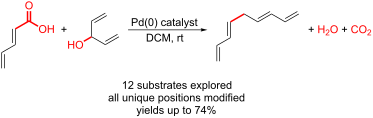
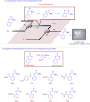
- (Table 1, entry 9). To further understand this interesting decarboxylative coupling reaction, a handful of different pentadienyl electrophiles and dienoic acids were examined (Table 3). Typically, the pentadienyl alcohol was used; however, in some cases the acetate was superior. It was found that both a


Regiochemistry of cyclocondensation reactions in the synthesis of polyazaheterocycles
Beilstein J. Org. Chem. 2017, 13, 257–266, doi:10.3762/bjoc.13.29
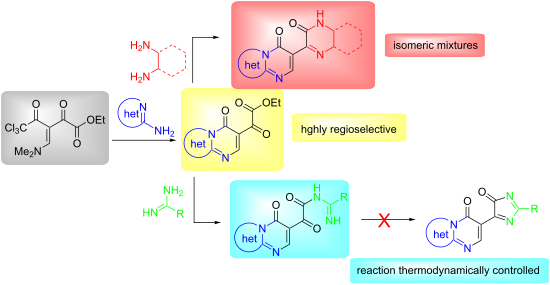
- between the HOMO/LUMO energies of electrophiles and nucleophiles (Table 2 and Table 3), and the reactions were controlled by frontier molecular orbitals rather than by charge density. Analogous calculations using the PM3 method for cyclocondensation reactions were performed by Saiz et al. [14] for the


New approaches to organocatalysis based on C–H and C–X bonding for electrophilic substrate activation
Beilstein J. Org. Chem. 2016, 12, 2834–2848, doi:10.3762/bjoc.12.283
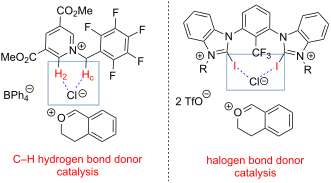
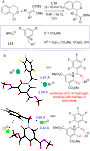
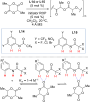
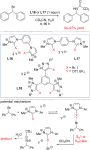
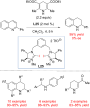
- these efforts. The use of synthetic hydrogen bond donors for the activation of neutral or ionic electrophiles has been one of the major focuses of these research efforts in the past two decades (Figure 1) [1]. Many privileged hydrogen bond donor scaffolds capable of forming single or double hydrogen










A versatile route to polythiophenes with functional pendant groups using alkyne chemistry
Beilstein J. Org. Chem. 2016, 12, 2682–2688, doi:10.3762/bjoc.12.265
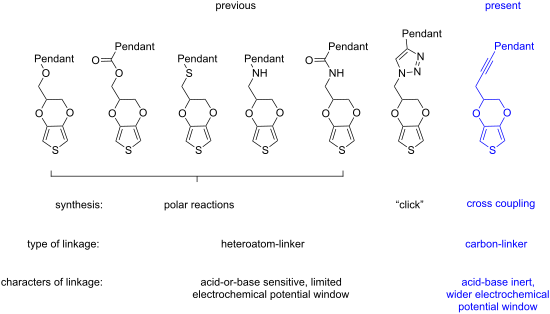
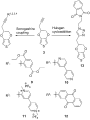
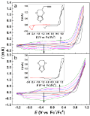
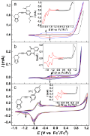
- methylenethiol derivative EDOT-CH2SH [18], as nucleophiles, as well as the halomethyl derivative EDOT-CH2-Cl/Br [6][9] and the exomethylene-EDOT [19] as electrophiles, can be used to form ether, thioether, ester, amine and peptide linkages with the pendant groups. The polar reaction conditions required for their


Selective synthesis of thioethers in the presence of a transition-metal-free solid Lewis acid
Beilstein J. Org. Chem. 2016, 12, 2627–2635, doi:10.3762/bjoc.12.259
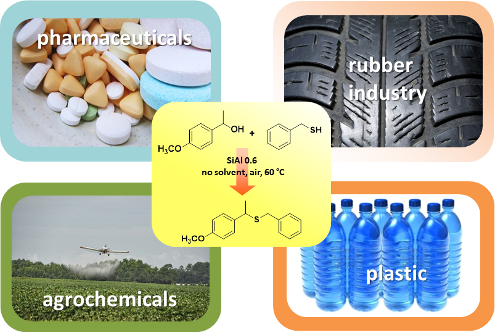
- of thiols has also been carried out under flow conditions in the presence of a heterogeneous base in a packed bed reactor but also in this case alkyl halides were used as electrophiles [28]. The reaction we are presenting here takes place in the presence of a solid catalyst starting from the alcohol


A direct method for the N-tetraalkylation of azamacrocycles
Beilstein J. Org. Chem. 2016, 12, 2457–2461, doi:10.3762/bjoc.12.239
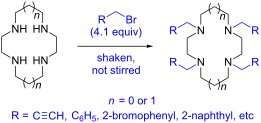
- electrophiles and excess sodium bicarbonate in anhydrous DMF, but the yields were generally poor (60% in the privileged case of ethyl bromoacetate, 25–40% in all other examples) [35]. Some success has been reported using direct alkylation in biphasic solvent systems which combine an alkaline aqueous phase with


Superelectrophilic activation of 5-hydroxymethylfurfural and 2,5-diformylfuran: organic synthesis based on biomass-derived products
Beilstein J. Org. Chem. 2016, 12, 2125–2135, doi:10.3762/bjoc.12.202
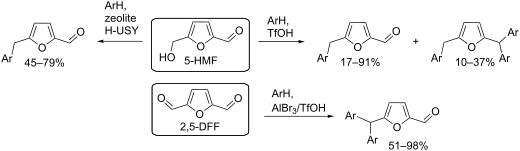
- index ω [48][49], charge distribution, and contribution of atomic orbitals into the LUMO were calculated. The dications B and D having high ω values of 9.6 and 8 eV, respectively, should be very reactive electrophiles. The carbon atom of the protonated aldehyde group in species A, B, C, and D bears a


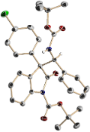
Chiral ammonium betaine-catalyzed asymmetric Mannich-type reaction of oxindoles
Beilstein J. Org. Chem. 2016, 12, 2099–2103, doi:10.3762/bjoc.12.199
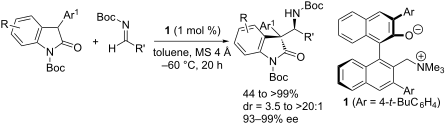
- stability arising from the aromatic character. Accordingly, a number of catalytic methods are available for the asymmetric functionalization of oxindole enolates with various different electrophiles. However, successful examples of Mannich-type reactions with imines are surprisingly limited despite allowing


Enantioconvergent catalysis
Beilstein J. Org. Chem. 2016, 12, 2038–2045, doi:10.3762/bjoc.12.192
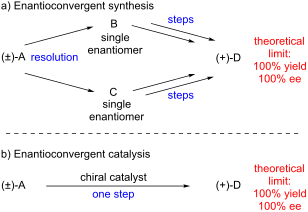
- generation of radical intermediates from chiral sp3-hybridized halides presents another opportunity for type II enantioconvergent catalysis. Peters and Fu have reported a system for the Cu-catalyzed C–N cross-coupling of racemic tertiary alkyl halide electrophiles with carbazole nucleophiles induced by


Unusual reactions of diazocarbonyl compounds with α,β-unsaturated δ-amino esters: Rh(II)-catalyzed Wolff rearrangement and oxidative cleavage of N–H-insertion products
Beilstein J. Org. Chem. 2016, 12, 1904–1910, doi:10.3762/bjoc.12.180
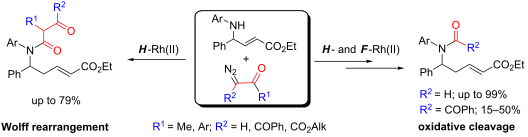
- intermediates generated from diazo compounds (ammonium, oxonium, C=X-ylides and others) to react with a variety of electrophiles/nucleophiles yielding complex and challenging organic molecules from relatively straightforward initial compounds [9][10]. The research group by Hu and co-workers elaborated recently
- a diversity of multicomponent reactions, which includes trapping of onium ylides by different electrophiles, such as activated С=С, С=O, C=N and other bonds [9]. A plethora of works aimed at realization of this “metal–carbene” methodology appeared in the last few years. Thus a diastereoselective


Biosynthesis of oxygen and nitrogen-containing heterocycles in polyketides
Beilstein J. Org. Chem. 2016, 12, 1512–1550, doi:10.3762/bjoc.12.148
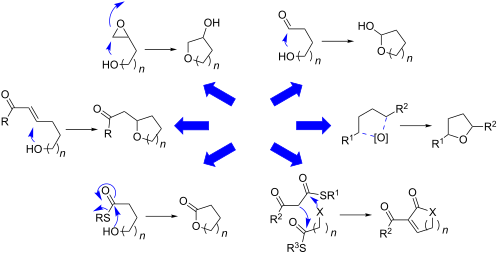
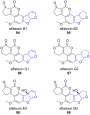
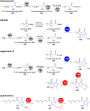
- are biosynthesised in seven principal ways (Scheme 2). Those comprise nucleophilic addition of a hydroxy group to electrophiles like epoxides 4, carbonyl groups 6 or Michael acceptors 9, potentially followed by further processing (a–c in Scheme 2). Lactones 12 are formed by transacylation of a






Development of chiral metal amides as highly reactive catalysts for asymmetric [3 + 2] cycloadditions
Beilstein J. Org. Chem. 2016, 12, 1447–1452, doi:10.3762/bjoc.12.140

- 2, entries 5–9). Sterically hindered substrates were also viable, and high enantioselectivities were obtained with 0.01 mol % catalyst loading (Table 2, entries 10–13). Other electrophiles were also successfully employed with 0.1 mol % catalyst loading (Scheme 1). N-Methylmaleimide reacted with 1a
- with other electrophiles. The [3 + 2] cycloaddition reaction of 0.5 M 1a (10 mmol) with 2 (11 mmol) was conducted at −40 °C for 18 h by using the chiral copper amide prepared from CuOTf·0.5toluene complex (0.011 mmol), KHMDS (0.010 mmol), and FeSulphos (0.011 mmol) in situ. Chiral copper amide


3,6-Carbazole vs 2,7-carbazole: A comparative study of hole-transporting polymeric materials for inorganic–organic hybrid perovskite solar cells
Beilstein J. Org. Chem. 2016, 12, 1401–1409, doi:10.3762/bjoc.12.134
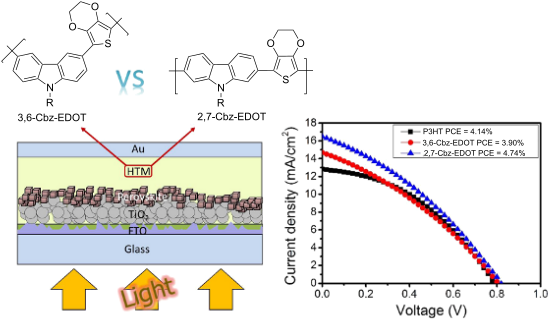
- and electrical properties [14][15][16][17][18][19][20][21]. For example, the 3,6-positions of the carbazole readily react with various electrophiles, and accordingly, many types of linear and hyperbranched poly(3,6-carbazole) derivatives have been reported to show potent redox activities and nonlinear


Application of Cu(I)-catalyzed azide–alkyne cycloaddition for the design and synthesis of sequence specific probes targeting double-stranded DNA
Beilstein J. Org. Chem. 2016, 12, 1348–1360, doi:10.3762/bjoc.12.128
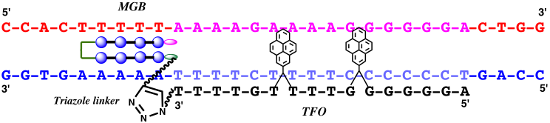
- [10][11][34]. Several different bifunctional linkers were designed and synthesized (Figure 3). All of them contain, on one side, an alkyne or azide group for "click chemistry” and, on the other side, either an amino group for interaction with electrophiles (for example, activated terminal phosphates


Multicomponent reactions: A simple and efficient route to heterocyclic phosphonates
Beilstein J. Org. Chem. 2016, 12, 1269–1301, doi:10.3762/bjoc.12.121
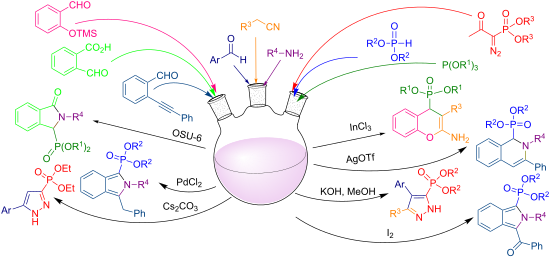
- acyclic α-aminophosphonates 176. However, using difunctionalized electrophiles such as 1,3-diiodopropane 178 resulted in piperidinylphosphonates 179 with moderate yields (Scheme 38). This one-pot transformation involves an aziridine ring opening, C-alkylation, and hydrophosphorylation of the formed imine


Conjugate addition–enantioselective protonation reactions
Beilstein J. Org. Chem. 2016, 12, 1203–1228, doi:10.3762/bjoc.12.116
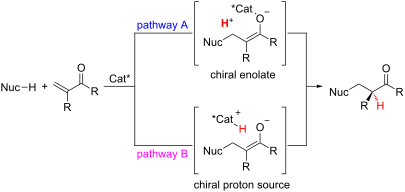
- hydrogen atom transfer are also included in this review. Review α,β-Unsaturated esters Lewis acids α,β-Unsaturated esters have been the most extensively studied class of electrophiles for conjugate addition–enantioselective protonation sequences. Esters are useful functional group handles for additional




Modular synthesis of the pyrimidine core of the manzacidins by divergent Tsuji–Trost coupling
Beilstein J. Org. Chem. 2016, 12, 1111–1121, doi:10.3762/bjoc.12.107
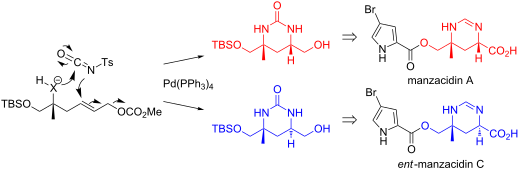
- groups [38][39][40][41][42][43], is based on a sequential nucleophilic addition and an intramolecular allylic substitution reaction. It relies on the coupling of different homoallylic nucleophiles of general type 6 to diverse electrophiles 7 such as Michael acceptors, or heteroolefins as for example



Bifunctional catalysis
Beilstein J. Org. Chem. 2016, 12, 1079–1080, doi:10.3762/bjoc.12.102
- molecules possessing two distinct functional groups to bring about new reactivity and/or selectivity in a reaction of interest. The reactions are typically polar addition reactions of pronucleophiles and electrophiles where, ideally, simple low-cost starting materials are converted into high-value
- reactivity and selectivity in synthetically relevant reactions. Furthermore, owing to the great number of pronucleophiles and electrophiles that are available, the number of polar addition reactions that are amenable to catalysis through the action of bifunctional catalysts is enormous, and consequently, the
Catalytic asymmetric synthesis of biologically important 3-hydroxyoxindoles: an update
Beilstein J. Org. Chem. 2016, 12, 1000–1039, doi:10.3762/bjoc.12.98
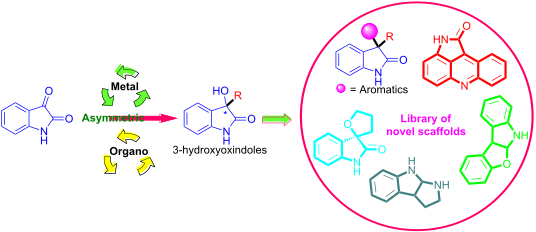
- products in excellent yields and with excellent enantioselectivity. The authors found that 7-azaisatins are better electrophiles than isatins and could be used for accessing biologically important isatin analogs. In 2015, Ren et al. developed a novel quinidine catalyst (cat. 23) bearing a 2-aminopyrimidin




1H-Imidazol-4(5H)-ones and thiazol-4(5H)-ones as emerging pronucleophiles in asymmetric catalysis
Beilstein J. Org. Chem. 2016, 12, 918–936, doi:10.3762/bjoc.12.90
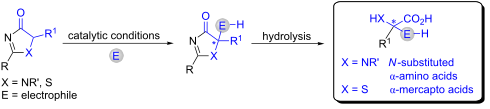
- devoted to the development of new efficient chiral catalysts, both metal catalysts and organocatalysts, together with the search for appropriate (pro)nucleophiles and/or electrophiles. In this context, the enantioselective construction of tetrasubstituted stereocenters is another challenge [5][6][7][8][9
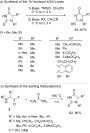
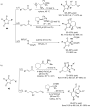
- reactions. In 2011, Weib and Beckert et al. reported a 1H NMR study of these compounds in solution that shows that they exist in equilibrium between two tautomeric forms [77], and therefore this could facilitate deprotonation at the 5-position to further react with various electrophiles. However, thiazol-4








Opportunities and challenges for direct C–H functionalization of piperazines
Beilstein J. Org. Chem. 2016, 12, 702–715, doi:10.3762/bjoc.12.70
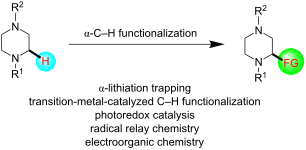
- α-lithiation of N-Boc-protected piperazines were reported by van Maarseveen and co-workers in 2005 [37], sixteen years after Beak and Lee’s seminal discovery. Van Maarseveen et al. have developed two sets of reaction conditions: one uses various electrophiles to directly trap the α-lithiation
- better for electrophiles such as TMSCl and Bu3SnCl whereas conditions B are more suitable for alkyl electrophiles. Van Maarseveen and co-workers also noted that the substituents on the distal nitrogen, while lacking proximity to the reaction center, have a significant impact on the overall result. In
- ]. This simple and effective diamine-free procedure allowed the reaction to take place at −30 °C, which is more desirable than −78 °C in process chemistry. Under the new reaction conditions, electrophiles such as TMSCl, MeO2CCl, DMF, Ph2CO, and PhBr (via a Negishi coupling process) can be used to install





From steroids to aqueous supramolecular chemistry: an autobiographical career review
Beilstein J. Org. Chem. 2016, 12, 684–701, doi:10.3762/bjoc.12.69
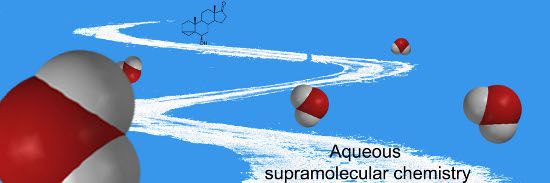
- features of these cavitands is that although structurally quite complex, because of their well-defined structure they can be readily functionalized [22][23]. For example, directed ortho-metallation and quenching with electrophiles could at first blush theoretically lead to a plethora of products because


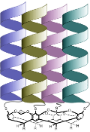


The aminoindanol core as a key scaffold in bifunctional organocatalysts
Beilstein J. Org. Chem. 2016, 12, 505–523, doi:10.3762/bjoc.12.50
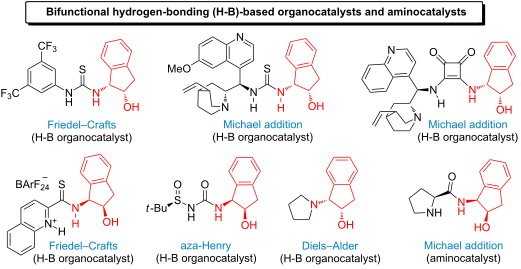
- derivative 4 to develop the first organocatalytic enantioselective Friedel–Crafts (F–C) alkylation of indoles, employing nitroalkenes as versatile electrophiles. In the presence of catalyst 4, the differently functionalized indole derivatives 2 reacted with aryl and alkyl nitroalkenes 3 in dichloromethane at
- reaction that leads to the final cis-product 21. The thermodynamically favorable trans-product 21 can be obtained through a tetramethylguanidine (TMG)-catalyzed epimerization process. Other possible electrophiles have been contemplated in the Friedel–Crafts alkylation of indoles. For instance, Jørgensen’s
- group studied the use of α,β-unsaturated acyl phosphonates as suitable electrophiles for this kind of reaction, using several bifunctional aminoindanol-based organocatalytic scaffolds as catalysts (Scheme 10) [39]. Hence, the authors demonstrated that acyl phosphonates can be used as efficient hydrogen