
Search results
Search for "deprotection" in Full Text gives 677 result(s) in Beilstein Journal of Organic Chemistry. Showing first 200.
Synthesis of disparlure and monachalure enantiomers from 2,3-butanediacetals
Beilstein J. Org. Chem. 2020, 16, 616–620, doi:10.3762/bjoc.16.57
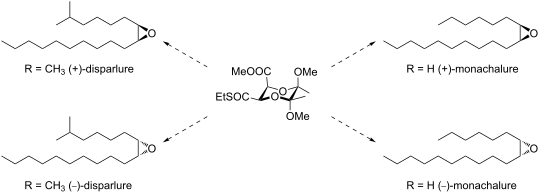
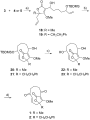
- chiral centers for the synthesis of both enantiomers of disparlure 1 and 3 and monachalure 2 and 4. Compound 14 also offers the possibility of selective modification of one of the substituents as well as sequential introduction of aliphatic chains. After deprotection of the butanediacetal group, diols 5


Recent advances in photocatalyzed reactions using well-defined copper(I) complexes
Beilstein J. Org. Chem. 2020, 16, 451–481, doi:10.3762/bjoc.16.42
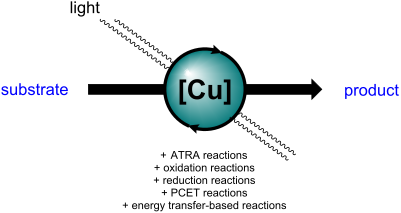
- and 5-exo-trig cyclization catalyzed by the photocatalyst [Cu(I)(bcp)(DPEPhos)]PF6. a5 mol % of catalyst and 5 equiv of DIPEA were used. [Cu(I)(bcp)(DPEPhos)]PF6-photocatalyzed synthesis of alkaloids. aYield over two steps (cyclization and TMS deprotection). Copper-photocatalyzed decarboxylative














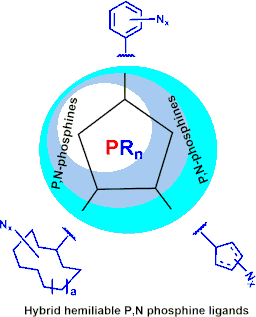
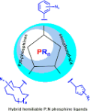
Architecture and synthesis of P,N-heterocyclic phosphine ligands
Beilstein J. Org. Chem. 2020, 16, 362–383, doi:10.3762/bjoc.16.35
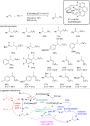
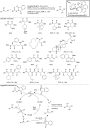
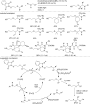
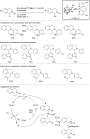
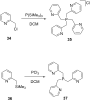
- deprotection then furnished 83b in reasonable yields between 68 and 87%. Bis(diphenylphosphine)-substituted imidazoles were also synthesized by Karthik et al. [87] starting from the diiodoimidazole derivative 84. The lithium chloride mediated magnesium/iodine exchange reaction of 84 followed by the addition of
- major isomer (+)-125 was crystallized from (−)-127 using an isopropanol/hexane mixture and confirmed to have R-configuration. The free ligand was obtained by deprotection of the P-center with 1,4-diazabicyclo[2.2.2]octane (DABCO) under refluxing in chloroform for two days at 50 °C. Duplicating the same




Microwave-assisted synthesis of 2-substituted 4,5,6,7-tetrahydro-1,3-thiazepines from 4-aminobutanol
Beilstein J. Org. Chem. 2020, 16, 32–38, doi:10.3762/bjoc.16.5
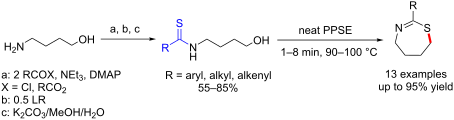
- -substituted tetrahydro-1,3-thiazepines by MW-assisted cyclization of 4-thioamidobutanols is presented. The acyclic precursors were prepared in high overall yields by an expeditious three-step diacylation/thionation/deprotection sequence from 4-aminobutanol. Microwave-assisted ring closure of 4-thioamido


Starazo triple switches – synthesis of unsymmetrical 1,3,5-tris(arylazo)benzenes
Beilstein J. Org. Chem. 2020, 16, 22–31, doi:10.3762/bjoc.16.4
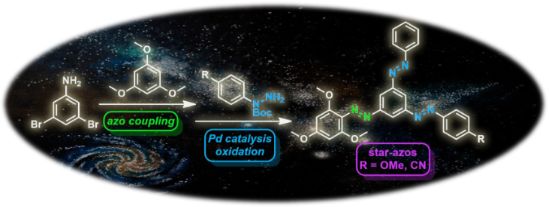
- ). Starting from 3,5-disubstituted nitrosobenzene E, consecutive Bayer–Mills and deprotection reactions would lead to the target compound 3 in five steps. Furthermore, by using nitrosoarene E, the selective installment of the amine groups, e.g., via acetamide- and nitro group-carrying intermediates, could be
- achieved [14][15][16]. Such a strategy had already been used successfully in previous syntheses of o-, p-, and m-bis(arylazo)benzenes in our laboratory [14]. However, multiple protection/deprotection steps lowered the atom economy and increased the step count of this strategy. The second approach towards


Synthesis of C-glycosyl phosphonate derivatives of 4-amino-4-deoxy-α-ʟ-arabinose
Beilstein J. Org. Chem. 2020, 16, 9–14, doi:10.3762/bjoc.16.2
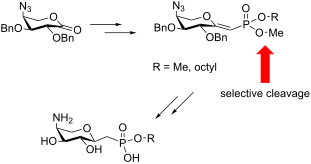
- ppm in compound 9). Full deprotection, including the conversion of the 4-azido group into an amino function, was accomplished by hydrogenation of 9 in the presence of palladium hydroxide in a 1:1 mixture of methanol/acetic acid to deliver the target derivative 11 in 30% yield after final HILIC
- groups with concomitant reduction of the azido group afforded the α-anomeric octyl ((4-amino-4-deoxy-ʟ-arabinopyranosyl)methyl)phosphonate 16 in 38% yield. Deprotection of the endo-glycal ester 15 was also investigated. An intermediate enol resulting from hydrogenolytic cleavage of the benzyl ether was


Automated glycan assembly of arabinomannan oligosaccharides from Mycobacterium tuberculosis
Beilstein J. Org. Chem. 2019, 15, 2936–2940, doi:10.3762/bjoc.15.288
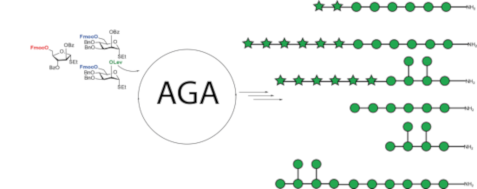
- (from −40 to −20 °C). Finally, the deprotection module removed the temporary protecting group, such as fluorenylmethyloxycarbonyl (Fmoc) or levulinoyl (Lev), to reveal a free hydroxy group that allowed for further chain elongation in the next cycle. Fmoc and Lev were used as orthogonal temporary
- -step purification and global deprotection [25]. Linear α-(1,6)-hexamannoside 4 was synthesized using six coupling cycles and 6.5 equiv of mannose building block (BB) 1. No deletion sequences were observed and the crude product was purified using normal-phase HPLC to obtain hexamannoside 4 in 55% yield
- , based on resin loading. The doubly branched hexamannoside 5 was assembled using BB 1 for α-(1,6) linkages and BB 2 for α-(1,6)/α-(1,2) branching points. First, the linear α-(1,6)-trimannose was assembled, followed by deprotection of both Lev and Fmoc to reveal three hydroxy groups. Three sequential


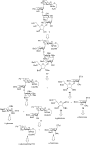
Chemical synthesis of tripeptide thioesters for the biotechnological incorporation into the myxobacterial secondary metabolite argyrin via mutasynthesis
Beilstein J. Org. Chem. 2019, 15, 2922–2929, doi:10.3762/bjoc.15.286
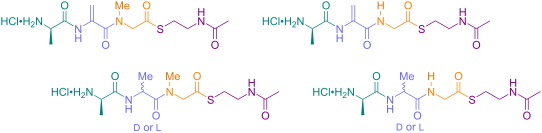
- , acid-mediated deprotection of the Boc group and final coupling to Boc-ᴅ-alanine. Fully protected tripeptides were transformed by base hydrolysis into the free carboxylic acids, followed by activation of the unprotected C-terminus as a SNAc thioester. Subsequent cleavage of the N-terminal Boc protecting
- benzyl protected serine at the Dha site. Following hydrogenolytic deprotection, in situ produced serine EDC adduct was subjected to copper(I) chloride-mediated elimination to give the dehydroalanine derivatives 34a and 34b in good yields. Deprotection of the ester protecting group also proceeded in good
- hydroxide deprotection of the ester in compound 40 provided the free acrylate 41. In parallel, Boc-protected sarcosine 42 was transformed into the SNAc thioester 43 and the Boc group was removed to give 44. Then, both building blocks, 44 and 41, were coupled to give the protected tripeptide thioester 35b in



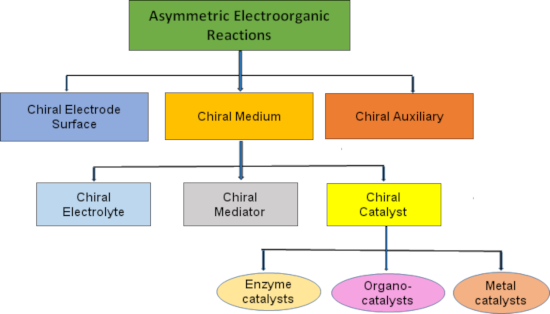
A review of asymmetric synthetic organic electrochemistry and electrocatalysis: concepts, applications, recent developments and future directions
Beilstein J. Org. Chem. 2019, 15, 2710–2746, doi:10.3762/bjoc.15.264
- . Further nucleophilic substitution of 174 with allyltrimethylsilane in the presence of a Lewis acid afforded α-alkylated products 175. The highest de was obtained in the case of 175d. The deprotection of 175 with LAH enabled access to α-alkylated pyrrolidines 176 with the release of 177 (Scheme 56). In




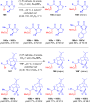


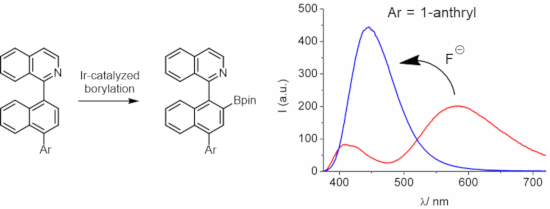
Arylisoquinoline-derived organoboron dyes with a triaryl skeleton show dual fluorescence
Beilstein J. Org. Chem. 2019, 15, 2612–2622, doi:10.3762/bjoc.15.254
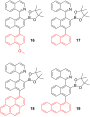
- ) group deprotection in MeOH/CH2Cl2 using TsOH·H2O as the catalyst (Scheme 2). In a conventional triflation (Tf2O, DMAP cat.), 7 was converted into 8 with a yield of 86%. For the synthesis the triflates 9–11 a one-pot demethylation–triflation sequence was followed (Scheme 2). The treatment of biaryl



Chemical synthesis of the pentasaccharide repeating unit of the O-specific polysaccharide from Escherichia coli O132 in the form of its 2-aminoethyl glycoside
Beilstein J. Org. Chem. 2019, 15, 2563–2568, doi:10.3762/bjoc.15.249
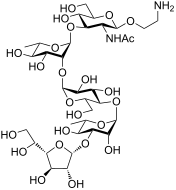
- -linked disaccharide (16a) along with 30% β-linked disaccharide (16b). Compound 16a was used for further glycosylation with the trisaccharide acceptor 11 to afford the protected pentasaccharide 17. Once the protected pentasaccharide was at hand, the next challenge was the global deprotection to achieve




Synthesis of novel sulfide-based cyclic peptidomimetic analogues to solonamides
Beilstein J. Org. Chem. 2019, 15, 2544–2551, doi:10.3762/bjoc.15.247
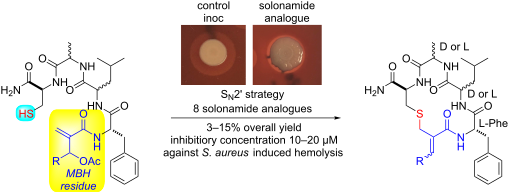
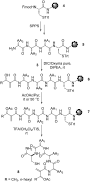
- ) and their respective carboxylic acids 3 were obtained in good yields based on previously reported procedures (Scheme 2) [35][36]. Starting from Rink Amide AM resin-bound orthogonally protected Fmoc-Cys-(Trt) 4, solonamide analogues were synthesized following stepwise Fmoc deprotection and standard




A toolbox of molecular photoswitches to modulate the CXCR3 chemokine receptor with light
Beilstein J. Org. Chem. 2019, 15, 2509–2523, doi:10.3762/bjoc.15.244
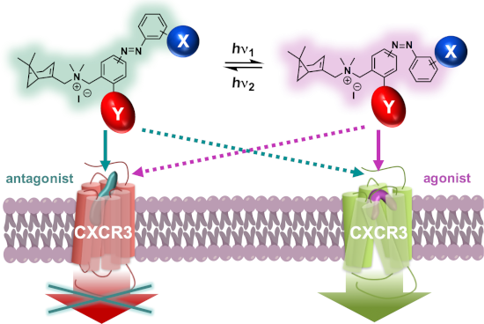
- in AcOH, completely deprotection took place and, after purification, aniline 30 was obtained with high purity. Compound 30 was used to introduce the iodine atom through a Sandmeyer reaction to give 28e albeit in low yield. Reductive amination with 7 afforded amine 16e followed by methylation to give

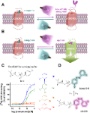


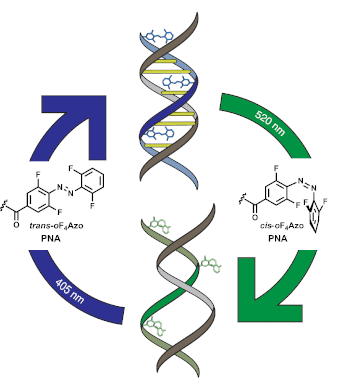
In search of visible-light photoresponsive peptide nucleic acids (PNAs) for reversible control of DNA hybridization
Beilstein J. Org. Chem. 2019, 15, 2500–2508, doi:10.3762/bjoc.15.243
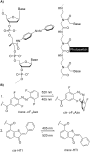
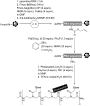
- base sensitive compounds, which undergo degradation under standard Fmoc deprotection conditions. As it is common for PNAs, our oligomers have an acetylated N-terminus and a C-terminal carboxamide group. After completion of the PNA sequences, the orthogonally protected backbone module [2-(N-Alloc

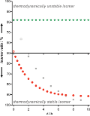


Indium-mediated C-allylation of melibiose
Beilstein J. Org. Chem. 2019, 15, 2458–2464, doi:10.3762/bjoc.15.238
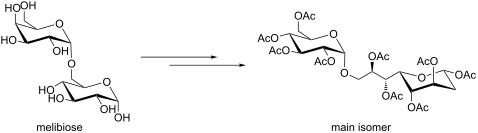
- resin followed by filtration and removal of the solvent under reduced pressure, led to precipitation of compound 3-syn, thereby causing problems during the ozonolysis. Thus, dichloromethane was added to the reaction mixture immediately after completed Zemplén-deprotection (as indicated by TLC) without
- Zemplén-deprotection and ozonolysis compound 4-anti was obtained. Purification at this stage utilizing conventional column chromatography was not feasible due to the high polarity of the obtained compound mixture, which contained pyranoid as well as furanoid isomers in their α,β-forms. Thus, per-O


Combining the Ugi-azide multicomponent reaction and rhodium(III)-catalyzed annulation for the synthesis of tetrazole-isoquinolone/pyridone hybrids
Beilstein J. Org. Chem. 2019, 15, 2447–2457, doi:10.3762/bjoc.15.237

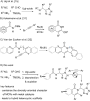
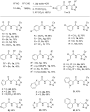
- tetrazole, pyridone or isoquinolone ring. Approaches for the synthesis of tetrazoles and isoquinolones and their interplay as designed in this work. Scope of the Ugi-azide-4CR/deprotection/acylation sequence. Ugi-azide-4CR conducted at the 2.0 mmol scale with tritylamine (1.0 equiv), aldehyde (1.5 equiv


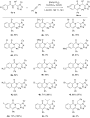


Synthesis of acremines A, B and F and studies on the bisacremines
Beilstein J. Org. Chem. 2019, 15, 2271–2276, doi:10.3762/bjoc.15.219

- . The use of a chiral oxazaborolidine catalyst led to kinetic resolution and increased the optical purity of 17 to 95% ee. Deprotection of the diol moiety followed by Stille cross coupling with vinyl stannane 18 finally gave 5 in excellent yield (Scheme 2). Since acremine F (5) can be expected to be the


An overview of the cycloaddition chemistry of fulvenes and emerging applications
Beilstein J. Org. Chem. 2019, 15, 2113–2132, doi:10.3762/bjoc.15.209
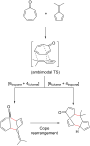
- 21) [105][237]. ROMP of the monomers, followed by deprotection yielded facially amphiphilic polynorbornenes that displayed lipid membrane disruption and antimicrobial activities [237][238]. The facially amphiphilic polynorbornenes with pendent ammonium groups were found to disrupt negatively charged







Synthesis of 1-azaspiro[4.4]nonan-1-oxyls via intramolecular 1,3-dipolar cycloaddition
Beilstein J. Org. Chem. 2019, 15, 2036–2042, doi:10.3762/bjoc.15.200
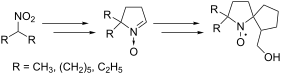
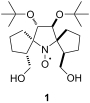
- group of the cyclopentane ring (Scheme 7). The ester groups in 11a–c were easily cleaved in an aqueous–methanol solution of ammonia. Nitroxides 12a–c were isolated as orange compounds moderately soluble in water. Overall yields of these radicals via the acylation–oxidation–deprotection pathway were in



Norbornadiene-functionalized triazatriangulenium and trioxatriangulenium platforms
Beilstein J. Org. Chem. 2019, 15, 1815–1821, doi:10.3762/bjoc.15.175
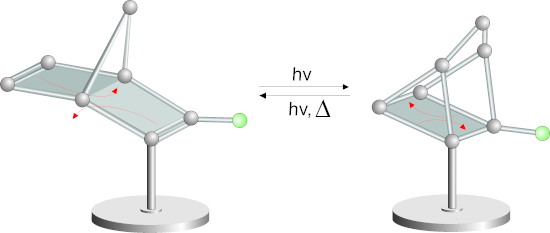
- triazatriangulenium ion 6 was synthesized according to a procedure of Laursen and Krebs [13]. The platform 6 was functionalized with norbornadiene 5 by deprotection of the acetylene with potassium hydroxide and in situ formation of the C–C bond between the acetylene and the central C atom of the platform 6 to yield


Design, synthesis and biological evaluation of immunostimulating mannosylated desmuramyl peptides
Beilstein J. Org. Chem. 2019, 15, 1805–1814, doi:10.3762/bjoc.15.174
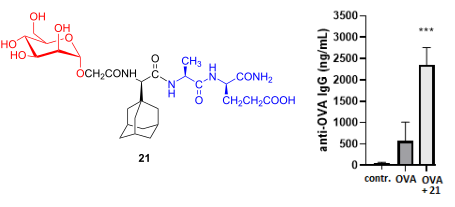
- derivatives lacking the adamantane moiety, dipeptide 1 with benzyl protection on the C-terminus was obtained after Boc-deprotection as previously reported (Scheme 1) [31]. Peptide 1 was also used for the synthesis of adamantly-containing desmuramyl tripeptide 3. Compound 1 was coupled with previously prepared
- performed. Boc deprotection of obtained compound 6 gave the trifluoroacetic salt of peptide 7 which was used in the synthesis of mannoconjugates. The mannose precursor containing the glycolyl linker 11 was prepared in a three-step procedure shown in Scheme 3. The stereoselective α-anomeric deacetylation of
- peptide moieties. The tert-butyl deprotection was accomplished using a selective reagent, trifluoroacetic acid (TFA). Side products derived from deacetylation of compound 10 have not been detected. The synthesis of benzyl-protected α-mannoside containing a (R)-hydroxyisobutyryl linker was previously


N-(1-Phenylethyl)aziridine-2-carboxylate esters in the synthesis of biologically relevant compounds
Beilstein J. Org. Chem. 2019, 15, 1722–1757, doi:10.3762/bjoc.15.168

- . Acetal formation, reduction of the amide function and deprotection completed synthesis of (−)-hygrine (S)-61. To synthesize (−)-hygroline (2S,2'S)-62 and (−)-pseudohygroline (2S,2'R)-62 the carbonyl group in (S)-66 was reduced and the diastereoisomeric alcohols (2S,2'S)-67 and (2S,2'R)-67 were separated
- transition state was involved. Acid-induced aziridine ring openings and subsequent conjugate additions to the α,β-unsaturated lactone led to the formation of cis-fused [5,5']bicyclic compounds 186a or 186b. Reduction of the lactone moiety in 186a and subsequent deprotection gave (2S,3R,4S,5R)-184. In order
- form a cis-2,6-disubstituted piperidine framework in (2S,3R,6S)-197. N-Methylation of (2S,3R,6S)-197 was accomplished by reductive amination while a selective deprotection provided the hydroxymethyl group in (2S,3R,6S)-198. Swern oxidation, Julia–Kocienski olefination and desilylation gave (−)-(2S,3R


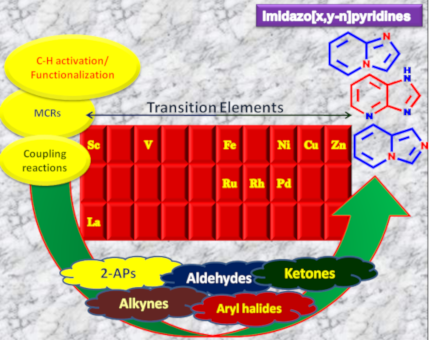
Recent advances on the transition-metal-catalyzed synthesis of imidazopyridines: an updated coverage
Beilstein J. Org. Chem. 2019, 15, 1612–1704, doi:10.3762/bjoc.15.165


Synthesis and conformational preferences of short analogues of antifreeze glycopeptides (AFGP)
Beilstein J. Org. Chem. 2019, 15, 1581–1591, doi:10.3762/bjoc.15.162
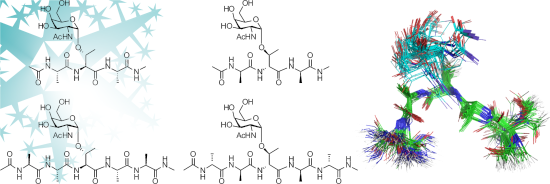
- , combined with HOAt. Loading of the resin was determined spectrophotometrically by measuring the absorption of the piperidine-dibenzofulvene adduct formed during Fmoc deprotection (20% v/v piperidine in DMF) at wavelength 290 nm. The obtained loadings were ranging from 0.36–0.60 mmol/g, while the original
- ’-tetramethyluronium hexafluorophosphate (HATU, 4 equiv), N,N-diisopropylethylamine (DIEA, 8 equiv) in NMP for 2 hours at room temperature. The loading was analyzed spectrophotometrically by measuring the absorption of the piperidine–dibenzofulvene adduct formed during the Fmoc deprotection (20% v/v piperidine in DMF
- –1.2 equiv) were pre-activated with HATU (2.8 equiv) in DMF and added to the reaction vessel, followed by HOAt (2.25 equiv) and DIEA (2.75 equiv) in DMF. Coupling was carried out at room temperature for 3 hours. After final Fmoc deprotection, the amino groups of peptides were acetylated using acetic


Synthesis and biological evaluation of truncated derivatives of abyssomicin C as antibacterial agents
Beilstein J. Org. Chem. 2019, 15, 1468–1474, doi:10.3762/bjoc.15.147
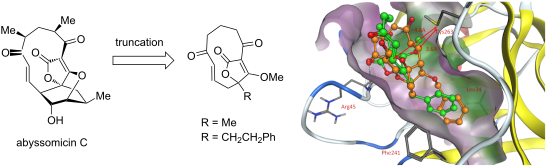
- the TBDMS group from the primary to the secondary alcohol was achieved by a protection/deprotection sequence, which smoothly provided alcohol 10 in 71% yield over two steps. A final Swern oxidation gave the building block 3 in 91% yield (33% overall yield from 1,5-pentanediol 6). The other key
- ). Treatment of 18 and 19 with Hoveyda–Grubbs second generation catalyst in refluxing 1,2-dichloroethane afforded the ring-closing metathesis products 20 and 21 in 62% and 45% yield, respectively. Deprotection of the TBDMS group using tetrabutylammonium fluoride followed by final Dess–Martin oxidation gave the