

Search results
Search for "cyclic voltammetry" in Full Text gives 210 result(s) in Beilstein Journal of Organic Chemistry. Showing first 200.
Metal and metal-free photocatalysts: mechanistic approach and application as photoinitiators of photopolymerization
Beilstein J. Org. Chem. 2014, 10, 863–876, doi:10.3762/bjoc.10.83
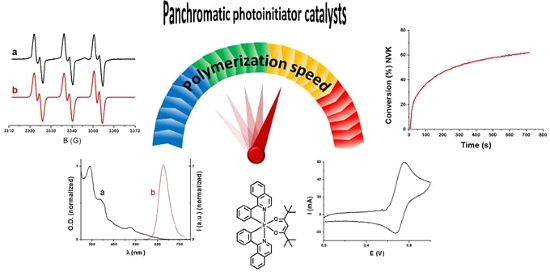
- -trapping, laser flash photolysis, steady state photolysis, cyclic voltammetry and luminescence experiments. Keywords: LEDs; photoinitiators; photopolymerization; photoredox catalysis; Introduction Photoredox catalysis is now well-known and largely used in organic synthesis, especially in the development






Rapid pseudo five-component synthesis of intensively blue luminescent 2,5-di(hetero)arylfurans via a Sonogashira–Glaser cyclization sequence
Beilstein J. Org. Chem. 2014, 10, 672–679, doi:10.3762/bjoc.10.60
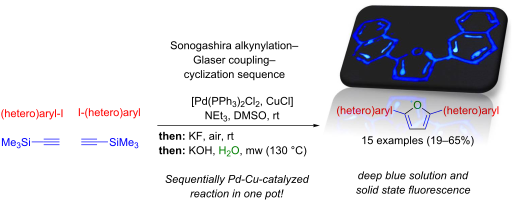
- quantum yield Φf. This finding correlates well with the planar ground state structure and an associated low Stokes shift. All studied representatives are potentially interesting singlet bluelight emitters. In addition, the electronic properties of the furans 2 have been studied by cyclic voltammetry
- . Computations account for significant distortions from coplanarity in the electronic ground state and the computed HOMO energies correlate with the first reversible oxidation potentials determined by cyclic voltammetry. Experimental Pseudo five-component synthesis of 2a [51] in a manner similar to [38]): A
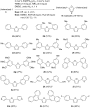
- (22000). Fluorescence (CH2Cl2): λmax: 358 nm. Stokes shift Δ = 3800 cm−1. Quantum yield: Φf = 83% (Ref.: p-terphenyl (Φf = 93% in cyclohexane)). Cyclic voltammetry (CH2Cl2): E1/20/+1 = 1.25 V. Compounds 2d (solid and THF solution) and 2n (solid and THF solution) (from left to right) under daylight (top




Tuning the interactions between electron spins in fullerene-based triad systems
Beilstein J. Org. Chem. 2014, 10, 332–343, doi:10.3762/bjoc.10.31
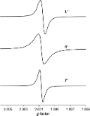
- physical properties similar to those of 1–4 and 6. Electrochemical characterisation of fullerene triads 1–6 Compounds 1–6 were studied by cyclic voltammetry (CV) as solutions in o-dichlorobenzene in order to investigate the sequence of electron additions and possible electronic interactions in these triads
- through the linker groups within the triads (Table 1 and Figure 2). Each triad molecule 1–6 exhibits a series of reduction processes in a potential range between −0.3 and −2.3 V (vs Fc+/Fc), some of which are overlapping or appear as shoulders to the main peaks. By comparison with the cyclic voltammetry
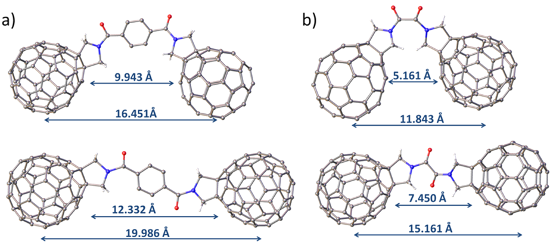
- fullerene triads where the nature of the fullerene cage and the length of the bridge between the cages can be controlled. Cyclic voltammetry measurements demonstrate the high electron accepting capacity of these molecules, which can accept up to six electrons reversibly, but indicate no interactions between



Synthesis, characterization and initial evaluation of 5-nitro-1-(trifluoromethyl)-3H-1λ3,2-benziodaoxol-3-one
Beilstein J. Org. Chem. 2014, 10, 1–6, doi:10.3762/bjoc.10.1
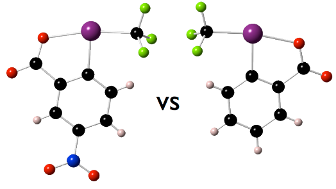
- -(trifluoromethyl)-3H-1λ3,2-benziodaoxol-3-one (3), a hypervalent-iodine-based electrophilic trifluoromethylating reagent, is described. Whereas considerations based on cyclic voltammetry and X-ray structural properties would predict an inferior reactivity when compared to the non-nitrated derivative 2, 19F NMR
- kinetic studies showed that this new derivative is almost one order of magnitude more reactive. Furthermore, differential scanning calorimetry measurements indicated that, in addition, it is also safer to handle. Keywords: cyclic voltammetry; differential scanning calorimetry; electrophilic
- the initial hypothesis that nitration may lead to a more positive reduction potential, cyclic voltammetry (CV) measurements were carried out. These experiments were conducted under an atmosphere of nitrogen in anhydrous MeCN with Bu4NBF4 (0.1 M) as supporting electrolyte. A platinum working electrode


Advancements in the mechanistic understanding of the copper-catalyzed azide–alkyne cycloaddition
Beilstein J. Org. Chem. 2013, 9, 2715–2750, doi:10.3762/bjoc.9.308
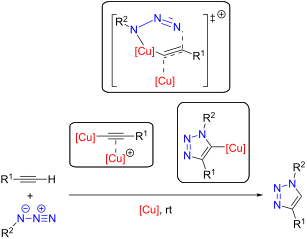
- (1 mol %) and TBTA (1 mol %) under aerobic conditions [64]. Cyclic voltammetry measurements have supported the hypothesis of TBTA influencing the redox activity of copper(I), as the redox potential of the Cu(I)/Cu(II) pair was shown to rise by approximately 300 mV when the water-soluble derivative




The chemistry of amine radical cations produced by visible light photoredox catalysis
Beilstein J. Org. Chem. 2013, 9, 1977–2001, doi:10.3762/bjoc.9.234
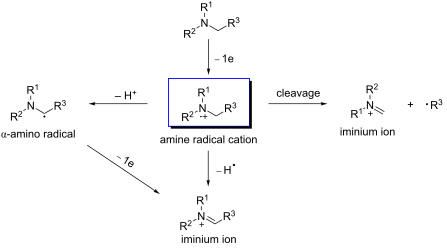
- readily measured by cyclic voltammetry, should be less positive than that of the photoexcited M. The solvent also has a significant impact on the oxidation and the subsequent reactions [43][44]. A polar solvent is generally favored for electron-transfer reactions involving amine radical cations, but




Anodic coupling of carboxylic acids to electron-rich double bonds: A surprising non-Kolbe pathway to lactones
Beilstein J. Org. Chem. 2013, 9, 1630–1636, doi:10.3762/bjoc.9.186
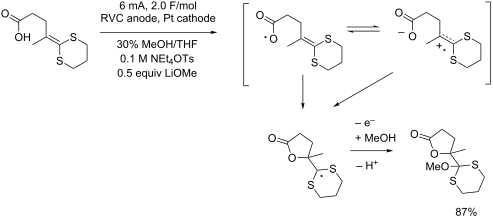
- form product 9. No product from sulfonamide trapping (8) was observed. However, when the reaction was run under more basic conditions (0.5 equivalents of lithium methoxide) cyclic voltammetry data indicated that the oxidative cyclizations were initiated by the oxidation of sulfonamide anion. This led
- afforded the five-membered ring product using either lithium methoxide or 2,6-lutidine as a base. Clearly, decarboxylation of the carboxylate anion was not a problem. In fact, cyclic voltammetry data suggest that the reaction originated from an oxidation of the ketene dithioacetal. The oxidation potential
- consistent with the formation of a radical cation followed by a cyclization that was too slow to compete with decomposition. The cyclic voltammetry data obtained were consistent with this observation. The +1.06 V versus Ag/AgCl oxidation potential measured for substrate 14c was the same as that measured for


Stability of SG1 nitroxide towards unprotected sugar and lithium salts: a preamble to cellulose modification by nitroxide-mediated graft polymerization
Beilstein J. Org. Chem. 2013, 9, 1589–1600, doi:10.3762/bjoc.9.181
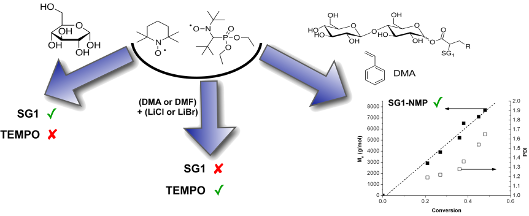
- a solvent. The aim of the study was to measure the redox potentials of the SG1 and LiCl/solvent and to conclude if a redox reaction could happen between these species. The redox potentials of SG1 and LiCl (4.5 wt %) in DMF and MeOH were then determined by cyclic voltammetry with a platinum electrode
- Cl2 is a gas and thus difficult to quantify. We tried to prove the formation of Br2 by heating DMF/4.5 wt % LiBr solutions for 14 hours. A comparison with the same solution but with heating for only 30 min did not show any difference by cyclic voltammetry. In particular, the reduction wave of Br2 into
- of the solvent (DMF or DMA) with the lithium salt (LiCl or LiBr). The first hypothesis to explain the SG1 consumption in DMA/LiCl was based on the SG1 oxidation by Cl2 (or Br2 in the case of LiBr lithium salt). However, the study by cyclic voltammetry of the redox potential of SG1 and LiCl could not


Structures of the reaction products of the AZADO radical with TCNQF4 or thiourea
Beilstein J. Org. Chem. 2013, 9, 1487–1491, doi:10.3762/bjoc.9.169

- -configuration. The cyclic voltammetry (CV) data of TEMPO (1), AZADO (2), TCNQF4 (3) and the adduct 5 are summarized in Table 1. The lower first oxidation potential (E1OX) of AZADO than that of TEMPO suggests that the reaction between AZADO and TCNQF4 can take place slightly more easily than that between TEMPO
- TCNQF4 (3). The reaction of 2 with 4 to form 6. CV (cyclic voltammetry) data of TEMPO (1), AZADO (2), TCNQF4 (3) and adduct 5.a Supporting Information Supporting Information File 148: Experimental procedures and summary of crystal data of 5 and 6. Acknowledgements We are grateful to Mr. Toshimasa


Incorporation of perfluorohexyl-functionalised thiophenes into oligofluorene-truxenes: synthesis and physical properties
Beilstein J. Org. Chem. 2013, 9, 1243–1251, doi:10.3762/bjoc.9.141
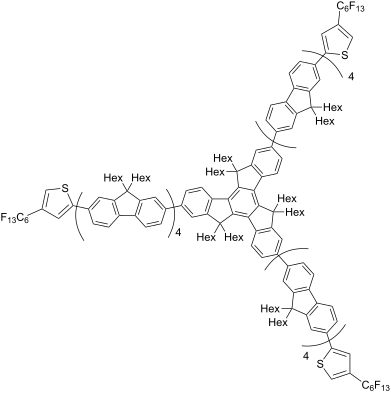
- were recorded as 3.20, 3.12 and 3.03 eV for T1-3FTh, T1-4FTh and T4-4FTh, respectively. The HOMO–LUMO gap for T1-3FTh and T1-4FTh is slightly narrower than that for T1; however, there is not much difference between the HOMO–LUMO gap of T4-4FTh and that of T4. The results for the cyclic voltammetry of
- TX materials. Electrochemical data for TX-XFTh and TX. Supporting Information Supporting Information File 254: Experimental procedures and cyclic voltammetry details. Acknowledgements We would like to thank the EPSRC and Cambridge Display Technology for funding N.T.




Enhancement of efficiency in organic photovoltaic devices containing self-complementary hydrogen-bonding domains
Beilstein J. Org. Chem. 2013, 9, 1102–1110, doi:10.3762/bjoc.9.122
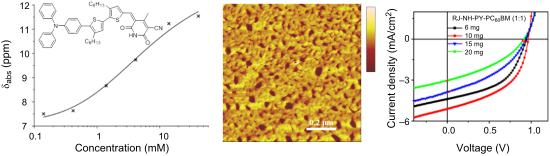
- peak at 782 nm. The emission maximum of a thin film of 2 is hypsochromically shifted by 31 nm to 751 nm. Cyclic voltammetry and photoelectron spectroscopy in air (PESA) were used to determine the HOMO and LUMO levels of compound 2 and these are summarized in Table 1. These values are similar to those


New core-pyrene π structure organophotocatalysts usable as highly efficient photoinitiators
Beilstein J. Org. Chem. 2013, 9, 877–890, doi:10.3762/bjoc.9.101
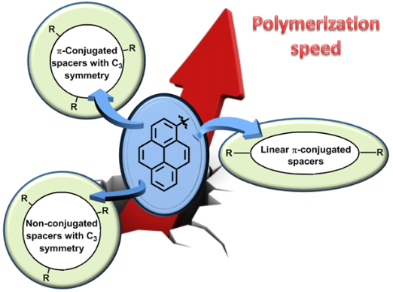
- procedure described in detail in [58][59]. Redox potentials The redox potentials were measured in acetonitrile by cyclic voltammetry with tetrabutylammonium hexafluorophosphate (98%) as a supporting electrolyte (0.1 M) (Voltalab 6 Radiometer; the working electrode was a platinum disk and the reference a


Synthesis, photophysical and electrochemical characterization of terpyridine-functionalized dendritic oligothiophenes and their Ru(II) complexes
Beilstein J. Org. Chem. 2013, 9, 866–876, doi:10.3762/bjoc.9.100
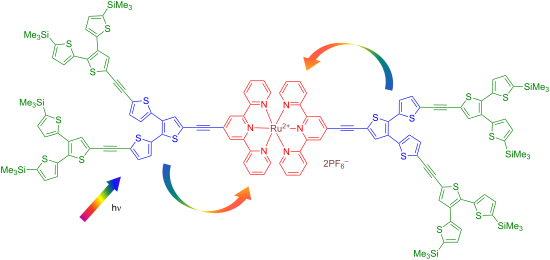
- , MALDI–TOF-mass spectrometry and elemental analysis as well as by cyclic voltammetry and UV–vis spectroscopy. Electronic absorption and emission properties. One of our goals was to study electronic communication between the core metal complex and the attached oligothiophene dendron as a function of
- HOMO-1 in the case of 1) and the LUMO for both complexes corroborate the 1MLCT character. Redox properties. Oxidation and reduction properties of all compounds were investigated by using cyclic voltammetry (CV). Electrochemical data of the ligands and the corresponding Ru(II) complexes are presented in
- using Equation 1, where Abs and n are the absorbance value at the excitation wavelength and the refractive index of the solvent, and s and r refer to sample and reference, respectively. Cyclic voltammetry experiments were performed with a computer-controlled AutoLab PGSTAT30 in a three-electrode single


Spectroscopic characterization of photoaccumulated radical anions: a litmus test to evaluate the efficiency of photoinduced electron transfer (PET) processes
Beilstein J. Org. Chem. 2013, 9, 800–808, doi:10.3762/bjoc.9.91
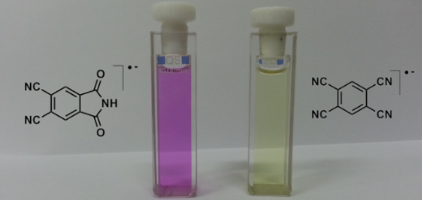
- [61], DABCO [61] and Bu4Sn [62] were available in the literature. Electrochemical measurements (cyclic voltammetry) on the other compounds (Et2NH, MAE, OXA, 1,3,5-TrCB and 1,2,4-TrCB) were performed on 5 × 10⁻² M solutions of the analyte in a three-electrode cell (volume 10 mL; n-Bu4NClO4 0.1 M as the




New enzymatically polymerized copolymers from 4-tert-butylphenol and 4-ferrocenylphenol and their modification and inclusion complexes with β-cyclodextrin
Beilstein J. Org. Chem. 2012, 8, 2118–2123, doi:10.3762/bjoc.8.238
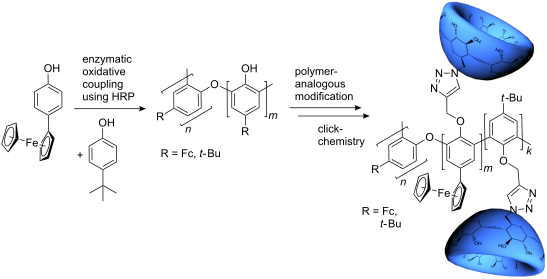
- ). Furthermore, the behavior of polymer 7 clicked with β-CD was studied electrochemically (Figure 1, Table 1). The cyclic voltammetry (CV) data of copolymer 7 shows an anodic peak potential at 0.97 V, which shifts to 1.09 V with each oxidation/reduction cycle due to formation of a polymer layer on the electrode
- ). The temperature was measured by infrared detection with a continuous-feedback temperature control and maintained at a constant value by power modulation. Reactions were performed in closed vessels under controlled pressure. Cyclic voltammetry (CV) measurements were performed with a computer-controlled
- subsequent click chemistry with N3-β-CD. The covalently bound cyclodextrin moiety and the covalently bound Fc or tert-butyl group form host/guest complexes as proven by DLS measurement. The cyclic voltammetry data shows that the central iron atom of the Fc moiety is present in the copolymer and can be


![[Graphic 2]](/bjoc/content/inline/1860-5397-8-238-i3.png?max-width=637&scale=0.59091) ).
).

Efficient electroorganic synthesis of 2,3,6,7,10,11-hexahydroxytriphenylene derivatives
Beilstein J. Org. Chem. 2012, 8, 1721–1724, doi:10.3762/bjoc.8.196
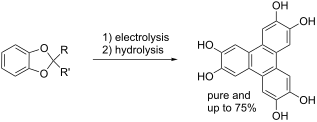
- . The shift of potentials is supported by cyclic voltammetry studies. Keywords: catechol; electrochemical oxidation; hexahydroxytriphenylene; ketals; propylene carbonate; Introduction The unique spectroscopic and geometric features of triphenylenes give rise to a variety of applications for this very
- density allows a scale-up of this electroorganic synthesis. Cyclic voltammetry Cyclic voltammetry studies show that triphenylene ketal 2a gets more easily oxidized at lower potentials than subunit 1a (Figure 1). The first reversible process at Eox = 1.22 V corresponds to the oxidation of 2a to a radical


The effect of the formyl group position upon asymmetric isomeric diarylethenes bearing a naphthalene moiety
Beilstein J. Org. Chem. 2012, 8, 1018–1026, doi:10.3762/bjoc.8.114
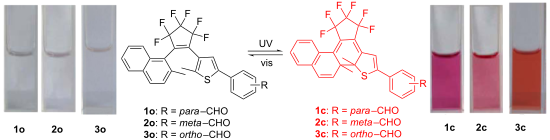
- electrochemical properties of 1–3 were evaluated by cyclic voltammetry (CV) under the same experimental conditions reported previously [13]. The CV curves of diarylethenes 1–3 are shown in Figure 7. The onset potentials (Eonset) of oxidation and reduction for 1o were initiated at +1.79 and −0.89 V, and those of
- 1–3 at room temperature: (A) in hexane solution (2.0 × 10⁻⁵ mol L−1); (B) in PMMA films (10%, w/w). Emission intensity changes of diarylethene 1 upon irradiation with UV light at room temperature: (A) in hexane (excited at 307 nm), (B) in a PMMA film (excited at 324 nm). Cyclic voltammetry of


Hybrid super electron donors – preparation and reactivity
Beilstein J. Org. Chem. 2012, 8, 994–1002, doi:10.3762/bjoc.8.112
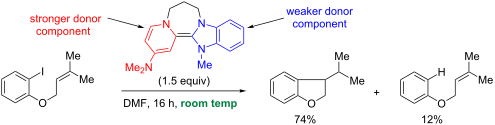
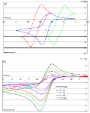
- compound 3 [16][27]. Cyclic voltammetry (CV) studies showed that the more powerful donors, e.g., 2 [15][16][18] and 4 [19], lose their second electrons at almost the same potential as their first electron (Figure 2 includes the CV of 4, showing a single two-electron redox wave, while Figure 4a includes
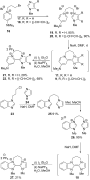
- trimethylene tethers. As compounds 10 and 11 are derived from imidazolium precursors, we were keen to explore their reactivity. The redox properties of the donors were first measured by cyclic voltammetry. Either the electron donors or their oxidized salts could, in principle, be used as a starting point for
- (hexafluorophosphate) salt 22. Cyclic voltammetry, starting with its oxidised disalt 22 (Figure 3, blue trace) shows that its redox activity occurs as two separate steps at potentials intermediate between those for compounds 6 and 8. [E1½ (DMF) = −1.54 V, E2½ (DMF) = −1.42 V versus Fc/Fc+; this corresponds to E1½ (DMF






Thiophene-based donor–acceptor co-oligomers by copper-catalyzed 1,3-dipolar cycloaddition
Beilstein J. Org. Chem. 2012, 8, 683–692, doi:10.3762/bjoc.8.76

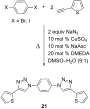
- -triazole co-oligomers were investigated by UV–vis spectroscopy and cyclic voltammetry. Several co-oligomers were electropolymerized to the corresponding conjugated polymers. Keywords: acetylene; azide; click chemistry; thiophene; triazole; Introduction Oligo- and polythiophenes are among the most
- properties, cyclic voltammetry of 5, 6, and 10–14 revealed redox transitions of the individual thiophene moieties (Table 3). Thus, cyclic voltammograms (CV) of 5 and 10 (5 × 10⁻³ M in dichloromethane/tetrabutylammonium hexafluorophosphate (TBAPF6, 0.1 M, 100 mV s−1) showed characteristic oxidation waves of
- respect to 9,10-diphenylanthracene (DPA, Φ = 0.9 in dichloromethane) [43]. Cyclic voltammetry experiments were performed with a computer-controlled EG&G PAR 273 potentiostat in a three-electrode single-compartment cell (2 mL). The platinum working electrode consisted of a platinum wire sealed in a soft




Self-assembly of Ru4 and Ru8 assemblies by coordination using organometallic Ru(II)2 precursors: Synthesis, characterization and properties
Beilstein J. Org. Chem. 2012, 8, 313–322, doi:10.3762/bjoc.8.34
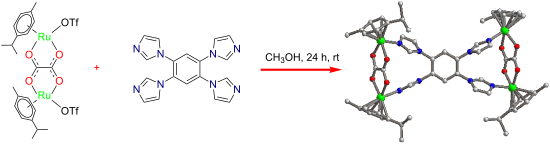
- tetranuclear rectangular geometry with the dimensions of 5.53 Å × 12.39 Å. Furthermore, the photo- and electrochemical properties of these newly synthesized assemblies have been studied by using UV–vis absorption and cyclic voltammetry analysis. Keywords: cages; macrocycles; ruthenium(II); self-assembly; self
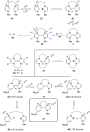
- -crystal X-ray diffraction analysis, which reveals a tetranuclear geometry with the dimensions of 5.53 Å × 12.39 Å. In addition to their synthesis and characterization, the UV–vis absorption and cyclic voltammetry studies are reported. Results and Discussion Synthesis and characterization of the
- novel, nanoscopic and functional metallamacrocycles and also to the study of their functional properties [15]. The photo- and electrochemical properties of our newly synthesized macrocycles (2a and 2b) are studied by UV–vis absorption and cyclic voltammetry investigations and the obtained results are


A ferrocene redox-active triazolium macrocycle that binds and senses chloride
Beilstein J. Org. Chem. 2012, 8, 246–252, doi:10.3762/bjoc.8.25
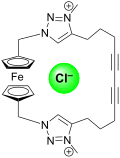
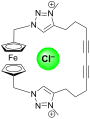
- , 0.2, 0.4, 0.6, 0.8, 1.0, 1.2, 1.4, 1.6, 1.8, 2.0, 2.5, 3.0, 4.0, 5.0, 7.0 and 10 equivalents. Stability constants were obtained by analysis of the resulting data with the WinEQNMR2 [13] computer program, following the triazolium C–H protons in all cases. Electrochemistry protocols Cyclic voltammetry
- larger halide, iodide, is only weakly bound. The addition of small amounts (<1 equiv) of dihydrogen phosphate caused precipitation and, hence, no association constant could be calculated. Electrochemical Investigations The ability of 5·2PF6 to sense anions electrochemically was investigated by cyclic
- voltammetry in 0.1 M TBA·PF6 in CH3CN. The macrocycle displays a quasi-reversible oxidation of the ferrocene/ferrocenium couple, which is shifted to a more positive potential by 0.38 V relative to ferrocene by virtue of the positively charged triazolium groups of the receptor. Addition of one equiv of TBA·Cl


Fifty years of oxacalix[3]arenes: A review
Beilstein J. Org. Chem. 2012, 8, 201–226, doi:10.3762/bjoc.8.22
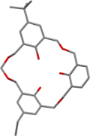
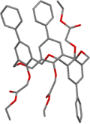
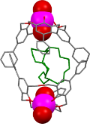
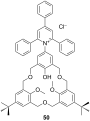
- cationic complex was deposited as a monolayer onto an alkylsulfonate coated gold surface and elicited both a redox response, as determined by cyclic voltammetry, and a photochemical response to visible light [83][84]. The optical response was studied further [85], and a transient band was observed at 545












Fluorescent hexaaryl- and hexa-heteroaryl[3]radialenes: Synthesis, structures, and properties
Beilstein J. Org. Chem. 2012, 8, 71–80, doi:10.3762/bjoc.8.7
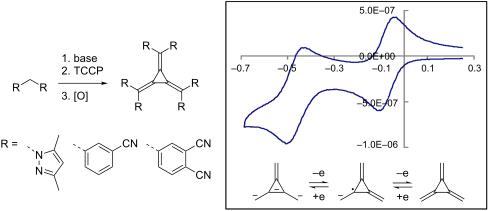
- − anions in the solid-state [21]. Cyclic voltammetry experiments show that the most electron deficient hexaaryl[3]radialene synthesised thus far is hexakis(4-cyanophenyl)[3]radialene [17]. The focus of our current work is the synthesis of new hexaaryl- and hexa-heteroaryl[3]radialenes which are more
- . Cyclic voltammetry Cyclic voltammetry measurements were performed on a PAR Model 263A potentiostat under nitrogen. Measurements were recorded on 1 mM solutions in dichloromethane/0.1 M [(n-C4H9)4]NPF6] solution using a platinum working electrode, platinum wire auxiliary and pseudo-reference electrodes
- . Ferrocene was added as an internal standard on completion of each experiment and tabulated potentials are given vs the saturated calomel electrode [E0(Fc/Fc+) = 460 mV vs SCE (dichloromethane)]. Cyclic voltammetry was performed with a sweep rate of 100 mVs−1. X-ray crystallography Crystals were mounted


Sexithiophenes as efficient luminescence quenchers of quantum dots
Beilstein J. Org. Chem. 2011, 7, 1722–1731, doi:10.3762/bjoc.7.202
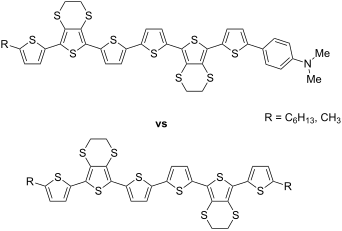
- Sexithiophenes 1a and 1b, in which a 4-(dimethylamino)phenyl unit is incorporated as an end-capping group, were synthesised and characterised by cyclic voltammetry, absorption spectroscopy and UV–vis spectroelectrochemistry. Additionally, their ability to function as effective luminescence quenchers for quantum
- trap states for nonradiative emission. Conclusion Two novel sexithiophene families, 1a,b and 2a,b, were synthesised and investigated as luminescence quenchers of quantum dots. Their properties were investigated by cyclic voltammetry, UV–vis absorption and spectroelectrochemistry. The addition of the


Redox-active tetrathiafulvalene and dithiolene compounds derived from allylic 1,4-diol rearrangement products of disubstituted 1,3-dithiole derivatives
Beilstein J. Org. Chem. 2010, 6, 1002–1014, doi:10.3762/bjoc.6.113

- rearrangement of 19 to give 20 is estimated to proceed in 25–55% yield. Cyclic voltammetry (in dichloromethane, vs Ag/AgCl) showed two sequential, reversible oxidation steps for compound 20 at E1/2 = +0.72 and +1.09 V. To demonstrate the reactivity of the 1,4-shift products and to assess the degree of steric
- nm in 28). The spectrum of 28 also shows a broad feature at around 900 nm, corresponding to the π–π * transition of the highly delocalised nickel dithiolene unit. The electrochemistry of 3, 25, 27 and 28 was investigated by cyclic voltammetry. Solutions of the compounds (0.1 mM) were prepared in
- reflectance ATR instrument (4000–400 cm−1, resolution 4 cm−1). Elemental analysis was performed by the University of Manchester micro-analytical laboratory. Melting points were recorded on a Gallenkamp melting point apparatus and are uncorrected. Cyclic voltammetry was performed with a CH instruments