
Search results
Search for "carboxylic acid" in Full Text gives 627 result(s) in Beilstein Journal of Organic Chemistry. Showing first 200.
Microwave-assisted multicomponent reactions in heterocyclic chemistry and mechanistic aspects
Beilstein J. Org. Chem. 2021, 17, 819–865, doi:10.3762/bjoc.17.71
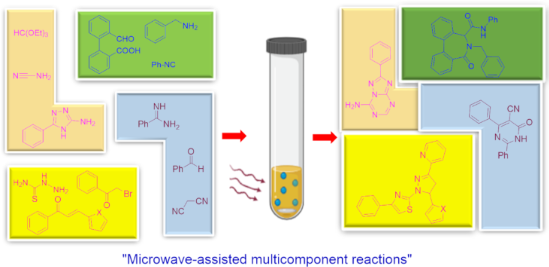
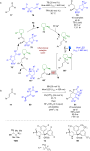
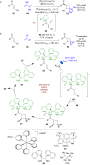
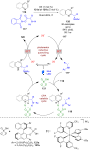
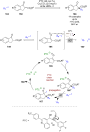
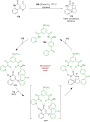
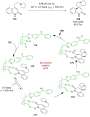
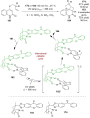
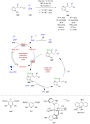
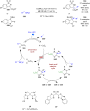
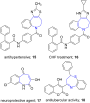
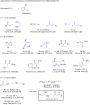
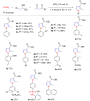
- ] tailored a microwave-assisted multicomponent reaction for fast and efficient generation of diastereoselective dibenzo[c,e]azepinones. The protocol utilized substituted 2'-formylbiphenyl-2-carboxylic acid 19, benzylamines 20, and isocyanides 21 in TFE and Na2SO4 as drying agent for the construction of
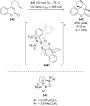
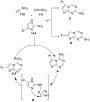
- -proliferative activity against tumor cell lines leading to the discovery of new lead compounds (Scheme 6). A tentative mechanism in Scheme 7 depicts the formation of iminium ion A from the reaction between 19 and 20 after the intramolecular protonation by carboxylic acid. The A conformer stabilized by






Synthesis of bis(aryloxy)fluoromethanes using a heterodihalocarbene strategy
Beilstein J. Org. Chem. 2021, 17, 813–818, doi:10.3762/bjoc.17.70
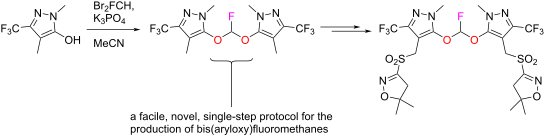
- )chloromethane via a published protocol for radical chlorination of an acetal due to the presence of vulnerable benzylic methyl groups proximate to the acetal [10]. We then synthesized carboxylic acid 9, from which we anticipated creating an aryloxylchlorofluoromethane (10, X = Cl, Scheme 4) via


Total synthesis of pyrrolo[2,3-c]quinoline alkaloid: trigonoine B
Beilstein J. Org. Chem. 2021, 17, 730–736, doi:10.3762/bjoc.17.62
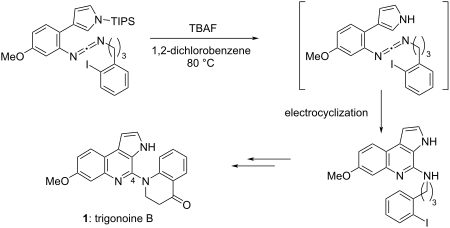
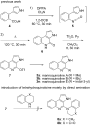
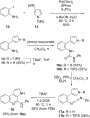
- ), and E (3e) comprising the pyrrolo[2,3-c]quinoline skeleton [25]. As demonstrated in Scheme 1, Curtius rearrangement of carboxylic acid 4 resulted in the formation of isocyanate 5, which, upon electrocyclization furnished pyrrolo[2,3-c]quinoline 6. Intermediate 6 was subsequently transformed into
- prepared from an appropriate carboxylic acid through a Curtius rearrangement reaction (50–98% yield). Treatment of urea derivatives 19a–d with CBr4, PPh3, and Et3N afforded carbodiimides 20a–d in 64–75% yield. Compounds 21a–d were obtained in situ following the removal of the TIPS protecting group in 20a–d





β-Lactamase inhibition profile of new amidine-substituted diazabicyclooctanes
Beilstein J. Org. Chem. 2021, 17, 711–718, doi:10.3762/bjoc.17.60
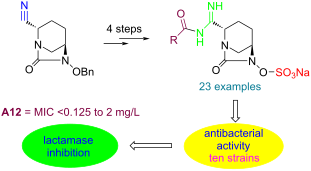
- derivative B22 which was treated with tetrabutylammonium fluoride (TBAF) in THF to obtain the hydroxy derivative C22. Compound C22 was converted to the sodium salt of A22 by using the procedure described for derivative A1. Analogously, compound A23 was prepared starting from 4-aminothiazole-2-carboxylic acid




Effective microwave-assisted approach to 1,2,3-triazolobenzodiazepinones via tandem Ugi reaction/catalyst-free intramolecular azide–alkyne cycloaddition
Beilstein J. Org. Chem. 2021, 17, 678–687, doi:10.3762/bjoc.17.57
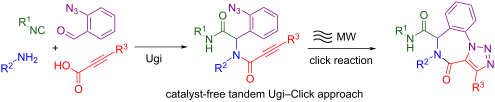
- ). Ugi product 6aaa (first letter – isocyanide code, second letter – amine code, third – carboxylic acid code) was the first to isolate in our trials and its structure was confirmed by X-ray analysis (Figure 3) in addition to mass spectrometry, elemental analysis, 1H and 13C NMR data. Compound 6


[2 + 1] Cycloaddition reactions of fullerene C60 based on diazo compounds
Beilstein J. Org. Chem. 2021, 17, 630–670, doi:10.3762/bjoc.17.55
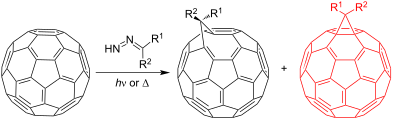
- with a covalently attached fullerene molecule [86]. To this end, adduct 13 was obtained from 4-(tert-butoxycarbonyl)phenyldiazomethane and fullerene. Subsequent acid hydrolysis of the protective ester group quantitatively gave a derivative of carboxylic acid 14, a versatile synthon for the synthesis of
Menthyl esterification allows chiral resolution for the synthesis of artificial glutamate analogs
Beilstein J. Org. Chem. 2021, 17, 540–550, doi:10.3762/bjoc.17.48
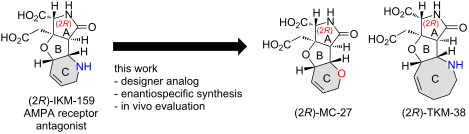
- enantiospecific synthesis of two artificial glutamate analogs designed based on IKM-159, an antagonist selective to the AMPA-type ionotropic glutamate receptor. The synthesis features the chiral resolution of the carboxylic acid intermediate by the esterification with ʟ-menthol, followed by a configurational
- independently be synthesized from the racemic carboxylic acid intermediate (rac)-7 [6]. For such a chiral resolution, we recently discovered that ʟ-(−)-menthol (8) is of use as a chiral auxiliary in the enantiospecific synthesis of the other analogs 2 and 5 (see Figure 1) [4], and the strategy was found to also
- (rac)-16 (87% yield), followed by alkaline methanolysis (74% yield) [17] and Pinnick oxidation (43% yield) [18][19][20], delivered carboxylic acid (rac)-19. Unfortunately, an attempt to improve the oxidation yield was not fruitful; the oxidation of aldehyde (rac)-18 with TEMPO [21] resulted in a lower








Synthesis of N-perfluoroalkyl-3,4-disubstituted pyrroles by rhodium-catalyzed transannulation of N-fluoroalkyl-1,2,3-triazoles with terminal alkynes
Beilstein J. Org. Chem. 2021, 17, 504–510, doi:10.3762/bjoc.17.44
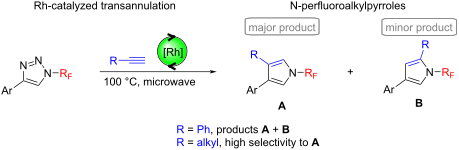
- an electrophile, the crude product 2a was treated with butyllithium, followed by the reaction with carbon dioxide to afford pyrrole carboxylic acid 6 in a good overall yield (Scheme 5). The trifluoromethyl group on the nitrogen was not affected by these highly basic reaction conditions. The mechanism
- transannulation/carboxylation process was demonstrated for the construction of the functionalized pyrrole 2-carboxylic acid with an N-trifluoromethyl functionality. Thus, this work improves the synthetic access to N-perfluoroalkyl-3,4-disubstituted pyrroles. Selected pyrrole-containing natural products, drugs


Synthetic strategies of phosphonodepsipeptides
Beilstein J. Org. Chem. 2021, 17, 461–484, doi:10.3762/bjoc.17.41
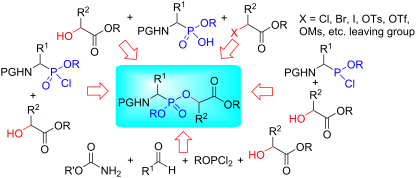
- and cis isomers of 2-hydroxy-2-oxo-3-[(phenoxyacetyl)amino]-1,2-oxaphosphorinane-6-carboxylic acid (16, Figure 3) were prepared and evaluated as inhibitors of the zinc-containing β-lactamase II from B. cereus. However, neither stereoisomer had any significant activity [6]. The phosphonodepsidipeptide
- . Structure of 2-hydroxy-2-oxo-3-[(phenoxyacetyl)amino]-1,2-oxaphosphorinane-6-carboxylic acid (16). Synthesis of α-phosphonodepsidipeptides as inhibitors of leucine aminopeptidase. Synthesis of α-phosphonodepsidipeptide 17 as coupling partner for cyclen-containing phosphonodepsipeptides as inhibitors of


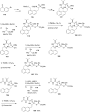


Biochemistry of fluoroprolines: the prospect of making fluorine a bioelement
Beilstein J. Org. Chem. 2021, 17, 439–460, doi:10.3762/bjoc.17.40
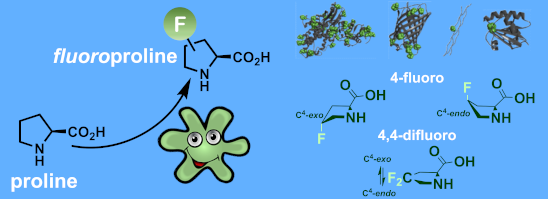
- this effect is not fully clear. It might be linked to the electrophilicity of the carboxylic acid moiety that experiences an electron-withdrawing effects from the fluorine atom (see the comparison of the acidity in Table 2) [58]. In another study, tRNAPro was preloaded with proline analogues, and a


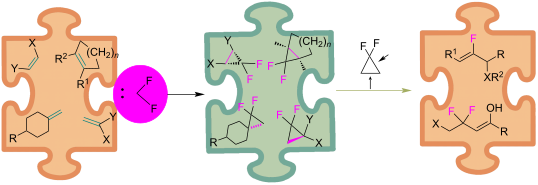
The preparation and properties of 1,1-difluorocyclopropane derivatives
Beilstein J. Org. Chem. 2021, 17, 245–272, doi:10.3762/bjoc.17.25




Novel library synthesis of 3,4-disubstituted pyridin-2(1H)-ones via cleavage of pyridine-2-oxy-7-azabenzotriazole ethers under ionic hydrogenation conditions at room temperature
Beilstein J. Org. Chem. 2021, 17, 156–165, doi:10.3762/bjoc.17.16
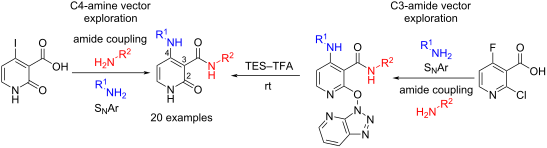
- Roche and Genentech researchers have described the first route to this scaffold for their FAK and EGFR mutant programs, respectively [1][2]. Both processes started from the versatile 4-iodo-2-methoxynicotinaldehyde (3). Oxidation to the carboxylic acid followed by chlorodehydration afforded the key


Supramolecular polymers with reversed viscosity/temperature profile for application in motor oils
Beilstein J. Org. Chem. 2021, 17, 105–114, doi:10.3762/bjoc.17.11
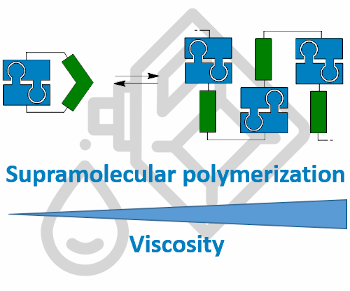
- acid (GCP) or the aminopyridine carbonyl pyrrole carboxylic acid (ACP). At low temperatures, small cyclic structures are formed. However, at elevated temperatures, a ring–chain transformation leads to the formation of a supramolecular polymer. We demonstrate that this effect is dependent on the
- in polar solvents such as DMSO (Ka > 1010 M−1) and water (Ka > 102 M−1) [26], but it also limits its solubility in nonpolar solvents. Therefore, another BU was also employed in this study, namely the less polar aminopyridine carbonyl pyrrole carboxylic acid (ACP). The ACP motif (Figure 2a) can be
- , 64293 Darmstadt, Germany 10.3762/bjoc.17.11 Abstract We report novel supramolecular polymers, which possess a reversed viscosity/temperature profile. To this end, we developed a series of ditopic monomers featuring two self-complementary binding sites, either the guanidiniocarbonyl pyrrole carboxylic




Supramolecular polymerization of sulfated dendritic peptide amphiphiles into multivalent L-selectin binders
Beilstein J. Org. Chem. 2021, 17, 97–104, doi:10.3762/bjoc.17.10
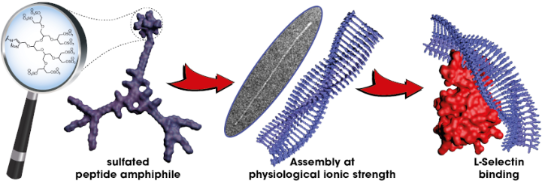
- ). These results are in agreement with our previous investigations related to pH-switchable and ionic strength-responsive dendritic amphiphiles appended with dendritic carboxylic acid functionalities [40][41]. The physiological ionic strength thus efficiently screens the repulsive contribution of the



Circularly polarized luminescent systems fabricated by Tröger's base derivatives through two different strategies
Beilstein J. Org. Chem. 2021, 17, 52–57, doi:10.3762/bjoc.17.6
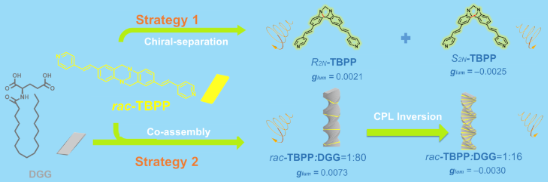
- carboxylic acid groups and one amide, which could be assemblied into the stable spiral structure by hydrogen-bond and other noncovlant interactions. DGG was synthesised by introducing an octadecyl moiety into the glutamic skeleton in 78.6% yield according to the reported route (Supporting Information File 1


Control over size, shape, and photonics of self-assembled organic nanocrystals
Beilstein J. Org. Chem. 2021, 17, 42–51, doi:10.3762/bjoc.17.5
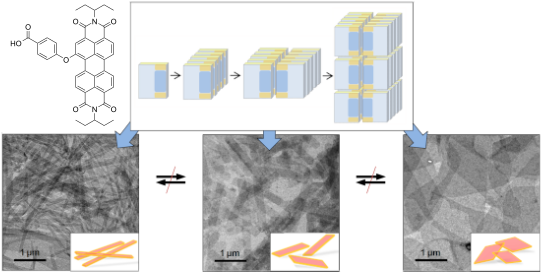
- ][37][38]. Additionally, the aqueous self-assembly incorporating carboxylic acid groups in the covalent unit design has been shown to result in complex and tunable self-assembly modes [39][40][41][42]. Crystalline self-assembly We have found that the nonclassical crystallization of 1 in neutral aqueous




Recent progress in the synthesis of homotropane alkaloids adaline, euphococcinine and N-methyleuphococcinine
Beilstein J. Org. Chem. 2021, 17, 28–41, doi:10.3762/bjoc.17.4
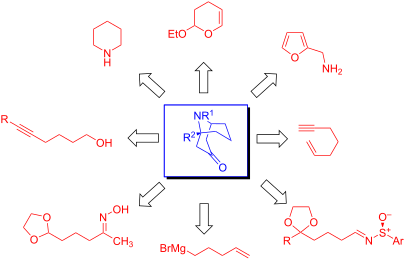
- accomplished, followed by the reductive workup of the resulting selenoxide and an increase in its temperature, eliminating selenoxide to generate carboxylic acid (−)-83 in 90% yield. This acid was subjected to Curtius rearrangement [55] in the presence of DPPA as a source of azide, providing isocyanate (−)-84


All-carbon [3 + 2] cycloaddition in natural product synthesis
Beilstein J. Org. Chem. 2020, 16, 3015–3031, doi:10.3762/bjoc.16.251
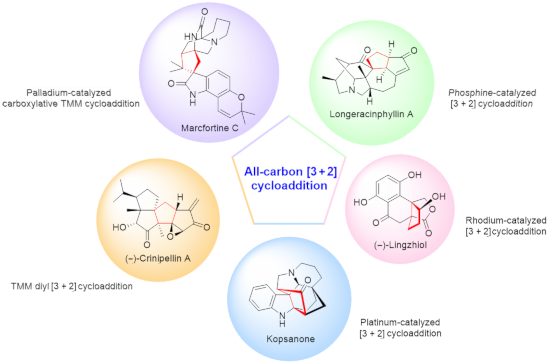
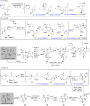
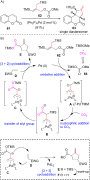
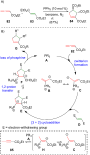
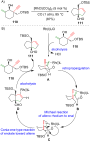
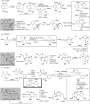
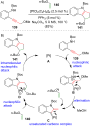
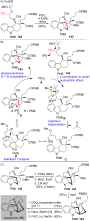
- cycloaddition adduct E, which is converted to the corresponding carboxylic acid (not shown) upon reaction work-up. This elegant reaction was applied in the synthesis of marcfortine B (8), reported by Trost and co-workers in 2007 [38] and 2013 [39]. The synthesis of marcfortine B (8) began with palladium







Regioselective synthesis of heterocyclic N-sulfonyl amidines from heteroaromatic thioamides and sulfonyl azides
Beilstein J. Org. Chem. 2020, 16, 2937–2947, doi:10.3762/bjoc.16.243
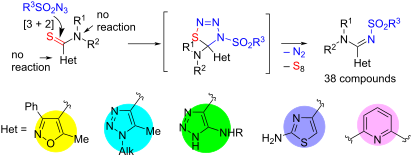
- appear at 154.1‒159.7 ppm which is close to 156 ppm which is the value found for N-sulfonyl amidines of 1,2,3-thiadiazole-4-carboxylic acid prepared by another method [22] and was clearly different from the thioamide carbon signal at 185‒187 ppm in the 13C NMR spectra of starting materials 1. A final







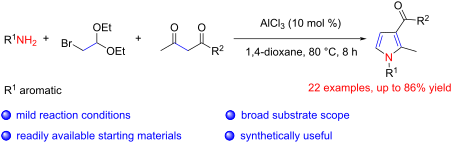
Three-component reactions of aromatic amines, 1,3-dicarbonyl compounds, and α-bromoacetaldehyde acetal to access N-(hetero)aryl-4,5-unsubstituted pyrroles
Beilstein J. Org. Chem. 2020, 16, 2920–2928, doi:10.3762/bjoc.16.241
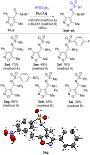
- . A reported method for accessing these similar scaffolds suffers from a low product yield and harsh reaction conditions (32%, 130 °C) [45][46]. One of the obtained N-aryl-4,5-unsubstituted pyrroles, 4l, could undergo hydrolysis to form the (pyrrol-3-yl)carboxylic acid 4w. The latter can react readily




UV resonance Raman spectroscopy of the supramolecular ligand guanidiniocarbonyl indole (GCI) with 244 nm laser excitation
Beilstein J. Org. Chem. 2020, 16, 2911–2919, doi:10.3762/bjoc.16.240
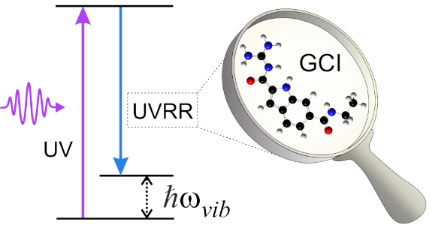
- ], followed by further functionalization with ethylamine at the carboxylic acid in two steps to obtain the GCP ethyl amide, which has been synthesized before, by a different method [9]. The novel building block for GCI was synthesized in a 4-step synthesis adapted from a previous work [28] and then
- functionalized accordingly, yielding the GCI ethyl amide (for detailed synthesis routes, see Scheme S1 and Scheme S2 in Supporting Information File 1). The functionalization of the binding motifs GCP and GCI were performed since in the presence of the free guanidinium moiety the free carboxylic acid leads to a


Easy access to a carbohydrate-based template for stimuli-responsive surfactants
Beilstein J. Org. Chem. 2020, 16, 2788–2794, doi:10.3762/bjoc.16.229
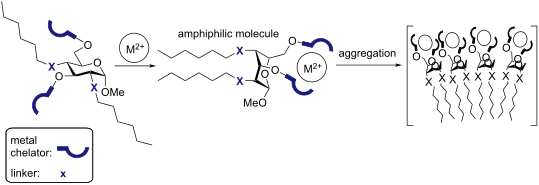
- commercially available levoglucosan. It was shown that the building block could undergo alkylations under strongly basic conditions. The building block with azido groups could furthermore take part in CuAAC reactions, generating derivatives with ester or carboxylic acid functionalities. In addition, the
- refluxing the compounds in an aqueous solution of NaOH giving access to the carboxylic acid derivatives 16 and 17 (Scheme 3) demonstrating the versatility of the azido groups to be handles for introducing other metal-chelating groups. The simplicity of the synthetic steps and the versatility of the products




Vicinal difluorination as a C=C surrogate: an analog of piperine with enhanced solubility, photostability, and acetylcholinesterase inhibitory activity
Beilstein J. Org. Chem. 2020, 16, 2663–2670, doi:10.3762/bjoc.16.216
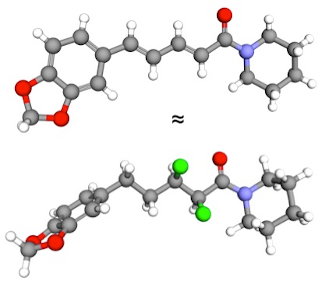
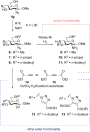
- 13, which only needed to be oxidised to the carboxylic acid 14 then coupled to piperidine in order to deliver the target compound, 2. However, the oxidation of 13 proved to be unexpectedly troublesome. Mild oxidising agents caused incomplete consumption of 13, while vigorous conditions led to the


Synthesis of 4-substituted azopyridine-functionalized Ni(II)-porphyrins as molecular spin switches
Beilstein J. Org. Chem. 2020, 16, 2589–2597, doi:10.3762/bjoc.16.210
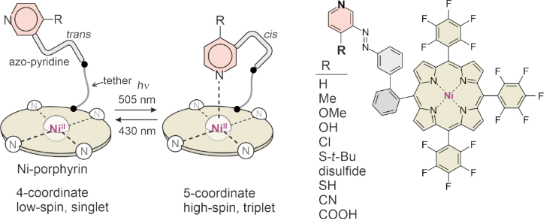
- shown that the spin switching efficiency is strongly dependent on the solvent and on the substituent at the 4-position of the pyridine unit. We now introduced thiol, disulfide, thioethers, nitrile and carboxylic acid groups and investigated their spin switching efficiency. Keywords: azopyridines; Ni(II
- that methoxy substitution (σ = −0.27) improved the spin switching efficiency in organic solvents to >98% in both directions [13]. However, the switching efficiency drops in protic solvents, particularly in water [3][14]. We now synthesized sulfur and carboxylic acid substituted record players aiming at
- or strain might be the reasons for the deviations. We cannot exclude that these groups coordinate directly to the Ni ion. Whereas the thiol (1h) and thiolate (1h−) exhibit disappointingly low switching efficiencies (Δ = 28% and 34%), the carboxylic acid (1j) and the corresponding carboxylate anion


Recent developments in enantioselective photocatalysis
Beilstein J. Org. Chem. 2020, 16, 2363–2441, doi:10.3762/bjoc.16.197
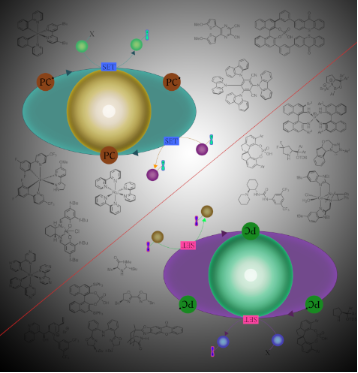
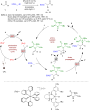
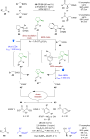
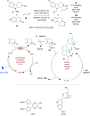
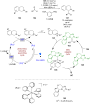
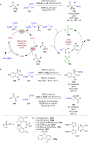
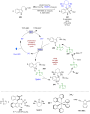
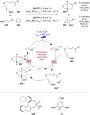
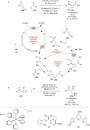
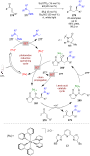
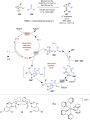
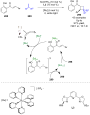
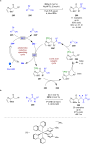
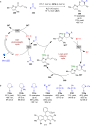
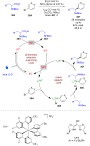
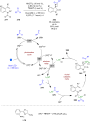
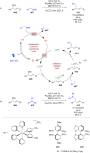
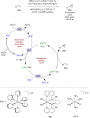
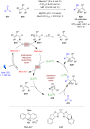
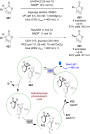
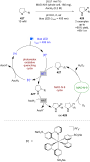
- between carboxylic acid/alcohol 76 and enal 77 (Scheme 10a) [46]. Analogously to the mechanism outlined in Scheme 9, it was proposed that formation of excited state iminium ion 66* is used to oxidise 76 to give radical cation 76•+ and alkyl radical 66•. Nucleophilic addition from the carboxylic acid or
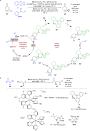
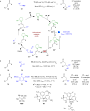
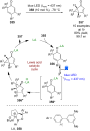
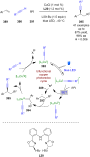
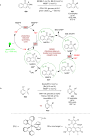
- carboxylic acids 155 with alkenes 156. A low yielding benzylation reaction was required for determination of enantioselectivities and a large excess of alkene was required for the reaction. The reaction is proposed to proceed via hydrogen-bonded complex 157, that lowers the triplet energy of the carboxylic
- acid so that a Dexter energy transfer process is possible from the photocatalyst to the substrate to promote 155 into its triplet state, which can then cyclise with 156 to give enantioenriched cycloaddition products 158. The selectivity of this reaction is generally low (6 examples, up to 93:7 er, 67