

Search results
Search for "IR" in Full Text gives 1117 result(s) in Beilstein Journal of Organic Chemistry. Showing first 200.
Synthesis, optical and electrochemical properties of (D–π)2-type and (D–π)2Ph-type fluorescent dyes
Beilstein J. Org. Chem. 2022, 18, 1047–1054, doi:10.3762/bjoc.18.106
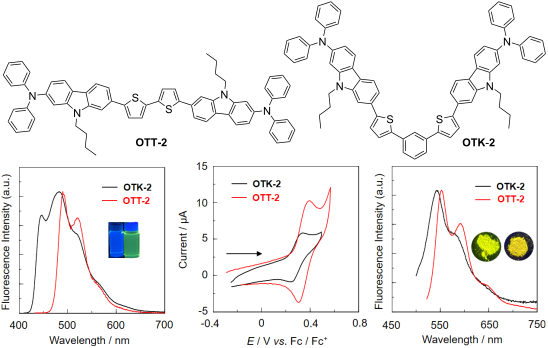
- OTT-2 to OTK-2. Experimental General methods Melting points were measured with an AS ONE ATM-02 apparatus. IR spectra were recorded on a SHIMADZU IRTracer-100 spectrometer by ATR method. 1H NMR and 13C NMR spectra were recorded on a Varian-500 FT NMR spectrometer. High-resolution mass spectral data by


Isolation and biosynthesis of daturamycins from Streptomyces sp. KIB-H1544
Beilstein J. Org. Chem. 2022, 18, 1009–1016, doi:10.3762/bjoc.18.101
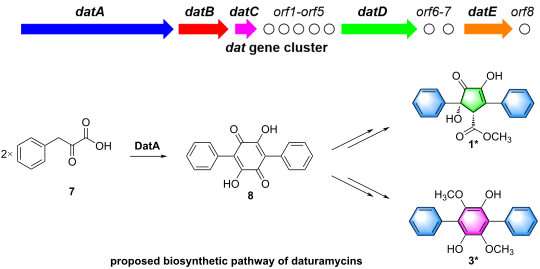
- us to explore their biosynthesis, especially the mechanism of cyclopentenone formation in the diarylcyclopentenones. Experimental General experimental procedures IR spectra were measured on a Bruker Tensor 27 FTIR spectrometer using KBr disks. NMR spectra were performed with a Bruker AV600 MHz
- ): pale yellow solid; IR (KBr) νmax: 3468, 3287, 1731, 1702, 1631, 1398 and 1202 cm−1; UV (MeOH) λmax (log ε): 314 (0.48), 217 (0.28), 202 (0.48); 1H and 13C NMR, see Table 1; HRMS–ESI (m/z): [M + Na]+ calcd for C19H16O5Na+, 347.0890; found, 347.0893. Daturamycin B (2): white powder; 1H and 13C NMR, see


Automated grindstone chemistry: a simple and facile way for PEG-assisted stoichiometry-controlled halogenation of phenols and anilines using N-halosuccinimides
Beilstein J. Org. Chem. 2022, 18, 999–1008, doi:10.3762/bjoc.18.100
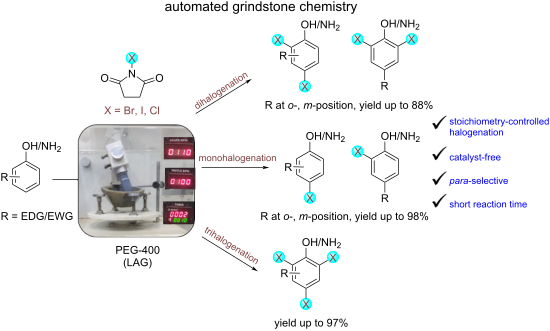
- . Moreover, up to 95% of the side product succinimide was also isolated, and considering its possible conversion to NBS [44] it is an attribute to this green protocol by lowering the E-factor. The products were well-characterized by 1H NMR, 13C NMR, IR, and CHN analysis. The NMR spectra of the synthesized




Molecular diversity of the base-promoted reaction of phenacylmalononitriles with dialkyl but-2-ynedioates
Beilstein J. Org. Chem. 2022, 18, 991–998, doi:10.3762/bjoc.18.99

- in the reaction. Because there is only one chiral carbon atom in the molecule, there are no diastereoisomers in the obtained products 3a–l. The chemical structures of compounds 3a–l were fully characterized by IR, HRMS, 1H and 13C NMR spectra. As for an example, the 1H NMR spectrum of compound 3i


Electroreductive coupling of 2-acylbenzoates with α,β-unsaturated carbonyl compounds: density functional theory study on product selectivity
Beilstein J. Org. Chem. 2022, 18, 956–962, doi:10.3762/bjoc.18.95

- cyclization step. Experimental General information. The 1H NMR (500 MHz) and 13C NMR (125 MHz) spectra were measured on a JEOL GMX-500 spectrometer with tetramethylsilane (TMS) or the residual signals of protonated solvents as an internal standard: CDCl3 (δ = 77.0 in 13C NMR). IR spectra were recorded on a


Introducing a new 7-ring fused diindenone-dithieno[3,2-b:2',3'-d]thiophene unit as a promising component for organic semiconductor materials
Beilstein J. Org. Chem. 2022, 18, 944–955, doi:10.3762/bjoc.18.94
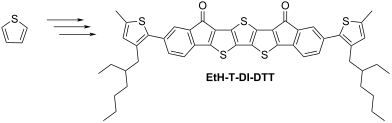
- V (ΔEp = 0.06 V), respectively. UV–vis absorption spectroelectrochemistry (see Figures S20 and S21 in Supporting Information File 1) shows the evolution of the dication and dianion states with the longest wavelength absorption band extending into the near-IR with broad features, characteristic of


Anti-inflammatory aromadendrane- and cadinane-type sesquiterpenoids from the South China Sea sponge Acanthella cavernosa
Beilstein J. Org. Chem. 2022, 18, 916–925, doi:10.3762/bjoc.18.91
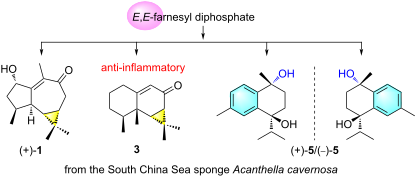
- MeCN at 4 °C in the present study. Compound (+)-1 was obtained as an optically active colorless oil. Its molecular formula was deduced to be C15H22O2 on the basis of HRESIMS [quasi-molecular ion peak at m/z 235.1700 ([M + H]+, calcd for 235.1693)]. The IR spectrum displayed an absorption band of an α,β
- with 4. The IR absorption band at 3386 cm−1 suggested the presence of hydroxy groups. A careful analysis of its 1D and 2D NMR spectra revealed that the NMR spectroscopic features of compound 5 (Table 1 and Figures S24–S31 in Supporting Information File 1) extremely resembled those of 4. The main
- -4 micro-melting point apparatus (Shanghai Precision Scientific Apparatuses Co., Ltd, Shanghai, China). Optical rotations were measured on a Perkin-Elmer 241MC polarimeter (PerkinElmer, Fremont, CA, USA). IR spectra were recorded on a Nicolet 6700 spectrometer (Thermo Scientific, Waltham, MA, USA






Thiophene/selenophene-based S-shaped double helicenes: regioselective synthesis and structures
Beilstein J. Org. Chem. 2022, 18, 809–817, doi:10.3762/bjoc.18.81
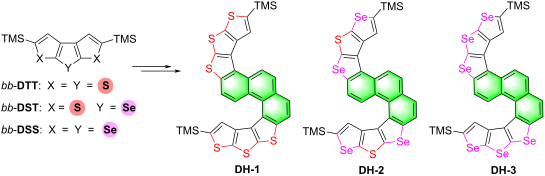
- employed. All starting materials and reagents were commercially available. 1H NMR and 13C{1H} NMR spectra were recorded on 300 or 400 MHz NMR instruments using CDCl3 as solvent. The chemical shift references were as follows: (1H) CDCl3, 7.26 ppm (CHCl3); (13C{1H}) CDCl3, 77.00 ppm (CDCl3). IR spectra were
- (d, J = 16.0 Hz, 2H), 6.93 (d, J = 16.0 Hz, 2H), 0.39 (s, 18H); 13C{1H} NMR (100 MHz, CDCl3) δ (ppm) 145.3, 144.7, 143.7, 140.7, 138.4, 137.8, 137.2, 129.1, 127.8, 125.5, 124.9, 124.4, 122.8, 118.0, −0.1; IR (KBr): 3018, 2958, 2849, 1631, 1408, 1360, 945, 837 cm−1; EIMS (70 eV) m/z: [M]+ 662.18 (40
- MHz, CDCl3) δ (ppm) 7.73 (s, 2H), 7.55 (d, J = 12.9 Hz, 3H), 7.38–7.32 (m, 5 H), 6.79 (d, J = 15.6 Hz, 2H), 0.38 (s, 18H); 13C{1H} NMR (100 MHz, CDCl3) δ (ppm) 151.6, 149.7, 144.5, 142.6, 141.1, 137.01, 136.98, 129.2, 128.6, 127.5, 125.6, 124.9, 124.4, 121.0, 0.2; IR (KBr): 3011, 2949, 2891, 1627


Copper-catalyzed multicomponent reactions for the efficient synthesis of diverse spirotetrahydrocarbazoles
Beilstein J. Org. Chem. 2022, 18, 796–808, doi:10.3762/bjoc.18.80
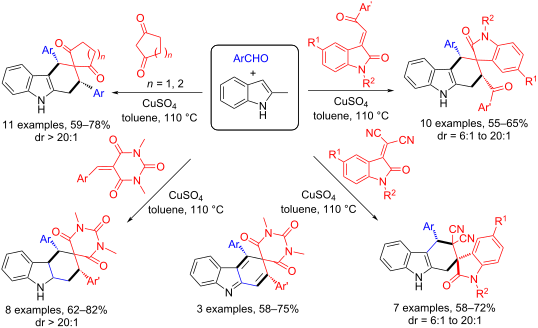
- , 121.8, 121.5, 120.2, 119.1, 110.7, 110.7, 109.0, 56.1, 50.0, 48.8, 43.6, 25.4; IR(KBr) υ: 3367, 3210, 3155, 3017, 2980, 2831, 2864, 1877, 1623, 1611, 1507, 1456, 1355, 1241, 1178, 1143, 955, 931, 849, 789 cm−1; HRMS–ESI (m/z): [M + Na]+ calcd for C39H30N2O2, 581.2199; found, 581.2191. 2. General
- , 29.1; IR(KBr) υ: 3355, 3207, 3117, 3048, 2963, 2831, 2167, 1871, 1641, 1633, 1554, 1431, 1370, 1240, 1131, 1100, 972, 961, 881, 764 cm−1; HRMS–ESI (m/z): [M + Na]+ calcd for C34H24N4O, 527.1842; found, 527.1849. 3. General procedure for the preparation of the tetrahydrospiro[carbazole-3,5'-pyrimidines
- , 129.1, 128.7, 128.3, 128.0, 126.3, 126.1, 125.5, 124.7, 124.2, 123.1, 120.8, 29.6, 28.8, 21.4, 21.3; IR (KBr) υ: 3219, 3158, 3043, 2966, 2900, 1843, 1755, 1648, 1617, 1537, 1466, 1358, 1318, 1266, 1150, 987, 899, 765 cm−1; HRMS–ESI (m/z): [M + Na]+ calcd for C31H25N3O3, 510.1788; found, 510.1788. 4





Synthesis of bis-spirocyclic derivatives of 3-azabicyclo[3.1.0]hexane via cyclopropene cycloadditions to the stable azomethine ylide derived from Ruhemann's purple
Beilstein J. Org. Chem. 2022, 18, 769–780, doi:10.3762/bjoc.18.77
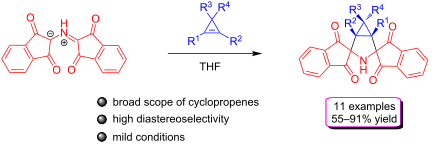
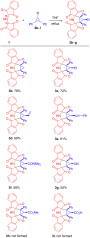
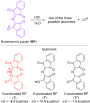
- asymmetric 1,3-dipolar cycloaddition of azomethine ylides and cyclopropenes catalyzed by a chiral Cu-(CH3CN)4BF4/Ph-Phosferrox complex for the construction of 3-azabicyclo[3.1.0]hexane derivatives [25]. Another concise enantioselective approach towards 3-azabicyclo[3.1.0]hexanes is based on a Cp*Ir-catalyzed






Inductive heating and flow chemistry – a perfect synergy of emerging enabling technologies
Beilstein J. Org. Chem. 2022, 18, 688–706, doi:10.3762/bjoc.18.70
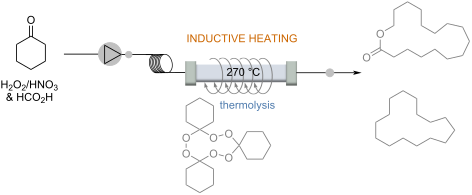
- temperature control can be ensured, e.g., by IR pyrometers. 2.2 Application of trickle bed reactor systems for isopulegol production Berenguer-Murcia et al. [25] developed a near isothermal micro trickle bed reactor operated by radiofrequency (RF; 300 kHz) heating of nickel ferrite particles (110 µm
- in that the actual temperature of the glass/metal surface could be determined locally using a high-resolution IR camera. It was found to be 950 °C and not 185 °C of the reaction mixture itself. These studies are noteworthy because it can be assumed that the temperatures determined by Organ locally on




Tri(n-butyl)phosphine-promoted domino reaction for the efficient construction of spiro[cyclohexane-1,3'-indolines] and spiro[indoline-3,2'-furan-3',3''-indolines]
Beilstein J. Org. Chem. 2022, 18, 669–679, doi:10.3762/bjoc.18.68
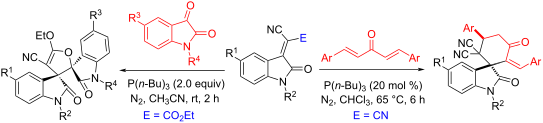
- of electron-donating methyl groups in the isatins gave higher yields than electron-withdrawing groups such as chloro and fluoro substituents. The structures of the spiro compounds 8a–m were fully characterized by their IR, HRMS, 1H and 13C NMR spectra. In addition, the single crystal structure of
- , 128.0, 127.1, 127.0, 123.0, 112.3, 110.9, 60.3, 49.0, 44.6, 44.4, 42.6, 21.4, 21.2; IR (KBr) ν: 3727, 3405, 3029, 2921, 2863, 2317, 1911, 1709, 1609, 1501, 1443, 1362, 1295, 1185, 1049, 1022, 959, 920, 820, 732 cm−1; HRMS–ESI (m/z): [M + Na]+ calcd for C38H31NaN3O2, 584.2314; found, 584.2306. 2. General
- ), 2.20 (s, 3H, CH3), 1.30 (t, J = 7.2 Hz, 3H, CH3); 13C NMR (100 MHz, CDCl3) δ 200.0, 175.1, 170.6, 140.6, 139.0, 138.8, 136.8, 135.0, 134.8, 131.6, 131.2, 130.1, 129.8, 129.3, 129.0, 128.6, 128.5, 127.5, 127.4, 127.1, 124.5, 110.2, 61.8, 53.0, 50.7, 43.4, 42.5, 42.0, 21.4, 21.0, 14.1; IR (KBr) ν: 3723


Heteroleptic metallosupramolecular aggregates/complexation for supramolecular catalysis
Beilstein J. Org. Chem. 2022, 18, 597–630, doi:10.3762/bjoc.18.62
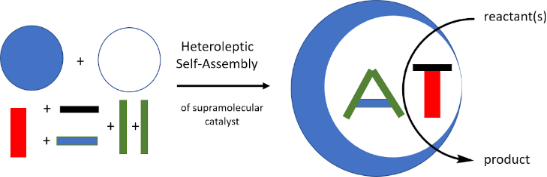
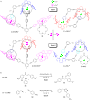
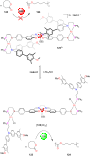
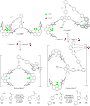
- of the guest molecule was proven by UV–vis and IR spectroscopy. The multicomponent prism (Figure 3) was finally utilized as a heterogeneous catalyst for Michael and Diels–Alder (DA) reactions in water, representing an uncommon hydrogen-bond donating heterogeneous catalyst [59]. Intrigued by the











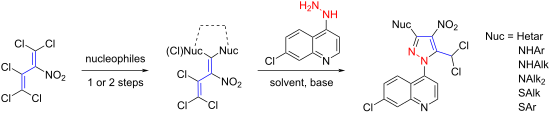
Chemistry of polyhalogenated nitrobutadienes, 17: Efficient synthesis of persubstituted chloroquinolinyl-1H-pyrazoles and evaluation of their antimalarial, anti-SARS-CoV-2, antibacterial, and cytotoxic activities
Beilstein J. Org. Chem. 2022, 18, 524–532, doi:10.3762/bjoc.18.54
- (1H, 13C, 14N, 15N NMR, IR, MS and HRMS), copies of spectra, and detailed procedures of biological assays. Acknowledgements We thank Dr. G. Dräger (Leibniz University of Hannover, Germany) for HRMS measurements, Siegrid Franke (Biochemistry and Molecular Biology Interdisciplinary Research Center


Sesquiterpenes from the soil-derived fungus Trichoderma citrinoviride PSU-SPSF346
Beilstein J. Org. Chem. 2022, 18, 479–485, doi:10.3762/bjoc.18.50
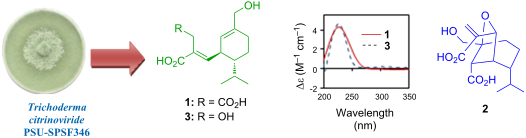
- ] (Figure 1). Their structures were elucidated on the basis of analysis of their spectroscopic data including IR, UV, NMR, and MS. The relative configuration was assigned based on NOEDIFF data. Furthermore, the absolute configuration of compound 1 was determined by comparison of its specific rotation and
- previously reported. Trichocitrinovirene A (1) was isolated as a colorless gum and had the molecular formula C15H22O5 on the basis of the HRESIMS peak at m/z 305.1359 [M + Na]+. The IR spectrum exhibited absorption bands at 3336, 1684, and 1649 cm−1 for hydroxy, conjugated carboxyl carbonyl, and double bond
- determined on the basis of the HRESIMS peak at m/z 321.1320 [M + Na]+. The IR spectrum was similar to that of compound 1, indicating that they possessed similar functional groups. The 1H NMR spectrum (Table 1) displayed characteristic signals for two geminal olefinic protons (δH 5.93 and 5.52, each s, 1H


Comparative study of thermally activated delayed fluorescent properties of donor–acceptor and donor–acceptor–donor architectures based on phenoxazine and dibenzo[a,j]phenazine
Beilstein J. Org. Chem. 2022, 18, 459–468, doi:10.3762/bjoc.18.48
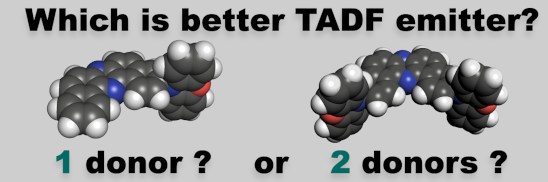
- allow for achieving a very high external quantum efficiency (EQE) of OLEDs without using precious metals such as Ir and Pt in the emitter. Thus, the development of TADF-active organic compounds, the establishment of materials design through systematic structure–property relationship (SPR), and the
- compound 1 was fully characterized by 1H and 13C NMR and IR spectroscopy, MS spectrometry as well as elemental analysis (for the detailed data, see Supporting Information File 1). Steady-state PL spectra To reveal the photophysical properties of diluted solutions of compound 1, UV–vis absorption and steady


Cs2CO3-Promoted reaction of tertiary bromopropargylic alcohols and phenols in DMF: a novel approach to α-phenoxyketones
Beilstein J. Org. Chem. 2022, 18, 420–428, doi:10.3762/bjoc.18.44
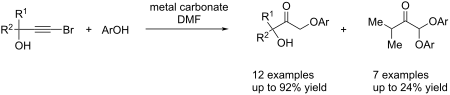
- model substrates for our investigation (Table 1). Completion of the reaction was monitored by IR and 1H NMR spectroscopy by the disappearance of the bands at 2196–2212 cm–1 (–C≡C–Br) and signals of the bromopropargylic alcohol 1a, respectively. Under the conditions previously used [18][19][20][21] for
- spectra were recorded on a Bruker DPX-400 spectrometer (400.1 and 100.6 MHz, respectively) in CDCl3 or (CD3)2CO using hexamethyldisiloxane as internal reference at 20–25 °C. IR spectra were measured on a Varian 3100 FT-IR Excalibur series instrument as thin films or KВr pellets. Microanalyses were
- ) NMR techniques, as well as IR spectra. Typical procedure for preparation of phenoxyhydroxyketones 4 in DMF, 50–55 °C. To a stirred solution of Cs2CO3 (326 mg, 1 mmol) and phenol (2a; 94 mg, 1 mmol) in DMF (5 mL) 4-bromo-2-methylbut-3-yn-2-ol (1a; 196 mg, 1.2 mmol) was added dropwise. The reaction



Four bioactive new steroids from the soft coral Lobophytum pauciflorum collected in South China Sea
Beilstein J. Org. Chem. 2022, 18, 374–380, doi:10.3762/bjoc.18.42
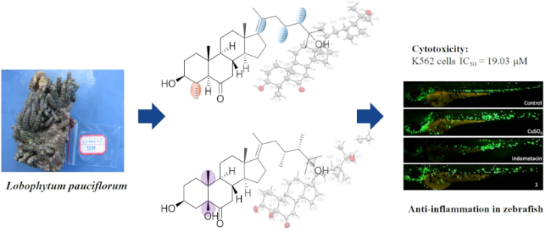
- constants (J) in hertz relative to the solvent peaks; δH 3.31 and δC 49.0 for CD3OD; δH 7.26 and δC 77.16 for CDCl3. HRESIMS data were surveyed on a Thermo LTQ-Orbitrap mass spectrometer. IR spectra were recorded on a Nicolet NEXUS 470 spectrophotometer using KBr pellets. UV spectra were recorded on a Jasco
- 0.13, MeOH); IR (KBr) νmax: 3389, 2944, 2871, 1707, 1603, 1467, 1380 cm−1; 1H and 13C NMR data (CDCl3, 500 and 125 MHz) see Table 1; HRESIMS (m/z) [M + Na]+ calcd for C30H50O3Na, 481.3652; found, 481.3648. Compound 2: colorless crystals; [α]D25 −12.77 (c 0.3, MeOH); IR (KBr) νmax: 3361, 2926, 2855
- , 1702, 1651, 1459, 1376 cm−1; 1H and 13C NMR data (CD3OD, 500 and 125 MHz) see Table 1; HRESIMS (m/z) [M + Na]+ calcd for C29H48O4Na, 483.3445; found, 483.3446. Compound 3: colorless crystals; [α]D25 −18.36 (c 0.5, MeOH); IR (KBr) νmax: 3390, 2938, 1702, 1459, 1376 cm−1; 1H and 13C NMR data (CDCl3, 500


Regioselectivity of the SEAr-based cyclizations and SEAr-terminated annulations of 3,5-unsubstituted, 4-substituted indoles
Beilstein J. Org. Chem. 2022, 18, 293–302, doi:10.3762/bjoc.18.33
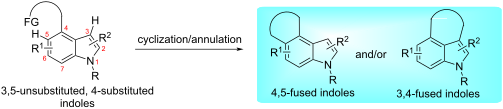
- [Pd(C3H5)Cl]2 and ligand L1 (Scheme 2) [11]. The reaction, that could also be considered as Friedel–Crafts type, intramolecular allylic alkylation, delivered nine-membered ring bearing 3,4-fused indoles 2 in moderate to good yields. In the asymmetric version of the reaction catalyzed by [Ir(cod)Cl]2
- stereochemistry in the Ir-catalyzed allylic substitution reactions. In 2016, Billingsley and co-workers disclosed the total synthesis of (−)-indolactam V (6), a nanomolar agonist of protein kinase C (Scheme 3) [12]. The authors applied an intramolecular SEAr reaction of 4-substituted indole derivative to
- diastereo- and enantioselectivities (up to >20:1 dr and >99% ee) (Scheme 8) [18]. The optimized reaction conditions for the annulation reaction were as follows: [Ir(cod)Cl]2 (4 mol %), Carreira’s P/olefin ligand (S)-L3 (16 mol %), Zn(OTf)2 (100 mol %), and 4 Å MS in CH2Cl2 at rt. The synthetic protocol


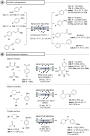
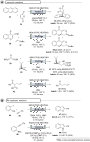
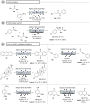
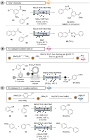
Iridium-catalyzed hydroacylation reactions of C1-substituted oxabenzonorbornadienes with salicylaldehyde: an experimental and computational study
Beilstein J. Org. Chem. 2022, 18, 251–261, doi:10.3762/bjoc.18.30
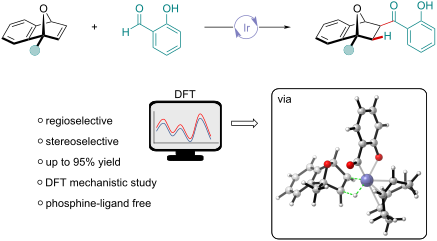
- iridium-catalyzed hydroacylation of C1-substituted oxabenzonorbornadienes with salicylaldehyde is reported. Utilizing commercially available [Ir(COD)Cl]2 in the presence of 5 M KOH in dioxane at 65 °C, provided a variety of hydroacylated bicyclic adducts in up to a 95% yield with complete stereo- and
- -substituted OBD (MeOBD, 13b) (Table 1). The use of [Ir(COD)Cl]2 (5 mol %) and 5 M KOH in H2O (10 mol %) in 1,4-dioxane at 65 °C for 20 h were the optimal conditions for the hydroacylation reaction (Table 1, entry 1) exclusively affording the C3-regioisomer 15b in a 61% isolated yield. To the effect of the
- reaction with C1-substituted methyl OBD (MeOBD) with salicylaldehyde catalyzed by [Ir(COD)OH]2 was chosen as the model reaction. As the reaction is in the presence of 5 M KOH, the potassium salt of salicylaldehyde was used rather than the protonated species for all calculations. Likewise, [Ir(COD)OH]2, and


Anomeric 1,2,3-triazole-linked sialic acid derivatives show selective inhibition towards a bacterial neuraminidase over a trypanosome trans-sialidase
Beilstein J. Org. Chem. 2022, 18, 208–216, doi:10.3762/bjoc.18.24
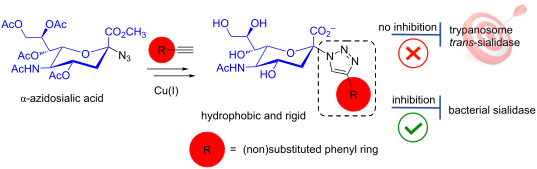
- , consistent with the spectra of 1,4-disubstituted triazole regiochemistry [22]. The final step was carried out in CH3OH/triethylamine/H2O 4:1:5 [26], followed by triethylammonium ion exchange for Na+ upon treatment with Amberlite IR 120 (Na+), to give the fully deprotected derivatives 3a–h in excellent yields
- the deprotection step with CH3OH/triethylamine/H2O 4:1:5 [26], triethylammonium ions were exchanged upon treatment with Amberlite IR 120 (Na+ form) and compounds 3a–h were obtained in excellent yield and purity without further purification. Chemical structures and reported activities of viral (A



Glycosylated coumarins, flavonoids, lignans and phenylpropanoids from Wikstroemia nutans and their biological activities
Beilstein J. Org. Chem. 2022, 18, 200–207, doi:10.3762/bjoc.18.23
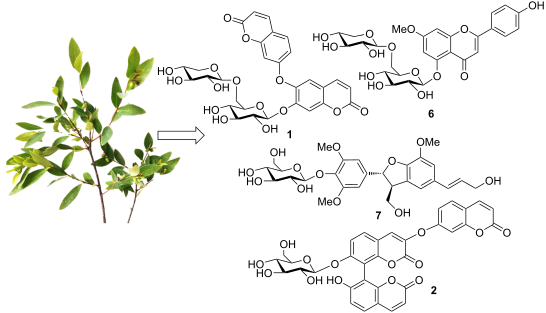
- including its absolute configuration was elucidated based on a combination of 1D and 2D NMR, UV, IR, HRESIMS spectroscopic data, as well as chemical transformation. Compounds 1–17 were first isolated from the plant species W. nutans, while compounds 1–3, 8, and 11 were reported from the genus Wikstroemia
- absorption bands at 325 and 293 nm indicated the presence of a coumarin-type chromophore. The IR spectrum of 1 demonstrated absorption bands characteristic for an hydroxy group (3266 cm−1), α,β-unsaturated carbonyl group (1739 and 1701 cm−1), and an aromatic ring (1624 and 1457 cm−1). The 1H NMR spectrum of
- samples were scanned from 190 to 400 nm in 1 nm steps. IR spectra were obtained using a Tensor 27 spectrophotometer with KBr pellets. 1D and 2D NMR spectra were acquired on Bruker DRX-600 and DRX-800 spectrometers with TMS as internal standard. Chemical shifts (δ) were expressed in ppm with reference to



Multi-faceted reactivity of N-fluorobenzenesulfonimide (NFSI) under mechanochemical conditions: fluorination, fluorodemethylation, sulfonylation, and amidation reactions
Beilstein J. Org. Chem. 2022, 18, 182–189, doi:10.3762/bjoc.18.20
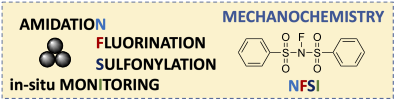
- of solvent. Being a crystalline material [43] and a Raman and IR active molecule [44][45], NFSI enabled the monitoring of the reactions by ex situ PXRD and IR spectroscopy, as well as by in situ Raman spectroscopy. Such a monitoring enabled us to understand background reactions such as the


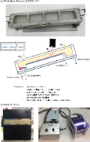
High-speed C–H chlorination of ethylene carbonate using a new photoflow setup
Beilstein J. Org. Chem. 2022, 18, 152–158, doi:10.3762/bjoc.18.16
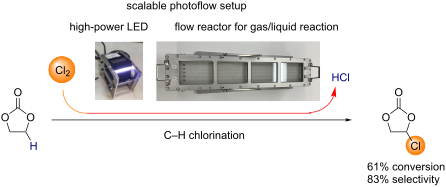
- the chlorination of compound 1. Acknowledgements We thank Prof. Masaaki Sato and Dr. Hitoshi Mitsui at MiChS Inc. for useful discussions. IR thanks the Center for Emergent Functional Matter Science at NYCU for support.




Tenacibactins K–M, cytotoxic siderophores from a coral-associated gliding bacterium of the genus Tenacibaculum
Beilstein J. Org. Chem. 2022, 18, 110–119, doi:10.3762/bjoc.18.12
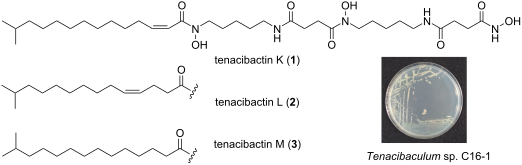
- genus Tenacibaculum. Experimental General experimental procedures UV and IR spectra were measured on a Shimadzu UV-1800 spectrophotometer and a PerkinElmer Spectrum 100 spectrophotometer, respectively. NMR spectra were recorded on a Bruker AVANCE NEO 500 spectrometer using the signals of the residual
- ): pale brown powder; UV (MeOH) λmax nm (log ε): 201 (4.82) nm; IR (ATR) νmax: 3305, 2916, 2849, 1613, 1538, 1466 cm−1; 1H and 13C NMR, Table 1; HR–ESITOFMS (m/z): [M − H]− calcd for C33H60N5O8, 654.4447; found, 654.4449; [M + Na]+ calcd for C33H61N5O8Na, 678.4412; found, 678.4412. Tenacibactin L (2
- ): pale brown powder; UV (MeOH) λmax nm (log ε): 202 (4.21) nm; IR (ATR) νmax: 3306, 2916, 2849, 1613, 1538, 1466 cm−1; 1H and 13C NMR, Table 2; HR–ESITOFMS (m/z): [M − H]− calcd for C33H60N5O8, 654.4447; found, 654.4445; [M + Na]+ calcd for C33H61N5O8Na, 678.4412; found, 678.4410. Tenacibactin M (3