
Search results
Search for "C–H" in Full Text gives 776 result(s) in Beilstein Journal of Organic Chemistry. Showing first 200.
Synthesis of N-phenyl- and N-thiazolyl-1H-indazoles by copper-catalyzed intramolecular N-arylation of ortho-chlorinated arylhydrazones
Beilstein J. Org. Chem. 2022, 18, 1079–1087, doi:10.3762/bjoc.18.110
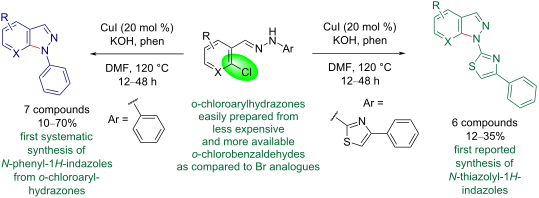
- amination by oxidative C−H bond functionalizations. These methods showed significant improvement with respect to the substrate scope and reaction conditions. However, mostly they are restricted to substrates containing hydrogen [13][14], alkyl [14][15], or (substituted) phenyl moieties [14][16][17] as N


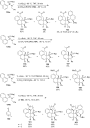
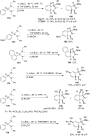
Facile and diastereoselective arylation of the privileged 1,4-dihydroisoquinolin-3(2H)-one scaffold
Beilstein J. Org. Chem. 2022, 18, 1070–1078, doi:10.3762/bjoc.18.109
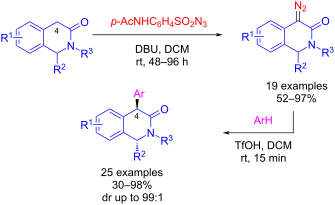
- investigate their suitability as substrates in the Regitz diazo transfer. We reasoned that if the C–H acidity of the methylene group in 11 would turn out to be insufficient for the Regitz protocol to be directly applied, these substrates could have been additionally activated by trifluoroacetylation





First example of organocatalysis by cathodic N-heterocyclic carbene generation and accumulation using a divided electrochemical flow cell
Beilstein J. Org. Chem. 2022, 18, 979–990, doi:10.3762/bjoc.18.98
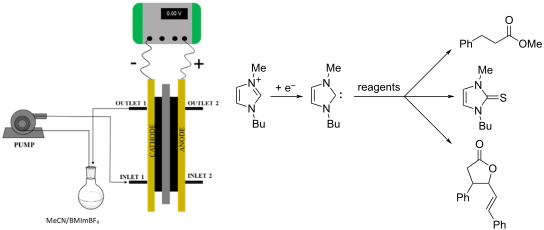
- can be modified by the presence of a base or by a single electron cathodic reduction of the C–H between nitrogen atoms of the imidazolium ring (Scheme 1), inducing the formation of a N-heterocyclic carbene (NHC) [7][8]. In recent years, NHCs have achieved great success: they have been frequently used


Synthetic strategies for the preparation of γ-phostams: 1,2-azaphospholidine 2-oxides and 1,2-azaphospholine 2-oxides
Beilstein J. Org. Chem. 2022, 18, 889–915, doi:10.3762/bjoc.18.90
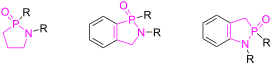
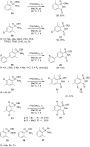
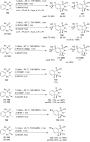
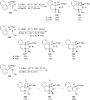
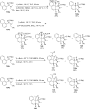
- method to synthesize 1,2-azaphospholidine 2-oxide derivatives 13. Arylphosphinyl azides generate arylphosphinyl nitrenes under photoirradiation. The phosphinyl nitrenes underwent an intramolecular insertion into the ortho C–H bond of the aryl group accompanied with the Curtius-like rearrangement as well
- [24]. Both monomesityl and dimesitylphosphinyl azides 14 generated 2,3-dihydrobenzo[c][1,2]azaphosphole 1-oxides 15 in 31% and 20%, respectively, via an intramolecular nitrene C–H insertion, for dimesitylphosphinyl azide (14b), with 51% yield of phosphonamidate 16 as byproduct. Bis(2,4,6
- (Scheme 5) [25]. The metal-free intramolecular oxidative C–H bond amidation of methyl and ethyl 2,6-dimethylphenylphosphonamidates 24, 26, and 28 is an interesting strategy for the synthesis of 1-methoxy/ethoxy-7-methyl-2-hydrobenzo[c][1,2]azaphosphol-3-one 1-oxide derivatives 25, 27, and 29 in







Synthesis of novel alkynyl imidazopyridinyl selenides: copper-catalyzed tandem selenation of selenium with 2-arylimidazo[1,2-a]pyridines and terminal alkynes
Beilstein J. Org. Chem. 2022, 18, 863–871, doi:10.3762/bjoc.18.87
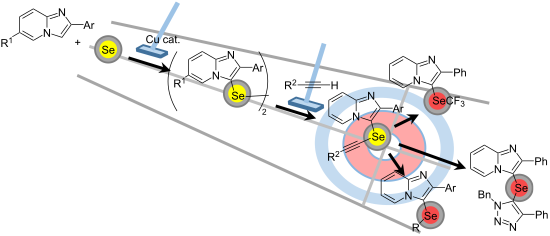
- or dialkyl diselenides, followed by C–H selenation with imidazopyridines to form the corresponding compounds. We also reported the one-pot two-step reaction of Se powder with imidazopyridine and triarylbismuthines using the CuI/1,10-phenanthroline catalytic system without bases, which formed similar
- selenides [25]. In this reaction, unlike the former, bis(imidazo[1,2-a]pyridin-3-yl) diselenides are generated through C–H selenation at the 3-position of 2-arylimidazopyridines with Se powder, followed by the cross-coupling reaction between diselenides and triarylbismuthines. These one-pot reactions are
- [1,2-a]pyridin-3-yl) diselenides using a Cu-catalyzed C–H selenation at the 3-position of 2-arylimidazo[1,2-a]pyridines with Se powder [32]. Initially, the reaction of bis(2-phenylimidazo[1,2-a]pyridin-3-yl) diselenide (2a), generated from Se powder and 2-phenylimidazo[1,2-a]pyridine (1a), with



Thiophene/selenophene-based S-shaped double helicenes: regioselective synthesis and structures
Beilstein J. Org. Chem. 2022, 18, 809–817, doi:10.3762/bjoc.18.81
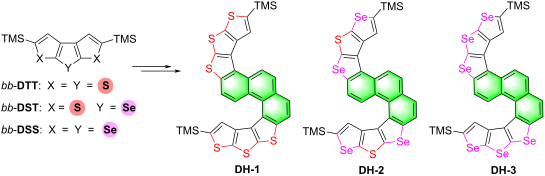
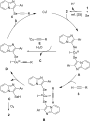
- ···C (3.31 Å), S···C (3.45 Å), and C···H (2.90 Å). Each of the two DH-2 molecules (blue and red molecules, Supporting Information File 2, Figure S7) in the unit cell interact with eight adjacent molecules through multiple interactions, such as, C···C (3.40 Å), Se···H (3.09 Å), H···H (2.26 Å), C···H


Synthesis of α-(perfluoroalkylsulfonyl)propiophenones: a new set of reagents for the light-mediated perfluoroalkylation of aromatics
Beilstein J. Org. Chem. 2022, 18, 788–795, doi:10.3762/bjoc.18.79
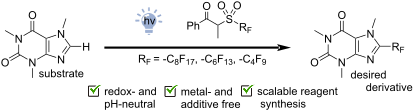
- , perfluorohexylation, and perfluorobutylation. Keywords: α-(perfluoroalkylsulfonyl)propiophenones; innate functionalization; late-stage functionalization; light-mediated perfluoroalkylation; perfluoroalkyl sulfinates; Introduction Perfluorinated compounds are a family of molecules containing a backbone where all C–H


Synthesis of odorants in flow and their applications in perfumery
Beilstein J. Org. Chem. 2022, 18, 754–768, doi:10.3762/bjoc.18.76
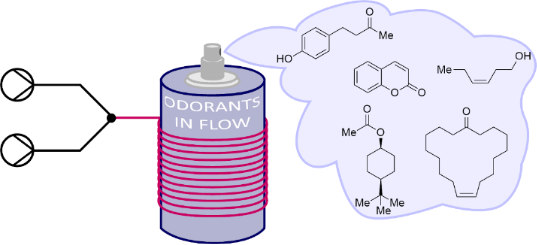
- review, we give an overview of selected methods for the synthesis of odorants in flow, including heterogeneously catalyzed reactions, gas reactions, and photochemical C–H functionalization processes. After a brief introduction on types of odorants, the presented odorant syntheses are ordered according to
- resembling that of hawthorn or a harsh orange-blossom type“. Acetophenone appears in vintage Geoffrey Beene: Grey Flannel at 0.14%, and Shiseido: Zen and Gap: Om at approx. 0.014%. In 2013, Roberge, Kappe, and co-workers investigated the C–H oxidation of ethylbenzene (37) to acetophenone with oxygen as an
- somewhat similar to coumarin is phthalide (50), having a sweet and powdery scent reminiscent of coconut and tonka bean [43]. Phthalide can be considered as a top note type of coumarin. Recently, Noël and co-workers developed a method for the photochemical, decatungstate-catalyzed C–H oxidation of activated


Structural basis for endoperoxide-forming oxygenases
Beilstein J. Org. Chem. 2022, 18, 707–721, doi:10.3762/bjoc.18.71
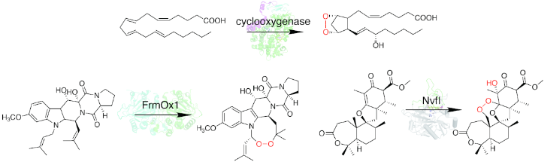
- highly reactive Fe(IV)=O species and a succinate byproduct. This Fe(IV)=O abstracts a hydrogen atom from an aliphatic C–H bond of the substrate to generate a radical intermediate. When the enzyme catalyzes the hydroxylation reaction, the radical reacts with the Fe(III)-OH species to form a hydroxylated


Mechanochemical halogenation of unsymmetrically substituted azobenzenes
Beilstein J. Org. Chem. 2022, 18, 680–687, doi:10.3762/bjoc.18.69
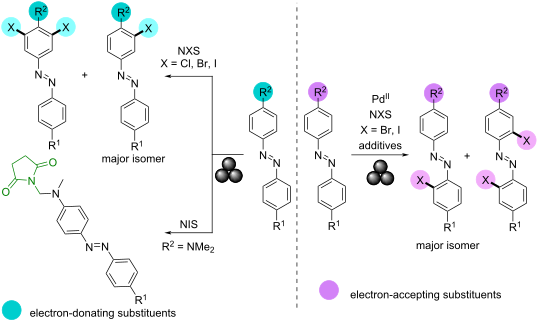
- Dajana Barisic Mario Pajic Ivan Halasz Darko Babic Manda Curic Division of Physical Chemistry, Ruđer Bošković Institute, Bijenička cesta 54, Zagreb, Croatia 10.3762/bjoc.18.69 Abstract The direct and selective mechanochemical halogenation of C–H bonds in unsymmetrically substituted azobenzenes
- using N-halosuccinimides as the halogen source under neat grinding or liquid-assisted grinding conditions in a ball mill has been described. Depending on the azobenzene substrate used, halogenation of the C–H bonds occurs in the absence or only in the presence of PdII catalysts. Insight into the
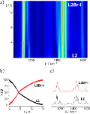
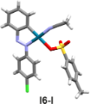
- species, cyclopalladated intermediates, and products (Figure 1). The monitoring results confirmed the crucial role of TsOH and acetonitrile (MeCN) as additives in the catalytic bromination of the C–H bond in L1. The experimental results were supported by quantum-chemical calculations, which showed that





Direct C–H amination reactions of arenes with N-hydroxyphthalimides catalyzed by cuprous bromide
Beilstein J. Org. Chem. 2022, 18, 647–652, doi:10.3762/bjoc.18.65
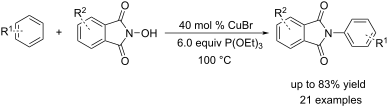
- Dongming Zhang Bin Lv Pan Gao Xiaodong Jia Yu Yuan College of Chemistry and Chemical Engineering, Yangzhou University, Yangzhou 225002, P. R. of China 10.3762/bjoc.18.65 Abstract An efficient Cu-catalyzed strategy for the direct C–H amination of arenes in high yields using N-hydroxyphthalimide as
- decades. With the combination of C–H activation, many aminations of aryl compounds have been established [6][7][8][9][10][11][12][13][14][15][16]. However, it is necessary to introduce the directing group into the arene in most successful cases. As a good amino source, phthalimides have been widely
- the direct C–H amination of arenes in good yields using N-hydroxyphthalimides as the amido radical precursor under mild conditions. This reaction has a broad substrate scope and leads to moderate to good yields in most cases. Also, good chemoselectivities were observed with some substrates. It is




DDQ in mechanochemical C–N coupling reactions
Beilstein J. Org. Chem. 2022, 18, 639–646, doi:10.3762/bjoc.18.64
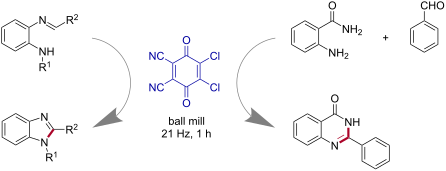
- direct C–H amination is vital to provide many amine derivatives by sustainable methods [36][37]. The dehydrogenative C–N cross-coupling reactions from unreactive N–H and C–H bonds can lead to various nitrogen-containing heterocycles [32][38]. Herein, we disclose the DDQ-mediated oxidative C–N coupling


BINOL as a chiral element in mechanically interlocked molecules
Beilstein J. Org. Chem. 2022, 18, 508–523, doi:10.3762/bjoc.18.53
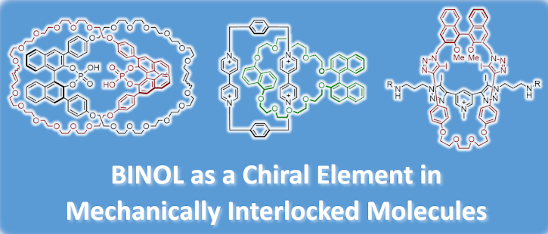
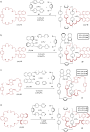
- -ray analysis revealed the presence of the expected [N–H···O] hydrogen bonds between the secondary ammonium station and the crown-ether macrocycle, but also additional [C–H···O] hydrogen bonds involving the benzylammonium methylene groups (see Figure 4). Interestingly, the presence of the directional
- -alkylene-linkers, the diastereoselectivity decreases with increasing linker length (79/33/12% de for C3/C6/C12-linkers, respectively). This is in line with an expected localization of the macrocycle around the ester functionality due to weak [C–H···O] interactions from the COOCH2 group to the macrocycle




Synthesis of 3,4,5-trisubstituted isoxazoles in water via a [3 + 2]-cycloaddition of nitrile oxides and 1,3-diketones, β-ketoesters, or β-ketoamides
Beilstein J. Org. Chem. 2022, 18, 446–458, doi:10.3762/bjoc.18.47

- of the reactants contained a Br, F, or CF3 group in the para-position or contained a thiophene ring (compounds 3b,c,h,i,k, and l). We also explored the reactions between phenyl hydroximoyl chlorides 1a–c and β-ketoesters 2g,h or β-ketoamides 2f,i under the optimized reaction conditions (DIPEA, 95



Tetraphenylethylene-embedded pillar[5]arene-based orthogonal self-assembly for efficient photocatalysis in water
Beilstein J. Org. Chem. 2022, 18, 429–437, doi:10.3762/bjoc.18.45
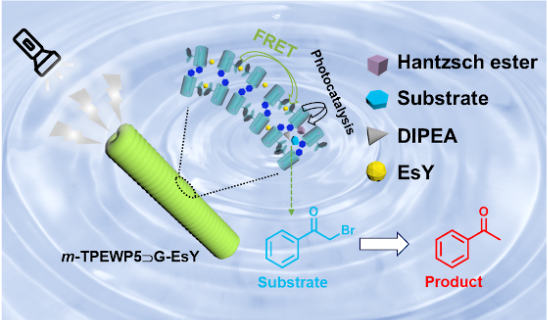
- supramolecular assembly with a two-step FRET process by the utilization of a metallacycle-tetraphenylethylene (TPE) donor and eosin Y (EsY) and sulforhodamine (SR101) as first and second acceptors, respectively. The resulting supramolecular energy transfer system was applied to the alkylation of C–H bonds via a


![[Graphic 5]](/bjoc/content/inline/1860-5397-18-45-i7.svg?max-width=637&scale=1.18182) G-EsY self-assembled photocat...
G-EsY self-assembled photocat...
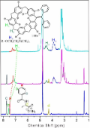


![[Graphic 15]](/bjoc/content/inline/1860-5397-18-45-i17.svg?max-width=637&scale=1.18182) G; (b) m-TPEWP5
G; (b) m-TPEWP5![[Graphic 16]](/bjoc/content/inline/1860-5397-18-45-i18.svg?max-width=637&scale=1.18182) G-EsY. [m-TPEWP5] = 1 × 10⁻⁴ M, [G] = 1 × 10⁻⁴ M, [EsY] = ...
G-EsY. [m-TPEWP5] = 1 × 10⁻⁴ M, [G] = 1 × 10⁻⁴ M, [EsY] = ...

![[Graphic 25]](/bjoc/content/inline/1860-5397-18-45-i27.svg?max-width=637&scale=1.18182) G donor assembly...
G donor assembly...

![[Graphic 43]](/bjoc/content/inline/1860-5397-18-45-i45.svg?max-width=637&scale=1.18182) G-EsY na...
G-EsY na...

![[Graphic 48]](/bjoc/content/inline/1860-5397-18-45-i50.svg?max-width=637&scale=1.18182) G-E...
G-E...
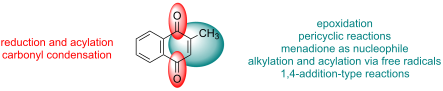
Menadione: a platform and a target to valuable compounds synthesis
Beilstein J. Org. Chem. 2022, 18, 381–419, doi:10.3762/bjoc.18.43


Site-selective reactions mediated by molecular containers
Beilstein J. Org. Chem. 2022, 18, 309–324, doi:10.3762/bjoc.18.35
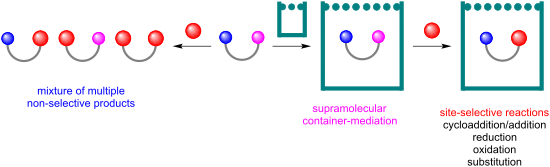
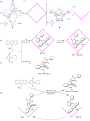
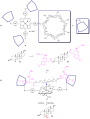
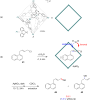
- , azides, halides and alkenes, oxidation of remote C–H bonds and alkenes, and substitution reactions involving ring-opening cyclization of epoxides, nucleophilic substitution of allylic chlorides, and hydrolysis reactions. The product selectivity is interpreted as the consequence of the space shape and
- , directing groups are introduced to the substrates covalently to achieve site-selective C–H bond activation, which prospered greatly in the past decades [7][8][9]. Template regulation is also introduced to locate reactive centers in a noncovalent way through hydrogen bonding [10][11][12]. Even though
- powerful role of molecular containers to achieve precise transformation of complex molecules. Oxidation C–H bonds are ubiquitously distributed in nearly all of the organic compounds, which makes them predominant candidates for the modification of complex molecules. Without pre-activation, direct






Regioselectivity of the SEAr-based cyclizations and SEAr-terminated annulations of 3,5-unsubstituted, 4-substituted indoles
Beilstein J. Org. Chem. 2022, 18, 293–302, doi:10.3762/bjoc.18.33
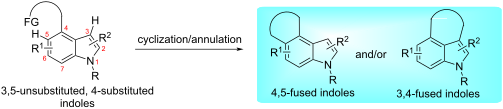
- indole derivative 31 in 82% yield (Scheme 11) [22]. Being a kinetically very active catalyst, Rh2(OAc)4 favored the formation of the five-membered ring. On the other hand, employment of Pd(OAc)2-catalysis switched the regioselectivity of this C–H insertion reaction. More specifically, under Pd(OAc)2


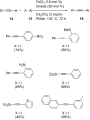
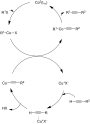
Recent developments and trends in the iron- and cobalt-catalyzed Sonogashira reactions
Beilstein J. Org. Chem. 2022, 18, 262–285, doi:10.3762/bjoc.18.31
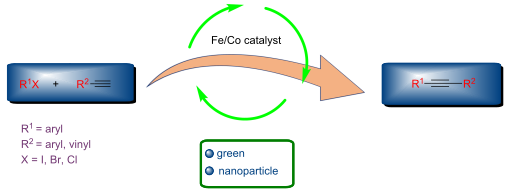
- of the alkyl halide and C–H activation can be increased by the presence of active Lewis acid sites on the iron(III) nanoparticles. The scope for this catalytic system can be figured out by the presence of high temperature, high ligand concentration and activated ligands. Chen and co-workers


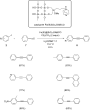
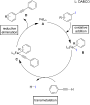





Iridium-catalyzed hydroacylation reactions of C1-substituted oxabenzonorbornadienes with salicylaldehyde: an experimental and computational study
Beilstein J. Org. Chem. 2022, 18, 251–261, doi:10.3762/bjoc.18.30
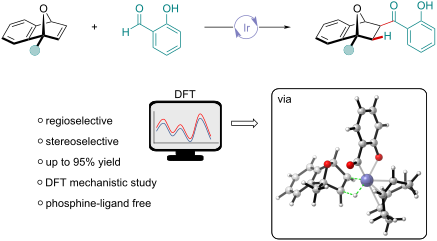
- regioselectivity. The mechanism and origins of selectivity in the iridium-catalyzed hydroacylation reaction has been examined at the M06/Def2TZVP level of theory. The catalytic cycle consists of three key steps including oxidative addition into the aldehyde C–H bond, insertion of the olefin into the iridium
- hydride, and C–C bond-forming reductive elimination. Computational results indicate the origin of regioselectivity is involved in the reductive elimination step. Keywords: C–H activation; density functional theory; hydroacylation; iridium catalysis; regioselectivity; Introduction Organic synthesis is
- bonds [6][7][8][9][10][11][12][13]. Hydroacylation reactions, the formal addition of an aldehyde C–H bond across a C–C π-system, has emerged as a powerful, and highly atom-economic approach to synthesize ketones. As such, C–H functionalizations are inherently both environmentally benign and economically


Multi-faceted reactivity of N-fluorobenzenesulfonimide (NFSI) under mechanochemical conditions: fluorination, fluorodemethylation, sulfonylation, and amidation reactions
Beilstein J. Org. Chem. 2022, 18, 182–189, doi:10.3762/bjoc.18.20
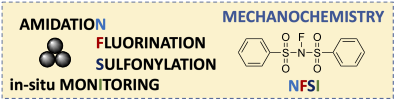
- are scarce and they have mostly been focused on the fluorinations of enolizable substrates. These considerations led us to explore the behavior of NFSI in fluorinations of activated arenes under ball-milling conditions towards an eventual implementation of mechanochemistry in late-stage C–H
- . To assist the metal-free amidation of the aromatic C–H bond in 5, we repeated the milling experiment at 40 °C using a heat gun to increase the temperature of the milling jar (see Supporting Information File 1, Figure S2) [42], which gave a mixture of 5 and 6 (ratio 85:15). The same experiment at 60


Asymmetric organocatalytic Michael addition of cyclopentane-1,2-dione to alkylidene oxindole
Beilstein J. Org. Chem. 2022, 18, 167–173, doi:10.3762/bjoc.18.18
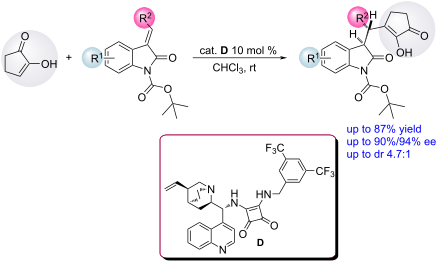
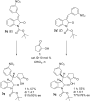
- . Also, a higher C–H acidity of the proton at the stereogenic centre and possible racemisation can’t be excluded. A heteroaromatic oxindole derivative afforded the product 3j in lower yield and high ee values. 4- and 5-bromo oxindole derivatives (2l and 2k, respectively) were also used as starting


High-speed C–H chlorination of ethylene carbonate using a new photoflow setup
Beilstein J. Org. Chem. 2022, 18, 152–158, doi:10.3762/bjoc.18.16
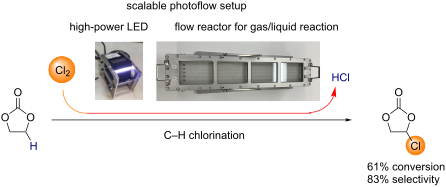
- Research & Development Group, Nankai Chemical Co. Ltd., 1-1-38 Kozaika, Wakayama 641-0007, Japan Department of Applied Chemistry, National Yang Ming Chiao Tung University (NYCU), Hsinchu 30010, Taiwan 10.3762/bjoc.18.16 Abstract We report the high-speed C–H chlorination of ethylene carbonate, which gives
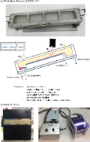
- ethylene carbonate was introduced to the reactor, the residence time was measured to be 15 or 30 s, depending on the slope of the reactor set at 15 or 5°, respectively. Such short time of exposition sufficed the photo C–H chlorination. The partial irradiation of the flow channels also sufficed for the C–H
- of ethylene carbonate such as 61%, the selectivity for monochlorinated ethylene carbonate over dichlorinated ethylene carbonate was 86%. We found that the substrate contamination with water negatively influenced the performance of the C–H chlorination. Keywords: C–H chlorination; chlorine gas




Ready access to 7,8-dihydroindolo[2,3-d][1]benzazepine-6(5H)-one scaffold and analogues via early-stage Fischer ring-closure reaction
Beilstein J. Org. Chem. 2022, 18, 143–151, doi:10.3762/bjoc.18.15
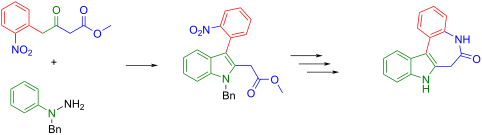
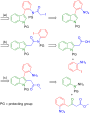
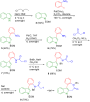
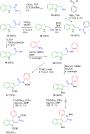
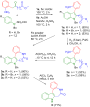
- -catalyzed norbornene-mediated C–H activation [35] failed and gave 1,4-bis(2-bromophenyl)piperazine-2,5-dione (22, Scheme 5) as the sole product in 61% yield, which to our knowledge is not documented in the literature yet. Synthetic pathway (c) started from methyl 4-(2-nitrophenyl)-3-oxobutanoate prepared in






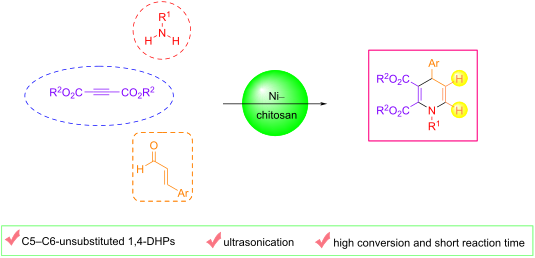
Green synthesis of C5–C6-unsubstituted 1,4-DHP scaffolds using an efficient Ni–chitosan nanocatalyst under ultrasonic conditions
Beilstein J. Org. Chem. 2022, 18, 133–142, doi:10.3762/bjoc.18.14
- 1a). The spectroscopic FTIR study revealed the interaction between the metal and the NH2 and OH groups of chitosan. In both spectra, the peaks around 1100, 1400, 1600, and 2900 cm−1 corresponded to the C–O, C–N, and N–H (bending) as well as to the C–H bonds of the chitosan moiety, respectively. The