
Search results
Search for "[3 2]" in Full Text gives 542 result(s) in Beilstein Journal of Organic Chemistry. Showing first 200.
Photocatalytic trifluoromethoxylation of arenes and heteroarenes in continuous-flow
Beilstein J. Org. Chem. 2020, 16, 1305–1312, doi:10.3762/bjoc.16.111
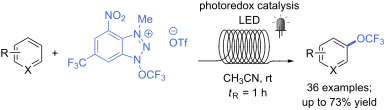
- isomer is marked with a star. 19F NMR yields are reported. a CH3CN/CH2Cl2 3:2, 0.08 M; b CH3CN/CH2Cl2 1:1, 0.05 M; c CH3CN/CH2Cl2 5:3, 0.05 M; d CH3CN/CH2Cl2 3:2, 0.02 M; e CH3CN/CH2Cl2 5:4, 0.057 M. Reaction optimization under flow conditions. Influence of bases on the photoredox trifluoromethoxylation



[3 + 2] Cycloaddition with photogenerated azomethine ylides in β-cyclodextrin
Beilstein J. Org. Chem. 2020, 16, 1296–1304, doi:10.3762/bjoc.16.110
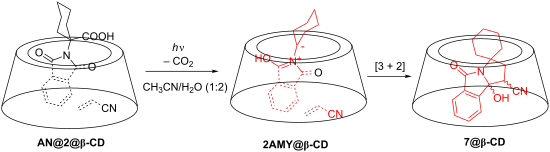
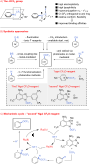
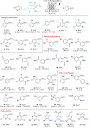
- decarboxylation and [3 + 2] cycloaddition take place in the ternary complex, whereas such a reactivity from bulky adamantane 3 is less likely. This proof of principle that decarboxylation and cycloaddition can be performed in the β-CD cavity has a significant importance for the design of new supramolecular
- systems for the control of photoreactivity. Keywords: [3 + 2] cycloadditions; β-cyclodextrin; inclusion complexes; photochemistry; phthalimides; Introduction Cycloadditions are highly useful reactions in organic synthesis providing complex cyclic structures from easily available precursors [1][2]. Among
- different reactions, [3 + 2] cycloadditions showed applicability in the synthesis of heterocyclic 5-ring compounds [3], as well as in the green synthesis of a number of natural products [4]. One of the useful synthons in [3 + 2] cycloadditions is azomethine ylide [5][6][7], also used in intramolecular


Ferrocenyl-substituted tetrahydrothiophenes via formal [3 + 2]-cycloaddition reactions of ferrocenyl thioketones with donor–acceptor cyclopropanes
Beilstein J. Org. Chem. 2020, 16, 1288–1295, doi:10.3762/bjoc.16.109
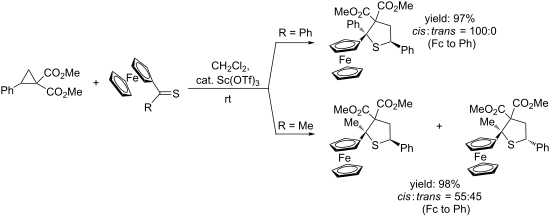
- thioketones reacted with donor–acceptor cyclopropanes in dichloromethane at room temperature in the presence of catalytic amounts of Sc(OTf)3 yielding tetrahydrothiophene derivatives, products of formal [3 + 2]-cycloaddition reactions, in moderate to high yields. In all studied cases, dimethyl 2
- thioketones to form nearly equal amounts of both diastereoisomeric tetrahydrothiophenes. A low selectivity was also observed in the reaction of a 2-phthalimide-derived cyclopropane with ferrocenyl phenyl thioketone. Keywords: [3 + 2]-cycloaddition reactions; donor–acceptor cyclopropanes; ferrocenyl
- by means of spectroscopic methods (R = CF3). In a recent work, an alternative, efficient and useful method for the synthesis of highly functionalized tetrahydrothiophenes of type 6 was reported [9] (Scheme 2). Under Lewis acid catalysis, formal [3 + 2]-cycloadditions of aromatic and cycloaliphatic


Synthesis of pyrrolidinedione-fused hexahydropyrrolo[2,1-a]isoquinolines via three-component [3 + 2] cycloaddition followed by one-pot N-allylation and intramolecular Heck reactions
Beilstein J. Org. Chem. 2020, 16, 1225–1233, doi:10.3762/bjoc.16.106
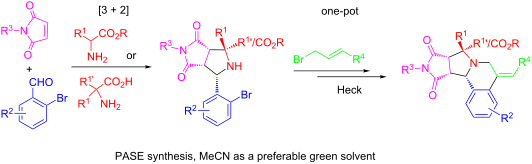
- Two kinds of [3 + 2] cycloaddition intermediates generated from the three-component reactions of 2-bromobenzaldehydes and maleimides with amino esters or amino acids were used for a one-pot N-allylation and intramolecular Heck reactions to form pyrrolidinedione-fused hexahydropyrrolo[2,1-a
- ]isoquinolines. The multicomponent reaction was combined with one-pot reactions to make a synthetic method with good pot, atom and step economy. MeCN was used as a preferable green solvent for the reactions. Keywords: [3 + 2] cycloaddition; Heck reaction; hexahydropyrrolo[2,1-a]isoquinoline; one-pot reactions
- related to natural products [18][19][20]. Among the well-established MCRs, three-component 1,3-dipolar cycloadditions of benzaldehydes, maleimides, and amino esters have been developed for making N-containing 5-membered heterocycles (Scheme 1) [21][22]. The [3 + 2] cycloadditions of maleimides with


Photocatalysis with organic dyes: facile access to reactive intermediates for synthesis
Beilstein J. Org. Chem. 2020, 16, 1163–1187, doi:10.3762/bjoc.16.103
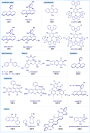
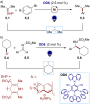
- release approach, the Xiao group reported a synthesis of the pyrroles 35.3 in 2014 [153]. They can be accessed via a photocatalytic formal [3 + 2] cycloaddition of the 2H-azirines 35.1 and the alkynes 35.2 (Scheme 35). The use of Mes-Acr-Me+ (OD2) was successful due to its high reduction potential in the
- opening of nitrogen-containing small rings was also exploited by our group in 2019 (Scheme 36) [154]. Starting from the aminocyclopropanes 36.1 and the cyclopropenes 36.2, a [3 + 2] annulation led to the bicyclo[3.1.0]hexanes 36.3. Under visible-light irradiation, the excited-state photocatalyst OD7
- performs an SET oxidation of an cyclopropylaniline 36.1, leading to an N-centred radical cation after ring opening. The latter undergoes a [3 + 2] annulation with cyclopropenes 36.2, affording a bicyclic product 36.3. The key to the broad substrate tolerance relied on using 4DPAIPN (OD7), which is a mild





Synthesis of esters of diaminotruxillic bis-amino acids by Pd-mediated photocycloaddition of analogs of the Kaede protein chromophore
Beilstein J. Org. Chem. 2020, 16, 1111–1123, doi:10.3762/bjoc.16.98
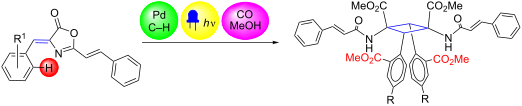
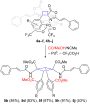
- of the ε-isomer in 4: (1) the initial (Z)-configuration of the oxazolones 2 is retained during the C–H bond activation step to give 3; (2) the relative transoid arrangement in 3 establishes the 1,3-head-to-tail coupling of the exocyclic C=C bonds; (3) the template effect of the Pd2(O2CCF3)2 moiety
- structures obtained for ortho-palladated complexes 3. [2 + 2] Photocycloaddition of cyclopalladated complexes 3 in solution to give the dinuclear cyclobutane ortho-palladated complexes 4. Release of the 1,3-diaminotruxillic bis-amino ester derivatives 5 by methoxycarbonylation of the Pd–C bond in


Fluorinated phenylalanines: synthesis and pharmaceutical applications
Beilstein J. Org. Chem. 2020, 16, 1022–1050, doi:10.3762/bjoc.16.91
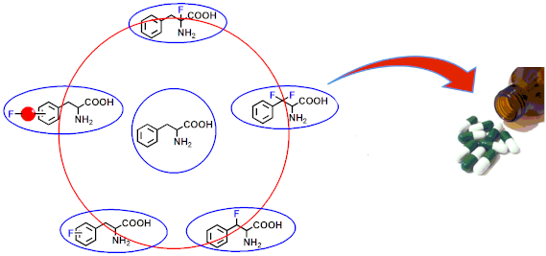
- -hydroxytetrachlorophthalimide esters with boronic acids 4-(2-Fluoroethyl)-ʟ-phenylalanine and 3-(2-fluoroethyl)-ʟ-phenylalanine (88a,b), respectively, were synthesized starting from partially protected ʟ- or ᴅ-aspartic acid derivatives 82 which were activated as the N-hydroxytetrachlorophthalimide esters 83. The treatment of


Recent applications of porphyrins as photocatalysts in organic synthesis: batch and continuous flow approaches
Beilstein J. Org. Chem. 2020, 16, 917–955, doi:10.3762/bjoc.16.83
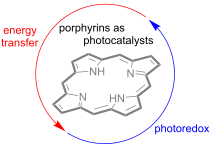
- (bpy)3)]2+, [Ir(ppy)3], eosin Y, and 4CzTPN [12] (Figure 3). However, some porphyrin and metalloporphyrin derivatives possess adequate potentials to be applied as photoredox catalysts in C–C and C-heteroatom bond formations [10][22]. Furthermore, supramolecular porphyrin-containing molecules, such as






One-pot synthesis of dicyclopenta-fused peropyrene via a fourfold alkyne annulation
Beilstein J. Org. Chem. 2020, 16, 791–797, doi:10.3762/bjoc.16.72
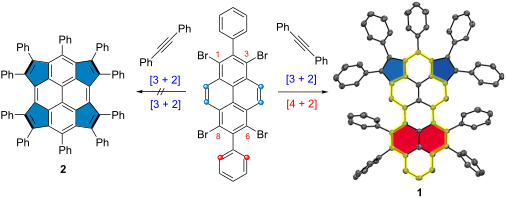
- twofold [3 + 2] cyclopentannulation and subsequent twofold [4 + 2] benzannulation. The structure of 1 is unambiguously confirmed by X-ray crystallography; 1 adopted a twisted geometry due to the steric hindrance of the phenyl rings and the hydrogen substituents at the bay regions. Notably, compound 1
- peropyrene 1. Furthermore, the observed isotopic distribution was fully consistent with its simulated spectrum (Figure 1). Characterization of the resultant product by single crystal X-ray analysis unambiguously revealed the selective formation of 1 through twofold [3 + 2] pentannulation and sequent twofold
- [4 + 2] benzannulation, instead of the desired tetracyclopenta[cd,fg,jk,mn]pyrene (2). The selective formation of 1 could be rationalized by the steric hindrance of the phenyl rings after the twofold [3 + 2] alkyne pentannulated intermediate (Scheme S2, Supporting Information File 1), and the sequent


Synthesis of C70-fragment buckybowls bearing alkoxy substituents
Beilstein J. Org. Chem. 2020, 16, 681–690, doi:10.3762/bjoc.16.66
- resulting mixture was extracted with CH2Cl2. The extract was washed with brine, dried over anhydrous Na2SO4, filtered and concentrated under reduced pressure. The mixture was purified by PTLC (ethyl acetate/hexane = 3:2 for 3a, ethyl acetate/hexane = 1:4 for 3b) to afford 3. General experimental procedure
- . The extract was washed with brine, dried over anhydrous Na2SO4, filtered and concentrated under reduced pressure. The mixture was purified by PTLC (CH2Cl2/hexane = 4:1 for 4a, CH2Cl2/hexane = 3:2 for 4b) to afford 4. Preparation of dialkoxides by intramolecular coupling reaction In a similar manner as


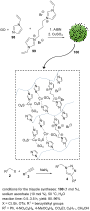
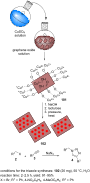
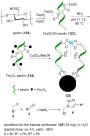
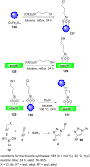
A systematic review on silica-, carbon-, and magnetic materials-supported copper species as efficient heterogeneous nanocatalysts in “click” reactions
Beilstein J. Org. Chem. 2020, 16, 551–586, doi:10.3762/bjoc.16.52
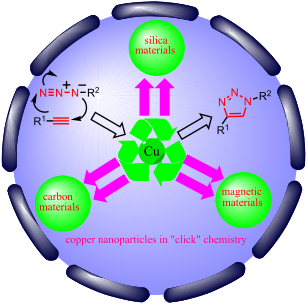
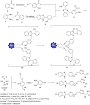
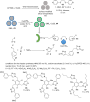
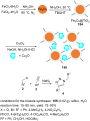
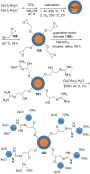
- , the desired triazole products were generated through the [3 + 2] cycloaddition of the azide and alkyne. The recyclability analysis of these IPSi-supported Cu(I) and Cu(II) catalysts indicated seven consecutive runs with almost equivalent performances. In 2018, silica modified with a benzimidazole
- synthesize benzimidazole–triazole derivatives through a one‐pot sequence of activation of the alkyne, [3 + 2] condensation, cyclization, and aromatization under mild reaction conditions (Scheme 2). Moreover, the BS–Cu(II)@SiO2 (11) catalyst could be recovered and recycled for seven cycles without a notable
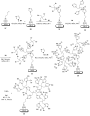
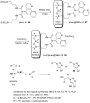
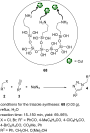
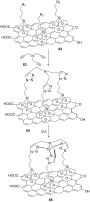
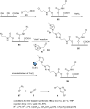
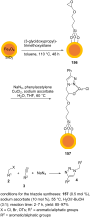
- ) (64) (Scheme 10) [32]. An interesting aspect of the heterogeneous catalyst SNIL–Cu(II) (64) is its successful application in the [3 + 2] cyclization synthesis of “click” products under mild reaction conditions. 0.05 mol % of 64 and 2 mol % of sodium ʟ-ascorbate were used to prepare a range of
















KOt-Bu-promoted selective ring-opening N-alkylation of 2-oxazolines to access 2-aminoethyl acetates and N-substituted thiazolidinones
Beilstein J. Org. Chem. 2020, 16, 492–501, doi:10.3762/bjoc.16.44
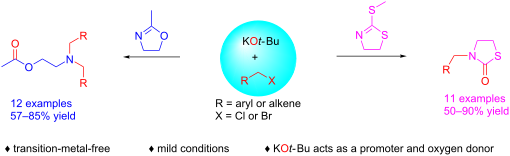
- coordination chemistry, and also valuable protecting or directing groups in catalysis [1][2][3]. 2-Oxazolines are a readily stable class of heterocycles resistant to a range of nucleophiles, bases, or radicals [4][5], which can be easily generated from amino alcohols and carboxylic acids, and from alkenes or


Aerobic synthesis of N-sulfonylamidines mediated by N-heterocyclic carbene copper(I) catalysts
Beilstein J. Org. Chem. 2020, 16, 482–491, doi:10.3762/bjoc.16.43

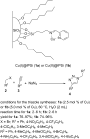
- area, reporting on the synthesis of the first heteroleptic bis-NHC and mixed NHC/phosphine copper(I) complexes [20][21][22]. Interestingly, these new copper-based complexes have shown excellent activity in the [3 + 2] cycloaddition reaction of azides/sulfonyl azides and alkynes (Scheme 1, right) [22
- diphenylamine, only 20% of the desired product was observed (12c). Interestingly, with benzyl azide, a substrate not containing a sulfonyl moiety, the product obtained is the 1,2,3-triazole derivative [33], resulting from a [3 + 2] cycloaddition of azide and alkyne (Scheme 6). The catalytic system was also




Photophysics and photochemistry of NIR absorbers derived from cyanines: key to new technologies based on chemistry 4.0
Beilstein J. Org. Chem. 2020, 16, 415–444, doi:10.3762/bjoc.16.40
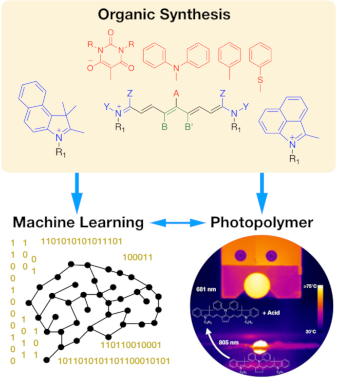
- view in comparison with UV-sensitive materials. Synthesis of the bridged heptamethines (IV and V) follows the general route shown in Scheme 3 [2][68][69]. Scheme 4 discloses the use of the chain builders cb and cb0-cb-6 [68][69]. The materials cb-1 and cb-2 were available by reaction of the respective


Synthesis and circularly polarized luminescence properties of BINOL-derived bisbenzofuro[2,3-b:3’,2’-e]pyridines (BBZFPys)
Beilstein J. Org. Chem. 2020, 16, 325–336, doi:10.3762/bjoc.16.32
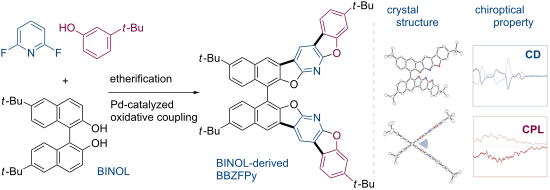
- 565-0871, Japan Department of Applied Chemistry, Faculty of Science and Engineering, Kindai University, Higashi-Osaka, Osaka 577-8502, Japan 10.3762/bjoc.16.32 Abstract A series of optically active bisbenzofuro[2,3-b:3’,2’-e]pyridine (BBZFPy) derivatives was synthesized starting with the readily
- dehydrogenative coupling adopting oxygen atom as the linker [12][13][14][15][16][17]. In particular, bisbenzofuro[2,3-b:3′,2′-e]pyridines (BBZFPys) were found to exhibit intense photoluminescence with relatively high quantum efficiency (Φflu up to 0.70), indicating that the BBFZPy scaffold may serve as a key


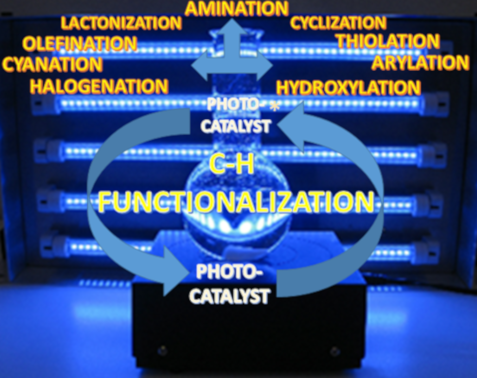
Recent developments in photoredox-catalyzed remote ortho and para C–H bond functionalizations
Beilstein J. Org. Chem. 2020, 16, 248–280, doi:10.3762/bjoc.16.26
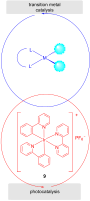
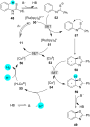
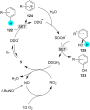
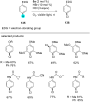
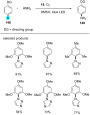
- of various bases, however, the best results were obtained with tetrabutylammonium hydroxide (TBAOH). The suggested mechanism commences with the photoexcitation of photocatalyst 11 to a strongly oxidizing excited state 50 (E1/2 red([Ru(bpy)3]2+*/[Ru(bpy)]3+) = +0.77 V vs SCE). Then, SET from anion 52












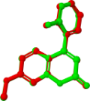
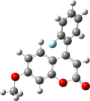
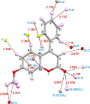
Synthesis of 4-(2-fluorophenyl)-7-methoxycoumarin: experimental and computational evidence for intramolecular and intermolecular C–F···H–C bonds
Beilstein J. Org. Chem. 2020, 16, 190–199, doi:10.3762/bjoc.16.22
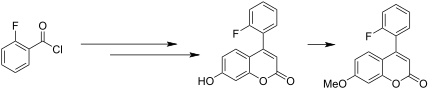
- over anhydrous MgSO4 and the solvent was removed in vacuo. The resulting light yellow product was purified by silica gel column chromatography with 60% EtOAc in hexane as eluent and 6 was obtained as a yellow crystalline solid (0.78 g, 2.9 mmol, 97%), mp 167–170 ºC, TLC Rf 0.54 (hexanes/EtOAc, 3:2). 1H



The use of isoxazoline and isoxazole scaffolding in the design of novel thiourea and amide liquid-crystalline compounds
Beilstein J. Org. Chem. 2020, 16, 175–184, doi:10.3762/bjoc.16.20
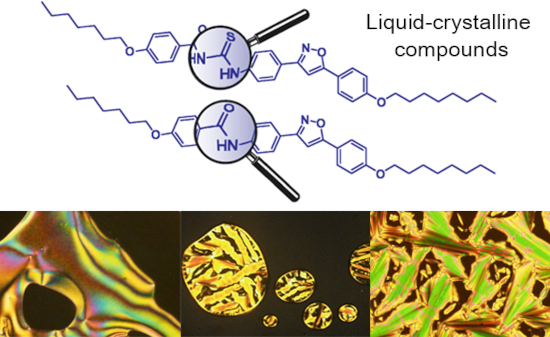
- , 8, 9, 12 and 13 were then prepared by [3 + 2]-1,3-dipolar cycloaddition of nitrile oxide (ArCNO) formed in situ from oximes and a number of alkenes as dipolarophiles, to yield the precursors of the cycloadducts isoxazolines 2, 7 and 11 regioselectively. The cycloadducts were subjected to SnCl2




Halogen-bonding-induced diverse aggregation of 4,5-diiodo-1,2,3-triazolium salts with different anions
Beilstein J. Org. Chem. 2020, 16, 78–87, doi:10.3762/bjoc.16.10
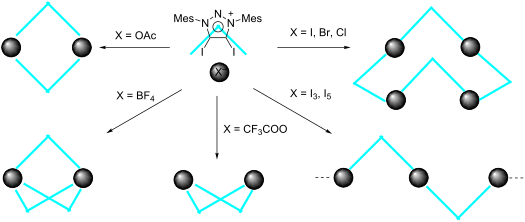
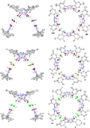
- (3)°, 144.12(7)° and 145.6(3)°. The crystal X-ray analyses of 2-BF4 shows that the diiodotriazolium moiety has formed with the tetrafluoroborate anion a triangle in which only two anions and three cations are assembled and one tetrafluoroborate is independent (Figure 3). 2-BF4 crystallizes in the




Starazo triple switches – synthesis of unsymmetrical 1,3,5-tris(arylazo)benzenes
Beilstein J. Org. Chem. 2020, 16, 22–31, doi:10.3762/bjoc.16.4
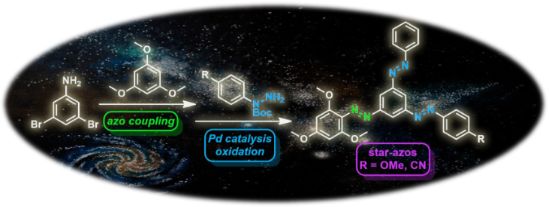
- /EtOAc, 2:1, v/v) to yield 16b as red oil (mixture of isomers, 218 mg, 9%). The product was used without further purification. See Supporting Information File 1 for the 1H NMR spectrum. HRESIMS (m/z): [M + H]+ calcd for C27H3279BrN4O6, 587.1500; found, 587.1486. tert-Butyl (E)-2-(3-(2-(tert
- /v, then SiO2, toluene/EtOAc, 5:1 to 3:1, v/v) to yield 17a as red oil (mixture of isomers, 28 mg, 23%). The product was used without further purification. See Supporting Information File 1 for the 1H NMR spectrum. HRESIMS: [M + H]+ calcd for C38H44N7O7, 710.3302; found, 710.3427. tert-Butyl (E)-2-(3
- -(2-(tert-butoxycarbonyl)-2-(4-methoxyphenyl)hydrazinyl)-5-((2,4,6-trimethoxyphenyl)diazenyl)phenyl)-1-phenylhydrazine-1-carboxylate (17b): In a nitrogen-filled glovebox, an oven-dried Schlenk tube was charged with P(t-Bu)3 (9.5 µL, 37 µmol, 15 mol %). All following operations were carried out in a


Extension of the 5-alkynyluridine side chain via C–C-bond formation in modified organometallic nucleosides using the Nicholas reaction
Beilstein J. Org. Chem. 2020, 16, 1–8, doi:10.3762/bjoc.16.1
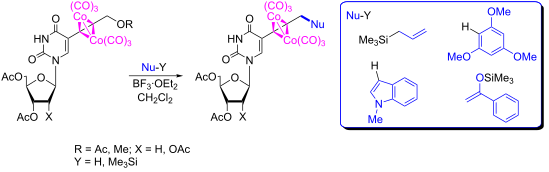
- product and purification by flash chromatography (2:1→3:2 petroleum ether/EtOAc) afforded 6a as a red-brown oil (0.0110 g, 16.3 μmol, 55%). 1H NMR (500 MHz, CDCl3) δ 8.85 (br s, 1H), 7.72 (s, 1H), 6.24 (dd, J = 8.0 Hz, 5.4 Hz, 1H), 5.93 (m, 1H), 5.22 (d, J = 6.3 Hz, 1H), 5.15 (d, J = 17.2 Hz, 1H), 5.05 (d
- mmol) and BF3·OEt2 (16 μL, 0.13 mmol). The solution was stirred over 12 h with gradual warming to room temperature. Then, NH4Cl (saturated saturated aq, 5 drops) and NaHCO3 (saturated aq, 5 drops) were added, followed by a conventional extractive workup (CH2Cl2). Purification by preparative TLC (3:2
- conventional extractive workup was performed (CH2Cl2). Preparative TLC (3:2 petroleum ether/EtOAc) afforded, in order of elution, 7a (7.8 mg, 11 μmol, 37% yield, 46% brsm) and recovered 5 (3.7 mg, 5.1 μmol, 18% recovery). 7a: 1H NMR (300 MHz, CDCl3) δ 8.60 (s, 1H), 7.55 (s, 1H), 6.00 (d, J = 5.4 Hz, 1H), 5.94


Emission solvatochromic, solid-state and aggregation-induced emissive α-pyrones and emission-tuneable 1H-pyridines by Michael addition–cyclocondensation sequences
Beilstein J. Org. Chem. 2019, 15, 2684–2703, doi:10.3762/bjoc.15.262
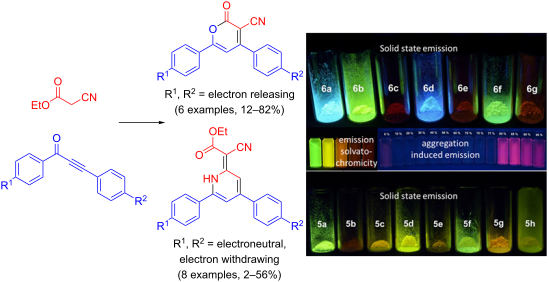
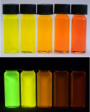
- ) Å, C11–H···N2 127°. Symmetry transformations are i = 1−x, 1−y, 1−z; ii = x, 3/2−y, −1/2+z, iii = 1−x, −1/2+y, −1/2−z. 1H-Pyridine derivatives 5 as solids under daylight (top), under UV light (λexc = 365 nm, c(5) = 10−4 M) in dichloromethane solution (center), and under UV light (λexc = 365 nm) in




AgNTf2-catalyzed formal [3 + 2] cycloaddition of ynamides with unprotected isoxazol-5-amines: efficient access to functionalized 5-amino-1H-pyrrole-3-carboxamide derivatives
Beilstein J. Org. Chem. 2019, 15, 2623–2630, doi:10.3762/bjoc.15.255
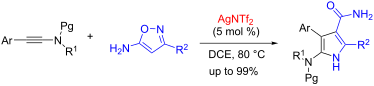
- Analysis, Qufu 273165, P. R. China 10.3762/bjoc.15.255 Abstract A formal [3 + 2] cycloaddition between ynamides and unprotected isoxazol-5-amines has been developed in the presence of catalytic AgNTf2 in an open flask. By the protocol, a variety of functionalized 5-amino-1H-pyrrole-3-carboxamide
- use of an inexpensive catalyst, simple reaction conditions, simple work-up without column chromatographic purification for most of products and high yields. Keywords: [3 + 2] cycloaddition; isoxazole; pyrrole; silver catalysis; ynamide; Introduction Silver-catalyzed transformations of alkynes have
- employment of isoxazole nucleophiles in gold-catalyzed formal [3 + 2] cycloaddition reaction of ynamides [31][32], and zinc-catalyzed the reaction of ynol ethers [33], giving the respective multi-substituted pyrrole derivatives efficiently (Scheme 2a) [34][35]. The reaction proceeds via an α-imino gold


Chemical synthesis of the pentasaccharide repeating unit of the O-specific polysaccharide from Escherichia coli O132 in the form of its 2-aminoethyl glycoside
Beilstein J. Org. Chem. 2019, 15, 2563–2568, doi:10.3762/bjoc.15.249
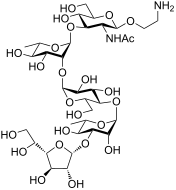
- and Galf. In this communication we report on the total synthesis of this pentasaccharide repeating unit of the O-specific polysaccharide in the form of its 2-aminoethyl glycoside (Figure 1) through a [3 + 2] converging strategy. The building blocks were prepared by suitable protecting group
- reducing end of the target pentasaccharide that will allow further conjugation using the terminal amine without affecting the glycosidic stereochemistry. Further retrosynthetic analysis of the target pentasaccharide 1 revealed that a [3 + 2] strategy will be the most suitable one for the total synthesis of
- pentasaccharide repeating unit of the O-specific polysaccharide of Escherichia coli O132 was accomplished through a convergent [3 + 2] strategy. The target pentasaccharide was obtained as its 2-aminoethyl glycoside that offers further possibilities for conjugation with suitable aglycons without hampering the




Formation of alkyne-bridged ferrocenophanes using ring-closing alkyne metathesis on 1,1’-diacetylenic ferrocenes
Beilstein J. Org. Chem. 2019, 15, 2534–2543, doi:10.3762/bjoc.15.246
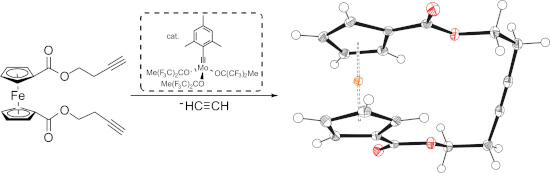
- synthesized via an esterification reaction starting from symmetrical 1,1’-ferrocenoyl dichloride (3) [92] as shown in Scheme 1. To a solution of the corresponding 1-alkynol (13.5 mmol), NEt3 (13.5 mmol), and 4-dimethylaminopyridine (DMAP, 0.5 mmol) in dichloromethane (DCM, 20 mL) at 0 °C the dichloride 3 (2 g