
Search results
Search for "stability" in Full Text gives 1459 result(s) in Beilstein Journal of Organic Chemistry. Showing first 200.
Synthesis and reactivity of the di(9-anthryl)methyl radical
Beilstein J. Org. Chem. 2024, 20, 2254–2260, doi:10.3762/bjoc.20.193
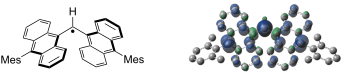
- . Previously, we reported aromatic hydrocarbon radicals with 9-anthryl (Ant) units at the spin-center carbon, exhibiting high stability (Figure 1a) [16][17][18][19][20][21]. Although bulky phenyl substitutions at the spin-center carbon can also provide high stability [13][14][15], the introduction of an Ant
- state yields the monomer radical [16][17][18]. Therefore, aromatic hydrocarbon radicals with Ant units possess both stability and reactivity depending on the conditions, giving them high potential for use as reactive catalysts [22][23] and stimuli-responsive sensors [24][25]. To further investigate this
- from the basic skeleton of the highly reactive diphenylmethyl radical [26][27][28]. This spin delocalization is similar to that of the galvinoxyl radical, which shows high stability in air [29]. Thus, the DAntM radical would be a stable radical with a reactive site. Additionally, utilizing the reactive


Cell-free protein synthesis with technical additives – expanding the parameter space of in vitro gene expression
Beilstein J. Org. Chem. 2024, 20, 2242–2253, doi:10.3762/bjoc.20.192
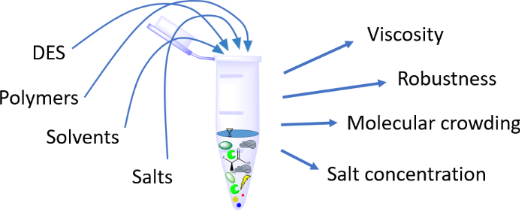
- alcohols, polyols, polyions or polymers, has a positive effect on protein stability and the soluble fraction expressed with CFPS [17]. The variable composition of CFPS systems with a high number of ingredients and possible reaction conditions [13] thus opens a large parameter space. In addition, non
- the impact of the polymer itself is greater than that of the increased viscosity. A positive effect on the stability and activity of the model enzyme β-ᴅ-glucuronidase by the addition of carboxymethylcellulose has already been reported [49]. However, the effects and states of molecular crowding in the


Metal-free double azide addition to strained alkynes of an octadehydrodibenzo[12]annulene derivative with electron-withdrawing substituents
Beilstein J. Org. Chem. 2024, 20, 2234–2241, doi:10.3762/bjoc.20.191
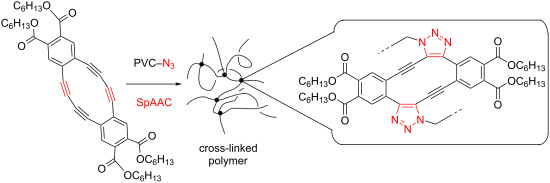
- ), which are readily accessible by the oxidative acetylenic coupling of a 1,2-diethynylbenzene derivative (Figure 1) [18]. The chemical stability of DBAs depends on the electronic character of the substituents. Electron-donating alkyloxy groups are known to enhance the stability of DBAs. On the other hand
- , DBAs substituted with electron-withdrawing groups have been little studied [19], and their chemical stability and physical properties are not well understood. In this paper, a new DBA substituted with ester groups was synthesized, and the double azide addition was comprehensively investigated. Finally




Novel truxene-based dipyrromethanes (DPMs): synthesis, spectroscopic characterization and photophysical properties
Beilstein J. Org. Chem. 2024, 20, 2163–2170, doi:10.3762/bjoc.20.186
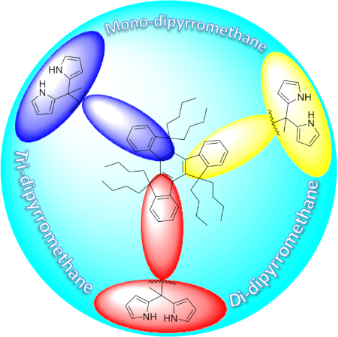
- of a variety of biologically important anions due to the presence of two pyrrolic NH hydrogen bond donors [38][39][40][41][42][43]. Notably, in the past few decades, the chemistry of DPMs have attested to be imperative in the existing chemical research because of their easy syntheses, good stability


Factors influencing the performance of organocatalysts immobilised on solid supports: A review
Beilstein J. Org. Chem. 2024, 20, 2129–2142, doi:10.3762/bjoc.20.183
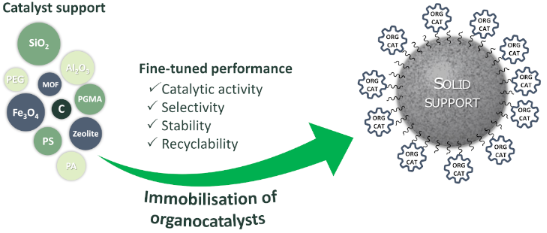
- immobilization strategies, including covalent bonding and encapsulation, cater to different polymer types. Soluble polymers enhance diffusion, while insoluble ones ensure stability and high loading capacities [42]. Silica is also widely applied due to its ease of functionalisation and thermal stability [43]. The
- 39% ee for a pore size of 11.3 nm [64]. Catalyst supports must meet certain criteria, including being chemically inert, and the supported catalyst should exhibit high stability across various reaction conditions while also being easily recyclable [8][64]. When the solid support is not inert, it can
- reactions in a less protic and less polar solvent. Attaching catalysts to solid supports also offers the potential for enhancing catalyst stability. Boyer and co-workers reported the use of silica nanoparticle-supported eosin Y 21 as a photocatalyst in reversible addition fragmentation chain transfer (RAFT


Efficacy of radical reactions of isocyanides with heteroatom radicals in organic synthesis
Beilstein J. Org. Chem. 2024, 20, 2114–2128, doi:10.3762/bjoc.20.182
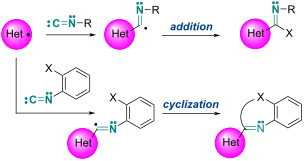
- -withdrawing group improves the stability of the product 4 (R = p-O2N-C6H4, E = PhSe) and also because phase separation is caused by the product precipitation from the reaction solution. On the other hand, the addition reaction of (PhTe)2 to isocyanides does not proceed at all [30]. This is because the


Computational toolbox for the analysis of protein–glycan interactions
Beilstein J. Org. Chem. 2024, 20, 2084–2107, doi:10.3762/bjoc.20.180
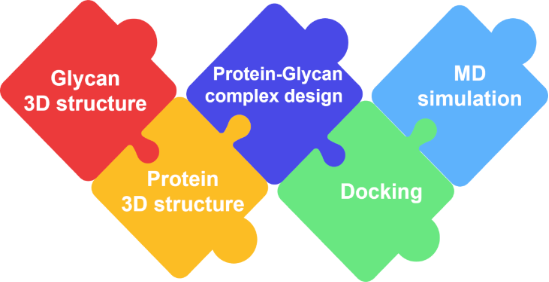
- field of computational chemistry and biochemistry: 1. AMBER [56]: AMBER (https://ambermd.org/) is the acronym for "Assisted Model Building with Energy Refinement", and it is an open-source software widely employed for molecular modelling and simulation. It is known for its stability, user-friendly
- scoring function based on the AMBER force field to evaluate the stability of the complex. DOCK is particularly useful for GAGs due to its ability to accurately model conformational flexibility and enhance sampling, allowing for more precise predictions of ligand–receptor interactions. 7. ATTRACT [138]: It


Multicomponent syntheses of pyrazoles via (3 + 2)-cyclocondensation and (3 + 2)-cycloaddition key steps
Beilstein J. Org. Chem. 2024, 20, 2024–2077, doi:10.3762/bjoc.20.178

- their synthesis have been extensively reviewed [93]. When hydrazones undergo cyclization with β-ketoesters or ketones, the stability of the enol form of the carbonyl compounds plays a crucial role in the reaction. Recognizing this, a series of multicomponent reactions has been developed to synthesize
- consecutive three-component approach in a polymer analogous fashion with diynes 105, terephthaloyl chloride (106), and hydrazines to synthesize high molecular weight pyrazole-based polymers 107 (Scheme 38) [132]. The materials 107 fluoresce in THF solutions, form thin films, and possess high thermal stability




Understanding X-ray-induced isomerisation in photoswitchable surfactant assemblies
Beilstein J. Org. Chem. 2024, 20, 2005–2015, doi:10.3762/bjoc.20.176
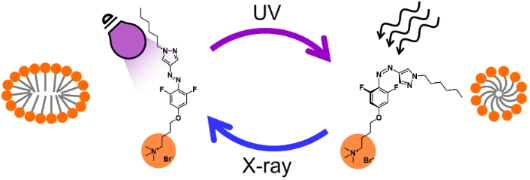
- replaced by a pyrazole, which improves several aspects of their performance, including quantitative photoswitching between isomers and significantly enhanced thermal stability of the Z isomer [13][14][15]. This has led to recent reports on the integration of AAPs into surfactants to form systems with
- that Z–E isomerisation cannot be easily induced using gentle heating or visible light, as shown by the stability of the UV–vis absorbance spectra and SAXS patterns under these conditions (Figures S1 and S3, Supporting Information File 1). In contrast, irradiation with X-rays leads to significant
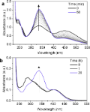
- stability of the Z isomer, AAP photoswitches are also susceptible to Z–E isomerisation on X-ray irradiation due to the presence of catalysing ionic and radical species from radiolysis of the surrounding water. This can be seen by a partial return of the UV–vis absorbance spectrum of AAPTAB from the Z to the



Harnessing the versatility of hydrazones through electrosynthetic oxidative transformations
Beilstein J. Org. Chem. 2024, 20, 1988–2004, doi:10.3762/bjoc.20.175
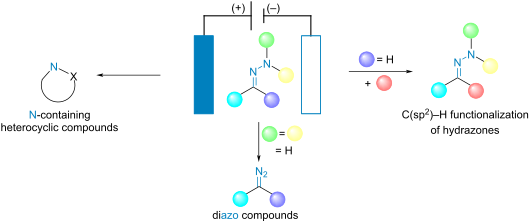
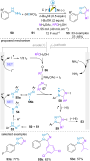
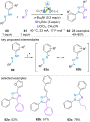
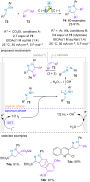
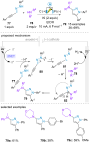
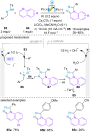
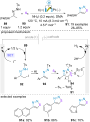
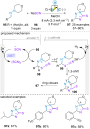
- the aromatic product 85, thereby regenerating the catalyst (Scheme 16) [61]. Given its abundance, stability, and low price, elemental sufur (S8) is an ideal source of sulfur atom to produce thiacycles [62]. In 2019, H.-T. Tang utilized this reagent in combination with (hetero)aromatic ketone-derived








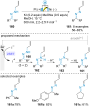
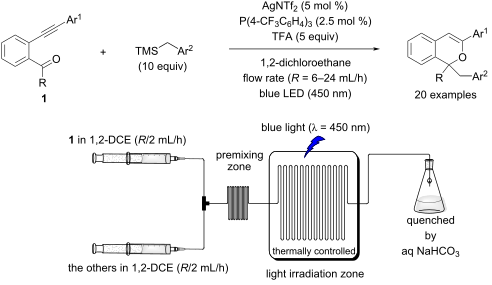
Development of a flow photochemical process for a π-Lewis acidic metal-catalyzed cyclization/radical addition sequence: in situ-generated 2-benzopyrylium as photoredox catalyst and reactive intermediate
Beilstein J. Org. Chem. 2024, 20, 1973–1980, doi:10.3762/bjoc.20.173
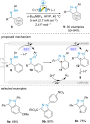
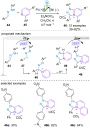
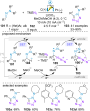
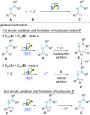
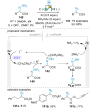
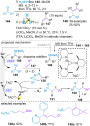
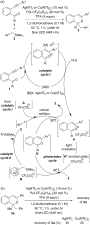
- TFA), the stability of products 3 was a concern. Indeed, subjecting product 3a to the optimal reaction conditions with either AgNTf2 or Cu(NTf2)2 resulted in the significant degradation of 3a, although the degradation of 3a was partially suppressed when AgNTf2 was used (Scheme 1b). Accordingly, we
- . (a) Sequential π-Lewis acidic metal-catalyzed cyclization/photochemical radical addition for the formation of 1H-isochromene derivatives 3 and its plausible catalytic cycles. (b) Stability of 3a under the optimal reaction conditions of the batch reaction. The reaction with benzyltrimethylsilane


1,2-Difluoroethylene (HFO-1132): synthesis and chemistry
Beilstein J. Org. Chem. 2024, 20, 1955–1966, doi:10.3762/bjoc.20.171
- -difluoroethylene was shown to have a lower energy compared to trans-1,2-difluoroethylene, which is in accordance with previously described 1,2-dihalogenated ethylene species [47]. The authors of reference [47] explained the higher stability of (Z)-HFO-1132 as follows: Within the family of 1,2-dihaloethylenes, when
- the methods for the preparation of HFO-1132 as well as reactions demonstrating the chemical behavior of this compound. From the reactions not included in this Review article, mechanistic studies on 1,2-difluoroethylene ozonolysis [77][103][104][105][106][107][108] and studies on the stability of


Negishi-coupling-enabled synthesis of α-heteroaryl-α-amino acid building blocks for DNA-encoded chemical library applications
Beilstein J. Org. Chem. 2024, 20, 1922–1932, doi:10.3762/bjoc.20.168
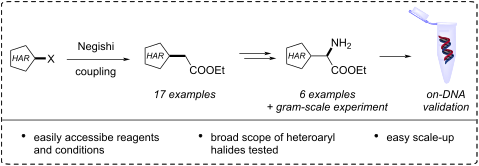
- -conversion for the mono-brominated compound, we encountered several problems related to the stability of the product (see Supporting Information File 1). To circumvent these issues, we came across the possibility of inserting an oximino group into the benzylic position which can then be converted into an
- amino group by reduction. We reasoned that increasing the sp2 fraction and the rigidity of the whole structure will lead to increased stability of these derivatives. The first exploratory attempts demonstrated the easy preparation and the high bench stability of the oxime derivatives, therefore we opted




Access to 2-oxoazetidine-3-carboxylic acid derivatives via thermal microwave-assisted Wolff rearrangement of 3-diazotetramic acids in the presence of nucleophiles
Beilstein J. Org. Chem. 2024, 20, 1894–1899, doi:10.3762/bjoc.20.164

- the lower stability of the less-substituted β-lactam derivatives under thermolysis conditions. Additional alkyl substituents sterically shield the ring and prevent an unwanted nucleophilic attack leading to product degradation. In reactions with alcohols and mercaptans, the corresponding esters 3k–n,r


2-Heteroarylethylamines in medicinal chemistry: a review of 2-phenethylamine satellite chemical space
Beilstein J. Org. Chem. 2024, 20, 1880–1893, doi:10.3762/bjoc.20.163
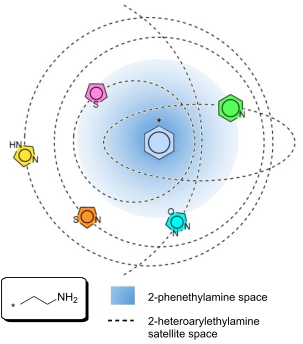
- hydration reaction of carbon dioxide to bicarbonate, cyanates to carbamic acids, aldehydes to gem-diols, etc., and represent a potential therapeutic target for diseases like osteoporosis, edema, obesity or cancer [29]. Alım et al. [30] evaluated a series of thiophene sulfonamides based on the high stability




The Groebke–Blackburn–Bienaymé reaction in its maturity: innovation and improvements since its 21st birthday (2019–2023)
Beilstein J. Org. Chem. 2024, 20, 1839–1879, doi:10.3762/bjoc.20.162
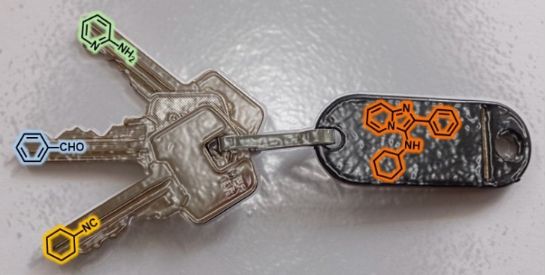
- catalysts Noncovalent organocatalysts display a few advantages compared to the traditional metal Lewis acids, such as lower environmental impact, higher stability to air and moisture, easier removal from the GBB products. In this regard, Bolotin et al. in 2022 have reported the high catalytic activity of
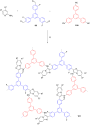
- economy (water was the only byproduct) and thermal stability as well as remarkable fluorescence properties. Multicomponent reaction can be also employed to prepare crystalline porous materials namely covalent organic frameworks (COFs). The structural diversity and functionality of COFs were assembled from
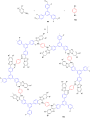
- of COFs was further demonstrated by employing the 1,4-diisocyanobenzene (102) monomer, leading to the generation of four COFs 103 in 71–88% yield. The results showed that the synthesized COFs displayed good chemical and thermal stability (Scheme 32). 3.2 GBB-like reactions Basak et al. [68] reported






Hetero-polycyclic aromatic systems: A data-driven investigation of structure–property relationships
Beilstein J. Org. Chem. 2024, 20, 1817–1830, doi:10.3762/bjoc.20.160
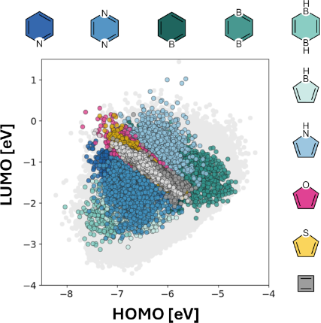
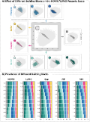
- ‘Hückel Rule’ (a term that was actually introduced by Doering) [39] was originally developed solely for monocyclic systems, but was later extended by Vol’pin to cata-condensed polycyclic systems [40]. It is generally assumed that aromatic molecules are characterized by excess stability and a large Gap
- . Unsurprisingly, the (4n + 2) systems show higher Gap values (Figure 6B), however, the difference consistently diminishes until it is negligible for 10-ring systems. (For further analysis based on this criterion, including molecular stability, see section 1.4 of Supporting Information File 1.) Influence of atomic



Oxidative fluorination with Selectfluor: A convenient procedure for preparing hypervalent iodine(V) fluorides
Beilstein J. Org. Chem. 2024, 20, 1785–1793, doi:10.3762/bjoc.20.157
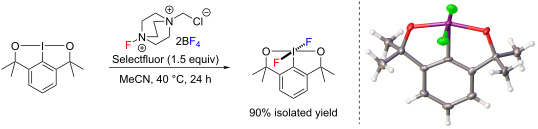
- ) fluorides in good isolated yields (72–90%). Stability studies revealed that bicyclic difluoro(aryl)-λ5-iodane 6 was much more stable in acetonitrile-d3 than in chloroform-d1, presumably due to acetonitrile coordinating to the iodine(V) centre and stabilising it via halogen bonding. Keywords: fluorination
- stability and is highly hygroscopic, it is often prepared in situ and Gilmour [3][4][5][6][7][8] has reported a range of fluorination protocols utilising hypervalent iodine(I/III) catalysis (Scheme 1A). Lennox has also demonstrated that 1 can be generated cleanly by electrochemical oxidation [9][10]. In an
- 7a/b and an sp3-hybridised carbon in 6. This NCC bond angle (111.7°) would certainly increase the angle strain in 7a/b and this, combined with the acute N–I–N bond angle (156.6–156.9°) caused by these two five-membered rings, could be the reason that we could not prepare these compounds. Stability


Harnessing unprotected deactivated amines and arylglyoxals in the Ugi reaction for the synthesis of fused complex nitrogen heterocycles
Beilstein J. Org. Chem. 2024, 20, 1758–1766, doi:10.3762/bjoc.20.154
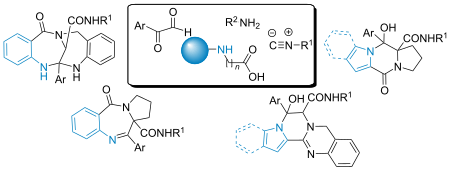
- single diastereomer (Scheme 5, Table 3), while N-phenylglycine afforded the enamine derivative 10 (Scheme 6, Table 4). Both structures were confirmed by single-crystal X-ray diffraction of compounds 9a and 10a (Figure 2). The diastereoselectivity observed in the hemiaminals and their stability can be
- corresponding pyrrolopiperazinoquinazolines 13 with high yields. Interestingly, despite the acidic medium and high temperatures, the hemiaminal group was conserved, showing the high stability of these systems. On the other hand, the reduction of the N-phenylglycine derivative 10c, used without purification


Syntheses and medicinal chemistry of spiro heterocyclic steroids
Beilstein J. Org. Chem. 2024, 20, 1713–1745, doi:10.3762/bjoc.20.152
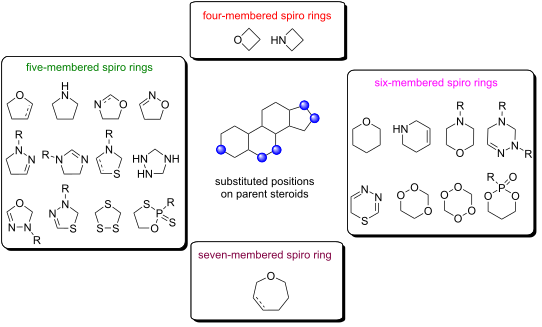
- illustrate that a spirocycle can alter the stability, physicochemical, and pharmacokinetic properties of the structure [9]. In this review, we summarize recent synthetic procedures reported between 2000 and 2023 for synthesizing steroidal spiro heterocycles. The review categorizes the procedures based on the


A fiber-optic spectroscopic setup for isomerization quantum yield determination
Beilstein J. Org. Chem. 2024, 20, 1684–1692, doi:10.3762/bjoc.20.150
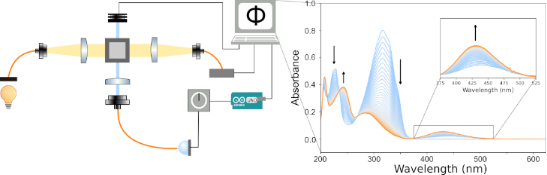
- different currents to test the stability of the setup (see Supporting Information File 1). Quantum yield determination A concentrated solution of azobenzene (Sigma-Aldrich) in methanol (Supelco LiChrosolv) was prepared by dissolving an aliquot of crystalline azobenzene in 1.00 mL of solvent. Samples of 3.00


Ring opening of photogenerated azetidinols as a strategy for the synthesis of aminodioxolanes
Beilstein J. Org. Chem. 2024, 20, 1671–1676, doi:10.3762/bjoc.20.148
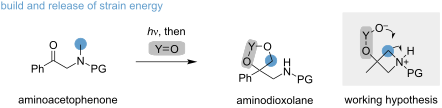
- infra). Thirdly, we wanted to assess substitution α to the nitrogen (R), as this was thought to impact the stability of the intermediary 1,4-biradical 2 [29][30]. To obtain comparable results, all reactions were performed in a LuzChem photoreactor under identical conditions. Deuterated acetonitrile was



Methyltransferases from RiPP pathways: shaping the landscape of natural product chemistry
Beilstein J. Org. Chem. 2024, 20, 1652–1670, doi:10.3762/bjoc.20.147
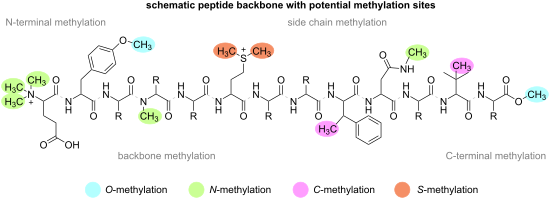
- -terminal methyltransferases The α-amino group of N-terminal amino acid residues can either be mono-, di-, or trimethylated. This methylation step occurs after the core peptide is cleaved from the leader and can enhance the metabolic stability of the final peptide natural product [85]. Crocagin A is the
- installed by the MT PoyE. Interestingly, two of these methylated asparagine residues also carry a hydroxy group at the β-carbon, which does not appear to affect the methylations. Renevey and Riniker demonstrated that the N-methylated asparagine residues of polytheonamide B are essential for the stability of





Polymer degrading marine Microbulbifer bacteria: an un(der)utilized source of chemical and biocatalytic novelty
Beilstein J. Org. Chem. 2024, 20, 1635–1651, doi:10.3762/bjoc.20.146
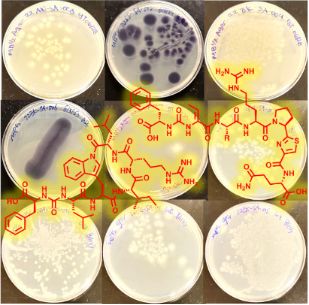
- stability by introduction of disulfide bonds [112][113]. Two new alginate lyases, AlgL17 and AlgL6, both expressed in E. coli, were characterized from Microbulbifer sp. ALW1 isolated from rotten brown algae [61][62]. AlgL17 preferentially degraded polyM with poor activity towards polyG, indicating it to be
- a polyM-specific alginate lyase. AlgL17 was an exotype alginate lyase based on its ability of producing 4-deoxy-ʟ-erythro-5-hexoseulose uronic acid (DEH) from sodium alginate [62]. AlgL6 degraded polyM, polyG, and sodium alginate in an exolytic manner. It exhibited good stability in the presence of
- hydrolases and lyases, based on their enzymatic mechanism. ChSase B6 is a chondroitinase originally identified in marine Microbulbifer sp. ALW1 [60] and was cloned and expressed in E. coli. ChSase B6 could digest chondroitin sulfate B into disaccharides with good thermostability and stability against




New triazinephosphonate dopants for Nafion proton exchange membranes (PEM)
Beilstein J. Org. Chem. 2024, 20, 1623–1634, doi:10.3762/bjoc.20.145
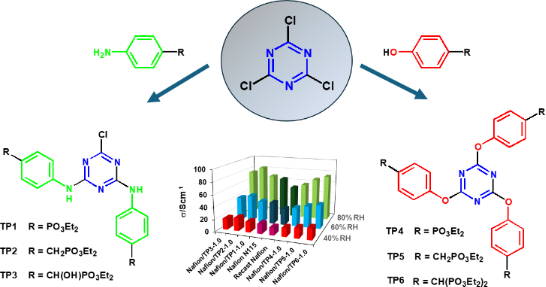
- applications and performances depend on key components such as their separators/ion-exchange membranes. The most studied and already commercialized Nafion membrane shows great chemical stability, but its water content limits its high proton conduction to a limited range of operating temperatures. Here, we
- structural properties of the membranes restrain their stability and durability, their humidity and temperature application conditions, and their efficiency and consequently, the performance of fuel cells or eletrolysers [18][19]. Many organic polymers with acidic functional groups have been developed as
- acid groups [22]. These membranes have an excellent chemical stability, but their high proton conduction is dependent of the water content of the membranes which limits their operating temperature range to 80 °C [23]. The importance of the membranes for the new sustainable energy sources fostered the