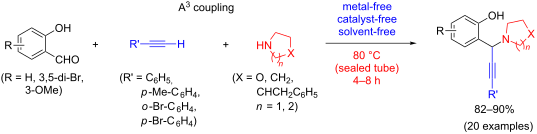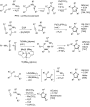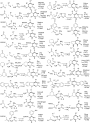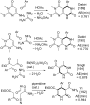

Search for "piperidine" in Full Text gives 288 result(s) in Beilstein Journal of Organic Chemistry. Showing first 200.
Beilstein J. Org. Chem. 2017, 13, 451–494, doi:10.3762/bjoc.13.48
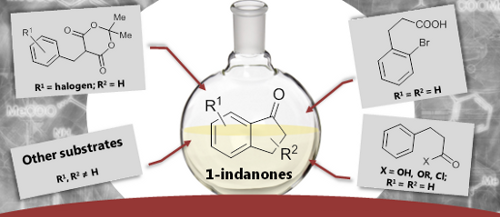
Graphical Abstract
Figure 1: Biologically active 1-indanones and their structural analogues.
Figure 2: Number of papers about (a) 1-indanones, (b) synthesis of 1-indanones.
Scheme 1: Synthesis of 1-indanone (2) from hydrocinnamic acid (1).
Scheme 2: Synthesis of 1-indanone (2) from 3-(2-bromophenyl)propionic acid (3).
Scheme 3: Synthesis of 1-indanones 5 from 3-arylpropionic acids 4.
Scheme 4: Synthesis of kinamycin (9a) and methylkinamycin C (9b).
Scheme 5: Synthesis of trifluoromethyl-substituted arylpropionic acids 12, 1-indanones 13 and dihydrocoumarin...
Scheme 6: Synthesis of 1-indanones 16 from benzoic acids 15.
Scheme 7: Synthesis of 1-indanones 18 from arylpropionic and 3-arylacrylic acids 17.
Scheme 8: The NbCl5-induced one-step synthesis of 1-indanones 22.
Scheme 9: Synthesis of biologically active 1-indanone derivatives 26.
Scheme 10: Synthesis of enantiomerically pure indatraline ((−)-29).
Scheme 11: Synthesis of 1-indanone (2) from the acyl chloride 30.
Scheme 12: Synthesis of the mechanism-based inhibitors 33 of coelenterazine.
Scheme 13: Synthesis of the indane 2-imidazole derivative 37.
Scheme 14: Synthesis of fluorinated PAHs 41.
Scheme 15: Synthesis of 1-indanones 43 via transition metal complexes-catalyzed carbonylative cyclization of m...
Scheme 16: Synthesis of 6-methyl-1-indanone (46).
Scheme 17: Synthesis of 1-indanone (2) from ester 48.
Scheme 18: Synthesis of benzopyronaphthoquinone 51 from the spiro-1-indanone 50.
Scheme 19: Synthesis of the selective endothelin A receptor antagonist 55.
Scheme 20: Synthesis of 1-indanones 60 from methyl vinyl ketone (57).
Scheme 21: Synthesis of 1-indanones 64 from diethyl phthalate 61.
Scheme 22: Synthesis of 1-indanone derivatives 66 from various Meldrum’s acids 65.
Scheme 23: Synthesis of halo 1-indanones 69.
Scheme 24: Synthesis of substituted 1-indanones 71.
Scheme 25: Synthesis of spiro- and fused 1-indanones 73 and 74.
Scheme 26: Synthesis of spiro-1,3-indanodiones 77.
Scheme 27: Mechanistic pathway for the NHC-catalyzed Stetter–Aldol–Michael reaction.
Scheme 28: Synthesis of 2-benzylidene-1-indanone derivatives 88a–d.
Scheme 29: Synthesis of 1-indanone derivatives 90a–i.
Scheme 30: Synthesis of 1-indanones 96 from o-bromobenzaldehydes 93 and alkynes 94.
Scheme 31: Synthesis of 3-hydroxy-1-indanones 99.
Scheme 32: Photochemical preparation of 1-indanones 103 from ketones 100.
Scheme 33: Synthesis of chiral 3-aryl-1-indanones 107.
Scheme 34: Photochemical isomerization of 2-methylbenzil 108.
Scheme 35: Synthesis of 2-hydroxy-1-indanones 111a–c.
Scheme 36: Synthesis of 1-indanone derivatives 113 and 114 from η6-1,2-dioxobenzocyclobutene complex 112.
Scheme 37: Synthesis of nakiterpiosin (117).
Scheme 38: Synthesis of 2-alkyl-1-indanones 120.
Scheme 39: Synthesis of fluorine-containing 1-indanone derivatives 123.
Scheme 40: Synthesis of 2-benzylidene and 2-benzyl-1-indanones 126, 127 from the chalcone 124.
Scheme 41: Synthesis of 2-bromo-6-methoxy-3-phenyl-1-indanone (130).
Scheme 42: Synthesis of combretastatin A-4-like indanones 132a–s.
Figure 3: Chemical structures of investigated dienones 133 and synthesized cyclic products 134–137.
Figure 4: Chemical structures of 1-indanones and their heteroatom analogues 138–142.
Scheme 43: Synthesis of 2-phosphorylated and 2-non-phosphorylated 1-indanones 147 and 148 from β-ketophosphona...
Scheme 44: Photochemical synthesis of 1-indanone derivatives 150, 153a, 153b.
Scheme 45: Synthesis of polysubstituted-1-indanones 155, 157.
Scheme 46: Synthesis of 1-indanones 159a–g from α-arylpropargyl alcohols 158 using RhCl(PPh3)3 as a catalyst.
Scheme 47: Synthesis of optically active 1-indanones 162 via the asymmetric Rh-catalyzed isomerization of race...
Scheme 48: Mechanism of the Rh-catalyzed isomerization of α-arylpropargyl alcohols 161 to 1-indanones 162.
Figure 5: Chemical structure of abicoviromycin (168) and its new benzo derivative 169.
Scheme 49: Synthesis of racemic benzoabicoviromycin 172.
Scheme 50: Synthesis of [14C]indene 176.
Scheme 51: Synthesis of indanone derivatives 178–180.
Scheme 52: Synthesis of racemic pterosin A 186.
Scheme 53: Synthesis of trans-2,3-disubstituted 1-indanones 189.
Scheme 54: Synthesis of 3-aryl-1-indanone derivatives 192.
Scheme 55: Synthesis of 1-indanone derivatives 194 from 3-(2-iodoaryl)propanonitriles 193.
Scheme 56: Synthesis of 1-indanones 200–204 by cyclization of aromatic nitriles.
Scheme 57: Synthesis of 1,1’-spirobi[indan-3,3’-dione] derivative 208.
Scheme 58: Total synthesis of atipamezole analogues 211.
Scheme 59: Synthesis of 3-[4-(1-piperidinoethoxy)phenyl]spiro[indene-1,1’-indan]-5,5’-diol hydrochloride 216.
Scheme 60: Synthesis of 3-arylindan-1-ones 219.
Scheme 61: Synthesis of 2-hydroxy-1-indanones 222.
Scheme 62: Synthesis of the 1-indanone 224 from the THP/MOM protected chalcone epoxide 223.
Scheme 63: Synthesis of 1-indanones 227 from γ,δ-epoxy ketones 226.
Scheme 64: Synthesis of 2-hydroxy-2-methylindanone (230).
Scheme 65: Synthesis of 1-indanone derivatives 234 from cyclopropanol derivatives 233.
Scheme 66: Synthesis of substituted 1-indanone derivatives 237.
Scheme 67: Synthesis of 7-methyl substituted 1-indanone 241 from 1,3-pentadiene (238) and 2-cyclopentenone (239...
Scheme 68: Synthesis of disubstituted 1-indanone 246 from the siloxydiene 244 and 2-cyclopentenone 239.
Scheme 69: Synthesis of 5-hydroxy-1-indanone (250) via the Diels–Alder reaction of 1,3-diene 248 with sulfoxid...
Scheme 70: Synthesis of halogenated 1-indanones 253a and 253b.
Scheme 71: Synthesis of 1-indanones 257 and 258 from 2-bromocyclopentenones 254.
Scheme 72: Synthesis of 1-indanone 261 from 2-bromo-4-acetoxy-2-cyclopenten-1-one (260) and 1,2-dihydro-4-viny...
Scheme 73: Synthesis of 1-indanone 265 from 1,2-dihydro-7-methoxy-4-vinylnaphthalene (262) and bromo-substitut...
Scheme 74: Synthesis of 1-indanone 268 from dihydro-3-vinylphenanthrene 266 and 4-acetoxy-2-cyclopenten-1-one (...
Scheme 75: Synthesis of 1-indanone 271 from phenylselenyl-substituted cyclopentenone 268.
Scheme 76: Synthesis of 1-indanone 272 from the trienone 270.
Scheme 77: Synthesis of the 1-indanone 276 from the aldehyde 273.
Scheme 78: Synthesis of 1-indanones 278 and 279.
Scheme 79: Synthesis of 1-indanone 285 from octa-1,7-diyne (282) and cyclopentenone 239.
Scheme 80: Synthesis of benz[f]indan-1-one (287) from cyclopentenone 239 and o-bis(dibromomethyl)benzene (286)....
Scheme 81: Synthesis of 3-methyl-substituted benz[f]indan-1-one 291 from o-bis(dibromomethyl)benzene (286) and...
Scheme 82: Synthesis of benz[f]indan-1-one (295) from the anthracene epidioxide 292.
Scheme 83: Synthesis of 1-indanone 299 from homophthalic anhydride 298 and cyclopentynone 297.
Scheme 84: Synthesis of cyano-substituted 1-indanone derivative 301 from 2-cyanomethylbenzaldehyde (300) and c...
Scheme 85: Synthesis of 1-indanone derivatives 303–305 from ketene dithioacetals 302.
Scheme 86: Synthesis of 1-indanones 309–316.
Scheme 87: Mechanism of the hexadehydro-Diels–Alder (HDDA) reaction.
Scheme 88: Synthesis of 1-indenone 318 and 1-indanones 320 and 321 from tetraynes 317 and 319.
Scheme 89: Synthesis of 1-indanone 320 from the triyn 319.
Scheme 90: Synthesis 1-indanone 328 from 2-methylfuran 324.
Scheme 91: Synthesis of 1-indanones 330 and 331 from furans 329.
Scheme 92: Synthesis of 1-indanone 333 from the cycloadduct 332.
Scheme 93: Synthesis of (S)-3-arylindan-1-ones 335.
Scheme 94: Synthesis of (R)-2-acetoxy-1-indanone 338.
Figure 6: Chemical structures of obtained cyclopenta[α]phenanthrenes 339.
Scheme 95: Synthesis of the benzoindanone 343 from arylacetaldehyde 340 with 1-trimethylsilyloxycyclopentene (...
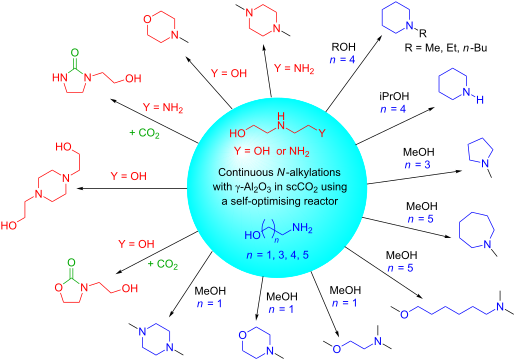
Beilstein J. Org. Chem. 2017, 13, 329–337, doi:10.3762/bjoc.13.36
Graphical Abstract
Scheme 1: Target reaction – intramolecular cyclisation of 1 followed by N-methylation with methanol to yield ...
Figure 1: Simplified schematic demonstrating a self-optimising reactor [34,35,37,44]. The reagents are pumped into the sys...
Figure 2: Result of the SNOBFIT optimisation for N-methylpiperidine (2b) with and without CO2 showing yields ...
Scheme 2: Cyclisation and N-alkylation of 1,4- and 1,6-amino alcohols.
Scheme 3: a) Reactions highlighting the incorporation of CO2 in to 16. b) High temperature reaction of 15 yie...
Scheme 4: Summary of products obtained from the reactions of amino alcohols over γ-Al2O3 in scCO2.
Figure 3: Diagram of the high pressure equipment used in the experiments.
Beilstein J. Org. Chem. 2017, 13, 93–105, doi:10.3762/bjoc.13.12
Graphical Abstract
Figure 1: Silicon-protective groups typically used in carbohydrate chemistry.
Scheme 1: Glycosylation with sulfoxide 1.
Scheme 2: Glycosylation with imidate 4.
Scheme 3: Glycosylation with thioglycoside 7.
Scheme 4: In situ formation of a silylated lactosyl iodide for the synthesis of α-lactosylceramide.
Figure 2: Comparison of the reactivity of glycosyl donors with the pKa of the corresponding piperidinium ions....
Figure 3: Conformational change induced by bulky vicinal protective groups such as TBS, TIPS and TBDPS. The v...
Scheme 5: An example of a “one pot one addition” glycosylation, where 3 glucosyl donors are mixed with 2.1 eq...
Scheme 6: Superarmed-armed glycosylation with thioglycoside 34.
Scheme 7: One-pot double glycosylation with the conformationally armed thioglycoside 37.
Scheme 8: Superarmed-armed glycosylation with thioglycoside 41.
Figure 4: Donors disarmed by the di-tert-butylsilylene protective group.
Figure 5: The influence of a 3,6-O-tethering on anomeric reactivity and glycosylation selectivity. The α-thio...
Scheme 9: Regio- and stereoselective glycosylation using the superarmed thioglycoside donor 20.
Scheme 10: Superarmed donors used for C-arylation and the dependence of the size of the silylethers on the ste...
Scheme 11: β-Selective glucosylation with TIPS-protected glucosyl donors. The α-face is shielded by the bulky ...
Scheme 12: β-Selective rhamnosylation with a conformationally inverted donor.
Scheme 13: α-Selective galactosylation with DTBS-protected galactosyl donors.
Scheme 14: β-Selective arabinofuranosylation with a DTBS-protected donor.
Scheme 15: α-Selective glycosylation with a TIPDS-protected glucal donor.
Scheme 16: Highly β-selective glucuronylation using a 2,4-DTBS-tethered donor.
Beilstein J. Org. Chem. 2016, 12, 2834–2848, doi:10.3762/bjoc.12.283
Graphical Abstract
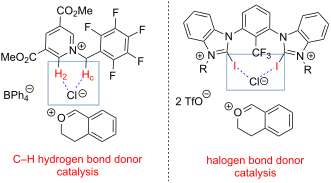
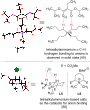
Figure 1: Electrophile Activation by Hydrogen Bond Donors [1-16].
Figure 2: Early examples of C–H hydrogen bonds and their recent use in supramolecular chemistry [18,19,32-34].
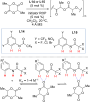
Scheme 1: Design of 1,2,3-triazole-based catalysts for trityl group transfer through chloride anion binding b...
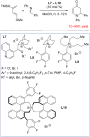
Scheme 2: Examples of chiral triazole-based catalysts for anion activation designed by Mancheno and co-worker...
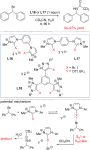
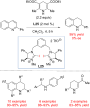
Scheme 3: Application of chiral triazole-based catalysts L3 and L4 for counterion activation of pyridinium, q...
Scheme 4: Ammonium salt anion binding via C–H hydrogen bonds in solid state [40-45,50,51].
Scheme 5: Early examples of ammonium salts being used for electrophilic activation of imines in aza-Diels–Ald...
Scheme 6: Ammonium salts as hydrogen bond-donor catalysts by Bibal and co-workers [53,54].
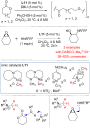
Scheme 7: Tetraalkylammonium catalyst (L6)-catalyzed dearomatization of isoquinolinium salts [50].
Scheme 8: Tetraalkylammonium catalyst L6 complexation to halogen-containing substrates [51].
Scheme 9: Tetraalkylammonium-catalyzed aza-Diels–Alder reaction by Maruoka and co-workers [52].
Scheme 10: (A) Alkylpyridinium catalysts L13-catalyzed reaction of 1-isochroman and silyl ketene acetals by Be...
Scheme 11: Mixed N–H/C–H two hydrogen bond donors L14 and L15 as organocatalysts for ROP of lactide by Bibal a...
Scheme 12: Examples of stable complexes based on halogen bonding [68,69].
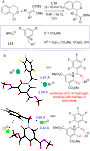
Scheme 13: Interaction between (−)-sparteine hydrobromide and (S)-1,2-dibromohexafluoropropane in the cocrysta...
Scheme 14: Iodine-catalyzed reactions that are computationally proposed to proceed through halogen bond to car...
Scheme 15: Transfer hydrogenation of phenylquinolines catalyzed by haloperfluoroalkanes by Bolm and co-workers ...
Scheme 16: Halogen bond activation of benzhydryl bromides by Huber and co-workers [82].
Scheme 17: Halogen bond-donor-catalyzed addition to oxocarbenium ions by Huber and co-workers [89].
Scheme 18: Halogen bond-donor activation of α,β-unsaturated carbonyl compounds in the [2 + 4] cycloaddition re...
Scheme 19: Halogen bond donor activation of imines in the [2 + 4] cycloaddition reaction of imine and Danishef...
Scheme 20: Transfer hydrogenation catalyzed by a chiral halogen bond donor by Tan and co-workers [91].
Scheme 21: Allylation of benzylic alcohols by Takemoto and co-workers [92].
Scheme 22: NIS induced semipinacol rearrangement via C–X bond cleavage [93].
Beilstein J. Org. Chem. 2016, 12, 2793–2807, doi:10.3762/bjoc.12.278
Graphical Abstract
Figure 1: Some relevant MDM2-p53 interaction inhibitors.
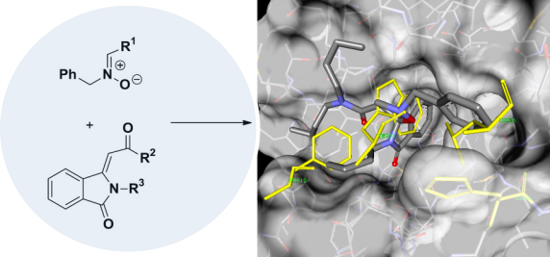
Figure 2: Retrosynthetic route to spiro[isoindole-1,5-isoxazolidin]-3(2H)-ones 3.
Scheme 1: Synthesis of compounds 2.
Scheme 2: Synthesis of 6a–f by 1,3-dipolar cycloaddition.
Figure 3: Selected NOESY observed for compounds 6a and 7a.
Figure 4: ORTEP drawing of the X-ray crystal structure of 7a showing the model atomic numbering scheme (C10 a...
Scheme 3: Reaction pathway.
Figure 5: Three-dimensional plots of TSs of reaction of dipolarophiles (Z)-8 and (E)-8 with nitrone 4. The la...
Figure 6: Free energy profiles for the cycloaddition reaction of the two isomers Z (A) or E (B) of dipolaroph...
Figure 7: Compound 6e reduces cancer cell proliferation. Treatment of SH-SY5Y, HT-29 and HepG2 cells with 6e ...
Figure 8: Cytotoxic effect of 6e. The cytotoxic activity of 6e was assessed in terms of both LDH release (a) ...
Figure 9: 6e modulate the levels of p53 in SH-SY5Y cells. (a) The SH-SY5Y cells were treated for 24 h with th...
Figure 10: (A) Representative Western Blots and (B) semiquantitative analyses of p53, MDM2, p21 expression lev...
Figure 11: (A) Representative Western Blots and (B) densitometric analysis of caspase-3 and PARP cleavage in t...
Figure 12: Compounds 6a (green) and 6c (blue) docked into MDM2 structure (PDB-ID: 3LBL) superimposed on the ke...
Figure 13: A) Compounds 6e (green) docked into MDM2 structure (PDB-ID: 3LBL); His96 and p53 residue (yellow st...
Beilstein J. Org. Chem. 2016, 12, 2609–2613, doi:10.3762/bjoc.12.256
Graphical Abstract
Figure 1: Structures of (±)-tashiromine (1) and (±)-epitashiromine (2) showing the systematic numbering of th...
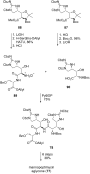
Scheme 1: Reagents and conditions: (i) NH2(CH2)3OH, 250 °C (sealed tube), 18 h, 81%; (ii) Ac2O, pyridine, 0 °...
Scheme 2: Reagents and conditions: (i) Imidazole, PPh3, I2, CH3CN–PhCH3, reflux, 1 h; (ii) p-TsCl, NEt3, DMAP...
Scheme 3: Reagents and conditions: (i) LiAlH4, Et2O, 3 h, 87%.
Beilstein J. Org. Chem. 2016, 12, 2478–2489, doi:10.3762/bjoc.12.242
Graphical Abstract
Scheme 1: Preparation of the nitro derivatives 4a and 5a and the fluorine-containing compounds 4b and 5b. Rea...
Figure 1: 1H NMR spectra of compound 3a measured in five different solvents: (A) CDCl3, (B) DMSO-d6, (C) acet...
Figure 2: HSQC and H,H-COSY (small spectrum) of compound 3a measured in CDCl3 at 25 °C. The independent coupl...
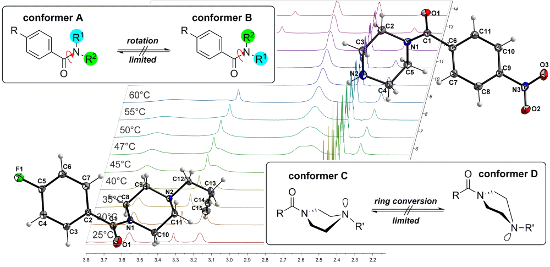
Figure 3: Illustration of the general partial double bond character of an amide bond and the limited isomeriz...
Figure 4: Temperature-dependent 1H NMR spectra of 3a measured in DMSO-d6 (aliphatic region of the piperazine ...
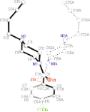
Figure 5: Molecular structure of compound 3a (ORTEP plot with 50% probability level).
Figure 6: Molecular structure of compound 4b (ORTEP plot with 50% probability level).
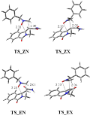
Figure 7: Superimposition fit of the two conformers, which exist in the ratio of 1:1 in the solid state struc...
Scheme 2: Peptide labeling using the Huisgen-click reaction and building block 4b. Reagents and conditions: a...
Scheme 3: The traceless Staudinger ligation to yield compound 9. Reagents and conditions: a) acetonitrile/wat...
Scheme 4: Preparation of the radiolabeling building blocks [18F]4b and [18F]5b. Reagents and conditions: a) K[...
Figure 8: Radio-TLC (eluent: ethanol) of [18F]5b (Rf = 0.50; reaction mixture).
Figure 9: (Radio)HPLC of 5a (tR = 7.7 min, UV trace, red), 5b (tR = 6.7 min, UV trace: blue) and [18F]5b (tR ...
Beilstein J. Org. Chem. 2016, 12, 2462–2470, doi:10.3762/bjoc.12.240
Graphical Abstract
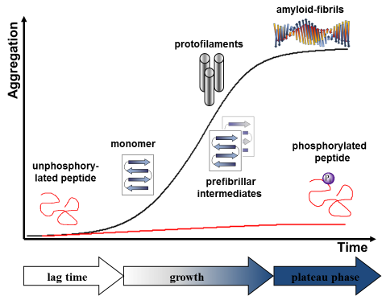
Scheme 1: Helical wheel projection of two parallel helical strands and primary structure of KFM6. The recogni...
Figure 1: a) Time-dependent CD spectra and b) corresponding CD-minimum plot for random coil (black) and β-she...
Figure 2: ThT-binding assay of of 15 µM KFM6 in 50 mM Tris/HCl buffer with 10 mM MgCl2 at pH 7.5, 24 °C, and ...
Figure 3: a) TEM micrograph of 15 µM KFM6 in 50 mM Tris/HCl buffer with 10 mM MgCl2 at pH 7.5 and 24 °C. The ...
Figure 4: a) Enzymatic phosphorylation of 15 µM KFM6 in time-dependent CD-minimum plots. Addition of both 200...
Beilstein J. Org. Chem. 2016, 12, 2420–2442, doi:10.3762/bjoc.12.236
Graphical Abstract
Figure 1: Possible two-component couplings for various monocyclic rings frequently encountered in organic mol...
Figure 2: Possible three-component couplings for various monocyclic rings frequently encountered in organic m...
Figure 3: Possible four-component couplings for various monocyclic rings frequently encountered in organic mo...
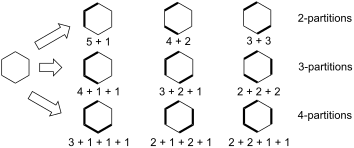
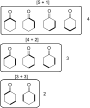
Figure 4: Permutations of two-component coupling patterns for synthesizing the cyclohexanone ring. Synthesis ...
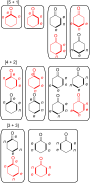
Figure 5: Permutations of two-component coupling patterns for synthesizing the cyclohexanone ring overlayed w...
Scheme 1: Conjectured syntheses of cyclohexanone via [5 + 1] strategies.
Scheme 2: Conjectured syntheses of cyclohexanone via [4 + 2] strategies.
Scheme 3: Conjectured syntheses of cyclohexanone via [3 + 3] strategies.
Figure 6: Permutations of three-component coupling patterns for synthesizing the cyclohexanone ring. Synthesi...
Figure 7: Permutations of three-component coupling patterns for synthesizing the pyrazole ring via [2 + 2 + 1...
Scheme 4: Literature method for constructing the pyrazole ring via the A4 [2 + 2 + 1] strategy.
Scheme 5: Literature methods for constructing the pyrazole ring via the A5 [2 + 2 + 1] strategy.
Scheme 6: Literature methods for constructing the pyrazole ring via the A1 [2 + 2 + 1] strategy.
Scheme 7: Literature methods for constructing the pyrazole ring via the B4 [3 + 1 + 1] strategy.
Figure 8: Intrinsic green performance of documented pyrazole syntheses according to [2 + 2 + 1] and [3 + 1 + ...
Scheme 8: Conjectured reactions for constructing the pyrazole ring via the A2 and A3 [2 + 2 + 1] strategies.
Scheme 9: Conjectured reactions for constructing the pyrazole ring via the B1, B2, B3, and B4 [3 + 1 + 1] str...
Figure 9: Permutations of three-component coupling patterns for synthesizing the Biginelli ring adduct. Synth...
Scheme 10: Reported syntheses of the Biginelli adduct via the traditional [3 + 2 + 1] mapping strategy.
Scheme 11: Reported syntheses of the Biginelli adduct via new [3 + 2 + 1] mapping strategies.
Scheme 12: Reported syntheses of the Biginelli adduct via a new [2 + 2 + 1 + 1] mapping strategy.
Scheme 13: Conjectured syntheses of the Biginelli adduct via new [2 + 2 + 2] mapping strategies.
Scheme 14: Conjectured syntheses of the Biginelli adduct via new [3 + 2 + 1] mapping strategies.
Figure 10: Intrinsic green performance of documented Biginelli adduct syntheses according to [3 + 2 + 1] three...
Figure 11: Intrinsic green performance of newly conjectured Biginelli adduct syntheses according to [4 + 1 + 1...
Beilstein J. Org. Chem. 2016, 12, 2325–2342, doi:10.3762/bjoc.12.226
Graphical Abstract
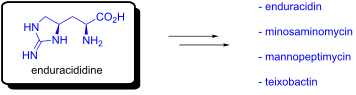
Figure 1: Structures of the enduracididine family of amino acids (1–6).
Figure 2: Enduracidin A (7) and B (8).
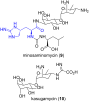
Figure 3: Minosaminomycin (9) and related antibiotic kasugamycin (10).
Figure 4: Enduracididine-containing compound 11 identified in a cytotoxic extract of Leptoclinides dubius [32].
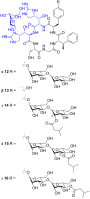
Figure 5: Mannopeptimycins α–ε (12–16).
Figure 6: Regions of the mannopeptimycin structure investigated in structure–activity relationship investigat...
Figure 7: Teixobactin (17).
Scheme 1: Proposed biosynthesis of L-enduracididine (1) and L-β-hydroxyenduracididine (5).
Scheme 2: Synthesis of enduracididine (1) by Shiba et al.
Scheme 3: Synthesis of protected enduracididine diastereomers 31 and 32.
Scheme 4: Synthesis of the C-2 azido diastereomers 36 and 37.
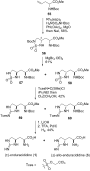
Scheme 5: Synthesis of 2-azido-β-hydroxyenduracididine derivatives 38 and 39.
Scheme 6: Synthesis of protected β-hydroxyenduracididine derivatives 40 and 41.
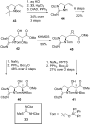
Scheme 7: Synthesis of C-2 diastereomeric amino acids 46 and 47.
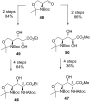
Scheme 8: Synthesis of protected β-hydroxyenduracididines 51 and 52.
Scheme 9: General transformation of alkenes to cyclic sulfonamide 54 via aziridine intermediate 53.
Scheme 10: Synthesis of (±)-enduracididine (1) and (±)-allo-enduracididine (3).
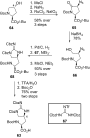
Scheme 11: Synthesis of L-allo-enduracididine (3).
Scheme 12: Synthesis of protected L-allo-enduracididine 63.
Scheme 13: Synthesis of β-hydroxyenduracididine derivative 69.
Scheme 14: Synthesis of minosaminomycin (9).
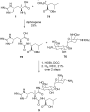
Scheme 15: Retrosynthetic analysis of mannopeptimycin aglycone (77).
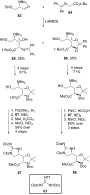
Scheme 16: Synthesis of protected amino acids 87 and 88.
Scheme 17: Synthesis of mannopeptimycin aglycone (77).
Scheme 18: Synthesis of N-mannosylation model guanidine 92 and attempted synthesis of benzyl protected mannosy...
Scheme 19: Synthesis of benzyl protected mannosyl D-β-hydroxyenduracididine 97.
Scheme 20: Synthesis of L-β-hydroxyenduracididine 98.
Scheme 21: Total synthesis of mannopeptimycin α (12) and β (13).
Scheme 22: Synthesis of protected L-allo-enduracididine 102.
Scheme 23: The solid phase synthesis of teixobactin (17).
Scheme 24: Retrosynthesis of the macrocyclic core 109 of teixobactin (17).
Scheme 25: Synthesis of macrocycle 117.
Beilstein J. Org. Chem. 2016, 12, 2055–2064, doi:10.3762/bjoc.12.194
Graphical Abstract
Figure 1: Thienyl-bridged oligophenothiazines as topological hybrids of (oligo)phenothiazines and 2,5-di(hete...
Scheme 1: One-pot bromine-lithium-exchange-borylation-Suzuki (BLEBS) synthesis of 7-bromo-substituted phenoth...
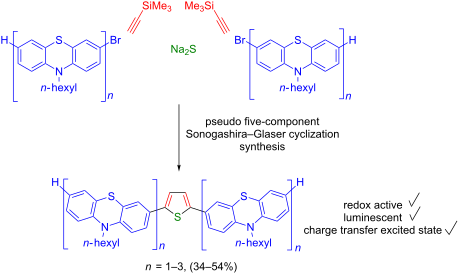
Scheme 2: Pseudo five-component Sonogashira-Glaser-cyclization synthesis of thienyl-bridged oligophenothiazin...
Figure 2: Cyclic voltammograms of compounds 3 (recorded in CH2Cl2, T = 293 K, electrolyte n-Bu4N+PF6−, Pt wor...
Figure 3: UV–vis (solid lines) and fluorescence spectra (dashed lines) of the thienyl-bridged oligophenothiaz...
Figure 4: DFT-calculated minimum conformer of the 2,5-bis(terphenothiazinyl)thiophene 3c (calculated with the...
Figure 5: Relevant Kohn–Sham FMOs contributing to the S1 states that are assigned to the longest wavelengths ...
Beilstein J. Org. Chem. 2016, 12, 1939–1948, doi:10.3762/bjoc.12.183
Graphical Abstract
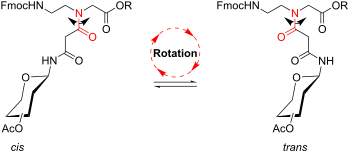
Figure 1: cis- and trans rotamer of protected PNA building blocks 1a–d and 2a–d.
Figure 2: cis- and trans rotamer of unprotected PNA-building block 3.
Figure 3: Rotameric structures of dimeric PNA glycoconjugate 4.
Scheme 1: Synthesis of building blocks 1a–d and 2a–d (a stands for D-glucose, b stands for D-galactose, c sta...
Scheme 2: Synthesis of building block 3.
Scheme 3: Synthesis of the dimeric glycoconjugate 4.
Figure 4: 1H NMR (400 MHz) of building block 1a in CDCl3. The amide signals of the rotamers are marked.
Figure 5: 1H NMR (400 MHz) of building block 1b in CDCl3. The amide signals of the rotamers are marked.
Figure 6: 1H NMR (400 MHz) of PNA glycoconjugate 4 in CDCl3. The amide signals of the rotamers of 4 (2 double...
Figure 7: Building block 1a in CDCl3, DMSO-d6, DMF-d7 and chlorobenzene-d5.
Figure 8: Temperature-dependent 1H NMR (600 MHz) spectra of building block 1a in DMSO-d6.
Figure 9: Temperature-dependent 1H NMR (600 MHz) spectra of building block 1a in chlorobenzene-d5, broadened ...
Figure 10: Temperature-dependent 1H NMR (600 MHz) spectra of building block 1b in chlorobenzene-d5, broadened ...
Figure 11: Temperature-dependent 1H NMR (600 MHz) spectra of dimeric glycoconjugate 4 in chlorobenzene-d5, bro...
Figure 12: A) Missing correlation between the amidic proton and the methylene or 2-aminoethyl protons of the P...
Beilstein J. Org. Chem. 2016, 12, 1788–1797, doi:10.3762/bjoc.12.169
Graphical Abstract
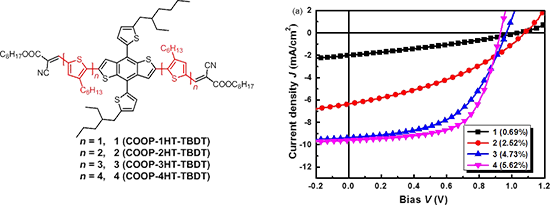
Scheme 1: Synthetic route to compounds 1–4 with BDT core. Reagents and conditions: i) [Pd2(dba)3]·CHCl3, HP(t-...
Figure 1: UV−vis absorption spectra of COOP-nHT-TBDTs 1–4 (a) in chloroform solution (5.0 × 10⁻⁵ mol·L-1) and...
Figure 2: (a) Cyclic voltammograms of 1–4 measured in CH2Cl2 solution (1.0 × 10⁻³ mol·L−1) with 0.1 mol·L−1 Bu...
Figure 3: (a) J–V curves of the best COOP-nHT-TBDT:PC61BM solar cells; (b) EQE spectra of the corresponding c...
Figure 4: AFM height images of COOP-nHT-TBDT:PC61BM blended films: (a) 1, 1:0.6 (w/w); (b) 2, 1:0.6 (w/w); (c...
Figure 5: J–V curves of COOP-nHT-TBDT:PC61BM-based hole-only devices.
Figure 6: (a) VOC, (b) JSC, (c) FF, and (d) PCE decay of the COOP-nHT-TBDT:PC61BM solar cells. Note all these...
Beilstein J. Org. Chem. 2016, 12, 1269–1301, doi:10.3762/bjoc.12.121
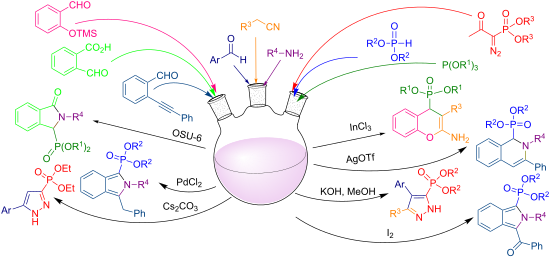
Graphical Abstract
Scheme 1: The Biginelli condensation.
Scheme 2: The Biginelli reaction of β-ketophosphonates catalyzed by ytterbium triflate.
Scheme 3: Trimethylchlorosilane-mediated Biginelli reaction of diethyl (3,3,3-trifluoropropyl-2-oxo)phosphona...
Scheme 4: Biginelli reaction of dialkyl (3,3,3-trifluoropropyl-2-oxo)phosphonate with trialkyl orthoformates ...
Scheme 5: p-Toluenesulfonic acid-promoted Biginelli reaction of β-ketophosphonates, aryl aldehydes and urea.
Scheme 6: General Kabachnik–Fields reaction for the synthesis of α-aminophosphonates.
Scheme 7: Phthalocyanine–AlCl catalyzed Kabachnik–Fields reaction of N-Boc-piperidin-4-one with diethyl phosp...
Scheme 8: Kabachnik–Fields reaction of isatin with diethyl phosphite and benzylamine.
Scheme 9: Magnetic Fe3O4 nanoparticle-supported phosphotungstic acid-catalyzed Kabachnik–Fields reaction of i...
Scheme 10: The Mg(ClO4)2-catalyzed Kabachnik–Fields reaction of 1-tosylpiperidine-4-one.
Scheme 11: An asymmetric version of the Kabachnik–Fields reaction for the synthesis of α-amino-3-piperidinylph...
Scheme 12: A classical Kabachnik–Fields reaction followed by an intramolecular ring-closing reaction for the s...
Scheme 13: Synthesis of (S)-piperidin-2-phosphonic acid through an asymmetric Kabachnik–Fields reaction.
Scheme 14: A modified diastereoselective Kabachnik–Fields reaction for the synthesis of isoindolin-1-one-3-pho...
Scheme 15: A microwave-assisted Kabachnik–Fields reaction toward isoindolin-1-ones.
Scheme 16: The synthesis of 3-arylmethyleneisoindolin-1-ones through a Horner–Wadsworth–Emmons reaction of Kab...
Scheme 17: An efficient one-pot method for the synthesis of ethyl (2-alkyl- and 2-aryl-3-oxoisoindolin-1-yl)ph...
Scheme 18: FeCl3 and PdCl2 co-catalyzed three-component reaction of 2-alkynylbenzaldehydes, anilines, and diet...
Scheme 19: Three-component reaction of 6-methyl-3-formylchromone (75) with hydrazine derivatives or hydroxylam...
Scheme 20: Three-component reaction of 6-methyl-3-formylchromone (75) with thiourea, guanidinium carbonate or ...
Scheme 21: Three-component reaction of 6-methyl-3-formylchromone (75) with 1,4-bi-nucleophiles in the presence...
Scheme 22: One-pot three-component reaction of 2-alkynylbenzaldehydes, amines, and diethyl phosphonate.
Scheme 23: Lewis acid–surfactant combined catalysts for the one-pot three-component reaction of 2-alkynylbenza...
Scheme 24: Lewis acid catalyzed cyclization of different Kabachnik–Fields adducts.
Scheme 25: Three-component synthesis of N-arylisoquinolone-1-phosphonates 119.
Scheme 26: CuI-catalyzed three-component tandem reaction of 2-(2-formylphenyl)ethanones with aromatic amines a...
Scheme 27: Synthesis of 1,5-benzodiazepin-2-ylphosphonates via ytterbium chloride-catalyzed three-component re...
Scheme 28: FeCl3-catalyzed four-component reaction for the synthesis of 1,5-benzodiazepin-2-ylphosphonates.
Scheme 29: Synthesis of indole bisphosphonates through a modified Kabachnik–Fields reaction.
Scheme 30: Synthesis of heterocyclic bisphosphonates via Kabachnik–Fields reaction of triethyl orthoformate.
Scheme 31: A domino Knoevenagel/phospha-Michael process for the synthesis of 2-oxoindolin-3-ylphosphonates.
Scheme 32: Intramolecular cyclization of phospha-Michael adducts to give dihydropyridinylphosphonates.
Scheme 33: Synthesis of fused phosphonylpyrans via intramolecular cyclization of phospha-Michael adducts.
Scheme 34: InCl3-catalyzed three-component synthesis of (2-amino-3-cyano-4H-chromen-4-yl)phosphonates.
Scheme 35: Synthesis of phosphonodihydropyrans via a domino Knoevenagel/hetero-Diels–Alder process.
Scheme 36: Multicomponent synthesis of phosphonodihydrothiopyrans via a domino Knoevenagel/hetero-Diels–Alder ...
Scheme 37: One-pot four-component synthesis of 1,2-dihydroisoquinolin-1-ylphosphonates under multicatalytic co...
Scheme 38: CuI-catalyzed four-component reactions of methyleneaziridines towards alkylphosphonates.
Scheme 39: Ruthenium–porphyrin complex-catalyzed three-component synthesis of aziridinylphosphonates and its p...
Scheme 40: Copper(I)-catalyzed three-component reaction towards 1,2,3-triazolyl-5-phosphonates.
Scheme 41: Three-component reaction of acylphosphonates, isocyanides and dialkyl acetylenedicarboxylate to aff...
Scheme 42: Synthesis of (4-imino-3,4-dihydroquinazolin-2-yl)phosphonates via an isocyanide-based three-compone...
Scheme 43: Silver-catalyzed three-component synthesis of (2-imidazolin-4-yl)phosphonates.
Scheme 44: Three-component synthesis of phosphonylpyrazoles.
Scheme 45: One-pot three-component synthesis of 3-carbo-5-phosphonylpyrazoles.
Scheme 46: A one-pot two-step method for the synthesis of phosphonylpyrazoles.
Scheme 47: A one-pot method for the synthesis of (5-vinylpyrazolyl)phosphonates.
Scheme 48: Synthesis of 1H-pyrrol-2-ylphosphonates via the [3 + 2] cycloaddition of phosphonate azomethine yli...
Scheme 49: Three-component synthesis of 1H-pyrrol-2-ylphosphonates.
Scheme 50: The classical Reissert reaction.
Scheme 51: One-pot three-component synthesis of N-phosphorylated isoquinolines.
Scheme 52: One-pot three-component synthesis of 1-acyl-1,2-dihydroquinoline-2-phosphonates and 2-acyl-1,2-dihy...
Scheme 53: Three-component reaction of pyridine derivatives with ethyl propiolate and dialkyl phosphonates.
Scheme 54: Three-component reactions for the phosphorylation of benzothiazole and isoquinoline.
Scheme 55: Three-component synthesis of diphenyl [2-(aminocarbonyl)- or [2-(aminothioxomethyl)-1,2-dihydroisoq...
Scheme 56: Three-component stereoselective synthesis of 1,2-dihydroquinolin-2-ylphosphonates and 1,2-dihydrois...
Scheme 57: Diphosphorylation of diazaheterocyclic compounds via a tandem 1,4–1,2 addition of dimethyl trimethy...
Scheme 58: Multicomponent reaction of alkanedials, acetamide and acetyl chloride in the presence of PCl3 and a...
Scheme 59: An oxidative domino three-component synthesis of polyfunctionalized pyridines.
Scheme 60: A sequential one-pot three-component synthesis of polysubstituted pyrroles.
Scheme 61: Three-component decarboxylative coupling of proline with aldehydes and dialkyl phosphites for the s...
Scheme 62: Three-component domino aza-Wittig/phospha-Mannich sequence for the phosphorylation of isatin deriva...
Scheme 63: Stereoselective synthesis of phosphorylated trans-1,5-benzodiazepines via a one-pot three-component...
Scheme 64: One-pot three-component synthesis of phosphorylated 2,6-dioxohexahydropyrimidines.
Beilstein J. Org. Chem. 2016, 12, 1250–1268, doi:10.3762/bjoc.12.120
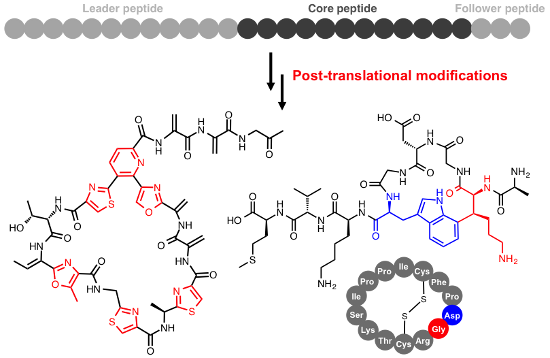
Graphical Abstract
Figure 1: Schematic of RiPP biosynthesis. Thiazole/oxazole formation is represented by the blue heterocycle (...
Figure 2: Examples of heterocycles in RiPPs alongside the precursor peptides that these molecules derive from...
Figure 3: Formation of thiazoles and oxazoles in RiPPs. A) Biosynthesis of microcin B17. B) Mechanistic model...
Figure 4: Lanthionine bond formation. A) Nisin and its precursor peptide. B) Mechanism of lanthionine bond fo...
Figure 5: S-[(Z)-2-Aminovinyl]-D-cysteine (AviCys) formation in the epidermin pathway. A) Mechanisms for deca...
Figure 6: Cyclisation in the biosynthesis of thiopeptides. A) Mechanism of TclM-catalysed heterocyclisation i...
Figure 7: ATP-dependent macrocyclisation. A) General mechanism for ATP-dependent macrolactonisation or macrol...
Figure 8: Peptidase-like macrolactam formation. A) General mechanism. B) Examples of RiPPs cyclised by serine...
Figure 9: Structure of autoinducing peptide AIP-I from Staphylococcus aureus and the sequence of the correspo...
Figure 10: Radical cyclisation in RiPP biosynthesis. A) AlbA-catalysed formation of thioethers in the biosynth...
Figure 11: RiPPs with uncharacterised mechanisms of cyclisation. Unusual heterocycles in ComX and methanobacti...
Beilstein J. Org. Chem. 2016, 12, 1136–1152, doi:10.3762/bjoc.12.110
Graphical Abstract
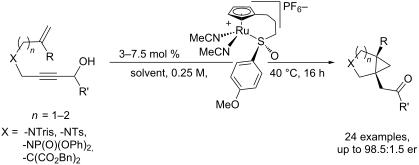
Scheme 1: Divergent behavior of the palladium and ruthenium-catalyzed Alder–ene reaction.
Scheme 2: Some asymmetric enyne cycloisomerization reactions.
Figure 1: (a) Mechanism for the redox biscycloisomerization reaction. (b) Ruthenium catalyst containing a tet...
Scheme 3: Synthesis of p-anisyl catalyst 1.
Figure 2: Failed sulfinate ester syntheses.
Scheme 4: Using norephedrine-based oxathiazolidine-2-oxide 7 for chiral sulfoxide synthesis.
Scheme 5: (a) General synthetic sequence to access enyne bicycloisomerization substrates (b) Synthesis of 2-c...
Figure 3: Failed bicycloisomerization substrates. Reactions performed at 40 °C for 16 hours with 3 mol % of c...
Scheme 6: Deprotection of [3.1.0] bicycles and X-ray crystal structure of 76.
Scheme 7: ProPhenol-catalyzed addition of zinc acetylide to acetaldehyde for the synthesis of a chiral 1,6-en...
Figure 4: Diastereomeric metal complexes formed after alcohol coordination.
Scheme 8: Curtin–Hammitt scenario of redox bicycloisomerization in acetone.
Beilstein J. Org. Chem. 2016, 12, 1096–1100, doi:10.3762/bjoc.12.104
Graphical Abstract
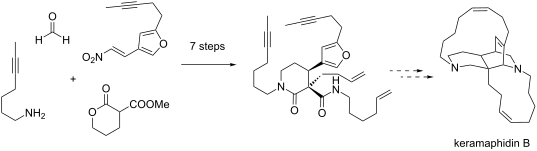
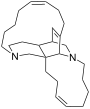
Figure 1: Keramaphidin B (1).
Figure 2: Retrosynthetic analysis of keramaphidin B.
Scheme 1: Enantio- and diastereoselective bifunctional thiourea 12 organocatalysed Michael addition. (a) CO(O...
Scheme 2: Synthesis of bis alkene 5. (a) 12 (20 mol %), toluene, −20 °C, 36 h, 95:5 dr, 92% yield; (b) aq HCH...
Beilstein J. Org. Chem. 2016, 12, 1065–1071, doi:10.3762/bjoc.12.100
Graphical Abstract
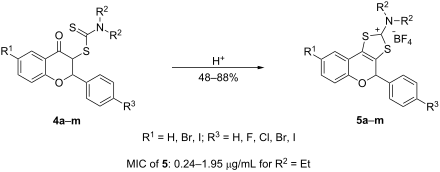
Figure 1: The molecular structure of tricyclic flavonoid 1.
Scheme 1: Synthesis of flavanones 4a–m and tricyclic flavonoids 5a–m. Conditions: i) EtOH, reflux, 4 h; ii) H2...
Figure 2: The syn and anti-isomers of flavanones 4.
Figure 3: Molecular structures of 4d (left) and 4f (right). Ellipsoids represent 50% probability levels [24].
Figure 4: Molecular structure of 5a (left, both independent molecules) and 5b (right, one of two independent ...
Beilstein J. Org. Chem. 2016, 12, 1000–1039, doi:10.3762/bjoc.12.98
Graphical Abstract
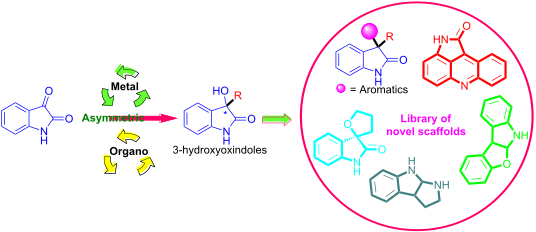
Figure 1: 3-Hydroxyoxindole-containing natural products and biologically active molecules.
Scheme 1: Chiral CNN pincer Pd(II) complex 1 catalyzed asymmetric allylation of isatins.
Scheme 2: Asymmetric allylation of ketimine catalyzed by the chiral CNN pincer Pd(II) complex 2.
Scheme 3: Pd/L1 complex-catalyzed asymmetric allylation of 3-O-Boc-oxindoles.
Scheme 4: Cu(OTf)2-catalyzed asymmetric direct addition of acetonitrile to isatins.
Scheme 5: Chiral tridentate Schiff base/Cu complex catalyzed asymmetric Friedel–Crafts alkylation of isatins ...
Scheme 6: Guanidine/CuI-catalyzed asymmetric alkynylation of isatins with terminal alkynes.
Scheme 7: Asymmetric intramolecular direct hydroarylation of α-ketoamides.
Scheme 8: Plausible catalytic cycle for the direct hydroarylation of α-ketoamides.
Scheme 9: Ir-catalyzed asymmetric arylation of isatins with arylboronic acids.
Scheme 10: Enantioselective decarboxylative addition of β-ketoacids to isatins.
Scheme 11: Ruthenium-catalyzed hydrohydroxyalkylation of olefins and 3-hydroxy-2-oxindoles.
Scheme 12: Proposed catalytic mechanism and stereochemical model.
Scheme 13: In-catalyzed allylation of isatins with stannylated reagents.
Scheme 14: Modified protocol for the synthesis of allylated 3-hydroxyoxindoles.
Scheme 15: Hg-catalyzed asymmetric allylation of isatins with allyltrimethylsilanes.
Scheme 16: Enantioselective additions of organoborons to isatins.
Scheme 17: Asymmetric aldol reaction of isatins with cyclohexanone.
Scheme 18: Enantioselective aldol reactions of aliphatic aldehydes with isatin derivatives and the plausible t...
Scheme 19: Enantioselective aldol reaction of isatins and 2,2-dimethyl-1,3-dioxan-5-one.
Scheme 20: Asymmetric aldol reactions between ketones and isatins.
Scheme 21: Phenylalanine lithium salt-catalyzed asymmetric synthesis of 3-alkyl-3-hydroxyoxindoles.
Scheme 22: Aldolization between isatins and dihydroxyacetone derivatives.
Scheme 23: One-pot asymmetric synthesis of convolutamydine A.
Scheme 24: Asymmetric aldol reactions of cyclohexanone and acetone with isatins.
Scheme 25: Aldol reactions of acetone with isatins.
Scheme 26: Aldol reactions of ketones with isatins.
Scheme 27: Enantioselective allylation of isatins.
Scheme 28: Asymmetric aldol reaction of trifluoromethyl α-fluorinated β-keto gem-diols with isatins.
Scheme 29: Plausible mechanism proposed for the asymmetric aldol reaction.
Scheme 30: Asymmetric aldol reaction of 1,1-dimethoxyacetone with isatins.
Scheme 31: Enantioselective Friedel-Crafts reaction of phenols with isatins.
Scheme 32: Enantioselective addition of 1-naphthols with isatins.
Scheme 33: Enantioselective aldol reaction between 3-acetyl-2H-chromen-2-ones and isatins.
Scheme 34: Stereoselective Mukaiyama–aldol reaction of fluorinated silyl enol ethers with isatins.
Scheme 35: Asymmetric vinylogous Mukaiyama–aldol reaction between 2-(trimethylsilyloxy)furan and isatins.
Scheme 36: β-ICD-catalyzed MBH reactions of isatins with maleimides.
Scheme 37: β-ICD-catalyzed MBH reactions of 7-azaisatins with maleimides and activated alkenes.
Scheme 38: Enantioselective aldol reaction of isatins with ketones.
Scheme 39: Direct asymmetric vinylogous aldol reactions of allyl ketones with isatins.
Scheme 40: Enantioselective aldol reactions of ketones with isatins.
Scheme 41: The MBH reaction of isatins with α,β-unsaturated γ-butyrolactam.
Scheme 42: Reactions of tert-butyl hydrazones with isatins followed by oxidation.
Scheme 43: Aldol reactions of isatin derivatives with ketones.
Scheme 44: Enantioselective decarboxylative cyanomethylation of isatins.
Scheme 45: Catalytic kinetic resolution of 3-hydroxy-3-substituted oxindoles.
Scheme 46: Lewis acid catalyzed Friedel–Crafts alkylation of 3-hydroxy-2-oxindoles with electron-rich phenols.
Scheme 47: Lewis acid catalyzed arylation of 3-hydroxyoxindoles with aromatics.
Scheme 48: Synthetic application of 3-arylated disubstituted oxindoles in the construction of core structures ...
Scheme 49: CPA-catalyzed dearomatization and arylation of 3-indolyl-3-hydroxyoxindoles with tryptamines and 3-...
Scheme 50: CPA-catalyzed enantioselective decarboxylative alkylation of β-keto acids with 3-hydroxy-3-indolylo...
Scheme 51: BINOL-derived imidodiphosphoric acid-catalyzed enantioselective Friedel–Crafts reactions of indoles...
Scheme 52: CPA-catalyzed enantioselective allylation of 3-indolylmethanols.
Scheme 53: 3-Indolylmethanol-based substitution and cycloaddition reactions.
Scheme 54: CPA-catalyzed asymmetric [3 + 3] cycloaddtion reactions of 3-indolylmethanols with azomethine ylide...
Scheme 55: CPA-catalyzed three-component cascade Michael/Pictet–Spengler reactions of 3-indolylmethanols and a...
Scheme 56: Acid-promoted chemodivergent and stereoselective synthesis of diverse indole derivatives.
Scheme 57: CPA-catalyzed asymmetric formal [3 + 2] cycloadditions.
Scheme 58: CPA-catalyzed enantioselective cascade reactions for the synthesis of C7-functionlized indoles.
Scheme 59: Lewis acid-promoted Prins cyclization of 3-allyl-3-hydroxyoxindoles with aldehydes.
Scheme 60: Ga(OTf)3-catalyzed reactions of allenols and phenols.
Scheme 61: I2-catalyzed construction of pyrrolo[2.3.4-kl]acridines from enaminones and 3-indolyl-3-hydroxyoxin...
Scheme 62: CPA-catalyzed asymmetric aza-ene reaction of 3-indolylmethanols with cyclic enaminones.
Scheme 63: Asymmetric α-alkylation of aldehydes with 3-indolyl-3-hydroxyoxindoles.
Scheme 64: Organocatalytic asymmetric α-alkylation of enolizable aldehydes with 3-indolyl-3-hydroxyoxindoles a...
Beilstein J. Org. Chem. 2016, 12, 985–999, doi:10.3762/bjoc.12.97
Graphical Abstract
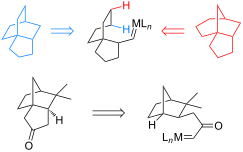
Figure 1: Bridged polycyclic natural products.
Figure 2: Strategic limitations.
Scheme 1: Bridged rings from N–H bond insertions.
Scheme 2: The synthesis of deoxystemodin.
Scheme 3: A model system for ingenol.
Scheme 4: Formal synthesis of platensimycin.
Scheme 5: The formal synthesis of gerryine.
Scheme 6: Copper-catalyzed bridged-ring synthesis.
Scheme 7: Factors influencing insertion selectivity.
Scheme 8: Bridged-lactam formation.
Scheme 9: The total synthesis of (+)-codeine.
Scheme 10: A model system for irroratin.
Scheme 11: The utility of 1,6-insertion.
Scheme 12: Piperidine functionalization.
Scheme 13: Wilkinson’s catalyst for C–H bond insertion.
Scheme 14: Bridgehead insertion and the total synthesis of albene and santalene.
Scheme 15: The total synthesis of neopupukean-10-one.
Scheme 16: An approach to phomoidride B.
Scheme 17: Carbene cascade for fused bicycles.
Scheme 18: Cascade formation of bridged rings.
Scheme 19: Conformational effects.
Scheme 20: Hydrazone cascade reaction.
Scheme 21: Mechanistic studies.
Scheme 22: Gold carbene formation from alkynes.
Scheme 23: Au-catalyzed bridged-bicycle formation.
Scheme 24: Gold carbene/alkyne cascade.
Scheme 25: Gold carbene/alkyne cascade with C–H bond insertion.
Scheme 26: Platinum cascades.
Scheme 27: Tungsten cascade.
Beilstein J. Org. Chem. 2016, 12, 750–759, doi:10.3762/bjoc.12.75
Graphical Abstract
Figure 1: Examples of deoxofluorinated hexosamines.
Scheme 1: Retrosynthetic plan.
Scheme 2: Preparation of starting 2-azido compounds. Reagents and conditions: (a) NaN3, NH4Cl, MeOC2H4OH, 79%...
Scheme 3: Preparation of mono and difluoro analogs of 2-azido-2-deoxy-1,6-anhydro-β-D-gluco- and galactopyran...
Scheme 4: Suggested mechanisms for deoxofluorination at C-3 of 1,6-anhydro-β-D-glucohexopyranose derivatives....
Scheme 5: Formation of oxazoline 41 from 19.
Scheme 6: 1-O-Deacetylation of monofluorinated hexosamines. Reagents and conditions: (a) BnNH2, THF, 62%; (b)...
Beilstein J. Org. Chem. 2016, 12, 702–715, doi:10.3762/bjoc.12.70
Graphical Abstract
Figure 1: Selected piperazine-containing small-molecule pharmaceuticals.
Figure 2: Strategies for the synthesis of carbon-substituted piperazines.
Figure 3: The first α-lithiation of N-Boc-protected piperazines by van Maarseveen et al. in 2005 [37].
Figure 4: α-Lithiation of N-Boc-N’-tert-butyl piperazines by Coldham et al. in 2010 [38].
Figure 5: Diamine-free α-lithiation of N-Boc-piperazines by O’Brien, Campos, et al. in 2010 [40].
Figure 6: The first enantioselective α-lithiation of N-Boc-piperazines by McDermott et al. in 2008 [41].
Figure 7: Dynamic thermodynamic resolution of lithiated of N-Boc-piperazines by Coldham et al. in 2010 [38].
Figure 8: Enantioselective α-lithiation of N-Boc-N’-alkylpiperazines by O’Brien et al. in 2013 and 2016 [42,43].
Figure 9: Asymmetric α-functionalization of N-Boc-piperazines with Ph2CO by O’Brien et al. in 2016 [43].
Figure 10: A “chiral auxiliary” strategy toward enantiopure α-functionalized piperazines by O’Brien et al. 201...
Figure 11: Installation of methyl group at the α-position of piperazines by O’Brien et al. 2016 [43].
Figure 12: α-Lithiation trapping of C-substituted N-Boc-piperazines by O’Brien et al. 2016 [43].
Figure 13: Rh-catalyzed reactions of N-(2-pyridinyl)piperazines by Murai et al. in 1997 [52].
Figure 14: Ta-catalyzed hydroaminoalkylation of piperazines by Schafer et al. in 2013 [55].
Figure 15: Photoredox catalysis for α-C–H functionalization of piperazines by MacMillan et al. in 2011 and 201...
Figure 16: Copper-catalyzed aerobic C–H oxidation of piperazines by Touré, Sames, et al. in 2013 [67].
Figure 17: Free radical approach by Undheim et al. in 1994 [68].
Figure 18: Anodic oxidation approach by Nyberg et al. in 1976 [70].
Beilstein J. Org. Chem. 2016, 12, 564–570, doi:10.3762/bjoc.12.55
Graphical Abstract
Scheme 1: Selected examples of oligopeptides bearing dehydroamino acid moieties: myxovalargin (1), argyrin A (...
Scheme 2: The Buchwald cross-coupling reaction in the preparation of peptides containing dehydroamino acids 4....
Scheme 3: Syntheses of vinyl iodides 10 and 11.
Scheme 4: Preparation of vinyl iodides 24–29 (Cbz = benzyloxycarbonyl, Alloc = allyloxycarbonyl, Boc = tert-b...
Scheme 5: Copper-mediated C–N cross-coupling of dehydropeptides 31–33, 36, 37, and 39–41.
Scheme 6: C–N coupling reaction between amide 43 and vinyl iodide 42; formation of dehydroisoleucine containi...
Beilstein J. Org. Chem. 2016, 12, 462–495, doi:10.3762/bjoc.12.48
Graphical Abstract
Scheme 1: Activation of carbonyl compounds via enamine and iminium intermediates [2].
Scheme 2: Electronic and steric interactions present in enamine activation mode [2].
Scheme 3: Electrophilic activation of carbonyl compounds by a thiourea moiety.
Scheme 4: Asymmetric synthesis of dihydro-2H-pyran-6-carboxylate 3 using organocatalyst 4 [16].
Scheme 5: Possible hydrogen-bonding for the reaction of (E)-methyl 2-oxo-4-phenylbut-3-enoate [16].
Scheme 6: Asymmetric desymmetrization of 4,4-cyclohexadienones using the Michael addition reaction with malon...
Scheme 7: The enantioselective synthesis of α,α-disubstituted cycloalkanones using catalyst 11 [18].
Scheme 8: The enantioselective synthesis of indolo- and benzoquinolidine compounds through aza-Diels–Alder re...
Scheme 9: Enantioselective [5 + 2] cycloaddition [20].
Scheme 10: Asymmetric synthesis of oxazine derivatives 26 [21].
Scheme 11: Asymmetric synthesis of bicyclo[3.3.1]nonadienone, core 30 present in (−)-huperzine [22].
Scheme 12: Asymmetric inverse electron-demand Diels-Alder reaction catalyzed by amine-thiourea 34 [23].
Scheme 13: Asymmetric entry to morphan skeletons, catalyzed by amine-thiourea 37 [24].
Scheme 14: Asymmetric transformation of (E)-2-nitroallyl acetate [25].
Scheme 15: Proposed way of activation.
Scheme 16: Asymmetric synthesis of nitrobicyclo[3.2.1]octan-2-one derivatives [26].
Scheme 17: Asymmetric tandem Michael–Henry reaction catalyzed by 50 [27].
Scheme 18: Asymmetric Diels–Alder reactions of 3-vinylindoles 51 [29].
Scheme 19: Proposed transition state and activation mode of the asymmetric Diels–Alder reactions of 3-vinylind...
Scheme 20: Desymmetrization of meso-anhydrides by Chin, Song and co-workers [30].
Scheme 21: Desymmetrization of meso-anhydrides by Connon and co-workers [31].
Scheme 22: Asymmetric intramolecular Michael reaction [32].
Scheme 23: Asymmetric addition of malonate to 3-nitro-2H-chromenes 67 [33].
Scheme 24: Intramolecular desymmetrization through an intramolecular aza-Michael reaction [34].
Scheme 25: Enantioselective synthesis of (−)-mesembrine [34].
Scheme 26: A novel asymmetric Michael–Michael reaction [35].
Scheme 27: Asymmetric three-component reaction catalyzed by Takemoto’s catalyst 77 [46].
Scheme 28: Asymmetric domino Michael–Henry reaction [47].
Scheme 29: Asymmetric domino Michael–Henry reaction [48].
Scheme 30: Enantioselective synthesis of derivatives of 3,4-dihydro-2H-pyran 89 [49].
Scheme 31: Asymmetric addition of α,α-dicyano olefins 90 to 3-nitro-2H-chromenes 91 [50].
Scheme 32: Asymmetric three-component reaction producing 2,6-diazabicyclo[2.2.2]octanones 95 [51].
Scheme 33: Asymmetric double Michael reaction producing substituted chromans 99 [52].
Scheme 34: Enantioselective synthesis of multi-functionalized spiro oxindole dienes 106 [53].
Scheme 35: Organocatalyzed Michael aldol cyclization [54].
Scheme 36: Asymmetric synthesis of dihydrocoumarins [55].
Scheme 37: Asymmetric double Michael reaction en route to tetrasubstituted cyclohexenols [56].
Scheme 38: Asymmetric synthesis of α-trifluoromethyl-dihydropyrans 121 [58].
Scheme 39: Tyrosine-derived tertiary amino-thiourea 123 catalyzed Michael hemiaketalization reaction [59].
Scheme 40: Enantioselective entry to bicyclo[3.2.1]octane unit [60].
Scheme 41: Asymmetric synthesis of spiro[4-cyclohexanone-1,3’-oxindoline] 126 [61].
Scheme 42: Kinetic resolution of 3-nitro-2H-chromene 130 [62].
Scheme 43: Asymmetric synthesis of chromanes 136 [63].
Scheme 44: Wang’s utilization of β-unsaturated α-ketoesters 87 [64,65].
Scheme 45: Asymmetric entry to trifluoromethyl-substituted dihydropyrans 144 [66].
Scheme 46: Phenylalanine-derived thiourea-catalyzed domino Michael hemiaketalization reaction [67].
Scheme 47: Asymmetric synthesis of α-trichloromethyldihydropyrans 149 [68].
Scheme 48: Takemoto’s thiourea-catalyzed domino Michael hemiaketalization reaction [69].
Scheme 49: Asymmetric synthesis of densely substituted cyclohexanes [70].
Scheme 50: Enantioselective synthesis of polysubstituted chromeno [4,3-b]pyrrolidine derivatines 157 [71].
Scheme 51: Enantioselective synthesis of spiro-fused cyclohexanone/5-oxazolone scaffolds 162 [72].
Scheme 52: Utilizing 2-mercaptobenzaldehydes 163 in cascade processes [73,74].
Scheme 53: Proposed transition state of the initial sulfa-Michael step [74].
Scheme 54: Asymmetric thiochroman synthesis via dynamic kinetic resolution [75].
Scheme 55: Enantioselective synthesis of thiochromans [76].
Scheme 56: Enantioselective synthesis of chromans and thiochromans synthesis [77].
Scheme 57: Enantioselective sulfa-Michael aldol reaction en route to spiro compounds [78].
Scheme 58: Enantioselective synthesis of 4-aminobenzo(thio)pyrans 179 [79].
Scheme 59: Asymmetric synthesis of tetrahydroquinolines [80].
Scheme 60: Novel asymmetric Mannich–Michael sequence producing tetrahydroquinolines 186 [81].
Scheme 61: Enantioselective synthesis of biologically interesting chromanes 190 and 191 [82].
Scheme 62: Asymmetric tandem Henry–Michael reaction [83].
Scheme 63: An asymmetric synthesis of substituted cyclohexanes via a dynamic kinetic resolution [84].
Scheme 64: Three component-organocascade initiated by Knoevenagel reaction [85].
Scheme 65: Asymmetric Michael reaction catalyzed by catalysts 57 and 211 [86].
Scheme 66: Proposed mechanism for the asymmetric Michael reaction catalyzed by catalysts 57 and 211 [86].
Scheme 67: Asymmetric facile synthesis of hexasubstituted cyclohexanes [87].
Scheme 68: Dual activation catalytic mechanism [87].
Scheme 69: Asymmetric Michael–Michael/aldol reaction catalyzed by catalysts 57, 219 and 214 [88].
Scheme 70: Asymmetric synthesis of substituted cyclohexane derivatives, using catalysts 57 and 223 [89].
Scheme 71: Asymmetric synthesis of substituted piperidine derivatives, using catalysts 223 and 228 [90].
Scheme 72: Asymmetric synthesis of endo-exo spiro-dihydropyran-oxindole derivatives catalyzed by catalyst 232 [91]....
Scheme 73: Asymmetric synthesis of carbazole spiroxindole derivatives, using catalyst 236 [92].
Scheme 74: Enantioselective formal [2 + 2] cycloaddition of enal 209 with nitroalkene 210, using catalysts 23 ...
Scheme 75: Asymmetric synthesis of polycyclized hydroxylactams derivatives, using catalyst 242 [94].
Scheme 76: Asymmetric synthesis of product 243, using catalyst 246 [95].
Scheme 77: Formation of the α-stereoselective acetals 248 from the corresponding enol ether 247, using catalys...
Scheme 78: Selective glycosidation, catalyzed by Shreiner’s catalyst 23 [97].
Beilstein J. Org. Chem. 2016, 12, 444–461, doi:10.3762/bjoc.12.47
Graphical Abstract
Scheme 1: Breslow’s proposal on the mechanism of the benzoin condensation.
Scheme 2: Imidazolium carbene-catalysed homo-benzoin condensation.
Scheme 3: Homo-benzoin condensation in aqueous medium.
Scheme 4: Homobenzoin condensation catalysed by bis(benzimidazolium) salt 8.
Scheme 5: List of assorted chiral NHC-catalysts used for asymmetric homobenzoin condensation.
Scheme 6: A rigid bicyclic triazole precatalyst 15 in an efficient enantioselective benzoin reaction.
Scheme 7: Inoue’s report of cross-benzoin reactions.
Scheme 8: Cross-benzoin reactions catalysed by thiazolium salt 17.
Scheme 9: Catalyst-controlled divergence in cross-benzoin reactions.
Scheme 10: Chemoselective cross-benzoin reactions catalysed by a bulky NHC.
Scheme 11: Selective intermolecular cross-benzoin condensation reactions of aromatic and aliphatic aldehydes.
Scheme 12: Chemoselective cross-benzoin reaction of aliphatic and aromatic aldehydes.
Scheme 13: Cross-benzoin reactions of trifluoromethyl ketones developed by Enders.
Scheme 14: Cross-benzoin reactions of aldehydes and α-ketoesters.
Scheme 15: Enantioselective cross-benzoin reactions of aliphatic aldehydes and α-ketoesters.
Scheme 16: Dynamic kinetic resolution of β-halo-α-ketoesters via cross-benzoin reaction.
Scheme 17: Enantioselective benzoin reaction of aldehydes and alkynones.
Scheme 18: Aza-benzoin reaction of aldehydes and acylimines.
Scheme 19: NHC-catalysed diastereoselective synthesis of cis-2-amino 3-hydroxyindanones.
Scheme 20: Cross-aza-benzoin reactions of aldehydes with aromatic imines.
Scheme 21: Enantioselective cross aza-benzoin reaction of aliphatic aldehydes with N-Boc-imines.
Scheme 22: Chemoselective cross aza-benzoin reaction of aldehydes with N-PMP-imino esters.
Scheme 23: NHC-catalysed coupling reaction of acylsilanes with imines.
Scheme 24: Thiazolium salt-mediated enantioselective cross-aza-benzoin reaction.
Scheme 25: Aza-benzoin reaction of enals with activated ketimines.
Scheme 26: Isatin derived ketimines as electrophiles in cross aza-benzoin reaction with enals.
Scheme 27: Aza-benzoin reaction of aldehydes and phosphinoylimines catalysed by the BAC-carbene.
Scheme 28: Nitrosoarenes as the electrophilic component in benzoin-initiated cascade reaction.
Scheme 29: One-pot synthesis of hydroxamic esters via aza-benzoin reaction.
Scheme 30: Cookson and Lane’s report of intramolecular benzoin condensation.
Scheme 31: Intramolecular cross-benzoin condensation between aldehyde and ketone moieties.
Scheme 32: Intramolecular crossed aldehyde-ketone benzoin reactions.
Scheme 33: Enantioselective intramolecular crossed aldehyde-ketone benzoin reaction.
Scheme 34: Chromanone synthesis via enantioselective intramolecular cross-benzoin reaction.
Scheme 35: Intramolecular cross-benzoin reaction of chalcones.
Scheme 36: Synthesis of bicyclic tertiary alcohols by intramolecular benzoin reaction.
Scheme 37: A multicatalytic Michael–benzoin cascade process for cyclopentanone synthesis.
Scheme 38: Enamine-NHC dual-catalytic, Michael–benzoin cascade reaction.
Scheme 39: Iminium-cross-benzoin cascade reaction of enals and β-oxo sulfones.
Scheme 40: Intramolecular benzoin condensation of carbohydrate-derived dialdehydes.
Scheme 41: Enantioselective intramolecular benzoin reactions of N-tethered keto-aldehydes.
Scheme 42: Asymmetric cross-benzoin reactions promoted by camphor-derived catalysts.
Scheme 43: NHC-Brønsted base co-catalysis in a benzoin–Michael–Michael cascade.
Scheme 44: Divergent catalytic dimerization of 2-formylcinnamates.
Scheme 45: One-pot, multicatalytic asymmetric synthesis of tetrahydrocarbazole derivatives.
Scheme 46: NHC-chiral secondary amine co-catalysis for the synthesis of complex spirocyclic scaffolds.