
Search results
Search for "photophysical" in Full Text gives 270 result(s) in Beilstein Journal of Organic Chemistry. Showing first 200.
Mono- and bithiophene-substituted diarylethene photoswitches with emissive open or closed forms
Beilstein J. Org. Chem. 2019, 15, 2344–2354, doi:10.3762/bjoc.15.227
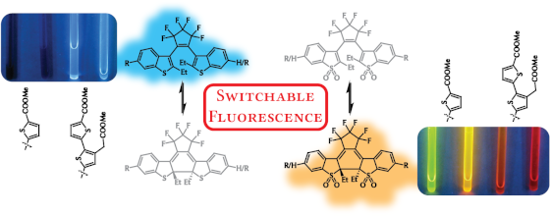
- ) were detected, confirming cleavage of the methyl esters. Photophysical properties The absorption and emission properties as well as the photochromic properties of eight “thiophenylated” DAEs were studied in acetonitrile solutions (Table 1). The properties of the OFs (open forms) were obtained from


Fluorescent phosphorus dendrimers excited by two photons: synthesis, two-photon absorption properties and biological uses
Beilstein J. Org. Chem. 2019, 15, 2287–2303, doi:10.3762/bjoc.15.221
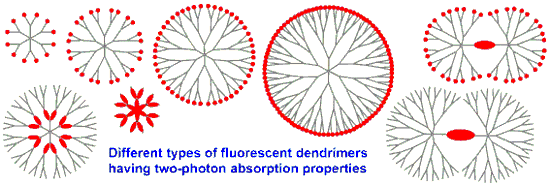
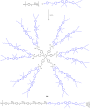
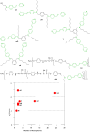
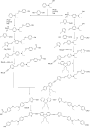
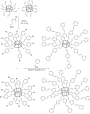
- dendrimers having TPA fluorophores as branches and water-solubilizing functions on the surface. Photophysical properties of the types of dendrimers shown in Scheme 2 (measured in toluene). Comparison of the photophysical properties (in toluene) of the spherical dendrimers shown in Scheme 2, with that of the










Synthesis and properties of sulfur-functionalized triarylmethylium, acridinium and triangulenium dyes
Beilstein J. Org. Chem. 2019, 15, 2133–2141, doi:10.3762/bjoc.15.210
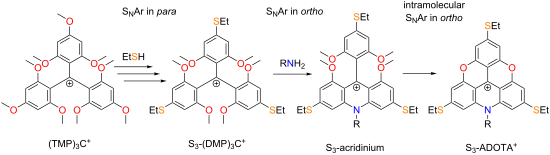
- fluorescence lifetime (τfl) [12][13] are key photophysical properties to consider and optimize for any given application. We have for quite some time been interested in the synthesis, properties and applications of dyes from the triangulenium family (Figure 1) [14][15]. The triangulenium dyes can be divided
- also in agreement with the observation that 5a (and 5b) display intense fluorescence (Figure 6). Table 3 summarizes the spectral and photophysical properties on the triangulenium dyes showing any applicable fluorescence. Beside S3-ADOTA+ (5a) that are the double and triple -SEt-substituted TOTAs 6 and
- enhanced internal conversion or intersystem crossing to the triplet state. Further photophysical work will have to settle this issue and thereby suggest structural improvements and/or the best applications of these dyes. Conclusion The effective introduction of alkylthiol groups into the para-positions of


Naphthalene diimides with improved solubility for visible light photoredox catalysis
Beilstein J. Org. Chem. 2019, 15, 2043–2051, doi:10.3762/bjoc.15.201
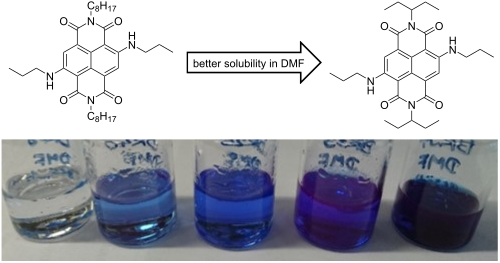
- probably a “non-Kasha” photophysical dynamic behavior which can be found also for other photochemical reactions in the literature [67], but needs further investigations by time-resolved spectroscopy. The irradiations at 638 nm and 597 nm overlap with the emission range of cNDI 6 so that an inner filter
- effect cannot be excluded. Taken together, it makes clear that tuning of optical and electrochemical properties of potential photoredox catalysts have to be combined with their elucidation of their photophysical dynamic behavior. Conclusion The cNDIs 2–6 were synthesized as potential photoredox catalysts
- but also by their photophysical dynamics. To the best of our knowledge this is the first report on the usage of cNDIs as photoredox catalysts. The irradiation by visible light from LEDs as energy-saving light sources together with the use of an organic dye instead of a transition metal complex as



Synthesis of benzo[d]imidazo[2,1-b]benzoselenoazoles: Cs2CO3-mediated cyclization of 1-(2-bromoaryl)benzimidazoles with selenium
Beilstein J. Org. Chem. 2019, 15, 2029–2035, doi:10.3762/bjoc.15.199
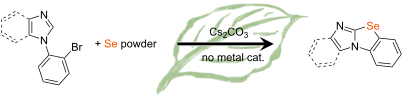
- -fluorobenzene, and Se powder under the optimized conditions, i.e., in the presence of Cs2CO3 (2 equiv) in DMF under an argon atmosphere at 150 °C. This reaction gave product 2a in only 35% yield, suggesting that the stepwise reaction via 1-(2-bromoaryl)benzimidazole 1 is superior. Next, the photophysical


Fluorinated azobenzenes as supramolecular halogen-bonding building blocks
Beilstein J. Org. Chem. 2019, 15, 2013–2019, doi:10.3762/bjoc.15.197
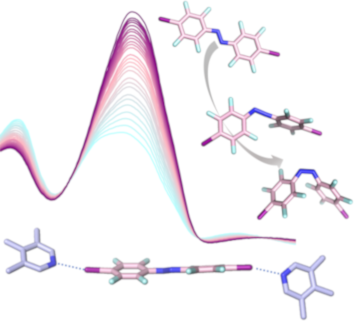
- azobenzenes with different halogen bonding donor properties are discussed in relation to their changing photophysical properties, rationalized by DFT calculations. Keywords: azobenzene; DFT calculations; fluorine chemistry; halogen bonding; photochemistry; Introduction The halogen bond is an attractive
- iodoethynyl group, as trade-off, photophysical properties are changing. The bathochromic shift of the π→π* band leads to an overlap with the n→π* excitation, making it more difficult to address, together with a diminishing thermal half-life. Both effects can be qualitatively reproduced and understood with the


Identification of optimal fluorescent probes for G-quadruplex nucleic acids through systematic exploration of mono- and distyryl dye libraries
Beilstein J. Org. Chem. 2019, 15, 1872–1889, doi:10.3762/bjoc.15.183
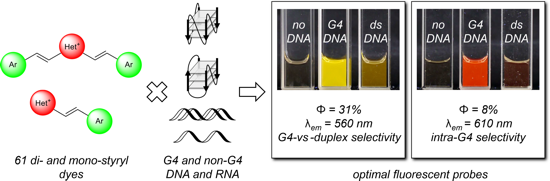
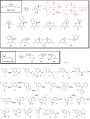
- at the improvement of photophysical properties of the dyes and the establishment of structure–properties relationships. Results Design and synthesis of the dye library On the basis of the previously established distyryl scaffold, we designed 49 novel derivatives through systematic variation of the







Norbornadiene-functionalized triazatriangulenium and trioxatriangulenium platforms
Beilstein J. Org. Chem. 2019, 15, 1815–1821, doi:10.3762/bjoc.15.175
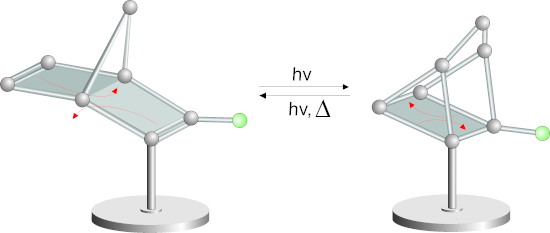
- platform 2 (44%). The photophysical properties and the switching behaviour of 1, 2 and 3 were determined in solution (THF). The UV–vis spectra of the norbornadienes (NBD, black, 1a, 2a, 3a) and quadricylanes (QC, red, 1b, 2b, 3b) and the spectra of the QCs after irradiation with 311 nm for 1b and 2b or 254


Synthesis, photophysical and electrochemical properties of pyridine, pyrazine and triazine-based (D–π–)2A fluorescent dyes
Beilstein J. Org. Chem. 2019, 15, 1712–1721, doi:10.3762/bjoc.15.167
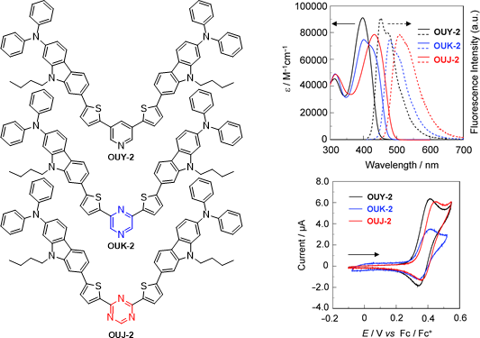
- and OUJ-2 with two (diphenylamino)carbazole thiophene units as D (electron-donating group)–π (π-conjugated bridge) moiety and a pyridine, pyrazine or triazine ring as electron-withdrawing group (electron-accepting group, A) have been designed and synthesized. The photophysical and electrochemical
- moiety, and the lowest unoccupied molecular orbital (LUMO) is localized over the A moiety. Thus, the photophysical and electrochemical properties based on the ICT characteristics of D–π–A dyes should be tuneable by not only the electron-donating ability of D and the electron-accepting ability of A, but
- ][18][19][20][21][22][23][24], and a promising photosensitizer for dye-sensitized solar cells (DSSCs) [25][26][27][28][29][30][31][32][33][34]. Thus, in this work, to gain insight into the photophysical and electrochemical properties of D–π–A fluorescent dyes with an azine ring as electron-withdrawing




Host–guest interactions in nor-seco-cucurbit[10]uril: novel guest-dependent molecular recognition and stereoisomerism
Beilstein J. Org. Chem. 2019, 15, 1705–1711, doi:10.3762/bjoc.15.166

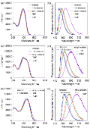
- photophysical signals to identify the possible diastereomers of guests within nor-seco-cucurbit[10]uril (NS-CB[10]) cavities. Further experiments revealed that balancing the hydrophilic and hydrophobic effects of the guest in aqueous solution can improve the molecular recognition and binding ability of NS-CB[10
- , the top–center isomer of G2 within both host-1 and host-2 could be characterized because of the novel monomer and excimer photophysical property of pyrene as fluorophore. As a result, we demonstrated here a novel guest-controlled molecular recognition and stereoisomerism for the first time. Results
- [30]. For example, when pyrene instead of the benzyl group was appended to the ADA moiety (G2) in the present work, the top–center diastereomers of ADA-based derivatives within the host cavities could be distinguished by the novel photophysical property of pyrene (Scheme 2). Figure 3a shows changes in


Synthesis, enantioseparation and photophysical properties of planar-chiral pillar[5]arene derivatives bearing fluorophore fragments
Beilstein J. Org. Chem. 2019, 15, 1601–1611, doi:10.3762/bjoc.15.164
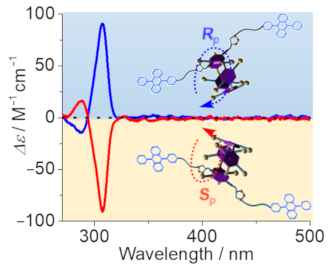
- derivatives (P5A-DPA and P5A-Py) bearing bulky fluorophores were obtained in high yield by click reaction. The photophysical properties of both compounds were investigated in detail. P5A-DPA with two 9,10-diphenylanthracene (DPA) pigments grafted on the pillar[5]arene showed a high fluorescence quantum yield
- quantum yield are beneficial for the application of pillar[5]arene in these fields. Perylene (Py) and 9,10-diphenylanthracene (DPA) are well known for their desirable absorption and high fluorescence quantum yield. These chromophores possess unique photophysical properties and have been widely used as
- be inhibited generating a pair of Sp and Rp enantiomers. Secondly, the strong absorption in the visible range and high fluorescence a quantum yield of the fluorophores will donate the pillar[5]arene derivatives novel photophysical properties. Results and Discussion Syntheses of pillar[5]arene



Diazocine-functionalized TATA platforms
Beilstein J. Org. Chem. 2019, 15, 1485–1490, doi:10.3762/bjoc.15.150
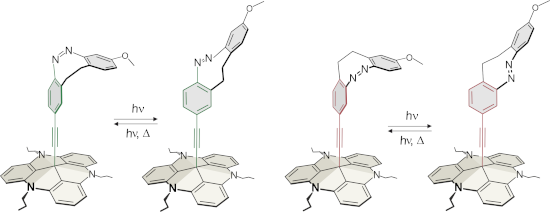
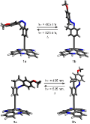
- for dibenzoyl 7 (Scheme 1). Diazocine 13 was obtained by reduction and oxidation in moderate yields (22%). The reaction of diazocine 13 with the TATA ion 9 gave the target diazocine 2 (88%, Scheme 2). The photophysical properties and the switching behavior of 1 and 2 were determined in solution (THF



Reversible end-to-end assembly of selectively functionalized gold nanorods by light-responsive arylazopyrazole–cyclodextrin interaction
Beilstein J. Org. Chem. 2019, 15, 1407–1415, doi:10.3762/bjoc.15.140
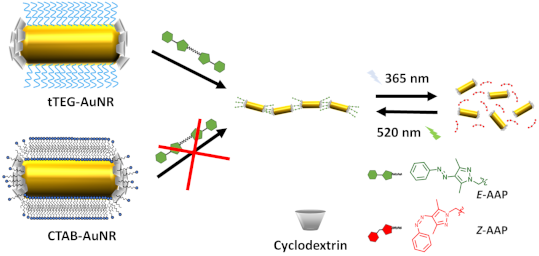
- photophysical properties like nearly quantitative isomerization, straight forward synthesis in excellent yields and very long Z-isomer half-life times up to 1000 days due to less steric repulsion [37]. In previous reports we could show that the AAP guest inclusion properties to β-CD are comparable to
- azobenzenes leading due to the superior photophysical properties to fully reversible supramolecular systems, which showed limited feasibility with azobenzenes [20][38][39]. Herein, we present the application of a light-responsive CD–AAP host–guest system for the reversible end-to-end assembly of AuNR. The


Complexation of a guanidinium-modified calixarene with diverse dyes and investigation of the corresponding photophysical response
Beilstein J. Org. Chem. 2019, 15, 1394–1406, doi:10.3762/bjoc.15.139
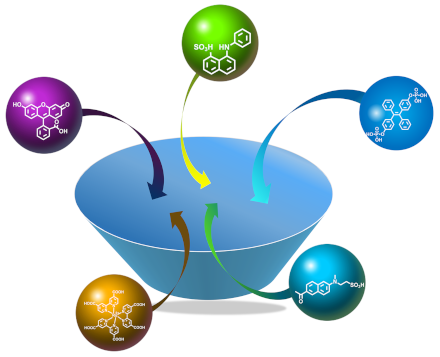
- representative candidate of luminescent transition-metal complexes. We determined the association constants of the GC5A–dye complexes by fluorescence titration and discuss the complexation-induced photophysical changes. In addition, a comparison of the complexation behavior of GC5A with that of other macrocycles
- and potential applications according to the diverse photophysical responses are provided. Keywords: calixarene; host–guest complexation; luminescent dyes; macrocycles; photophysical properties; Introduction Fluorescence sensing represents a powerful detection methodology due to its low cost, ease of
- targeted therapy in vivo [27]. These biomedical applications depend on the fine set-up of receptor–dye complexation. In this work, we comprehensively investigated the complexation behavior of GC5A with a series of luminescent dyes. Their complexation-induced photophysical alternations were comparatively




Remarkable effect of alkynyl substituents on the fluorescence properties of a BN-phenanthrene
Beilstein J. Org. Chem. 2019, 15, 1257–1261, doi:10.3762/bjoc.15.122
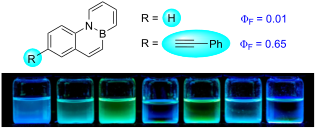
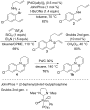
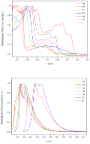
- -phenanthrenes with substituents of a diverse nature have been synthesized by palladium-catalyzed cross-coupling reactions of a common chloro-substituted precursor, which was made from readily available materials in only four steps. Evaluation of the photophysical properties of the prepared compounds unveiled an
- aromatic hydrocarbons (BN-PAHs) have received increasing interest over the past few years [1][2][3][4][5], particularly in the field of materials science [6]. The presence of a polarized B–N bond induces significant changes in the photophysical properties of these compounds when compared to their PAH
- analogues containing only non-polar C=C bonds. This fact opens up new opportunities for creating improved optoelectronic devices [7][8][9][10][11][12][13][14][15]. The introduction of substituents is known to have a substantial influence on the photophysical properties of PAHs. However, although some





Self-assembly behaviors of perylene- and naphthalene-crown macrocycle conjugates in aqueous medium
Beilstein J. Org. Chem. 2019, 15, 1203–1209, doi:10.3762/bjoc.15.117
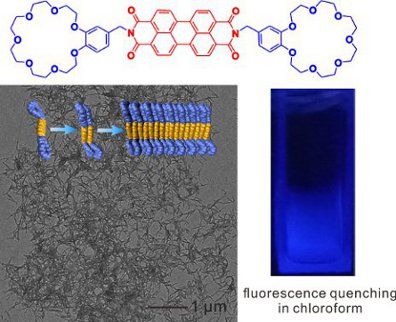
- properties, such as charge transport and photophysical properties [69][70][71][72][73][74]. While the morphologies of these aggregates were greatly influenced by solvents, molecular structures and shapes, as well as the fraction of hydrophilic and/or hydrophobic parts [75][76][77][78][79][80][81]. By far


Precious metal-free molecular machines for solar thermal energy storage
Beilstein J. Org. Chem. 2019, 15, 1096–1106, doi:10.3762/bjoc.15.106
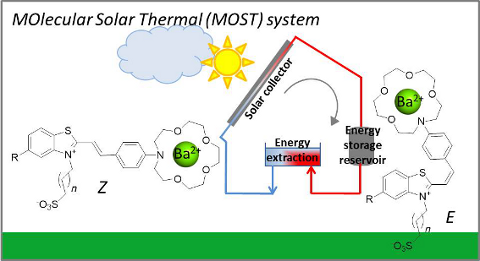
- photoisomerization and a longer life time of the higher energy forms in comparison with the known analogs. The chemical structures of all dyes in the series were characterized by NMR, UV–vis, IR spectroscopy and elemental analysis. The steady-state photophysical properties of the dyes were elucidated. The stability
- . First of all, the azacrown nitrogen atom is linked directly to the dye and it is part of the chromophore system, responsible for the “push–pull” effect and the photophysical properties of the dye. This provides control over the “push–pull” effect in the chromophore by switching on and off states (i.e
- were proved by NMR spectroscopy, elemental analysis, IR and UV–vis spectroscopy. Photophysical properties Steady-state absorption and emission spectroscopy Next we elucidated the photophysical properties of the chosen compounds and determined their suitability to be used as MOST systems. First, we




Molecular recognition using tetralactam macrocycles with parallel aromatic sidewalls
Beilstein J. Org. Chem. 2019, 15, 1086–1095, doi:10.3762/bjoc.15.105
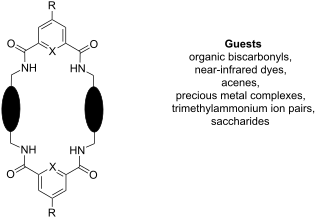
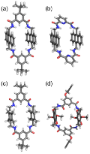
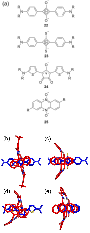
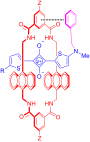
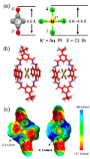
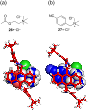
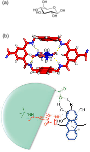
- photophysical property of a squaraine dye is improved when it is encapsulated by tetralactam A, B, or C, but squaraine fluorescence is quenched when the dye is encapsulated by tetralactam E whose structure has extremely electron-rich sidewalls [34]. The moderate flexibility of tetralactam A is one of the




Photochemical generation of the 2,2,6,6-tetramethylpiperidine-1-oxyl (TEMPO) radical from caged nitroxides by near-infrared two-photon irradiation and its cytocidal effect on lung cancer cells
Beilstein J. Org. Chem. 2019, 15, 863–873, doi:10.3762/bjoc.15.84
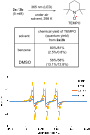
- stable in benzene below 320 K (47 °C), as confirmed by electron paramagnetic resonance (EPR) spectroscopic analysis. Significant thermal decomposition of 2a and 2b was observed at ≈340 K (67 °C), as indicated by the typical EPR signals (see Supporting Information File 1, Figure S1). The photophysical
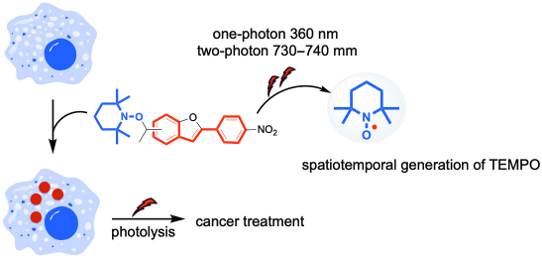
- . Photochemical generation of TEMPO radical. Synthesis of caged nitroxides 2a and 2b. Photochemical generation of TEMPO radical and photoproducts 6 and 7 under air atmosphere. Isodesmic reaction from BRa and 5b to 5a and BRb. Photophysical data for 2a, 2b, 5a, and 5b in benzene (DMSO). Supporting Information








Synthesis of functionalized diazocines for application as building blocks in photo- and mechanoresponsive materials
Beilstein J. Org. Chem. 2019, 15, 727–732, doi:10.3762/bjoc.15.68
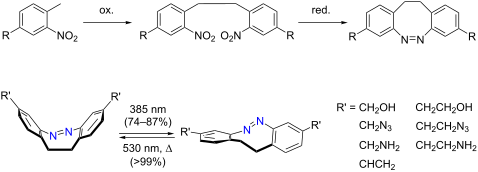
- to 3,3’- and 4,4’-diaminodiazocine, which have been implemented in macromolecules for conformation switching, our compounds exhibit improved photophysical properties (photostationary states, separation of absorption bands in the cis and trans configuration). Hence they are promising candidates as
- the amino-functionalized diazocines 6a and 6b [34]. Additionally, the diazocine 4b was converted into the divinyldiazocine 7. Towards this end, the hydroxy groups were tosylated, followed by elimination with potassium butoxide [35][36]. The photochemical and photophysical properties of compounds 4–7
- azo condensation proved to be reliable key steps in the synthesis of these substituted diazocines. The photophysical properties of compounds 4–7 were investigated by NMR and UV–vis experiments. The previously investigated 3,3’-diaminodiazocine 2 and 4,4’-diaminodiazocine 3 exhibited poor


Synthesis and fluorescent properties of N(9)-alkylated 2-amino-6-triazolylpurines and 7-deazapurines
Beilstein J. Org. Chem. 2019, 15, 474–489, doi:10.3762/bjoc.15.41
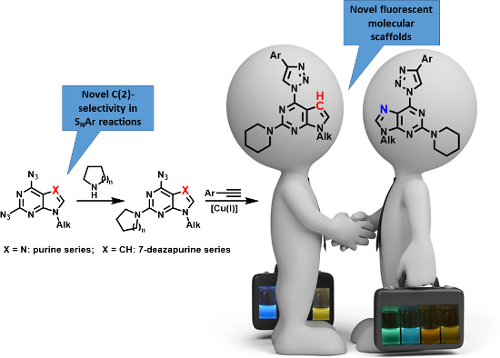
- ; Introduction Purine [1][2][3][4][5][6][7] and 7-deazapurine (IUPAC name: pyrrolo[2,3-d]pyrimidine) [8][9][10][11] derivatives have been progressively studied for decades due to their wide range of biological activities and photophysical properties. Currently, the synthesis of push–pull systems is a promising
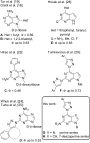
- -deazapurines (Figure 1 compounds of type G and H) in order to determine and to compare their fluorescent properties. The synthetic approach towards 7-deazapurine derivatives H has been recently disclosed by us [39], but the photophysical properties of these compounds have not been studied thus far. In this
- full account we report the newly developed C(2)-regioselective nucleophilic aromatic substitution of 2,6-diazidopurines, transformation of the intermediate 2-amino-6-azidopurines into the title compounds and comparative photophysical study of originally yet identically substituted fluorescent push–pull





Application of olefin metathesis in the synthesis of functionalized polyhedral oligomeric silsesquioxanes (POSS) and POSS-containing polymeric materials
Beilstein J. Org. Chem. 2019, 15, 310–332, doi:10.3762/bjoc.15.28
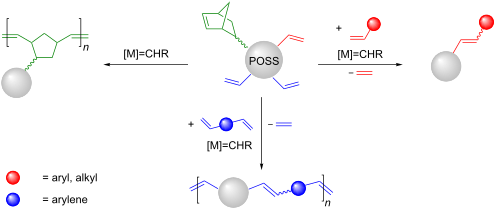
- isolated yields exceeding 60%. Chromophore-functionalized silsesquioxane-core dendrimers were obtained to investigate their photophysical properties [12][14]. In the synthesized compounds chromophore properties were only slightly influenced by the core. The possibility of fine-tuning of the photophysical
- proposed a procedure for the separation of T10 and T12 derivatives, which enabled detailed photophysical studies of pure T10 and T12 core-based materials [26]. Detailed photophysical studies of chromophore-functionalized T10 and T12 silsesquioxanes have shown that the cage size and/or the symmetry can
- strongly affect photophysical properties [26]. In the subsequent paper the authors describe the use of OVS or mixtures of T10 and T12 units in the synthesis of hydroxyphenyl-terminated silsesquioxanes. Such derivatives were obtained via cross metathesis with 4-acetoxystyrene or via a sequence of cross






N-Arylphenothiazines as strong donors for photoredox catalysis – pushing the frontiers of nucleophilic addition of alcohols to alkenes
Beilstein J. Org. Chem. 2019, 15, 52–59, doi:10.3762/bjoc.15.5
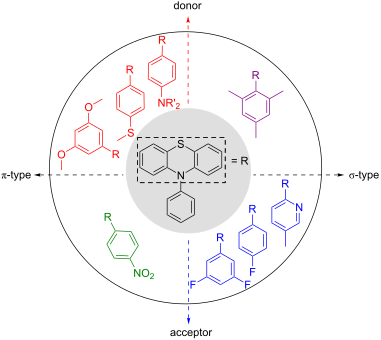
- excited states. Normally, this is the reason why photochemical processes can hardly compete with photophysical decay processes. However, a pre-coordination of the substrate may facilitate electron transfer under non-diffusional controlled conditions. Very recently, the fast (picosecond) excited state
- photoredox concept is based on the photophysical properties of the excited photoredox catalyst, the idea of the conPET concept mimics nature’s light collection system and consecutively collects the energy of two photons stored in the excited state of the initially pre-promoted photoredox catalyst’s radical



Degenerative xanthate transfer to olefins under visible-light photocatalysis
Beilstein J. Org. Chem. 2018, 14, 3047–3058, doi:10.3762/bjoc.14.283

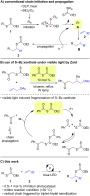
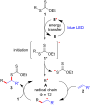
- degenerative transfer of xanthates to olefins is enabled by the iridium-based photocatalyst [Ir{dF(CF3)ppy}2(dtbbpy)](PF6) under blue LED light irradiation. Detailed mechanistic investigations through kinetics and photophysical studies revealed that the process operates under a radical chain mechanism, which



Organometallic vs organic photoredox catalysts for photocuring reactions in the visible region
Beilstein J. Org. Chem. 2018, 14, 3025–3046, doi:10.3762/bjoc.14.282
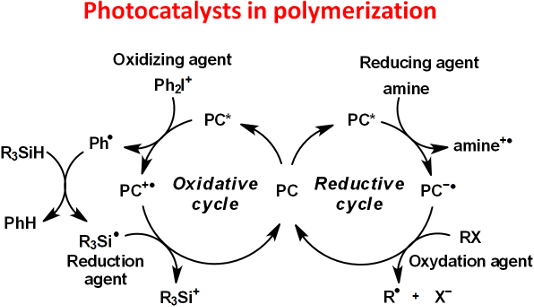
- transition metal catalysts classically used as initiators were established and 4CzIPN could provide performances comparable to that obtained with metal complexes. As specificity, 4CzIPN is characterized by a broad absorption extending from 250 nm to ≈500 nm. Its different photophysical characteristics are