

Search results
Search for "monomer" in Full Text gives 364 result(s) in Beilstein Journal of Organic Chemistry. Showing first 200.
Correlation effects and many-body interactions in water clusters
Beilstein J. Org. Chem. 2018, 14, 979–991, doi:10.3762/bjoc.14.83
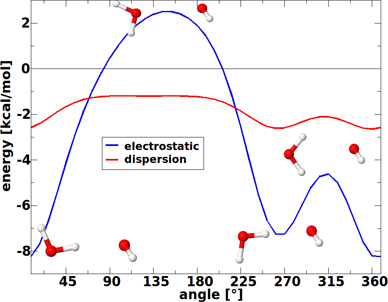
- individual terms with respect to the interaction energy operator. In this work all terms in Equation 5 have been computed using EXX monomer wave functions. Moreover, a time-dependent EXX (TDEXX) response approach was used to compute the second-order interaction energy contributions [53][54][55][56][57][58
- can be determined by combining two monomers to one single (pseudo-)monomer and calculating the interaction with the remaining one. In case of the trimer three different possibilities exist: where the term Δ2(AB − C) now denotes the interaction of the combined system AB with monomer C. As can be easily
- -body interaction energy counterparts but should rather be interpreted as the changes of the electrostatic and induction interactions due to the perturbations by another monomer in the trimer. Accordingly, one may interpret the electrostatic contribution in Figure 8 as an induction effect and the


Enzyme-free genetic copying of DNA and RNA sequences
Beilstein J. Org. Chem. 2018, 14, 603–617, doi:10.3762/bjoc.14.47
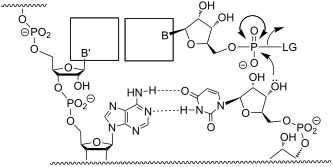
- replication has been reviewed [11]. Ligation reactions will not be discussed further here, as they are limited in their scope, in terms of sequences, whereas monomer-based copying may be used for any given sequence, at least in principle. Rather, we will focus on copying with mononucleotides, for which early
- examples can also be found in the literature of the 1960s [12]. The early monomer-based work on copying RNA focused on oligomerization of nucleotides on homosequences as templates [13][14]. The best results were observed for poly(C) as template, the 2-methylimidazolide of guanosine as activated monomer
- . Instead, the base pairing between individual bases of an incoming nucleotide and the templating base must suffice to attract the monomer to the extension site. The stability of different base pairs varies, and so does the templating effect of different stretches of the template sequence. Using random


Preparation of trinucleotide phosphoramidites as synthons for the synthesis of gene libraries
Beilstein J. Org. Chem. 2018, 14, 397–406, doi:10.3762/bjoc.14.28
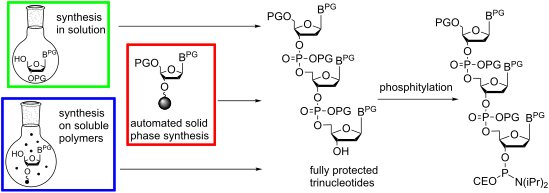
- -protected monomer. Upon selective removal of either the 5'-O-DMTr group or the 3'-O-levulinoyl group, the dimer was extended in 5' or 3' direction [26]. All other reports describe strategies, where the dimers are extended unidirectional, either in 5'-direction [25][26][27][29][30] or 3'-direction [31][32
- detritylation and coupling of the third monomer. The release of the trimer in fully protected form from the support was achieved by hydrogenation with Pd/C (10%) in tetrahydrofurane (THF) for 40 h at room temperature. Three fully protected trimers were prepared this way with isolated yields in the range of 44


Fluorogenic PNA probes
Beilstein J. Org. Chem. 2018, 14, 253–281, doi:10.3762/bjoc.14.17
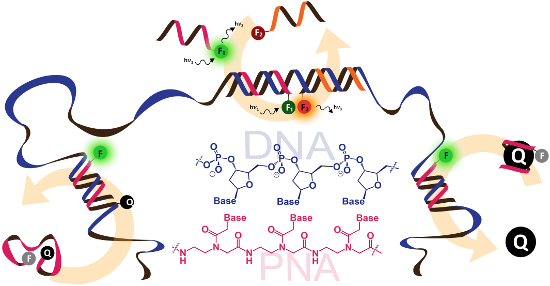
- background and good response with DNA, as well as offering an excellent specificity [65]. In addition to fluorophore-quencher interactions, FRET [66] and pyrene monomer–excimer switching [67][68] have been employed as alternative mechanisms for inducing fluorescence changes in the DNA probes. The FRET and
- monomer–excimer switching approaches have some advantages over fluorescence quenching because of the large Stokes shifts and the ability to measure the signals at two different wavelengths, thereby providing a means for self-referencing. Furthermore, unlike the fluorophore-quencher beacons, the FRET and
- monomer–excimer switching beacons are also fluorescent in the unbound state, and therefore it is possible to monitor the success of cellular delivery. In the case of pyrene monomer–excimer switching, the long fluorescence lifetime of the pyrene excimers allows facile elimination of background signals from


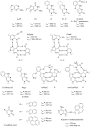


Fluorescent nucleobase analogues for base–base FRET in nucleic acids: synthesis, photophysics and applications
Beilstein J. Org. Chem. 2018, 14, 114–129, doi:10.3762/bjoc.14.7
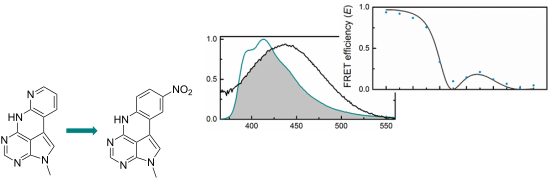
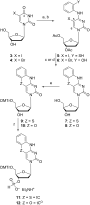
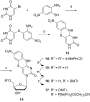
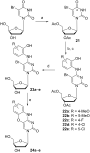
- protection and phosphitylation using CEP-Cl generated the fully protected monomer ready for solid-phase synthesis [50]. The complete synthesis of the RNA building block of tCO was in this way achieved over five steps with a total yield of 28%, improved from the four step DNA building block synthesis of tCO
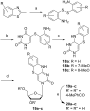
- first reported by our group, was our initial adenine analogue candidate [53]. It stabilizes the native B-form DNA and is selective for base pairing with thymine. The emissive properties are decent both for the monomer (Φf = 6.8%) and inside DNA even though the quantum yield is quenched in the latter





Binding abilities of polyaminocyclodextrins: polarimetric investigations and biological assays
Beilstein J. Org. Chem. 2017, 13, 2751–2763, doi:10.3762/bjoc.13.271
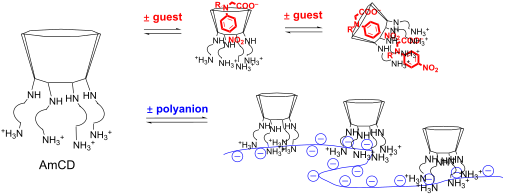
- hand, for the samples prepared at lower pH values the optical activities of the supernatant liquor after centrifugation decrease accounting for the progressive subtraction of the AmCD from the solution. Indicating with nr the average molar ratio between the AmCD and the monomer units of alginate in the
- substance (99.5 mg) was dissolved in warm water and after cooling to rt the volume was adjusted to 20 mL. Finally, the solution was filtered through a 0.45 μ Millipore® filter. For the sake of clarity, the concentration (normality) was calculated according to the formula weight of the monomer unit (C6H7O6Na



Synthesis and supramolecular properties of regioisomers of mononaphthylallyl derivatives of γ-cyclodextrin
Beilstein J. Org. Chem. 2017, 13, 2509–2520, doi:10.3762/bjoc.13.248
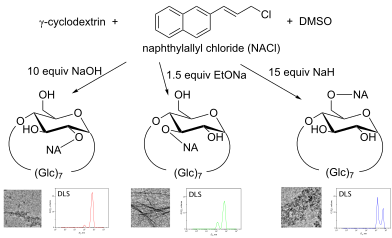
- as a ditopic monomer of the AB type with groups A and B undergoing an association of 1:1. However, a number of alternate or competing interactions may occur, as mentioned above, γ-CD is known to form also inclusion complexes of 2:1 stoichiometry and formation of cyclic supramolecular structures my


Synthesis of naturally-derived macromolecules through simplified electrochemically mediated ATRP
Beilstein J. Org. Chem. 2017, 13, 2466–2472, doi:10.3762/bjoc.13.243
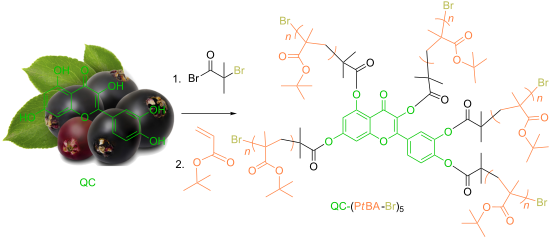
- , Supporting Information File 1) [57]. This potential cycle was repeated three times, efficiently increasing the monomer conversion to 25, 51, and then to 75% during active periods (Figure 3a). MW steadily increased during the “on” periods, while no low-MW polymers were detected (Figure 3b and Figure S12b
- purification (in CDCl3). Synthesis of PtBA homopolymers grafted from quercetin-based macroinitiator via seATRP under constant potential conditions; (a) Mn and Mw/Mn vs monomer conversion, and (b) GPC traces of tBA polymerization and their evolution over time. Reaction conditions: [tBA]/[QC-Br5 (per 5
- with respect to monomer conversion. Reaction conditions are identical to those stated in Figure 2. Summary of quercetin-based pseudo-star polymers synthesis by seATRP. Supporting Information Supporting Information File 458: Experimental section including NMR spectra, first-order kinetic plot, GPC


Synthesis and application of trifluoroethoxy-substituted phthalocyanines and subphthalocyanines
Beilstein J. Org. Chem. 2017, 13, 2273–2296, doi:10.3762/bjoc.13.224
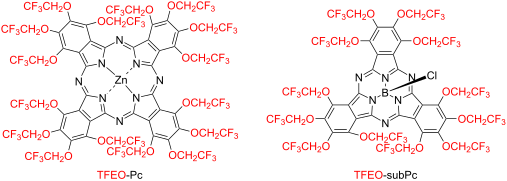
- . Furthermore, the same structural dimer of TFEO-Pc and tert-butyl-substituted phthalocyanine 7b was synthesized by the Suzuki coupling reaction. These dimers show a new absorption peak in the longer wavelength region than the Q band which is not observed in the monomer. This suggests intramolecular electronic








Structural diversity in the host–guest complexes of the antifolate pemetrexed with native cyclodextrins: gas phase, solution and solid state studies
Beilstein J. Org. Chem. 2017, 13, 2252–2263, doi:10.3762/bjoc.13.222
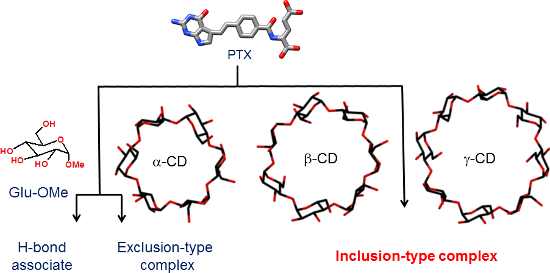
- complex with α-CD and pseudorotaxane inclusion-type complexes with β-, and γ-CDs. UV–vis titrations at pH 7.4 gave association constants for the obtained complexes. The stability of the complexes increases in the series: α-CD/PTX < γ-CD/PTX << β-CD/PTX. The association of PTX with a monomer cyclodextrin
- experiments in phosphate buffered saline (PBS, pH 7.4) were conducted for evaluation of association constants (Kas). Association of PTX with a monomer CD equivalent – methyl α-D-glucopyranoside – was investigated to fully understand the type of interactions between host and guest molecules. Additionally, the
- molecules. The experiments focused on association of PTX with monomer cyclodextrin equivalent – methyl α-D-glucopyranoside – were designed to provide additional information about the type of interactions between host and guest molecules. The second aim of this work is to demonstrate the importance of




Phosphonic acid: preparation and applications
Beilstein J. Org. Chem. 2017, 13, 2186–2213, doi:10.3762/bjoc.13.219


Novel approach to hydroxy-group-containing porous organic polymers from bisphenol A
Beilstein J. Org. Chem. 2017, 13, 2131–2137, doi:10.3762/bjoc.13.211
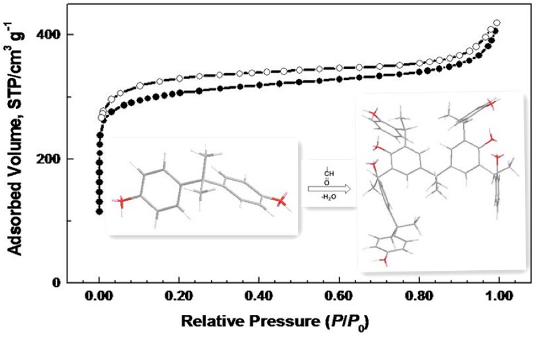
- connecting phenolic molecules with formaldehyde or other aromatic aldehydes to form cross-linking structures through the simple Bakelite-type chemistry to obtain great number of polymers with different functionalities. Phloroglucinol has been utilized as a monomer by Kanatzidis and Katsoulidis [23][24] to
- produce a series of porous polymers. In this contribution, bisphenol A (BPA) was employed as a novel polyphenol monomer instead of phloroglucinol. BPA is a commercially available industrial raw material, which is much cheaper than phloroglucinol. In addition, BPA might be stored more easily, compared with
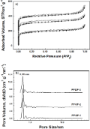
- t-plot method of PPOP-1 are smaller than those of PPOP-2 and PPOP-3. The difference between the pore volumes and BET specific surface area results of PPOPs may be related to the monomer strut length. With the shortest linker of M1, PPOP-1 possesses the lowest pore volume and BET specific surface




Spatial effects in polymer chemistry
Beilstein J. Org. Chem. 2017, 13, 2015–2016, doi:10.3762/bjoc.13.198
- tacticity of a polymeric chain is a result of spatial interactions between the active growing chain end and the free monomer or a monomer–metal complex. Moreover, the preferred head-to-tail chain growth of vinyl monomers can be a result of such spatial effects. The spatial arrangement of polymer chains in
1,3-Dibromo-5,5-dimethylhydantoin as promoter for glycosylations using thioglycosides
Beilstein J. Org. Chem. 2017, 13, 1994–1998, doi:10.3762/bjoc.13.195
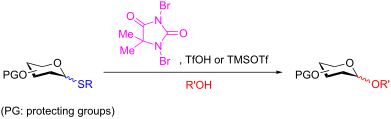
- , including dichloromethane, is sold under the trade name Brom-55 and used as swimming pool sanitizer, as industrial brominating agent for ethylene propylene diene monomer rubber to improve ozone resistance, as additive in plastics to promote photodegradation and as a fungicide to preserve fresh fruits [27


18-Hydroxydolabella-3,7-diene synthase – a diterpene synthase from Chitinophaga pinensis
Beilstein J. Org. Chem. 2017, 13, 1770–1780, doi:10.3762/bjoc.13.171
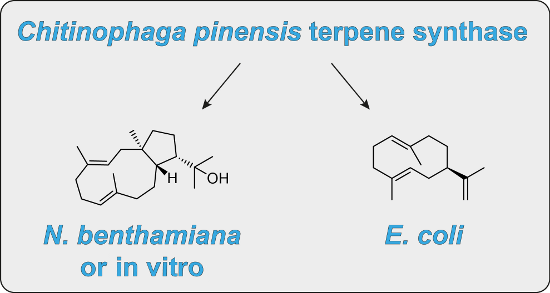
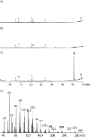
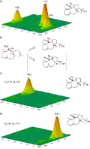
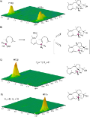
- ], these findings point to the absolute configuration of (1R,3E,7E,11S,12S)-18-hydroxydolabella-3,7-diene. For the incubation experiments with (R)- and (S)-(1-13C,1-2H)GPP, the terpene monomer IPP, HdS and the GGPP synthase (GGPPS) from S. cyaneofuscatus [12] were added to the reaction mixtures for an




Block copolymers from ionic liquids for the preparation of thin carbonaceous shells
Beilstein J. Org. Chem. 2017, 13, 1693–1701, doi:10.3762/bjoc.13.163
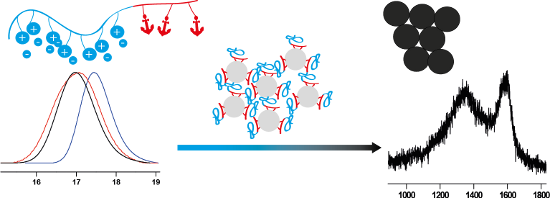
- monomer by RAFT polymerization. This allows the control over the molecular weight of ionic liquid blocks in the range of 8000 and 22000 and of the block-copolymer synthesis. In this work we focus on block copolymers with an anchor block. They can be used to control the formation of TiO2 nanoparticles
- . In a first step the PIL block is synthesized using 1-vinyl-3-cyanomethylimidazolium bromide (1) as an IL monomer, which was prepared following a literature procedure [16]. During this process the nitrogen atom in the imidazole ring in position 3 is quaternized. Monomer 1 was polymerized with 2
- polymerization is, we synthesized three block copolymers with different chain lengths for both the PIL block and the anchor block. For the PIL block we could synthesize short blocks, containing only 22 repeating units, as well as longer chain lengths consisting of 38 or 72 monomer units (as estimated by 1H NMR


Molecular recognition of N-acetyltryptophan enantiomers by β-cyclodextrin
Beilstein J. Org. Chem. 2017, 13, 1572–1582, doi:10.3762/bjoc.13.157
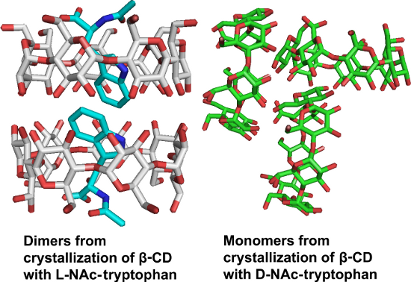
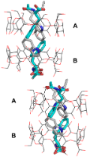
- , exhibits more freedom: the carboxylic and acetylamino groups of guests D and F inside β-CD B are close and parallel, whereas in β-CD monomer A the acetylamino moiety of the major guest C is close to the carboxyl group of minor guest E, their respective carboxyl and acetylamino groups pointing to opposite




Chemical systems, chemical contiguity and the emergence of life
Beilstein J. Org. Chem. 2017, 13, 1551–1563, doi:10.3762/bjoc.13.155
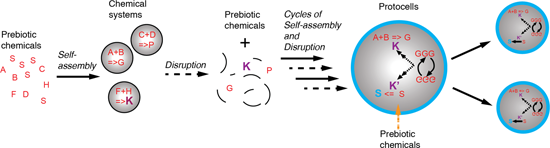
- systems (stacks of alternating amphiphile bilayers and monomer layers). In stark contrast to the polymerization of RNA on montmorillonite, the absence of strong direct interactions between the mineral surfaces and the molecular species does neither reduce the chemical availability of the reaction products
- , the polymerization of hydrophobic amino acids was enhanced (in terms of yield and product length in monomer units), whereas that of hydrophilic, charged amino acids depended on the types of lipid headgroups used, i.e., whether ionic interactions could occur between amphiphile and amino acid. The
- authors surmised that the product length (up 29 monomer units compared to 9 in aqueous set-ups) was possible due to solubilization of the products within the hydrophobic core of the vesicle bilayers. Recent investigations with potentially prebiotic fatty acid structures have confirmed these observations


Synthesis of oligonucleotides on a soluble support
Beilstein J. Org. Chem. 2017, 13, 1368–1387, doi:10.3762/bjoc.13.134
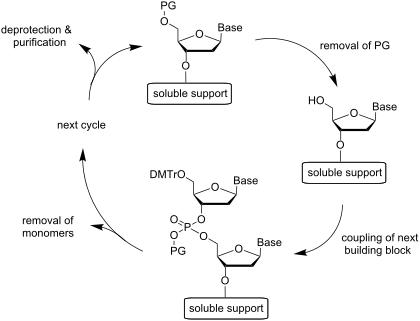
- . Conventional ammonolysis was used for the release from support and removal of base and phosphate protections. By this approach, a 15-mer phosphorothioate ODN (sequence not given, one G coupled as a monomer) was synthesized in 58% overall yield. The development of new materials that allow nanofiltration in






One-pot synthesis of block-copolyrotaxanes through controlled rotaxa-polymerization
Beilstein J. Org. Chem. 2017, 13, 1310–1315, doi:10.3762/bjoc.13.127
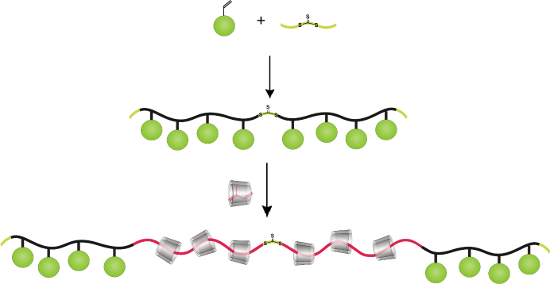
- , free radical copolymerization of a hydrophobic monomer, complexed in a host, with a stopper comonomer [24][25]. This latter has to be large enough to prevent the dissociation of the growing axis and the host, as it happens in the case of aqueous CD assisted homopolymerizations of hydrophobic monomers
- description see Supporting Information File 1). The eventual content of free RAMEB in the product was checked by isothermal calorimetry (ITC) and was around 3 wt %. The conversion of the monomers was calculated from the yield of polyrotaxane minus the total RAMEB content. In both cases, the monomer
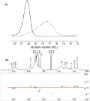
- Supporting Information File 1). The molar masses of polyrotaxanes 1 and 2 were determined after complete acetylation by GPC in THF (for results see Table 1). From the molar ratio i/st, the average molar mass per monomer repeat was derived Da for both polyrotaxanes 1 and 2, which allows to calculate the


Strategies toward protecting group-free glycosylation through selective activation of the anomeric center
Beilstein J. Org. Chem. 2017, 13, 1239–1279, doi:10.3762/bjoc.13.123

- and potential treatments. Their initial work describes the direct synthesis of 1-O-phosphofuranosyl hexoses from the corresponding 1-thioimidoyl donor. The donor is available in good yield over five steps starting from the parent monomer unit using a methodology they previously developed (the
- anomeric center Davis and colleagues [51] developed a unique glycosylation strategy that employs a 4-bromobutanyl group as a self-activating aglycone on a mannose monomer (Scheme 13) which works even in the absence of any activating agent, such as TMSOTf. The synthesis of the self-activating donor proceeds




Aqueous semisynthesis of C-glycoside glycamines from agarose
Beilstein J. Org. Chem. 2017, 13, 1222–1229, doi:10.3762/bjoc.13.121
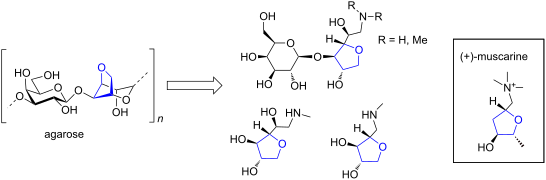
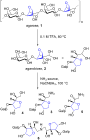
- available, these polysaccharides are far little explored as sources of chemical platforms for drug development. The rare monosaccharide 3,6-anhydro-α-L-galactopyranose (AnGal), naturally present in the agarose structure, is a valuable scaffold since it is a highly functionalized and a chiral-rich monomer



Sugar-based micro/mesoporous hypercross-linked polymers with in situ embedded silver nanoparticles for catalytic reduction
Beilstein J. Org. Chem. 2017, 13, 1212–1221, doi:10.3762/bjoc.13.120
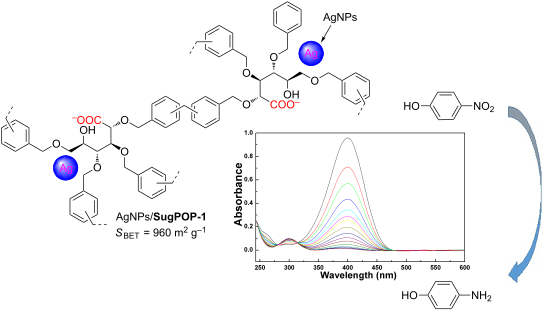
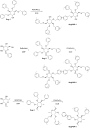
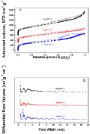
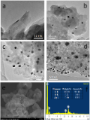
- derived from the monosaccharide has certain effects on the SSA and PSD of the prepared porous polymers, porosity tuning can be likely achieved with varying monomer molecular structures. Moreover, the aldehyde or ketone groups of the material provide the possibility for further modification and
- increase the affinity to carbon dioxide. Compared with the reported polymer Glc-3 [17] (prepared using the same monomer as for SugPOP-1 and with a similar method), the polymer SugPOP-1 also possesses a higher CO2 adsorption capacity due to its higher porosity. Compared with a class of microporous HCPs




From chemical metabolism to life: the origin of the genetic coding process
Beilstein J. Org. Chem. 2017, 13, 1119–1135, doi:10.3762/bjoc.13.111
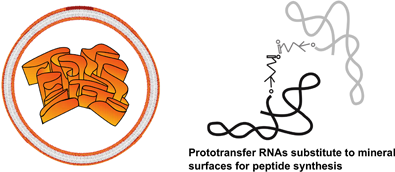
- together, associating proteins and nucleic acids. What we discussed above can be summarised with the words of Monnard: “(1) The synthesis of RNA monomers is difficult; (2) efficient pathways for monomer polymerization into functional RNAs and their subsequent, sequence-specific replication remain elusive



Synthesis and enzymatic ketonization of the 5-(halo)-2-hydroxymuconates and 5-(halo)-2-hydroxy-2,4-pentadienoates
Beilstein J. Org. Chem. 2017, 13, 1022–1031, doi:10.3762/bjoc.13.101
- was eluted using a linear gradient [2–0 M (NH4)2SO4)]. Fractions (≈2 mL) were collected and pooled by their 4-OT activity. The protein sometimes appears as a series of bands (multiples of the monomer mass) by SDS-PAGE where no one band corresponds to the monomer mass (6915 Da). However, if the protein
- is exchanged into 20 mM HEPES buffer (pH 7.3), loaded onto a HiLoad 16/60 Superdex 75 prep grade column (120 mL resin), equilibrated, and eluted with the same buffer (at 0.5 mL/min), a single band of the correct size is observed. The enzyme elutes at 104 mL, which is consistent with the monomer mass