
Search results
Search for "ligand" in Full Text gives 1052 result(s) in Beilstein Journal of Organic Chemistry. Showing first 200.
Switchable molecular tweezers: design and applications
Beilstein J. Org. Chem. 2024, 20, 504–539, doi:10.3762/bjoc.20.45

- particularly evident for metal complexes, where the system's geometry can be finely tuned to modulate its response based on the selection of metal and ligand components. This aspect has been extensively explored by Schmittel and co-workers in a recent review [17]. Molecular tweezers have been developed in this
- -workers introduced a switchable system based on a terpyridine (terpy) ligand (Figure 8), which is structurally similar to the diphenylpyridine units used by Zimmerman in rigid clips, but can change their conformation upon complexation by a metal cation [32][33]. When substituted at the 6 and 6" positions
- system and enable dynamic ligand formation due to the reversibility of the hydrazone bond formation [40]. More recently, Vives and co-workers have developed a family of terpyridine-based tweezers bearing metal–salphen complexes as functional units (Figure 9). Using metal complexes as arms brings




Ligand effects, solvent cooperation, and large kinetic solvent deuterium isotope effects in gold(I)-catalyzed intramolecular alkene hydroamination
Beilstein J. Org. Chem. 2024, 20, 479–496, doi:10.3762/bjoc.20.43
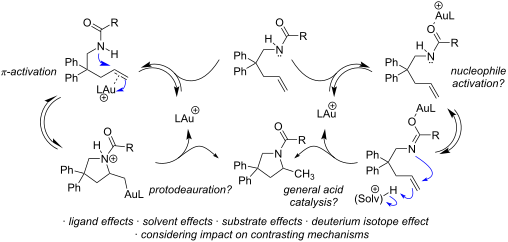
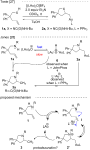
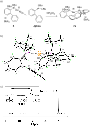
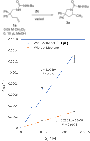
- out under a variety of conditions with cationic gold catalysts supported by phosphine ligands. The impact of ligand on gold, protecting group on nitrogen, and solvent and additive on reaction rates was determined. The most effective reactions utilized more Lewis basic ureas, and more electron
- both within the context of a classic gold π-activation/protodeauration mechanism and a general acid-catalyzed mechanism without intermediate gold alkyls. Keywords: alkene hydroamination; general acid catalysis; gold catalysis; isotope effect; phosphine ligand effect; solvent effect; Introduction
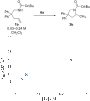
- undertaking a 1H NMR spectroscopic kinetic survey of solvent, ligand, and substituent effects on the general reaction 1 → 3 (with a variety of N-protecting groups), to supplement known qualitative observations. We found that, (1) electron-withdrawing phosphines accelerate hydroamination, (2) reactions are






Development of a chemical scaffold for inhibiting nonribosomal peptide synthetases in live bacterial cells
Beilstein J. Org. Chem. 2024, 20, 445–451, doi:10.3762/bjoc.20.39
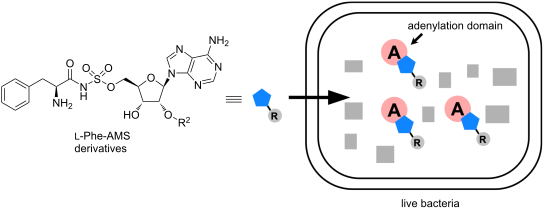
- previously described an activity-based protein profiling (ABPP) strategy for NRPSs using ABPs that target A-domains (Figure 2b) [13][14][15]. The probes comprise an aminoacyl-AMS ligand and a photoaffinity group with clickable alkyne functionality appended to the 2′-OH group of adenosine. A complex structure
- probes (AA-AMS-BPyne) can selectively label the A-domains corresponding to the amino acid of the ligand in both recombinant enzymes and proteomes. We recently reported that these probes can be used to label the A-domains of endogenous NRPSs in live bacterial cells [17][18][19]. The intracellular labeling


Mono or double Pd-catalyzed C–H bond functionalization for the annulative π-extension of 1,8-dibromonaphthalene: a one pot access to fluoranthene derivatives
Beilstein J. Org. Chem. 2024, 20, 427–435, doi:10.3762/bjoc.20.37
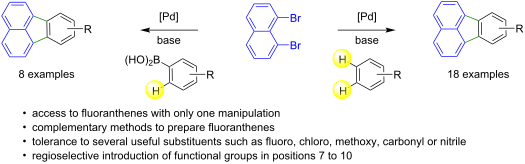
- derivatives (Scheme 1b) [21]. In the course of this reaction 20 mol % of Pd catalyst, 50 mol % of phosphine ligand and 30 equiv of DBU as base were used to afford the desired fluoranthene derivatives. 1-Naphthylboronic acid and 1,2-dibromobenzene in the presence of Pd2(dba)3 (20 mol %) and PCy3 (80 mol


Mechanisms for radical reactions initiating from N-hydroxyphthalimide esters
Beilstein J. Org. Chem. 2024, 20, 346–378, doi:10.3762/bjoc.20.35
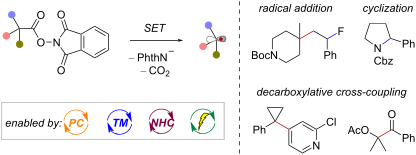
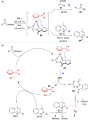
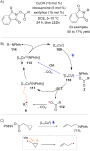
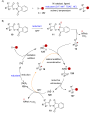
- [20][21]. More recent approaches have leveraged photoinduced ligand-to-metal charge transfer to generate radicals from aliphatic [22] and aromatic [23][24] carboxylic acids. However, more broadly used approaches involve carefully designed activated esters. Barton esters 2 emerged in the early 1980s
- -halides [115]. Their optimized reaction conditions required a NiII precursor, 2,2’-bipyridine (bpy) as ligand, silver nitrate (AgNO3) as an additive and the combination of a magnesium (Mg) sacrificial anode and a RVC cathode (Scheme 35A). A crucial discovery in advancing this methodology was the in situ








Elucidating the glycan-binding specificity and structure of Cucumis melo agglutinin, a new R-type lectin
Beilstein J. Org. Chem. 2024, 20, 306–320, doi:10.3762/bjoc.20.31
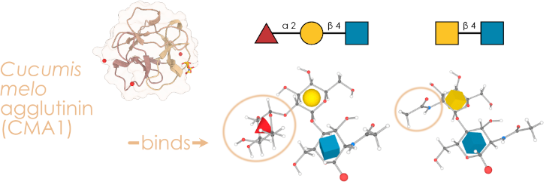
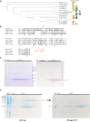
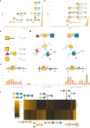
- binding in solution and a further confirmation of the binding specificity obtained by the array experiments. We note that the functional activity of bacterially produced CMA1 indicates that potential modification by glycosylation is not required for ligand binding. Next, we set out to quantify the binding
- arrangement of the ligand in the binding site (Figure 4c,d). While lectins such as CMA1 typically can present three binding pockets in their CBM13 domain, we hypothesized that the N-terminal half of CMA1 would in fact only exhibit two functional binding sites. However, only the alpha site was found occupied
- (BioRad). 0.6 mg/mL protein in PBS was mixed with SYPRO Orange (Sigma-Aldrich, Merck, #S5692) and glycan ligand (10 mM GalNAc; Carbosynth, #MA04390; 10 mM GlcNAc, Carbosynth, #MA00834; 10 mM blood group H type-2 tetrasaccharide; Elicityl, GLY032-2) in a total reaction volume of 25 µL. The temperature was



Unveiling the regioselectivity of rhodium(I)-catalyzed [2 + 2 + 2] cycloaddition reactions for open-cage C70 production
Beilstein J. Org. Chem. 2024, 20, 272–279, doi:10.3762/bjoc.20.28
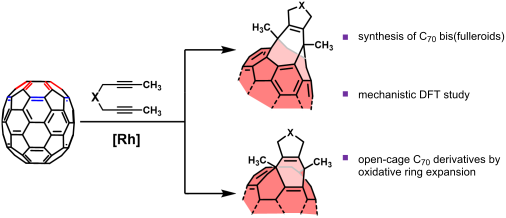
- group was substituted by a mesyl substituent and BIPHEP was used as a model phosphine ligand instead of Tol-BINAP to reduce the computational cost. The calculations, conducted at the B3LYP-D3/cc-pVTZ-PP(SMD=o-DCB)//B3LYP-D3/cc-pVDZ-PP level (see full computational details in Supporting Information File


Catalytic multi-step domino and one-pot reactions
Beilstein J. Org. Chem. 2024, 20, 254–256, doi:10.3762/bjoc.20.25
- ; multi-step reactions; multicomponent reactions; one-pot synthesis; organocatalysis; tandem reactions; transition-metal-catalysis; The synthesis of pharmaceutical ingredients, natural products, agrochemicals, ligand systems, and building blocks for materials science has reached a high level of

Metal-catalyzed coupling/carbonylative cyclizations for accessing dibenzodiazepinones: an expedient route to clozapine and other drugs
Beilstein J. Org. Chem. 2024, 20, 193–204, doi:10.3762/bjoc.20.19
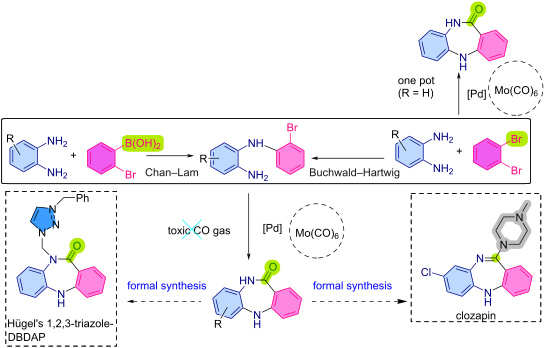
- (entry 1, Table 1). Next, the same procedure was carried out in the presence of molybdenum hexacarbonyl (Mo(CO)6, 2 equiv) as CO surrogate, under the previous conditions, but again we only observed the formation of intermediate 3a in 21% yield (entry 2, Table 1). Changing the ligand to triphenylphosphine
- effective ligand in a variety of highly efficient aminocarbonylation reactions with Mo(CO)6 due to its strong basicity and accelerated release of CO from this reagent [21]. The reaction was then screened using two different bidentate ligands, XPhos and XantPhos, and using the previous reaction conditions
- -step synthesis of DBDAPs, we embarked on an in-depth study of the B–H coupling/carbonylative cyclization in a step-wise fashion. Our first attempt was conducted using the previous conditions, which led to the desired compound 3a in 15% yield (entry 1, Table 2). Changing the ligand to PPh3 under the


Perspectives on push–pull chromophores derived from click-type [2 + 2] cycloaddition–retroelectrocyclization reactions of electron-rich alkynes and electron-deficient alkenes
Beilstein J. Org. Chem. 2024, 20, 125–154, doi:10.3762/bjoc.20.13
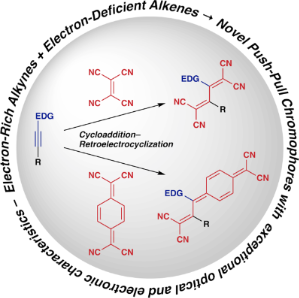
- wormlike nanoparticles. In rotaxanes, the utilization of metal–ligand bonding involving CuI is a common strategy for immobilizing a thread moiety within a macrocycle. However, the efficacy of such a bonding is compromised when catalysts are used in stoppering reactions, e.g., the copper-catalyzed azide
- –alkyne cycloaddition reaction. Consequently, a [2 + 2] CA–RE reaction that can yield push–pull chromophores without the use of a catalyst is exceedingly valuable as a stoppering method, even for systems featuring metal–ligand bonding. Accordingly, Diederich et al. demonstrated the synthesis of a CuI bis
- room-temperature solution (dichloromethane) and as a frozen matrix at 77 K [123]. This is in contrast with the typical homoleptic phenanthroline-based CuI complexes renowned for their emissions from a triplet metal-to-ligand charge transfer excited state. The absence of luminescence may be attributed


Photoinduced in situ generation of DNA-targeting ligands: DNA-binding and DNA-photodamaging properties of benzo[c]quinolizinium ions
Beilstein J. Org. Chem. 2024, 20, 101–117, doi:10.3762/bjoc.20.11
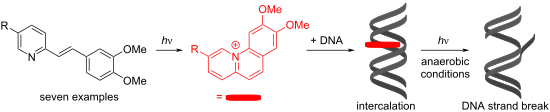
- organic solvents (78–20% in MeCN). The quinolizinium derivatives bind to DNA by intercalation with binding constants of 6–11 × 104 M−1, as shown by photometric and fluorimetric titrations as well as by CD- and LD-spectroscopic analyses. These ligand–DNA complexes can also be established in situ upon
- delivered without effect to the binding site, where the DNA-binding benzoquinolizinium ligand can then be generated as needed upon irradiation. Notably, the use of light for the activation of photo-controllable DNA ligands offers several advantages because it is easy to apply, traceless, and non-invasive
- efficient fluorescence quenching (Figure 5), which is commonly observed with this class of cationic ligands [3][70], mainly as a result of a photoinduced electron transfer from the excited, DNA-bound ligand with the DNA bases [71]. The binding isotherms obtained from the titration data were used to





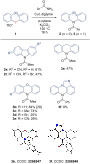
Synthesis of N-acyl carbazoles, phenoxazines and acridines from cyclic diaryliodonium salts
Beilstein J. Org. Chem. 2024, 20, 12–16, doi:10.3762/bjoc.20.2
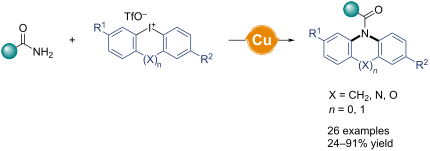
- Bremen, Germany 10.3762/bjoc.20.2 Abstract N-Acyl carbazoles can be efficiently produced through a single-step process using amides and cyclic diaryliodonium triflates. This convenient reaction is facilitated by copper iodide in p-xylene, using the commonly found activating ligand diglyme. We have
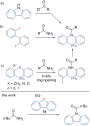
- [33][34]. Results and Discussion Initially, we investigated the synthesis of N-acyl carbazole by treatment of diaryliodonium salt 1a with valeramide using Cu(I) catalysts [18]. The results are shown in Table 1. In the first experiments in p-xylene at 120 °C with DMEDA as N,N-ligand, only modest

1-Butyl-3-methylimidazolium tetrafluoroborate as suitable solvent for BF3: the case of alkyne hydration. Chemistry vs electrochemistry
Beilstein J. Org. Chem. 2023, 19, 1966–1981, doi:10.3762/bjoc.19.147
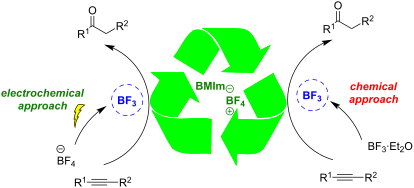
- , UK Department of Chemistry, Sapienza University of Rome, piazzale Aldo Moro, 5, 00185 Rome, Italy 10.3762/bjoc.19.147 Abstract In order to replace the expensive metal/ligand catalysts and classic toxic and volatile solvents, commonly used for the hydration of alkynes, the hydration reaction of
- /BF3 (either with electrogenerated BF3 or with BF3·Et2O) as an efficient and less harmful alternative to expensive metal/ligand catalysts, while avoiding conventional toxic and volatile solvents commonly used for the hydration of alkynes. Experimental General Information All chemicals were commercial


Aldiminium and 1,2,3-triazolium dithiocarboxylate zwitterions derived from cyclic (alkyl)(amino) and mesoionic carbenes
Beilstein J. Org. Chem. 2023, 19, 1947–1956, doi:10.3762/bjoc.19.145
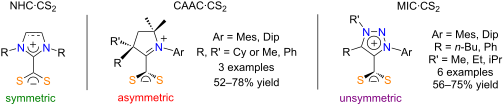
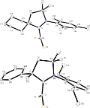
- , MIC·CS2, and NHC·CS2 zwitterions displayed similar electronic properties and featured the same bite angle. Yet, their steric properties are liable to ample modifications by varying the exact nature of their cationic heterocycle and its substituents. Keywords: betaines; carbenes; ligand effects; nitrogen


Studying specificity in protein–glycosaminoglycan recognition with umbrella sampling
Beilstein J. Org. Chem. 2023, 19, 1933–1946, doi:10.3762/bjoc.19.144
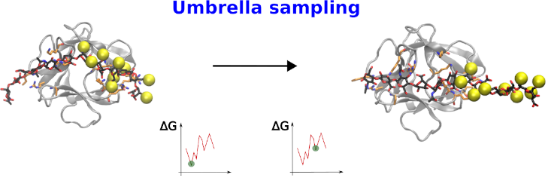
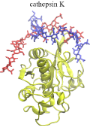
- essential to explain their biological functions. In this study, the umbrella sampling (US) approach is used to pull away a GAG ligand from the binding site and then pull it back in. We analyze the binding interactions between GAGs of three types (heparin, desulfated heparan sulfate, and chondroitin sulfate
- /pdb, [37]). The third complex is known to exist in two different binding poses which are experimentally well established. In this study, the umbrella sampling (US) approach is used to pull away a GAG ligand from the binding site and then pull it back in. The main focus of our study is to evaluate
- ligand from its bound position and allowing the ligand to approach the protein from a very distant position to the binding sites. Materials and Methods Structures and parameters Ligand preparation GAG structures used in the study consist of two parts: 1. the part from the experimental structure (heparin




N-Boc-α-diazo glutarimide as efficient reagent for assembling N-heterocycle-glutarimide diads via Rh(II)-catalyzed N–H insertion reaction
Beilstein J. Org. Chem. 2023, 19, 1841–1848, doi:10.3762/bjoc.19.136
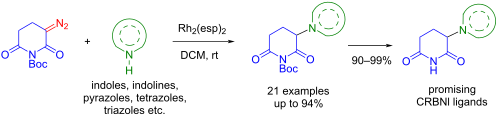
- ][10], potentially opening a path for its use in treating KRAS-induced cancers. A common characteristic of the degraders elaborated in the literature involves the compulsory integration of an E3-ligase ligand motif into the PROTAC configuration [11]. The E3-ligase most frequently utilized in TPD




Selectivity control towards CO versus H2 for photo-driven CO2 reduction with a novel Co(II) catalyst
Beilstein J. Org. Chem. 2023, 19, 1766–1775, doi:10.3762/bjoc.19.129
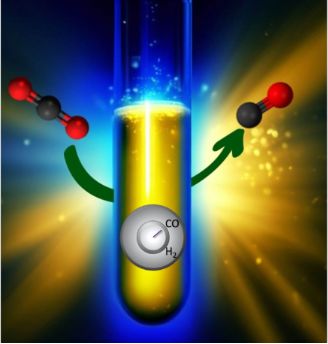
- maintaining high selectivity for carbon products. Results and Discussion Synthesis and characterization of the new Co(II)-based catalyst The novel cobalt(II) complex 1 was synthesized in dry methanol (MeOH) by mixing in a 2:1 ratio, the chelating diimine ligand, 1-benzyl-4-(quinolin-2-yl)-1H-1,2,3-triazole
- chosen solvent for photocatalysis. The absorption profile evokes the structured band of the free ligand BzQuTr [42], with two intense π–π* ligand-centered transitions at circa 319 nm and 330 nm (Figure 3). The pink solid dissolves as an intense blue DMA solution. Nevertheless, the d–d transitions
- ), respectively. A more intense current arises with the third redox process occurring at −2.52 V, which could be assigned to the reduction localized on the ligand (compare with the cyclic voltammogram in Supporting Information File 1, Figure S8). We investigated the electrochemical properties also under a CO2


Tying a knot between crown ethers and porphyrins
Beilstein J. Org. Chem. 2023, 19, 1630–1650, doi:10.3762/bjoc.19.120
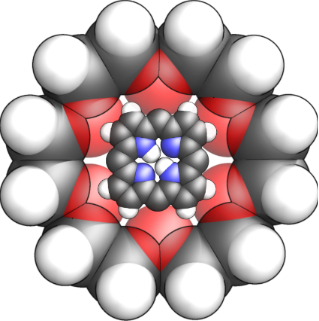
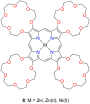
- planar to an octahedral. The water molecule and the hydroxide anion occupied ligand positions on both sides of the median central-core plane, hydrogen bonding to the flexible crown ether part of 16 (Scheme 6). The intramolecular flexibility of compound 16 allowed for tightening/loosening of the cleft
- flexibility of macrocyclic ligands, as demonstrated by X-ray molecular structures. The helicates consisted of two metal centres, namely cobalt, manganese, or iron, each coordinated by two nitrogens and oxygen donors of the ligand. The metal centres adopted distorted octahedral geometries with slight
- deviations from the N3O plane. An intriguing feature of the helicates was their short metal–metal separation (3.151 Å [Fe], 3.521 Å [Mn], and 3.104 Å [Co]) enabled by the flexibility of the ligand incorporating the sp3-hybridised meso-carbons. Crownphyrins and similar systems In 2022 our group reported on


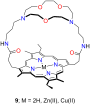

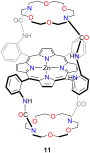


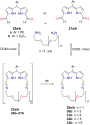


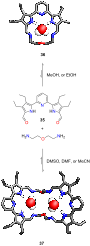


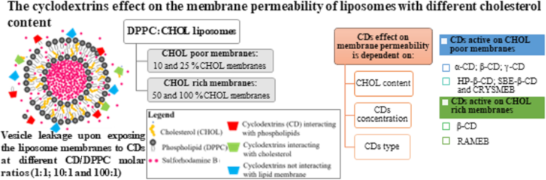
Cyclodextrins permeabilize DPPC liposome membranes: a focus on cholesterol content, cyclodextrin type, and concentration
Beilstein J. Org. Chem. 2023, 19, 1570–1579, doi:10.3762/bjoc.19.115
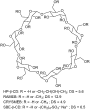
- hydroxypropyl-β-CD (HPBCD, DS = 5.6) were provided by Roquette Frères (Lestrem, France). Sulfobutyl ether-β-CD (SBE-β-CD, DS = 6.5) was provided by LIGAND Pharmaceuticals (San Diego, CA, USA). Dipalmitoylphosphatidylcholine (DPPC) and trizma base (buffer reagent) were purchased from Sigma-Aldrich, Switzerland


C–H bond functionalization: recent discoveries and future directions
Beilstein J. Org. Chem. 2023, 19, 1568–1569, doi:10.3762/bjoc.19.114
- the abstraction of intramolecular hydrogen atoms. Radical chemistry is a viable alternative to the two-electron process, involving C–H bond functionalization in the absence of any ligand and using low-cost redox-active metals (Fe, Cu, Mn, etc.) rather than heavy metals (Rh, Ir, etc.). Although radical
N-Sulfenylsuccinimide/phthalimide: an alternative sulfenylating reagent in organic transformations
Beilstein J. Org. Chem. 2023, 19, 1471–1502, doi:10.3762/bjoc.19.106
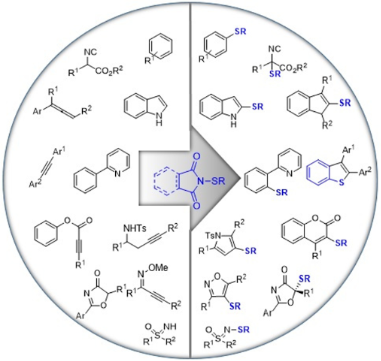
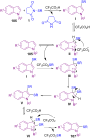
- intermediate III. Reductive elimination of Pd from III gave product 5 and species IV. Finaly, Pd(II) species were reproduced by ligand exchange to restart the next cycle (Scheme 4). In 2014, Fu and co-workers described a facile method for the C–H thiolation of phenols 7 with 1-(substituted phenylthio
- )pyrrolidine-2,5-diones 1 using FeCl3 or BF3·OEt2 as a catalyst (Scheme 5) [46]. A wide variety of thiolated phenols 8 were produced under mild reaction conditions without using any base, ligand, or additive. For both substrates, 7 and 1 aryl rings containing electron-donating groups exhibited a higher
- sulfide moieties 11 was performed by Fu et al. (Scheme 6) [47]. Iron(III) chloride was used as a catalyst for this coupling reaction without the need of any ligand and additive. Screening for other metal salts, such as Cu(OAc)2, Pd(OAc)2, AgOAc or CuI was not successful, although FeS·7H2O, FeS, Fe2(SO4)3




Application of N-heterocyclic carbene–Cu(I) complexes as catalysts in organic synthesis: a review
Beilstein J. Org. Chem. 2023, 19, 1408–1442, doi:10.3762/bjoc.19.102
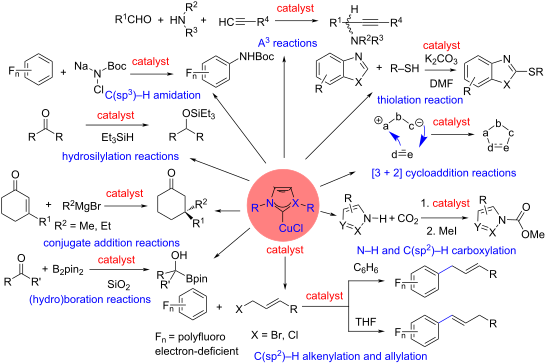
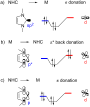
- copper(I) bromide in CH2Cl2 (Scheme 24) [31]. Nakamura et al. synthesized for the first time a copper complex with a 1,2,3-triazole carbene ligand in 2011. Complexes of copper with 1,4-diphenyl-, 1,4-dimesityl-, and 1-(2,6-diisopropylphenyl)-4-(3,5-xylyl)-1,2,3-triazol-5-ylidene were prepared through
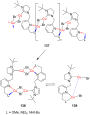
- catalysts for hydrosilylation and [3 + 2] cycloaddition discussed later [39]. 1.4 By ligand displacement Corrigan and co-worker stabilized homoleptic copper- and silver bis(trimethylsilyl)phosphido compounds [M6{P(SiMe3)2}6] (M = Cu, Ag) through their coordination with NHC ligands. For this purpose, they
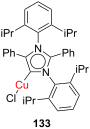
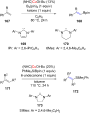
- the respective ligand with the copper salts in THF [43]. In the same year, Sanford and co-workers [44] synthesized the first isolable NHC–Cu(I)–difluoromethyl complexes 91 (Scheme 31). Owing to the low stability of [Cu(CHF2)] species, larger/bulky ligands like IPr, SiPr, etc. were used to obtain










One-pot nucleophilic substitution–double click reactions of biazides leading to functionalized bis(1,2,3-triazole) derivatives
Beilstein J. Org. Chem. 2023, 19, 1399–1407, doi:10.3762/bjoc.19.101
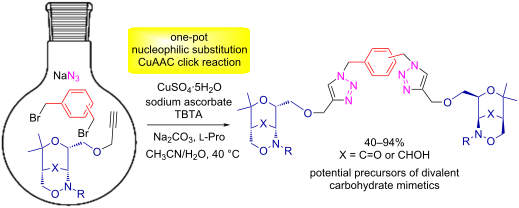
- (bromomethyl)benzene furnished geometrically differing bis(1,2,3-triazole) derivatives. The use of tris[(1-benzyl-1H-1,2,3-triazol-4-yl)methyl]amine (TBTA) as ligand for the click step turned out to be very advantageous. The compounds with 1,2-oxazinyl end groups can potentially serve as precursors of divalent
- presence of sodium ascorbate as reducing agent and sodium carbonate as base as well as ʟ-proline as ligand in a DMF/water mixture at 60 °C provided this promising result. These conditions applied are similar to those described by Fokin et al. [24], which had also been employed by other groups [37][38]. The
- we examined the influence of the ligand tris[(1-benzyl-1H-1,2,3-triazol-4-yl)methyl]amine (TBTA) which has been identified by Sharpless et al. [58] as a very beneficial component in CuAAC reactions. After comprehensive optimization, we found that the addition of 0.2 equiv of this ligand not only



Organic thermally activated delayed fluorescence material with strained benzoguanidine donor
Beilstein J. Org. Chem. 2023, 19, 1289–1298, doi:10.3762/bjoc.19.95
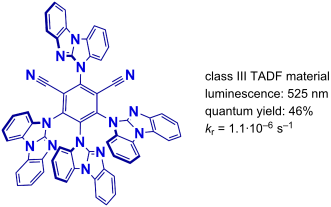
- 1. Benzoguanidine has an extended π-conjugation compared with carbazole and is more nitrogen-rich (three N-atoms vs one in carbazole). Thompson et al. recently reported a series of carbene–metal–amide (CMA) (metal = Cu, Ag, Au) emitters employing a benzoguanidine ligand [10]. The extended π
- containing a rigid benzoguanidine ligand in its molecular structure. Results and Discussion Synthesis and structure 4BGIPN was prepared in 70% yield by aromatic nucleophilic substitution reaction from 2,4,5,6-tetrafluoroisophthalonitrile and 5H-benzo[d]benzo[4,5]imidazo[1,2-a]imidazole (benzoguanidine) after
- experiment from 1.402(5) to 1.420(5), giving an average of 1.407(13) Å for 4BGIPN, which is closely similar to 1.405(8) Å reported for the benchmark 4CZIPN compound. Unlike carbazole, the benzoguanidine ligand lacks C2 rotational symmetry, thus enabling the benzoguanidine ligands to project above and below


Non-noble metal-catalyzed cross-dehydrogenation coupling (CDC) involving ether α-C(sp3)–H to construct C–C bonds
Beilstein J. Org. Chem. 2023, 19, 1259–1288, doi:10.3762/bjoc.19.94
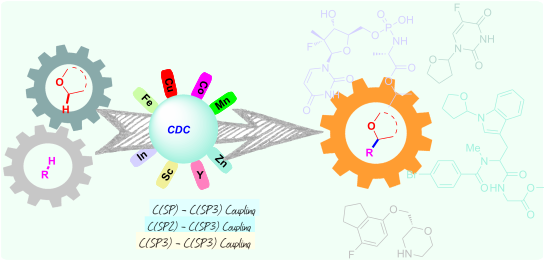
- have broad applications in synthesis. In 2019, Cai et al. developed a regioselective ligand-promoted CDC reaction between unactivated C(sp3)–H/C(sp3)–H bonds (Scheme 18) [79]. Different types of C(sp3)–H bond substrates, including cycloalkanes, cyclic ethers, and toluene derivatives without any
- directing groups could be used as coupling partners. The ligand acts as an activator of the catalyst to promote the reaction, and the iron-bound anion plays a crucial role in catalysis. This reaction might occur via a radical pathway, with the iron catalyst playing a significant role in electron transfer
- with Fe2(CO)9 as a catalyst and N1,N1,N2,N2-tetramethylethane-1,2-diamine (TMEDA) as bidentate ligand. A gram-scale alkylation reaction showed that the new procedure has excellent potential for synthetic applications. The mechanism study shows that radicals are the starting point of the coupling