
Search results
Search for "kinetic" in Full Text gives 628 result(s) in Beilstein Journal of Organic Chemistry. Showing first 200.
Ferrocenoyl-adenines: substituent effects on regioselective acylation
Beilstein J. Org. Chem. 2022, 18, 1270–1277, doi:10.3762/bjoc.18.133
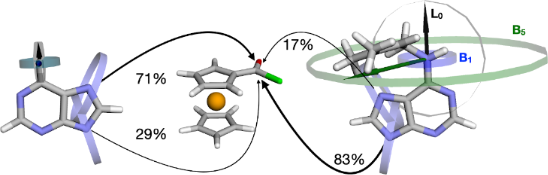
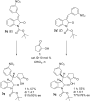
- kinetic and thermodynamic control of the acylation reaction. Results and Discussion It was shown that the reaction between the pyrimidine anion (uracil, thymine, or 5-fluorouracil) and FcCOCl in N,N-dimethylformamide (DMF) proceeded in a full regiospecific mode [19]. In the purine series, however, the



Experimental and theoretical studies on the synthesis of 1,4,5-trisubstituted pyrrolidine-2,3-diones
Beilstein J. Org. Chem. 2022, 18, 1140–1153, doi:10.3762/bjoc.18.118
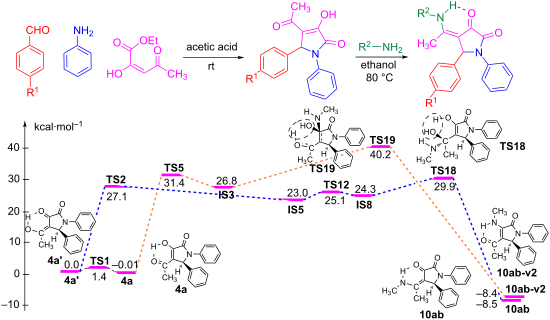
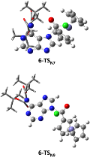
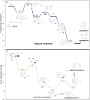
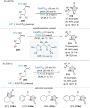
- proposed based on computational results and the main product is formed favorably following the PES via the lowest ΔG# pathway in both the gas-phase and an ethanol solvent model. DFT calculations showed that kinetic selectivity is more significant than thermodynamic selectivity for forming main products
- , the reaction pathway starting from 4a through IS3 and finally yielding 10ab-v2 is a more favorable one in both thermodynamic (ΔG) and kinetic (ΔG#) aspects (red and black lines) in comparision with going through IS5 to achieve the 10ab product. For the reaction originating from 4a’, passing through
- IS5 and finally forming product 10ab is the most preferred pathway, and even more favorable than both directions from 4a to yield 10ab-v2. Hence, the reaction routes to obtain 10ab-v2 are thermodynamically favorable, while yielding 10ab is under kinetic control. In order to better evaluate the


Understanding the competing pathways leading to hydropyrene and isoelisabethatriene
Beilstein J. Org. Chem. 2022, 18, 972–978, doi:10.3762/bjoc.18.97
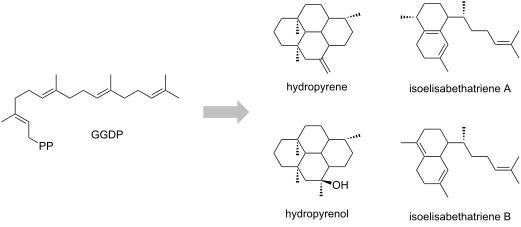
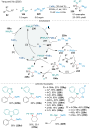
- . We show that there is a great thermodynamic preference for hydropyrene and hydropyrenol formation, and hence most likely in the synthesis of the isoelisabethatriene products kinetic control is at play. Keywords: diterpenes; enzyme mechanism; quantum mechanics; terpene synthases; thermodynamic and
- kinetic control; Introduction Terpenes constitute a ubiquitous class of natural molecules that are synthesized by terpene synthases (TPS). TPS generate a plethora of terpenes employing rich carbocation chemistry from a very limited number of substrates, known as geranyl pyrophosphate (GPP), farnesyl
- on the mechanistic details of the HP and IE pathways using computational methods in the gas phase. Gas-phase studies have been crucial in understanding terpene chemistry [10][11][12][13][14][15][16][17][18][19][20][21][22]. This work sheds light on the thermodynamic and kinetic parameters of the



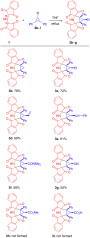
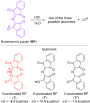
Synthesis of bis-spirocyclic derivatives of 3-azabicyclo[3.1.0]hexane via cyclopropene cycloadditions to the stable azomethine ylide derived from Ruhemann's purple
Beilstein J. Org. Chem. 2022, 18, 769–780, doi:10.3762/bjoc.18.77
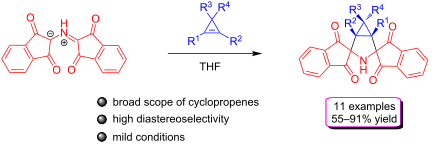
- revealed that the cycloaddition reactions are under kinetic control and belong to the class of inverse electron demand 1,3-DC reactions. We believe that the outcome of this work will serve as a basis for developing synthetic approaches to other bis-spirocyclic derivatives of 3-azabicyclo[3.1.0]hexane via






Structural basis for endoperoxide-forming oxygenases
Beilstein J. Org. Chem. 2022, 18, 707–721, doi:10.3762/bjoc.18.71
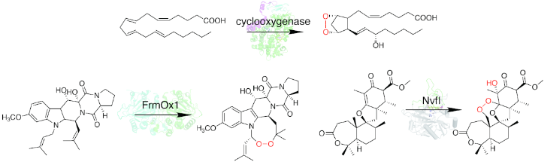
- [41][42][43]. Crystal structures of COXs The structural basis for the di-peroxide formation reaction by COXs has been substantially elucidated by electron paramagnetic resonance (EPR), kinetic analysis, X-ray crystallography, and mutagenesis experiments [24][44][45]. The structural analyses of
- . Catalytic residue in the cyclooxygenase reaction The formation of a tyrosyl radical during the catalytic cycle was proved by EPR and kinetic analyses [59][60][61]. Moreover, chemical and molecular biology analyses and a mutagenesis experiment identified the position of the tyrosyl radical. Treatment of the
- , including kinetic, UV–vis absorption, and EPR analyses of FtmOx1 wild type and its Y68F, Y74F, Y140F, and Y224F variants [70]. Their results revealed that the Y68F variant did not accumulate the initial tyrosyl radical and the formation of verruculogen was significantly decreased, while the Y224F variant


Inductive heating and flow chemistry – a perfect synergy of emerging enabling technologies
Beilstein J. Org. Chem. 2022, 18, 688–706, doi:10.3762/bjoc.18.70
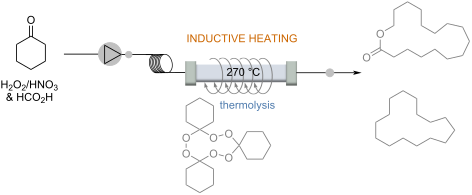
- water can be improved by using RF heating (Scheme 6) [43]. Thus, nickel-coated iron carbide NP (FeC-Ni) was developed to drastically reduce the overpotential at 20 mA/cm2 (≈200 mV for OER). This kinetic enhancement corresponds to a temperature increase of 200 °C, although the actual temperature only




Heteroleptic metallosupramolecular aggregates/complexation for supramolecular catalysis
Beilstein J. Org. Chem. 2022, 18, 597–630, doi:10.3762/bjoc.18.62
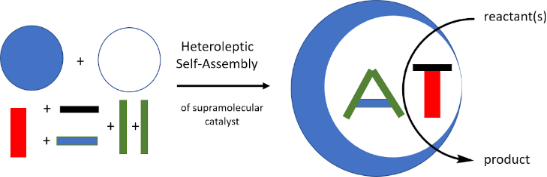
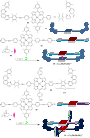
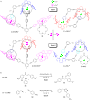
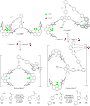
- heteroleptic aggregates are quite different. While in the former often a step-by-step attachment of the different ligands to the metal centers under kinetic control is dominating, the formation of dynamic aggregates relies on effective self-sorting protocols under thermodynamic control [24]. In its initial
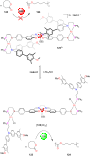
- catalytic machinery was due to kinetic and not thermodynamic reasons (Figure 19). While the concept of increased liberation of an organocatalyst (ILC) has been demonstrated in other dynamic nanomechanical systems as well [99], a particular highlight was recently realized with a catalytic nanorotor that was











Shift of the reaction equilibrium at high pressure in the continuous synthesis of neuraminic acid
Beilstein J. Org. Chem. 2022, 18, 567–579, doi:10.3762/bjoc.18.59
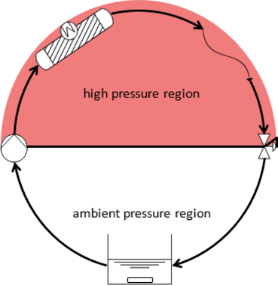
- can be modelled as a Michaelis–Menten rate expression. The Michaelis–Menten equation was used to fit the reaction rates at different substrate concentrations for different pressures in Figure 8. The resulting kinetic parameters are listed with 95% confidence intervals in Table 3. The influence of
- were kept constant and only the pressure was varied, resulting in the reactions rates shown in Figure 10 (left). By rearranging the rate expression and inserting the previously calculated kinetic parameters, the inhibition constant was calculated (Figure 10 (right)). The change in molar volume
- introduced by the coupling of pyruvate to the enzyme was calculated by using the exponential fit. The calculated value is −12.9 ± 5.5 mL/mol (the values at 50 MPa and 89 MPa were considered as outliers and not included in the calculation). Kinetic studies of the immobilized aldolase show an increase in


BINOL as a chiral element in mechanically interlocked molecules
Beilstein J. Org. Chem. 2022, 18, 508–523, doi:10.3762/bjoc.18.53
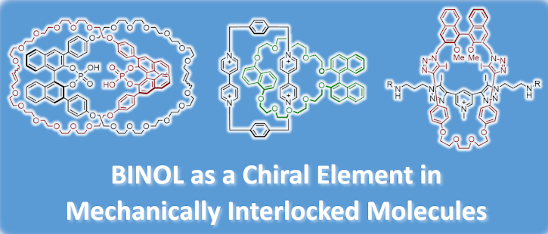
- is formed preferentially under kinetic control (er = 67:33, total yield 23%). Interestingly, employing (R)-15 together with (rac)-19 gave a significantly lower diastereoselectivity (er = 56:44), albeit at slightly increased yield (33%). Similarly, the reaction of the chiral isomannide-based




The asymmetric Henry reaction as synthetic tool for the preparation of the drugs linezolid and rivaroxaban
Beilstein J. Org. Chem. 2022, 18, 438–445, doi:10.3762/bjoc.18.46
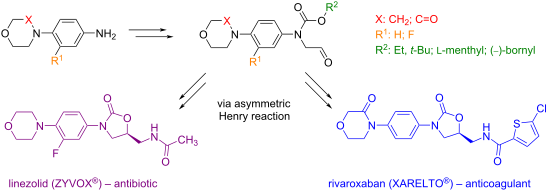
- material were practically the same as the one of the starting material in all cases. Further, the separation via kinetic resolution in the final reaction step was also examined. The course of the re-esterification was stopped at a conversion of ca 50% and the de values were determined. Unfortunately, no


Menadione: a platform and a target to valuable compounds synthesis
Beilstein J. Org. Chem. 2022, 18, 381–419, doi:10.3762/bjoc.18.43
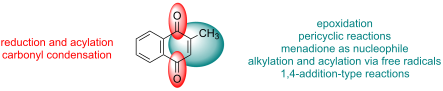
- reaction mechanisms: free radical autoxidation, cation radical autoxidation, and thermal intersystem crossing (ISC), using 18O2 labeling, spin-trapping, spectroscopic, mass spectrometric, kinetic, and computational techniques. After several experiments, the obtained results have demonstrated that the 2


Regioselectivity of the SEAr-based cyclizations and SEAr-terminated annulations of 3,5-unsubstituted, 4-substituted indoles
Beilstein J. Org. Chem. 2022, 18, 293–302, doi:10.3762/bjoc.18.33
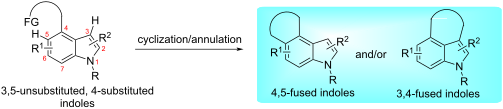
- highly nucleophilic indole C3 as the peri position, with the latter being often more nucleophilic than the former. Noteworthy is that the kinetic preference for ring-closure onto the C5 position may be a more dominating factor than the higher nucleophilicity of the C3 position (or vice versa). Due to
- –j was performed by converting them into the corresponding acid chloride, followed by treatment with AlCl3 in refluxing 1,2-dichloroethane (DCE) (Scheme 10B). The reactions furnished indole 4,5-fused indanones 29g–j as the only detectable cyclized products. The authors noted that the kinetic


New advances in asymmetric organocatalysis
Beilstein J. Org. Chem. 2022, 18, 240–242, doi:10.3762/bjoc.18.28
- Waser employed an isothiourea catalyst for esterification-mediated kinetic resolution of paracyclophane derivatives with planar chirality [19]. Parida and Pan showed that a Michael reaction coupled with an acyl transfer reaction between α-nitroketones and 4-arylidenepyrrolidine-2,3-diones can produce a
Trichloroacetic acid fueled practical amine purifications
Beilstein J. Org. Chem. 2022, 18, 225–231, doi:10.3762/bjoc.18.26
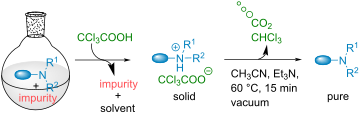
- contrast, use of Lewis basic solvents such as DMF considerably accelerate the decarboxylation kinetic (Table 1, entry 3) with the recovery of the free amine after 24 hours. However, this solvent is not convenient given its high boiling point making difficult it’s separation from the purified amine


Synthesis and late stage modifications of Cyl derivatives
Beilstein J. Org. Chem. 2022, 18, 174–181, doi:10.3762/bjoc.18.19
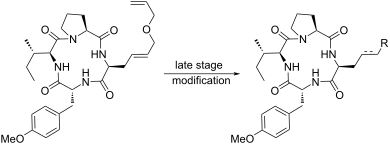
- degree of variability for the generation of small libraries, in our case of Cyl-1 derivatives. Chiral allylic alcohols are easily accessible, either via kinetic resolution of racemic alcohols [46][47], asymmetric catalysis [48], or from chiral pool materials, such as threitol 1 [49]. Using the last



Asymmetric organocatalytic Michael addition of cyclopentane-1,2-dione to alkylidene oxindole
Beilstein J. Org. Chem. 2022, 18, 167–173, doi:10.3762/bjoc.18.18
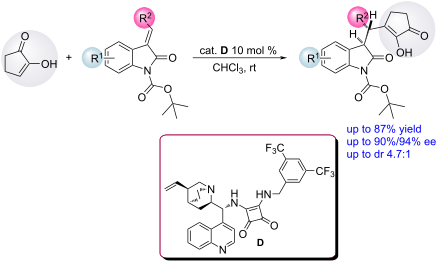
- (Table 2). As the racemate of 3a was obtained in a higher diastereomeric ratio (6.3:1) we applied kinetic and thermodynamic conditions for the epimerisation of it (Table 2, entries 1 and 2, respectively). Unfortunately, in both cases the diastereomeric ratio decreased and the amount of more stable syn


Mechanistic studies of the solvolysis of alkanesulfonyl and arenesulfonyl halides
Beilstein J. Org. Chem. 2022, 18, 120–132, doi:10.3762/bjoc.18.13
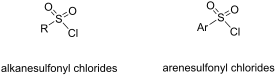
- Transfer Reactions”. The present review will emphasize more recent contributions and, in particular, the application of the extended Grunwald–Winstein equation and kinetic solvent isotope effects to the solvolysis reactions. There is also an appreciable number of reports concerning the corresponding
- from linearity in Arrhenius plots, which with conventional kinetic studies would be masked by a larger random scatter within the different determinations. A precise detailed treatment allowed the “second-order” heat capacities of activation (∆Cp#) to be determined for, among many other substrates
- , methane and benzenesulfonyl chlorides [28]. The magnitude of the ∆Cp# was initially considered to be the most sensitive indicator of the extent of solvent reorganization during the substitution process. Similarly, a very accurate determination of the kinetic solvent isotope effect (ksie) for solvolysis in


DABCO-promoted photocatalytic C–H functionalization of aldehydes
Beilstein J. Org. Chem. 2021, 17, 2959–2967, doi:10.3762/bjoc.17.205
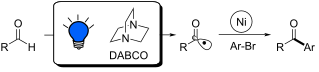
- leads to only minor differences in the thermodynamics of the reaction and do not change the qualitative picture. The HAT step carried out with DABCO presents a kinetic barrier of 16.9 kcal·mol−1 in the gas phase while the quinuclidine-catalyzed reaction is predicted to be barrierless as shown in Figure




Iron-catalyzed domino coupling reactions of π-systems
Beilstein J. Org. Chem. 2021, 17, 2848–2893, doi:10.3762/bjoc.17.196
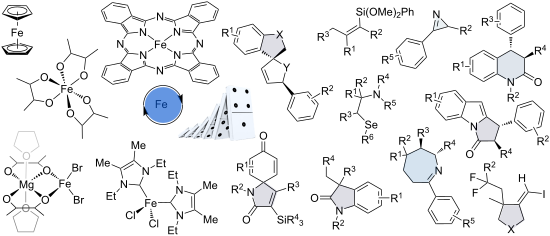
- , including kinetic isotope effects and radical trapping, suggested a radical mechanism. The hydroperoxide, in the presence of an iron catalyst, abstracts the hydrogen atom alpha to the heteroatom. The alkyl radical may attack the acrylamide; subsequent intramolecular radical cyclization with the aryl ring
- the synthesis of 1-azaspiro[4.5]decanes 77 (Scheme 13) [89]. The reaction was amenable to both EWGs and EDGs; however, substitution at the ortho-position of the cinnamamide lowered the product yield. Mechanistic experiments suggest the reaction proceeds through a radical reaction. Moreover, kinetic
- radical cyclization with the activated alkene 127. Ring closing with the ortho-carbon of the aryl ring generates aryl radical 128 which was confirmed not to be the rate-determining step by kinetic isotope effect studies. Subsequently, 128 is oxidized by S2O82− and deprotonated to form the desired product













Photophysical, photostability, and ROS generation properties of new trifluoromethylated quinoline-phenol Schiff bases
Beilstein J. Org. Chem. 2021, 17, 2799–2811, doi:10.3762/bjoc.17.191
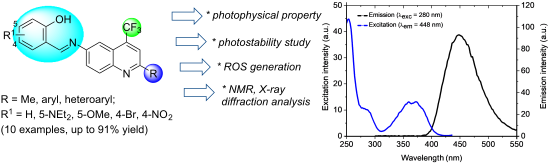
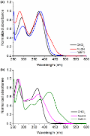
- -NEt2). The inset shows the first-order kinetic profile. General view for the present study. Synthesis of ((trifluoromethyl)quinolinyl)phenol Schiff bases 3aa–fa. Synthesis of trifluoromethylated quinolinyl-phenol Schiff bases 3bb–be. Photophysical data of derivatives 3aa–fa and 3bb–be ([ ] = 1.50 × 10




Recent advances in the asymmetric phosphoric acid-catalyzed synthesis of axially chiral compounds
Beilstein J. Org. Chem. 2021, 17, 2729–2764, doi:10.3762/bjoc.17.185
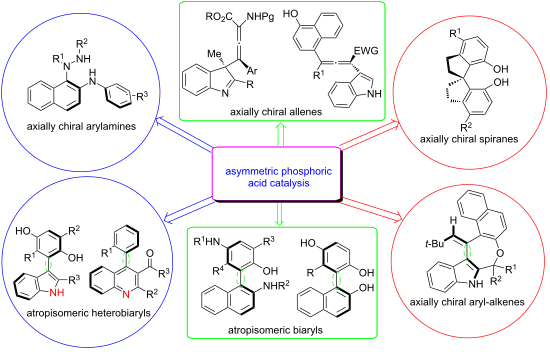
- axial chiral compounds has been paid much attention [6], and great progress has been made in recent years. For example, many remarkable activities have been undertaken to develop strategies such as dynamic kinetic resolution, atroposelective coupling, cycloaddition, and chirality conversion for the
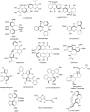
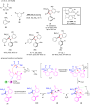
- (kinetic resolution) in the presence of chiral phosphoric acid CPA 3. In this work, various EWG- and EDG-containing substrates were incorporated, and chiral biaryls 10 were obtained with good to excellent selectivities of 81–93% ee by desymmetrization and 63–96% ee by kinetic resolution. The subsequent
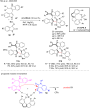
- asymmetric addition reaction of racemic naphthylindole 42 with azodicarboxylate 43 under chiral phosphoric acid catalysis. In the presence of CPA 2, 42 and 43 reacted and underwent dynamic kinetic resolution to afford naphthylindoles 44 with axial chirality in moderate to good yields (50–98%) and high












Synthetic strategies toward 1,3-oxathiolane nucleoside analogues
Beilstein J. Org. Chem. 2021, 17, 2680–2715, doi:10.3762/bjoc.17.182
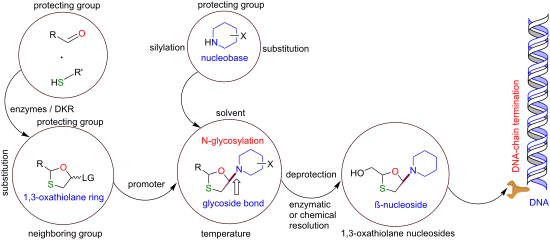
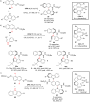
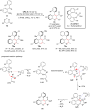
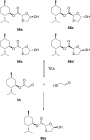
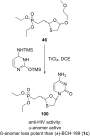
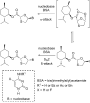
- nucleoside analogues. The enantiomerically pure 1,3-oxathiolane core has been an important building block in precursors that result in a defined stereochemistry of the resultant nucleoside product after N-glycosylation. Dynamic kinetic resolution (DKR) is a processes that interconverts a racemic mixture into
- -oxathiolane with Trichosporon laibachii lipase and a kinetic resolution. The synthesis of enantiopure ((R)-5-acetoxy-1,3-oxathiolan-2-yl)methyl benzoate (71) was carried out from the substrates 3a, 1,4-dithiane-2,5-diol (3q), and phenyl acetate via dynamic covalent kinetic resolution. This was a one-pot
- achieved. In 2014, Zhang et al. [64] reported an optimized asymmetric synthesis of 1,3-oxathiolan-5-ones 77 and 78 via dynamic covalent kinetic resolution using hemithioacetal chemistry coupled with a lipase-catalyzed cyclization (Scheme 25). Methyl thioglycolate (3j) was used in the reaction with aldehyde








Adjusting the length of supramolecular polymer bottlebrushes by top-down approaches
Beilstein J. Org. Chem. 2021, 17, 2621–2628, doi:10.3762/bjoc.17.175
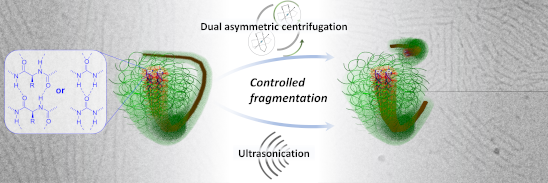
- access to differently sized fragments depending on time and rotation rate. Extended sonication and scission analysis further allowed an estimation of tensile strengths of around 16 MPa for both the BTU and BTP systems. In combination with the high kinetic stability of these SPBs, the applied top-down
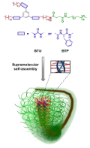
- benzenetrispeptide (BTP) motifs [18][19][20]. The resulting amphiphilic character of the materials facilitated a control of the kinetic assembly, which provided access to stable nanostructures on a broad length range (<100 nm–2 µm). While the process enables a good adjustment of the length, it relies on a precise
- ). It is important to note that all obtained fibers remained unchanged over several months after the top-down processing, demonstrating the previously described excellent kinetic stability of these supramolecular aggregates (Figures S15 and S16, Supporting Information File 1) [21]. Inspired by work of



α-Ketol and α-iminol rearrangements in synthetic organic and biosynthetic reactions
Beilstein J. Org. Chem. 2021, 17, 2570–2584, doi:10.3762/bjoc.17.172
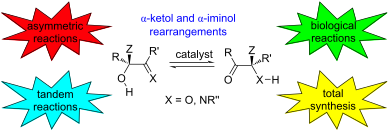
- transferred between the oxygen atoms after the alkyl migration, making it especially useful in synthetic strategies using these protected intermediates. Additionally, the reaction was found to be useful in the kinetic resolution of a racemic mixture of chiral substrates possessing both alkyl and aryl α
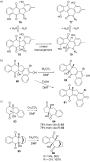
- -xylulose-5-phosphate reductoisomerase (DXR), uses a different mechanism to accomplish the carbon-skeleton rearrangement of its substrate 63 [19]; kinetic isotope effect experiments have excluded an α-ketol rearrangement and instead support a stepwise retro-aldol/aldol sequence for formation of intermediate
- . The catalyst is also capable of kinetic resolution of a mixture of enantiomeric substrates. Al* = 18. BF3-promoted diastereospecific rearrangement of α-ketol 21 to difluoroalkoxyborane 22. In the presence of a gold catalyst and water in 1,4-dioxane, 1-alkynylbutanol derivatives undergo tandem




Copper-catalyzed monoselective C–H amination of ferrocenes with alkylamines
Beilstein J. Org. Chem. 2021, 17, 2488–2495, doi:10.3762/bjoc.17.165
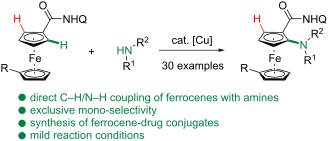
- exchange was observed at the ortho-position of 1a with 3.0 equivalents of CD3CO2D under standard conditions (Scheme 5a). Furthermore, a larger value of kinetic isotope effect (KIE = 2.4) was detected (Scheme 5b). These results indicated that the cleavage of C–H bond was most likely involved in the rate