
Search results
Search for "ester" in Full Text gives 1541 result(s) in Beilstein Journal of Organic Chemistry. Showing first 200.
Asymmetric organocatalytic synthesis of chiral homoallylic amines
Beilstein J. Org. Chem. 2024, 20, 2349–2377, doi:10.3762/bjoc.20.201
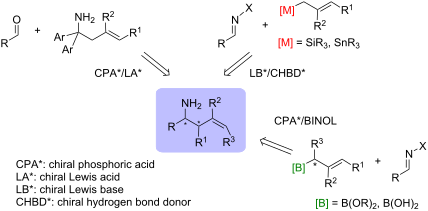
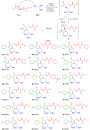
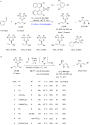
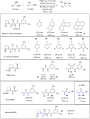
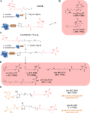
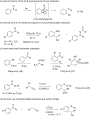
- -diaminonaphthalene derivatives 42, which after hydrolysis and extraction into toluene, were reacted with indole, 3-methylindole, 3,4-dihydroisoquinoline, and benzoyl hydrazone ethyl glyoxylate ester to afford terminal (E)-trifluoromethyl homoallylic amines 44 with up to 3 adjacent stereocentres with high to
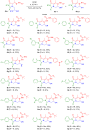
- . 3,3’-Diaryl-BINOL-catalysed asymmetric organocatalytic allylation of acylimines [24]. Aminophenol-catalysed reaction between N-phosphinoylimines and pinacol allylboronic ester. Imine scope [6]. aReaction time: 6 h. Asymmetric geranylation and prenylation of indoles catalysed by (R)- or (S)-3,3








Improved deconvolution of natural products’ protein targets using diagnostic ions from chemical proteomics linkers
Beilstein J. Org. Chem. 2024, 20, 2323–2341, doi:10.3762/bjoc.20.199
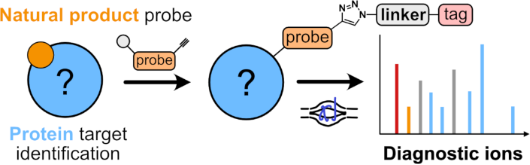
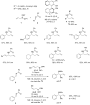
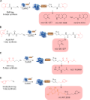
- analogue, the DMP-tag, which in contrast to standardly used isotopic tags bearing the N-hydroxysuccinimide ester (NHS-ester) reacting with all primary amines of lysine side-chains, allows to selectively label the probe–protein conjugates (Figure 7A) [81][83]. The DMP-tag can be prepared in a six-steps




Stereoselective mechanochemical synthesis of thiomalonate Michael adducts via iminium catalysis by chiral primary amines
Beilstein J. Org. Chem. 2024, 20, 2313–2322, doi:10.3762/bjoc.20.198
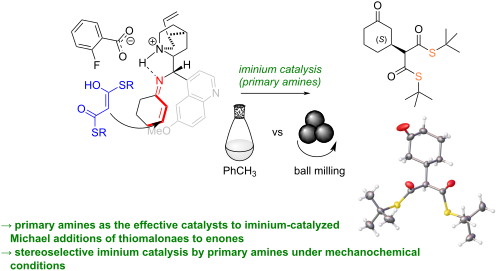
- both conditions. This result could be ascribed to the lower affinity of the oxo-ester to form active nucleophiles in comparison to the more favorable enolization of thiomalonates. The stereochemical outcome of the thiomalonate’s addition could be rationalized by the assumption the iminium ion


Deuterated reagents in multicomponent reactions to afford deuterium-labeled products
Beilstein J. Org. Chem. 2024, 20, 2270–2279, doi:10.3762/bjoc.20.195
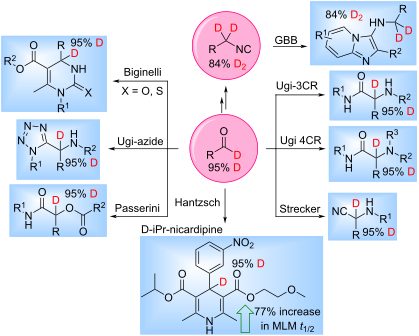
- H-iPr-nicardipine was higher (8 min) related to enhanced ester stability with an isopropyl group versus a methyl ester. Collectively these results point to high potential for translation in vivo where novel deuterated analogs exhibit longer t1/2 and by extension oral bioavailability. Conclusion In


Metal-free double azide addition to strained alkynes of an octadehydrodibenzo[12]annulene derivative with electron-withdrawing substituents
Beilstein J. Org. Chem. 2024, 20, 2234–2241, doi:10.3762/bjoc.20.191
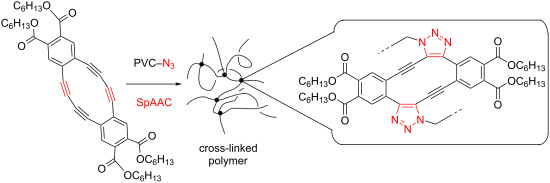
- , DBAs substituted with electron-withdrawing groups have been little studied [19], and their chemical stability and physical properties are not well understood. In this paper, a new DBA substituted with ester groups was synthesized, and the double azide addition was comprehensively investigated. Finally




Heterocycle-guided synthesis of m-hetarylanilines via three-component benzannulation
Beilstein J. Org. Chem. 2024, 20, 2208–2216, doi:10.3762/bjoc.20.188
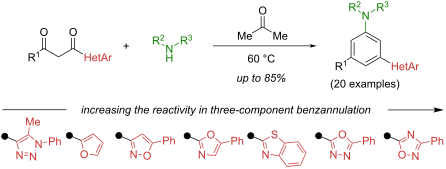
- situ-generated acetone imines in a (3 + 3) manner to afford meta-substituted anilines (Scheme 1C) [53][54]. Various EWGs (ester, carbamoyl, ketone, trifluoromethyl) have been successfully employed which motivated us to evaluate other possible EWGs. Results and Discussion Based on the fact, that many
- heterocycles are isoelectronic to an ester or a carbamoyl group, we were interested in testing various heterocycles as electron-withdrawing groups for activation of the carbonyl group in 1,3-diketones. In order to compare the electron-withdrawing ability of heterocycles and previously studied EWGs, we tried to


Natural resorcylic lactones derived from alternariol
Beilstein J. Org. Chem. 2024, 20, 2171–2207, doi:10.3762/bjoc.20.187
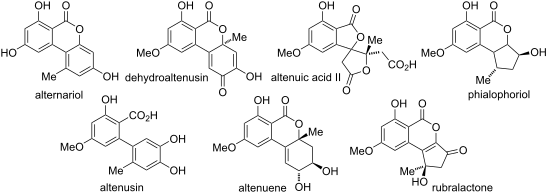
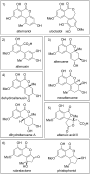
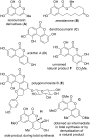
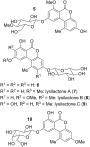
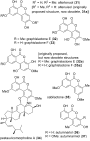
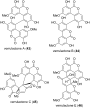
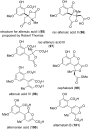
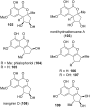
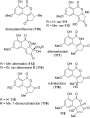
- ester of desmethylaltenusin, was isolated from Alternaria alternata; it showed neuroprotective effects against oxidative stress-mediated damages in PC12 cells [213]. Two further biaryl derivatives are most likely derived from alternariol and their biosynthesis similarly seems to include a reductive bond










From perfluoroalkyl aryl sulfoxides to ortho thioethers
Beilstein J. Org. Chem. 2024, 20, 2108–2113, doi:10.3762/bjoc.20.181
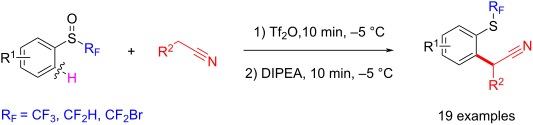
- -cyanoalkylation of benzoyl or ester group-substituted fluoroalkyl aryl sulfoxides with various alkyl nitriles in two steps [48]. The addition of a base in the second step easily enabled the [3,3]-rearrangement, allowing for the addition of two functional groups – the cyano group and difluoromethylthio group – to



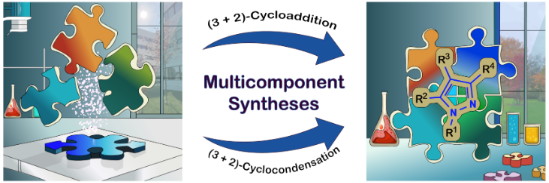
Multicomponent syntheses of pyrazoles via (3 + 2)-cyclocondensation and (3 + 2)-cycloaddition key steps
Beilstein J. Org. Chem. 2024, 20, 2024–2077, doi:10.3762/bjoc.20.178
- dihydropyridines, specifically 3,5-acyl-1,4 dihydropyridines 77, are well suited for undergoing ring opening-ring closing cyclocondensation with hydrazine in a pseudo-multicomponent reaction to give bis(pyrazolyl)methanes 78 (Scheme 28) [106]. Interestingly, the use of ester derivatives leads to the formation of




Diastereoselective synthesis of highly substituted cyclohexanones and tetrahydrochromene-4-ones via conjugate addition of curcumins to arylidenemalonates
Beilstein J. Org. Chem. 2024, 20, 2016–2023, doi:10.3762/bjoc.20.177
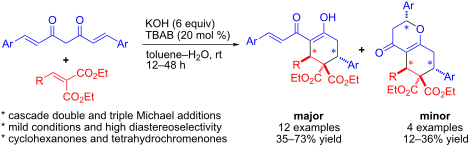
- not have a significant effect on the yield or formation of respective products (Table 1, entry 12). Based on the optimization studies, a combination of KOH in toluene and TBAB (Table 1, entry 2) as phase-transfer catalyst was chosen as the best conditions. Although KOH could saponify the ester group
- predominates over saponification under our mild conditions (room temperature). Overall, the reaction proceeds smoothly without any unwanted side reactions such as saponification of the ester groups. Having optimized the reaction conditions, we proceeded to examine the substrate scope of the developed
- to the increase in electron density at the carbon β to the ester group thus inhibiting the Michael addition of curcumin (Table 2, entry 4). Arylidenemalonate 2e, bearing a weakly electron-donating substituent, reacted with 1a to afford the double Michael adduct 3e in moderate yield (46%), and the


Regioselective alkylation of a versatile indazole: Electrophile scope and mechanistic insights from density functional theory calculations
Beilstein J. Org. Chem. 2024, 20, 1940–1954, doi:10.3762/bjoc.20.170
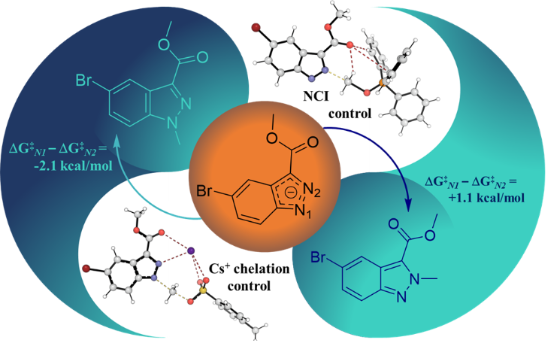
- OPPh3 contributing to the increased error and standard deviation. Compound 6 was completely consumed and not detected (see Supporting Information File 1). Mechanistic considerations Alam and Keeting proposed a deprotonated intermediate that utilized the indazole N2 and C=O from an ester substituent at C
- system (Figure 10). Under conditions A, deprotonation and cesium coordination were heavily favored by 11.1 kcal/mol (18(N-H)). Transition states 18-N2-Cs and 18-N1-Cs were found leading to N1- and N2-products, respectively. NCIs between the cesium cation with the ester and sulfonate oxygens, and
- indazole and the deprotonated indazole was only −0.2 kcal/mol (Figure 11). Again, no preorganized intermediates were found. The NCIs were consistent with the parent system. The hydrogen bond between the H on the electrophilic methyl group and an ester oxygen was found in the transition state leading to the


Negishi-coupling-enabled synthesis of α-heteroaryl-α-amino acid building blocks for DNA-encoded chemical library applications
Beilstein J. Org. Chem. 2024, 20, 1922–1932, doi:10.3762/bjoc.20.168
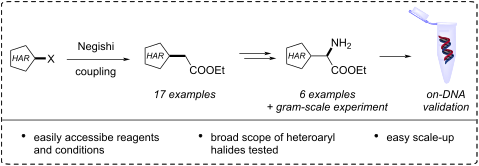
- proceeded smoothly yielding 4j in quantitative yield. However, obtaining compound 4r presented some challenges due to the resistance of ester 2r towards conventional oxidation methods (see Table S5 in Supporting Information File 1). Consequently, a multi-step process involving ester hydrolysis and
- methods were tested and after a brief optimization process, zinc dust and HCl in a mixture of EtOH/dioxane proved to be the best conditions in order to maximize the yield and limit the amino ester instability issues (see Table S6 in Supporting Information File 1). By slightly adjusting the reaction time
- first attached to carboxylic acid functionalized DNA headpiece 7a (first reverse amidation). Next, the ester was hydrolyzed to obtain acid 9, and finally, a second reverse amidation with aniline afforded 10. Both the reverse amidation and the ester hydrolysis were performed following literature




Access to 2-oxoazetidine-3-carboxylic acid derivatives via thermal microwave-assisted Wolff rearrangement of 3-diazotetramic acids in the presence of nucleophiles
Beilstein J. Org. Chem. 2024, 20, 1894–1899, doi:10.3762/bjoc.20.164

- -methoxyethylamine. Attempts to obtain directly 2-oxoazetidine carboxylic acid (or its decarboxylation product) or its trifluoroethyl ester by running the synthesis with water or trifluoroethanol were also unsuccessful. Acylation of the π-excessive double bonds of N-alkylindole and dihydropyran by the in situ


The Groebke–Blackburn–Bienaymé reaction in its maturity: innovation and improvements since its 21st birthday (2019–2023)
Beilstein J. Org. Chem. 2024, 20, 1839–1879, doi:10.3762/bjoc.20.162
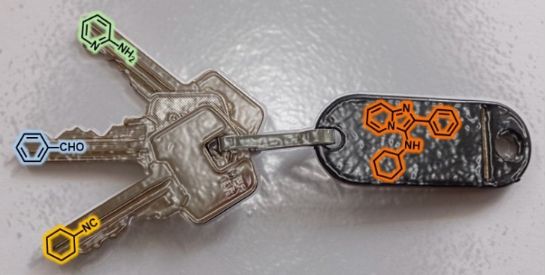
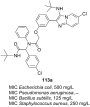
- ester) was positioned in the aldehyde precursors 86 (Scheme 28). Various 2-aminothiazoles 87 and tert-butyl isocyanide (5) were reacted with 86 in the presence of Yb(OTf)3, affording 88. Addition of a new aliquot of Yb(OTf)3 (30 mol %) allowed the new ring formation through a 7-exo-trig intramolecular






Chiral bifunctional sulfide-catalyzed enantioselective bromolactonizations of α- and β-substituted 5-hexenoic acids
Beilstein J. Org. Chem. 2024, 20, 1794–1799, doi:10.3762/bjoc.20.158
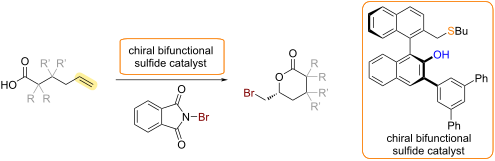
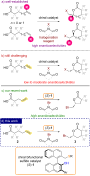
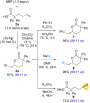
- -valerolactones 7 and 8, which are functionalized with sulfur and nitrogen, in high yields. Additionally, optically active δ-valerolactone 3a was converted to optically active epoxy-ester 9 upon treatment with potassium carbonate in methanol. Notably, the transformed products were obtained without any loss of



Syntheses and medicinal chemistry of spiro heterocyclic steroids
Beilstein J. Org. Chem. 2024, 20, 1713–1745, doi:10.3762/bjoc.20.152
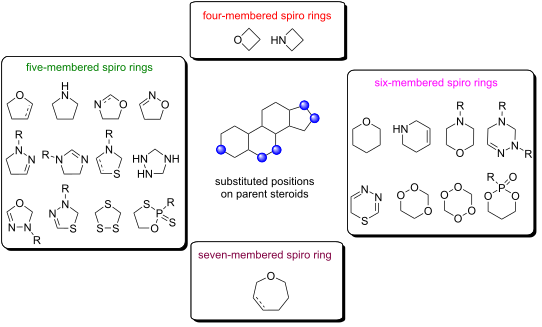
- diazo precursor. To achieve this, cholesterol was first esterificated using 2-(4-methoxyphenyl)acetic acid and DCC. The resulting arylacetic ester 12 was then reacted with 4-acetamidobenzenesulfonyl azide (p-ABSA) and DBU in anhydrous acetonitrile to yield the diazo compound 13 in 22% yield. The carbene
- final CO insertion to release the ester. After an acid hydrolysis which produced 36, a basic treatment induced the condensation reaction to yield the heterocycle 37 in 99% yield. This reaction sequence was also applied to the acetates of ethisterone and ethynylestradiol, resulting in similar yields in
- ester under basic conditions was carried out, followed by the transformation of the carboxyl group to the amides 165 and 166 by treatment with thionyl chloride and the corresponding amine. Tetraoxanes were obtained from ketones 163, 165, and 166 by a peroxyacylation reaction using an acidic hydrogen


Chemo-enzymatic total synthesis: current approaches toward the integration of chemical and enzymatic transformations
Beilstein J. Org. Chem. 2024, 20, 1693–1712, doi:10.3762/bjoc.20.151
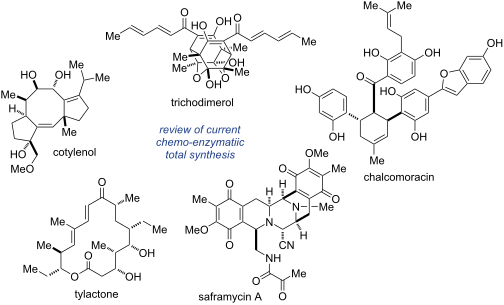
- Suzuki–Miyaura coupling with boronic ester 53 and O-acetylation furnished 54. The dienophile component, morachalcone A (44), was synthesized from phenol 55 in four steps including O-prenylation and subsequent Claisen rearrangement, aldol condensation with 56, and deprotection. The key chemo-enzymatic
- this problem, the research group designed synthetic substrate analogs (96, 101) that mimic the biosynthetic intermediate 88 (Scheme 10A). By replacing an amide linkage in 88 with an ester linkage, the fatty acid side chain could be removed under mild conditions after enzymatic construction of the
- pentacyclic secondary amine 97 bearing the ester linker in the C1 side chain in one pot. After removal of SfmC by precipitation and centrifugation, the reaction mixture containing secondary amine 97 was subjected to the reductive amination using 2-picoline borane as a hydride source, yielding tertiary amine




Methyltransferases from RiPP pathways: shaping the landscape of natural product chemistry
Beilstein J. Org. Chem. 2024, 20, 1652–1670, doi:10.3762/bjoc.20.147
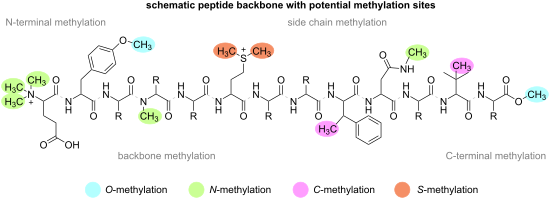
- ]. Further O-MTs can be classified based on a common acceptor group of modification, namely C-terminal carboxy-MTs and peptide/protein ʟ-aspartyl O-MTs (PAMTs). C-terminal carboxymethyltransferases Carboxy-MTs catalyse the formation of a methyl ester by methylating the oxygen atom within the hydroxy group of
- enzyme engineering and rational design [73][74]. Lentzea kentuckyensis sp. produces lassomycin (Figure 4), a lasso peptide, with a methyl ester at the C-terminus. The las cluster encodes LasF, which is predicted to function as an O-MT. Since no other putative MT is encoded in the las cluster, LasF is
- proposed to methylate lassomycin [77]. PAMTs – peptide/protein ʟ-aspartyl O-methyltransferases PAMTs share a conserved C-terminal domain, substantial sequence homology, and a common enzymatic activity. They catalyse the conversion between aspartate and isoaspartate with aspartyl-O-methyl ester and





Polymer degrading marine Microbulbifer bacteria: an un(der)utilized source of chemical and biocatalytic novelty
Beilstein J. Org. Chem. 2024, 20, 1635–1651, doi:10.3762/bjoc.20.146
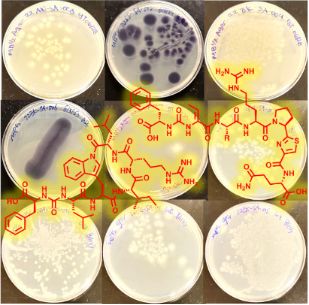
- . Their structures differ from common parabens by the presence of an acetamide group ortho to the phenolic hydroxy group [14]. They exhibited weak activity against E. coli and methicillin-sensitive Staphylococcus aureus (MSSA). The three analogues 15–17 (Figure 6) with different ester chain lengths were
- synthesized and tested for antimicrobial activity. However, no clear trend was found between the ester length and bioactivity. In addition to the paraben derivatives, three known nucleosides, 4´,5´-didehydro-5´-deoxyinosine (18), 2´-O-methyladenosine (19), and 5´-methylthioinosine (20) were also identified




Supramolecular assemblies of amphiphilic donor–acceptor Stenhouse adducts as macroscopic soft scaffolds
Beilstein J. Org. Chem. 2024, 20, 1590–1603, doi:10.3762/bjoc.20.142
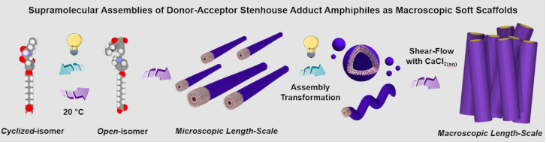
- nitrogen atmosphere, followed by reduction of the indole motif in compound 1n to indoline in 2n. The ester group in compound 2n was deprotected under basic conditions to give compound 3n (Scheme 2). DAn with different chain lengths of the alkyl linker were synthesized through an aza-Piancatalli


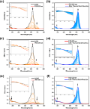


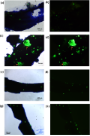
Electrocatalytic hydrogenation of cyanoarenes, nitroarenes, quinolines, and pyridines under mild conditions with a proton-exchange membrane reactor
Beilstein J. Org. Chem. 2024, 20, 1560–1571, doi:10.3762/bjoc.20.139
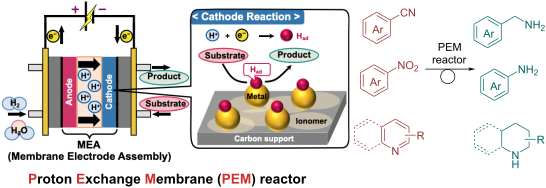
- yields (7a–e, 7g, and 7h), except for 6f which contained a methyl group at the 4-position. The reaction of 2,3-dimethylquinoline (6i) gave the desired product 7i (cis/trans = 3:1) in 77% yield. Substrates bearing acetyl (6k), ester (6l), and amide (6m) groups were tolerated under these conditions and


Benzylic C(sp3)–H fluorination
Beilstein J. Org. Chem. 2024, 20, 1527–1547, doi:10.3762/bjoc.20.137

- yields, with the authors proposing that HFIP aided in stabilising the electrochemically generated benzylic radical cation intermediates. Secondary and tertiary benzylic substrates bearing halogen, ester, protected amine and alkyl functional groups tolerated the reaction conditions well. The authors
- showed they were able to scale-up and selectively fluorinate the ibuprofen methyl ester at the methylene group to produce over 2 g of product 12. The utility of the benzyl fluoride products as strategic intermediates for benzylation of electron-rich arenes was demonstrated by the authors (Figure 41B



















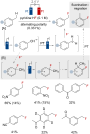

Towards an asymmetric β-selective addition of azlactones to allenoates
Beilstein J. Org. Chem. 2024, 20, 1504–1509, doi:10.3762/bjoc.20.134
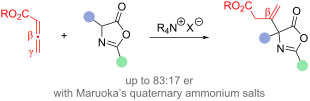
- investigated the generality of this protocol. As outlined in Scheme 2, differently substituted allenoates were reasonably well tolerated (see products 5a–d), albeit some erosion in enantioselectivity was observed when using a tert-butyl ester containing allenoate (product 5d). Various α-arylmethyl-substituted


Electrophotochemical metal-catalyzed synthesis of alkylnitriles from simple aliphatic carboxylic acids
Beilstein J. Org. Chem. 2024, 20, 1497–1503, doi:10.3762/bjoc.20.133
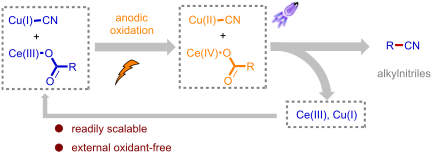
- size of the alkyl side chain at the alpha position of arylacetic acids (9–16). These features offer great opportunities for the introduction of a wide range of functional groups, including bromide (9), boron (12), ether (13), nitrile (14), ester (15), and alkene (16) moieties, which are versatile


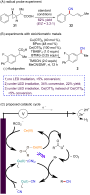
Challenge N- versus O-six-membered annulation: FeCl3-catalyzed synthesis of heterocyclic N,O-aminals
Beilstein J. Org. Chem. 2024, 20, 1412–1420, doi:10.3762/bjoc.20.123
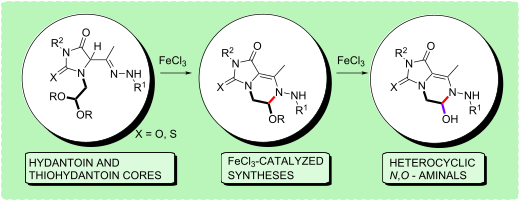
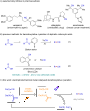
- ), whose sequential acylation process by iso(thio)cyanates 3a–h gives rise to the asymmetric (thio)urea derivatives (intermediate II). The spontaneous nucleophilic attack of the (thio)amide nitrogen on the terminal methyl ester function at C-4 of the starting azo-ene system provides a regioselective