

Search results
Search for "electronic effects" in Full Text gives 153 result(s) in Beilstein Journal of Organic Chemistry.
The use of silicon- based tethers for the Pauson- Khand reaction
Beilstein J. Org. Chem. 2007, 3, No. 21, doi:10.1186/1860-5397-3-21
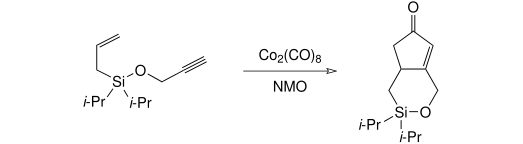
- silanols derived from decomposed corresponding silyl ethers. The P-K reaction is known to be affected by steric and electronic effects within the cyclisation precursors. Therefore we prepared the following dimethyl vinyl- and allyl-silyl ethers with various groups attached to the terminus of the alkyne


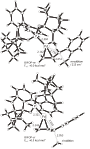
Effect of transannular interaction on the redox- potentials in a series of bicyclic quinones
Beilstein J. Org. Chem. 2006, 2, No. 26, doi:10.1186/1860-5397-2-26
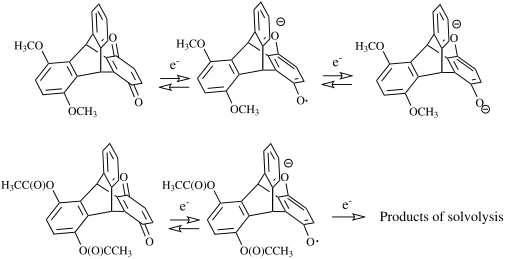
- redox-potentials of bicyclo[2.2.2]octane-derived quinones will help in the design of new compounds with controlled biological activity. However, attempts to directly relate the reduction potentials of substituted triptycene-quinones to the electronic effects of substituents are often unsuccessful
- activity. However, attempts to directly relate the reduction potentials of substituted triptycene-quinones to the electronic effects of substituents are often unsuccessful. Thus, the negative shift of the reduction potential, caused by two methoxy-groups at the 5,8-positions (compound 2), was surprisingly
- difference may fall below the threshold that would warrant sufficient concentrations of the conformation B to account for the experimental redox-potential of 2. Yamamura and co-authors [3] also noticed that the reduction potential of the quinone 2 was higher than expected from the electronic effects of the


A superior P-H phosphonite: Asymmetric allylic substitutions with fenchol- based palladium catalysts
Beilstein J. Org. Chem. 2006, 2, No. 7, doi:10.1186/1860-5397-2-7
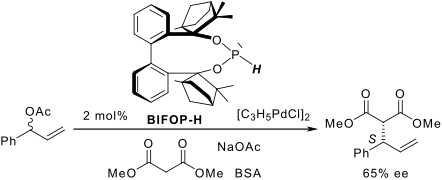
- electronic effects,[3][4] regioselectivity in favor of the branched product is supported at strong donor-substituted (e.g. alkyl, O-alkyl) allylic positions. Frequently employed Pd-catalysts most often favor linear, nonchiral products (Scheme 1). Pfaltz et al. improved the yield of the chiral, branched


Other Beilstein-Institut Open Science Activities