
Search results
Search for "decomposition" in Full Text gives 824 result(s) in Beilstein Journal of Organic Chemistry. Showing first 200.
Synthesis and reactivity of azole-based iodazinium salts
Beilstein J. Org. Chem. 2023, 19, 317–324, doi:10.3762/bjoc.19.27
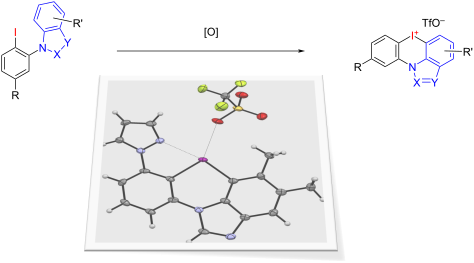
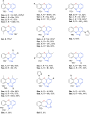
- %. Unfortunately, the MeO-substituted derivative 5ad did not form. Except for the acetamide 5ae, which could not be obtained due to decomposition, other meta- and para-substituted derivatives 5af–ak, among them derivatives with strong electron-withdrawing functionalities, could be synthesized in 39–69% yield. The
- to iodide and bromide were performed giving the salts 10a and 10b in excellent yields [27]. A copper-catalyzed iodination gave the diiodinated product 11 in quantitative yield [42]. Finally, N-methylation of 5aa was performed, to yield the dicationic salt 5av in 56% yield without decomposition of the




Synthesis, α-mannosidase inhibition studies and molecular modeling of 1,4-imino-ᴅ-lyxitols and their C-5-altered N-arylalkyl derivatives
Beilstein J. Org. Chem. 2023, 19, 282–293, doi:10.3762/bjoc.19.24
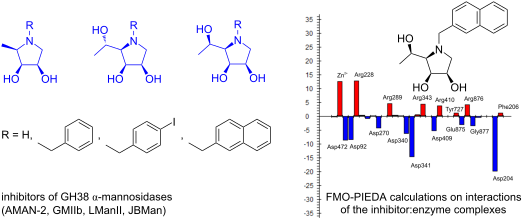
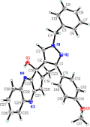
- decomposition analysis (FMO-PIEDA). Results and Discussion Chemistry The target N-arylalkyl 1,4-imino-ᴅ-lyxitol derivatives modified at C-5 were synthesized by the analogous approach that we had reported previously for their ʟ-enantiomers [33]. First, the key, fully protected N-benzylpyrrolidine 3 was prepared


Sequential hydrozirconation/Pd-catalyzed cross coupling of acyl chlorides towards conjugated (2E,4E)-dienones
Beilstein J. Org. Chem. 2023, 19, 176–185, doi:10.3762/bjoc.19.17
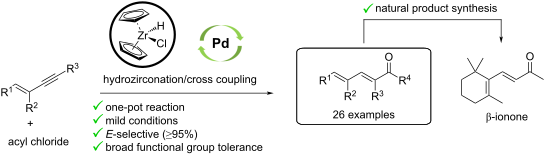
- enynes 25a–e in yields up to 77%. Unfortunately, in the case of nitro-substituted enyne 25d only 4% were isolated due to rapid decomposition and instability issues (Table 1, entry 4). With enynes 25a–e in hand, the influence of solvent, reaction temperature, time, and Pd source on the hydrozirconation
- substituents at the benzoyl moiety of 25. The analysis of crude 1H NMR spectra of 27 indicated decomposition and side product formation (for details see Supporting Information File 1, chapter 2.2). Unfortunately, due to the poor amount of side products, these compounds could not be isolated by chromatography
- and HPLC purification steps. However, GC–MS analysis of the crude product of one exemplary dienone 27ac (with only 17% yield) indicated only decomposition in the reaction sequence. Further, phenylenyne 25a was treated with different conjugated and aliphatic acyl chlorides 26m–p (Table 4, entries 13–16



Total synthesis of insect sex pheromones: recent improvements based on iron-mediated cross-coupling chemistry
Beilstein J. Org. Chem. 2023, 19, 158–166, doi:10.3762/bjoc.19.15
- benefits from the leaving group ligation at the latest stages of the cross coupling. This is particularly interesting since it can hamper the usual decomposition of the iron catalyst, which tends to afford unreactive reduced aggregates at the end of the catalytic transformation, when the coupling kinetics


1,4-Dithianes: attractive C2-building blocks for the synthesis of complex molecular architectures
Beilstein J. Org. Chem. 2023, 19, 115–132, doi:10.3762/bjoc.19.12
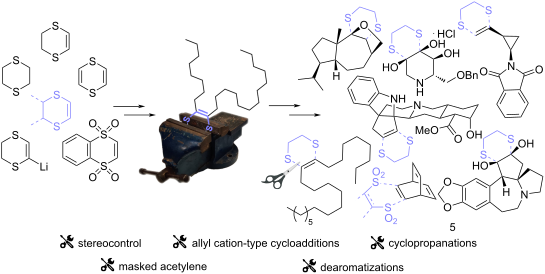
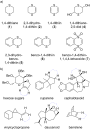
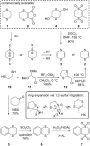
- (viz 106) was formed. In part, this was found to be due to decomposition (and self-condensation reactions) of the dimethylthio-substituted allyl alcohol 105. However, also the minor adducts that were formed with the olefins were shown to be mixtures of exclusively non-cyclic allylation products of the











Two-step continuous-flow synthesis of 6-membered cyclic iodonium salts via anodic oxidation
Beilstein J. Org. Chem. 2023, 19, 27–32, doi:10.3762/bjoc.19.2
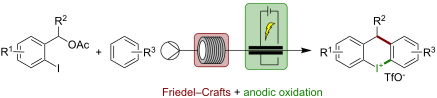
- decomposition of the intermediary iodoarene. Here it was possible to perform the procedure with either benzene or toluene, leading to a moderate yield of 38% and 37%. We could not use derivatives with any other substituents with secondary benzyl acetates since those led only to inseparable product mixtures


Combining the best of both worlds: radical-based divergent total synthesis
Beilstein J. Org. Chem. 2023, 19, 1–26, doi:10.3762/bjoc.19.1
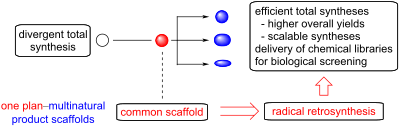
- oxidative decomposition to the core of 194 and 195. FGI followed to complete targets 196–200 (Scheme 16). Pyrroloindoline natural products (Knowles 2018) [102]: In 2018, Knowles’ group demonstrated the ability of TEMPO to act as a trap for radical cations arising from the single-electron oxidation of











Inclusion complexes of the steroid hormones 17β-estradiol and progesterone with β- and γ-cyclodextrin hosts: syntheses, X-ray structures, thermal analyses and API solubility enhancements
Beilstein J. Org. Chem. 2022, 18, 1749–1762, doi:10.3762/bjoc.18.184
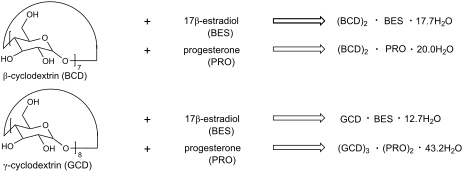
- by the respective DSC curves (Figures S15–S18 in Supporting Information File 1) and dTGA curves (Figures S19–S22 in Supporting Information File 1). Other thermal events such as minor phase transitions were observed for β-CD·BES and β-CD·PRO as well as premature decomposition, displayed by β-CD·BES in
- particular (Table 1). Thus, all CD complexes displayed thermal integrity until relatively high temperatures of at least 100 °C, prior to phase transitions and decomposition, indicating acceptable thermal stability for commercial pharmaceutical applications. Further analytical details regarding the TGA, dTGA
- K·min−1 until decomposition. The HSM experiment was viewed through a Nikon SMZ-10 stereoscopic microscope fitted with a Linkam THM600 hot stage and a Linkam TP92 temperature control unit. The images were captured by a real-time Sony Digital Hyper HAD colour video at selected temperatures. The captured



Synthesis of (−)-halichonic acid and (−)-halichonic acid B
Beilstein J. Org. Chem. 2022, 18, 1629–1635, doi:10.3762/bjoc.18.174
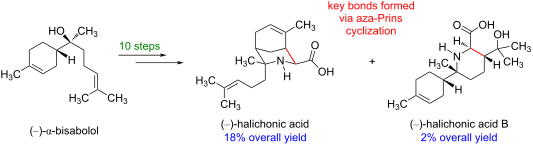
- organic co-solvent), and slow decomposition occurred under acidic conditions at elevated temperatures. Alternative methods to cleave the benzamide using sodium peroxide [11] or triethyloxonium tetrafluoroborate [12] were also unsuccessful, giving either no reaction or significant decomposition
- silica gel resulted in extensive decomposition. Therefore, the crude imine was immediately hydrolyzed using aqueous citric acid [14], affording (−)-7-amino-7,8-dihydrobisabolene (4) as a single stereoisomer in 90% yield over the two steps. The enantiomer of 4 is itself a natural product with cytotoxic


Oxa-Michael-initiated cascade reactions of levoglucosenone
Beilstein J. Org. Chem. 2022, 18, 1457–1462, doi:10.3762/bjoc.18.151
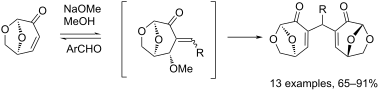
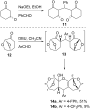
- from 12 gave moderate to low yields of bridged species, most effectively with electron-poor aromatic aldehydes, and reactions had to be monitored to optimize conversions and prevent decomposition (Scheme 2) [14]. Analysis of the NMR spectra indicated that instead of the open chain diketones 13, the


Synthesis of meso-pyrrole-substituted corroles by condensation of 1,9-diformyldipyrromethanes with pyrrole
Beilstein J. Org. Chem. 2022, 18, 1403–1409, doi:10.3762/bjoc.18.145
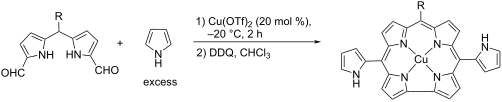
- 1, entries 9 and 10). This situation can be explained by the instability of the bilane intermediate formed in the reaction medium and its decomposition during long reaction times. It was also investigated whether the product yield would increase with the amount of catalyst since only the copper


Preparation of an advanced intermediate for the synthesis of leustroducsins and phoslactomycins by heterocycloaddition
Beilstein J. Org. Chem. 2022, 18, 1385–1395, doi:10.3762/bjoc.18.143
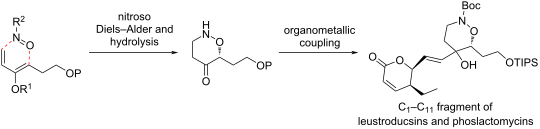
- the cyclic hemiacetal 9 in modest yield (Scheme 2). Therefore, compound 8 was protected as silyl or benzyl ether using standard techniques. Unfortunately, no hydrolysis under several basic conditions provides the target ketone, no conversion and/or decomposition being observed (Scheme 3). Enol


Cyclodextrin-based Schiff base pro-fragrances: Synthesis and release studies
Beilstein J. Org. Chem. 2022, 18, 1346–1354, doi:10.3762/bjoc.18.140
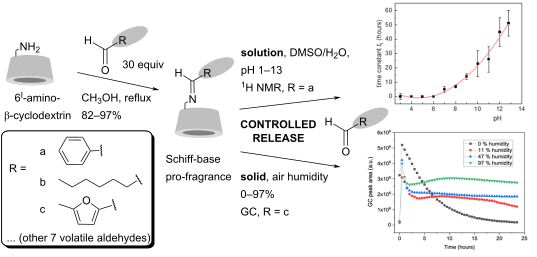
- –97%). This method allows for easy recovery of the unreacted aldehyde as well as separation of the product (just by extraction by hexane and drying under reduced pressure) without its decomposition. The structure of the final imines was confirmed by 1H NMR, 13C NMR, ESI–MS, and the release of the VOCs
- bond decomposition that Shiff base hydrolysis is very fast in acidic conditions and slows down when going to higher pH values. Multiple headspace extraction experiments revealed the role of pH and the presence of supramolecular interaction between aldehyde and β-CD on the rate of aldehyde release from
Modular synthesis of 2-furyl carbinols from 3-benzyldimethylsilylfurfural platforms relying on oxygen-assisted C–Si bond functionalization
Beilstein J. Org. Chem. 2022, 18, 1256–1263, doi:10.3762/bjoc.18.131
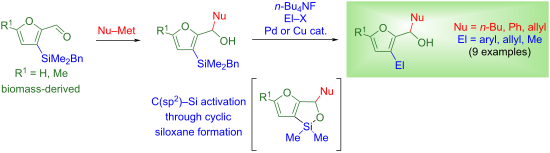
- under the same reaction conditions led predominantly to decomposition products and only 5-methylfurfural (resulting from protodesilylation) was recovered in low yield (≈20%). Hence, intramolecular hydroxy activation seems decisive to obtain productive cross-coupling reactions with this system. Also, it


Derivatives of benzo-1,4-thiazine-3-carboxylic acid and the corresponding amino acid conjugates
Beilstein J. Org. Chem. 2022, 18, 1195–1202, doi:10.3762/bjoc.18.124
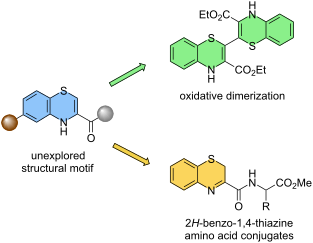
- diethyl ether at 0 °C for 1 h gave acid 10aa in 75% yield, while complete decomposition was observed at reflux temperature after only 10 min (Table 1, entries 1 and 2). Acid 10aa did not form when the reaction was performed in ethanol, CH2Cl2, THF, DMF, or ethyl acetate at different temperatures under
- formed in 50% yield in ethanol and 30% in diethyl ether (Table 1, entries 10 and 11). Reactions with thiol 8c, having an electron-donating methoxy group, and acid 9a or esters 9b,c only gave unidentifiable decomposition products in various solvents (ethanol, diethyl ether, methanol, and CH2Cl2) at
- (see Supporting Information File 1 for detailed reaction conditions) since decomposition of the benzothiazine core was observed in all coupling reactions. To avoid the issues related to the instable benzothiazine ring, we explored other possible linear reaction routes (Scheme 4) as an alternative to
Electro-conversion of cumene into acetophenone using boron-doped diamond electrodes
Beilstein J. Org. Chem. 2022, 18, 1154–1158, doi:10.3762/bjoc.18.119

- , entry 2). On the other hand, the isolated yield of 3 was decreased by the addition of H2O (Table 2, entries 3 and 4). This is probably because the addition of H2O promoted the generation of hydroxyl radicals, and a decomposition reaction became dominant. These results indicated that the oxygen source is


Isolation and biosynthesis of daturamycins from Streptomyces sp. KIB-H1544
Beilstein J. Org. Chem. 2022, 18, 1009–1016, doi:10.3762/bjoc.18.101
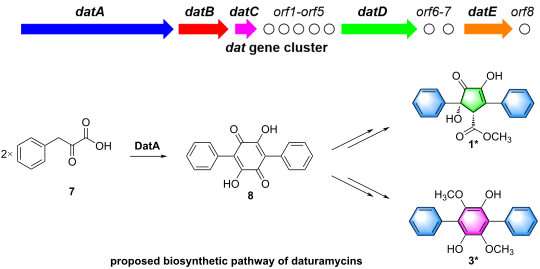
- . Diarylcyclopentenones, characteristic constituents of mushrooms [23], were rarely discovered in Streptomyces species. These components exhibit redox activity and are involved in reducing ferric (Fe3+) in the Fenton-based biological decomposition of lignocellulose [24][25]. The biosynthetic pathway of p-terphenyl was


On Reuben G. Jones synthesis of 2-hydroxypyrazines
Beilstein J. Org. Chem. 2022, 18, 935–943, doi:10.3762/bjoc.18.93
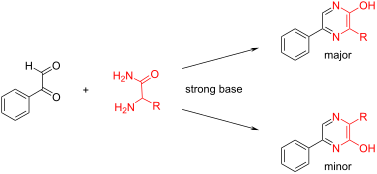
- . Moreover, when using an excess of a strong base, a low temperature would favor the occurrence of the iminoimide 7 whereas at a higher temperature, decomposition and the cyclization process giving isomer 4 would prevail. Conclusion This report describes some of the reaction parameters which orient and


Synthesis of α-(perfluoroalkylsulfonyl)propiophenones: a new set of reagents for the light-mediated perfluoroalkylation of aromatics
Beilstein J. Org. Chem. 2022, 18, 788–795, doi:10.3762/bjoc.18.79
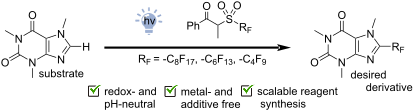
- cheap and abundant starting materials their use is fraught with technical complications. This family of molecules is extremely sensitive to bench conditions and requires a carefully controlled refrigeration in addition to low light levels to avoid decomposition. Furthermore, true to the unique
- obtain the corresponding sulfinate in limited yield, the decomposition of this compound after several days at 4 °C, and within a few minutes under heating deemed its applicability impractical. After this first step, we proceeded to test the nucleophilic substitution between our perfluoroalkylsulfinate
- secondary carbon atom at 40 °C (Scheme 2). Furthermore, increasing the temperature to 70 °C was not found to generate the product and instead resulted in slight decomposition of the starting materials. Attempting to trap the sulfinate nucleophiles with primary benzyl bromide (4) with catalytic sodium iodide


Synthesis of bis-spirocyclic derivatives of 3-azabicyclo[3.1.0]hexane via cyclopropene cycloadditions to the stable azomethine ylide derived from Ruhemann's purple
Beilstein J. Org. Chem. 2022, 18, 769–780, doi:10.3762/bjoc.18.77
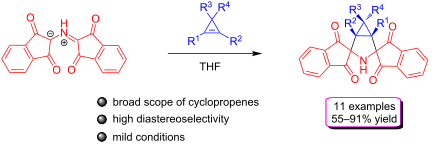
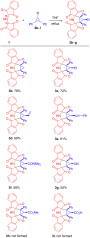
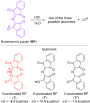
- prepared carbon tetrachloride solution of 1-chloro-2-phenylcyclopropene (2m) was treated with PRP (1) in THF medium. To avoid cyclopropene decomposition, the reaction was carried out at room temperature with stirring. Twelve hours later, we were pleased to note that azomethine ylide 1 was fully consumed as






Synthesis of odorants in flow and their applications in perfumery
Beilstein J. Org. Chem. 2022, 18, 754–768, doi:10.3762/bjoc.18.76
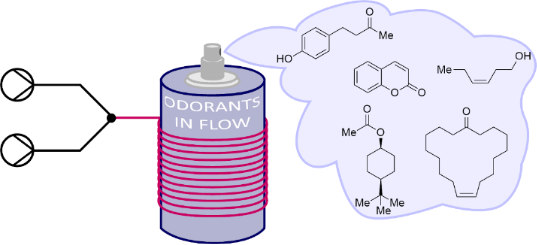
- employed Stewart–Grubbs catalyst 71 is completely decomposed but its decomposition products could efficiently be removed by passing the reaction mixture through a cartridge containing a mixture of silica and charcoal providing 72 in 32% yield at a productivity of 0.2 g/h. The macrocycle 72 was already
- -closing metathesis reaction for the preparation of macrocyclic musks, the efficient removal of ethylene by the means of a tube-in-tube reactor or a continuously stirred tank reactor (CSTR) can promote the reaction and suppress decomposition of the catalyst. In addition, reactions involving organometallics


Inductive heating and flow chemistry – a perfect synergy of emerging enabling technologies
Beilstein J. Org. Chem. 2022, 18, 688–706, doi:10.3762/bjoc.18.70
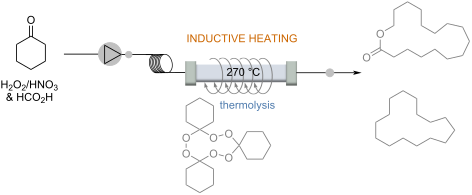
- pressure, much higher temperatures around 950 °C are actually required. At these high temperatures, the selectivity of the process is a challenge. Possible side reactions such as hydrogenation of CO and CO2, decomposition of CH4, and the Boudouard reaction lead to the formation of elemental carbon [31
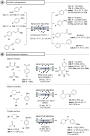
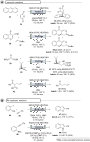
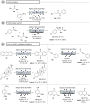
- 180 °C at 4.5 MPa for 7.5 min. These conditions allowed to suppress the decomposition of the N-alkylation product 78 by using a 1/8“-reactor. The subsequent purification was realized by a clever catch and release protocol based on a silica column, yielding iloperidone (80, 67%). The tricyclic




Rapid gas–liquid reaction in flow. Continuous synthesis and production of cyclohexene oxide
Beilstein J. Org. Chem. 2022, 18, 660–668, doi:10.3762/bjoc.18.67
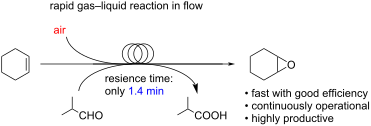
- oxidation and decomposition of oxidants generated from air and aldehyde. Furthermore, the fast epoxidation is applicable for the continuous production process of cyclohexene oxide for 1 hour maintaining stable operation. Results and Discussion Batch experiment of epoxidation of cyclohexene with air As an


New synthesis of a late-stage tetracyclic key intermediate of lumateperone
Beilstein J. Org. Chem. 2022, 18, 653–659, doi:10.3762/bjoc.18.66
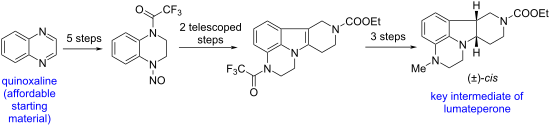
- 24 was accomplished in neat conditions within 3 days of reaction time using a literature procedure [5]. Attempts in acetonitrile as solvent were unsuccessful: after 1 day at room temperature, product 28 was isolated in only 20% yield, while at reflux temperature, a decomposition has been observed


A study of the photochemical behavior of terarylenes containing allomaltol and pyrazole fragments
Beilstein J. Org. Chem. 2022, 18, 588–596, doi:10.3762/bjoc.18.61
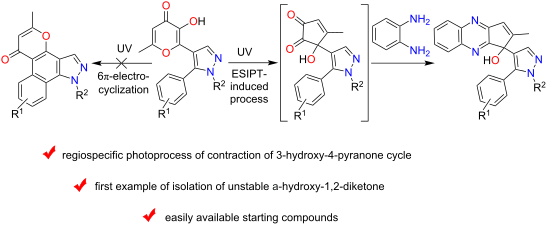
- darkness at room temperature for 5 days resulted in complete decomposition. Despite the labile nature of α-hydroxy-1,2-diketone 14a we attempted to isolate this product in pure form. It should be noted that in contrast to the methylated derivative 16, pyrazole 12a has a low solubility in most organic
- medium accelerates the decomposition of target α-hydroxy-1,2-diketone 14a. Subsequently, we used DMF as a solvent for carrying out the studied photoreaction. Unexpectedly, the starting pyrazole 12a was isolated unchanged after 24 hours of UV irradiation, indicating that DMF also is not suitable for the
- were unsuccessful due to the low stability of the resulting α-hydroxy-1,2-diketone 14 and their partial decomposition during purification. Thus, the purity of the obtained compounds 14 does not allow a complete characterization by various analytical methods. Based on this fact we made attempts to