
Search results
Search for "bicyclic" in Full Text gives 422 result(s) in Beilstein Journal of Organic Chemistry. Showing first 200.
Exploring the scope of DBU-promoted amidations of 7-methoxycarbonylpterin
Beilstein J. Org. Chem. 2020, 16, 509–514, doi:10.3762/bjoc.16.46
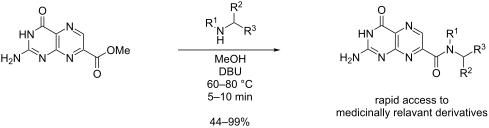
- yields often >80%. Keywords: amidation; DBU; folate; pterin; Introduction Pteridines are a class of fused bicyclic heterocycles with significant biological relevance. The 2-amino-4-pteridinone core, simply referred to as “pterin”, is present in various biological cofactors like folates, biopterin, and


Recent advances in photocatalyzed reactions using well-defined copper(I) complexes
Beilstein J. Org. Chem. 2020, 16, 451–481, doi:10.3762/bjoc.16.42
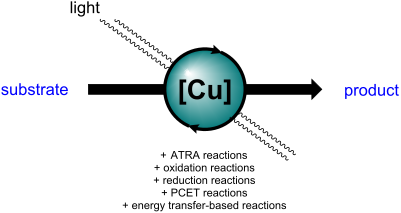
- the best copper-based photocatalyst, Collins and co-workers reported the synthesis of a bicyclic lactone by a PCET reaction manifold (Scheme 32) [39]. Using their methodology, the authors discovered the [Cu(I)(quinitri)(xantphos)]BF4 catalyst as the best one, which afford the cis-lactone in 79
- ester derivatives. δ-Functionalization of alcohols using [Cu(I)(dmp)(xantphos)]BF4. Photocatalytic synthesis of [5]helicene and phenanthrene. Oxidative carbazole synthesis using in situ-formed [Cu(I)(dmp)(xantphos)]BF4. Copper-photocatalyzed functionalization of N-aryl tetrahydroisoquinolines. Bicyclic








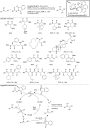


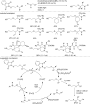


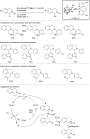


Architecture and synthesis of P,N-heterocyclic phosphine ligands
Beilstein J. Org. Chem. 2020, 16, 362–383, doi:10.3762/bjoc.16.35
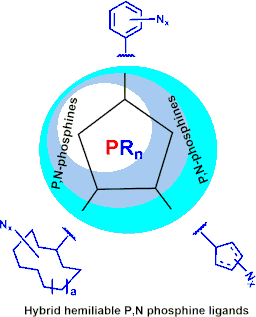
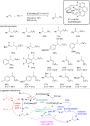
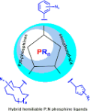
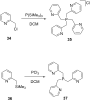
- with aminosilanes which produces trimethylchlorosilane as a byproduct which can be distilled off easily [102]. Bicyclic guanidine frameworks present an opportunity to form inflexible ligands that are inclined to exhibit a κ2-P,N-bonding mode in metal complexes. Dyer et al. [103] prepared cycloguanidine




[1,3]/[1,4]-Sulfur atom migration in β-hydroxyalkylphosphine sulfides
Beilstein J. Org. Chem. 2020, 16, 88–105, doi:10.3762/bjoc.16.11
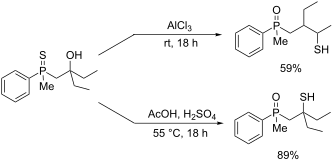
- . The nature of this difference is currently a subject of further research in our laboratory. Nevertheless, the above results opened a new pathway for the synthesis of bicyclic organophosphorus compounds possessing a chirality center at phosphorus. Moreover, the formation of the bicyclic compounds
- stereoselectivity. It was found that the P-stereogenic β-/γ-mercaptoalkylphosphine oxides underwent intramolecular cyclization to the corresponding bicyclic phosphine oxides with high stereoselectivity and high yield under mild reaction conditions. 1H NMR spectra of compounds 12 and 29. 13C NMR spectra of compounds


Bacterial terpene biosynthesis: challenges and opportunities for pathway engineering
Beilstein J. Org. Chem. 2019, 15, 2889–2906, doi:10.3762/bjoc.15.283
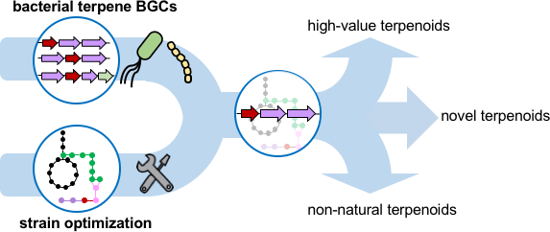
- cationic species. For instance, remodeling the hydrophobic pocket of the active site by single-point mutation, epi-isozizaene (33) synthase was engineered to produce various linear, monocyclic, bicyclic, and tricyclic terpene skeletons (Figure 9b) [119][120][121]. Another prominent example is cyclooctat-9
- , simply by rationally mutating the active-site residues. The majority of bacterial type II diterpene TCs produce bicyclic labdane, halimadane, or clerodane skeletons with different stereochemistry, levels of unsaturation, and hydroxylation patterns [124], which undergo further conversion with their
- (Figure 10b) [131]. Similarly, by mutating two residues of P450BM3 that control the shape of the substrate binding cavity, the enzyme was engineered to accept different linear, monocyclic, and bicyclic terpenes [132]. The alteration of the native sequences uses either method or the combination of the two




Synthesis of aryl-substituted thieno[3,2-b]thiophene derivatives and their use for N,S-heterotetracene construction
Beilstein J. Org. Chem. 2019, 15, 2678–2683, doi:10.3762/bjoc.15.261
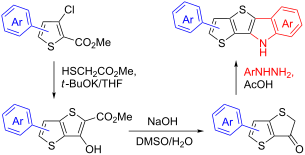
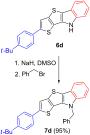
- light-harvesting dyes for dye-sensitized solar cells [1], electron-donating materials for bulk heterojunction solar cells [2][3][4], and p-type semiconductors for organic field-effect transistors [5][6][7]. Within the same context of organic semiconductor development, the bicyclic TT subunit has been



Unexpected one-pot formation of the 1H-6a,8a-epiminotricyclopenta[a,c,e][8]annulene system from cyclopentanone, ammonia and dimethyl fumarate. Synthesis of highly strained polycyclic nitroxide and EPR study
Beilstein J. Org. Chem. 2019, 15, 2664–2670, doi:10.3762/bjoc.15.259

- in hydride abstraction with the formation of carbocation 9 and subsequent cyclization to the bicyclic alkoxyamine 10. The resulting isoxazolidine ring is then opened with m-CPBA in the usual way, retaining the configuration of the asymmetric center at 3aC-OH [13] (Scheme 4). The steric strain in


Chiral terpene auxiliaries V: Synthesis of new chiral γ-hydroxyphosphine oxides derived from α-pinene
Beilstein J. Org. Chem. 2019, 15, 2493–2499, doi:10.3762/bjoc.15.242

- rearrangement reaction may be the rigid bicyclic structure of the substrate and steric hindrance on one side of the molecule caused by the gem-dimethyl bridge. Conclusion Regioisomeric exocyclic allylic alcohols were synthesized from natural α-pinene. (1R,2R,4S,5R)-3-Methyleneneoisoverbanol and (1R,2R,3R,5R)-4
- the less hindered side of the molecule to produce γ-hydroxyphosphine oxide derivatives. It was also shown that phosphine oxide can be reduced to phosphine without affecting the bicyclic pinane structure. The synthesis of diastereomeric endocyclic allylic alcohols from (−)-β-pinene was also carried out
- . Unfortunately, due to the probably too rigid bicyclic structure of the diphenylphosphinites, they did not undergo the sigmatropic rearrangement to the corresponding phosphine oxides. Further research and application of the obtained ligands are in progress. Experimental Diphenyl(((1R,2R,5S)-δ-pinen-3-yl)methyl


Current understanding and biotechnological application of the bacterial diterpene synthase CotB2
Beilstein J. Org. Chem. 2019, 15, 2355–2368, doi:10.3762/bjoc.15.228
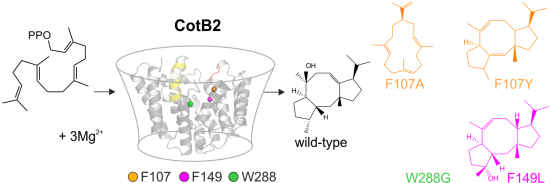
- diterpenes synthesized by the respective synthase mutants are missing the bond between C2 and C6 compared to cyclooctatin (5). Hence, they are comprising a 5,11-fused bicyclic skeleton. In contrast, cembranoids are monocyclic compounds consisting of a 14 membered ring structure. Common to all compounds


Isolation of fungi using the diffusion chamber device FIND technology
Beilstein J. Org. Chem. 2019, 15, 2191–2203, doi:10.3762/bjoc.15.216
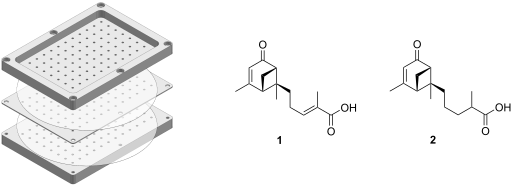
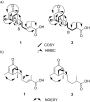
- ), 122.1 (C-4), 143.0 (C-10) and 129.5 (C-11) evidenced two carbon–carbon double bonds. Together with a carbonyl carbon at δC 206.6 and a carboxylic carbon at δC 177.8, the two remaining DOU were accounted to a bicyclic ring system. After assigning the proton resonances to the 13C resonances of directly


Genome mining in Trichoderma viride J1-030: discovery and identification of novel sesquiterpene synthase and its products
Beilstein J. Org. Chem. 2019, 15, 2052–2058, doi:10.3762/bjoc.15.202
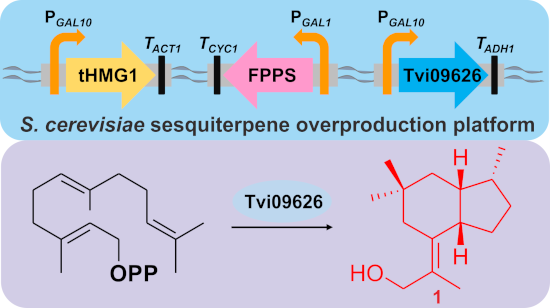
- by genome mining and determined the structure of its corresponding products. One new 5/6 bicyclic sesquiterpene and its esterified derivative were characterised by GC–MS and 1D and 2D NMR spectroscopy. To the best of our knowledge, this is the first well-identified sesquiterpene synthase from T
- characterised by GC–MS and 1D and 2D NMR, revealing a 5/6 bicyclic sesquiterpene and its C-11 esterified structure. Based on a literature search, to our knowledge, this is the first report of the characterisation of a sesquiterpene synthase in T. viride. In addition, this study demonstrates the effectiveness of
- 5/6 bicyclic sesquiterpene with the molecular formula C15H26O (Figure 1). Interestingly, compound 1 contained a quaternary carbon with two methyl groups, which is uncommon for the cyclization mechanism of sesquiterpenoids and needs further investigation. Compound 2 was purified as a white powder. 1H



A review of the total syntheses of triptolide
Beilstein J. Org. Chem. 2019, 15, 1984–1995, doi:10.3762/bjoc.15.194
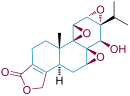
- form the A- and D-ring. The second one involves the reaction of the bicyclic intermediate 13 and 2-isopropyl-1,4-benzoquinone (14) to form the B- and C-ring. Finally, a regio- and stereoselective reduction, methylation and dehydration procedure and a selenylation, oxidation and elimination procedure


Analysis of sesquiterpene hydrocarbons in grape berry exocarp (Vitis vinifera L.) using in vivo-labeling and comprehensive two-dimensional gas chromatography–mass spectrometry (GC×GC–MS)
Beilstein J. Org. Chem. 2019, 15, 1945–1961, doi:10.3762/bjoc.15.190
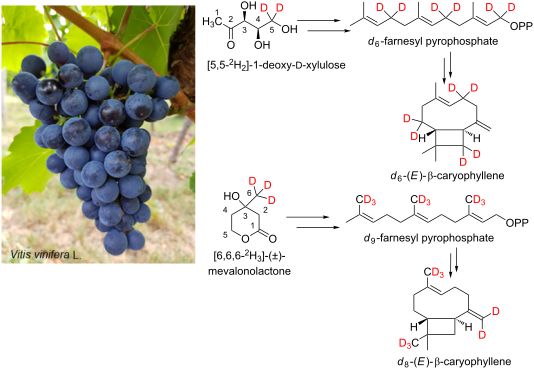
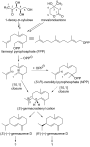
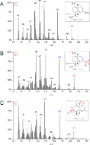
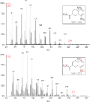
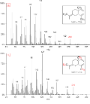
- -copaene, β-copaene, α-cubebene, β-cubebene and the bicyclic δ-cadinene were biosynthesized via (S)-(−)-germacrene D rather than via (R)-(+)-germacrene D as intermediate. Keywords: biosynthesis; deuterium labeling; germacrene; HS-SPME; terpenes; TOF–MS; Introduction The aroma profile of grape berries at
- the time of physiological ripening is very complex and significantly influenced by potent flavoring substances of isoprenoid origin like mono- and sesquiterpenes [1][2]. Sesquiterpenes form a structurally diverse subgroup of terpenes consisting of three isoprene units [3]. Since the bicyclic
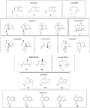
- photoinduced [2 + 2]-cycloaddition is very unlikely. The biosynthesis of β-bourbonene can be performed by cationic cyclization, as shown in Scheme 4. A total of 5 bicyclic, aromatic sesquiterpene hydrocarbons (21–25) with a cadinane skeleton were found in exocarp of the grape variety Lemberger, whose identity











N-(1-Phenylethyl)aziridine-2-carboxylate esters in the synthesis of biologically relevant compounds
Beilstein J. Org. Chem. 2019, 15, 1722–1757, doi:10.3762/bjoc.15.168

- can serve as the starting material to a variety of orthogonally protected derivatives of 2,3-diaminopropanoic acid. The bicyclic amino acid (S)-127 is a major metabolite of isazofos in corn grain and for toxicological studies both enantiomers were required [17]. To this end the aziridine ester (2S,1′R
- )-5a was reacted with 3-bromo-5-methoxy-1H-1,2,4-triazole (128) to give N-protected bicyclic amino ester 129 which was next converted into (S)-(+)-127 in two standard steps (Scheme 33) [17]. Its enantiomer was prepared from (2R,1′S)-5a. Lacosamide ((R)-130) is a derivative of ᴅ-serine and has found
- transition state was involved. Acid-induced aziridine ring openings and subsequent conjugate additions to the α,β-unsaturated lactone led to the formation of cis-fused [5,5']bicyclic compounds 186a or 186b. Reduction of the lactone moiety in 186a and subsequent deprotection gave (2S,3R,4S,5R)-184. In order


Synthesis and biological evaluation of truncated derivatives of abyssomicin C as antibacterial agents
Beilstein J. Org. Chem. 2019, 15, 1468–1474, doi:10.3762/bjoc.15.147
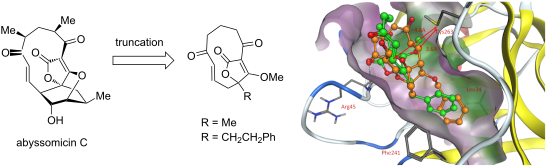
- structure–activity relationship studies towards novel antibiotics targeting 4-amino-4-deoxychorismate (ADC) synthase. Specifically, it is demonstrated that the synthetically challenging bicyclic motif is essential for activity towards methicillin-resistant Staphylococcus aureus (MRSA). Keywords


Switchable selectivity in Pd-catalyzed [3 + 2] annulations of γ-oxy-2-cycloalkenones with 3-oxoglutarates: C–C/C–C vs C–C/O–C bond formation
Beilstein J. Org. Chem. 2019, 15, 1107–1115, doi:10.3762/bjoc.15.107
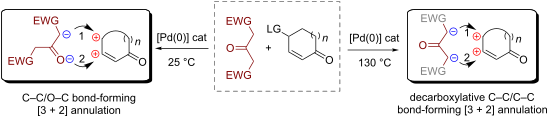
- combination may allow direct access to either fused bicyclic cyclopentanic (pentalene-, indene-, or azulene-type) structures via a γ-C-allylation/β-C-1,4 addition process, or annulated furan-based motifs through a γ-C-allylation/β-O-1,4 addition process, both motifs being incorporated into biologically


Novel (2-amino-4-arylimidazolyl)propanoic acids and pyrrolo[1,2-c]imidazoles via the domino reactions of 2-amino-4-arylimidazoles with carbonyl and methylene active compounds
Beilstein J. Org. Chem. 2019, 15, 1032–1045, doi:10.3762/bjoc.15.101
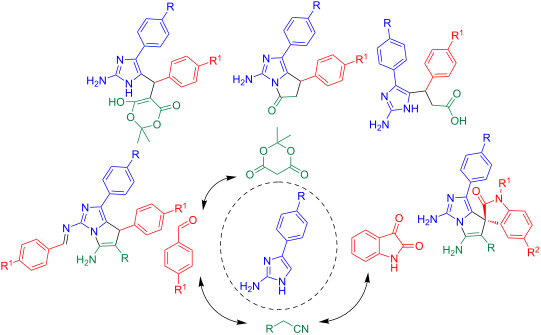
- (Table 2). The corresponding bicyclic amine 10a was obtained by the prolonged treatment of the product 4a with catalytic amounts of TFA in acetonitrile followed by the addition of an aqueous solution of NH3. The structures of cyclized products 9 and 10 were confirmed by spectral methods. The signals of
- allows to classify them as compounds of the same type containing a fused aminoimidazo[1,2-c]pyrrole moiety. Finally, the structure of azomethines 16 was confirmed by X-ray diffraction data of the sample compound 16a (Figure 5). All atoms of the bicyclic fragment lie in the plane within 0.01 Å. The
- structures of spiroxindoles 19 and 20 were confirmed by X-ray diffraction data of the sample compound 19a (Figure 7). Compound 19a exists in the crystal phase as solvate with dimethylformamide and water in a 1:1:1 ratio. The spiro-joined bicyclic fragments are turned relatively to each other in such a way


Mechanochemical synthesis of poly(trimethylene carbonate)s: an example of rate acceleration
Beilstein J. Org. Chem. 2019, 15, 963–970, doi:10.3762/bjoc.15.93
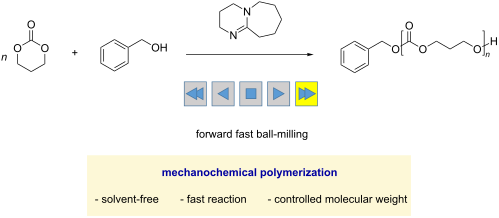
- for the rate enhancement under ball-milling conditions. As another highly reactive organic catalyst, 1,5,7-triazabicyclo[4.4.0]dec-5-ene (TBD) was investigated next. The bicyclic guanidine base TBD has shown better efficiencies than DBU in many chemical transformations including the polymerization of


Synthesis of a novel category of pseudo-peptides using an Ugi three-component reaction of levulinic acid as bifunctional substrate, amines, and amino acid-based isocyanides
Beilstein J. Org. Chem. 2019, 15, 852–857, doi:10.3762/bjoc.15.82
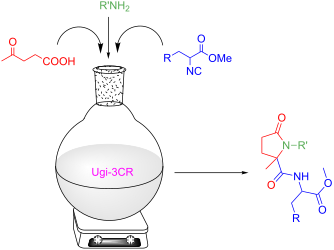
- post-multicomponent reactions, diversities of bicyclic drug-like heterocyclic compounds can be obtained [26]. Results and Discussion In continuation of our interest on the synthesis of novel pseudo-peptides [27][28][29] via multicomponent reactions, herein we investigate the Ugi-4C-3CR of levulinic


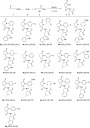


Solid-phase synthesis of biaryl bicyclic peptides containing a 3-aryltyrosine or a 4-arylphenylalanine moiety
Beilstein J. Org. Chem. 2019, 15, 761–768, doi:10.3762/bjoc.15.72
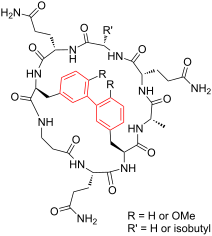
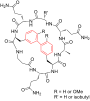
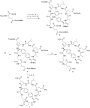
- Iteng Ng-Choi Angel Oliveras Lidia Feliu Marta Planas LIPPSO, Departament de Química, University of Girona, Maria Aurèlia Capmany 69, Girona 17003, Spain 10.3762/bjoc.15.72 Abstract A methodology for the solid-phase synthesis of biaryl bicyclic peptides containing a Phe-Phe, a Phe-Tyr or a Tyr
- resulting biaryl monocyclic peptidyl resin leading to the formation of the expected biaryl bicyclic peptide. This study provides the first solid-phase synthesis of this type of bicyclic compounds being amenable to prepare a diversity of synthetic or natural biaryl bicyclic peptides. Keywords: borylation
- ; cross-coupling; cyclization; macrocycles; solid-phase synthesis; Introduction Monocyclic and bicyclic peptides are acquiring a relevant interest in current drug discovery. They display improved biological properties over their acyclic counterparts and, at the same time, they are suitable to modulate



Synthesis of 2H-furo[2,3-c]pyrazole ring systems through silver(I) ion-mediated ring-closure reaction
Beilstein J. Org. Chem. 2019, 15, 679–684, doi:10.3762/bjoc.15.62

- synthetic methods has been developed for the construction of carbon–heteroatom bonds using these types of catalysts. For example, the gold(I) catalyst [(Ph3PAu)3O]BF4 was applied in the regioselective intramolecular cyclization of alkynols to construct bicyclic ethers [37], while the silver(I) catalyst


Reusable and highly enantioselective water-soluble Ru(II)-Amm-Pheox catalyst for intramolecular cyclopropanation of diazo compounds
Beilstein J. Org. Chem. 2019, 15, 357–363, doi:10.3762/bjoc.15.31
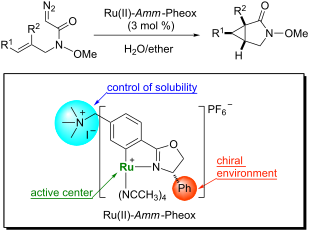
- proceeded smoothly at room temperature, affording the corresponding bicyclic cyclopropane ring-fused lactones and lactams in high yields (up to 99%) with excellent enantioselectivities (up to 99% ee). After screening of various catalysts, the Ru(II)-Amm-Pheox complex having an ammonium group proved to be
- amide derivatives, prepared from the corresponding allylic alcohols by the Fukuyama method [50] were investigated as shown in Scheme 1. The catalytic system was applicable to a wide variety of substrates, which reacted smoothly to give the corresponding bicyclic products. For example, diazo Weinreb
- amide derivatives bearing electron-donating or electron-withdrawing groups at the ortho, meta, or para positions could be converted to the corresponding bicyclic products in excellent yields (up to 99%) and enantioselectivities (up to 98% ee, Scheme 1, 2g−m). A diazo compound with two chlorine


Synthesis of nonracemic hydroxyglutamic acids
Beilstein J. Org. Chem. 2019, 15, 236–255, doi:10.3762/bjoc.15.22
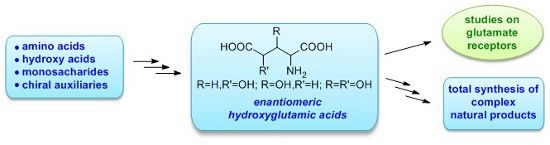
- equimolar amounts of easily separable cycloadducts 75 and 76 (Scheme 19) [81]. The bicyclic framework in the latter compound was first reduced and the hydroxy group was protected as acetate. Then the oxidative cleavage of the C=C bond gave diacid 77 (readily purified as dimethyl ester 78) which is a


Synthesis, biophysical properties, and RNase H activity of 6’-difluoro[4.3.0]bicyclo-DNA
Beilstein J. Org. Chem. 2019, 15, 79–88, doi:10.3762/bjoc.15.9
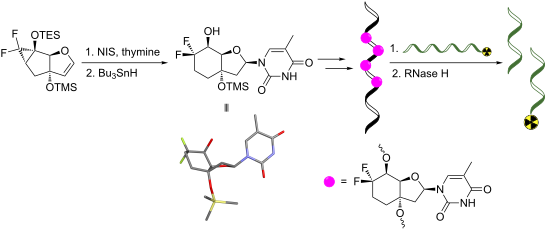
- -DNA (6’-diF-bc4,3-DNA). The difluorinated thymidine phosphoramidite building block was synthesized starting from an already known gem-difluorinated tricyclic glycal. This tricyclic siloxydifluorocyclopropane was converted into the [4.3.0]bicyclic nucleoside via cyclopropane ring-opening through the
- addition of an electrophilic iodine during the nucleosidation step followed by reduction. The gem-difluorinated bicyclic nucleoside was then converted into the corresponding phosphoramidite building block which was incorporated into oligonucleotides. Thermal denaturation experiments of these
- gem-difluorinated bicyclic nucleoside 6 as the main side product. Since nucleoside 6 possessed the desired stereochemistry at the 1’- and the 5’-positions, we investigated the mechanism of its formation in more detail to be able to increase its yield. To determine in which of the two steps the


Mechanistic studies of an L-proline-catalyzed pyridazine formation involving a Diels–Alder reaction with inverse electron demand
Beilstein J. Org. Chem. 2019, 15, 30–43, doi:10.3762/bjoc.15.3
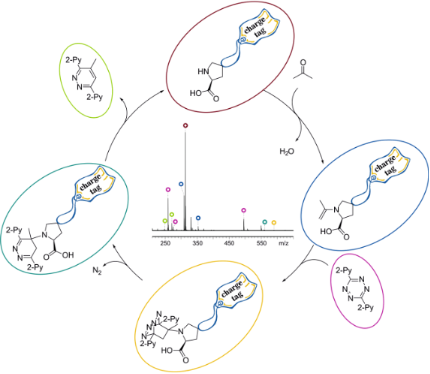
- formation of the enamine I seems plausible. It is an electron-rich dienophile which could undergo a [4 + 2] cycloaddition with the electron-poor aryl-substituted tetrazine 2 in a Diels–Alder reaction with inverse electron demand. The bicyclic Diels–Alder intermediate II then might undergo a retro-Diels
- theoretical methods [52]. Their results are in agreement with the catalytic cycle presented in Scheme 1. However, the question is raised whether the bicyclic Diels–Alder species II is a real intermediate or rather a transition state of a concerted formation of the dihydropyridazine intermediate III directly
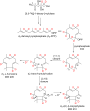
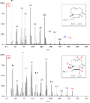
- than the intensity of product 3 and declines very slowly as the reaction progresses (Figure 3b). However, no signals for the intermediates I1 (enamine) and II1 (bicyclic Diels–Alder intermediate) were found. Intermediate I1 (m/z 156) has been observed before by Marquez et al. in ESIMS experiments of an