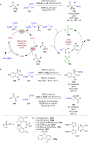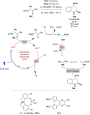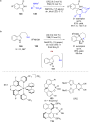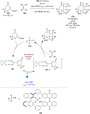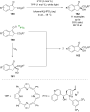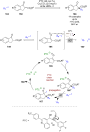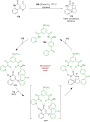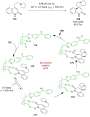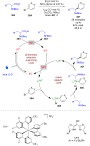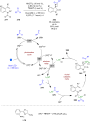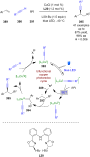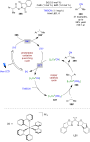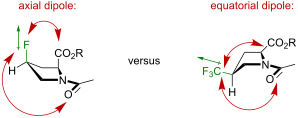

Search for "amides" in Full Text gives 477 result(s) in Beilstein Journal of Organic Chemistry. Showing first 200.
Beilstein J. Org. Chem. 2020, 16, 1805–1819, doi:10.3762/bjoc.16.148
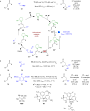
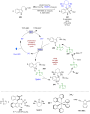
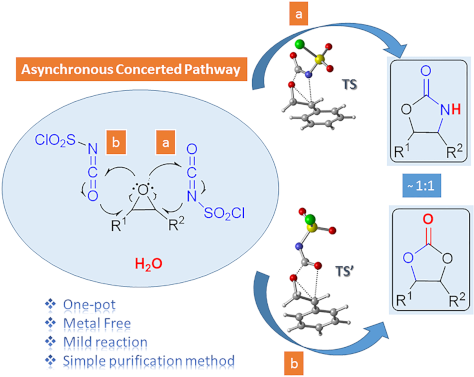
Graphical Abstract
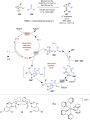
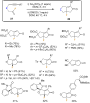
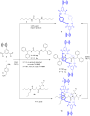
Scheme 1: Oxazolidinone (1), five-membered cyclic carbonate (2) and some important compounds containing an ox...
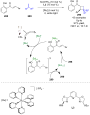
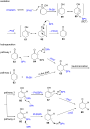
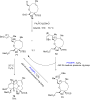
Scheme 2: Proposed mechanisms by Keshava Murthy and Dhar [41] and De Meijere and co-workers [42].
Figure 1: Possible pathways for the formation of oxazolidinone intermediates 10 and 11. Optimized transition ...
Figure 2: Potential energy profile related to the formation of oxazolidinone intermediates 10 and 11 at the P...
Figure 3: IRC calculated for the formation of (a) 10 and (b) 11 at M06-2X/6-31+G(d,p) level. I-1, I-15, I-35, ...
Figure 4: Optimized geometries for the stationary points for the formation of 10 at PCM(DCM)/M06-2X/6-31+G(d,...
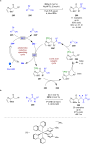
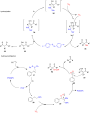
Scheme 3: Proposed mechanisms for the formation of oxazolidinone 9f.
Figure 5: Potential energy profiles for paths 1a (blue), 1b (red), 2 (green) and relative Gibbs free energies...
Figure 6: Optimized geometries for the stationary points of path 1b at PCM(DCM)/M06-2X/6-31+G(d,p)//M06-2X/6-...
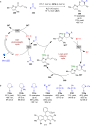
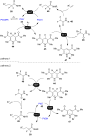
Scheme 4: Proposed mechanism for the formation of five-membered cyclic carbonate 8f.
Figure 7: Potential energy profile and relative Gibbs free energies (kcal/mol) in DCM related to the formatio...
Figure 8: Optimized geometries for the stationary points of step 1 for the formation of 16 at PCM(DCM)/M06-2X...
Figure 9: Optimized geometries for the stationary points of step 2 for the formation of 17 at PCM(DCM)/M06-2X...
Figure 10: Optimized geometries for the stationary points of step 3 for the formation of PC8 at PCM(DCM)/M06-2...
Beilstein J. Org. Chem. 2020, 16, 1754–1804, doi:10.3762/bjoc.16.147
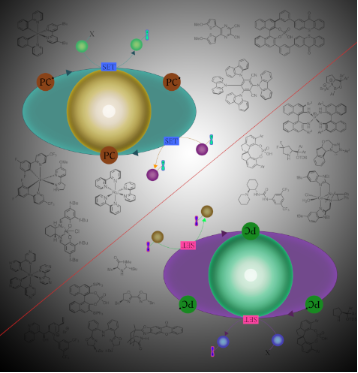
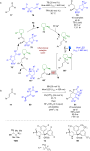
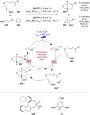
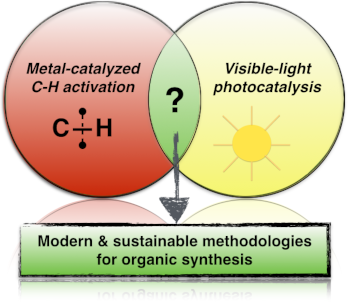
Graphical Abstract
Figure 1: Concept of dual synergistic catalysis.
Figure 2: Classification of catalytic systems involving two catalysts.
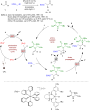
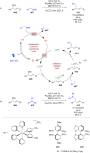
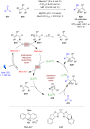
Figure 3: General mechanism for the dual nickel/photoredox catalytic system.
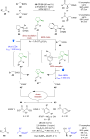
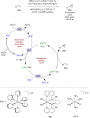
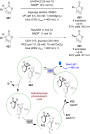
Figure 4: General mechanisms for C–H activation catalysis involving different reoxidation strategies.
Figure 5: Indole synthesis via dual C–H activation/photoredox catalysis.
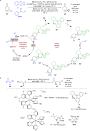
Figure 6: Proposed mechanism for the indole synthesis via dual catalysis.
Figure 7: Oxidative Heck reaction on arenes via the dual catalysis.
Figure 8: Proposed mechanism for the Heck reaction on arenes via dual catalysis.
Figure 9: Oxidative Heck reaction on phenols via the dual catalysis.
Figure 10: Proposed mechanism for the Heck reaction on phenols via dual catalysis.
Figure 11: Carbazole synthesis via dual C–H activation/photoredox catalysis.
Figure 12: Proposed mechanism for the carbazole synthesis via dual catalysis.
Figure 13: Carbonylation of enamides via the dual C–H activation/photoredox catalysis.
Figure 14: Proposed mechanism for carbonylation of enamides via dual catalysis.
Figure 15: Annulation of benzamides via the dual C–H activation/photoredox catalysis.
Figure 16: Proposed mechanism for the annulation of benzamides via dual catalysis.
Figure 17: Synthesis of indoles via the dual C–H activation/photoredox catalysis.
Figure 18: Proposed mechanism for the indole synthesis via dual catalysis.
Figure 19: General concept of dual catalysis merging C–H activation and photoredox catalysis.
Figure 20: The first example of dual catalysis merging C–H activation and photoredox catalysis.
Figure 21: Proposed mechanism for the C–H arylation with diazonium salts via dual catalysis.
Figure 22: Dual catalysis merging C–H activation/photoredox using diaryliodonium salts.
Figure 23: Direct arylation via the dual catalytic system reported by Xu.
Figure 24: Direct arylation via dual catalytic system reported by Balaraman.
Figure 25: Direct arylation via dual catalytic system reported by Guo.
Figure 26: C(sp3)–H bond arylation via the dual Pd/photoredox catalytic system.
Figure 27: Acetanilide derivatives acylation via the dual C–H activation/photoredox catalysis.
Figure 28: Proposed mechanism for the C–H acylation with α-ketoacids via dual catalysis.
Figure 29: Acylation of azobenzenes via the dual catalysis C–H activation/photoredox.
Figure 30: C2-acylation of indoles via the dual C–H activation/photoredox catalysis.
Figure 31: Proposed mechanism for the C2-acylation of indoles with aldehydes via dual catalysis.
Figure 32: C2-acylation of indoles via the dual C–H activation/photoredox catalysis.
Figure 33: Perfluoroalkylation of arenes via the dual C–H activation/photoredox catalysis.
Figure 34: Proposed mechanism for perfluoroalkylation of arenes via dual catalysis.
Figure 35: Sulfonylation of 1-naphthylamides via the dual C–H activation/photoredox catalysis.
Figure 36: Proposed mechanism for sulfonylation of 1-naphthylamides via dual catalysis.
Figure 37: meta-C–H Alkylation of arenes via visible-light metallaphotocatalysis.
Figure 38: Alternative procedure for meta-C–H alkylation of arenes via metallaphotocatalysis.
Figure 39: Proposed mechanism for meta-C–H alkylation of arenes via metallaphotocatalysis.
Figure 40: C–H borylation of arenes via visible-light metallaphotocatalysis.
Figure 41: Proposed mechanism for C–H borylation of arenes via visible-light metallaphotocatalysis.
Figure 42: Undirected C–H aryl–aryl cross coupling via dual gold/photoredox catalysis.
Figure 43: Proposed mechanism for the undirected C–H aryl–aryl cross-coupling via dual catalysis.
Figure 44: Undirected C–H arylation of (hetero)arenes via dual manganese/photoredox catalysis.
Figure 45: Proposed mechanism for the undirected arylation of (hetero)arenes via dual catalysis.
Figure 46: Photoinduced C–H arylation of azoles via copper catalysis.
Figure 47: Photo-induced C–H chalcogenation of azoles via copper catalysis.
Figure 48: Decarboxylative C–H adamantylation of azoles via dual cobalt/photoredox catalysis.
Figure 49: Proposed mechanism for the C–H adamantylation of azoles via dual catalysis.
Figure 50: General mechanisms for the “classical” (left) and Cu-free variant (right) Sonogoshira reaction.
Figure 51: First example of a dual palladium/photoredox catalysis for Sonogashira-type couplings.
Figure 52: Arylation of terminal alkynes with diazonium salts via dual gold/photoredox catalysis.
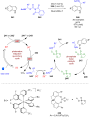
Figure 53: Proposed mechanism for the arylation of terminal alkynes via dual catalysis.
Figure 54: C–H Alkylation of alcohols promoted by H-atom transfer (HAT).
Figure 55: Proposed mechanism for the C–H alkylation of alcohols promoted by HAT.
Figure 56: C(sp3)–H arylation of latent nucleophiles promoted by H-atom transfer.
Figure 57: Proposed mechanism for the C(sp3)–H arylation of latent nucleophiles promoted by HAT.
Figure 58: Direct α-arylation of alcohols promoted by H-atom transfer.
Figure 59: Proposed mechanism for the direct α-arylation of alcohols promoted by HAT.
Figure 60: C–H arylation of amines via dual Ni/photoredox catalysis.
Figure 61: Proposed mechanism for the C–H arylation of amines via dual Ni/photoredox catalysis.
Figure 62: C–H functionalization of nucleophiles via excited ketone/nickel dual catalysis.
Figure 63: Proposed mechanism for the C–H functionalization enabled by excited ketones.
Figure 64: Selective sp3–sp3 cross-coupling promoted by H-atom transfer.
Figure 65: Proposed mechanism for the selective sp3–sp3 cross-coupling promoted by HAT.
Figure 66: Direct C(sp3)–H acylation of amines via dual Ni/photoredox catalysis.
Figure 67: Proposed mechanism for the C–H acylation of amines via dual Ni/photoredox catalysis.
Figure 68: C–H hydroalkylation of internal alkynes via dual Ni/photoredox catalysis.
Figure 69: Proposed mechanism for the C–H hydroalkylation of internal alkynes.
Figure 70: Alternative procedure for the C–H hydroalkylation of ynones, ynoates, and ynamides.
Figure 71: Allylic C(sp3)–H activation via dual Ni/photoredox catalysis.
Figure 72: Proposed mechanism for the allylic C(sp3)–H activation via dual Ni/photoredox catalysis.
Figure 73: Asymmetric allylation of aldehydes via dual Cr/photoredox catalysis.
Figure 74: Proposed mechanism for the asymmetric allylation of aldehydes via dual catalysis.
Figure 75: Aldehyde C–H functionalization promoted by H-atom transfer.
Figure 76: Proposed mechanism for the C–H functionalization of aldehydes promoted by HAT.
Figure 77: Direct C–H arylation of strong aliphatic bonds promoted by HAT.
Figure 78: Proposed mechanism for the C–H arylation of strong aliphatic bonds promoted by HAT.
Figure 79: Direct C–H trifluoromethylation of strong aliphatic bonds promoted by HAT.
Figure 80: Proposed mechanism for the C–H trifluoromethylation of strong aliphatic bonds.
Beilstein J. Org. Chem. 2020, 16, 1662–1682, doi:10.3762/bjoc.16.138
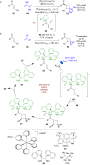
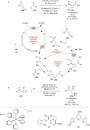
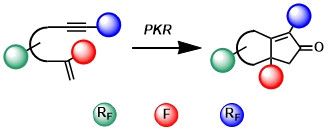
Graphical Abstract
Scheme 1: Schematic representation of the Pauson–Khand reaction.
Scheme 2: Substrates included in this review.
Scheme 3: Commonly accepted mechanism for the Pauson–Khand reaction.
Scheme 4: Regioselectivity of the PKR.
Scheme 5: Variability at the acetylenic and olefinic counterpart.
Scheme 6: Pauson–Khand reaction of fluoroolefinic enynes reported by the group of Ishizaki [46].
Scheme 7: PKR of enynes bearing fluorinated groups on the alkynyl moiety, reported by the group of Ishizaki [46]....
Scheme 8: Intramolecular PKR of 1,7-enynes reported by the group of Billard [47].
Scheme 9: Intramolecular PKR of 1,7-enynes reported by the group of Billard [48].
Scheme 10: Intramolecular PKR of 1,7-enynes by the group of Bonnet-Delpon [49]. Reaction conditions: i) Co(CO)8 (1...
Scheme 11: Intramolecular PKR of 1,6-enynes reported by the group of Ichikawa [50].
Scheme 12: Intramolecular Rh(I)-catalyzed PKR reported by the group of Hammond [52].
Scheme 13: Intramolecular PKR of allenynes reported by the group of Osipov [53].
Scheme 14: Intramolecular PKR of 1,7-enynes reported by the group of Osipov [53].
Scheme 15: Intramolecular PKR of fluorine-containing 1,6-enynes reported by the Konno group [54].
Scheme 16: Diastereoselective PKR with enantioenriched fluorinated enynes 34 [55].
Scheme 17: Intramolecular PKR reported by the group of Martinez-Solorio [56].
Scheme 18: Fluorine substitution at the olefinic counterpart.
Scheme 19: Synthesis of fluorinated enynes 37 [59].
Scheme 20: Fluorine-containing substrates in PKR [59].
Scheme 21: Pauson Khand reaction for fluorinated enynes by the Fustero group: scope and limitations [59].
Scheme 22: Synthesis of chloro and bromo analogues [59].
Scheme 23: Dimerization pathway [59].
Scheme 24: Synthesis of fluorine-containing N-tethered 1,7-enynes [61].
Scheme 25: Intramolecular PKR of chiral N-tethered fluorinated 1,7-enynes [61].
Scheme 26: Examples of further modifications to the Pauson−Khand adducts [61].
Scheme 27: Asymmetric synthesis the fluorinated enynes 53.
Scheme 28: Intramolecular PKR of chiral N-tethered 1,7-enynes 53 [64].
Scheme 29: Intramolecular PKR of chiral N-tethered 1,7-enyne bearing a vinyl fluoride [64].
Scheme 30: Catalytic intramolecular PKR of chiral N-tethered 1,7-enynes [64].
Scheme 31: Model fluorinated alkynes used by Riera and Fustero [70].
Scheme 32: PKR with norbornadiene and fluorinated alkynes 58 [71].
Scheme 33: Nucleophilic addition/detrifluoromethylation and retro Diels-Alder reactions [70].
Scheme 34: Tentative mechanism for the nucleophilic addition/retro-aldol reaction sequence.
Scheme 35: Catalytic PKR with norbornadiene [70].
Scheme 36: Scope of the PKR of trifluoromethylalkynes with norbornadiene [72].
Scheme 37: DBU-mediated detrifluoromethylation [72].
Scheme 38: A simple route to enone 67, a common intermediate in the total synthesis of α-cuparenone.
Scheme 39: Effect of the olefin partner in the regioselectivity of the PKR with trifluoromethyl alkynes [79].
Scheme 40: Intermolecular PKR of trifluoromethylalkynes with 2-norbornene reported by the group of Konno [54].
Scheme 41: Intermolecular PKR of diarylalkynes with 2-norbornene reported by the group of Helaja [80].
Scheme 42: Intermolecular PKR reported by León and Fernández [81].
Scheme 43: PKR reported with cyclopropene 73 [82].
Beilstein J. Org. Chem. 2020, 16, 1627–1635, doi:10.3762/bjoc.16.135
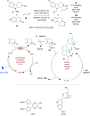
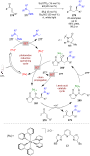
Graphical Abstract
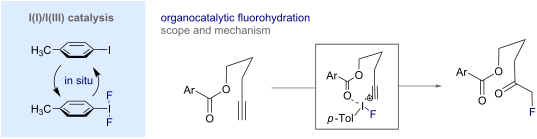
Figure 1: (A) Synthetic routes to α-fluoroketones from silyl enol ethers or acetophenone derivatives. (B) Sel...
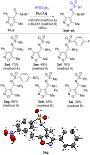
Scheme 1: Substrate scope with standard reaction conditions: alkyne (0.2 mmol), p-TolI (20 mol %), Selectfluor...
Figure 2: X-ray molecular structure of compound 2. Conformation of the carbonyl group and the fluoride with a...
Figure 3: (A) Structure activity relationship of the core scaffold. (B) Exploring the effect of methyl benzoa...
Figure 4: (A) Hammett plot varying the para-substitution on the alkyne (ρ ≈ 0). (B) Hammett plot varying the ...
Figure 5: An overview of the I(I)/I(III)-catalysed fluorohydration of alkynes.
Beilstein J. Org. Chem. 2020, 16, 1588–1595, doi:10.3762/bjoc.16.131
Graphical Abstract
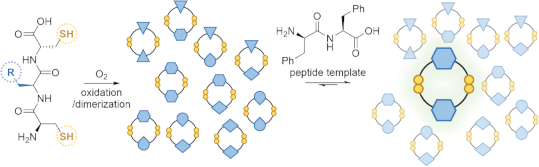
Scheme 1: a) Building blocks included in this study. b) Antiparallel and parallel constitutional isomers of t...
Figure 1: HPLC–MS chromatograms of a reference library for all possible tripeptide dimers ([M + H]+ ions).
Figure 2: a) HPLC–MS chromatograms of the dimers (CFC)2 and templates YY and FF. b) Amplification of the peak...
Scheme 2: a) Synthesis of the parallel and antiparallel isomers p(CFC)2 and a(CFC)2. b) Templates FF. YY and ...
Figure 3: ITC of YY (30 mM) to a(CFC)2 (1.5 mM) in phosphate buffer (pH 7.4, 100 mM).
Figure 4: Continuously varied NMR measurements of a) p(CFC)2 to YY b) p(CFC)2 to FF c) a(CFC)2 to YY d) a(CFC)...
Figure 5: Job plots derived from the continuously varied NMR measurements of a) p(CFC)2 to YY b) p(CFC)2 to FF...
Beilstein J. Org. Chem. 2020, 16, 1564–1571, doi:10.3762/bjoc.16.128
Graphical Abstract
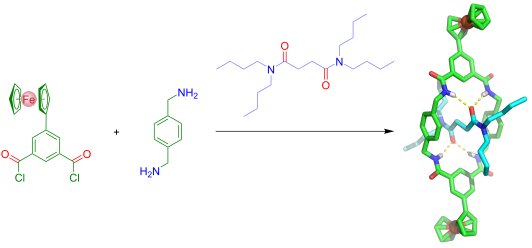
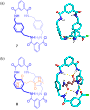
Figure 1: (a) Non-functionalized rotaxanes previously described in the literature. (b) The redox-active rotax...
Figure 2: Synthesis of the redox-active rotaxanes 1 and macrocycle 2.
Figure 3: Most stable conformers obtained by Monte Carlo conformational search using model compounds. (a) Mod...
Figure 4: 1H NMR spectrum (300 MHz) of rotaxane 1a (top) and thread 4a (bottom) in CDCl3 (a designation of th...
Figure 5: 1H,1H-ROESY NMR spectrum (600 MHz) of the rotaxane 1a in CDCl3.
Figure 6: Cyclic voltammogram of ferrocene rotaxane 1a (0.67 mM) in CH2Cl2/CH3CN 1:5 (TBAPF6 0.10 M, scan rat...
Figure 7: Single crystal X-ray structures of (a) rotaxane 1a and (b) Leigh’s rotaxane I [4].
Beilstein J. Org. Chem. 2020, 16, 1476–1488, doi:10.3762/bjoc.16.123
Graphical Abstract
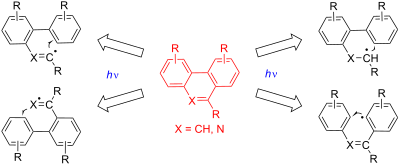
Figure 1: Bioactive phenanthridine and phenanthridinium derivatives.
Scheme 1: Synthesis of phenanthrenes by a photo-Pschorr reaction.
Scheme 2: Synthesis of phenanthrenes by a benzannulation reaction.
Scheme 3: Photocatalytic cyclization of α-bromochalcones for the synthesis of phenanthrenes.
Figure 2: Carbon-centered and nitrogen-centered radicals used for the synthesis of phenanthridines.
Scheme 4: General scheme describing the synthesis of phenanthridines from isocyanides via imidoyl radicals.
Scheme 5: Synthesis of substituted phenanthridines involving the intermediacy of electrophilic radicals.
Scheme 6: Photocatalyzed synthesis of 6-β-ketoalkyl phenanthridines.
Scheme 7: Synthesis of 6-substituted phenanthridines through the addition of trifluoromethyl (path a), phenyl...
Scheme 8: Synthesis of 6-(trifluoromethyl)-7,8-dihydrobenzo[k]phenanthridine.
Scheme 9: Phenanthridine syntheses by using photogenerated radicals formed through a C–H bond homolytic cleav...
Scheme 10: Trifluoroacetimidoyl chlorides as starting substrates for the synthesis of 6-(trifluoromethyl)phena...
Scheme 11: Synthesis of phenanthridines via aryl–aryl-bond formation.
Scheme 12: Oxidative conversion of N-biarylglycine esters to phenanthridine-6-carboxylates.
Scheme 13: Photocatalytic synthesis of benzo[f]quinolines from 2-heteroaryl-substituted anilines and heteroary...
Scheme 14: Synthesis of noravicine (14.2a) and nornitidine (14.2b) alkaloids.
Scheme 15: Gram-scale synthesis of the alkaloid trisphaeridine (15.3).
Scheme 16: Synthesis of phenanthridines starting from vinyl azides.
Scheme 17: Synthesis of pyrido[4,3,2-gh]phenanthridines 17.5a–d through the radical trifluoromethylthiolation ...
Scheme 18: The direct oxidative C–H amidation involving amidyl radicals for the synthesis of phenanthridones.
Beilstein J. Org. Chem. 2020, 16, 1418–1435, doi:10.3762/bjoc.16.118
Graphical Abstract
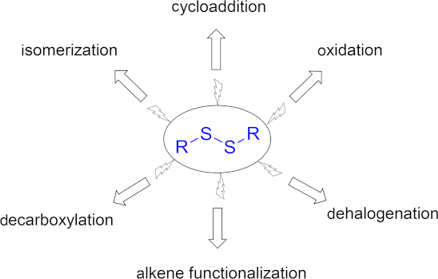
Scheme 1: [3 + 2] cyclization catalyzed by diaryl disulfide.
Scheme 2: [3 + 2] cycloaddition catalyzed by disulfide.
Scheme 3: Disulfide-bridged peptide-catalyzed enantioselective cycloaddition.
Scheme 4: Disulfide-catalyzed [3 + 2] methylenecyclopentane annulations.
Scheme 5: Disulfide as a HAT cocatalyst in the [4 + 2] cycloaddition reaction.
Scheme 6: Proposed mechanism of the [4 + 2] cycloaddition reaction using disulfide as a HAT cocatalyst.
Scheme 7: Disulfide-catalyzed ring expansion of vinyl spiro epoxides.
Scheme 8: Disulfide-catalyzed aerobic oxidation of diarylacetylene.
Scheme 9: Disulfide-catalyzed aerobic photooxidative cleavage of olefins.
Scheme 10: Disulfide-catalyzed aerobic oxidation of 1,3-dicarbonyl compounds.
Scheme 11: Proposed mechanism of the disulfide-catalyzed aerobic oxidation of 1,3-dicarbonyl compounds.
Scheme 12: Disulfide-catalyzed oxidation of allyl alcohols.
Scheme 13: Disulfide-catalyzed diboration of alkynes.
Scheme 14: Dehalogenative radical cyclization catalyzed by disulfide.
Scheme 15: Hydrodifluoroacetamidation of alkenes catalyzed by disulfide.
Scheme 16: Plausible mechanism of the hydrodifluoroacetamidation of alkenes catalyzed by disulfide.
Scheme 17: Disulfide-cocatalyzed anti-Markovnikov olefin hydration reactions.
Scheme 18: Disulfide-catalyzed decarboxylation of carboxylic acids.
Scheme 19: Proposed mechanism of the disulfide-catalyzed decarboxylation of carboxylic acids.
Scheme 20: Disulfide-catalyzed decarboxylation of carboxylic acids.
Scheme 21: Disulfide-catalyzed conversion of maleate esters to fumarates and 5H-furanones.
Scheme 22: Disulfide-catalyzed isomerization of difluorotriethylsilylethylene.
Scheme 23: Disulfide-catalyzed isomerization of allyl alcohols to carbonyl compounds.
Scheme 24: Proposed mechanism for the disulfide-catalyzed isomerization of allyl alcohols to carbonyl compound...
Scheme 25: Diphenyl disulfide-catalyzed enantioselective synthesis of ophirin B.
Scheme 26: Disulfide-catalyzed isomerization in the total synthesis of (+)-hitachimycin.
Scheme 27: Disulfide-catalyzed isomerization in the synthesis of (−)-gloeosporone.
Beilstein J. Org. Chem. 2020, 16, 1343–1356, doi:10.3762/bjoc.16.115
Graphical Abstract
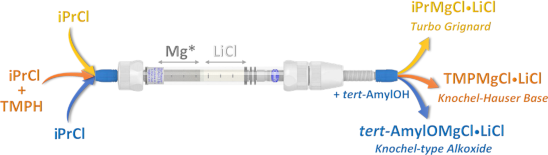
Figure 1: Comparing on-demand coffee and turbo Grignard pod-style machines.
Figure 2: Ranking of the 20 most cited Grignard reagents (SciFinder March 26, 2019).
Figure 3: On-demand prototype. A) Inside view of the pump with a flexible bag containing a yellow liquid layi...
Figure 4: Temperature evolution measured with thermocouples along the column outer surface at three different...
Figure 5: Stratified bicomponent column (Diba Omnifit EZ Solvent Plus) composed of magnesium (chips/powder, 1...
Scheme 1: Continuous flow synthesis of TMPMgCl⋅LiCl with a stratified packed-bed column of activated magnesiu...
Scheme 2: Continuous flow synthesis of TMPMgCl⋅LiBr with a stratified packed-bed column of activated magnesiu...
Scheme 3: Continuous flow synthesis of t-AmylOMgCl⋅LiCl with a stratified packed-bed column of activated magn...
Figure 6: Steady-state concentration stability during the conversion of iPrCl in THF (56 mL, 2.2 M) into iPrM...
Scheme 4: Synthesis of iPrMgCl⋅LiCl on the ODR prototype.
Scheme 5: Synthesis of HMDSMgCl⋅LiCl on the ODR prototype.
Beilstein J. Org. Chem. 2020, 16, 1188–1202, doi:10.3762/bjoc.16.104
Graphical Abstract
Figure 1: Experimental setup of ultrasonic spray pyrolysis. Reprinted with permission from [95], copyright 2006 T...
Figure 2: Overview of nitrogen-containing functional groups on the surface of activated carbons. Scheme was d...
Beilstein J. Org. Chem. 2020, 16, 1163–1187, doi:10.3762/bjoc.16.103
Graphical Abstract
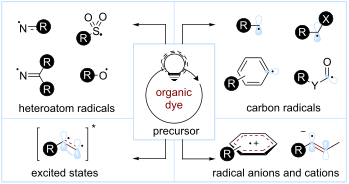
Figure 1: Selected examples of organic dyes. Mes-Acr+: 9-mesityl-10-methylacridinium, DCA: 9,10-dicyanoanthra...
Scheme 1: Activation modes in photocatalysis.
Scheme 2: Main strategies for the formation of C(sp3) radicals used in organophotocatalysis.
Scheme 3: Illustrative example for the photocatalytic oxidative generation of radicals from carboxylic acids:...
Scheme 4: Illustrative example for the photocatalytic reductive generation of C(sp3) radicals from redoxactiv...
Figure 2: Common substrates for the photocatalytic oxidative generation of C(sp3) radicals.
Scheme 5: Illustrative example for the photocatalytic oxidative generation of radicals from dihydropyridines ...
Scheme 6: Illustrative example for the photocatalytic oxidative generation of C(sp3) radicals from trifluorob...
Scheme 7: Illustrative example for the photocatalytic reductive generation of C(sp3) radicals from benzylic h...
Scheme 8: Illustrative example for the photocatalytic generation of C(sp3) radicals via direct HAT: the cross...
Scheme 9: Illustrative example for the photocatalytic generation of C(sp3) radicals via indirect HAT: the deu...
Scheme 10: Selected precursors for the generation of aryl radicals using organophotocatalysis.
Scheme 11: Illustrative example for the photocatalytic reductive generation of aryl radicals from aryl diazoni...
Scheme 12: Illustrative examples for the photocatalytic reductive generation of aryl radicals from haloarenes:...
Scheme 13: Illustrative example for the photocatalytic reductive generation of aryl radicals from aryl halides...
Scheme 14: Illustrative example for the photocatalytic reductive generation of aryl radicals from arylsulfonyl...
Scheme 15: Illustrative example for the reductive photocatalytic generation of aryl radicals from triaryl sulf...
Scheme 16: Main strategies towards acyl radicals used in organophotocatalysis.
Scheme 17: Illustrative example for the decarboxylative photocatalytic generation of acyl radicals from α-keto...
Scheme 18: Illustrative example for the oxidative photocatalytic generation of acyl radicals from acyl silanes...
Scheme 19: Illustrative example for the oxidative photocatalytic generation of carbamoyl radicals from 4-carba...
Scheme 20: Illustrative example of the photocatalytic HAT approach for the generation of acyl radicals from al...
Scheme 21: General reactivity of a) radical cations; b) radical anions; c) the main strategies towards aryl an...
Scheme 22: Illustrative example for the oxidative photocatalytic generation of alkene radical cations from alk...
Scheme 23: Illustrative example for the reductive photocatalytic generation of an alkene radical anion from al...
Figure 3: Structure of C–X radical anions and their neutral derivatives.
Scheme 24: Illustrative example for the photocatalytic reduction of imines and the generation of an α-amino C(...
Scheme 25: Illustrative example for the oxidative photocatalytic generation of aryl radical cations from arene...
Scheme 26: NCR classifications and generation.
Scheme 27: Illustrative example for the photocatalytic reductive generation of iminyl radicals from O-aryl oxi...
Scheme 28: Illustrative example for the photocatalytic oxidative generation of iminyl radicals from α-N-oxy ac...
Scheme 29: Illustrative example for the photocatalytic oxidative generation of iminyl radicals via an N–H bond...
Scheme 30: Illustrative example for the photocatalytic oxidative generation of amidyl radicals from Weinreb am...
Scheme 31: Illustrative example for the photocatalytic reductive generation of amidyl radicals from hydroxylam...
Scheme 32: Illustrative example for the photocatalytic reductive generation of amidyl radicals from N-aminopyr...
Scheme 33: Illustrative example for the photocatalytic oxidative generation of amidyl radicals from α-amido-ox...
Scheme 34: Illustrative example for the photocatalytic oxidative generation of aminium radicals: the N-aryltet...
Scheme 35: Illustrative example for the photocatalytic oxidative generation of nitrogen-centered radical catio...
Scheme 36: Illustrative example for the photocatalytic oxidative generation of nitrogen-centered radical catio...
Scheme 37: Illustrative example for the photocatalytic oxidative generation of hydrazonyl radical from hydrazo...
Scheme 38: Generation of O-radicals.
Scheme 39: Illustrative examples for the photocatalytic generation of O-radicals from N-alkoxypyridinium salts...
Scheme 40: Illustrative examples for the photocatalytic generation of O-radicals from alkyl hydroperoxides: th...
Scheme 41: Illustrative example for the oxidative photocatalytic generation of thiyl radicals from thiols: the...
Scheme 42: Main strategies and reagents for the generation of sulfonyl radicals used in organophotocatalysis.
Scheme 43: Illustrative example for the reductive photocatalytic generation of sulfonyl radicals from arylsulf...
Scheme 44: Illustrative example of a Cl atom abstraction strategy for the photocatalytic generation of sulfamo...
Scheme 45: Illustrative example for the oxidative photocatalytic generation of sulfonyl radicals from sulfinic...
Scheme 46: Illustrative example for the photocatalytic generation of electronically excited triplet states: th...
Scheme 47: Illustrative example for the photocatalytic generation of electronically excited triplet states: th...
Beilstein J. Org. Chem. 2020, 16, 1100–1110, doi:10.3762/bjoc.16.97
Graphical Abstract
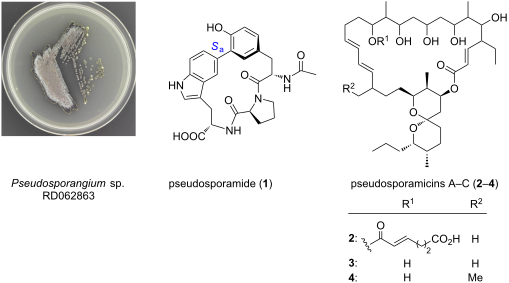
Figure 1: Structures of pseudosporamide (1) and pseudosporamicins A–C (2–4).
Figure 2: COSY, key HMBC and ROESY correlations of pseudosporamide (1).
Figure 3: 1H NMR ΔδS−R values for PGME amides 5a and 5b obtained from compound 1.
Figure 4: The opposite axial chirality around the biaryl C-6–C-7'' bond influenced by the C-2 configuration i...
Figure 5: The experimental and calculated ECD spectra in MeCN.
Figure 6: COSY, key HMBC and NOESY correlations of compound 2.
Figure 7: NOESY correlations for the spiroacetal moiety of compound 2.
Figure 8: Selected examples of oligomycin-class metabolites from actinomycetes.
Beilstein J. Org. Chem. 2020, 16, 1084–1091, doi:10.3762/bjoc.16.95
Graphical Abstract
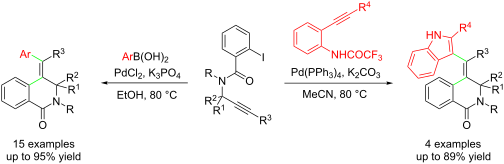
Scheme 1: Planned approach to tetrasubstituted-4-methylene-3,4-dihydroisoquinolin-1(2H)-ones 4 and 6.
Scheme 2: Preparation of the starting N-propargyl-2-iodobenzamides 2.
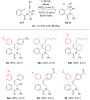
Scheme 3: Substrate scope of the reaction of N-propargyl-2-iodobenzamide 2a with arylboronic acids 3b–i.
Scheme 4: Substrate scope of the reaction of N-propargyl-2-iodobenzamides 2c–f with arylboronic acids 3a–c/j.
Scheme 5: Reaction of N-propargyl-2-iodobenzamides 2b,f with the 2-alkynyltrifluoroacetanilides 5a–c.
Beilstein J. Org. Chem. 2020, 16, 1022–1050, doi:10.3762/bjoc.16.91
Graphical Abstract
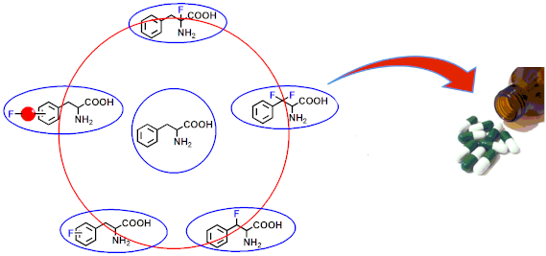
Figure 1: Categories I–V of fluorinated phenylalanines.
Scheme 1: Synthesis of fluorinated phenylalanines via Jackson’s method.
Scheme 2: Synthesis of all-cis-tetrafluorocyclohexylphenylalanines.
Scheme 3: Synthesis of ʟ-4-[sulfono(difluoromethyl)]phenylalanine (nPt: neopentyl, TCE: trichloroethyl).
Scheme 4: Synthesis of ʟ-4-[sulfono(difluoromethyl)]phenylalanine derivatives 17.
Scheme 5: Synthesis of fluorinated Phe analogues from Cbz-protected aminomalonates.
Scheme 6: Synthesis of tetrafluorophenylalanine analogues via the 3-methyl-4-imidazolidinone auxiliary 25.
Scheme 7: Synthesis of tetrafluoro-Phe derivatives via chiral auxiliary 31.
Scheme 8: Synthesis of 2,5-difluoro-Phe and 2,4,5-trifluoro-Phe via Schöllkopf reagent 34.
Scheme 9: Synthesis of 2-fluoro- and 2,6-difluoro Fmoc-Phe derivatives starting from chiral auxiliary 39.
Scheme 10: Synthesis of 2-[18F]FPhe via chiral auxiliary 43.
Scheme 11: Synthesis of FPhe 49a via photooxidative cyanation.
Scheme 12: Synthesis of FPhe derivatives via Erlenmeyer azalactone synthesis.
Scheme 13: Synthesis of (R)- and (S)-2,5-difluoro Phe via the azalactone method.
Scheme 14: Synthesis of 3-bromo-4-fluoro-(S)-Phe (65).
Scheme 15: Synthesis of [18F]FPhe via radiofluorination of phenylalanine with [18F]F2 or [18F]AcOF.
Scheme 16: Synthesis of 4-borono-2-[18F]FPhe.
Scheme 17: Synthesis of protected 4-[18F]FPhe via arylstannane derivatives.
Scheme 18: Synthesis of FPhe derivatives via intermediate imine formation.
Scheme 19: Synthesis of FPhe derivatives via Knoevenagel condensation.
Scheme 20: Synthesis of FPhe derivatives 88a,b from aspartic acid derivatives.
Scheme 21: Synthesis of 2-(2-fluoroethyl)phenylalanine derivatives 93 and 95.
Scheme 22: Synthesis of FPhe derivatives via Zn2+ complexes.
Scheme 23: Synthesis of FPhe derivatives via Ni2+ complexes.
Scheme 24: Synthesis of 3,4,5-trifluorophenylalanine hydrochloride (109).
Scheme 25: Synthesis of FPhe derivatives via phenylalanine aminomutase (PAM).
Scheme 26: Synthesis of (R)-2,5-difluorophenylalanine 115.
Scheme 27: Synthesis of β-fluorophenylalanine via 2-amino-1,3-diol derivatives.
Scheme 28: Synthesis of β-fluorophenylalanine derivatives via the oxazolidinone chiral auxiliary 122.
Scheme 29: Synthesis of β-fluorophenylalanine from pyruvate hemiketal 130.
Scheme 30: Synthesis of β-fluorophenylalanine (136) via fluorination of β-hydroxyphenylalanine (137).
Scheme 31: Synthesis of β-fluorophenylalanine from aziridine derivatives.
Scheme 32: Synthesis of β-fluorophenylalanine 136 via direct fluorination of pyruvate esters.
Scheme 33: Synthesis of β-fluorophenylalanine via fluorination of ethyl 3-phenylpyruvate enol using DAST.
Scheme 34: Synthesis of β-fluorophenylalanine derivatives using photosensitizer TCB.
Scheme 35: Synthesis of β-fluorophenylalanine derivatives using Selectflour and dibenzosuberenone.
Scheme 36: Synthesis of protected β-fluorophenylalanine via aziridinium intermediate 150.
Scheme 37: Synthesis of β-fluorophenylalanine derivatives via fluorination of α-hydroxy-β-aminophenylalanine d...
Scheme 38: Synthesis of β-fluorophenylalanine derivatives from α- or β-hydroxy esters 152a and 155.
Scheme 39: Synthesis of a series of β-fluoro-Phe derivatives via Pd-catalyzed direct fluorination of β-methyle...
Scheme 40: Synthesis of series of β-fluorinated Phe derivatives using quinoline-based ligand 162 in the Pd-cat...
Scheme 41: Synthesis of β,β-difluorophenylalanine derivatives from 2,2-difluoroacetaldehyde derivatives 164a,b....
Scheme 42: Synthesis of β,β-difluorophenylalanine derivatives via an imine chiral auxiliary.
Scheme 43: Synthesis of α-fluorophenylalanine derivatives via direct fluorination of protected Phe 174.
Figure 2: Structures of PET radiotracers of 18FPhe derivatives.
Figure 3: Structures of melfufen (179) and melphalan (180) anticancer drugs.
Figure 4: Structure of gastrazole (JB95008, 181), a CCK2 receptor antagonist.
Figure 5: Dual CCK1/CCK2 antagonist 182.
Figure 6: Structure of sitagliptin (183), an antidiabetic drug.
Figure 7: Structure of retaglpitin (184) and antidiabetic drug.
Figure 8: Structure of evogliptin (185), an antidiabetic drug.
Figure 9: Structure of LY2497282 (186) a DPP-4 inhibitor for the treatment of type II diabetes.
Figure 10: Structure of ulimorelin (187).
Figure 11: Structure of GLP1R (188).
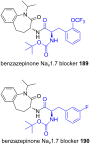
Figure 12: Structures of Nav1.7 blockers 189 and 190.
Beilstein J. Org. Chem. 2020, 16, 966–973, doi:10.3762/bjoc.16.85
Graphical Abstract
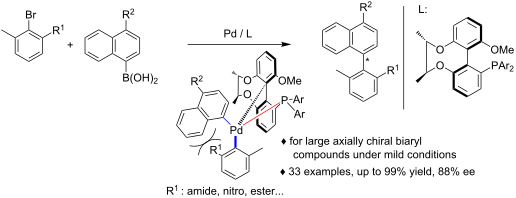
Figure 1: (R)-MeO-MOP and our ligands.
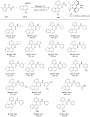
Scheme 1: Asymmetric Suzuki–Miyaura coupling. Reaction conditions: 1 equiv N-aryl-bromoaryl compounds, 2 equi...
Scheme 2: Asymmetric Suzuki–Miyaura coupling. Reaction conditions: 1 equiv of bromoaryl compounds, 2 equiv of...
Scheme 3: Gram-scale reaction.
Scheme 4: Based on our analysis and speculation, a possible intermediate structure is proposed [65,66].
Scheme 5: Method A for the synthesis of amide substrates.
Scheme 6: Method B for the synthesis of amide substrates.
Beilstein J. Org. Chem. 2020, 16, 917–955, doi:10.3762/bjoc.16.83
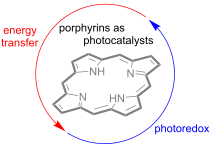
Graphical Abstract
Figure 1: Chemical structures of the porphyrinoids and their absorption spectra: in bold are highlighted the ...
Figure 2: Photophysical and photochemical processes (Por = porphyrin). Adapted from [12,18].
Figure 3: Main dual photocatalysts and their oxidative/reductive excited state potentials, including porphyri...
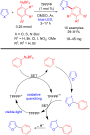
Scheme 1: Photoredox alkylation of aldehydes with diazo acetates using porphyrins and a Ru complex. aUsing a ...
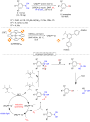
Scheme 2: Proposed mechanism for the alkylation of aldehydes with diazo acetates in the presence of TPP.
Scheme 3: Arylation of heteroarenes with aryldiazonium salts using TPFPP as photocatalyst, and corresponding ...
Scheme 4: A) Scope with different aryldiazonium salts and enol acetates. B) Photocatalytic cycles and compari...
Scheme 5: Photoarylation of isopropenyl acetate A) Comparison between batch and continuous-flow approaches an...
Scheme 6: Dehalogenation induced by red light using thiaporphyrin (STPP).
Scheme 7: Applications of NiTPP as both photoreductant and photooxidant.
Scheme 8: Proposed mechanism for obtaining tetrahydroquinolines by reductive quenching.
Scheme 9: Selenylation and thiolation of anilines.
Scheme 10: NiTPP as photoredox catalyst in oxidative and reductive quenching, in comparison with other photoca...
Scheme 11: C–O bond cleavage of 1-phenylethanol using a cobalt porphyrin (CoTMPP) under visible light.
Scheme 12: Hydration of terminal alkynes by RhIII(TSPP) under visible light irradiation.
Scheme 13: Regioselective photocatalytic hydro-defluorination of perfluoroarenes by RhIII(TSPP).
Scheme 14: Formation of 2-methyl-2,3-dihydrobenzofuran by intramolecular hydro-functionalization of allylpheno...
Scheme 15: Photocatalytic oxidative hydroxylation of arylboronic acids using UNLPF-12 as heterogeneous photoca...
Scheme 16: Photocatalytic oxidative hydroxylation of arylboronic acids using MOF-525 as heterogeneous photocat...
Scheme 17: Preparation of the heterogeneous photocatalyst CNH.
Scheme 18: Photoinduced sulfonation of alkenes with sulfinic acid using CNH as photocatalyst.
Scheme 19: Sulfonic acid scope of the sulfonation reactions.
Scheme 20: Regioselective sulfonation reaction of arimistane.
Scheme 21: Synthesis of quinazolin-4-(3H)-ones.
Scheme 22: Selective photooxidation of aromatic benzyl alcohols to benzaldehydes using Pt/PCN-224(Zn).
Scheme 23: Photooxidation of benzaldehydes to benzoic acids using Pt or Pd porphyrins.
Scheme 24: Photocatalytic reduction of various nitroaromatics using a Ni-MOF.
Scheme 25: Photoinduced cycloadditions of CO2 with epoxides by MOF1.
Figure 4: Electronic configurations of the species of oxygen. Adapted from [66].
Scheme 26: TPP-photocatalyzed generation of 1O2 and its application in organic synthesis. Adapted from [67-69].
Scheme 27: Pericyclic reactions involving singlet oxygen and their mechanisms. Adapted from [67].
Scheme 28: First scaled up ascaridole preparation from α-terpinene.
Scheme 29: Antimalarial drug synthesis using an endoperoxidation approach.
Scheme 30: Photooxygenation of colchicine.
Scheme 31: Synthesis of (−)-pinocarvone from abundant (+)-α-pinene.
Scheme 32: Seeberger’s semi-synthesis of artemisinin.
Scheme 33: Synthesis of artemisinin using TPP and supercritical CO2.
Scheme 34: Synthesis of artemisinin using chlorophyll a.
Scheme 35: Quercitol stereoisomer preparation.
Scheme 36: Photocatalyzed preparation of naphthoquinones.
Scheme 37: Continuous endoperoxidation of conjugated dienes and subsequent rearrangements leading to oxidized ...
Scheme 38: The Opatz group total synthesis of (–)-oxycodone.
Scheme 39: Biomimetic syntheses of rhodonoids A, B, E, and F.
Scheme 40: α-Photooxygenation of chiral aldehydes.
Scheme 41: Asymmetric photooxidation of indanone β-keto esters by singlet oxygen using PTC as a chiral inducer...
Scheme 42: Asymmetric photooxidation of both β-keto esters and β-keto amides by singlet oxygen using PTC-2 as ...
Scheme 43: Bifunctional photo-organocatalyst used for the asymmetric oxidation of β-keto esters and β-keto ami...
Scheme 44: Mechanism of singlet oxygen oxidation of sulfides to sulfoxides.
Scheme 45: Controlled oxidation of sulfides to sulfoxides using protonated porphyrins as photocatalysts. aIsol...
Scheme 46: Photochemical oxidation of sulfides to sulfoxides using PdTPFPP as photocatalyst.
Scheme 47: Controlled oxidation of sulfides to sulfoxides using SnPor@PAF as a photosensitizer.
Scheme 48: Syntheses of 2D-PdPor-COF and 3D-Pd-COF.
Scheme 49: Photocatalytic oxidation of A) thioanisole to methyl phenyl sulfoxide and B) various aryl sulfides,...
Scheme 50: General mechanism for oxidation of amines to imines.
Scheme 51: Oxidation of secondary amines to imines.
Scheme 52: Oxidation of secondary amines using Pd-TPFPP as photocatalyst.
Scheme 53: Oxidative amine coupling using UNLPF-12 as heterogeneous photocatalyst.
Scheme 54: Synthesis of Por-COF-1 and Por-COF-2.
Scheme 55: Photocatalytic oxidation of amines to imines by Por-COF-2.
Scheme 56: Photocyanation of primary amines.
Scheme 57: Synthesis of ᴅ,ʟ-tert-leucine hydrochloride.
Scheme 58: Photocyanation of catharanthine and 16-O-acetylvindoline using TPP.
Scheme 59: Photochemical α-functionalization of N-aryltetrahydroisoquinolines using Pd-TPFPP as photocatalyst.
Scheme 60: Ugi-type reaction with 1,2,3,4-tetrahydroisoquinoline using molecular oxygen and TPP.
Scheme 61: Ugi-type reaction with dibenzylamines using molecular oxygen and TPP.
Scheme 62: Mannich-type reaction of tertiary amines using PdTPFPP as photocatalyst.
Scheme 63: Oxidative Mannich reaction using UNLPF-12 as heterogeneous photocatalyst.
Scheme 64: Transformation of amines to α-cyanoepoxides and the proposed mechanism.
Beilstein J. Org. Chem. 2020, 16, 833–857, doi:10.3762/bjoc.16.76
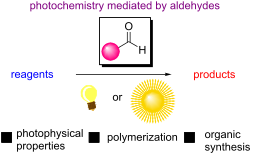
Graphical Abstract
Scheme 1: Norrish type I and II dissociations.
Scheme 2: Proposed radical pair formation after the photolysis of benzaldehyde (8).
Scheme 3: Aldehydes in the Paterno–Büchi reaction.
Scheme 4: 2,3-Diazabicyclo[2.2.1]hept-2-ene (DBH).
Scheme 5: Dissociation pathways of benzaldehyde.
Scheme 6: Reactions that lead to polarized products detectable by CIDNP.
Scheme 7: MMA (26), DEABP (27), and Michler’s ketone (28).
Scheme 8: Radical intermediates of DEABP.
Scheme 9: Photoinitiated polymerization of monomeric MMA (26) using the quinoxalines 32 and benzaldehyde (8).
Scheme 10: Acetone (4) and formaldehyde (35) as photografting initiators.
Scheme 11: Photografting by employing acetaldehyde (36) as the photoinitiator.
Scheme 12: Proposed photolysis mechanism for aliphatic ketones 44 and formaldehyde (35).
Scheme 13: Initiator 50, reductant 51, and benzaldehyde derivatives 52–54 for the polymerization of the methac...
Scheme 14: Proposed mechanism of the photomediated atom transfer radical polymerization employing the benzalde...
Scheme 15: cis/trans isomerization employing triplet states of photosensitizers.
Scheme 16: Salicylaldehyde (68) forms an internal hydrogen bond.
Scheme 17: Olefin isomerization via energy transfer from a carbonyl compound.
Scheme 18: Mechanistic pathways for the Paterno–Büchi reaction.
Scheme 19: Isomeric oxetanes formed after photochemical addition of aryl aldehydes to 2-butenes.
Scheme 20: Rotation of the C3–C4 bond of the biradical intermediate may lead to all four conformations.
Scheme 21: Photolysis products of benzaldehyde (8) in different solvents. a) In benzene or ethanol. b) In hex-...
Scheme 22: N-tert-Butylbenzamide formation proceeds via a benzoyl radical.
Scheme 23: Photochemical pinacol coupling.
Scheme 24: Photochemical ATRA catalyzed by 4-anisaldehyde (52).
Scheme 25: Proposed triplet sensitization mechanism of the ATRA reaction in the presence of 4-anisaldehyde (52...
Scheme 26: Benzaldehyde-mediated photoredox CDC reaction: compatible amides and ethers.
Scheme 27: Photoredox cross-dehydrogenative coupling (CDC) conditions and proposed reaction mechanism.
Scheme 28: Optimized conditions for the photoredox merger reaction.
Scheme 29: Proposed mechanism for the C(sp3)–H alkylation/arylation of ethers.
Scheme 30: Substrate scope for the photochemical alkylation of ethers.
Scheme 31: C(sp3)–H Functionalization of N-containing molecules.
Scheme 32: Substrate scope for the photochemical alkylation of N-containing molecules.
Scheme 33: Additional products yielded by the photochemical alkylation reaction of N-containing molecules.
Scheme 34: C(sp3)–H functionalization of thioethers.
Scheme 35: Proposed mechanism for the C(sp3)–H alkylation/arylation of N-containing molecules and thioethers.
Scheme 36: Hydroacylation using 4-cyanobenzaldehyde (53) as the photoinitiator.
Scheme 37: Selectivity for the formation of the α,α-disubstituted aldehydes.
Scheme 38: Substrate scope for the photochemical addition of aldehydes to Michael acceptors.
Scheme 39: Proposed mechanism for the hydroacylation of Michael acceptors using 4-cyanobenzaldehyde (53) as th...
Scheme 40: Catalytic arylation of aromatic aldehydes by aryl bromides in which the reaction product acts as th...
Scheme 41: Proposed mechanism for the catalytic arylation of benzaldehydes by aryl bromides in which the react...
Scheme 42: Functionalization of the chiral cyclobutanes 180.
Scheme 43: Optimized reaction conditions and proposed mechanism for the sulfonylcyanation of cyclobutenes.
Beilstein J. Org. Chem. 2020, 16, 798–808, doi:10.3762/bjoc.16.73
Graphical Abstract
Figure 1: Chemical structure of 18β-glycyrrhetinic acid and known derivatives.
Scheme 1: Synthesis of compound 4. Reagents and conditions: (a) Ac2O, NEt3, DMF (cat.), DCM, 25 °C, 1 day; (b...
Scheme 2: Synthesis of compound 4. Reagents and conditions: (a) Ac2O, 130 °C, 1 h; (b) 1-Boc-piperazine, CH3C...
Figure 2: a) Estimated structure of the intermediate 6; b) Possible aminolysis process.
Scheme 3: Synthesis of byproduct 11. Reagents and conditions: (a) chloroacetic anhydride, 130 °C, 1 h.
Scheme 4: Synthesis of compound 17. Reagents and conditions: (a) chloroacetic anhydride, 130 °C, 1 h; (b) mor...
Figure 3: Crystal structure of conpound 18.
Beilstein J. Org. Chem. 2020, 16, 691–737, doi:10.3762/bjoc.16.67
Graphical Abstract
Scheme 1: Pharmaceuticals possessing a silicon or boron atom.
Scheme 2: The first Cu-catalyzed C(sp3)–Si bond formation.
Scheme 3: Conversion of benzylic phosphate 6 to the corresponding silane.
Scheme 4: Conversion of alkyl triflates to alkylsilanes.
Scheme 5: Conversion of secondary alkyl triflates to alkylsilanes.
Scheme 6: Conversion of alkyl iodides to alkylsilanes.
Scheme 7: Trapping of intermediate radical through cascade reaction.
Scheme 8: Radical pathway for conversion of alkyl iodides to alkylsilanes.
Scheme 9: Conversion of alkyl ester of N-hydroxyphthalimide to alkylsilanes.
Scheme 10: Conversion of gem-dibromides to bis-silylalkanes.
Scheme 11: Conversion of imines to α-silylated amines (A) and the reaction pathway (B).
Scheme 12: Conversion of N-tosylimines to α-silylated amines.
Scheme 13: Screening of diamine ligands.
Scheme 14: Conversion of N-tert-butylsulfonylimines to α-silylated amines.
Scheme 15: Conversion of aldimines to nonracemic α-silylated amines.
Scheme 16: Conversion of N-tosylimines to α-silylated amines.
Scheme 17: Reaction pathway [A] and conversion of aldehydes to α-silylated alcohols [B].
Scheme 18: Conversion of aldehydes to benzhydryl silyl ethers.
Scheme 19: Conversion of ketones to 1,2-diols (A) and conversion of imines to 1,2-amino alcohols (B).
Scheme 20: Ligand screening (A) and conversion of aldehydes to α-silylated alcohols (B).
Scheme 21: Conversion of aldehydes to α-silylated alcohols.
Scheme 22: 1,4-Additions to α,β-unsaturated ketones.
Scheme 23: 1,4-Additions to unsaturated ketones to give β-silylated derivatives.
Scheme 24: Additions onto α,β-unsaturated lactones to give β-silylated lactones.
Scheme 25: Conversion of α,β-unsaturated to β-silylated lactams.
Scheme 26: Conversion of N-arylacrylamides to silylated oxindoles.
Scheme 27: Conversion of α,β-unsaturated carbonyl compounds to silylated tert-butylperoxides.
Scheme 28: Catalytic cycle for Cu(I) catalyzed α,β-unsaturated compounds.
Scheme 29: Conversion of p-quinone methides to benzylic silanes.
Scheme 30: Conversion of α,β-unsaturated ketimines to regio- and stereocontrolled allylic silanes.
Scheme 31: Conversion of α,β-unsaturated ketimines to enantioenriched allylic silanes.
Scheme 32: Regioselective conversion of dienedioates to allylic silanes.
Scheme 33: Conversion of alkenyl-substituted azaarenes to β-silylated adducts.
Scheme 34: Conversion of conjugated benzoxazoles to enantioenriched β-silylated adducts.
Scheme 35: Conversion of α,β-unsaturated carbonyl indoles to α-silylated N-alkylated indoles.
Scheme 36: Conversion of β-amidoacrylates to α-aminosilanes.
Scheme 37: Conversion of α,β-unsaturated ketones to enantioenriched β-silylated ketones, nitriles, and nitro d...
Scheme 38: Regio-divergent silacarboxylation of allenes.
Scheme 39: Silylation of diazocarbonyl compounds, (A) asymmetric and (B) racemic.
Scheme 40: Enantioselective hydrosilylation of alkenes.
Scheme 41: Conversion of 3-acylindoles to indolino-silanes.
Scheme 42: Proposed mechanism for the silylation of 3-acylindoles.
Scheme 43: Silyation of N-chlorosulfonamides.
Scheme 44: Conversion of acyl silanes to α-silyl alcohols.
Scheme 45: Conversion of N-tosylaziridines to β-silylated N-tosylamines.
Scheme 46: Conversion of N-tosylaziridines to silylated N-tosylamines.
Scheme 47: Conversion of 3,3-disubstituted cyclopropenes to silylated cyclopropanes.
Scheme 48: Conversion of conjugated enynes to 1,3-bis(silyl)propenes.
Scheme 49: Proposed sequence for the Cu-catalyzed borylation of substituted alkenes.
Scheme 50: Cu-catalyzed synthesis of nonracemic allylic boronates.
Scheme 51: Cu–NHC catalyzed synthesis of α-substituted allylboronates.
Scheme 52: Synthesis of α-chiral (γ-alkoxyallyl)boronates.
Scheme 53: Cu-mediated formation of nonracemic cis- or trans- 2-substituted cyclopropylboronates.
Scheme 54: Cu-catalyzed synthesis of γ,γ-gem-difluoroallylboronates.
Scheme 55: Cu-catalyzed hydrofunctionalization of internal alkenes and vinylarenes.
Scheme 56: Cu-catalyzed Markovnikov and anti-Markovnikov borylation of alkenes.
Scheme 57: Cu-catalyzed borylation/ortho-cyanation/Cope rearrangement.
Scheme 58: Borylfluoromethylation of alkenes.
Scheme 59: Cu-catalyzed synthesis of tertiary nonracemic alcohols.
Scheme 60: Synthesis of densely functionalized and synthetically versatile 1,2- or 4,3-borocyanated 1,3-butadi...
Scheme 61: Cu-catalyzed trifunctionalization of allenes.
Scheme 62: Cu-catalyzed selective arylborylation of arenes.
Scheme 63: Asymmetric borylative coupling between styrenes and imines.
Scheme 64: Regio-divergent aminoboration of unactivated terminal alkenes.
Scheme 65: Cu-catalyzed 1,4-borylation of α,β-unsaturated ketones.
Scheme 66: Cu-catalyzed protodeboronation of α,β-unsaturated ketones.
Scheme 67: Cu-catalyzed β-borylation of α,β-unsaturated imines.
Scheme 68: Cu-catalyzed synthesis of β-trifluoroborato carbonyl compounds.
Scheme 69: Asymmetric 1,4-borylation of α,β-unsaturated carbonyl compounds.
Scheme 70: Cu-catalyzed ACB and ACA reactions of α,β-unsaturated 2-acyl-N-methylimidazoles.
Scheme 71: Cu-catalyzed diborylation of aldehydes.
Scheme 72: Umpolung pathway for chiral, nonracemic tertiary alcohol synthesis (top) and proposed mechanism for...
Scheme 73: Cu-catalyzed synthesis of α-hydroxyboronates.
Scheme 74: Cu-catalyzed borylation of ketones.
Scheme 75: Cu-catalyzed borylation of unactivated alkyl halides.
Scheme 76: Cu-catalyzed borylation of allylic difluorides.
Scheme 77: Cu-catalyzed borylation of cyclic and acyclic alkyl halides.
Scheme 78: Cu-catalyzed borylation of unactivated alkyl chlorides and bromides.
Scheme 79: Cu-catalyzed decarboxylative borylation of carboxylic acids.
Scheme 80: Cu-catalyzed borylation of benzylic, allylic, and propargylic alcohols.
Beilstein J. Org. Chem. 2020, 16, 509–514, doi:10.3762/bjoc.16.46
Graphical Abstract
Figure 1: The dual role of DBU in the amidation of 7-CMP.
Scheme 1: DBU-promoted amidation of 7-CMP (1).
Figure 2: Role of a β-hydroxy group in aiding the amidation reaction.
Figure 3: Pseudo-first order kinetics for representative amines.
Beilstein J. Org. Chem. 2020, 16, 451–481, doi:10.3762/bjoc.16.42
Graphical Abstract
Scheme 1: [Cu(I)(dap)2]Cl-catalyzed ATRA reaction under green light irradiation.
Scheme 2: Photocatalytic allylation of α-haloketones.
Scheme 3: [Cu(I)(dap)2]Cl-photocatalyzed chlorosulfonylation and chlorotrifluoromethylation of alkenes.
Scheme 4: Photocatalytic perfluoroalkylchlorination of electron-deficient alkenes using the Sauvage catalyst.
Scheme 5: Photocatalytic synthesis of fluorinated sultones.
Scheme 6: Photocatalyzed haloperfluoroalkylation of alkenes and alkynes.
Scheme 7: Chlorosulfonylation of alkenes catalyzed by [Cu(I)(dap)2]Cl. aNo Na2CO3 was added. b1 equiv of Na2CO...
Scheme 8: Copper-photocatalyzed reductive allylation of diaryliodonium salts.
Scheme 9: Copper-photocatalyzed azidomethoxylation of olefins.
Scheme 10: Benzylic azidation initiated by [Cu(I)(dap)2]Cl.
Scheme 11: Trifluoromethyl methoxylation of styryl derivatives using [Cu(I)(dap)2]PF6. All redox potentials ar...
Scheme 12: Trifluoromethylation of silyl enol ethers.
Scheme 13: Synthesis of annulated heterocycles upon oxidation with the Sauvage catalyst.
Scheme 14: Oxoazidation of styrene derivatives using [Cu(dap)2]Cl as a precatalyst.
Scheme 15: [Cu(I)(dpp)(binc)]PF6-catalyzed ATRA reaction.
Scheme 16: Allylation reaction of α-bromomalonate catalyzed by [Cu(I)(dpp)(binc)]PF6 following an ATRA mechani...
Scheme 17: Bromo/tribromomethylation reaction using [Cu(I)(dmp)(BINAP)]PF6.
Scheme 18: Chlorotrifluoromethylation of alkenes catalyzed by [Cu(I)(N^N)(xantphos)]PF6.
Scheme 19: Chlorosulfonylation of styrene and alkyne derivatives by ATRA reactions.
Scheme 20: Reduction of aryl and alkyl halides with the complex [Cu(I)(bcp)(DPEPhos)]PF6. aIrradiation was car...
Scheme 21: Meerwein arylation of electron-rich aromatic derivatives and 5-exo-trig cyclization catalyzed by th...
Scheme 22: [Cu(I)(bcp)(DPEPhos)]PF6-photocatalyzed synthesis of alkaloids. aYield over two steps (cyclization ...
Scheme 23: Copper-photocatalyzed decarboxylative amination of NHP esters.
Scheme 24: Photocatalytic decarboxylative alkynylation using [Cu(I)(dq)(binap)]BF4.
Scheme 25: Copper-photocatalyzed alkylation of glycine esters.
Scheme 26: Copper-photocatalyzed borylation of organic halides. aUnder continuous flow conditions.
Scheme 27: Copper-photocatalyzed α-functionalization of alcohols with glycine ester derivatives.
Scheme 28: δ-Functionalization of alcohols using [Cu(I)(dmp)(xantphos)]BF4.
Scheme 29: Photocatalytic synthesis of [5]helicene and phenanthrene.
Scheme 30: Oxidative carbazole synthesis using in situ-formed [Cu(I)(dmp)(xantphos)]BF4.
Scheme 31: Copper-photocatalyzed functionalization of N-aryl tetrahydroisoquinolines.
Scheme 32: Bicyclic lactone synthesis using a copper-photocatalyzed PCET reaction.
Scheme 33: Photocatalytic Pinacol coupling reaction catalyzed by [Cu(I)(pypzs)(BINAP)]BF4. The ligands of the ...
Scheme 34: Azide photosensitization using a Cu-based photocatalyst.
Beilstein J. Org. Chem. 2020, 16, 212–232, doi:10.3762/bjoc.16.24
Graphical Abstract
Scheme 1: Competitive side reactions in the Cu ECA of organometallic reagents to α,β-unsaturated aldehydes.
Scheme 2: Cu-catalyzed ECA of α,β-unsaturated aldehydes with phosphoramidite- (a) and phosphine-based ligands...
Scheme 3: One-pot Cu-catalyzed ECA/organocatalyzed α-substitution of enals.
Scheme 4: Combination of copper and amino catalysis for enantioselective β-functionalizations of enals.
Scheme 5: Optimized conditions for the Cu ECAs of R2Zn, RMgBr, and AlMe3 with α,β-unsaturated aldehydes.
Scheme 6: CuECA of Grignard reagents to α,β-unsaturated thioesters and their application in the asymmetric to...
Scheme 7: Improved Cu ECA of Grignard reagents to α,β-unsaturated thioesters, and their application in the as...
Scheme 8: Catalytic enantioselective synthesis of vicinal dialkyl arrays via Cu ECA of Grignard reagents to γ...
Scheme 9: 1,6-Cu ECA of MeMgBr to α,β,γ,δ-bisunsaturated thioesters: an iterative approach to deoxypropionate...
Scheme 10: Tandem Cu ECA/intramolecular enolate trapping involving 4-chloro-α,β-unsaturated thioester 22.
Scheme 11: Cu ECA of Grignard reagents to 3-boronyl α,β-unsaturated thioesters.
Scheme 12: Cu ECA of alkylzirconium reagents to α,β-unsaturated thioesters.
Scheme 13: Conversion of acylimidazoles into aldehydes, ketones, acids, esters, amides, and amines.
Scheme 14: Cu ECA of dimethyl malonate to α,β-unsaturated acylimidazole 31 with triazacyclophane-based ligand ...
Scheme 15: Cu/L13-catalyzed ECA of alkylboranes to α,β-unsaturated acylimidazoles.
Scheme 16: Cu/hydroxyalkyl-NHC-catalyzed ECA of dimethylzinc to α,β-unsaturated acylimidazoles.
Scheme 17: Stereocontrolled synthesis of 3,5,7-all-syn and anti,anti-stereotriads via iterative Cu ECAs.
Scheme 18: Stereocontrolled synthesis of anti,syn- and anti,anti-3,5,7-(Me,OR,Me) units via iterative Cu ECA/B...
Scheme 19: Cu-catalyzed ECA of dialkylzinc reagents to α,β-unsaturated N-acyloxazolidinones.
Scheme 20: Cu/phosphoramidite L16-catalyzed ECA of dialkylzincs to α,β-unsaturated N-acyl-2-pyrrolidinones.
Scheme 21: Cu/(R,S)-Josiphos (L9)-catalyzed ECA of Grignard reagents to α,β-unsaturated amides.
Scheme 22: Cu/Josiphos (L9)-catalyzed ECA of Grignard reagents to polyunsaturated amides.
Scheme 23: Cu-catalyzed ECA of trimethylaluminium to N-acylpyrrole derivatives.
Beilstein J. Org. Chem. 2020, 16, 200–211, doi:10.3762/bjoc.16.23
Graphical Abstract
Figure 1: Chemical structure of representative approved drugs containing a spirocyclic moiety.
Scheme 1: Synthetic strategies for accessing pyrrolocyclopentenone derivatives, including the novel couple/pa...
Scheme 2: Couple/pair approach using combined KA2 and Pauson–Khand multicomponent reactions.
Scheme 3: Follow-up chemistry on compound 5 taking advantage of the enone chemistry. Reaction conditions. (i)...
Figure 2: Top: Selected NOE contacts from NOESY 1D spectra of compound 36; bottom: low energy conformer of 36...
Figure 3: PCA plot resulting from the correlation between PC1 vs PC2, showing the positioning in the chemical...
Figure 4: PMI plot showing the skeletal diversity of compounds 3–39 (blue diamonds) with respect to the refer...
Beilstein J. Org. Chem. 2020, 16, 175–184, doi:10.3762/bjoc.16.20
Graphical Abstract
Scheme 1: Amines 3, 4, 8, 9, 12 and 13 installed on 5-membered isoxazoline and isoxazole rings.
Scheme 2: Synthesis of acylisoxazolinylthioureas 17a–c and acylisoxazolylthioureas 18a–c. (i) SOCl2, reflux, ...
Scheme 3: Synthesis of amides. Part A: (i) SOCl2, reflux; (ii) KOCN, acetone, reflux; (iii) amines 3, 4, 8 an...
Figure 1: Optical textures observed on POM for thioureas 17a (a), 17b (b), 18a (c), 18b (d) and 18c (e,f). Al...
Figure 2: Optical textures observed on POM of amide 19. (a) Fan-shaped focal conic texture of the SmA mesopha...
Figure 3: DSC curves for the thiourea 17a (A), amide 19 (B) and 20 (C) upon the first heating and cooling cur...
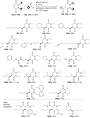
Figure 4: TGA analysis for thiourea 18c; and amides 20 and 22.
Beilstein J. Org. Chem. 2020, 16, 159–167, doi:10.3762/bjoc.16.18
Graphical Abstract
Scheme 1: Synthesis of carbamothioates from xanthate esters and benzyl isocyanides.
Figure 1: Substrate scope for the synthesis of carbamothioates. Reaction conditions for methods A and B: sodi...
Figure 2: ORTEP diagram of O-benzyl (4-fluorobenzyl)carbamothioate (4c).
Figure 3: Rotamers of thionocarbamates 4 (top) and computer-minimized structures of 4c (bottom).
Scheme 2: Proposed general reaction mechanism for the formation of carbamothioates (e.g., 4a) from xanthate e...
Figure 4: Optimized geometries of the reactants, transition states, intermediates, and products of the propos...
Figure 5: Relative energies of the reactants, transition states (TS1–TS3), and intermediates (Int1–Int3) of t...