
Search results
Search for "C–H" in Full Text gives 776 result(s) in Beilstein Journal of Organic Chemistry. Showing first 200.
Strategies in the synthesis of dibenzo[b,f]heteropines
Beilstein J. Org. Chem. 2023, 19, 700–718, doi:10.3762/bjoc.19.51
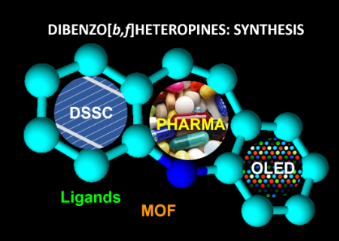
- the enol carboxylate and subsequent 1,2 radical rearrangement and decarboxylation. Moderate to good yields of dibenzo[b,f]oxepine carboxylates 25 were achieved (63–85%). Stopka et al. [46] reported on tandem C–H functionalisation and ring expansion as an alternative to the Wagner–Meerwin rearrangement
- )malonates 24. Ring expansion via C–H functionalisation. The synthesis of fluorinated 5H-dibenzo[b,f]azepine 38 from isatin (32). The synthesis of substituted dibenzo[b,f]azepines 43 from indoles 39. Retrosynthetic pathways to dibenzo[b,f]azepines via Buchwald–Hartwig amination. Synthesis of dibenzo[b,f


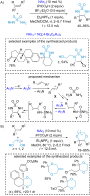
Photocatalytic sequential C–H functionalization expediting acetoxymalonylation of imidazo heterocycles
Beilstein J. Org. Chem. 2023, 19, 666–673, doi:10.3762/bjoc.19.48
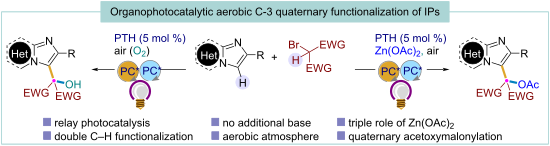
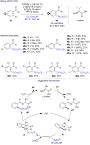
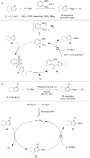
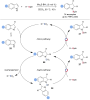
- from academia and industry. Herein, we report a direct C-3 acetoxymalonylation of imidazo heterocycles using relay C–H functionalization enabled by organophotocatalysis starring zinc acetate in the triple role of an activator, ion scavenger as well as an acetylating reagent. The mechanistic
- investigation revealed a sequential sp2 and sp3 C–H activation, followed by functionalization driven by zinc acetate coupled with the photocatalyst PTH. A variety of imidazo[1,2-a]pyridines and related heterocycles were explored as substrates along with several active methylene reagents, all generating the
- products with excellent yields and regioselectivity, thus confirming excellent functional group tolerability. Keywords: C–H functionalization; imidazo heterocycles; photoredox; regioselective; relay catalysis; Introduction Among all N-fused heterocycles, imidazo[1,2-a]pyridines (IPs) are the prevalent




Enolates ambushed – asymmetric tandem conjugate addition and subsequent enolate trapping with conventional and less traditional electrophiles
Beilstein J. Org. Chem. 2023, 19, 593–634, doi:10.3762/bjoc.19.44
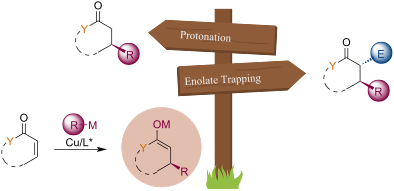
- . These transformations combine several reactions into a sequence that uses functionalities generated in previous steps without isolating intermediates [1]. Stabilized carbon-based nucleophiles, or in other words, conjugate bases of weak C–H acids, are termed enolates, and they participate in a large
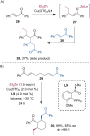
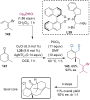
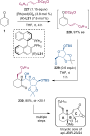
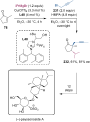
- functional group tolerance with excellent stereoselectivities. In 2016, Ellman and co-workers demonstrated a Rh- or Co-catalyzed highly diastereoselective tandem C–H bond addition/aldol reaction sequence [96][97]. The C–H activation was promoted by pyridine, pyrazole, or imine directing groups, while the
- aldol addition step was performed either in a two-component (intramolecular aldol) or a three-component (intermolecular aldol) arrangement. The enantioselective implementation of this methodology was realized by Herraiz and Cramer in 2021 (Scheme 53) [98]. The reaction sequence is initiated by the C–H









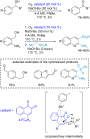
C3-Alkylation of furfural derivatives by continuous flow homogeneous catalysis
Beilstein J. Org. Chem. 2023, 19, 582–592, doi:10.3762/bjoc.19.43
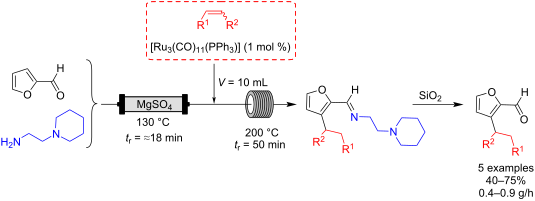
- formation of the imine directing group and the C3-functionalization with some vinylsilanes and norbonene. Keywords: biomass; C–H activation; flow; furfural; homogeneous catalysis; Introduction The conversion of biomass derivatives into value-added products is one of the key branches of green chemistry and
- furfural derivatives have been developed. In particular, their direct functionalization by transition-metal-catalyzed C–H activation processes [16][17][18] has become a major area of interest where only a few methods have been reported so far. Most examples concern functionalization at C5, which is the
- synthesis has increased dramatically and has rapidly become a routine tool for classical synthesis [26][27][28][29]. In particular, many efforts have been devoted to the development of flow alternatives for transition-metal-catalyzed cross-couplings [30] and for some C–H functionalizations [31


Direct C2–H alkylation of indoles driven by the photochemical activity of halogen-bonded complexes
Beilstein J. Org. Chem. 2023, 19, 575–581, doi:10.3762/bjoc.19.42
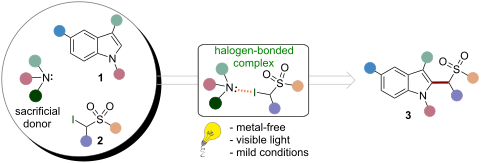
- ). Mechanistic investigations are reported. These studies provide convincing evidences for the photochemical formation of reactive open-shell species. Keywords: alkylation; EDA complex; halogens; indoles; photochemistry; Findings Direct replacement of carbon–hydrogen (C–H) bonds with new carbon–carbon (C–C
- tool to guide the development of greener and more convenient synthetic protocols [7][8][9][10][11][12]. In this context, photochemical approaches based on electron donor–acceptor (EDA) complexes have been successfully exploited to drive the direct C–H functionalization of a large number of organic
- -carboxaldehyde (1g) was not a suitable substrate for this transformation. Conclusion In conclusion, we reported a novel photochemical method for the direct C–H alkylation of indoles with α-iodosulfones. This approach exploits the photochemical activity of halogen-bonded EDA complexes, formed between α


A new oxidatively stable ligand for the chiral functionalization of amino acids in Ni(II)–Schiff base complexes
Beilstein J. Org. Chem. 2023, 19, 566–574, doi:10.3762/bjoc.19.41
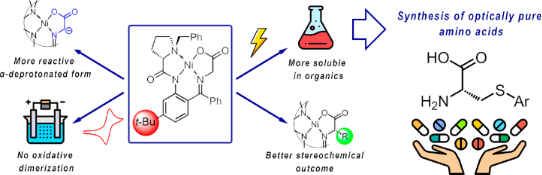
- )) and includes a chiral auxiliary, an amino acid, and a bifunctional linker capable to arrange the components in the Schiff base complex. Such templates provide a significant C–H acidity at the α-amino acid carbon and a possibility for recycling of the chiral auxiliaries (for reviews see [5][14][15][16



Transition-metal-catalyzed domino reactions of strained bicyclic alkenes
Beilstein J. Org. Chem. 2023, 19, 487–540, doi:10.3762/bjoc.19.38
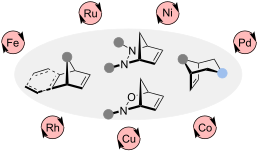
- proceeds similarly to Nakamura’s Fe-catalyzed methodology (Scheme 13) [48]. In 2017, the Cheng laboratory investigated the Co-catalyzed ring-opening/dehydration of oxabicyclic alkenes via the C–H activation of arenes (Scheme 15) [50]. First, the group explored the ortho-naphthylation of N-pyrimidinylindole
- the Lewis acid cocatalyst AgSbF6 was removed from the reaction mixture, it was noted only ring-opened 1,2-hydroxy adducts were formed, so it is likely the Lewis acid is required for dehydration. In contrast, when N-pyrimidinylbenzimidazole derivatives were used, the 1,2-C–H addition product was
- -catalyzed [3 + 2] annulation/ring-opening/dehydration domino reaction of oxabicyclic alkenes 30 with 2-(1-methylhydrazinyl)pyridine (MHP) directed arenes 87 for the synthesis of benzo[b]fluorenones 88 (Scheme 16) [52]. C–H bond functionalization with heterobicyclic alkenes as annulation partners has



















Transition-metal-catalyzed C–H bond activation as a sustainable strategy for the synthesis of fluorinated molecules: an overview
Beilstein J. Org. Chem. 2023, 19, 448–473, doi:10.3762/bjoc.19.35
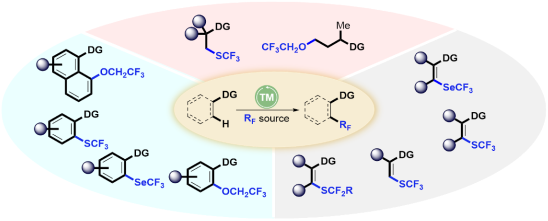
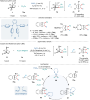
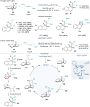
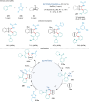
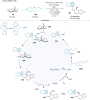
- functionalization of C(sp2) and C(sp3) centers with SCF3, SeCF3, or OCH2CF3 groups among others, by C–H bond activation. The scope and limitations of these transformations are discussed in this review. Keywords: C–H bond activation; emergent fluorinated groups; homogeneous catalysis; organofluorine chemistry
- [6][7][8][9][10][11]. Among them [2][5][12][13][14][15][16][17][18], the direct functionalization of a simple C–H bond by transition-metal catalysis [19][20][21][22][23][24][25][26][27][28][29][30][31][32][33][34][35][36][37][38][39][40][41][42][43] became an important tool offering new
- retrosynthetic disconnections. In this context, a strong interest from the scientific community was shown towards the challenging synthesis of fluorinated molecules by transition-metal-catalyzed C–H bond activation [44][45][46][47][48][49][50], allowing the functionalization of complex molecules and even for











Discrimination of β-cyclodextrin/hazelnut (Corylus avellana L.) oil/flavonoid glycoside and flavonolignan ternary complexes by Fourier-transform infrared spectroscopy coupled with principal component analysis
Beilstein J. Org. Chem. 2023, 19, 380–398, doi:10.3762/bjoc.19.30
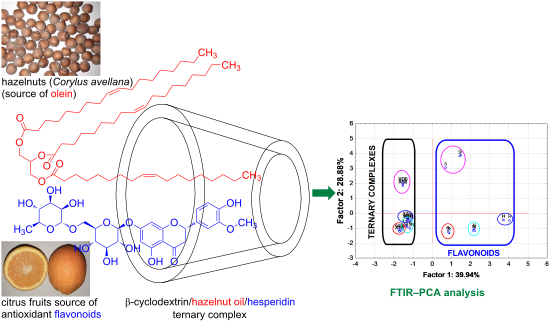
- band for the asymmetric stretching vibrations of the C–H groups appears at 2924.8 (± 1.4) cm−1, while the bending vibrations (in-plane, asymmetric, and symmetric) of the OH and CH groups appear as weak bands in the range of 1205–1643 cm−1. The stretching vibrations of the C–O and C–C groups in the
- glucoside moieties appear as medium-strong bands in the range of 998–1152 cm−1. A specific band for CD appears at 939.2 (± 1.8) cm−1 and is assigned to the stretching vibrations of the C–H groups from the β-CD ring. Also, the band at 852.9 (± 0.8) cm−1 is attributable to the bending vibrations of the C–C–H
- the C–O groups at 1027.9 (± 5.7) cm−1, as well as the out-of-plane bending vibrations in the C–H groups at 722 (± 0.1) cm−1. Degradation/isomerization of oil components (low level) can be observed at 956.7 (± 8.7) cm−1, where the band corresponding to the bending vibrations of the C=C groups in trans



Group 13 exchange and transborylation in catalysis
Beilstein J. Org. Chem. 2023, 19, 325–348, doi:10.3762/bjoc.19.28
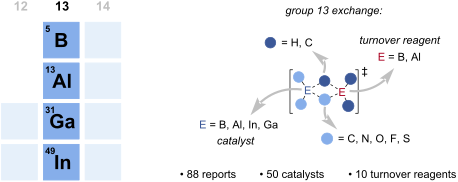
- functionalisation of unsaturated bonds [1][2][3][4][5], and, more recently, frustrated Lewis pair (FLP) chemistries including small molecule activations and C–H insertion reactions [6][7][8][9][10]. Group 13 exchange is the transfer of one or more substituents from one group 13 element to another group 13 element
- experimentally determined free energy barrier of 28 kcal mol−1 for the second transborylation reaction (Scheme 3b) [60]. The seminal work from Fontaine reported that [1-(N-2,2,6,6-tetramethylpiperidinyl)-2-BH2-C6H4]2 catalysed the C–H borylation of heterocycles with HBpin [61], the first example of a catalytic
- frustrated Lewis pair (FLP)-mediated C‒H functionalisation (Scheme 4a). Using computational analysis, the mechanism of the reaction was proposed to occur by borane dimer [9]2 dissociation, followed by a concerted deprotonation of the heterocycle 10 to give a zwitterionic intermediate 11. The zwitterion then










1,4-Dithianes: attractive C2-building blocks for the synthesis of complex molecular architectures
Beilstein J. Org. Chem. 2023, 19, 115–132, doi:10.3762/bjoc.19.12
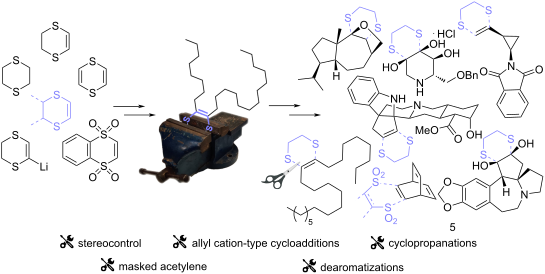
- co-workers could offer more opportunities here (Scheme 7) [43][44]. Furthermore, some recently reported photoredox-catalyzed thioether (C–H) alkylation and heteroarylation reactions developed by Alfonzo and Hande have demonstrated the use of 1,4-dithianes as viable substrates in such attractive bond
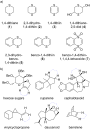
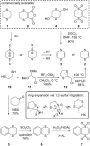
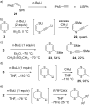
- ][57]. Stereoselective 5,6-dihydro-1,4-dithiin-based synthesis of cis-olefins [42][58]. Addition to aldehydes and applications in stereoselective synthesis. Direct C–H functionalization methods for 1,4-dithianes [82][83]. Known cycloaddition reactivity modes of allyl cations [84][85][86][87][88][89][90











Synthesis and characterisation of new antimalarial fluorinated triazolopyrazine compounds
Beilstein J. Org. Chem. 2023, 19, 107–114, doi:10.3762/bjoc.19.11
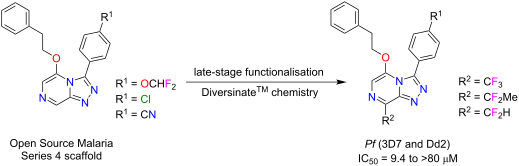
- improve solubility and metabolic stability while retaining potency [5]. Late-stage functionalisation (LSF) is a strategy involving the use of C–H bonds as chemical handles for the introduction of various functional groups, which has been widely employed by medicinal chemists to generate new analogues of
- lead compounds without the need for de novo synthesis [5]. Baran et al. has developed an operationally simple, radical-based functionalisation strategy that allows direct transformation of C–H bonds to C–C bonds in a practical manner [11]. This strategy involves the utilisation of sodium and zinc
- sulfinate-based reagents (marketed by Merck as Diversinates™) to functionalise heteroaromatic C–H bonds of unprotected systems in a variety of solvents at room temperature and without the requirement of an inert atmosphere or solvent purification [11][12][13]. In our previous work on OSM Series 4 scaffolds


Practical synthesis of isocoumarins via Rh(III)-catalyzed C–H activation/annulation cascade
Beilstein J. Org. Chem. 2023, 19, 100–106, doi:10.3762/bjoc.19.10
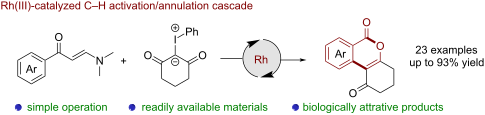
- China Anhui Province Key Laboratory of Chemistry for Inorganic/Organic Hybrid Functionalized Materials, College of Chemistry & Chemical Engineering, Anhui University, Hefei, Anhui 230601, People’s Republic of China 10.3762/bjoc.19.10 Abstract Herein, we report an unprecedented Rh(III)-catalyzed C–H
- activation/annulation cascade of readily available enaminones with iodonium ylides towards the convenient synthesis of isocoumarins. This coupling system proceeds in useful chemical yields (up to 93%) via a cascade C–H activation, Rh-carbenoid migratory insertion and acid-promoted intramolecular annulation
- . The success of gram-scale reaction and diverse functionalization of isocoumarins demonstrated the synthetic utility of this protocol. Keywords: C–H activation; enaminone; iodonium ylide; isocoumarin; rhodium catalysis; Introduction Isocoumarins are an important structural motif in many naturally


Improving the accuracy of 31P NMR chemical shift calculations by use of scaling methods
Beilstein J. Org. Chem. 2023, 19, 36–56, doi:10.3762/bjoc.19.4
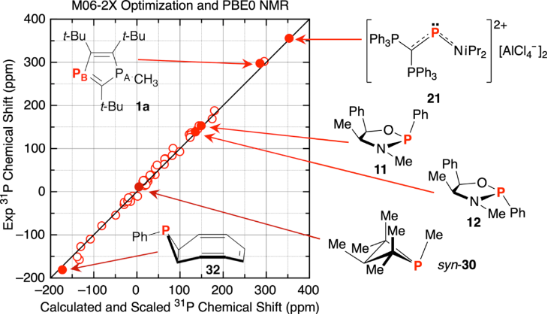
- conformations in our hands that especially for (H2P)2PH affected the calculated chemical shifts, and (e) while we did not check all chemical shifts, the citation in reference [37] for CH2=C(H)PF2, the furthest downfield point (and hence a critical value) is wrong, although the value of 219.5 ppm is correct [60




Redox-active molecules as organocatalysts for selective oxidative transformations – an unperceived organocatalysis field
Beilstein J. Org. Chem. 2022, 18, 1672–1695, doi:10.3762/bjoc.18.179
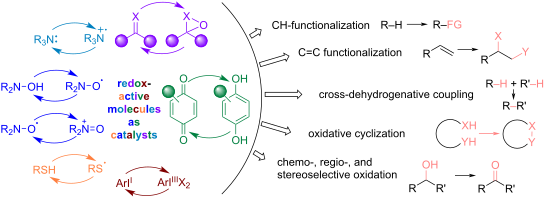
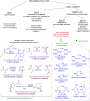
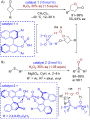
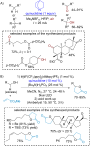
- benzyl iodides was observed. Besides classical NHPI/PINO-catalyzed CH-functionalization processes, there is a significant number of works in which PINO plays the role of both the catalyst for C–H bond cleavage and the reagent intercepting the resultant C-centered radical [90]. As a rule, stoichiometric
- introduction of an electron-withdrawing acetoxy group. The DABCO cation radical is less reactive compared to quinuclidine-derived cation radicals. It was involved in the Ni-catalyzed oxidative C–C cross-coupling involving aldehyde C–H bond cleavage with the formation of acyl radicals according to the proposed
- , and the allylic hydrogen atom abstraction by the thiyl radical. The final product is formed by the coupling of the ArCN anion radical with an allylic radical. As was mentioned above, thiyl radicals were mainly applied for the cleavage of activated C–H bonds. Recently, the tetrafluoropyridinyl thiyl











Synthetic study toward the diterpenoid aberrarone
Beilstein J. Org. Chem. 2022, 18, 1625–1628, doi:10.3762/bjoc.18.173
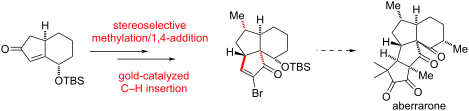
- the 6-5-5 tricyclic skeleton includes the mediation of Nagata reagent for constructing the C1 all-carbon quaternary centers and gold-catalyzed cyclopentenone synthesis through C–H insertion. Keywords: aberrarone; C–H insertion; gold; Pauson–Khand; total synthesis; Introduction Marine natural
- one quaternary carbon stereocenter and 1,2-dikeone moiety, Nazarov cyclization [33] of 7 was proposed for synthesizing this challenging moiety. The corresponding precursor cyclopentenone 8 may be prepared from alkynone 9 through a gold-catalyzed C–H insertion [34]. Alkynone 9 could be achieved through
- strategy, the stereogenic center at C1 was synthesized, along with a smooth attachment of the cyanate group served for further functional group transformation to construct the C ring through C–H insertion. The stereochemistry finding of this conjugate addition from the convex face of the 6-5 ring system


One-pot double annulations to confer diastereoselective spirooxindolepyrrolothiazoles
Beilstein J. Org. Chem. 2022, 18, 1607–1616, doi:10.3762/bjoc.18.171
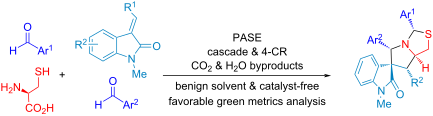
- one-pot reactions with recyclable organocatalysts [69]. Notably, we conferred K10 acid to promote the C–H activation in the synthesis of spirooxindolepyrrolidines, and used Zeolite HY catalyst to synthesize diastereoselective dispiro[oxindolepyrrolidine]s with a butterfly shape (Scheme 1A and 1B) [70


Functionalization of imidazole N-oxide: a recent discovery in organic transformations
Beilstein J. Org. Chem. 2022, 18, 1575–1588, doi:10.3762/bjoc.18.168
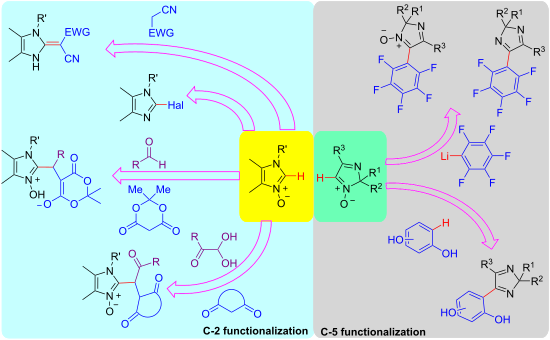
- through C–H/C–H coupling [10]. Also, in 2020, Valery P. Perevalov and team reported a three-component reaction of 2-unsubstituted imidazole N-oxides, arylglyoxals, and CH-acids [11]. However, the use of imidazole 1-oxides is not much unfolded till now among the science community. There were quite some
- review paper exploring several procedures of C–H bond activation for the functionalization of N-oxides [12] and in 2019, Dongli Li and co-workers analyzed heterocyclic N-oxides with regard to their usefulness in synthesis of organic drug molecules and catalysis [13]. Many review papers have been
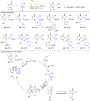
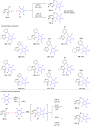
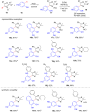
- to be a 1:1:1 ratio of 2-unsubstituted imidazole N-oxides as C-nucleophile, ethyl cyanoacetate as C–H acidic electrophile and 4-(methylsulfanyl)benzaldehyde as aldehyde catalyst, DMF as solvent at 100 °C for 5 h. Under the optimized conditions, malononitrile providing the products 4i,j (36–45%), 2





Simple synthesis of multi-halogenated alkenes from 2-bromo-2-chloro-1,1,1-trifluoroethane (halothane)
Beilstein J. Org. Chem. 2022, 18, 1567–1574, doi:10.3762/bjoc.18.167
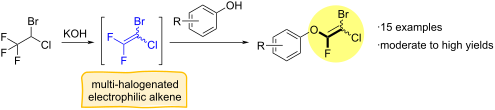
- for obtaining 1. The desired highly halogenated aryl alkenyl ether 2a was obtained, but the yield was unacceptably low (Table 1, entry 1). The low conversion is attributed to use of an insufficient amount of KOH, which was used as a base for deprotonation of the phenolic hydroxy group and acidic C–H


Comparison of crystal structure and DFT calculations of triferrocenyl trithiophosphite’s conformance
Beilstein J. Org. Chem. 2022, 18, 1499–1504, doi:10.3762/bjoc.18.157
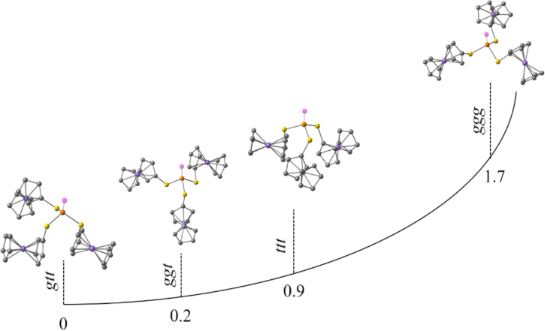
- )3PS [7] (Figure 4). All three compounds form crystals belonging to the monoclinic syngony. In all three cases, the molecules in the crystals form a herringbone motif. In (FcS)3P, C–H···π interactions dominate, while in (FcS)3PS and (FcS)3PO, in addition to C–H···π interactions, by one C–H···S and two
- C–H···O interactions, respectively, are observed. It should be noted that (FcS)3PO crystals contain a solvent molecule that participates in intermolecular interactions. Thus, despite the similarity of the molecular structure of the three compounds and some crystal parameters, the intermolecular
- interactions differ noticeably from each other. At the same time one should underline the role of the ferrocene moiety for the crystal structure of the (FcS)3P. The related (PhS)3P molecule with Ph rings instead of Fc units exist in the propeller-like gauche-gauche-gauche configuration [21], forming the C–H


Dissecting Mechanochemistry III
Beilstein J. Org. Chem. 2022, 18, 1454–1456, doi:10.3762/bjoc.18.150
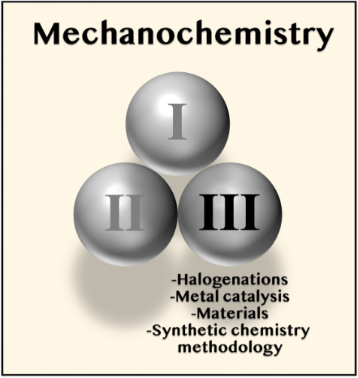
- were also key reagents to develop the mechanochemical halogenation of azobenzenes as studied by Ćurić and co-workers [4]. They demonstrated how, depending on the azobenzene structure, the halogenation of the C–H bonds with NBX occurred in the presence of Pd(II) catalysts or under metal-free conditions


Synthesis of C6-modified mannose 1-phosphates and evaluation of derived sugar nucleotides against GDP-mannose dehydrogenase
Beilstein J. Org. Chem. 2022, 18, 1379–1384, doi:10.3762/bjoc.18.142
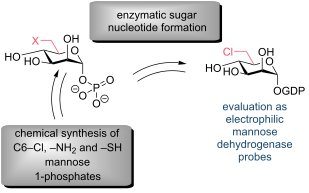
- conformation has recently been shown to be an important factor contributing to anomeric reactivity of canonical pyranoses [12]). One phenyl ring of the phosphate ester group occupied a position folded underneath the pyranose ring and engaged in an intramolecular C–H···π interaction with the axial C5 proton
- diffuse intermolecular C–H···O contacts involving the phosphate and acetyl oxygen atoms. Deprotection of 16 was completed in two steps, first using hydrogenolysis with Adam’s catalyst (PtO2), followed by removal of the acetate protecting groups with Et3N/H2O/MeOH, and furnished the target glycosyl 1


Modular synthesis of 2-furyl carbinols from 3-benzyldimethylsilylfurfural platforms relying on oxygen-assisted C–Si bond functionalization
Beilstein J. Org. Chem. 2022, 18, 1256–1263, doi:10.3762/bjoc.18.131
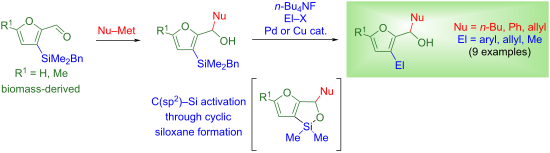
- ][3]. As part of this effort, exploitation of furfural and corresponding derivatives attracts continuous attention [4][5][6][7]. In this area, we have actively investigated catalytic C–H activation reactions [8][9][10][11][12][13][14], and as part of this work, we have recently developed an iridium


A one-pot electrochemical synthesis of 2-aminothiazoles from active methylene ketones and thioureas mediated by NH4I
Beilstein J. Org. Chem. 2022, 18, 1249–1255, doi:10.3762/bjoc.18.130
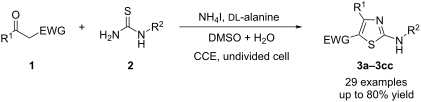
- 1b). Alternatively, the oxidation of α-C–H of active methylene ketones generate α-carbon-centered radicals, thus providing another way to obtain thiazoles. Recently, Sun et al. reported a tert-butyl hydroperoxide/azodiisobutyronitrile-mediated synthesis of 2-aminothiazoles from active methylene
- the in situ generation of α-iodocarbonyl ketones from constant current electrolysis (CCE) of ketones in the presence of iodide ions. It is worth noting that we have also reported an electrochemical method for the synthesis of 2-aminothiazoles via the one-pot direct α-C–H functionalization of ketones
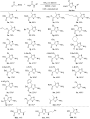
- demonstrate the feasibility of our idea, ethyl acetoacetate (1a) and thiourea (2a) were chosen as model substrates for the optimization of reaction conditions. Based on our previous studies on the halide-mediated α-C–H functionalization of carbonyl compounds [32][33][34][35], graphite was chosen as the




Experimental and theoretical studies on the synthesis of 1,4,5-trisubstituted pyrrolidine-2,3-diones
Beilstein J. Org. Chem. 2022, 18, 1140–1153, doi:10.3762/bjoc.18.118
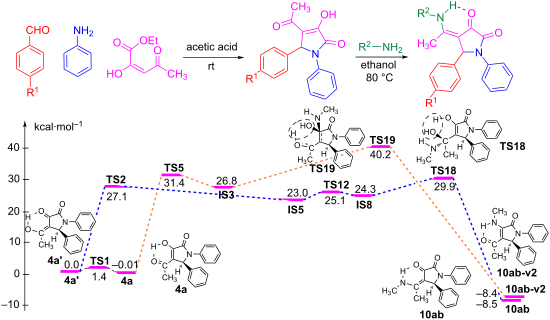
- (Figure S1 in Supporting Information File 1) is characterized by C7–H7···O12i hydrogen bonds resulting in chain formation along the a direction [C7–H7: 0.93 Å, H7···O12: 2.42 Å, C7···O12: 3.325(3) Å, C7–H7···O12: 164˚; symmetry code: (i) 1 + x, y, z]. Neighboring chains connect by C–H···π interactions