
Search results
Search for "[3 2]" in Full Text gives 542 result(s) in Beilstein Journal of Organic Chemistry. Showing first 200.
Effective microwave-assisted approach to 1,2,3-triazolobenzodiazepinones via tandem Ugi reaction/catalyst-free intramolecular azide–alkyne cycloaddition
Beilstein J. Org. Chem. 2021, 17, 678–687, doi:10.3762/bjoc.17.57
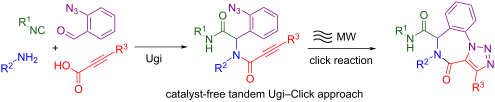
- includes a [3 + 2] click reaction between the azide ion with the triple bond and further C–N coupling instead of the IAAC reaction. Compounds having no fused benzene ring or with a heterocyclic moiety instead could also be obtained via the tandem approach Ugi reaction/IAAC [15][16]. Despite the


A new and efficient methodology for olefin epoxidation catalyzed by supported cobalt nanoparticles
Beilstein J. Org. Chem. 2021, 17, 519–526, doi:10.3762/bjoc.17.46
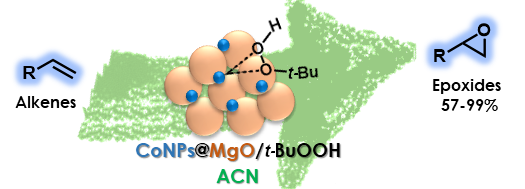
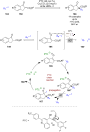
- ). The recovered solid catalyst was washed with acetonitrile (3 × 2 mL) and dried in an oven (150 °C, 1 h) for its reuse. TEM micrograph and size distribution graphic for CoNPs@MgO catalyst (scale bar = 20 nm). Plausible mechanistic pathway for olefin epoxidation catalyzed by CoNPs/MgO in the presence of


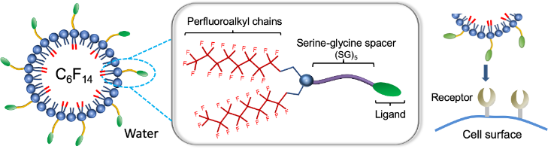
Synthesis and physicochemical evaluation of fluorinated lipopeptide precursors of ligands for microbubble targeting
Beilstein J. Org. Chem. 2021, 17, 511–518, doi:10.3762/bjoc.17.45
- mL column was suspended in 5 mL of DMF and swollen overnight. After washing with DMF (3 × 2 mL), the Fmoc groups of the Rink amide AM resin were activated with 20% of piperidine in DMF (2 mL) for 20 min. After washing with DMF (3 × 2 mL), Fmoc-Ser(t-Bu)-OH (3 equiv) as the first Fmoc-amino acid and
- the mixture of HBTU, HOBT, and DIPEA (3 equiv/3 equiv/6 equiv) in DMF were added to the resin and shaken for 30 min. The reaction was monitored using a Kaiser test based on the reaction of ninhydrin. After washing with DMF (3 × 2 mL) and DCM (3 × 2 mL), 25% of acetic anhydride in DCM (2 mL) was added
- capping the reaction with 25% of acetic anhydride in DCM (2 mL), the column was washed with DCM (3 × 2 mL), DMF (3 × 2 mL), and methanol (3 × 2 mL), and dried overnight. A solution of 2.5 mL of TFA/TIS/H2O 94:2.5:2.5 (v/v/v) was added to the column for cleaving the compound from the resin, and the


Synthesis of N-perfluoroalkyl-3,4-disubstituted pyrroles by rhodium-catalyzed transannulation of N-fluoroalkyl-1,2,3-triazoles with terminal alkynes
Beilstein J. Org. Chem. 2021, 17, 504–510, doi:10.3762/bjoc.17.44
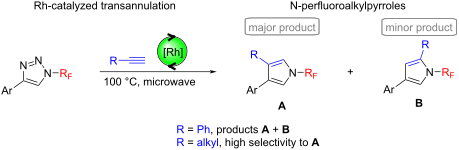
- , conveniently prepared by [3 + 2] cycloadditions of terminal alkynes with sulfonyl azides, have been used as the precursors to N-sulfonylindoles by transition-metal-catalyzed transannulation reactions. In the presence of Rh(II) or Ni(0) catalysts the triazole ring-opening takes place and intermediate highly


Synthesis of legonmycins A and B, C(7a)-hydroxylated bacterial pyrrolizidines
Beilstein J. Org. Chem. 2021, 17, 334–342, doi:10.3762/bjoc.17.31

- was subjected to a third round of chromatography (toluene/ethyl acetate 3:2 → toluene/ethyl acetate/acetone 2:2:1) to afford the title compound as an oil (661 mg, 47%). Rf 0.35 (dichloromethane/methanol 9:1); 1H NMR (400 MHz, CD3OD) δ 1.02 (d, J = 6.5 Hz, 3H), 1.03 (d, J = 6.5 Hz, 3H), 1.59 (s, 3H
- of water with toluene (2 × 50 mL). The residue was purified by column chromatography (toluene/ethyl acetate/acetone 3:2:0–12:8:5) to afford the title compound as a yellow amorphous solid (345 mg, 56% corrected for the presence of ≈10 wt % toluene). The data are consistent with literature values [22
- . The residue was purified by column chromatography (toluene/ethyl acetate/acetone 3:2:0–0:1:1) to afford the title compound as a yellow glass (34.7 mg, 37%). The data are consistent with literature values [22]. Rf 0.40 (acetone/ethyl acetate/toluene 2:1:1); mp 49 °C [lit. mp not given]; IR νmax 3234br


Annulation of a 1,3-dithiole ring to a sterically hindered o-quinone core. Novel ditopic redox-active ligands
Beilstein J. Org. Chem. 2021, 17, 273–282, doi:10.3762/bjoc.17.26
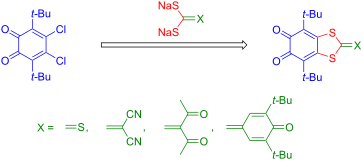
- of the experimental EPR spectra. It is noteworthy that semiquinone derivatives of 6b and 6d show resolved hyperfine splittings due to the coupling of unpaired electrons with the magnetic nuclei of 14N (quintet 1:2:3:2:1) and protons of methyl groups (septet 1:6:15:20:15:6:1), respectively. o


1,2,3-Triazoles as leaving groups in SNAr–Arbuzov reactions: synthesis of C6-phosphonated purine derivatives
Beilstein J. Org. Chem. 2021, 17, 193–202, doi:10.3762/bjoc.17.19
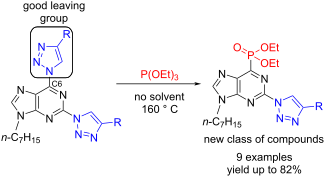
- -purine-2,6-diyl)bis(1H-1,2,3-triazole-4-carboxylate) (6a, 0.20 g, 0.43 mmol, 1.0 equiv) was dissolved in P(OEt)3 (2 mL) and stirred for 3 hours at 160 °C. Then, the solution was cooled to room temperature, hexane (10 mL) was added, and the mixture was left in the freezer (−20 °C) for 10 h. The brown


Novel library synthesis of 3,4-disubstituted pyridin-2(1H)-ones via cleavage of pyridine-2-oxy-7-azabenzotriazole ethers under ionic hydrogenation conditions at room temperature
Beilstein J. Org. Chem. 2021, 17, 156–165, doi:10.3762/bjoc.17.16
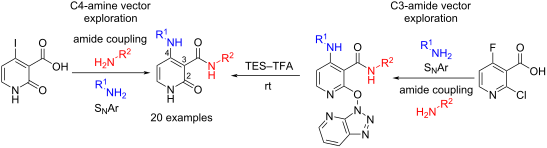
- obtained for the 3-(2-(dimethylamino)ethyl)aniline analogue 24j was due to the fact the 2-Cl-Py did not transform to the OAt ether in situ and the subsequent hydrolysis step was very sluggish. We postulate that the presence of the more basic N,N,-dimethylaminoethyl side chain (pKa ≈11) must prevent


All-carbon [3 + 2] cycloaddition in natural product synthesis
Beilstein J. Org. Chem. 2020, 16, 3015–3031, doi:10.3762/bjoc.16.251
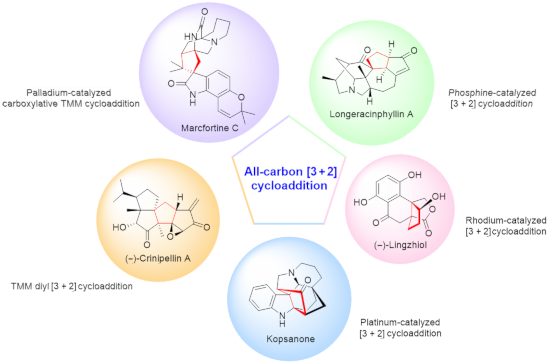
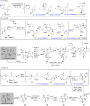
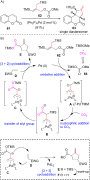
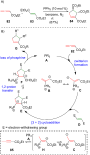
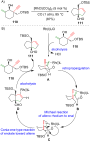
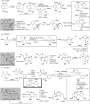
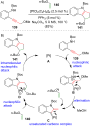
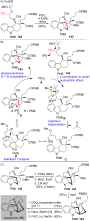
- , stereo-congested, five-membered carbocycles containing all-carbon quaternary center(s) is, at present, a distinct challenge in modern synthetic chemistry, which can be accessed through the all-carbon [3 + 2] cycloaddition. More importantly, the all-carbon [3 + 2] cycloaddition can forge vicinal all
- -carbon quaternary centers in a single step and has been demonstrated in the synthesis of complex natural products. In this review, we present the development of all-carbon [3 + 2] cycloadditions and illustrate their application in natural product synthesis reported in the last decade covering 2011–2020
- (inclusive). Keywords: all-carbon; cyclization; [3 + 2] cycloaddition; natural product synthesis; stereocenters; Introduction The highly-substituted, stereo-congested, five-membered carbocycle containing contiguous stereocenters is one of the most common structural features in many structurally complicated







Regioselective synthesis of heterocyclic N-sulfonyl amidines from heteroaromatic thioamides and sulfonyl azides
Beilstein J. Org. Chem. 2020, 16, 2937–2947, doi:10.3762/bjoc.16.243
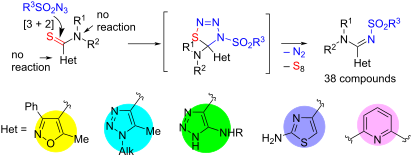
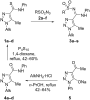
- form can be explained by steric hindrance between the phenyl and the arylsulfonyl groups. Because of the observed evolution of nitrogen and sulfur in every reaction of heterocyclic thioamides and sulfonyl azides it is logic to propose the formation of a thiatriazole ring via [3 + 2] cycloaddition of







Synthesis of purines and adenines containing the hexafluoroisopropyl group
Beilstein J. Org. Chem. 2020, 16, 2739–2748, doi:10.3762/bjoc.16.224
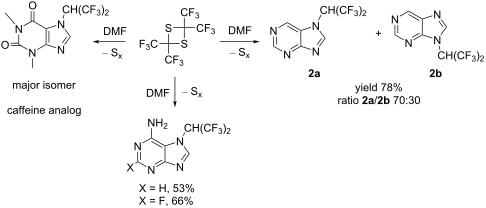
- to the formation of two regioisomers, but interestingly, the ratio of the 7-CF2H- and 9-CF2H-isomers varied broadly from 1:2 [22] to 3:2, depending on the reaction conditions and the source of difluorocarbene [11]. Mechanism, regiochemistry, and rotation barriers of the CH(CF3)2 group The mechanism
- NMR data are given in Table 1 and Table 3. Reaction of 4-azabenzimidazole (3) and 1 A mixture of 1.2 g (0.01 mol) of 4-azabenzimidazole (3), 2 g (0.06 mol) of 1, and 15 mL of DMSO was agitated at ambient temperature for 24 h. The precipitated sulfur was filtered, washed with hexane, and dried on a



A heterobimetallic tetrahedron from a linear platinum(II)-bis(acetylide) metalloligand
Beilstein J. Org. Chem. 2020, 16, 2701–2708, doi:10.3762/bjoc.16.220
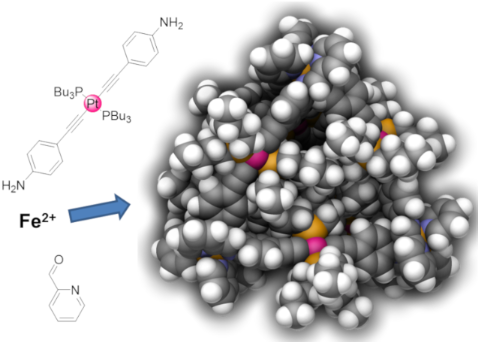
- , CD3CN, 298 K) δ [ppm] 4.66–4.47 (m); 19F NMR (470 MHz, CD3CN, 298 K) δ [ppm] −79.4 (CF3SO3−); DOSY (500 MHz, CD3CN, 298 K, τ = 150 ms): D = 3.33∙10−10 m2/s, dh = 33 Å, rh = 1.65 nm; ESI(+)-MS (CH3CN, M = {C320H432Fe4N24P12Pt6}8+) m/z: 1720.141 [M + 4OTf]4+, 1542.718 [Fe(C52H72N4P2Pt)3]2+, 1433.608 [Fe2


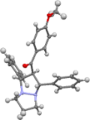
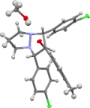
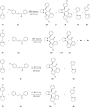
Selective and reversible 1,3-dipolar cycloaddition of 6-aryl-1,5-diazabicyclo[3.1.0]hexanes with 1,3-diphenylprop-2-en-1-ones under microwave irradiation
Beilstein J. Org. Chem. 2020, 16, 2679–2686, doi:10.3762/bjoc.16.218
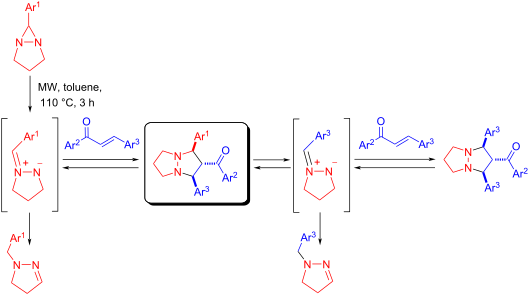
- -Michael-type cycloadducts [28]. Very recently, a catalytic enantioselective (3 + 2) cycloaddition of diazabicyclohexanes with chalcones was carried out [30]. 1,5-Diazabicyclo[3.1.0]hexanes have been employed as precursors for 1,3-dipoles not only in (3 + 2) but also in (3 + 3) cycloadditions. It was shown
- investigated using only convection heating. The aim of the current work is to investigate the regio- and diastereoselectivity of the microwave-assisted (3 + 2) cycloaddition of 6-aryldiazabicyclo[3.1.0]hexanes with 1,3-diphenylprop-2-en-1-ones. Results and Discussion Herein, we report the 1,3-dipolar
- cycloaddition reaction of 6-aryl-1,5-diazabicyclo[3.1.0]hexanes 1a–d (DABCH) with 1,3-diarylpropenones 2a–l at 110 °С under microwave irradiation using a microwave oven Discover SP in a 10 mL glass reactor. It was found that under these conditions the (3 + 2) cycloaddition products – perhydropyrazolopyrazoles




Dawn of a new era in industrial photochemistry: the scale-up of micro- and mesostructured photoreactors
Beilstein J. Org. Chem. 2020, 16, 2484–2504, doi:10.3762/bjoc.16.202
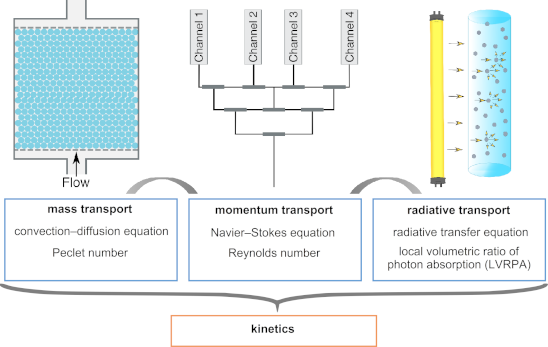
- ). This allowed for a larger reactor volume with the same illumination. The throughput was increased by using a larger volumetric flow rate. Several [3 + 2] photocycloadditions were performed. While scaling up, the concentration of the reactants, the diameter of the tubes, and the number of the reactors




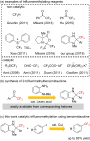
Catalytic trifluoromethylation of iodoarenes by use of 2-trifluoromethylated benzimidazoline as trifluoromethylating reagent
Beilstein J. Org. Chem. 2020, 16, 2442–2447, doi:10.3762/bjoc.16.198
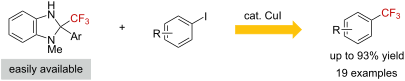
- ) gave product 3h in only a modest yield (30%). Heteroaryl iodides were also suitable substrates (Figure 3). 2-Iodopyridine (5a) gave the expected trifluoromethylation product 6a in 80% yield. 2-Iodoquinoline (5b) and 1-iodoisoquinoline (5c) were also suitable substrates to furnish desired products 6b



Recent developments in enantioselective photocatalysis
Beilstein J. Org. Chem. 2020, 16, 2363–2441, doi:10.3762/bjoc.16.197
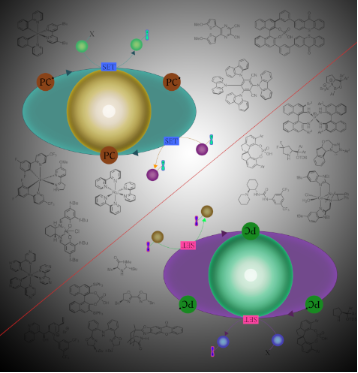
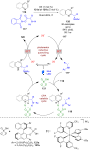
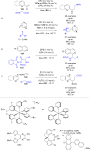
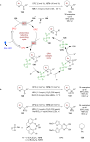
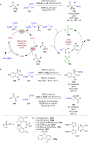
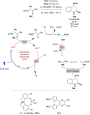
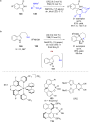
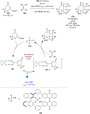
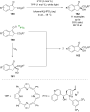
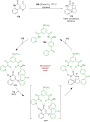
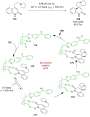
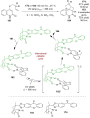
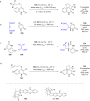
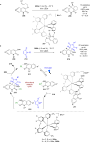
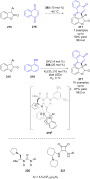
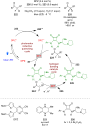
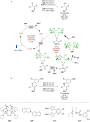
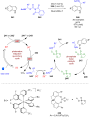
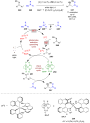
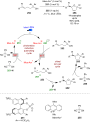
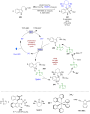
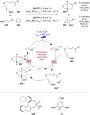
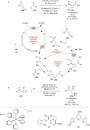
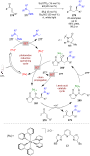
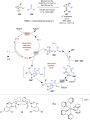
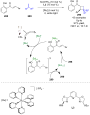
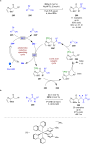
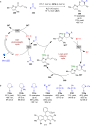
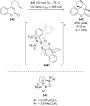
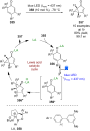
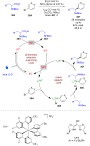
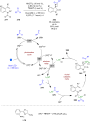
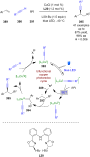
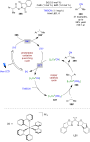
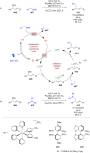
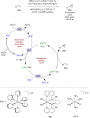
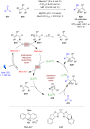
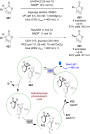
- and enantioselectivities (12 examples, up to 97:3 er). Yoon et al. later expanded the scope of this reaction to cyclopropyl ketones 275 for the synthesis of formal [3 + 2] cycloaddition products 276 in excellent yields and enantioselectivities (21 examples, up to >99:1 er), this time using a

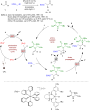


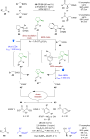
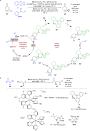

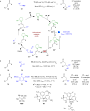
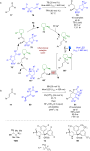
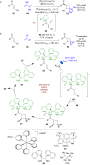
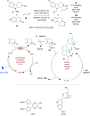
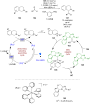










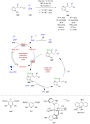

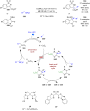







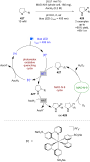

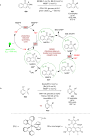
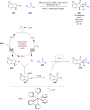


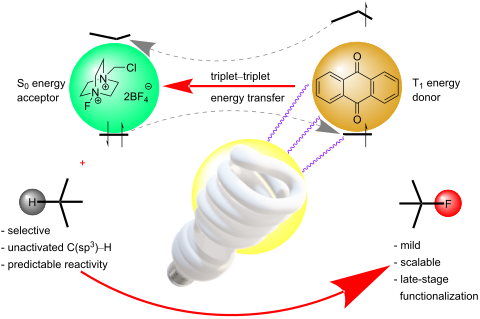
Photosensitized direct C–H fluorination and trifluoromethylation in organic synthesis
Beilstein J. Org. Chem. 2020, 16, 2151–2192, doi:10.3762/bjoc.16.183






Reactions of 3-aryl-1-(trifluoromethyl)prop-2-yn-1-iminium salts with 1,3-dienes and styrenes
Beilstein J. Org. Chem. 2020, 16, 2064–2072, doi:10.3762/bjoc.16.173
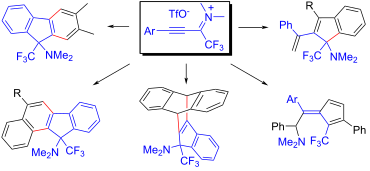
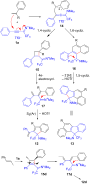
- good yield. Dehydrogenation of 7 with chloranil then provided 9-(dimethylamino)-9-(trifluoromethyl)fluorene 8. In an analogous reaction sequence, 11H-benzo[a]fluorene derivative 9 was obtained from 3-(2-naphthyl)propyn-1-iminium salt 1b and 2,3-dimethylbutadiene (Scheme 2) in a one-pot three-step




Synthesis of monophosphorylated lipid A precursors using 2-naphthylmethyl ether as a protecting group
Beilstein J. Org. Chem. 2020, 16, 1955–1962, doi:10.3762/bjoc.16.162
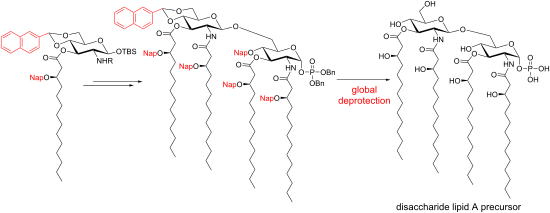
- developing a robust strategy in regards to the potential application of our route to the production of other lipid A analogs. Results and Discussion The acyl chain (R)-3-(2-naphthylmethoxy)tetradecanoic acid 7 was prepared via an enantioselective route as previously reported (Scheme 1) [16]. Lauroyl chloride
- with LiOH gave (R)-3-(2-naphthylmethoxy)tetradecanoic acid (7) in 78% yield over two steps. The glucosamine building block 14 was synthesized using the procedures described in previous literature [20] (Scheme 2). The protection of the free amine of glucosamine with a 2,2,2-trichloroethoxycarbonyl (Troc
- with (R)-3-(2-naphthylmethoxy)tetradecanoic acid (7) using 1-ethyl-3-(3-dimethylaminopropyl)carbodiimide (EDC) and 4-dimethylaminopyridine (DMAP) as the activation reagents [14] to give the key/common building block 15 in good yield (Scheme 2). Glycosyl acceptor 18 and donor 20 were thus conveniently


Synthesis of 3(2)-phosphonylated thiazolo[3,2-a]oxopyrimidines
Beilstein J. Org. Chem. 2020, 16, 1947–1954, doi:10.3762/bjoc.16.161
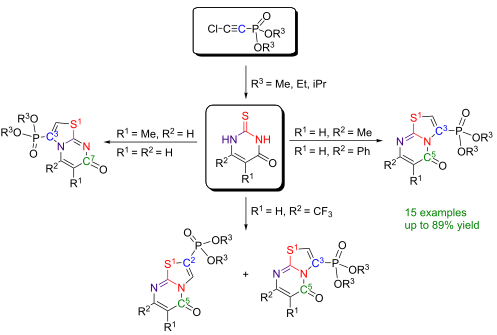
- Earth Sciences, St. Petersburg State University, Universitetskaya emb. 7/9, St. Petersburg, 199034 Russia 10.3762/bjoc.16.161 Abstract A series of 3(2)-phosphonylated thiazolo[3,2-a]oxopyrimidines was synthesized for the first time by the reactions of chloroethynylphosphonates with unsubstituted and 5


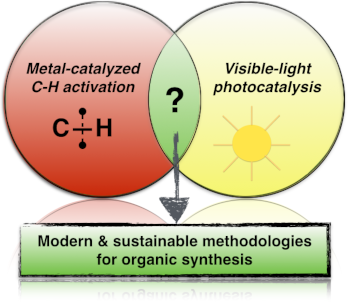
When metal-catalyzed C–H functionalization meets visible-light photocatalysis
Beilstein J. Org. Chem. 2020, 16, 1754–1804, doi:10.3762/bjoc.16.147


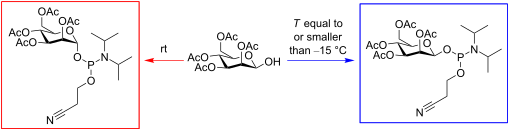
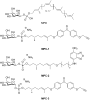
Nonenzymatic synthesis of anomerically pure, mannosyl-based molecular probes for scramblase identification studies
Beilstein J. Org. Chem. 2020, 16, 1732–1739, doi:10.3762/bjoc.16.145
- over MgSO4, and the volatile components were removed under reduced pressure. The yellowish residue (crude product) was purified by flash chromatography over silica gel, with a mixture of n-hexane/ethyl acetate 3:2, v/v as eluent. The fractions containing the product (Rf = 0.22 in n-hexane/ethyl acetate
- 3:2, v/v) were combined, and the solvents were removed under reduced pressure on a rotary evaporator to give Cit-BZP-yne (154 mg, 0.38 mmol, 67%) as white solid. 1H NMR (300 MHz, CDCl3, δ):7.85–7.72 (m, 4H), 7.09–6.99 (m, 2H), 7.02–6.91 (m, 2H), 5.61–5.49 (m, 1H), 4.77 (d, J = 2.4 Hz, 2H), 4.47 (s



Synthesis of the tetrasaccharide repeating unit of the O-specific polysaccharide of Azospirillum doebereinerae type strain GSF71T using linear and one-pot iterative glycosylations
Beilstein J. Org. Chem. 2020, 16, 1700–1705, doi:10.3762/bjoc.16.141
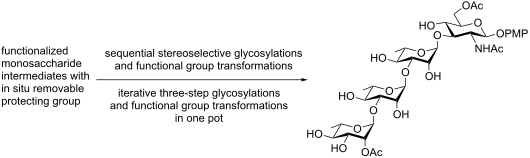
- reported under these conditions, special care should be taken for large-scale preparations. p-Methoxyphenyl (2-O-acetyl-α-ʟ-rhamnopyranosyl)-(1→3)-(α-ʟ-rhamnopyranosyl)-(1→3)-(α-ʟ-rhamnopyranosyl)-(1→3)-2-acetamido-6-O-acetyl-2-deoxy-β-ᴅ-glucopyranoside (1): To a solution of compound 7 (300 mg, 0.21 mmol
- -20 column using CH3OH/H2O 6:1 as eluent to give pure compound 1 (90 mg, 50%). p-Methoxyphenyl (2,4-di-O-benzyl-α-ʟ-rhamnopyranosyl)-(1→3)-2-azido-4,6-O-benzylidene-2-deoxy-β-ᴅ-glucopyranoside (5): To a solution of compound 2 (600 mg, 1.5 mmol) and compound 3 (800 mg, 1.57 mmol) in anhydrous CH2Cl2
- SiO2 using hexane/EtOAc 3:1 as eluent to give pure compound 5 (806 mg, 73%). p-Methoxyphenyl (2,4-di-O-benzyl-α-ʟ-rhamnopyranosyl)-(1→3)-(2,4-di-O-benzyl-α-ʟ-rhamnopyranosyl)-(1→3)-2-azido-4,6-O-benzylidene-2-deoxy-β-ᴅ-glucopyranoside (6): To a solution of compound 5 (700 mg, 0.96 mmol) and compound 3


Heterogeneous photocatalysis in flow chemical reactors
Beilstein J. Org. Chem. 2020, 16, 1495–1549, doi:10.3762/bjoc.16.125
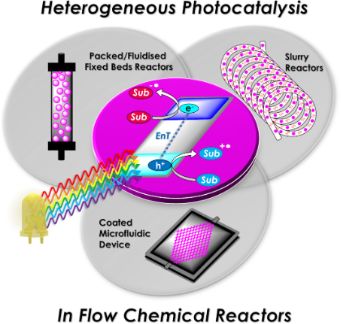
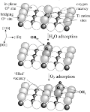
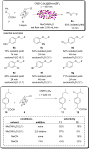
- immobilisation is common with transition metal complexes as they are often inherently cationic species. Amara and co-workers recently showed that [Ru(bpy)3]2+ could be immobilised on silica particles with a dramatic increase in the efficiency of the photooxidation of terpenes [137]. Polymer networks containing
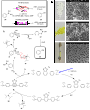
- bipyridyl units have been designed to immobilise transition metal complexes through coordinate bonding for the oxidative coupling of amines [138]. [Ru(bpy)3]2+ units were synthesised with ethynyl groups para-substituted to the nitrogen heteroatom on four of the six pyridine rings. The ethynyl groups were













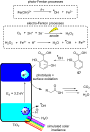

An overview on disulfide-catalyzed and -cocatalyzed photoreactions
Beilstein J. Org. Chem. 2020, 16, 1418–1435, doi:10.3762/bjoc.16.118
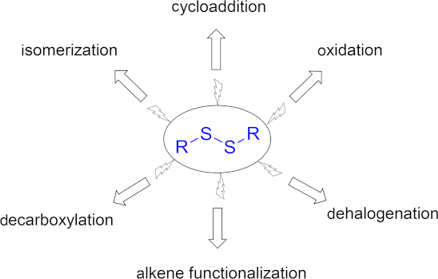
- of a [3 + 2] cycloaddition reactions under UV irradiation with azobis(isobutyronitrile) (AIBN) as the free radical initiator and phenyl disulfide as the catalyst, in which the three-membered rings containing double bonds and substituted olefins were transformed into five-membered-ring structures with
- used similar disulfide-catalyzed [3 + 2] cycloaddition reactions for the synthesis of polycyclic frameworks. The irradiation of vinylcyclopropanes with alkenes or alkynes in the presence of dibutyl disulfide afford the desired bi- or tricyclic products with 54–88% yield (Scheme 2) [6]. In 2014, Maruoka
- [3 + 2] methylenecyclopentane annulations of olefins with methylenecyclopropanes. This regioselective, mild, and protecting group-free annulation requires only an equimolar amount of the reacting alkene and does not require an excess of the reacting alkene, unlike other methods [9]. Furthermore, the